Examine the tangible relics, physical tokens, and revolutionary machines that shaped civilizational growth.
🎥 VIDEO HUB & SHORTS
Watch visual summaries, site intros, and mini-documentaries chronicling 300,000 years of world history.
📊 HISTORICAL INFOGRAPHICS ARCHIVE
Museum-grade visual graphics, civilizational timelines, and architectural breakdowns curated for educators and history lovers.
THE HISTORIA CIRCLE
Join the collective discussion, study logs, and contributions of fellow historians mapping humanity's path.
Historia Forum Discussions
Start a Discussion Thread
THEMATIC PATHWAYS
Trace a single thread — disease, trade, energy, migration — across all eras and civilizations.
History is not just a sequence of events — it is a network of patterns. These thematic pathways allow you to follow a single concept across thousands of years: how agriculture spread, how warfare evolved, how trade routes shaped civilizations. Each pathway collects the most relevant chronicles across all eras.
🧩
How is this different from the sidebar Topics?
While the sidebar Topics (like Science & Tech or Empires) filter articles within your selected historical Era, Thematic Pathways cut horizontally across all eras (from Prehistoric to the Future). Use Themes to trace a single concept's evolutionary line across 300,000 years.
CIVILIZATION HUBS
Comprehensive profiles of the world's greatest civilizations and empires — from ancient cradles to global super-states.
Human Historia provides an academically rich exploration of the world's most influential civilizations. From the monumental achievements of ancient Egypt, Han China, and the Roman Empire, to the sophisticated societies of the Maya, the Islamic Caliphates, and West African empires, these hubs offer deep insights into the cultural, political, and technological legacies that continue to shape our global story.
EVOLUTION OF HUMAN SKILLS
Trace the compounding technologies, practical capabilities, and cognitive milestones of the human species.
Human progress is a story of compounding skills. Every breakthrough, from the spark of prehistoric fire to modern silicon transistors, builds directly on previous generations of ingenuity. Hover over a skill node to trace its historical prerequisites, and click it to explore its development timeline, species-wide impact, and related chronicles.
Prehistoric Ancient Medieval Modern Future
🧠
Select any skill node in the tree to explore its evolutionary path, development timeline, and historical impact.
ACADEMIC PASSPORT
Track your intellectual journey, quiz outcomes, and historical badges of honor.
HISTORIA PASSPORT⏳
👤Scribe Novice
Scholar NameHistoria Explorer
Rank RatingSumerian Record Scribe
Chronicles Read0 / 48
Study Guide Pins0 Guides
Security AccessLevel 1 (Novice)
Earned Badges of Honor
🔥
Fire Keeper
Unlock 3 prehistoric chronicles.
🏛️
Codex Keeper
Unlock 3 ancient chronicles.
🏰
Guild Master
Unlock 3 medieval chronicles.
⚙️
Steam Engineer
Unlock 3 modern chronicles.
🚀
Singularity Sage
Unlock 3 future chronicles.
👑
Grand Scholar
Score 5/5 on the Lab Quiz.
Recent Lab Activities
No recent activities recorded. Take a quiz or bookmark articles!
Curated Exhibition
Human Historia
An immersive graphical anthology tracing the paths of civilizations, breakthroughs, and conflicts that forged the modern consciousness.
25Chronicles
Showing all articles
Colonial Famines: How Imperial Resource Extraction Devastated India and Ireland
Written by Historia EconomicsHistorical Era: MODERN
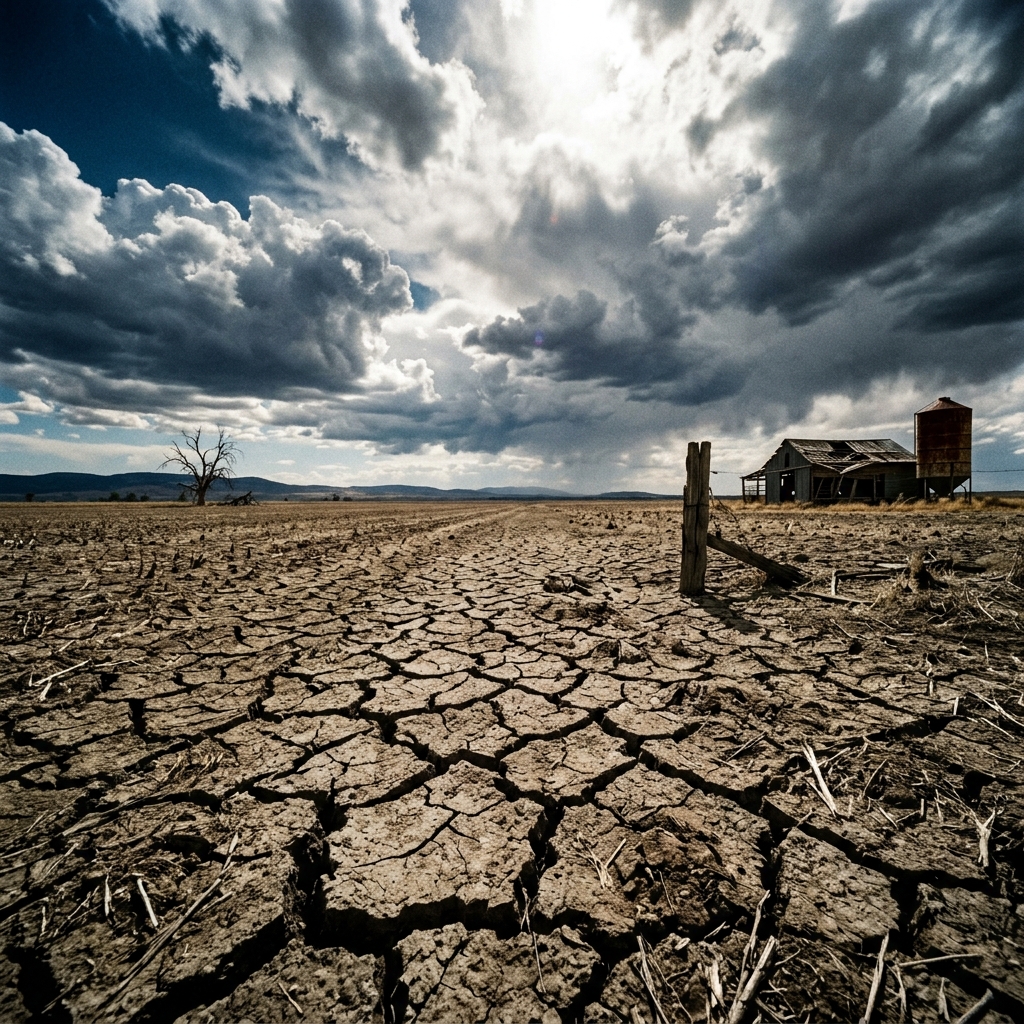
🎨 Historical Illustration (AI)
* Note: Cover image is an AI-generated historical illustration.
🧠Key Chronicle Takeaway (Atomic Summary)
The Irish Famine (1845-52): 1 million dead while Ireland exported food to Britain. The Indian famines of 1876-1902: up to 29 million dead during record grain exports. Mike Davis's argument that these were not natural disasters but policy failures driven by laissez-faire ideology.
In October 1877, at the height of what would become one of the worst famines in recorded Indian history, the Madras government received a report from its famine relief commissioner recommending the establishment of "relief works" — public employment projects that would allow starving agricultural laborers to earn enough to buy grain. The Commissioner of Revenue, Richard Temple, had implemented similar measures during the Bihar famine of 1873–74, feeding hundreds of thousands and keeping mortality low. For this, he had been publicly rebuked by the Secretary of State for India, Lord Salisbury, and ridiculed in the British press as "Temple's dole" — an extravagant expenditure of taxpayer money on people who should have been left to the discipline of the market. Stung by this criticism, Temple reversed course in 1877. He set the relief ration at roughly one pound of grain per day — below what he himself had calculated as the minimum for survival — and required exhausting physical labor in exchange. He also set the "distance test": no relief would be given within ten miles of a recipient's home, ensuring that only the truly desperate would apply. People died in the queues to reach the relief camps. People died in the camps themselves. The region around Madras saw mortality that shocked even contemporary Victorian observers. And throughout this period, grain continued to be exported from India to Britain.
Historical Context
The famines of the British colonial period in India, Ireland, and elsewhere were not natural disasters in any meaningful sense. They were natural events — droughts, blights, crop failures — that interacted with man-made systems of governance, trade, and ideology to produce outcomes that were catastrophic far beyond what the natural event alone would have caused. Understanding this distinction is the central intellectual contribution of Mike Davis's 2001 book Late Victorian Holocausts: El Niño Famines and the Making of the Third World, which remains the most comprehensive and provocative treatment of the subject available. Davis's argument is not that British colonial officials wanted millions of people to die. It is that they held beliefs — about free markets, about the proper relationship between government and economy, about the racial characteristics of the peoples they governed — that led them to make policy choices that predictably and preventably killed millions of people. The distinction between intention and negligent ideology does not reduce the body count.
The period from roughly 1845 to 1902 saw a series of catastrophic famines in territories under British colonial control. The Irish Famine of 1845–52, triggered by the potato blight, killed approximately one million people and drove another million to emigrate, reducing the population of Ireland by roughly 20–25% in a decade. The Indian famines of 1876–79 (the "Great Famine" or "Madras Famine"), driven by El Niño-induced drought across the Deccan plateau and affecting also Bombay, Bengal, and the Punjab, killed between 5.5 and 12 million people by various estimates, the range reflecting genuine uncertainty about mortality data in a period when systematic demographic record-keeping in India was incomplete. The famines of 1896–97 and 1899–1902, again linked to El Niño drought cycles, killed an estimated 12–19 million more. In the space of roughly fifty years, somewhere between 12 and 29 million people died of starvation or famine-related disease in British colonial India — more than died in the First World War on all fronts combined.
These were not exceptional events in the colonial record — they were its recurring feature. Historians of colonial India have identified eighteen major famines in the period of British East India Company and Crown rule between 1765 and 1947, as against one recorded famine in the two centuries of Mughal rule. This comparison is itself subject to debate — Mughal records are imperfect and the causal attribution of famine to colonial policy rather than to climate variability requires careful argument — but the basic pattern is real and has been documented by a range of scholars across the political spectrum.
Why It Happened: Ideology as Policy
The proximate cause of every famine in this period was a failure of food availability or food access — either crops failed, or people lacked the purchasing power to buy food that existed elsewhere. The structural cause, the reason that these natural events became killing events, was a combination of colonial economic extraction, ideological commitment to laissez-faire free-market doctrine, and a racial hierarchy that assigned different values to different human lives. These factors were not independent of each other; they formed a coherent, if catastrophic, policy framework.
British colonial economic policy systematically extracted value from India and Ireland. The "drain of wealth" — the annual net transfer of resources from India to Britain through tribute, administrative costs charged to Indian revenue, trade policies that favored British manufactures over Indian producers, and the forced purchase of British goods — was estimated by the Indian nationalist economist Dadabhai Naoroji in the 1870s at approximately £30 million annually, an enormous sum in the currency of the time. India was taxed to pay for British military adventures both within and outside the subcontinent. These extractions left the agricultural population with fewer reserves to draw on in bad years. A peasant who in good years produces just enough to pay taxes and survive has no buffer against a harvest that produces half of normal.
But the ideological dimension was at least as important as the economic extraction. The dominant political-economic doctrine in Victorian Britain was laissez-faire liberalism, derived from the work of Adam Smith, David Ricardo, and Thomas Malthus, and articulated in its most influential policy form by John Stuart Mill's political economy. This doctrine held that market prices correctly allocated resources, that government intervention in markets produced perverse incentives and long-term harm, and — in Malthus's most brutal formulation — that famine was a natural corrective to overpopulation that government relief would only postpone while making worse. These ideas were not marginal: they were the ideological consensus of the British governing class, taught at Oxford and Cambridge, implemented in Ireland during the 1840s by Treasury official Charles Trevelyan, and re-implemented in India in the 1870s by Viceroy Lord Lytton.
Trevelyan, who oversaw British famine relief policy in Ireland, wrote in 1848 that the famine was "a direct stroke of an all-wise and all-merciful Providence" that would teach the Irish the virtues of self-reliance. While people died in the streets of Cork and County Clare, Ireland continued to export food to Britain — cattle, grain, butter — because food exports were a market transaction that the government would not interrupt. Lytton, presiding over the Madras famine of 1876–79, organized a magnificent banquet for the Prince of Wales's visit to India while simultaneously refusing to increase relief rations. He wrote to the Secretary of State for India that "the entire population cannot be kept alive by any measures which it is in our power to take." He was wrong. His own famine commission, investigating the aftermath, found that the measures taken had been inadequate and that the mortality was in significant part preventable.
Photographs of the 1876–79 Madras famine, published in British illustrated newspapers, generated public sympathy in Britain. They did not generate a change in the policy that had made the famine catastrophic. Government of India grain exports continued throughout the famine period.
The Empires That Fed Their People
One of Mike Davis's most provocative and important arguments in Late Victorian Holocausts is the contrast between the famine response of the British colonial state and those of the pre-colonial empires it replaced. The Mughal Empire in India and the Qing Empire in China both developed sophisticated, institutionally embedded famine relief systems that managed comparable climate shocks with dramatically lower mortality — at least during their periods of effective government. These systems were not perfect, and they declined as Mughal and Qing central power weakened in the eighteenth and nineteenth centuries. But they demonstrate that the catastrophic mortality of the colonial famines was not simply the inevitable result of an El Niño drought in a poor, densely populated agricultural region. It was the result of policy choices, and different policy choices produced different outcomes.
The Mughal emperor Akbar (r. 1556–1605) established a system of regional granaries — "grain banks" — and famine relief protocols that were codified in the Ain-i-Akbari, Abul Fazl's administrative manual of the empire. During famines, grain from these reserves was distributed at subsidized prices or freely to the destitute; tax remissions were granted to affected districts; and public works were organized to provide cash income to agricultural laborers who could then buy food. The Qing Dynasty in China maintained an even more elaborate system: the "ever-normal granaries" (changping cang) held reserves distributed across counties throughout the empire, managed by a bureaucracy specifically tasked with famine prevention. During the severe El Niño events of 1743–44 and 1759, Qing relief operations distributed grain to tens of millions of people across northern China, keeping mortality to levels far below what the same climatic events would produce in British India in the 1870s under comparable drought conditions.
British colonial policy, driven by its free-market ideology, dismantled these pre-existing relief systems. The East India Company gradually eroded or eliminated the Mughal granary network as it extended its control over Indian territory. The assumption was that market forces would distribute food more efficiently than government stores — an assumption that fails catastrophically when the people who need food lack the purchasing power to access it at market prices, which is precisely the condition of agricultural laborers during a drought-induced crop failure. The replacement of a functioning if imperfect relief system with a doctrine that precluded government food distribution was not a neutral administrative choice. It was a policy that transferred food-distribution risk entirely onto the rural poor, who had no capacity to bear it.
1 million dead in Ireland, 1845–52, while food exports to Britain continued throughout
5.5–12 million dead in the Indian famine of 1876–79 (range reflects data uncertainty)
12–19 million dead in Indian famines of 1896–1902 by most scholarly estimates
18 major famines documented under British rule in India, versus one under Mughal rule over comparable periods
£30 million annual "drain" from India estimated by Dadabhai Naoroji in the 1870s — resources that would otherwise have been available for famine reserves
The Railways That Starved People
British colonial India built the world's third-largest railway network by 1880 — a massive infrastructure achievement frequently cited as evidence of colonial modernization. But who did the railways serve? Built with Indian government debt (charged to Indian rather than British revenue), the railway network was designed primarily to move raw materials — cotton, grain, jute — from agricultural hinterlands to port cities for export to Britain. During the famines of 1876–79 and 1896–1902, railways that ran through starving districts continued to carry grain outward toward the ports. The transport network that might have moved food into famine zones was moving food out of them instead. Its purpose, in the colonial economy, was extraction, not welfare. Mike Davis documents this paradox extensively: the more railways, the more efficient the export infrastructure, the more food could be removed from regions whose people were dying for lack of it.
Social & Human Effects
The human experience of these famines resists easy summary. It was heterogeneous, prolonged, and marked by the particular cruelties of systems designed to minimize cost rather than minimize death. The relief camp system in India, when it existed at all, was organized around the "principle of less eligibility" derived from British Poor Law doctrine — the idea that relief conditions must be worse than the worst conditions of independent labor, so that only the truly desperate would apply and the "undeserving" would be discouraged. In practice, this meant conditions that were themselves lethal: inadequate rations, exhausting labor requirements, poor sanitation, and separation of families. Contemporary observers, including Florence Nightingale (who advocated for famine relief reforms in India following the 1876–79 disaster) and the Indian nationalist Romesh Chunder Dutt, documented mortality in relief camps that rivaled mortality outside them.
The famine experience in Ireland had different institutional characteristics but similarly brutal human content. The population of County Clare, one of the worst-affected western counties, fell by 30% between 1841 and 1851 — not just through death but through emigration driven by desperation. Evictions during the famine years reached catastrophic levels: landlords, whose rental income had collapsed with their tenants' ability to pay, found it cheaper to clear tenant families off the land and convert to pasture than to maintain a starving tenantry. Families were evicted, their houses knocked or burned to prevent their return, in the middle of the famine. The British government's response — maintaining the position that private charity, not state action, was the appropriate vehicle for relief — meant that the amount of aid reaching those in need bore no relationship to the scale of the need.
One of the most revealing social effects was the intensification of existing inequalities during famine periods. In both India and Ireland, wealthier farmers and urban merchants were able to profit from famine by purchasing land from distressed sellers at depressed prices, accumulating grain stocks purchased at low prices for sale at high ones, and accessing relief employment and commercial opportunities that the destitute could not reach. Famine consistently transferred land and resources from the poorest segments of the agricultural population to those slightly less poor, and from colonized to colonizers. The post-famine landscape of western Ireland, dominated by larger, cattle-grazing farms where a century earlier there had been dense smallholder settlement, was a direct product of this process.
Economic Consequences
The economic consequences of the colonial famines were profound and largely one-directional: they transferred wealth and economic capacity upward through colonial hierarchies. Land concentration in Ireland accelerated dramatically in the famine and post-famine decades. The Encumbered Estates Act of 1849, passed by the British Parliament, facilitated the sale of indebted Irish landlord estates — which were then often purchased by English and Anglo-Irish buyers who replaced the remaining smallholder tenants with commercial farming. The Famine effectively reorganized the Irish agricultural economy in directions that served British food import interests more efficiently than the subsistence potato cultivation it replaced.
In India, the economic effects of repeated famines operated through multiple channels. The debt obligations that famine survivors incurred — borrowing at high interest rates from moneylenders to survive — created long-term debt bondage that transferred agricultural surplus from peasant producers to creditor classes. The disruption of craft industries — Indian textile production had been systematically undercut by cheap British manufactures since the early nineteenth century — meant that agricultural laborers lacked the economic diversification that might have provided income alternatives during crop failures. The railways, as noted, moved grain toward export rather than toward famine relief, and the debt service on railway construction was charged to Indian public revenue, effectively taxing the Indian population to build infrastructure that served British commercial interests.
The long-term economic consequence most difficult to measure but most important to understand is the cumulative effect of repeated famine, debt, and extraction on the developmental capacity of Indian and Irish society. Economists have attempted to estimate the "drain of wealth" from India over the colonial period, with figures ranging from the conservative to the very large depending on methodology. Utsa Patnaik's widely cited (and contested) estimate, using trade data, suggests a total drain of approximately $45 trillion in current values over the full period of British rule. Whatever the precise figure, the basic mechanism — the extraction of resources at below-market rates combined with the forced purchase of British manufactures — represented a sustained suppression of the capital accumulation that would have been necessary for industrial development. India in 1947, at independence, had roughly the same per-capita income as it had at the beginning of British rule. This outcome was not inevitable. It was the product of specific policy choices made over two centuries.
⚖️
Historian Debate: Ideological Negligence or Intentional Genocide?
Ideological Negligence View
Mike Davis, Amartya Sen, and most academic historians argue that the colonial famines were the result of ideological negligence — a catastrophic mismatch between laissez-faire doctrine and the realities of colonial agrarian economies — rather than intentional killing. Colonial officials, in this view, were not trying to kill Indians or Irish people; they were implementing economic theories that they genuinely believed would produce better outcomes in the long run, while being indifferent to short-term mortality at a level that reflected racial hierarchy and class distance rather than deliberate malice. Sen's broader argument — that famines do not occur in democracies because political accountability creates incentives for government response — fits this framework: colonial governance was unaccountable by design, and the failures followed.
Genocide or Deliberate Starvation
Scholars including Tim Pat Coogan (for Ireland) and some post-colonial theorists argue that the distinction between ideological negligence and deliberate killing breaks down when officials are repeatedly warned of preventable mortality, implement policies that they know will cause deaths, and continue those policies. Coogan's application of the UN genocide convention to the Irish Famine — noting that the convention covers acts "causing serious bodily harm" to a national group, not only deliberate killing — remains controversial but has gained support in Irish nationalist historiography. The argument is not that British officials sat in London hoping people would die, but that when the choice was between ideological consistency and preventing death, they chose ideology. At what point does that choice become morally equivalent to intent?
Scholars such as Mike Davis, Amartya Sen, Tim Pat Coogan, and Romesh Chunder Dutt have shaped this debate through works like Late Victorian Holocausts (2001), Poverty and Famines (1981), The Great Hunger (1962, Cecil Woodham-Smith), and The Economic History of India (1901–1903). The legal and moral categorization remains contested; the factual record of preventable mortality does not.
"We have carefully avoided any act that could offend the susceptibilities of the people or come in conflict with the customs of the country... [But] it is not our duty to keep [the people] alive at any cost. Political economy is to some extent a question of humanity, but it is also a question of political necessity."
— Sir Richard Temple, Commissioner of Central Provinces, in a letter to the Government of India during the 1876–79 famine, defending the restriction of relief rations. Cited in B.M. Bhatia, Famines in India (1963). Temple later admitted in his memoirs that the rations set were below the minimum for survival.
Long-Term Legacy
The colonial famines left legacies that shaped post-colonial development trajectories in ways that are still being worked through. In India, the experience of British famine policy was a formative influence on the independence movement and on the economic policies of the new Indian state after 1947. Jawaharlal Nehru's commitment to planned economic development, state control of key industries, and food security — policies that Western economists sometimes criticized as excessive government intervention — were explicitly rooted in the lesson that free markets had starved millions of people under colonial rule. Amartya Sen's theoretical framework for understanding famine, developed in his 1981 book Poverty and Famines, grew partly from his childhood experience of the Bengal famine of 1943 (the last major Indian famine, in which 2–3 million died under British wartime administration) and articulated a rigorous economic case for why market mechanisms cannot be relied upon as the sole guarantor of food security.
In Ireland, the Famine is the central traumatic event of modern Irish historical consciousness, and its memory has shaped Irish-British relations, Irish-American identity, and Irish political culture in ways that are still active. The demographic consequences were permanent: Ireland's population in the 2020s remains lower than it was in 1841, the only country in Europe of which this is true. The Irish diaspora — Irish-American communities in Boston, New York, Chicago, and elsewhere — that the Famine largely created has exerted political influence on American foreign policy toward Britain in contexts from the independence struggle of 1916–22 to the Northern Ireland peace process of the 1990s. The Famine is not past in any sociologically meaningful sense.
The most important intellectual legacy, perhaps, is the challenge these events pose to the narrative of benevolent colonialism — the idea that British imperial rule, whatever its faults, ultimately brought development, progress, and institutional improvement to its subject peoples. The Colonial famine record is one of the most powerful empirical refutations of this claim. Millions of people died, preventably, in territories under British administration, during periods when the British government had both the physical capacity and — as the Mughal and Qing precedents demonstrate — the institutional models to prevent those deaths. They chose not to. The reasons for that choice — ideology, racial hierarchy, economic interest, institutional design, political accountability failures — are not mysterious. They are documented. What remains contested is not the fact of the deaths but the moral and political framework within which those deaths are categorized, and who is responsible for reckoning with their consequences.
Related Civilizations & Contexts
British Colonial IndiaMughal EmpireQing Dynasty ChinaColonial IrelandVictorian BritainBengal Famine 1943Irish DiasporaEast India Company
Further Reading
Mike Davis — Late Victorian Holocausts: El Niño Famines and the Making of the Third World (2001). The definitive and most ambitious treatment of the colonial famines as a connected global phenomenon; essential and deliberately polemical.
Amartya Sen — Poverty and Famines: An Essay on Entitlement and Deprivation (1981). Nobel laureate's foundational economic analysis of famine causation; argues definitively that famine is about entitlement failure (lack of purchasing power) rather than food shortage alone.
Cecil Woodham-Smith — The Great Hunger: Ireland 1845–1849 (1962). The classic popular history of the Irish Famine, still one of the most readable and researched accounts available.
Romesh Chunder Dutt — The Economic History of India Under Early British Rule (1901). Written by a contemporary Indian civil servant and nationalist; the original systematic documentation of the "drain of wealth" thesis.
David Arnold — Famine: Social Crisis and Historical Change (1988). Scholarly comparative study of famine across historical contexts, with strong chapters on British India; valuable for situating the colonial famines in broader historical framework.
Cormac Ó Gráda — Black '47 and Beyond: The Great Irish Famine in History, Economy, and Memory (1999). Rigorous economic history of the Irish Famine by Ireland's leading famine scholar; more measured than Woodham-Smith but equally important.
📖 Scholar Mode Active — Click to exit focused reading
History Lab 🧪
Run simulated matches between civilizations and convert ancient currencies.
🕵️ Who Am I? (The Historical Guess Game)
A secret historical figure has been selected. Ask yes/no questions to narrow down the pool of candidates. Click any active card to make your accusation!
Secret Identity
❓ Who Am I?
Ask questions using the board below to narrow down my identity.
Ask a Question:
Question LogQuestions: 0 / 7
No questions asked yet.
Candidate Board:
🗺️ Timeline Scramble
Five historical events appear out of order. Click them in the correct chronological sequence — from oldest to most recent. How well do you know your history?
🏺 Relic or Fake?
Is this a real historical artifact or a convincing fabrication? Judge each one based on its description and era — then see the truth revealed!
Artifact 1 / 10Score: 0
Empire Matchup Simulator
Empire ATerritory Size (Peak, M km²)Empire B
00
Empire APopulation (Peak, Millions)Empire B
00
Empire AMilitary Power (Army Size)Empire B
00
Tactical Battle Analysis
Select empires and click simulate to run evaluations.
Historical Purchasing Power Converter
See what ancient coins are worth in modern terms and check their historical purchasing power.
Modern Value Equivalent
$0.00 USD
Historical Purchasing Power:
Select currency to view purchasing capability.
Historical Identity Generator
Forge an authentic historical identity from ancient civilisations, complete with linguistic meaning and biography.
Neutral
Gaius Julius
Meaning:Descendant of Jupiter
Historical Background:
A Roman citizen and clerk who worked in the forum under Roman republic rule.
Chrono-Cultural Fusion Simulator
Fuse the culture, technology, and governance of two legendary civilizations to synthesize a unique hybrid society.
Cohesion & Coexistence Rate
85%
🏛️ Hybrid Architecture
⚙️ Synthesized Asset
📜 Synthetic Governance
Historical Tactics & Trivia Quiz
Test your historical knowledge and battle tactics to claim your administrative rank.
8 Questions • Multi-Era
You will be presented with random scenarios and trivia spanning ancient Egypt, classical Rome, Islamic Golden Age, and the modern industrial era. Complete the evaluation to see your historical title!
Question 1 of 8Score: 0
What was the Code of Hammurabi written on?
Correct!
Evaluation Complete!
6 / 8
Correct
Rank Attained
Imperial Legionary
Your knowledge of classical strategy and administrative structures is respectable.
🎲 Counterfactual "What If?" Scenario Simulator
Explore alternative historical trajectories by tweaking key civilizational pivot points.
Simulated Shift
Selected Era
Prehistoric Era
Millions of years ago to ~3000 BCE
The dawn of humanity. From the evolutionary split of early hominids to the mastery of stone tools, fire, and the birth of language.
Landmark Milestones
Welcome to Historia
Enter your Scholar Name to synchronize your chronicles and save your journey.