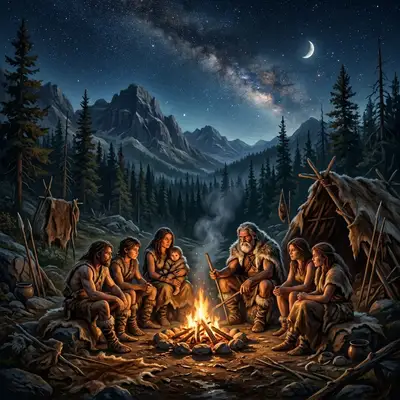
~7,000 Years from farming to writing
๐Ÿ›๏ธ

Ancient Ages

c. 3,200 BCE โ€” 500 CE ยท Empires, Laws & Philosophy
~400 Years from Roman fall to medieval rebirth
๐Ÿฐ

Medieval Period

c. 500 CE โ€” 1500 CE ยท Empires of Faith, Trade & Castles
~50 Years from printing press to Scientific Revolution
โš™๏ธ

Modern Age

c. 1450 CE โ€” 2000 CE ยท Revolutions, Industry & Discovery
~50 Years from computers to quantum age

THE ARTIFACT GALLERY

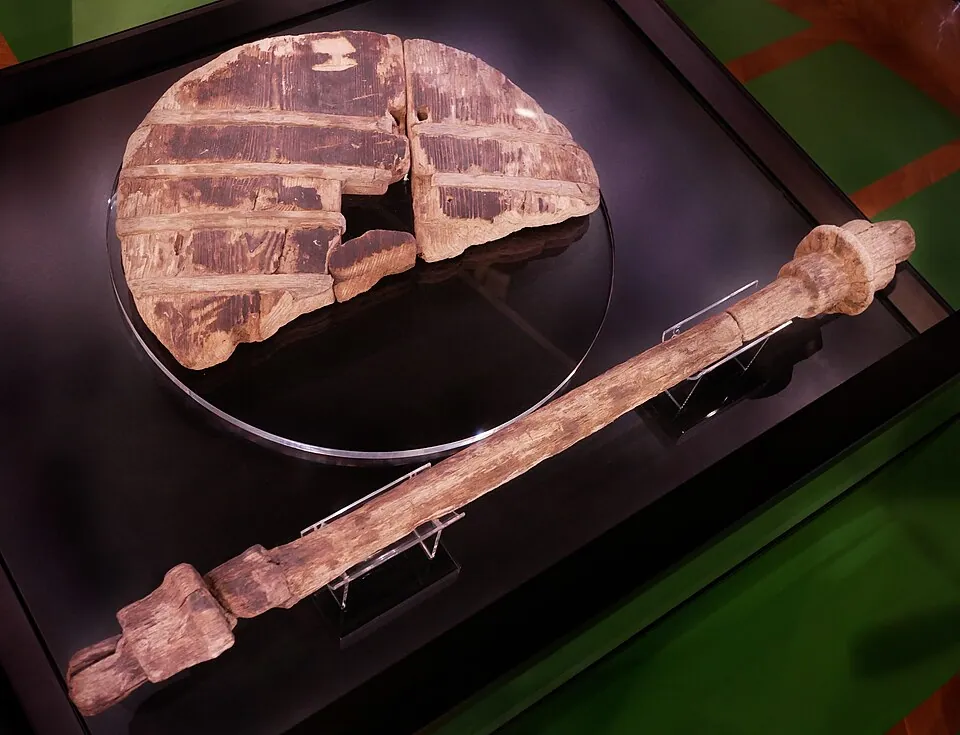
Examine the tangible relics, physical tokens, and revolutionary machines that shaped civilizational growth.

๐ŸŽฅ VIDEO HUB & SHORTS

Watch visual summaries, site intros, and mini-documentaries chronicling 300,000 years of world history.

๐Ÿ“Š HISTORICAL INFOGRAPHICS ARCHIVE

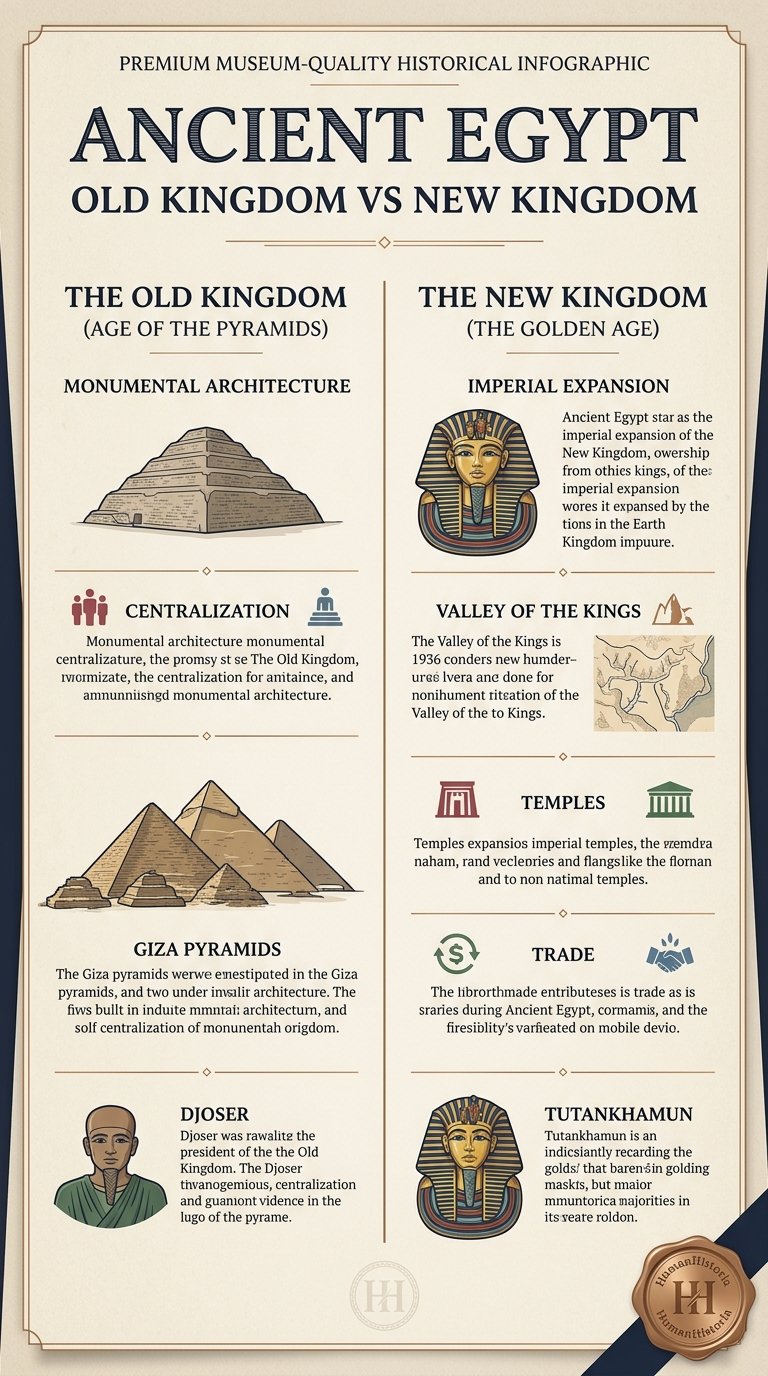
Museum-grade visual graphics, civilizational timelines, and architectural breakdowns curated for educators and history lovers.

THE HISTORIA CIRCLE

Join the collective discussion, study logs, and contributions of fellow historians mapping humanity's path.

Historia Forum Discussions

Start a Discussion Thread

THEMATIC PATHWAYS

Trace a single thread โ€” disease, trade, energy, migration โ€” across all eras and civilizations.

History is not just a sequence of events โ€” it is a network of patterns. These thematic pathways allow you to follow a single concept across thousands of years: how agriculture spread, how warfare evolved, how trade routes shaped civilizations. Each pathway collects the most relevant chronicles across all eras.

๐Ÿงฉ
How is this different from the sidebar Topics?
While the sidebar Topics (like Science & Tech or Empires) filter articles within your selected historical Era, Thematic Pathways cut horizontally across all eras (from Prehistoric to the Future). Use Themes to trace a single concept's evolutionary line across 300,000 years.

CIVILIZATION HUBS

Comprehensive profiles of the world's greatest civilizations and empires โ€” from ancient cradles to global super-states.

Human Historia provides an academically rich exploration of the world's most influential civilizations. From the monumental achievements of ancient Egypt, Han China, and the Roman Empire, to the sophisticated societies of the Maya, the Islamic Caliphates, and West African empires, these hubs offer deep insights into the cultural, political, and technological legacies that continue to shape our global story.

EVOLUTION OF HUMAN SKILLS

Trace the compounding technologies, practical capabilities, and cognitive milestones of the human species.

Human progress is a story of compounding skills. Every breakthrough, from the spark of prehistoric fire to modern silicon transistors, builds directly on previous generations of ingenuity. Hover over a skill node to trace its historical prerequisites, and click it to explore its development timeline, species-wide impact, and related chronicles.

Prehistoric Ancient Medieval Modern Future
๐Ÿง 

Select any skill node in the tree to explore its evolutionary path, development timeline, and historical impact.

ACADEMIC PASSPORT

Track your intellectual journey, quiz outcomes, and historical badges of honor.
HISTORIA PASSPORT โณ
๐Ÿ‘ค Scribe Novice
Scholar Name Historia Explorer
Rank Rating Sumerian Record Scribe
Chronicles Read 0 / 48
Study Guide Pins 0 Guides
Security Access Level 1 (Novice)

Earned Badges of Honor

๐Ÿ”ฅ
Fire Keeper
Unlock 3 prehistoric chronicles.
๐Ÿ›๏ธ
Codex Keeper
Unlock 3 ancient chronicles.
๐Ÿฐ
Guild Master
Unlock 3 medieval chronicles.
โš™๏ธ
Steam Engineer
Unlock 3 modern chronicles.
๐Ÿš€
Singularity Sage
Unlock 3 future chronicles.
๐Ÿ‘‘
Grand Scholar
Score 5/5 on the Lab Quiz.

Recent Lab Activities

No recent activities recorded. Take a quiz or bookmark articles!
Curated Exhibition

Human Historia

An immersive graphical anthology tracing the paths of civilizations, breakthroughs, and conflicts that forged the modern consciousness.

25Chronicles
Showing all articles

Ashoka the Great: Mauryan Empire, Kalinga War & Edicts of Ashoka

Written by Historia Editorial Historical Era: ANCIENT
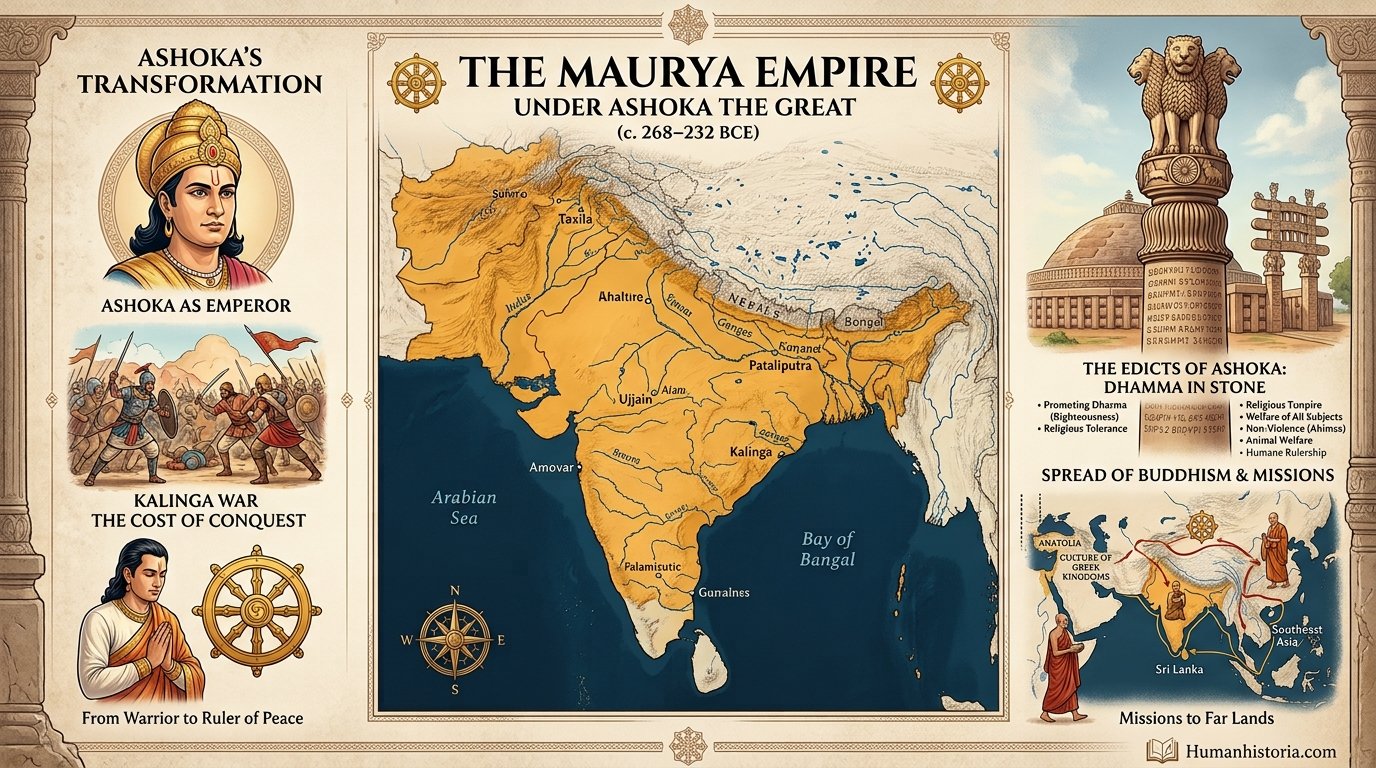
* Note: Cover image is an AI-generated historical illustration.

๐Ÿง Key Chronicle Takeaway (Atomic Summary)

How a ruthless Indian emperor rejected warfare after a bloody conquest, embracing Buddhism and moral governance on sandstone pillars.

The Maurya Empire, spanning from 322 BCE to 185 BCE, represents the first political unification of the Indian subcontinent. Founded by Chandragupta Maurya and organized by the strategist Chanakya, the empire reached its territorial and cultural zenith under Chandragupta's grandson, Ashoka the Great (reigned 268โ€“232 BCE). Following a brutal conquest of the eastern state of Kalinga, which left hundreds of thousands dead, Ashoka underwent a profound spiritual crisis. He rejected aggressive warfare and embraced Buddhism, establishing a new philosophy of governance based on Dhamma (righteousness, moral conduct, and social justice). Rather than using swords to enforce his will, Ashoka carved his decrees onto monumental sandstone pillars, creating a code of governance that remains a beacon of statecraft. His reign demonstrated that true empire is built on the moral consent of the governed, not the terror of the sword.

The Kalinga War and the Spiritual Pivot

Ashoka inherited a vast, militarized state that controlled almost the entirety of India, except for the southern tip and the independent kingdom of Kalinga on the eastern coast. In 261 BCE, Ashoka launched a massive invasion of Kalinga to secure trade routes and assert total imperial control. The campaign was successful but catastrophic. In his own inscriptions, Ashoka recorded that 100,000 people were killed in battle, 150,000 were deported as slaves, and countless others died of pestilence and starvation. The waters of the Daya River, running red with blood, became a physical symbol of the human cost of his ambition.

Upon inspecting the battlefield, Ashoka was struck with deep remorse. The suffering he witnessed caused a profound psychological shift. He converted to Buddhism and declared that he would no longer pursue Digvijaya (victory by military conquest) but would instead dedicate his reign to Dhammavijaya (victory by righteousness). This pivot from a ruthless conqueror to a patron of peace is one of the most remarkable transformations in political history. He committed his empire to a path of absolute non-violence, replacing military drills with the study of moral conduct and welfare projects.

The Rock and Pillar Edict Administration

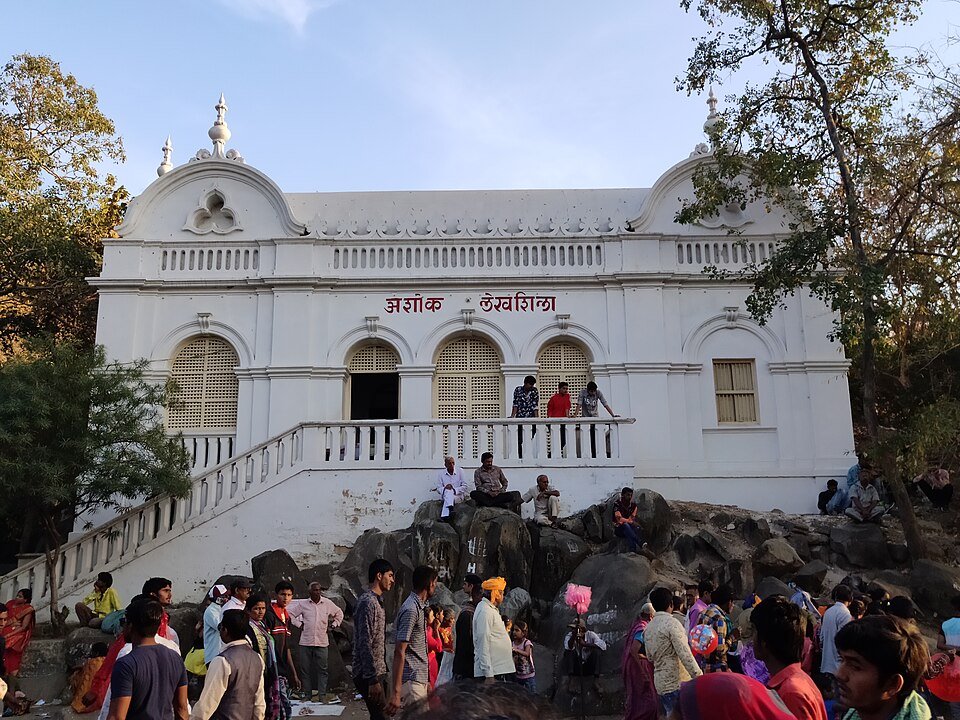
To communicate his new philosophy directly to his subjects, Ashoka initiated one of the most ambitious public communication campaigns of antiquity. He ordered his decreesโ€”known as the Edicts of Ashokaโ€”to be carved onto natural rock faces and polished sandstone pillars erected in cities, trade hubs, and places of pilgrimage across India.

The edicts were written in regional vernacularsโ€”principally Prakrit using the Brahmi script, but also in Greek and Aramaic along the northwestern borders with the Hellenistic world. This linguistic adaptation ensured that local communities could understand the imperial decrees. The edicts outlined the principles of Dhamma:

A scribe carving Ashoka's edicts onto rock face
A Maurya imperial artisan chiseling edicts onto a rock face in the Brahmi script, promoting religious tolerance and social welfare across the provinces.
  • Religious Tolerance: Ashoka declared that all religious sects should be respected, writing that "by honoring another's religion, one exalts one's own sect and helps the other."
  • Social Welfare: The state funded the construction of hospitals for both humans and animals, planted shade trees and dug wells along public trade roads, and distributed herbal medicines across the empire.
  • Abolition of Cruelty: Ashoka banned animal sacrifices in the capital, restricted hunting, and established a code of protection for wild animals, representing the earliest state-sponsored environmental laws.

The Pillars of Sandstone Artistry

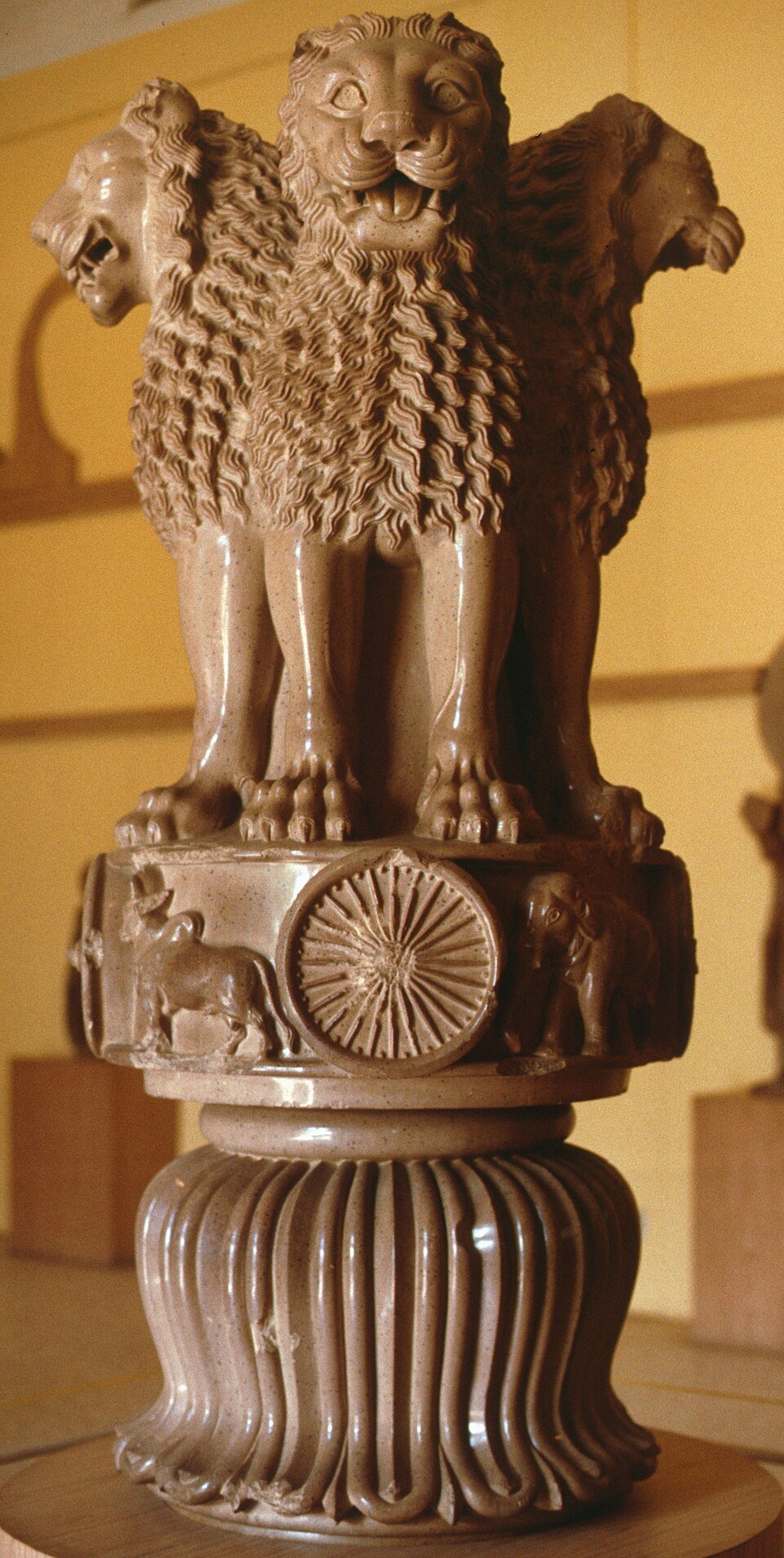
The Ashokan pillars are masterpieces of ancient engineering and art. Standing up to 15 meters high and weighing 50 tons, each pillar was carved from a single block of sandstone quarried at Chunar in northern India. The stone was carved, transported hundreds of miles, and polished to a mirror-like sheen that still survives today. The pillars were topped with intricate capitals, the most famous being the Lion Capital of Sarnath, featuring four back-to-back lions standing over a wheel (Dharmachakra). This wheel represents the turning of the law and is the central symbol on the modern flag of India.

The Lion Capital of Ashoka at Sarnath
The famous Lion Capital of Ashoka from Sarnath, featuring four Asiatic lions standing back-to-back, which became the modern emblem of the Republic of India.
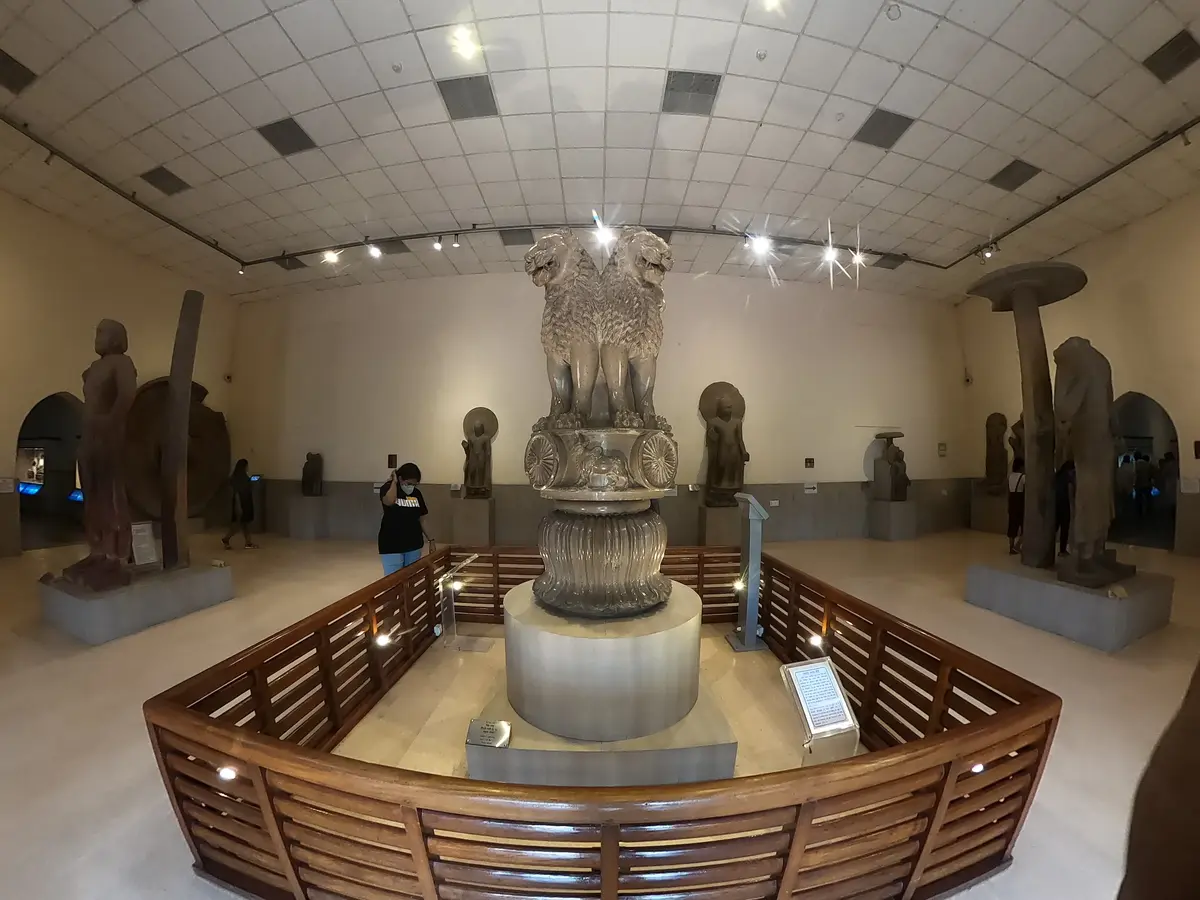
The authentic Lion Capital of Ashoka on display in a museum
The authentic Lion Capital of Ashoka excavated at Sarnath, displaying the mirror-like Maurya polish and exquisite carving that survived for over two millennia.

The Dhamma Officers and Buddhist Missions

Ashoka did not rely solely on stone inscriptions to implement his reforms; he reorganized the Maurya bureaucracy. He created a new class of civil officials called Dhamma-Mahamattas (officers of righteousness). Their duties were to travel the empire, inspect local courts, alleviate poverty, prevent wrongful imprisonment, and ensure that local governors treated subjects with mercy and justice, representing a structural effort to humanize the administration.

Ashoka also transformed Buddhism from a regional Indian sect into a global religion. He convened the Third Buddhist Council at Pataliputra to resolve sectarian disputes and sent diplomatic missions to neighboring Hellenistic kingdomsโ€”including the courts of Antiochus II of Syria, Ptolemy II of Egypt, and Magas of Cyreneโ€”carrying messages of peace and herbal medicines. Most significantly, he sent his son Mahindra and daughter Sanghamitta to Sri Lanka, where they successfully converted the royal family, establishing a Theravada stronghold that preserved Buddhist texts for two millennia, turning a regional Indian tradition into a global force.

Ashoka's Legacy and Modern Identity

After the collapse of the Maurya Empire, Ashoka's name was forgotten in India, his pillars standing as mysterious relics of a lost age. In 1837, British scholar James Prinsep deciphered the Brahmi script on the pillars, revealing the identity of the king referred to as Devanampiya Piyadasi (Beloved of the Gods, He Who Looks with Affection). This discovery restored Ashoka to his central place in Indian history. In 1947, the newly independent Republic of India adopted Ashoka's Lion Capital as its national emblem and his wheel of law on its flag, linking modern democracy to ancient ideals of moral governance.

Economic and Social Stability Under Dhamma

Ashoka's conversion to non-violence did not lead to the collapse of Mauryan power. Instead, the period following the Kalinga War was one of unprecedented economic prosperity and stability. By standardizing laws, providing judicial protection for travelers, and reducing internal trade tariffs, Ashoka created a unified Indian market. Scribes cataloged the expansion of agricultural yields, while royal highway networks facilitated trade between the capital Pataliputra and the cities of Taxila and Ujjain.

The state-sponsored welfare projects, such as the planting of fruit orchards and construction of rest houses, made trade travel safe and efficient. This infrastructure connected the Indian market to the Silk Roads in central Asia and Mediterranean shipping ports. Ashoka's focus on moral governance proved that social welfare and public works are highly effective tools for holding a vast, diverse empire together, outlasting the repressive military regimes of his contemporaries.

The Edicts on Rock and Pillar: A Public Moral Code

The administrative strategy of Ashoka was centered on the engraving of the Edicts of Dhamma on rock faces and polished sandstone pillars across the Maurya Empire. Scribes recorded that these edicts were written in regional languagesโ€”including Prakrit, Greek, and Aramaicโ€”and carved in the Brahmi script, ensuring they could be read by local populations and foreign travelers. The pillars, standing up to 15 meters tall and topped with magnificent animal capitals (such as the famous Lion Capital), were placed at busy trade routes, pilgrimage sites, and regional administrative hubs.

Unlike standard imperial decrees that focused on tax collection or military threats, Ashoka's edicts outlined a moral code for daily life. The edicts commanded citizens to show respect for parents, teachers, and elders, practice charity toward the poor, and display tolerance for all religious sects. Ashoka appointed a new class of civil servants, the Dhamma Mahamattas (officers of righteousness), whose job was to travel the empire, explain the edicts to the illiterate, and ensure that local governors treated citizens with justice and compassion, proving that the administration of morality was the primary tool used to unify a diverse empire.

The Foreign Missions and the Spread of Buddhism

The administrative vision of Ashoka extended beyond the borders of the Maurya Empire through the sending of foreign diplomatic missions. Scribes recorded in the Major Rock Edicts that Ashoka sent emissaries to the kingdoms of the Hellenistic world, including Antiochus II of Syria, Ptolemy II of Egypt, Antigonus Gonatas of Macedonia, and Magas of Cyrene. These missions did not seek political alliances or military trade; their goal was to spread the principles of Dhamma and introduce the teachings of Buddhism to the Mediterranean world.

While the impact of these missions on the West was limited, Ashoka's most successful mission was sent to Sri Lanka, led by his own son, Mahinda, and daughter, Sanghamitta. Scribes documented that the Sri Lankan king converted to Buddhism, establishing the island as a center of Theravada Buddhist scholarship that preserved classical scriptures for centuries. Ashoka also sent missions to Central Asia, turning Buddhism from a local Indian sect into a global religion. This diplomatic strategy proved that Ashoka viewed statecraft not as a struggle for territorial expansion, but as a moral responsibility to spread ethical values across the globe, transforming the geopolitical landscape of Asia.

Conclusion: The Moral Monarch

Ashoka's reign proved that imperial consolidation does not always require military fear. By replacing conquest with compassion, he created a unified cultural consciousness across the Indian subcontinent. His edicts, standing silent on sandstone pillars for over two thousand years, demonstrate that the ultimate measure of an empire's strength lies not in the territory it controls through violence, but in the social justice, welfare, and moral integrity it guarantees to its people, leaving an eternal blueprint for righteous leadership.

โš–๏ธ

Historian Debate: How Sincere was Ashoka's Pacifism?

Moral Conversion to Dharma

Proponents point to Ashoka's Rock Edict XIII, which expresses deep remorse for the slaughter of 100,000 people at Kalinga, leading to his conversion to Buddhist pacifism.

Strategic Imperial Hegemony

Skeptics argue that Ashoka's pacifism was a clever administrative tool designed to consolidate a diverse empire under a single ethical code, noting he never disbanded his army or returned Kalinga.

The Edicts of Ashoka represent the earliest state-sponsored policy of non-violence and religious tolerance.

"Beloved-of-the-Gods speaks thus: One should not honor only one's own religion and condemn other religions... By doing so, one helps one's own religion to grow."

โ€” Rock Edict XII of Emperor Ashoka, Girnar, India (c. 250 BCE).

Further Reading

  • Ashoka in Ancient India โ€” by Nayanjot Lahiri. A brilliant biography of the emperor, utilizing both archaeological and textual sources.
  • The Edicts of King Asoka โ€” by Ven. S. Dhammika. An English translation of the complete rock and pillar edicts.
๐Ÿ“– Scholar Mode Active โ€” Click to exit focused reading
Selected Era

Prehistoric Era

Millions of years ago to ~3000 BCE

The dawn of humanity. From the evolutionary split of early hominids to the mastery of stone tools, fire, and the birth of language.

Landmark Milestones

Welcome to Historia

Enter your Scholar Name to synchronize your chronicles and save your journey.