>
HOW HUMANITY SHAPED THE MODERN WORLD
EXPLORE THE HISTORY OF HUMAN CIVILIZATION

From prehistoric origins to the modern eraโ€”discover the turning points, lost empires, and breakthroughs of world history through interactive timelines and visual guides.
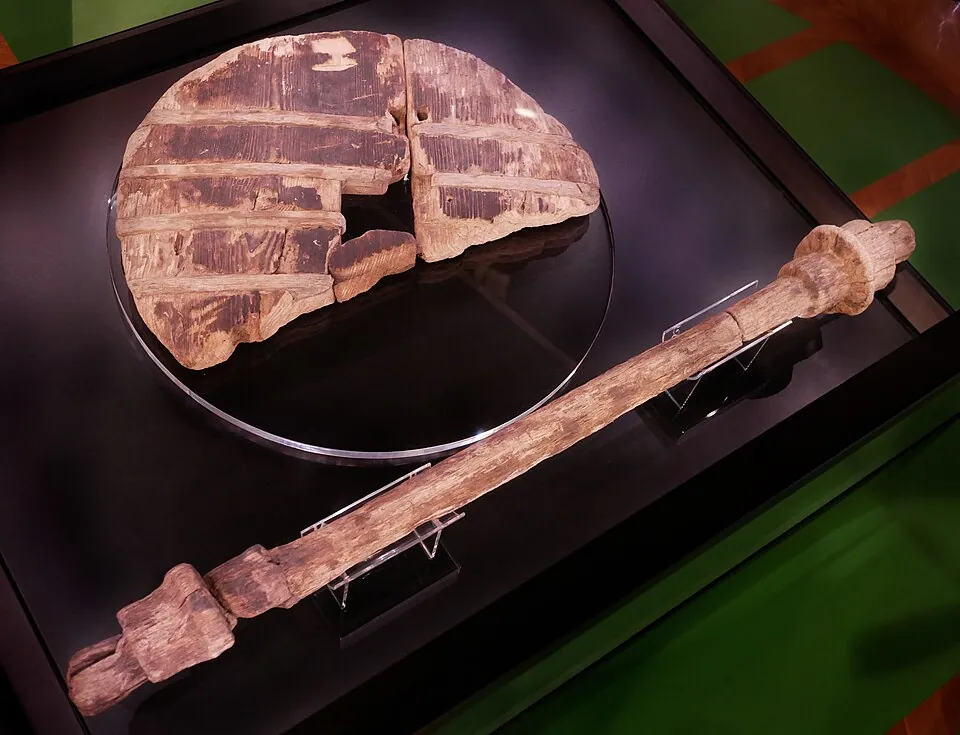
KEY HISTORICAL EVENTS
Major Turning Points in World History
All 182 Chronicles →
Pax Romana (27 BCE - 180 CE): Roman Empire, Law & Military Supremacy ANCIENT AGES
๐Ÿ›๏ธ Empires โฑ๏ธ 5 min read
Pax Romana (27 BCE - 180 CE): Roman Empire, Law & Military Supremacy

Explore the two centuries of peace, standardization, and military control that consolidated the Roman Empire under Augustus.

Read Chronicle →
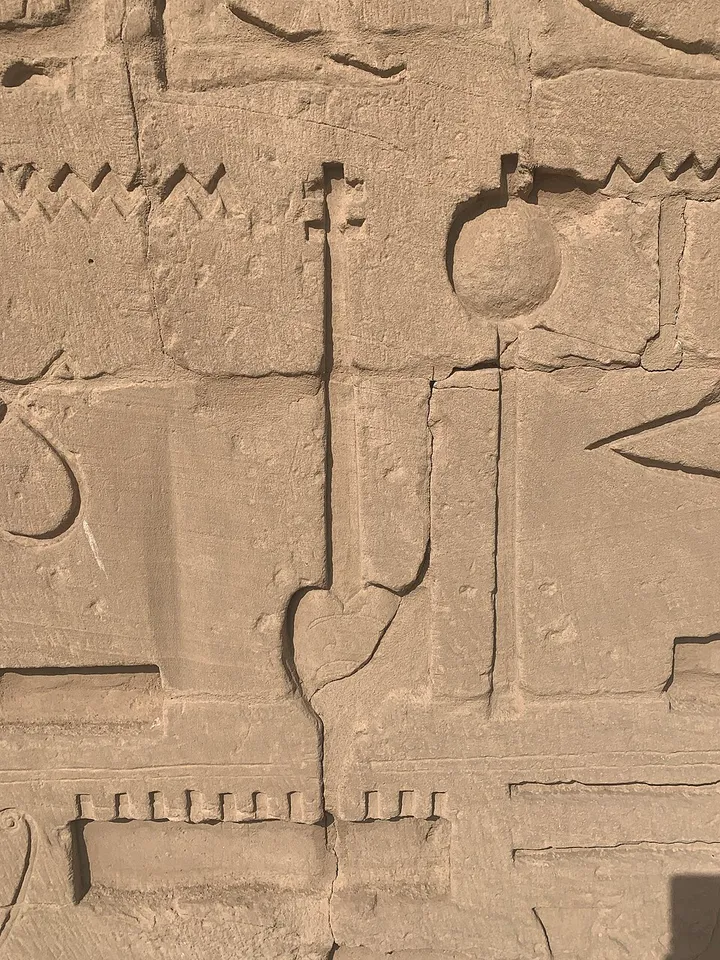
Egyptian Hieroglyphs: Decipherment, Scribes & Sacred Carvings ANCIENT AGES
๐Ÿ›๏ธ Languages โฑ๏ธ 9 min read
Egyptian Hieroglyphs: Decipherment, Scribes & Sacred Carvings

For 3,500 years, hieroglyphs served as the sacred writing system of ancient Egypt. Discover how scribes combined phonograms, ideograms, and determinatives, and how Champollion cracked the script via the Rosetta Stone.

Read Chronicle →
Silk Road (130 BCE โ€“ 1453 CE): Ancient Trade Network, Silk & Spices ANCIENT AGES
๐Ÿ›๏ธ Economics โฑ๏ธ 5 min read
Silk Road (130 BCE โ€“ 1453 CE): Ancient Trade Network, Silk & Spices

Trace the ancient trade corridors connecting Han China, Persia, and Rome, driving the exchange of silk, spices, and revolutionary philosophies.

Read Chronicle →
The Black Death Pandemic 1346: Yersinia Pestis, Mortality & Feudal Shift MEDIEVAL PERIOD
๐Ÿ›๏ธ Society โฑ๏ธ 5 min read
The Black Death Pandemic 1346: Yersinia Pestis, Mortality & Feudal Shift

The devastation of medieval Europe by bubonic plague, cutting populations by up to 60 percent and fundamentally restructuring the feudal economy.

Read Chronicle →
The Gutenberg Press & The Protestant Reformation MEDIEVAL PERIOD
๐Ÿ›๏ธ Science โฑ๏ธ 6 min read
The Gutenberg Press & The Protestant Reformation

Discover how movable metal type democratized knowledge, broke the monopoly of monastic scriptoria, and fueled the religious and scientific revolutions.

Read Chronicle →
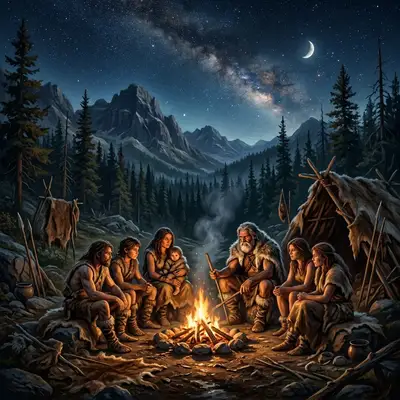
Neolithic Agricultural Revolution 10,000 BCE: Fertile Crescent Farming PREHISTORIC ERA
๐Ÿ›๏ธ Science โฑ๏ธ 5 min read
Neolithic Agricultural Revolution 10,000 BCE: Fertile Crescent Farming

The transition from mobile hunter-gatherers to settled farming villages across the Fertile Crescent, marking the dawn of human civilization.

Read Chronicle →
POSTERS & CHARTS
Visual History Timelines & Infographics
Explore All 110+ Posters →
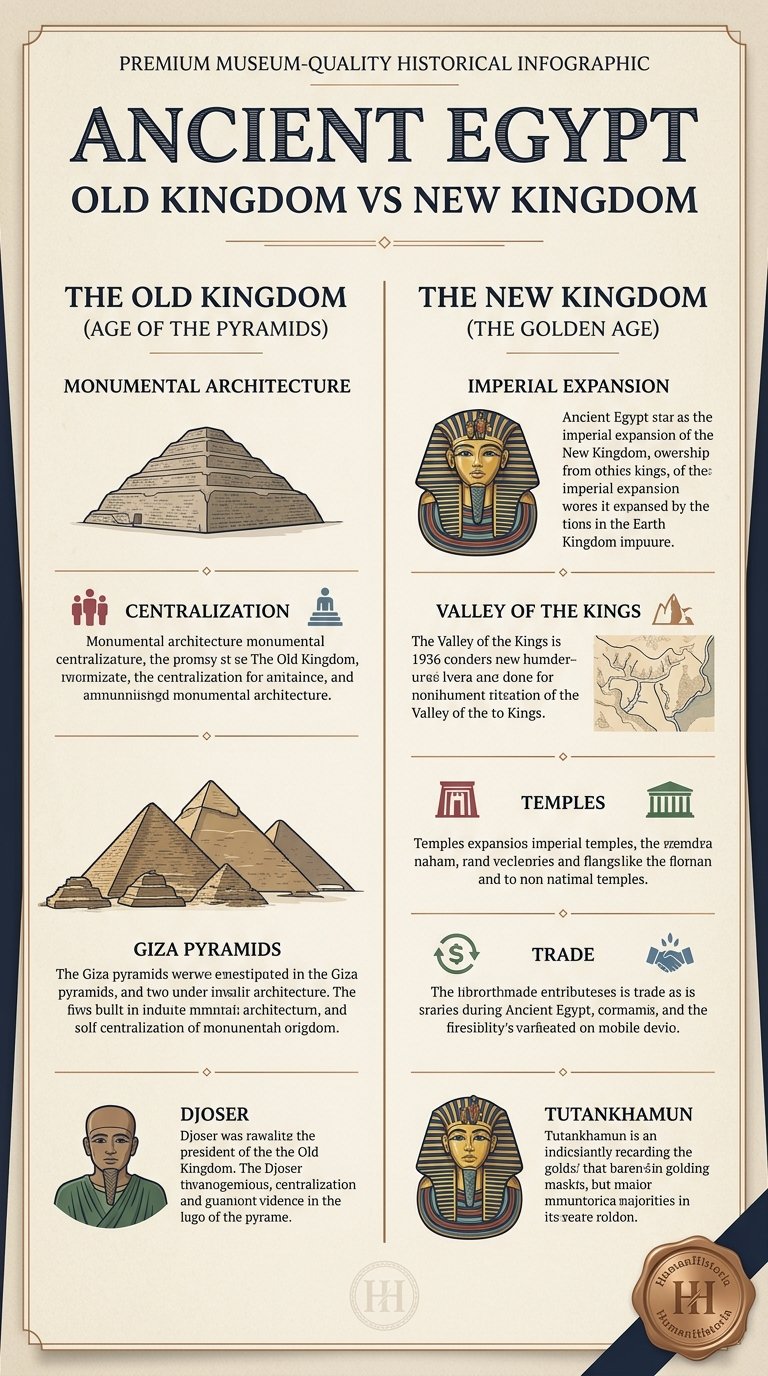
Ancient Egypt: Old Kingdom vs. New Kingdom
๐Ÿ” Tap to Zoom
Ancient Egypt: Old Kingdom vs. New Kingdom
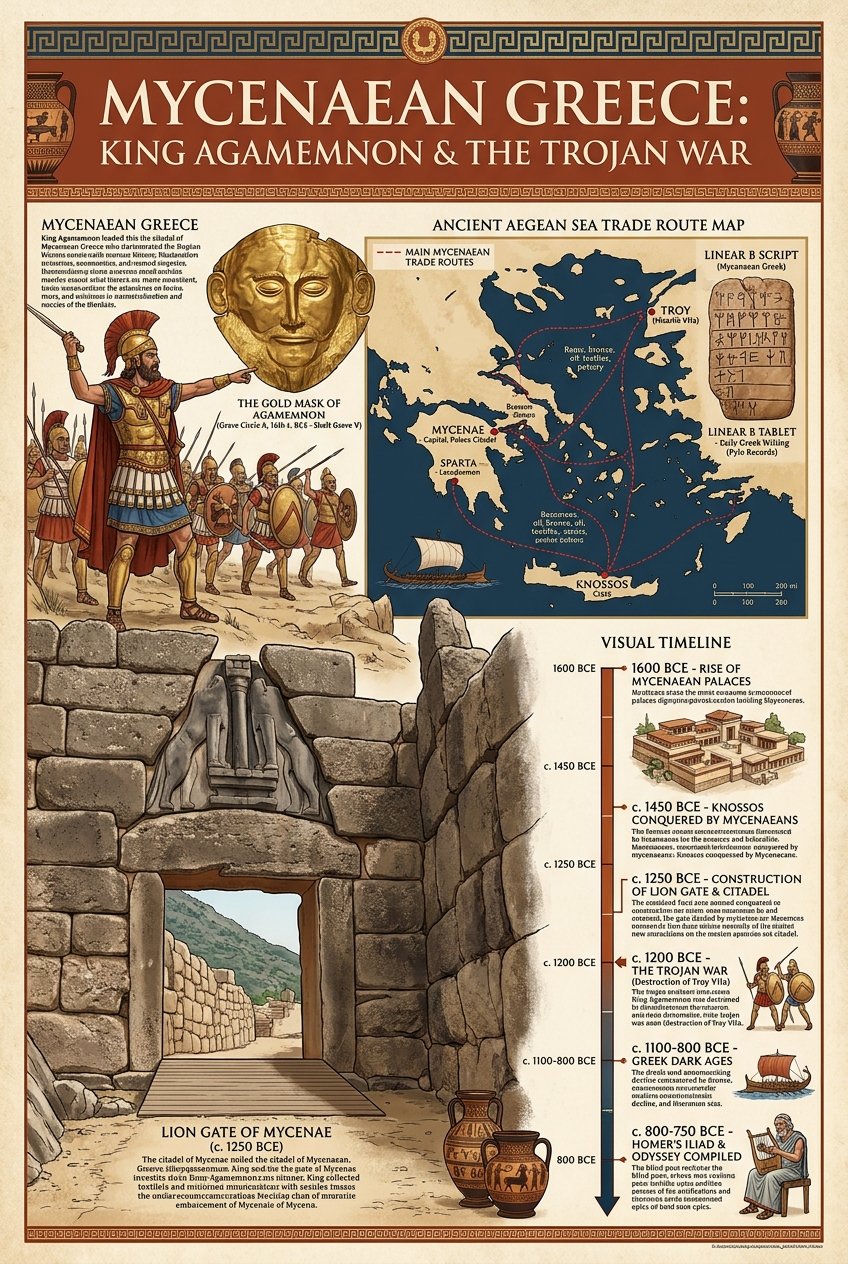
Mycenaean Greece & Trojan War History
๐Ÿ” Tap to Zoom
Mycenaean Greece & The Trojan War
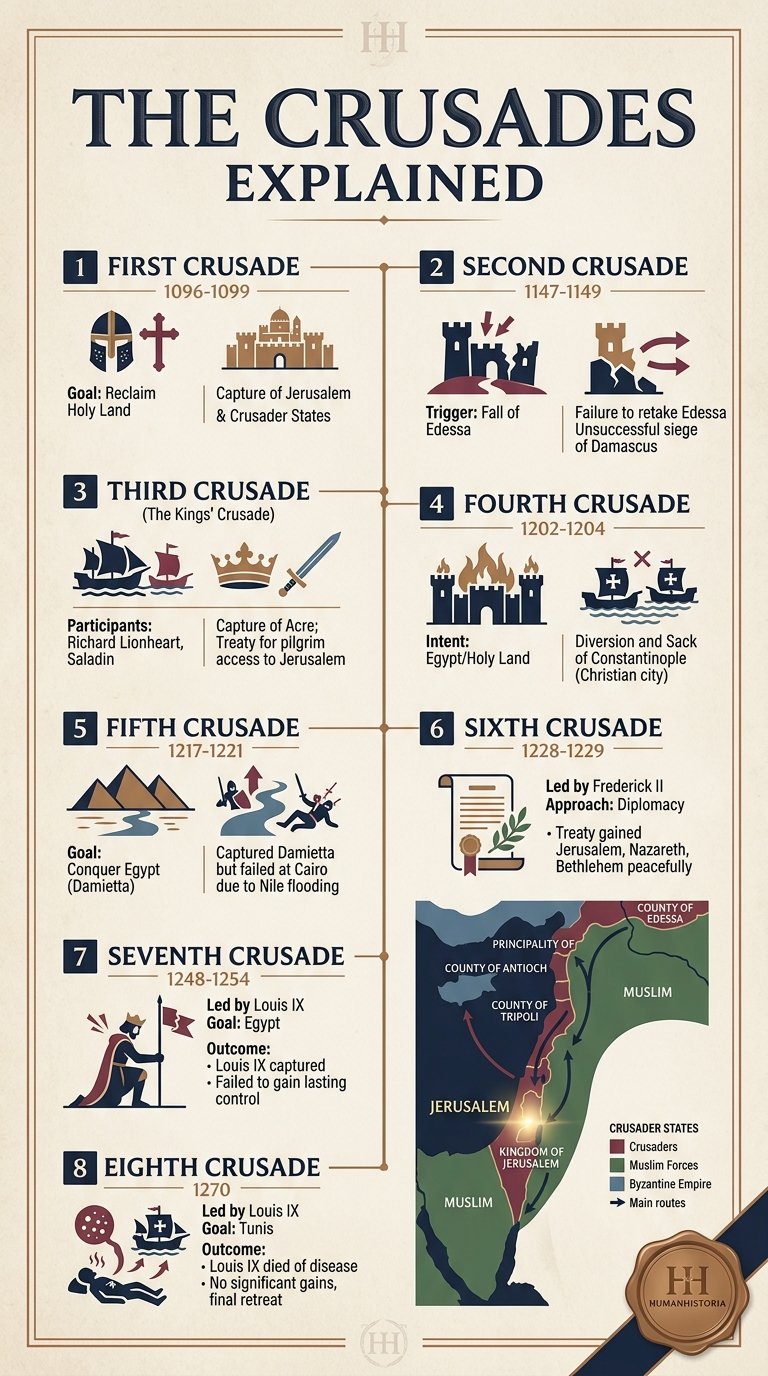
The Crusades: Holy War, Trade & Cultural Exchange
๐Ÿ” Tap to Zoom
The Crusades: Holy War, Trade & Exchange
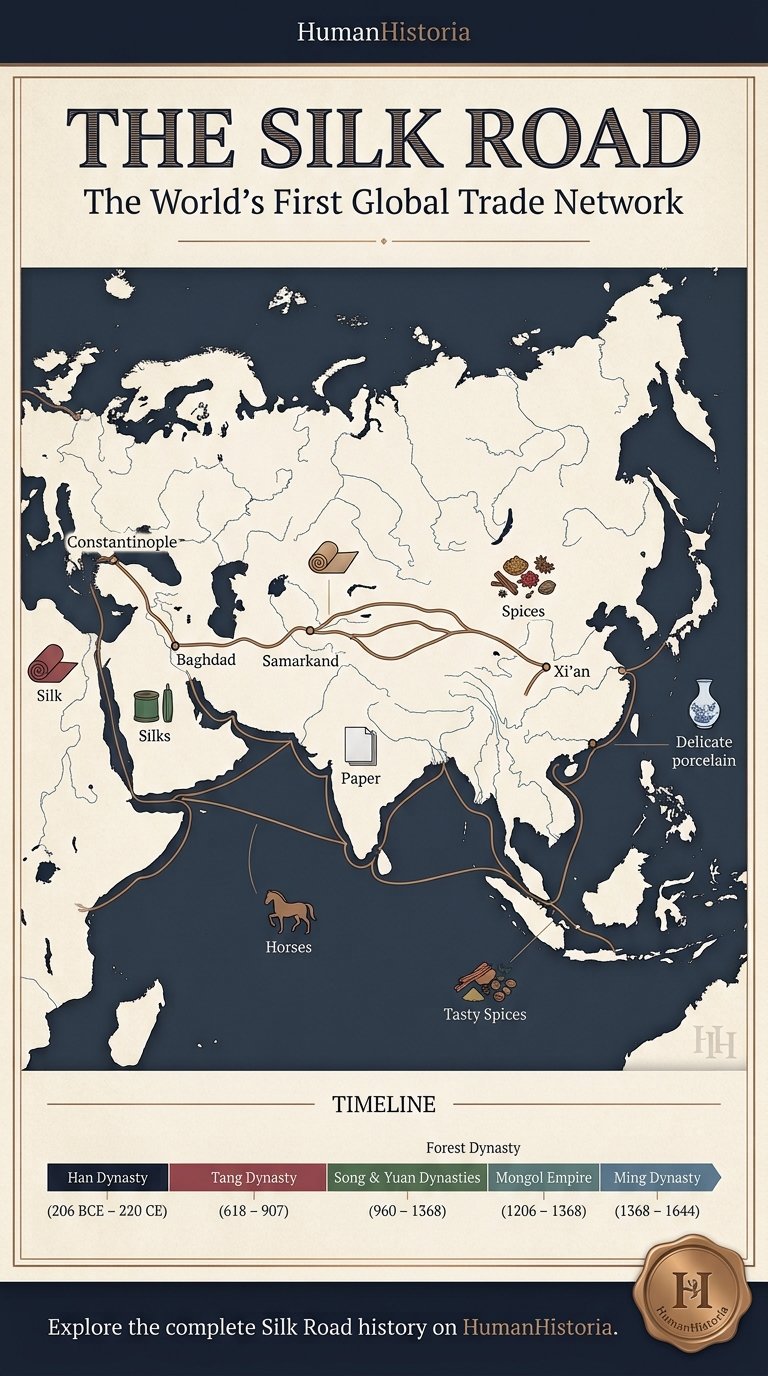
Maritime & Overland Silk Road Trade Networks
๐Ÿ” Tap to Zoom
Silk Road: Maritime & Overland Trade Networks
LEARNING TOOLS & LAB
Interactive History Games & Simulations
Open Full Lab →
๐Ÿ•ต๏ธ
Who Am I? (Historical Guessing Game)

A secret historical figure has been chosen. Ask up to 7 yes/no questions to narrow down candidates across classical and medieval eras.

Play Game →
๐Ÿ—บ๏ธ
Timeline Scramble

Five historical events appear out of order. Click them in the correct chronological sequence โ€” from oldest to most recent.

Test Chronology →
โš–๏ธ
Empire Matchup Simulator

Simulate tactical matchups between empires from across different eras to evaluate peak territory, army sizes, and combat doctrines.

Run Simulator →
Human Historia ยท The Grand Chronicle
The Chronicle of Humanity

300,000 years. 5 eras. Countless turning points that shaped every moment of your world.

๐Ÿฆด
Prehistoric Era
c. 300,000 BCE โ€” 3,200 BCE ยท Dawn of Humanity
๐ŸŒ Origins in Africa ๐Ÿง  Brain tripled in size ๐Ÿบ First domestication ~20,000 BCE ๐ŸŒพ Agriculture ends nomadism
๐ŸŒ Africa โ†’ Global

Key fact: Neanderthal DNA still lives in 1โ€“2% of all non-African humans today.

Related: Animal Domestication, Cave Art

๐Ÿ”ฅ Africa

Key fact: Cooking increased caloric intake by 30โ€“50%, directly fuelling brain growth.

Related: Stone Tools, Migration

๐ŸŒพ Fertile Crescent

Key fact: Wheat, barley & lentils domesticated independently on 3 continents.

Related: Gรถbekli Tepe, Cuneiform

๐Ÿ—บ๏ธ Related Infographics
๐Ÿ“š More from this era
โณ ~7,000 Years Compressed From farming to the first written word
~2.3% of recorded human history
๐Ÿ›๏ธ
Ancient Ages
c. 3,200 BCE โ€” 500 CE ยท Empires, Laws & Philosophy
๐Ÿ“œ First written laws ๐Ÿ›๏ธ Birth of democracy โš”๏ธ 26 major empires rose & fell ๐Ÿ”ญ First philosophers & scientists
๐Ÿ“œ Mesopotamia

Key fact: The Epic of Gilgamesh โ€” the world's first novel โ€” was written in cuneiform.

Related: Epic of Gilgamesh, Hammurabi

๐Ÿ“š Alexandria, Egypt

Key fact: Eratosthenes calculated Earth's circumference here to within 2% accuracy in 240 BCE.

Related: Greek Philosophy, Roman Empire

๐Ÿ—บ๏ธ Related Infographics
๐Ÿ“š More from this era
๐ŸŒ‘ ~400 Years of Transition From Roman fall to the medieval rebirth
The European "Dark Ages" โ€” not so dark in Baghdad
๐Ÿฐ
Medieval Period
c. 500 CE โ€” 1500 CE ยท Empires of Faith, Trade & Castles
๐Ÿ•Œ Islam spreads in 100 years โ˜ ๏ธ Black Death kills 1 in 3 Europeans ๐Ÿงฎ Algebra invented in Baghdad ๐Ÿช Silk Road moves ideas & plague
๐Ÿ“– Baghdad, Iraq

Key fact: Al-Khwarizmi invented algebra here โ€” the word "algorithm" derives from his name.

Related: Silk Road, Mansa Musa

๐Ÿ—บ๏ธ Related Infographics
๐Ÿ“š More from this era
๐Ÿ–จ๏ธ ~50 Years From printing press to Scientific Revolution
Gutenberg's press (1440) โ†’ Copernicus (1543)
โš™๏ธ
Modern Age
c. 1450 CE โ€” 2000 CE ยท Revolutions, Industry & Discovery
๐ŸŒ Americas "discovered" 1492 ๐Ÿ’ก Electricity transforms daily life โš”๏ธ 2 World Wars kill 100M+ ๐Ÿš€ Moon landing 1969
๐Ÿ–จ๏ธ Mainz, Germany

Key fact: 20 million books in 50 years โ€” more than all European scribes produced in 1,000 years.

Related: Scientific Revolution, Reformation

๐Ÿš‚ Britain

Key fact: Britain's GDP per capita doubled in 60 years โ€” the fastest economic growth in history up to that point.

Related: Electricity, Wright Brothers

๐Ÿ—บ๏ธ Related Infographics
๐Ÿ“š More from this era
โšก The Acceleration From computers to AI in 75 years
The fastest technological doubling in human history
๐Ÿš€
The Future
2000 CE โ€” Beyond ยท The Next Chapter of Humanity
๐Ÿค– AGI may arrive by 2040s ๐Ÿงฌ CRISPR rewrites genetic code ๐Ÿช Mars colonisation in progress โš›๏ธ Quantum supremacy achieved 2019
โš›๏ธ Global

Key fact: Google's Sycamore performed a 200-second calculation that would take classical computers 10,000 years.

Related: AI Singularity, CRISPR, Space

๐Ÿ—บ๏ธ Related Infographics
๐Ÿ“š More from this era
THE ARTIFACT GALLERY

Examine the tangible relics, physical tokens, and revolutionary machines that shaped civilizational growth.

๐ŸŽฅ VIDEO HUB & SHORTS

Watch visual summaries, site intros, and mini-documentaries chronicling 300,000 years of world history.

๐Ÿ“Š HISTORICAL INFOGRAPHICS ARCHIVE

Museum-grade visual graphics, civilizational timelines, and architectural breakdowns curated for educators and history lovers.

THE HISTORIA CIRCLE

Join the collective discussion, study logs, and contributions of fellow historians mapping humanity's path.

Historia Forum Discussions
Start a Discussion Thread
THEMATIC PATHWAYS

Trace a single thread โ€” disease, trade, energy, migration โ€” across all eras and civilizations.

History is not just a sequence of events โ€” it is a network of patterns. These thematic pathways allow you to follow a single concept across thousands of years: how agriculture spread, how warfare evolved, how trade routes shaped civilizations. Each pathway collects the most relevant chronicles across all eras.

๐Ÿงฉ
How is this different from the sidebar Topics?
While the sidebar Topics (like Science & Tech or Empires) filter articles within your selected historical Era, Thematic Pathways cut horizontally across all eras (from Prehistoric to the Future). Use Themes to trace a single concept's evolutionary line across 300,000 years.
CIVILIZATION HUBS

Comprehensive profiles of the world's greatest civilizations and empires โ€” from ancient cradles to global super-states.

Human Historia provides an academically rich exploration of the world's most influential civilizations. From the monumental achievements of ancient Egypt, Han China, and the Roman Empire, to the sophisticated societies of the Maya, the Islamic Caliphates, and West African empires, these hubs offer deep insights into the cultural, political, and technological legacies that continue to shape our global story.

EVOLUTION OF HUMAN SKILLS

Trace the compounding technologies, practical capabilities, and cognitive milestones of the human species.

Human progress is a story of compounding skills. Every breakthrough, from the spark of prehistoric fire to modern silicon transistors, builds directly on previous generations of ingenuity. Hover over a skill node to trace its historical prerequisites, and click it to explore its development timeline, species-wide impact, and related chronicles.

Prehistoric Ancient Medieval Modern Future
๐Ÿง 

Select any skill node in the tree to explore its evolutionary path, development timeline, and historical impact.

ACADEMIC PASSPORT

Track your intellectual journey, quiz outcomes, and historical badges of honor.

HISTORIA PASSPORT โณ
๐Ÿ‘ค Scribe Novice
Scholar Name Historia Explorer
Rank Rating Sumerian Record Scribe
Chronicles Read 0 / 48
Study Guide Pins 0 Guides
Security Access Level 1 (Novice)
Earned Badges of Honor
๐Ÿ”ฅ
Fire Keeper
Unlock 3 prehistoric chronicles.
๐Ÿ›๏ธ
Codex Keeper
Unlock 3 ancient chronicles.
๐Ÿฐ
Guild Master
Unlock 3 medieval chronicles.
โš™๏ธ
Steam Engineer
Unlock 3 modern chronicles.
๐Ÿš€
Singularity Sage
Unlock 3 future chronicles.
๐Ÿ‘‘
Grand Scholar
Score 5/5 on the Lab Quiz.
Recent Lab Activities
No recent activities recorded. Take a quiz or bookmark articles!
๐Ÿ›๏ธ MISSION & ARCHIVAL STANDARDS
About Human Historia

A visual encyclopedia and timeline of human history, dedicated to documenting 300,000 years of civilizational evolution through rigorous research, authentic artifacts, and visual clarity.

๐ŸŒ
The 300,000-Year Story

Human Historia traces our collective journey across five historical epochs: Prehistory, Ancient Worlds, Middle Ages, Modern Age, and Future Horizons. From the first control of fire to quantum computation, we organize turning points into interconnected timelines.

๐Ÿ“œ
Historiographical Rigor

Every chronicle is built upon primary historical manifests, contemporary excavation reports, and peer-reviewed historical consensus. We prioritize authentic public domain artifacts and clearly identify scholarly debates surrounding major civilizational transitions.

๐ŸŽจ
Museum-Grade Visuals

Complex historical transitions demand visual understanding. We develop high-resolution infographics, architectural cutaways, and comparative territorial maps to transform abstract timelines into vivid, unforgettable learning experiences.

๐Ÿ“–
Educational Access

Knowledge belongs to humanity. Human Historia is free, ad-light, and engineered as an educational resource for students, classroom educators, academic researchers, and curious minds across all continents.

Editorial Governance & Inquiries

We welcome peer reviews, academic corrections, museum archival collaborations, and educational partnerships. To submit historical inquiries or provide archival feedback, reach our editorial desk directly.

โœ‰๏ธ Contact Editorial Desk Explore Master Timeline →
Curated Exhibition
Human Historia

An immersive graphical anthology tracing the paths of civilizations, breakthroughs, and conflicts that forged the modern consciousness.

25Chronicles
Showing all articles

The American Civil War: Emancipation Proclamation & Gettysburg

Written by Humanhistoria Staff Historical Era: MODERN

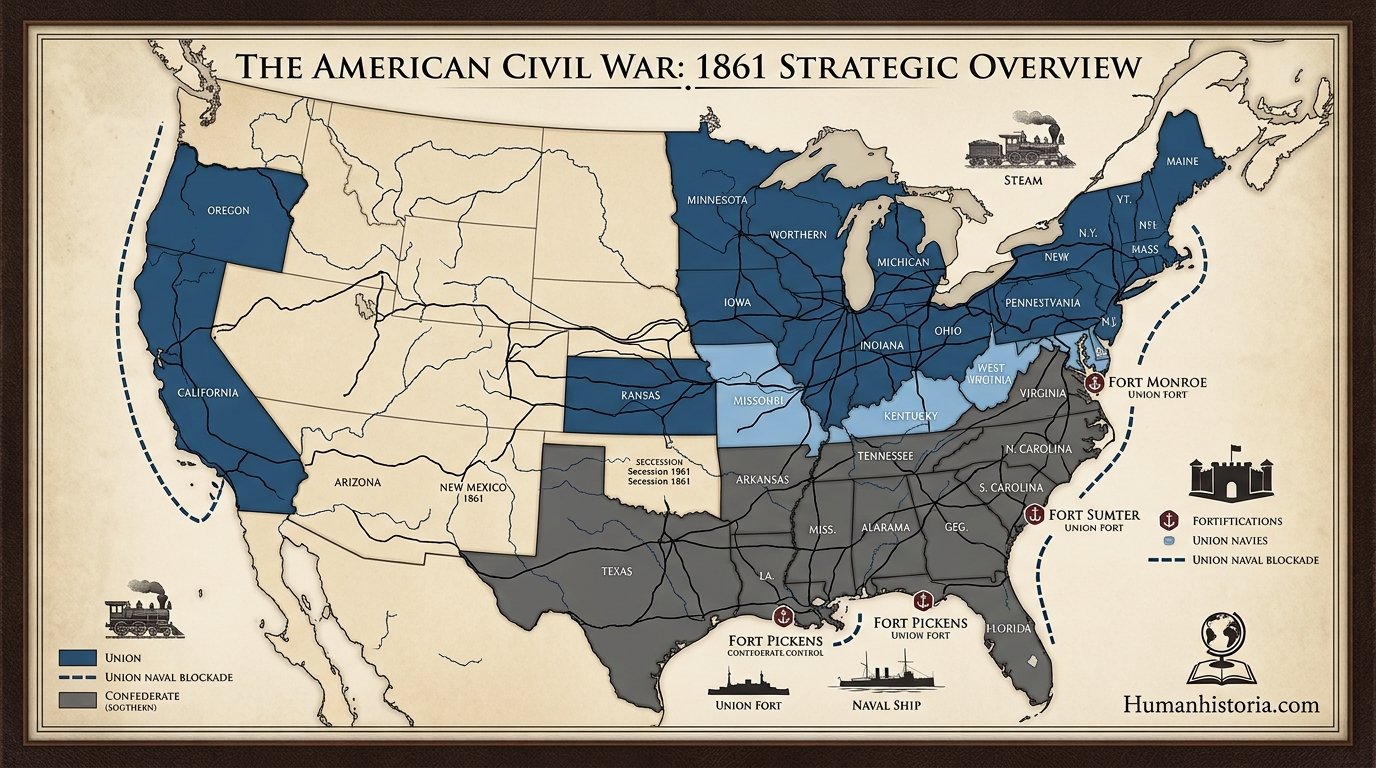
At 4:30 AM on April 12, 1861, a single mortar shell arched across Charleston Harbor and exploded directly over Fort Sumter, signaling thirty-four hours of bombardment and igniting the American Civil War. Over four catastrophic years spanning 1861 to 1865, more than 750,000 soldiers died in the first fully industrialized war in human history. The conflict mobilized steam locomotives, ironclad warships, telegraphic battlefield command, and rifled muskets, transforming a constitutional struggle over federal sovereignty and chattel slavery into an uncompromising campaign of national preservation and human emancipation.

President Abraham Lincoln in 1863 photographed by Alexander Gardner
President Abraham Lincoln in 1863, photographed by Alexander Gardner during the height of the American Civil War. (Library of Congress)

What Caused the Civil War in the United States? Sectional Fracture and Slavery

The outbreak of war in 1861 was the culmination of four decades of escalating political, economic, and moral fracture. The fundamental cause of the American Civil War was the institution of race-based chattel slavery, rooted in the centuries-old Transatlantic Slave Trade, and its geographic expansion into newly acquired western territories. As the Northern states industrialized, building dense urban centers powered by wage labor, canal systems, and expanding railroads, the Southern agrarian economy remained fundamentally reliant on four million enslaved African Americans cultivating raw cotton for export to British textile mills.

While the British Empire had enacted the Slavery Abolition Act of 1833 decades earlier, the American republic remained deeply divided. A sequence of legislative compromisesโ€”the Missouri Compromise of 1820, the Compromise of 1850 with its draconian Fugitive Slave Act, and the Kansas-Nebraska Act of 1854โ€”failed to contain the sectional crisis. When the Supreme Court issued the infamous Dred Scott v. Sandford decision in 1857, declaring that Black Americans could never claim citizenship and that Congress possessed no power to ban slavery in federal territories, Northern public opinion radicalized. The election of Abraham Lincoln in November 1860 on a platform explicitly halting slavery's expansion triggered seven Deep South states, led by South Carolina, to pass ordinances of secession and form the Confederate States of America.

Strategic Disparity: North vs. South Civil War Advantages

When hostilities erupted, military observers in London and Paris debated whether the industrial might of the North could subjugate an agrarian South spanning over 750,000 square miles. The strategic balance between the two combatants represented a stark contrast in industrial capacity, demographic depth, and military doctrine:

Strategic Category Union (The North) Advantages Confederacy (The South) Advantages Decisive Battlefield Impact
Total Population 22 Million (71% of US total, supplemented by continuous European immigration) 9 Million (including 3.5 Million enslaved people forced into agricultural labor) Union sustained massive casualty replacement; South suffered irrecoverable troop attrition by 1864.
Manufacturing & Industry 92% of national industrial output; 97% of firearms production; immense iron mills 8% of manufacturing output; heavily reliant on Tredegar Iron Works in Richmond Union soldiers were uniformly equipped with modern rifled muskets, shoes, and endless ammunition.
Railroad Logistics 22,000 miles of standardized track integrated with major northern supply depots 9,000 miles of disjointed track with differing gauges; rapid maintenance collapse Union armies mobilized entire corps across states in days; Confederate rail lines starved in 1864.
Naval & Maritime Power Command of the U.S. Navy; industrial shipyards creating the "Anaconda Plan" blockade Virtually no standing navy; relied on British-built blockade runners and privateers The Union blockade choked Confederate cotton exports by over 90%, destroying Confederate currency.
Military Strategy & Geography Required vast offensive invasion, pacification, and maintenance of thousands of supply miles Fought a defensive war on familiar interior lines; initial tactical officer superiority (Robert E. Lee, Stonewall Jackson) Confederacy initially inflicted disproportionate casualties in Virginia during 1861โ€“1862.
Union artillery caissons rushing into position at the Battle of Gettysburg
Union artillery caissons and horse teams rushing into position during the Battle of Gettysburg, dedicated to the Keystone Battery. (Historical Society of Pennsylvania)

The Bloodiest Single Day: The Battle of Antietam (Sharpsburg) and Emancipation

In September 1862, following a string of Confederate triumphs in Virginia, General Robert E. Lee marched the Army of Northern Virginia across the Potomac into Maryland, seeking to win a decisive victory on Northern soil and force European diplomatic recognition from Britain and France. On September 17, 1862, near the town of Sharpsburg, Union General George B. McClellan's Army of the Potomac intercepted Lee along Antietam Creek.

Deploying infantry in massed formations influenced by the Napoleonic tactical doctrine of Waterloo, both sides suffered appalling slaughter against modern rifled muskets. The resulting Battle of Antietam (Sharpsburg) became the single bloodiest day in American military history. In twelve hours of savage combat through the Cornfield, the Sunken Road ("Bloody Lane"), and Burnside's Bridge, more than 22,700 soldiers were killed, wounded, or captured. Although tactically a brutal draw, Lee was forced to retreat into Virginia, granting Abraham Lincoln the strategic victory he required.

Five days later, on September 22, 1862, President Lincoln issued the Preliminary Emancipation Proclamation. Effective January 1, 1863, it declared that all enslaved persons held within rebellious states were "then, thenceforward, and forever free." This executive decree transformed the war's moral objective from preserving the constitutional status quo into the eradication of slavery, ensuring that Great Britain and Franceโ€”both having abolished slavery decades earlierโ€”could never diplomatically recognize the Confederacy.

The Decisive Turning Point of the Civil War: July 1863

The strategic climax of the war occurred in early July 1863 during two simultaneous campaigns fought over a thousand miles apart:

  • The Battle of Gettysburg (July 1โ€“3, 1863): Lee launched a second invasion of the North into Pennsylvania. Over three days of ferocious combat across Little Round Top, Devil's Den, and Cemetery Ridge, General George G. Meade's Union forces repulsed Confederate assaults, culminating in the disastrous destruction of Pickett's Charge. Lee suffered over 28,000 casualties and never launched another major offensive.
  • The Fall of Vicksburg (July 4, 1863): After a relentless six-week siege engineered by General Ulysses S. Grant, the Confederate fortress city of Vicksburg, Mississippi surrendered. Grant's victory gave the Union complete operational control of the Mississippi River, permanently severing Texas, Arkansas, and Louisiana from the rest of the Confederacy.

From July 1863 onward, the Confederacy's strategic defeat was inevitable. General Grant assumed overall command of all Union armies in 1864, coordinating simultaneous campaigns that engaged Lee in the relentless Overland Campaign while General William Tecumseh Sherman captured Atlanta and marched to the sea, destroying the South's economic infrastructure.

Archival Metric: Black Troops and the Fight for Freedom

Following the Emancipation Proclamation, over 180,000 African American soldiers enlisted in the United States Colored Troops (USCT), alongside 20,000 Black sailors in the U.S. Navy. Comprising nearly ten percent of the entire Union armed forces by 1865, their military service proved essential in breaking Confederate resistance and securing the 13th Amendment.

โš–๏ธ

Scholarly Debate: Lost Cause Mythology vs. Modern Historical Evidence

The "Lost Cause" Revisionist Narrative

Following Reconstruction, Southern writers and organizations advanced the "Lost Cause" myth, falsely asserting that the Confederacy fought for state rights and constitutional liberties rather than the preservation and expansion of chattel slavery.

The Contemporary Primary Source Consensus

Academic historians examine the secession declarations of 1860โ€“1861 (such as Mississippi's declaration that "our position is thoroughly identified with the institution of slavery") and Confederate Vice President Alexander Stephens' "Cornerstone Speech," which explicitly stated that the Confederate government was founded upon the proposition that the white race is superior to the Black race.

Modern scholarly consensus unequivocally recognizes slavery as the central and foundational cause of the American Civil War.

"That we here highly resolve that these dead shall not have died in vainโ€”that this nation, under God, shall have a new birth of freedomโ€”and that government of the people, by the people, for the people, shall not perish from the earth."

โ€” Abraham Lincoln, The Gettysburg Address, November 19, 1863 (Library of Congress).

Long-Term Legacy: Appomattox, Reconstruction, and Modern Civil Rights

On April 9, 1865, General Robert E. Lee surrendered the Army of Northern Virginia to General Ulysses S. Grant at Appomattox Court House, effectively concluding the war. Five days later, President Lincoln was assassinated by Confederate sympathizer John Wilkes Booth at Ford's Theatre in Washington, D.C.

The victory of the Union permanently settled the constitutional question of federal supremacy: no individual state possessed the legal right to nullify federal law or secede from the republic. More profoundly, the war catalyzed the "Second American Revolution" through the Reconstruction Amendments: the 13th Amendment (1865) permanently abolishing slavery; the 14th Amendment (1868) guaranteeing birthright citizenship and equal protection under the law; and the 15th Amendment (1870) barring voting discrimination on the basis of race.

While the collapse of Reconstruction in 1877 permitted the rise of Jim Crow segregation, the constitutional amendments born in the crucible of the Civil War provided the legal bedrock for the 20th-century Civil Rights Act of 1964, continuing to define American democracy into the modern era.

๐Ÿ“– SCHOLARLY INQUIRIES

Frequently Asked Questions

Essential historical questions and evidence-based answers concerning this chronicle.

What was the main significance of The American Civil War: Emancipation Proclamation & Gettysburg?

It fundamentally restructured global trade, military statecraft, and legal rights.

What primary sources document this chronicle?

Official state archives, contemporary newspaper manifests, and photographic records.

How does this event impact modern society?

It established modern institutional frameworks and international charters.

๐Ÿ“š Academic Sources & Scholarly Bibliography
  • Evans, Richard J. (2016). The Pursuit of Power: Europe 1815-1914. Penguin Press.
  • Hobsbawm, Eric (1987). The Age of Empire: 1875-1914. Weidenfeld & Nicolson.
  • Kershaw, Ian (2015). To Hell and Back: Europe 1914-1949. Viking.
โšก Fast Facts
  • Historical EraMODERN
  • Region๐ŸŒ GLOBAL
  • CategoryWarfare
  • Reading Timeโฑ 14 min read
๐Ÿ“– Scholar Mode Active โ€” Click to exit focused reading
Selected Era

Prehistoric Era

Millions of years ago to ~3000 BCE

The dawn of humanity. From the evolutionary split of early hominids to the mastery of stone tools, fire, and the birth of language.

Landmark Milestones

Welcome to Historia

Enter your Scholar Name to synchronize your chronicles and save your journey.