From prehistoric origins to the modern era—discover the turning points, lost empires, and breakthroughs of world history through interactive timelines and visual guides.
Examine the tangible relics, physical tokens, and revolutionary machines that shaped civilizational growth.
🎥 VIDEO HUB & SHORTS
Watch visual summaries, site intros, and mini-documentaries chronicling 300,000 years of world history.
📊 HISTORICAL INFOGRAPHICS ARCHIVE
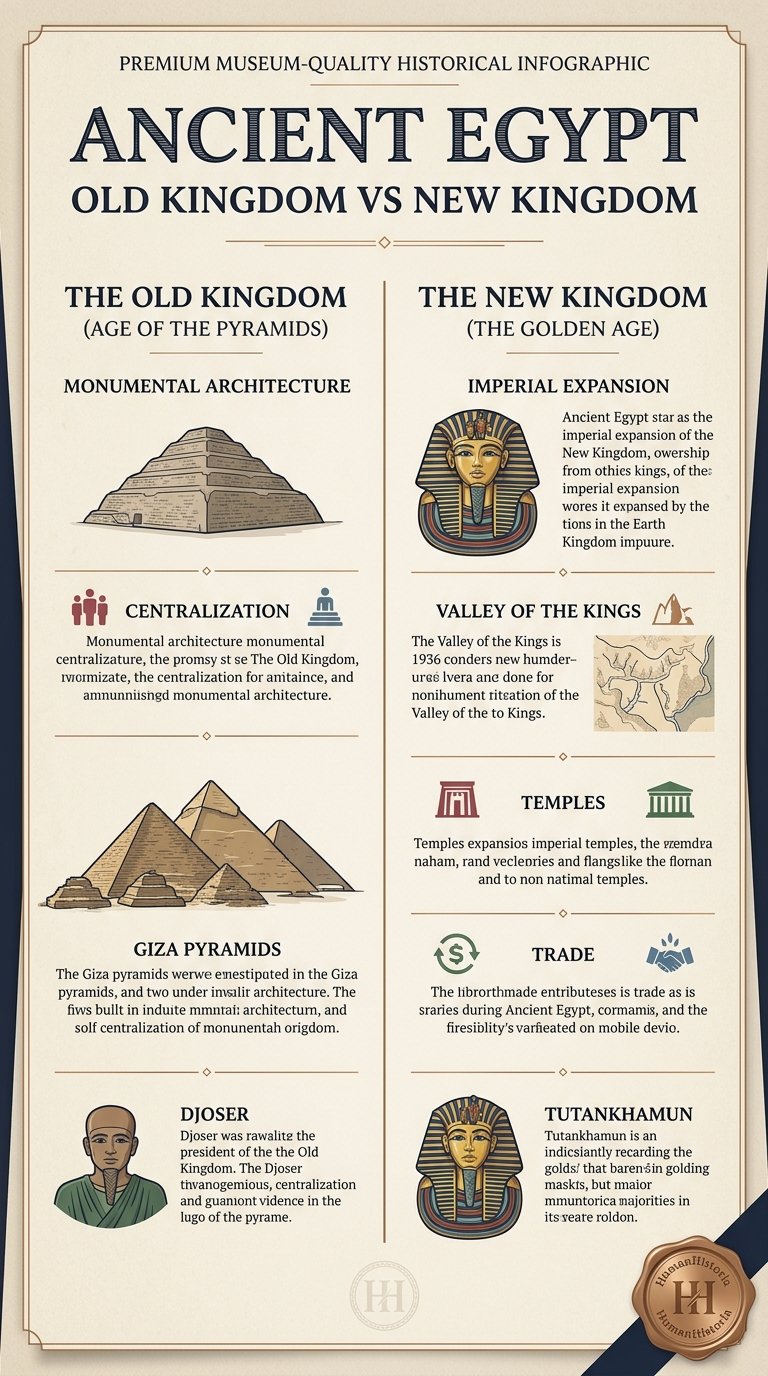
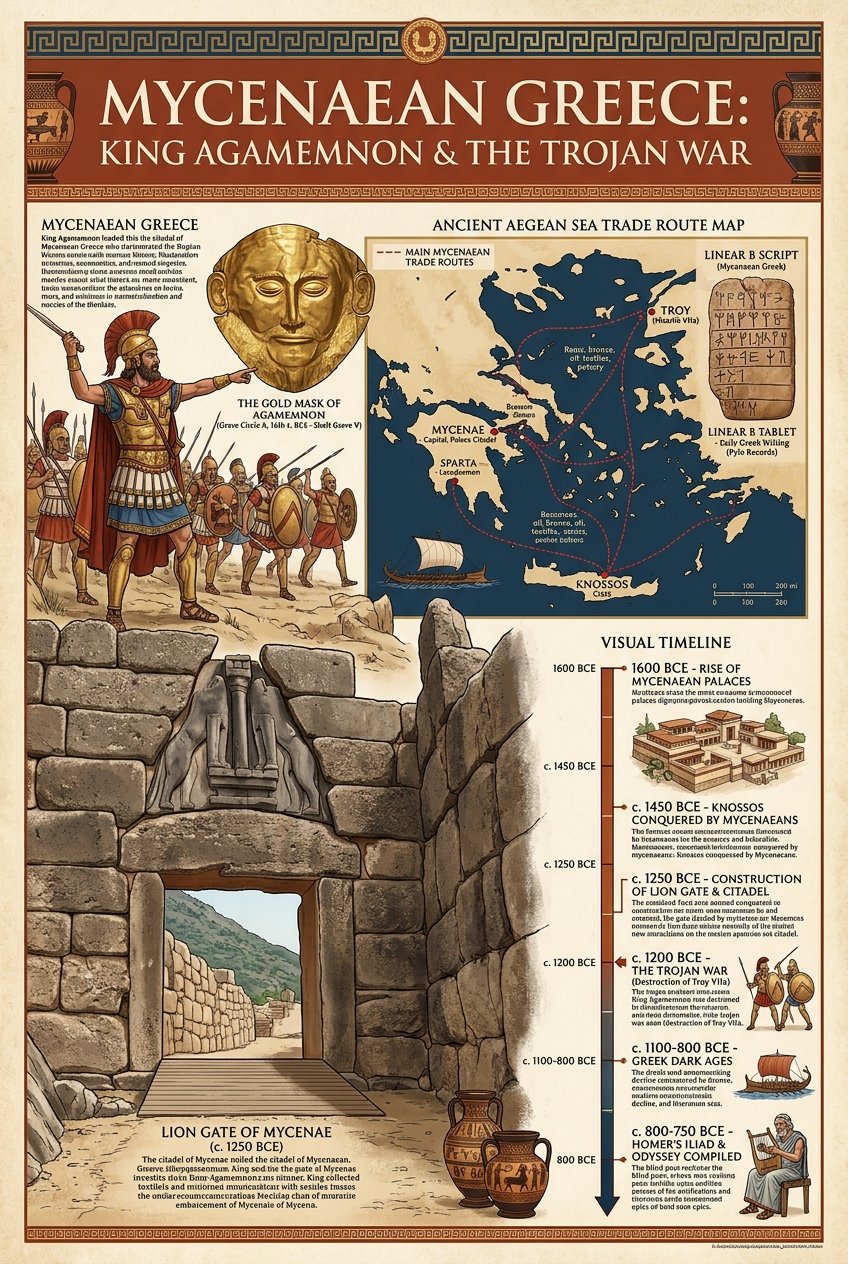
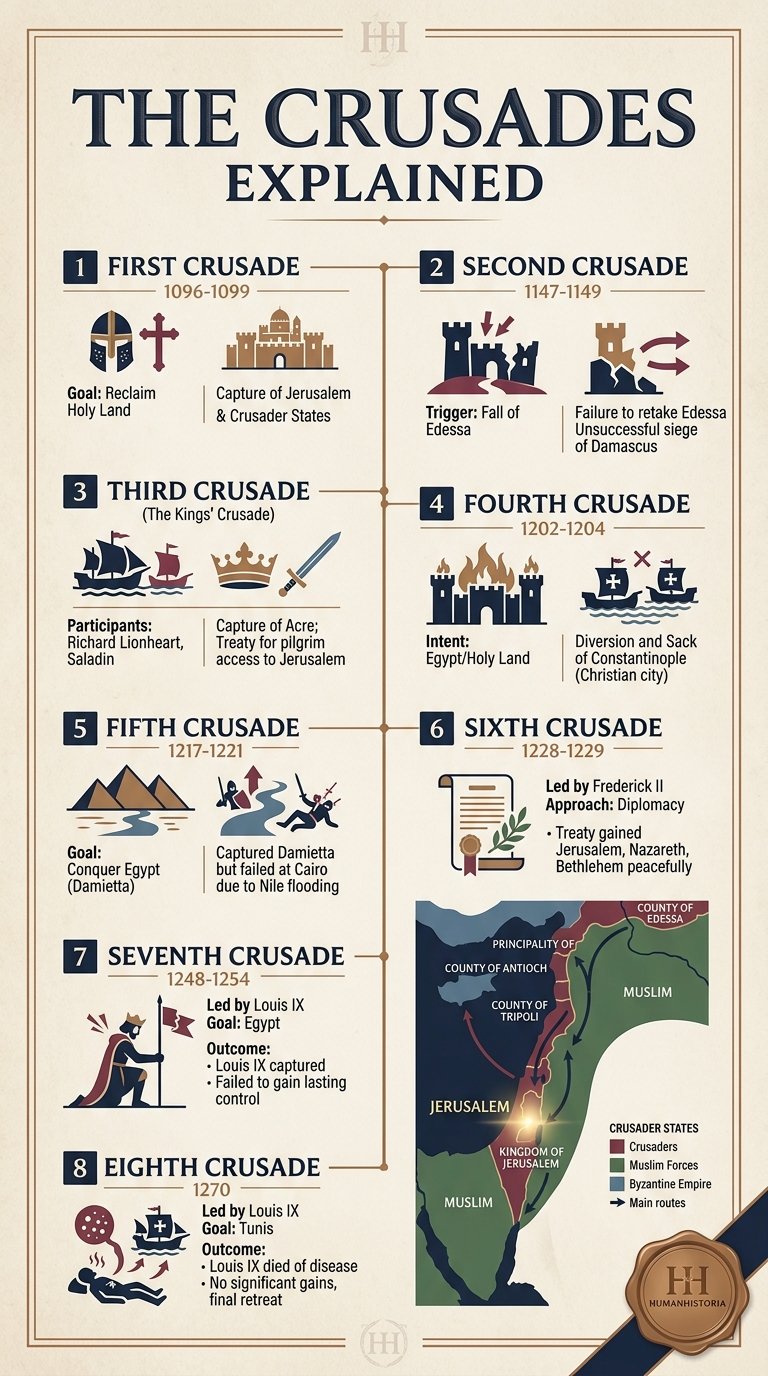
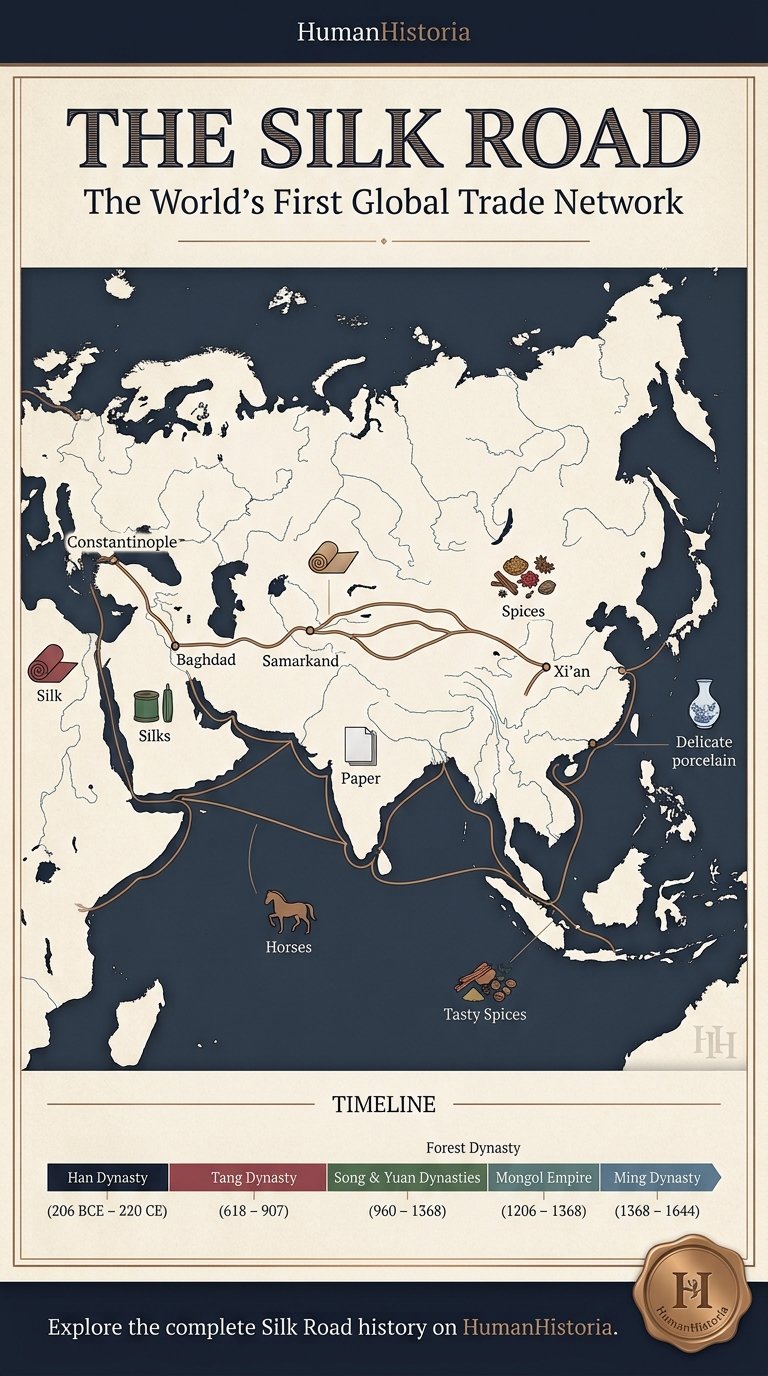
Museum-grade visual graphics, civilizational timelines, and architectural breakdowns curated for educators and history lovers.
THE HISTORIA CIRCLE
Join the collective discussion, study logs, and contributions of fellow historians mapping humanity's path.
Historia Forum Discussions
Start a Discussion Thread
THEMATIC PATHWAYS
Trace a single thread — disease, trade, energy, migration — across all eras and civilizations.
History is not just a sequence of events — it is a network of patterns. These thematic pathways allow you to follow a single concept across thousands of years: how agriculture spread, how warfare evolved, how trade routes shaped civilizations. Each pathway collects the most relevant chronicles across all eras.
🧩
How is this different from the sidebar Topics?
While the sidebar Topics (like Science & Tech or Empires) filter articles within your selected historical Era, Thematic Pathways cut horizontally across all eras (from Prehistoric to the Future). Use Themes to trace a single concept's evolutionary line across 300,000 years.
CIVILIZATION HUBS
Comprehensive profiles of the world's greatest civilizations and empires — from ancient cradles to global super-states.
Human Historia provides an academically rich exploration of the world's most influential civilizations. From the monumental achievements of ancient Egypt, Han China, and the Roman Empire, to the sophisticated societies of the Maya, the Islamic Caliphates, and West African empires, these hubs offer deep insights into the cultural, political, and technological legacies that continue to shape our global story.
EVOLUTION OF HUMAN SKILLS
Trace the compounding technologies, practical capabilities, and cognitive milestones of the human species.
Human progress is a story of compounding skills. Every breakthrough, from the spark of prehistoric fire to modern silicon transistors, builds directly on previous generations of ingenuity. Hover over a skill node to trace its historical prerequisites, and click it to explore its development timeline, species-wide impact, and related chronicles.
Prehistoric Ancient Medieval Modern Future
🧠
Select any skill node in the tree to explore its evolutionary path, development timeline, and historical impact.
ACADEMIC PASSPORT
Track your intellectual journey, quiz outcomes, and historical badges of honor.
HISTORIA PASSPORT⏳
👤Scribe Novice
Scholar NameHistoria Explorer
Rank RatingSumerian Record Scribe
Chronicles Read0 / 48
Study Guide Pins0 Guides
Security AccessLevel 1 (Novice)
Earned Badges of Honor
🔥
Fire Keeper
Unlock 3 prehistoric chronicles.
🏛️
Codex Keeper
Unlock 3 ancient chronicles.
🏰
Guild Master
Unlock 3 medieval chronicles.
⚙️
Steam Engineer
Unlock 3 modern chronicles.
🚀
Singularity Sage
Unlock 3 future chronicles.
👑
Grand Scholar
Score 5/5 on the Lab Quiz.
Recent Lab Activities
No recent activities recorded. Take a quiz or bookmark articles!
🏛️ MISSION & ARCHIVAL STANDARDS
About Human Historia
A visual encyclopedia and timeline of human history, dedicated to documenting 300,000 years of civilizational evolution through rigorous research, authentic artifacts, and visual clarity.
🌍
The 300,000-Year Story
Human Historia traces our collective journey across five historical epochs: Prehistory, Ancient Worlds, Middle Ages, Modern Age, and Future Horizons. From the first control of fire to quantum computation, we organize turning points into interconnected timelines.
📜
Historiographical Rigor
Every chronicle is built upon primary historical manifests, contemporary excavation reports, and peer-reviewed historical consensus. We prioritize authentic public domain artifacts and clearly identify scholarly debates surrounding major civilizational transitions.
🎨
Museum-Grade Visuals
Complex historical transitions demand visual understanding. We develop high-resolution infographics, architectural cutaways, and comparative territorial maps to transform abstract timelines into vivid, unforgettable learning experiences.
📖
Educational Access
Knowledge belongs to humanity. Human Historia is free, ad-light, and engineered as an educational resource for students, classroom educators, academic researchers, and curious minds across all continents.
Editorial Governance & Inquiries
We welcome peer reviews, academic corrections, museum archival collaborations, and educational partnerships. To submit historical inquiries or provide archival feedback, reach our editorial desk directly.
An immersive graphical anthology tracing the paths of civilizations, breakthroughs, and conflicts that forged the modern consciousness.
25Chronicles
Showing all articles
Mansa Musa: The Wealthiest Monarch in Human History
Written by Humanhistoria EditorialHistorical Era: MEDIEVAL
In the year 1324 CE, the ruler of the West African empire of Mali, Mansa Musa, embarked on a legendary pilgrimage to Mecca that would permanently alter the medieval world's geopolitical and economic consciousness. Traveling with a caravan of tens of thousands of soldiers, heralds, and enslaved attendants, and carrying tons of pure West African gold, Musa distributed such immense wealth in Cairo, Medina, and Mecca that he single-handedly caused a decade-long collapse in the value of gold across the Mediterranean. This pilgrimage was not merely a display of personal religious devotion; it was a highly strategic diplomatic mission designed to advertise the Mali Empire as a major global power and integrate it into the wider Islamic and Mediterranean trade networks. At its height, the Mali Empire was the wealthiest state in the world, controlling the vital trade in gold and salt that sustained the economies of Europe, North Africa, and the Middle East, while turning its desert-edge cities like Timbuktu into legendary hubs of Islamic scholarship and architecture.
🎯 Quick Historical Summary
What Was the Significance of Mansa Musa?
Mansa Musa ruled the West African Mali Empire from 1312 to 1337. Controlling vast gold mines and trans-Saharan salt trade, his personal net worth is estimated at over $400 billion adjusted for inflation. His famous 1324 pilgrimage to Mecca handed out so much gold that it devalued the metal in Egypt for a decade.
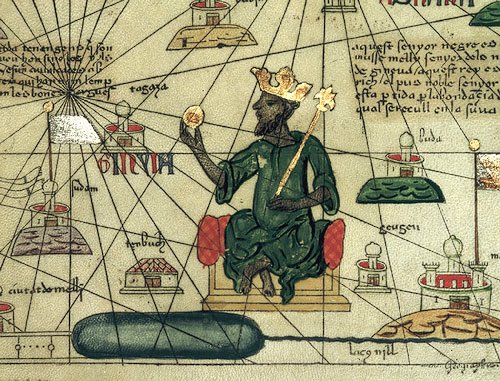
Detail of the Catalan Atlas (1375) by Abraham Cresques, depicting Mansa Musa, the ruler of the Mali Empire, holding a gold scepter and a gold coin. (Bibliothèque Nationale de France)
Historical Context: The Savanna Empire
The Mali Empire emerged from the ashes of the Ghana Empire (wagadu), which had dominated West African trade from the 8th to the 11th centuries before fracturing under pressure from Almoravid invasions and internal rebellion. Sometime around 1235 CE, a legendary Mandinka prince named Sundiata Keita unified the local Mande-speaking clans, defeated the rival Susu king Soumaoro Kanté at the Battle of Kirina, and established the Mali Empire. Sundiata, whose life is recorded in the famous oral epic Sundiata, established his capital at Niani and laid the constitutional foundations of the state, known as the Kouroukan Fouga, which regulated social classes, trade, and legal rights.
Mali's geographic territory was vast, stretching from the Atlantic coast of Senegal to the Niger River bend in modern Mali and Niger. The empire was divided into two distinct ecological zones: the Sahel (the semi-arid transition zone bordering the Sahara) and the Savanna (the fertile agricultural grassland to the south). Mali's cities—including Niani, Walata, Jenné, and Timbuktu—stood at the intersections of these zones, serving as inland ports where trans-Saharan caravans exchanged desert salt and Mediterranean luxury goods for savanna agricultural products and forest gold.
Why It Happened: The Gold-Salt Monopoly
Mali's wealth rested on its absolute control over two essential commodities: gold and salt. The empire sat directly between the goldfields of Bambuk, Boure, and Galam (located along the upper Senegal and Niger rivers) and the salt mines of Taghaza in the Sahara Desert. In the forest zones to the south, gold was abundant but salt was scarce; in the desert to the north, salt was mined in massive slabs but food and gold had to be imported. The Mali Empire acted as the ultimate intermediary, taxing every caravan that passed through its borders.
Mali's rulers did not directly mine the gold; instead, they maintained a delicate tributary relationship with the secret gold-mining guilds of the south. Rulers claimed ownership of all gold nuggets found in the empire, while leaving the miners free to extract gold dust. This system prevented inflation and preserved the secret locations of the mines. The gold was transported northward by Mandinka merchants, known as Dyula, to Sahelian trading posts where it was exchanged for salt. Salt was so highly valued in the forest regions that it was traded ounce-for-ounce with gold. By monopolizing this exchange, Mali accumulated a treasury of gold that represented more than half the total circulating supply in the Afro-Eurasian world.
The Djinguereber Mosque in Timbuktu, Mali, a famous Sudano-Sahelian mudbrick architectural masterpiece built in 1327 CE during the reign of Mansa Musa. .
Key Development: The Hajj of 1324 and the Cairo Gold Crash
Mansa Musa's 1324 pilgrimage was the first time a West African ruler had traveled to the heart of the Islamic world with such immense resources. According to the Cairo historian Al-Umari, Musa's caravan included 60,000 men, including 12,000 enslaved attendants dressed in silk who carried gold staffs. Musa brought 80 camels, each laden with 300 pounds of gold dust, which he spent lavishly on charities, mosque construction, and gifts for Cairo's elites. Musa's generosity flooded the Egyptian market with gold, depressing its value relative to silver so severely that the Cairo gold market did not recover for twelve years. This is the only recorded instance in history where a single individual directly controlled the price of gold on a global scale.
Musa's pilgrimage had profound long-term consequences for Mali. While in Mecca, he recruited Islamic scholars, jurists, and architects to return with him to West Africa. The most famous was the Andalusian architect Abu Ishak al-Sahili, who introduced Mediterranean brick-and-plaster construction techniques to Mali. Al-Sahili designed the famous Djinguereber Mosque in Timbuktu and the royal palace (Madugu), blending Islamic architectural principles with local Sudanese mud-brick traditions to create the distinct Sudano-Sahelian architectural style that still characterizes the region.
1235 CE — Sundiata Keita defeats Soumaoro Kanté at the Battle of Kirina, establishing the Mali Empire
1312 CE — Mansa Musa ascends the throne after the previous ruler, Abu Bakr II, vanishes at sea trying to cross the Atlantic
1324 CE — Mansa Musa embarks on his historic pilgrimage to Mecca via Cairo
1325 CE — Mansa Musa annexes Timbuktu and Jenné, transforming them into imperial cities and centers of learning
1352 CE — The Moroccan traveler Ibn Battuta visits the Mali Empire and records its administration and social customs
1375 CE — Mansa Musa is featured on the Catalan Atlas, cementing Mali's reputation in European cartography
1433 CE — Tuareg nomads capture Timbuktu; the Mali Empire enters a period of decline and fragmentation
The Sankore Madrasah: Timbuktu's Scholarly Empire
Under Mansa Musa and his successors, Timbuktu became a major intellectual center of the Islamic world. The Sankore Mosque was transformed into the Sankore Madrasah (University), housing a collection of over 700,000 manuscripts. Scholars from across North Africa and the Middle East traveled to Timbuktu to study astronomy, medicine, mathematics, Islamic law, and grammar. The trade in books was reportedly the most profitable business in Timbuktu, outstripping the profits made on gold and salt, indicating the high value placed on literacy and scholarship by the West African elite.
Major Achievements and Accomplishments of Mansa Musa
During his 25-year reign (1312–1337 CE), Mansa Musa transformed the Mali Empire from a regional West African powerhouse into one of the most culturally vibrant, intellectually respected, and economically dominant empires of the medieval world. Historians categorize his defining achievements across four enduring pillars:
Territorial and Trade Expansion: Mansa Musa conquered or annexed 24 major cities, including the strategic commercial hubs of Timbuktu and Gao. Under his rule, the Mali Empire stretched across 2,000 miles from the Atlantic Ocean to the eastern bend of the Niger River, securing complete imperial control over the trans-Saharan gold-salt trade caravan routes.
Architectural Masterpieces: Commissioning the Andalusian scholar and architect Abu Ishak al-Sahili, Musa sponsored the construction of monumental mud-brick and timber buildings. His primary architectural legacies—including the Djinguereber Mosque in Timbuktu, the Mosque of Gao, and the imperial palace (Madugu)—pioneered the distinctive Sudano-Sahelian architectural tradition that survives today.
Educational Renaissance & University Endowment: Musa elevated Timbuktu into an international center of Islamic scholarship. By endowing the Sankore Madrasah (University of Sankore), he attracted astronomers, mathematicians, jurists, and physicians from North Africa and the Middle East, amassing an archive of over 700,000 scholarly manuscripts.
Diplomatic Recognition and Global Cartography: Musa's 1324 pilgrimage to Mecca placed West Africa on the geopolitical map of the Mediterranean and Europe. His caravan—featuring tens of thousands of participants and tons of pure gold—astounded chroniclers in Cairo, leading European cartographers to prominently feature Mansa Musa on the celebrated 1375 Catalan Atlas holding a gold sceptre and gold coin.
Social & Human Effects: Slavery, Islam, and the Griots
The social structure of the Mali Empire was highly stratified. At the top was the royal lineage (Keita) and the warrior nobility, followed by specialized professional guilds (caste systems) of metalworkers, leatherworkers, and Griots (oral historians, known as Jeliw). Griots served as counselors to kings, preserving the empire's history, laws, and genealogical records through memorized oral poetry. In a society without writing, the Griot was the state archive; their spoken word was the ultimate source of historical legitimacy, a role that remains essential in West African culture today.
Islam was the religion of the ruling elite and merchants, serving as a political tool to facilitate trade with North African partners and legitimize imperial rule. However, the majority of Mali's population practiced traditional African religions. Mali's rulers practiced a tolerant form of Islam that did not enforce conversion, allowing traditional customs—such as women having high social mobility and mixed-gender gatherings—to persist, much to the shock of visiting Arab puritans like Ibn Battuta. Slavery was also integral to the trans-Saharan economy, with enslaved captives working in salt mines, agricultural estates, and caravans.
Economic Consequences: Financing the Renaissance
Mali's gold trade had a profound impact on the global economy. In the 13th and 14th centuries, European city-states like Florence, Genoa, and Venice began minting gold coins (the Florin and Genovino) for the first time in centuries, abandoning silver-standard currencies. This European return to gold was only possible because of the reliable, massive inflow of West African gold across the Sahara. Mali's gold was transported by Tuareg and Arab caravans to North African ports like Tunis and Tripoli, where it was exchanged with Italian merchants for textiles, glassware, and arms.
This economic connection financed the early phases of the European Renaissance and the expansion of Mediterranean trade, linking Mali directly to the commercial networks of Genoa, Venice, and the Levant. The wealth of Mali was so famous that it attracted the attention of European cartographers, who began marking West Africa on maps as a region of infinite gold, eventually motivating the Portuguese maritime voyages of exploration along the West African coast in the 15th century.
⚖️
Historian Debate: Griots vs. Arab Chroniclers
The Written Arabic Archive
Traditional Western historians long relied almost exclusively on written Arabic accounts—such as those by Ibn Khaldun, Al-Umari, and Ibn Battuta—to reconstruct Mali's history. These sources provide detailed dates, names of rulers, and economic figures. However, skeptics note that Arab writers were outsiders who often viewed West Africa through a lens of religious bias, evaluating Mali's civilization based on its compliance with orthodox Islamic practices.
The Griot Oral Archive
Modern Africanist historians, including Djibril Tamsir Niane, argue that the oral traditions of the Griots are the true historical records of Mali. Griots preserve the epic of Sundiata, detail the internal governance structures, and record Mande social laws. While critics argue that oral epics lack chronological precision and incorporate mythological elements, proponents assert that they provide an authentic, insider perspective on Mali's history that written foreign sources ignore.
Scholars such as Djibril Tamsir Niane and Nehemia Levtzion have shaped this debate through works like Niane's Sundiata: An Epic of Old Mali (1960) and Levtzion's Ancient Ghana and Mali (1973).
"They are seldom unjust, and have a greater abhorrence of injustice than any other people. Their sultan shows no mercy to anyone who is guilty of the least act of it. There is complete security in their country. Neither traveler nor inhabitant in it has anything to fear from robbers or men of violence."
— Ibn Battuta, The Rihla (1352). Ibn Battuta spent several months traveling through the Mali Empire, providing a rare first-hand written account of its law, security, and social organization.
Long-Term Legacy
The legacy of the Mali Empire remains a cornerstone of West African national identity. The modern nations of Mali, Senegal, and Guinea draw their names, national symbols, and cultural pride from the medieval state. The Epic of Sundiata remains a central cultural text, performed by Griots across the region, while Timbuktu stands as a universal symbol of remote, exotic wealth and ancient scholarship.
The preservation of Timbuktu's manuscripts has become a major international project. During the 2012 northern Mali conflict, local librarians and activists risked their lives to smuggle hundreds of thousands of documents out of Timbuktu to Bamako, protecting them from destruction by extremist groups. These manuscripts, covering everything from astronomy and mathematics to human rights and conflict resolution, stand as a powerful refutation of the colonial myth that sub-Saharan Africa had no written intellectual history, proving that Timbuktu was indeed one of the great academic sanctuaries of the medieval world.
Djibril Tamsir Niane — Sundiata: An Epic of Old Mali (1960). The definitive written translation of the Mandinka oral epic, preserving the foundation story of the empire as told by Griots.
Nehemia Levtzion — Ancient Ghana and Mali (1973). A foundational academic history combining written Arabic sources and oral traditions.
John O. Hunwick — Timbuktu and the Songhay Empire (1999). A detailed study of Timbuktu's scholarly culture and its transition from Mali to Songhai rule.
Michael Gomez — African Dominion: A New History of Empire in Early and Medieval West Africa (2018). An authoritative modern account of the rise of states in the Sahel and savanna.
Ibn Battuta — Travels in Asia and Africa 1325–1354 (trans. H.A.R. Gibb). Contains the primary source chapters describing Ibn Battuta's journey through Mali.
📊 Museum-Grade Infographic Poster
Mansa Musa's 1324 Pilgrimage Route & Mali Gold Infographic
💡 Click anywhere on poster to expand in high resolution🔎 Expand Lightbox
Historical map tracing Mansa Musa's gold-laden caravan path to Mecca, detailing gold donations that caused inflation in Cairo.
📖 SCHOLARLY INQUIRIES
Frequently Asked Questions
Essential historical questions and evidence-based answers concerning this chronicle.
Q.How did Mansa Musa transform Timbuktu?
He commissioned the Djinguereber Mosque, attracted Islamic scholars, poets, and jurists, and turned the University of Sankore into one of the world's great intellectual centers.
Q.How wealthy was Mansa Musa?
Adjusted for inflation, historians consider Mansa Musa the wealthiest individual in history, controlling nearly half the Old World's supply of gold during his 14th-century reign.
Q.What did Mansa Musa bring back from his pilgrimage?
He brought back scholars, jurists, and the Andalusian architect Abu Es Haq es-Saheli, who designed the famous Djinguereber Mosque in Timbuktu using earthen mud-brick architecture.
Q.What made Timbuktu famous under Mansa Musa?
Under Mansa Musa, Timbuktu housed Sankore University and extensive private libraries containing hundreds of thousands of manuscripts in science, astronomy, law, and literature.
📚 Academic Sources & Scholarly Bibliography
Levtzion, N. (1973).
Ancient Ghana and Mali.
Methuen.
Gomez, M.A. (2018).
African Dominion: A New History of Empire in Early and Medieval West Africa.
Princeton University Press.
Fauvelle, F.X. (2018).
The Golden Rhinoceros: Histories of the African Middle Ages.
Princeton University Press.
📖 Scholar Mode Active — Click to exit focused reading
History Lab 🧪
Interactive historical deduction games, tactical matchup simulators, and currency calculators.
🕵️ Who Am I? (The Historical Guess Game)
A secret historical figure has been selected. Ask yes/no questions to narrow down the pool of candidates. Click any active card to make your accusation!
Secret Identity
❓ Who Am I?
Ask questions using the board below to narrow down my identity.
Ask a Question:
Question LogQuestions: 0 / 7
No questions asked yet.
Candidate Board:
🗺️ Timeline Scramble
Five historical events appear out of order. Click them in the correct chronological sequence — from oldest to most recent. How well do you know your history?
🏺 Relic or Fake?
Is this a real historical artifact or a convincing fabrication? Judge each one based on its description and era — then see the truth revealed!
Artifact 1 / 10Score: 0
Empire Matchup Simulator
Empire ATerritory Size (Peak, M km²)Empire B
00
Empire APopulation (Peak, Millions)Empire B
00
Empire AMilitary Power (Army Size)Empire B
00
Tactical Battle Analysis
Select empires and click simulate to run evaluations.
Historical Purchasing Power Converter
See what ancient coins are worth in modern terms and check their historical purchasing power.
Modern Value Equivalent
$0.00 USD
Historical Purchasing Power:
Select currency to view purchasing capability.
Historical Identity Generator
Forge an authentic historical identity from ancient civilisations, complete with linguistic meaning and biography.
Neutral
Gaius Julius
Meaning:Descendant of Jupiter
Historical Background:
A Roman citizen and clerk who worked in the forum under Roman republic rule.
Chrono-Cultural Fusion Simulator
Fuse the culture, technology, and governance of two legendary civilizations to synthesize a unique hybrid society.
Cohesion & Coexistence Rate
85%
🏛️ Hybrid Architecture
⚙️ Synthesized Asset
📜 Synthetic Governance
Historical Tactics & Trivia Quiz
Test your historical knowledge and battle tactics to claim your administrative rank.
8 Questions • Multi-Era
You will be presented with random scenarios and trivia spanning ancient Egypt, classical Rome, Islamic Golden Age, and the modern industrial era. Complete the evaluation to see your historical title!
Question 1 of 8Score: 0
What was the Code of Hammurabi written on?
Correct!
Evaluation Complete!
6 / 8
Correct
Rank Attained
Imperial Legionary
Your knowledge of classical strategy and administrative structures is respectable.
🎲 Counterfactual "What If?" Scenario Simulator
Explore alternative historical trajectories by tweaking key civilizational pivot points.
Simulated Shift
Selected Era
Prehistoric Era
Millions of years ago to ~3000 BCE
The dawn of humanity. From the evolutionary split of early hominids to the mastery of stone tools, fire, and the birth of language.
Landmark Milestones
Welcome to Historia
Enter your Scholar Name to synchronize your chronicles and save your journey.
 ⭐ Featured Chronicle

 ANCIENT AGES
 ANCIENT AGES
 ANCIENT AGES
 MEDIEVAL PERIOD
 MEDIEVAL PERIOD
 PREHISTORIC ERA