From prehistoric origins to the modern era—discover the turning points, lost empires, and breakthroughs of world history through interactive timelines and visual guides.
Examine the tangible relics, physical tokens, and revolutionary machines that shaped civilizational growth.
🎥 VIDEO HUB & SHORTS
Watch visual summaries, site intros, and mini-documentaries chronicling 300,000 years of world history.
📊 HISTORICAL INFOGRAPHICS ARCHIVE
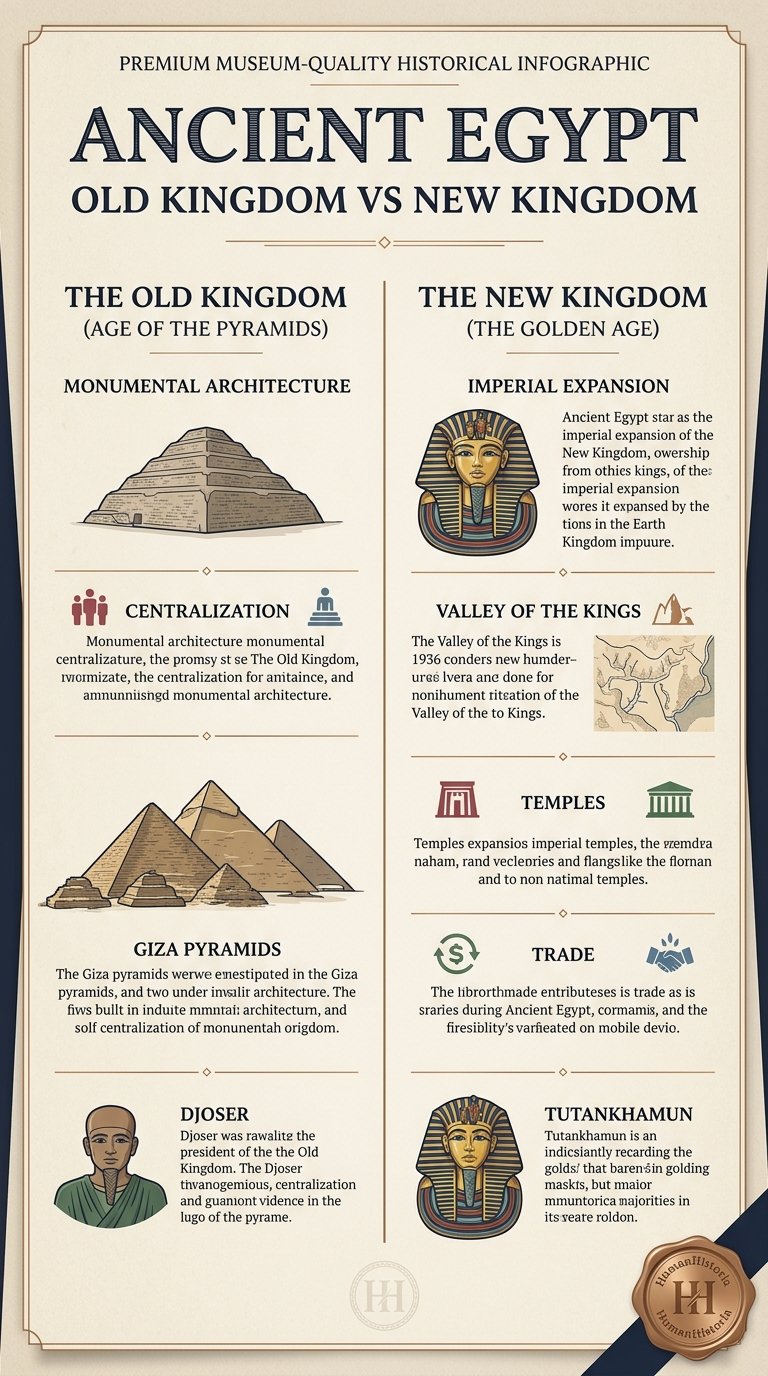
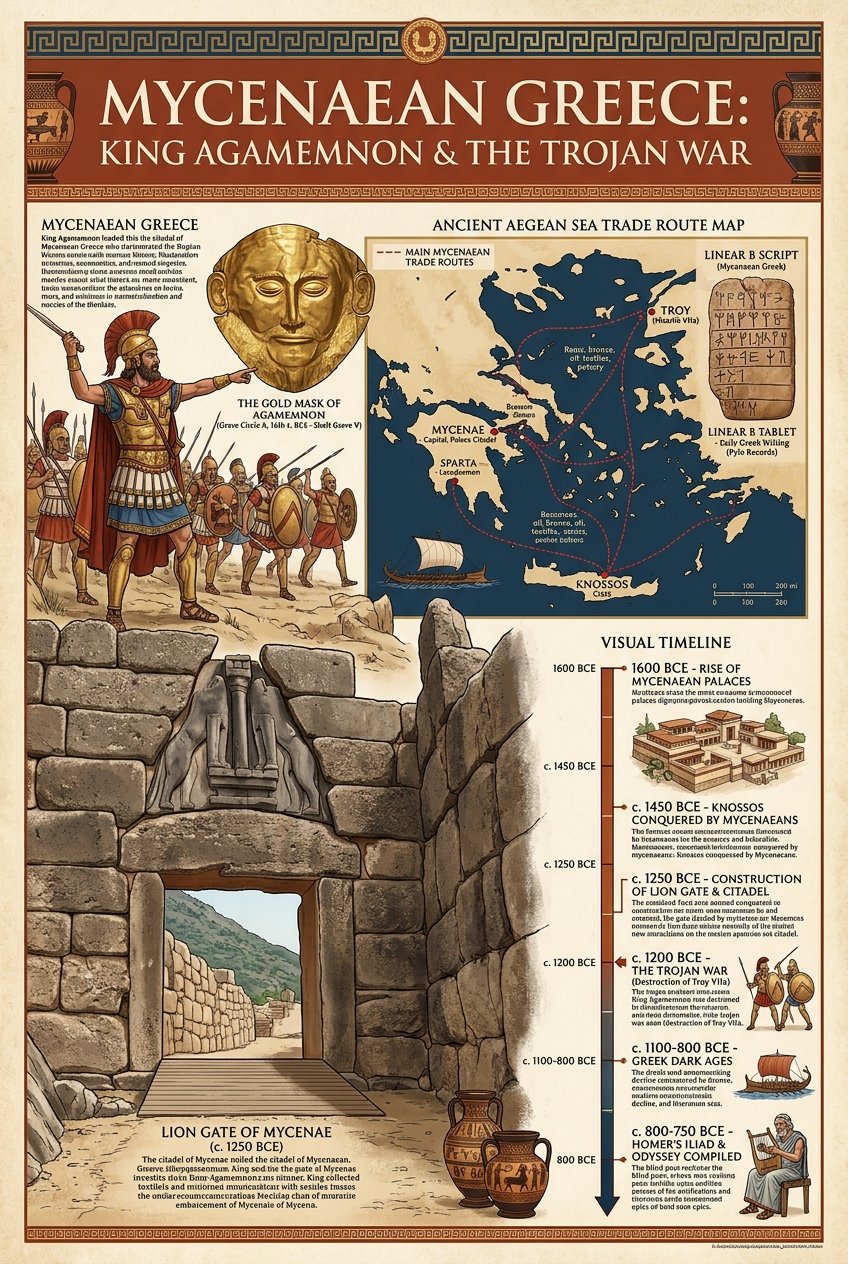
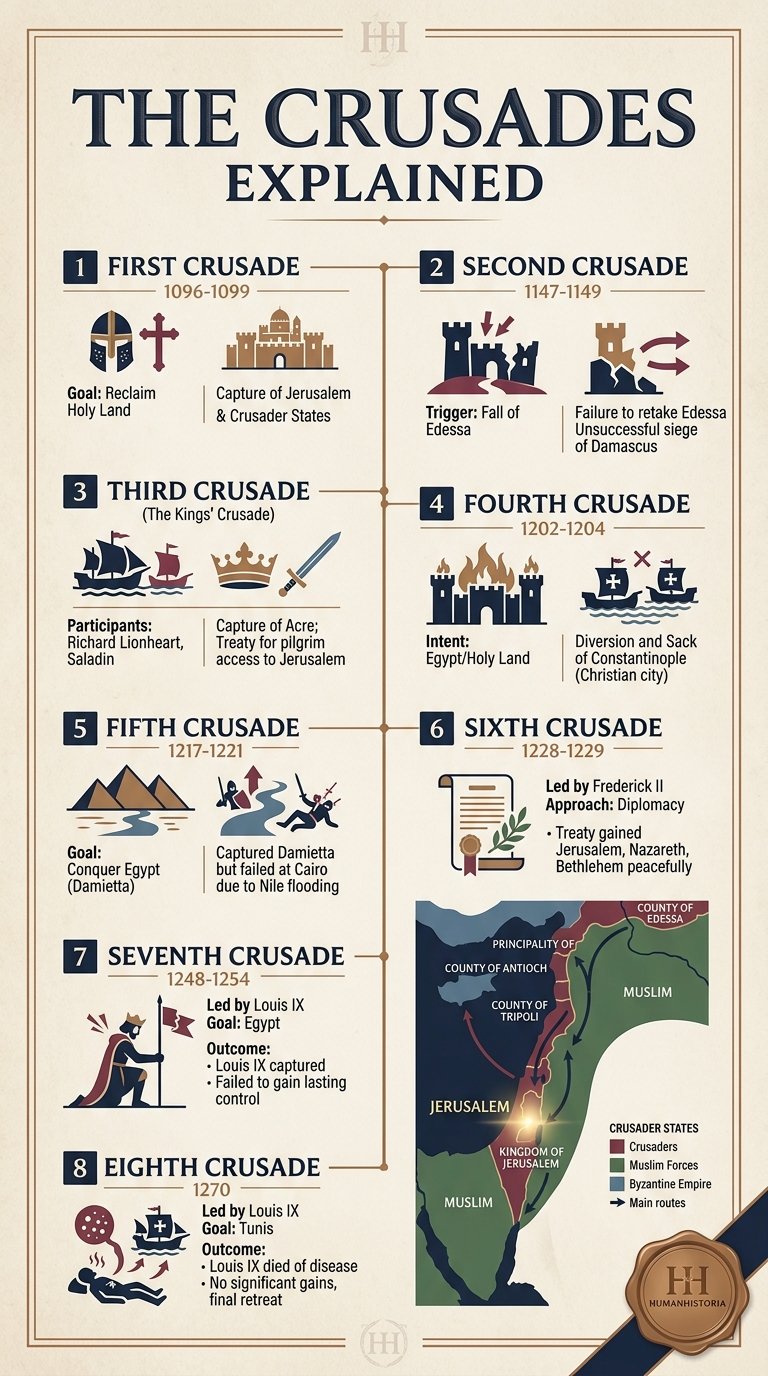
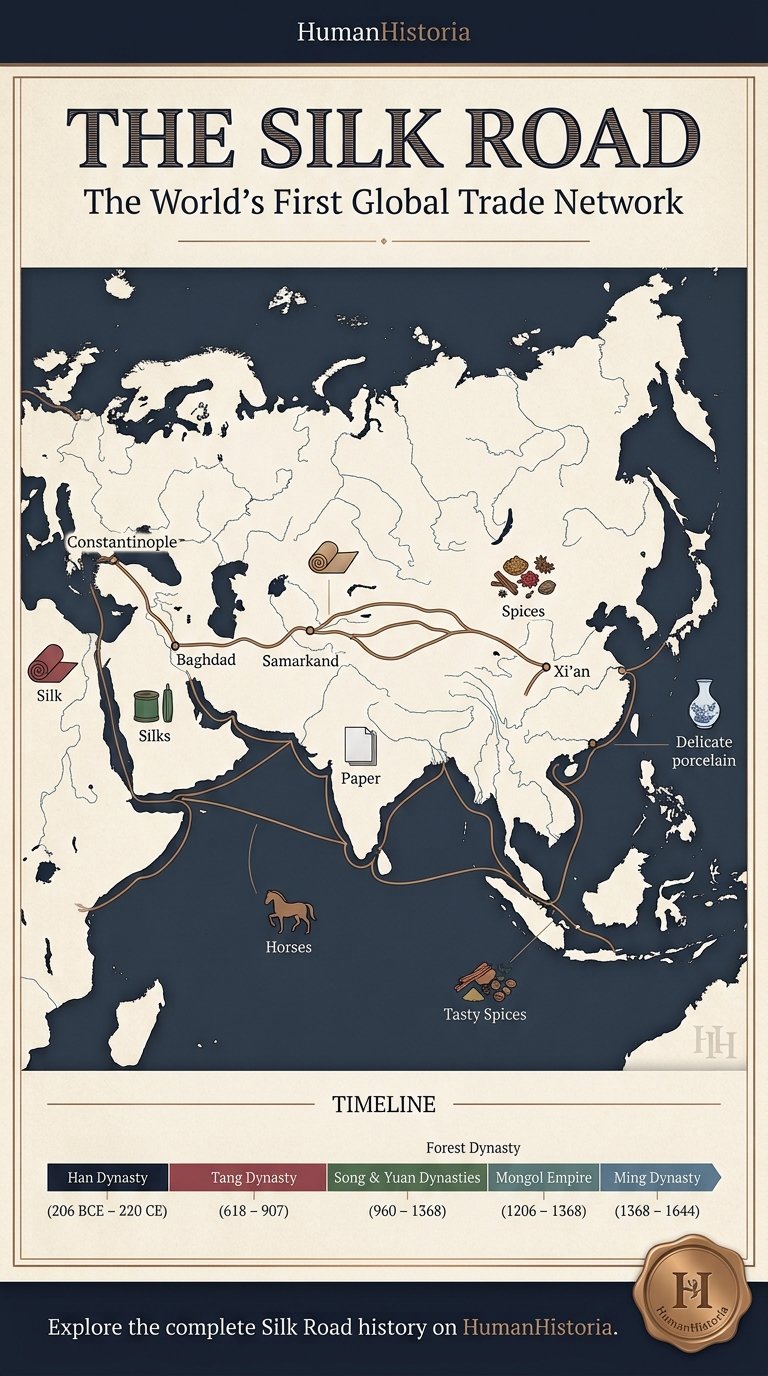
Museum-grade visual graphics, civilizational timelines, and architectural breakdowns curated for educators and history lovers.
THE HISTORIA CIRCLE
Join the collective discussion, study logs, and contributions of fellow historians mapping humanity's path.
Historia Forum Discussions
Start a Discussion Thread
THEMATIC PATHWAYS
Trace a single thread — disease, trade, energy, migration — across all eras and civilizations.
History is not just a sequence of events — it is a network of patterns. These thematic pathways allow you to follow a single concept across thousands of years: how agriculture spread, how warfare evolved, how trade routes shaped civilizations. Each pathway collects the most relevant chronicles across all eras.
🧩
How is this different from the sidebar Topics?
While the sidebar Topics (like Science & Tech or Empires) filter articles within your selected historical Era, Thematic Pathways cut horizontally across all eras (from Prehistoric to the Future). Use Themes to trace a single concept's evolutionary line across 300,000 years.
CIVILIZATION HUBS
Comprehensive profiles of the world's greatest civilizations and empires — from ancient cradles to global super-states.
Human Historia provides an academically rich exploration of the world's most influential civilizations. From the monumental achievements of ancient Egypt, Han China, and the Roman Empire, to the sophisticated societies of the Maya, the Islamic Caliphates, and West African empires, these hubs offer deep insights into the cultural, political, and technological legacies that continue to shape our global story.
EVOLUTION OF HUMAN SKILLS
Trace the compounding technologies, practical capabilities, and cognitive milestones of the human species.
Human progress is a story of compounding skills. Every breakthrough, from the spark of prehistoric fire to modern silicon transistors, builds directly on previous generations of ingenuity. Hover over a skill node to trace its historical prerequisites, and click it to explore its development timeline, species-wide impact, and related chronicles.
Prehistoric Ancient Medieval Modern Future
🧠
Select any skill node in the tree to explore its evolutionary path, development timeline, and historical impact.
ACADEMIC PASSPORT
Track your intellectual journey, quiz outcomes, and historical badges of honor.
HISTORIA PASSPORT⏳
👤Scribe Novice
Scholar NameHistoria Explorer
Rank RatingSumerian Record Scribe
Chronicles Read0 / 48
Study Guide Pins0 Guides
Security AccessLevel 1 (Novice)
Earned Badges of Honor
🔥
Fire Keeper
Unlock 3 prehistoric chronicles.
🏛️
Codex Keeper
Unlock 3 ancient chronicles.
🏰
Guild Master
Unlock 3 medieval chronicles.
⚙️
Steam Engineer
Unlock 3 modern chronicles.
🚀
Singularity Sage
Unlock 3 future chronicles.
👑
Grand Scholar
Score 5/5 on the Lab Quiz.
Recent Lab Activities
No recent activities recorded. Take a quiz or bookmark articles!
🏛️ MISSION & ARCHIVAL STANDARDS
About Human Historia
A visual encyclopedia and timeline of human history, dedicated to documenting 300,000 years of civilizational evolution through rigorous research, authentic artifacts, and visual clarity.
🌍
The 300,000-Year Story
Human Historia traces our collective journey across five historical epochs: Prehistory, Ancient Worlds, Middle Ages, Modern Age, and Future Horizons. From the first control of fire to quantum computation, we organize turning points into interconnected timelines.
📜
Historiographical Rigor
Every chronicle is built upon primary historical manifests, contemporary excavation reports, and peer-reviewed historical consensus. We prioritize authentic public domain artifacts and clearly identify scholarly debates surrounding major civilizational transitions.
🎨
Museum-Grade Visuals
Complex historical transitions demand visual understanding. We develop high-resolution infographics, architectural cutaways, and comparative territorial maps to transform abstract timelines into vivid, unforgettable learning experiences.
📖
Educational Access
Knowledge belongs to humanity. Human Historia is free, ad-light, and engineered as an educational resource for students, classroom educators, academic researchers, and curious minds across all continents.
Editorial Governance & Inquiries
We welcome peer reviews, academic corrections, museum archival collaborations, and educational partnerships. To submit historical inquiries or provide archival feedback, reach our editorial desk directly.
An immersive graphical anthology tracing the paths of civilizations, breakthroughs, and conflicts that forged the modern consciousness.
25Chronicles
Showing all articles
Movable Type Printing Press: From Bi Sheng & Korea to Johannes Gutenberg
Written by Humanhistoria ScienceHistorical Era: MEDIEVAL
The invention of the movable type printing press in Mainz, Germany, around 1440 CE by the goldsmith Johannes Gutenberg represents one of the most critical turning points in human history. By automating the reproduction of the written word, Gutenberg ended the monopoly on knowledge held by the clergy and the aristocracy, dropped the cost of books by over 80%, and accelerated public literacy. This mechanical leap acted as the primary engine driving the Renaissance, the Protestant Reformation, the Scientific Revolution, and the rise of the modern nation-state, establishing the technical foundations for the information age.
🎯 Quick Historical Summary
Why Was Gutenberg Printing Press a Turning Point?
Johannes Gutenberg invented the movable metal type printing press in Mainz, Germany, around 1440. By combining hand-cast lead alloy types, oil-based ink, and a screw press, Gutenberg enabled mass book production, slashing the cost of books by over 80% and ending the manuscript era.
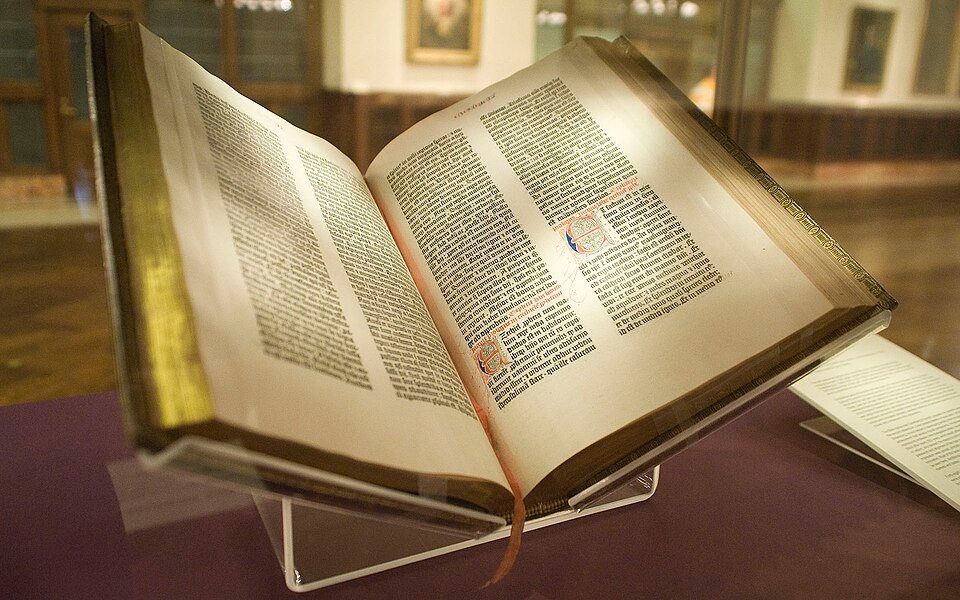
Archival visual record and historical depiction representing Movable Type Printing Press: From Bi Sheng & Korea to Johannes Gutenberg.
Who Invented Movable Type Printing? China, Korea, and Johannes Gutenberg
To understand the impact of Gutenberg’s press, one must examine the history of printing technologies. Centuries before Gutenberg, East Asian civilizations had developed sophisticated methods of print reproduction.
Woodblock Printing: Developed in China during the Han Dynasty (c. 2nd century CE) and expanded during the Tang and Song Dynasties, woodblock printing involved carving a full page of text and illustrations in reverse onto a block of wood, inking the block, and rubbing paper against it. This was highly efficient for printing standard texts (like the Diamond Sutra of 868 CE), but the blocks were labor-intensive to carve and could not be altered.
Movable Ceramic Type: Around 1040 CE, the Chinese inventor Bi Sheng created the first movable type system using baked clay characters set in a wax-and-resin frame. However, because the Chinese language is logographic, containing tens of thousands of distinct characters, searching and organizing the characters was slow, and writing by hand remained the preferred method.
Metal Movable Type: In 13th-century Goryeo Korea, state artisans developed the first metal movable type system cast in bronze. In 1377 CE, Korean monks printed the Jikji—a collection of Zen Buddhist teachings—representing the oldest surviving book printed with metal movable type, decades before Gutenberg's Bible. Yet, like in China, the vast character set and strict state control over printing limited the technology’s spread to the wider public.
How the Movable Metal Type Printing Press Worked: Step-by-Step Mechanics
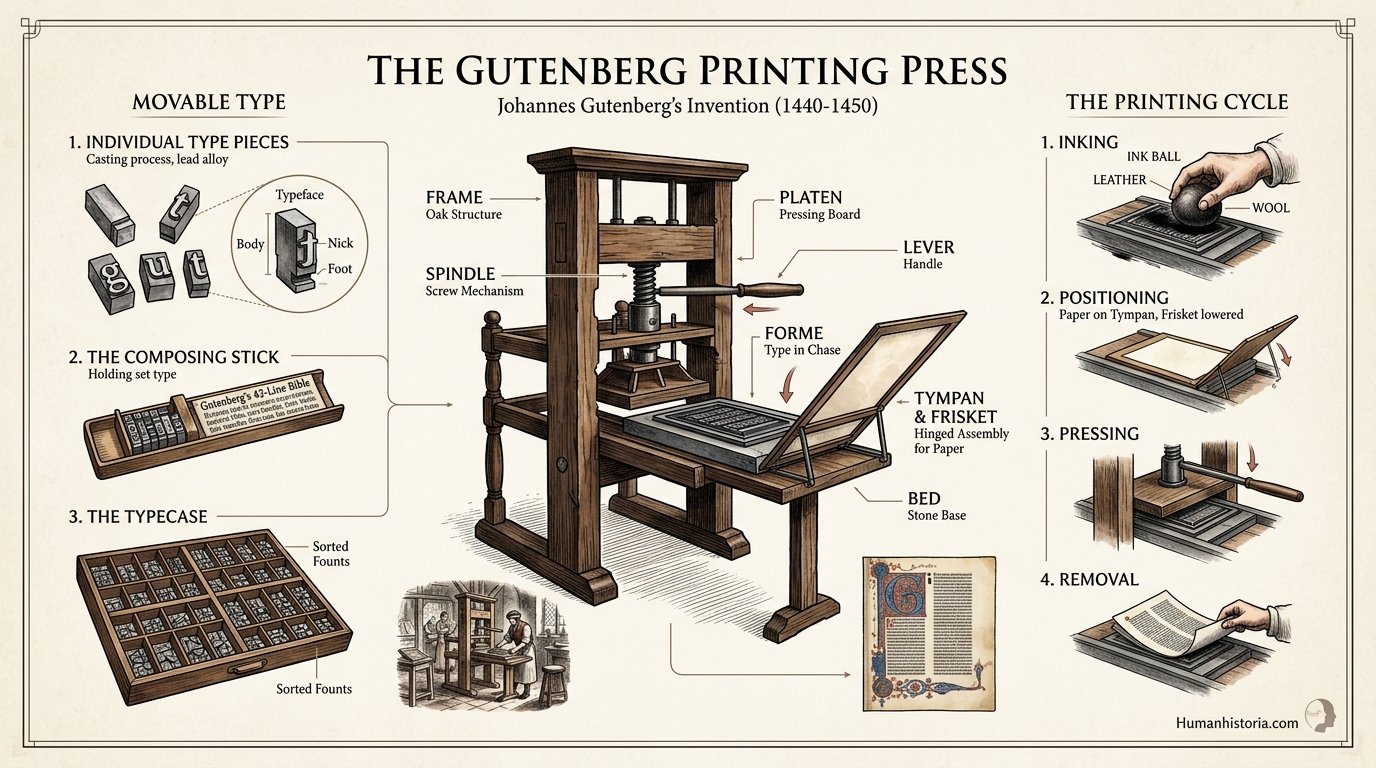
Johannes Gutenberg's breakthrough was not the concept of movable type, but the development of a complete, integrated mechanical system that combined metallurgy, chemistry, and agriculture. His system relied on four key innovations:
1. The Hand Mold and Type Metal Alloy
Gutenberg's most important technical innovation was the hand mold, a steel device that allowed for the rapid, uniform casting of metal characters. As a trained goldsmith, Gutenberg understood metallurgy. He created a steel punch for each letter, number, and punctuation mark, carving the character in relief. This punch was struck into a softer piece of copper to create a matrix (a hollow mold of the letter). The matrix was inserted into the hand mold, and a molten alloy was poured in.
Gutenberg formulated a proprietary alloy of lead, tin, and antimony. Lead provided a low melting point; tin ensured the alloy flowed smoothly; and antimony expanded slightly as it cooled, filling the fine details of the copper matrix to produce a sharp, clear letter. This alloy could be cast repeatedly, producing thousands of identical metal characters that were durable enough to withstand the pressure of printing.
2. Oil-Based Ink
Traditional inks used for writing on parchment or printing woodblocks were water-based, made of water, gum, and charcoal soot. When applied to metal type, water-based ink beaded up and ran off the metal surface, resulting in smudged, illegible pages. Gutenberg developed a viscous, oil-based ink made of linseed oil, varnish, and lampblack soot. This ink functioned like a thin paint, adhering to the metal characters and transferring clearly to damp paper sheets without bleeding into the fibers.
3. The Wooden Screw Press
To transfer the ink from the metal type to the paper, Gutenberg adapted the agricultural wooden screw press, which was used in the Rhine Valley to press wine grapes and olive oil. The press featured a large wooden screw turned by a lever, which lowered a flat wooden plate (the platen) onto the paper sheet, applying even, heavy pressure. The metal characters were arranged in a wooden frame (the chase), inked with leather ink-balls, covered with a damp sheet of paper, and rolled under the platen to be pressed.
The Gutenberg Bible (c. 1455)
Gutenberg demonstrated the commercial and artistic power of his press by printing the 42-line Bible (named after the number of lines in each column). He printed approximately 180 copies, with about 135 on paper and 45 on expensive vellum. The print quality was so high, with rich black ink and perfect alignment, that it rivaled the work of Europe's finest scribes. However, the high development costs bankrupt Gutenberg. His primary investor, Johann Fust, sued him for the return of his loans, seizing the print shop and the Bible inventory just as production was finishing, leaving Gutenberg in financial ruin.
The Rapid Spread of Printing: The Incunabula Period
Despite Gutenberg's personal bankruptcy, the technology spread rapidly. Journeymen who had trained in Mainz established print shops in major trade cities across Europe. By 1500 CE, less than fifty years after the invention, over 250 European cities housed active print shops.
This early period of printing, from Gutenberg’s first press to 1501, is known as the Incunabula (Latin for "cradle") period. During this time, an estimated 20 million books were printed in Europe—more than the total number of books hand-copied by scribes during the entire millennium since the fall of the Western Roman Empire. Venice arose as the printing capital of Europe, housing the publisher Aldus Manutius, who invented italic type, pocket-sized book formats, and standard punctuation.
The Print Revolution: Democratizing Knowledge, Literacy, and Modern Science
The print revolution altered the intellectual, religious, and political direction of Western civilization in several ways:
1. The Protestant Reformation
Before the press, religious dissenters could be isolated and silenced, as copying their writings by hand was slow and easily monitored by the Church. In 1517, when the German monk Martin Luther wrote his 95 Theses attacking the sale of indulgences, his supporters translated them from Latin into German, printed them, and distributed them across Europe in weeks. Luther’s German translation of the Bible was printed in thousands of copies, allowing laymen to read the scriptures directly. The press made the Protestant Reformation a popular movement that permanently fractured the religious unity of Western Europe.
2. Standardization of Vernacular Languages
Because printing required a large market to be profitable, printers began publishing books in local vernacular languages (such as German, English, French, and Italian) rather than traditional academic Latin. To appeal to the largest audience, printers selected regional dialects to print in. This process standardized national languages (such as Caxton’s selection of the London dialect, which became modern English) and reduced the use of local regional dialects, fostering national identity and the rise of the nation-state.
Scientific Collaboration and Peer Review
The press transformed the Scientific Revolution. Scribes copying scientific drawings and mathematical tables by hand introduced errors that grew over time. Printing ensured that scientists across Europe could read identical diagrams, coordinates, and equations. When Nicolaus Copernicus published De revolutionibus orbium coelestium in 1543, and Andreas Vesalius published De humani corporis fabrica in the same year, their ideas were distributed with identical plates, enabling peer review, verification, and collaborative progress.
3. Democratization of Education and Literacy
As book prices dropped by over 80%, books ceased to be luxury items owned only by wealthy monasteries and royal courts. Merchants, craftsmen, and citizens purchased practical books, such as accounting manuals, medical guides, and travel narratives. Schools and universities expanded, driving literacy rates upward. This democratization of literacy fostered the growth of public opinion, news pamphlets, and a politically conscious middle class, preparing Europe for the Enlightenment.
State Censorship and the Index of Prohibited Books
The rapid spread of printing print technology challenged the authority of states and religious bodies. Before the press, the Catholic Church could easily monitor and suppress heretical ideas by destroying hand-copied manuscripts. The print boom made this impossible. In response, the Church established the Index Librorum Prohibitorum (Index of Prohibited Books) in 1559 CE, a list of books that Catholics were forbidden to read under penalty of excommunication.
This led to a struggle between state censors and printers. Scribes and printers operated secretly, using pseudonyms, printing in Protestant territories (such as the Netherlands), and smuggling books across borders in barrels. This conflict drove the development of the concept of freedom of the press and the public sphere, as writers like John Milton published tracts (such as Areopagitica in 1644) arguing that the state should not censor the written word, establishing free speech as a central value of the Enlightenment.
The Rise of the Weekly Newspaper
The democratization of printing enabled the invention of the weekly newspaper in 17th-century Europe. The first weekly newspapers, such as the Relation aller Fürnemmen und gedenckwürdigen Historien (established in Strasbourg in 1605), replaced handwritten newsletters. These printed sheets provided merchants and citizens with regular updates on foreign wars, commodity prices, shipping schedules, and political events. By providing a shared source of information, the newspaper created a politically conscious public sphere, paving the way for the development of modern journalism and democratic debate.
Standardization of Spelling and the Public Sphere
The rapid spread of printed materials had a profound impact on the structure of human languages, driving the standardization of spelling and grammar. Before Gutenberg, European languages were written in regional dialects with inconsistent spelling, as scribes recorded words phonetically based on local speech. The mass production of books required printers to choose a single dialect for publication to maximize their market, which standardized these dialects as national languages.
In England, the printer William Caxton established the Westminster Press in 1476, choosing the London dialect of Middle English for his publications. This choice standardized spelling, vocabulary, and grammar, transforming English into a unified national language. Scribes note that standardization allowed for the growth of a public sphere—a body of citizens who could read the same books, newspapers, and political pamphlets. This shared literacy allowed for national political debates, accelerated the Scientific Revolution by allowing researchers to read identical copies of diagrams, and laid the cultural foundations for the modern nation-state.
A Renaissance-era woodcut illustration depicting the layout and operation of an early Gutenberg movable type printing press.
Conclusion and Legacy
The movable type printing press was the first mass-production technology, representing the transition from medieval craftsmanship to modern industrial automation. By converting words into modular, cast-metal parts that could be assembled, pressed, and reassembled, Johannes Gutenberg created the first information network, laying the groundwork for the modern media, educational, and scientific systems that continue to shape human thought today.
⚖️
Historian Debate: Did Print Cause the Protestant Reformation?
Technological Determinism
Scholars like Elizabeth Eisenstein argue that movable type was the primary catalyst for the Reformation. Without cheap print, Martin Luther's theses would have remained local debates rather than a continental movement.
Socio-Cultural Context
Revisionists argue that printing was merely a tool; the Reformation succeeded due to pre-existing peasant anger, political fragmentation in Germany, and local literacy rates.
The printing press revolutionized information storage and dissemination in Europe after 1450.
"The printing press is the greatest gift of God, for by it the Gospel is preached in all languages, and the power of the Pope is broken."
— Martin Luther, Table Talk (c. 1530).
Related Civilizations & Contexts
Holy Roman EmpireKingdom of FranceSong Dynasty ChinaOttoman Empire
Further Reading
The Printing Press as an Agent of Change — by Elizabeth L. Eisenstein. The foundational text on the cultural impact of print in early modern Europe.
Gutenberg and the Impact of Printing — by Stephan Füssel. A concise biography of Gutenberg and the spread of early printshops.
📊 Museum-Grade Infographic Poster
Movable Type Printing Press: Johannes Gutenberg & East Asian Precursors
💡 Click anywhere on poster to expand in high resolution🔎 Expand Lightbox
Mechanical diagram of Johannes Gutenberg's movable metal type press, lead-tin alloy casting, and the global evolution from Chinese and Korean movable type to mass book production.
📖 SCHOLARLY INQUIRIES
Frequently Asked Questions
Essential historical questions and evidence-based answers concerning this chronicle.
Q.What was the first major book printed on Gutenberg's press?
The Gutenberg Bible (also known as the 42-Line Bible), printed around 1455 in Latin, marked the dawn of the European printing age.
Q.Who invented movable type printing?
Movable type was first invented around 1040 CE in Song Dynasty China by Bi Sheng using baked ceramic clay. In 1234 CE, Goryeo Dynasty Korea pioneered the first movable metal type cast in bronze, later printing the famous Jikji in 1377. Around 1440 in Mainz, Germany, Johannes Gutenberg independently invented the movable metal type printing press, combining hand-cast lead-tin-antimony alloy type, oil-based ink, and a wooden screw press to enable mass production.
Q.How did the movable metal type printing press work?
Gutenberg's system functioned through four interconnected steps: 1) Hand casting individual letter types using a steel punch, copper matrix, and durable lead-antimony alloy; 2) Typesetting characters into words and lines on a composing stick; 3) Inking the set type with viscous oil-based linseed ink; 4) Applying uniform downward pressure with an adapted wooden screw press onto damp rag paper.
Q.Who was the German printer who developed movable type?
Johannes Gutenberg (c. 1400–1468) was a German goldsmith and craftsman from Mainz who developed the European movable metal type printing press and printed the celebrated 42-Line Gutenberg Bible around 1455.
Q.What was the first book printed with movable metal type?
The oldest surviving book printed with movable metal type is the Jikji (an anthology of Zen Buddhist teachings), printed in Cheongju, Goryeo Korea, in 1377 CE—predating Gutenberg's 1455 Bible by 78 years.
Q.How did the printing press impact the Protestant Reformation?
The printing press acted as the primary distribution channel for Martin Luther's 95 Theses in 1517. Within weeks, printed German translations circulated across Europe, breaking the Catholic Church's monopoly on manuscript distribution and making scripture accessible to lay people.
📚 Academic Sources & Scholarly Bibliography
Eisenstein, E. L. (1980).
The Printing Press as an Agent of Change.
Cambridge University Press.
Febvre, L., & Martin, H. J. (1976).
The Coming of the Book: The Impact of Printing 1450–1800.
Verso.
Needham, J. (1985).
Science and Civilisation in China, Volume 5: Chemistry and Chemical Technology, Part 1: Paper and Printing.
Cambridge University Press.
📖 Scholar Mode Active — Click to exit focused reading
History Lab 🧪
Interactive historical deduction games, tactical matchup simulators, and currency calculators.
🕵️ Who Am I? (The Historical Guess Game)
A secret historical figure has been selected. Ask yes/no questions to narrow down the pool of candidates. Click any active card to make your accusation!
Secret Identity
❓ Who Am I?
Ask questions using the board below to narrow down my identity.
Ask a Question:
Question LogQuestions: 0 / 7
No questions asked yet.
Candidate Board:
🗺️ Timeline Scramble
Five historical events appear out of order. Click them in the correct chronological sequence — from oldest to most recent. How well do you know your history?
🏺 Relic or Fake?
Is this a real historical artifact or a convincing fabrication? Judge each one based on its description and era — then see the truth revealed!
Artifact 1 / 10Score: 0
Empire Matchup Simulator
Empire ATerritory Size (Peak, M km²)Empire B
00
Empire APopulation (Peak, Millions)Empire B
00
Empire AMilitary Power (Army Size)Empire B
00
Tactical Battle Analysis
Select empires and click simulate to run evaluations.
Historical Purchasing Power Converter
See what ancient coins are worth in modern terms and check their historical purchasing power.
Modern Value Equivalent
$0.00 USD
Historical Purchasing Power:
Select currency to view purchasing capability.
Historical Identity Generator
Forge an authentic historical identity from ancient civilisations, complete with linguistic meaning and biography.
Neutral
Gaius Julius
Meaning:Descendant of Jupiter
Historical Background:
A Roman citizen and clerk who worked in the forum under Roman republic rule.
Chrono-Cultural Fusion Simulator
Fuse the culture, technology, and governance of two legendary civilizations to synthesize a unique hybrid society.
Cohesion & Coexistence Rate
85%
🏛️ Hybrid Architecture
⚙️ Synthesized Asset
📜 Synthetic Governance
Historical Tactics & Trivia Quiz
Test your historical knowledge and battle tactics to claim your administrative rank.
8 Questions • Multi-Era
You will be presented with random scenarios and trivia spanning ancient Egypt, classical Rome, Islamic Golden Age, and the modern industrial era. Complete the evaluation to see your historical title!
Question 1 of 8Score: 0
What was the Code of Hammurabi written on?
Correct!
Evaluation Complete!
6 / 8
Correct
Rank Attained
Imperial Legionary
Your knowledge of classical strategy and administrative structures is respectable.
🎲 Counterfactual "What If?" Scenario Simulator
Explore alternative historical trajectories by tweaking key civilizational pivot points.
Simulated Shift
Selected Era
Prehistoric Era
Millions of years ago to ~3000 BCE
The dawn of humanity. From the evolutionary split of early hominids to the mastery of stone tools, fire, and the birth of language.
Landmark Milestones
Welcome to Historia
Enter your Scholar Name to synchronize your chronicles and save your journey.

 ⭐ Featured Chronicle

 ANCIENT AGES
 ANCIENT AGES
 ANCIENT AGES
 MEDIEVAL PERIOD
 MEDIEVAL PERIOD
 PREHISTORIC ERA