~7,000 Years from farming to writing
๐Ÿ›๏ธ

Ancient Ages

c. 3,200 BCE โ€” 500 CE ยท Empires, Laws & Philosophy
~400 Years from Roman fall to medieval rebirth
๐Ÿฐ

Medieval Period

c. 500 CE โ€” 1500 CE ยท Empires of Faith, Trade & Castles
~50 Years from printing press to Scientific Revolution
โš™๏ธ

Modern Age

c. 1450 CE โ€” 2000 CE ยท Revolutions, Industry & Discovery
~50 Years from computers to quantum age

THE ARTIFACT GALLERY

Examine the tangible relics, physical tokens, and revolutionary machines that shaped civilizational growth.

๐ŸŽฅ VIDEO HUB & SHORTS

Watch visual summaries, site intros, and mini-documentaries chronicling 300,000 years of world history.

๐Ÿ“Š HISTORICAL INFOGRAPHICS ARCHIVE

Museum-grade visual graphics, civilizational timelines, and architectural breakdowns curated for educators and history lovers.

THE HISTORIA CIRCLE

Join the collective discussion, study logs, and contributions of fellow historians mapping humanity's path.

Historia Forum Discussions

Start a Discussion Thread

THEMATIC PATHWAYS

Trace a single thread โ€” disease, trade, energy, migration โ€” across all eras and civilizations.

History is not just a sequence of events โ€” it is a network of patterns. These thematic pathways allow you to follow a single concept across thousands of years: how agriculture spread, how warfare evolved, how trade routes shaped civilizations. Each pathway collects the most relevant chronicles across all eras.

๐Ÿงฉ
How is this different from the sidebar Topics?
While the sidebar Topics (like Science & Tech or Empires) filter articles within your selected historical Era, Thematic Pathways cut horizontally across all eras (from Prehistoric to the Future). Use Themes to trace a single concept's evolutionary line across 300,000 years.

CIVILIZATION HUBS

Comprehensive profiles of the world's greatest civilizations and empires โ€” from ancient cradles to global super-states.

Human Historia provides an academically rich exploration of the world's most influential civilizations. From the monumental achievements of ancient Egypt, Han China, and the Roman Empire, to the sophisticated societies of the Maya, the Islamic Caliphates, and West African empires, these hubs offer deep insights into the cultural, political, and technological legacies that continue to shape our global story.

EVOLUTION OF HUMAN SKILLS

Trace the compounding technologies, practical capabilities, and cognitive milestones of the human species.

Human progress is a story of compounding skills. Every breakthrough, from the spark of prehistoric fire to modern silicon transistors, builds directly on previous generations of ingenuity. Hover over a skill node to trace its historical prerequisites, and click it to explore its development timeline, species-wide impact, and related chronicles.

Prehistoric Ancient Medieval Modern Future
๐Ÿง 

Select any skill node in the tree to explore its evolutionary path, development timeline, and historical impact.

ACADEMIC PASSPORT

Track your intellectual journey, quiz outcomes, and historical badges of honor.
HISTORIA PASSPORT โณ
๐Ÿ‘ค Scribe Novice
Scholar Name Historia Explorer
Rank Rating Sumerian Record Scribe
Chronicles Read 0 / 48
Study Guide Pins 0 Guides
Security Access Level 1 (Novice)

Earned Badges of Honor

๐Ÿ”ฅ
Fire Keeper
Unlock 3 prehistoric chronicles.
๐Ÿ›๏ธ
Codex Keeper
Unlock 3 ancient chronicles.
๐Ÿฐ
Guild Master
Unlock 3 medieval chronicles.
โš™๏ธ
Steam Engineer
Unlock 3 modern chronicles.
๐Ÿš€
Singularity Sage
Unlock 3 future chronicles.
๐Ÿ‘‘
Grand Scholar
Score 5/5 on the Lab Quiz.

Recent Lab Activities

No recent activities recorded. Take a quiz or bookmark articles!
Curated Exhibition

Human Historia

An immersive graphical anthology tracing the paths of civilizations, breakthroughs, and conflicts that forged the modern consciousness.

25Chronicles
Showing all articles

The Scientific Revolution (1543-1687): Copernicus, Galileo & Newton

Written by Historia Science Historical Era: MODERN
* Note: Cover image is an AI-generated historical illustration.

๐Ÿง Key Chronicle Takeaway (Atomic Summary)

How Copernicus, Kepler, Galileo, and Newton dismantled geocentrism and codified modern mechanical physics.

The Scientific Revolution, spanning the 16th and 17th centuries, represents the most profound intellectual shift in human history. It saw the collapse of the ancient Aristotelian-Ptolemaic worldview, which placed a stationary Earth at the center of a finite universe, and the birth of modern physics and astronomy. By replacing appeals to scholastic authority and theological dogma with empirical observation, mathematical description, and systematic experimentation, thinkers like Nicolaus Copernicus, Johannes Kepler, Galileo Galilei, and Isaac Newton formulated a new universe governed by universal, mathematical laws. This revolution not only redefined humanity's place in the cosmos, but also established the modern scientific method as the primary tool for understanding the natural world.

The Scholastic Cosmos: Aristotelian-Ptolemaic Authority

Prior to the 16th century, European natural philosophy was dominated by the teachings of the Greek philosopher Aristotle (4th century BCE) and the astronomer Ptolemy (2nd century CE), which had been integrated into Christian theology by medieval scholars like Thomas Aquinas. This scholastic system was hierarchical and qualitative:

  • The Sublunary Realm: The Earth was stationary at the center of the universe, composed of four heavy, mutable elements: earth, water, air, and fire. Motion here was linear and imperfect; objects naturally fell to the center of the Earth or rose to the atmosphere unless acted upon by a force.
  • The Supralunary Realm: The heavens, beginning at the Moon, were composed of a fifth, immutable element: the aether. Here, motion was eternal and circular, representing mathematical perfection. Planets were carried on solid crystalline spheres around the Earth.

To explain the irregular movements of the planets, including retrograde motion (when planets appear to reverse direction), Ptolemy introduced complex mathematical tools: deferents (large circular paths centered near the Earth) and epicycles (smaller circular paths that planets traced while traveling along the deferent). While mathematically complex, this model aligned with daily sensory experienceโ€”the Earth felt stationary, and the sun and stars appeared to move across the sky.

Copernicus and the Heliocentric Threat

In 1543, the Polish canon and astronomer Nicolaus Copernicus published De revolutionibus orbium coelestium (On the Revolutions of the Heavenly Spheres). Fearing controversy, Copernicus delayed publication until he was on his deathbed. His treatise introduced a heliocentric (sun-centered) model: the Sun sat stationary at the center of the universe, while the Earth and other planets revolved around it in circular orbits. The Earth also rotated on its axis once every 24 hours, explaining the daily motion of the stars.

Heliocentrism offered a simpler explanation for retrograde motion. It was a perspective effect: as the faster-moving Earth overtook outer, slower-moving planets like Mars or Jupiter, those planets appeared to drift backward against the stars. However, Copernicusโ€™ model faced physical and theological objections:

  • The Physical Objection: If the Earth rotated rapidly on its axis and hurtled through space, why did objects dropped from towers fall straight down, rather than landing far behind? Why weren't clouds and birds left behind in the atmosphere?
  • The Theological Objection: The model contradicted passages of scripture (e.g., Joshua commanding the sun to stand still in the sky), which were interpreted as declaring the Earth stationary.

Because Copernicus still relied on perfect circular orbits, his model was not significantly more accurate than Ptolemy's and required many epicycles to align with observations. For decades, it was viewed as a useful mathematical fiction rather than a description of physical reality.

The Tychonic System: A Mathematical Compromise

To resolve the heliocentric debate, the Danish astronomer Tycho Brahe proposed a hybrid model in the late 16th century: the Tychonic System. In this system, the Earth remained stationary at the center of the universe, with the Moon and Sun revolving around it. However, all other planets (Mercury, Venus, Mars, Jupiter, Saturn) revolved around the moving Sun. This model was mathematically identical to the Copernican system but avoided the physical objection of a moving Earth. Tychoโ€™s major contribution, however, was empirical: using advanced instruments on his island observatory, Uraniborg, he recorded decades of astronomical data with unprecedented accuracy, providing the data that would dismantle the circular universe.

Kepler and the Elliptical Cosmos

Following Tycho Braheโ€™s death, his assistant, the German mathematician Johannes Kepler, inherited his observations. Kepler set out to calculate the orbit of Mars. For years, he tried to fit Tycho's data into circular orbits, but repeatedly found a discrepancy of 8 arcminutesโ€”a tiny difference, but one that Tycho's precise instruments could not have made by mistake. Kepler wrote: "These eight minutes alone pointed the way to a complete reformation of astronomy."

Kepler abandoned the ancient assumption of circular orbits. In his 1609 work, Astronomia Nova (New Astronomy), he formulated his first two laws of planetary motion, later adding the third:

  1. The Law of Ellipses: Planets move in elliptical orbits around the Sun, with the Sun sitting at one of the two foci.
  2. The Law of Equal Areas: A line segment joining a planet and the Sun sweeps out equal areas during equal intervals of time. This meant planets speed up when close to the Sun (perihelion) and slow down when far away (aphelion).
  3. The Harmonic Law (1619): The square of a planet's orbital period (T) is proportional to the cube of the semi-major axis of its orbit (r) (Tยฒ โˆ rยณ), proving a mathematical relationship linked all planets.

Keplerโ€™s laws swept away Ptolemy's epicycles and deferents. By describing planetary motion as elliptical and variable, he created the first highly accurate mathematical description of the solar system, though he could not explain *why* the planets moved in this manner.

Galileo's Telescope and the Trial of 1633

In 1609, the Italian polymath Galileo Galilei built a refracting telescope, turning it toward the night sky. His observations provided the first direct observational evidence supporting Copernicus:

  • The Moonโ€™s Surface: Galileo saw craters, mountains, and valleys, proving the Moon was not a perfect, smooth supralunary sphere, but a rugged geological body like the Earth.
  • The Moons of Jupiter: He discovered four satellites orbiting Jupiter. This proved that not all celestial bodies revolved around the Earth, destroying the core assumption of geocentrism.
  • The Phases of Venus: Galileo observed that Venus went through a full cycle of phases (crescent to gibbous), which was geometrically impossible in the Ptolemaic system but predicted by heliocentrism.

In 1632, Galileo published the Dialogue Concerning the Two Chief World Systems, a defense of heliocentrism written in Italian to reach a public audience. The book featured a character named Simplicio (Simpleton) who defended the Aristotelian geocentric view, which was seen as an insult to Pope Urban VIII.

In 1633, Galileo was summoned before the Roman Inquisition. He was forced under threat of torture to abjure his heliocentric beliefs, and his *Dialogue* was placed on the Index of Forbidden Books. Galileo was sentenced to life house arrest in Arcetri, where he spent his final years developing the laws of mechanics, laying the foundation for modern physics.

The Experimentation Mandate: The Royal Society

In 1660, a group of natural philosophers in London founded the Royal Society to promote empirical research. Guided by Francis Baconโ€™s philosophy of inductive reasoning, the Societyโ€™s motto was Nullius in verba ("Take no one's word for it"). They established the first peer-reviewed scientific journal, *Philosophical Transactions*, and appointed Robert Hooke as Curator of Experiments. The Society established that scientific truth is not decided by scholastic authority or philosophical debate, but by public demonstration, replicable experiments, and open peer review.

The Newtonian Synthesis: Gravity Unifies the Cosmos

The Scientific Revolution reached its climax in 1687 with the publication of Philosophiae Naturalis Principia Mathematica (Mathematical Principles of Natural Philosophy) by the English polymath Isaac Newton. Newton solved the outstanding question of the revolution: *what keeps the planets in their orbits, and why do objects fall to the Earth?*

Newton invented a new branch of mathematicsโ€”Calculusโ€”to describe variable rates of change. In the *Principia*, he formulated his three universal laws of motion:

  1. Inertia: An object remains at rest or in uniform motion in a straight line unless acted upon by a net external force.
  2. Force and Acceleration: Force equals mass times acceleration (F = ma).
  3. Action and Reaction: For every action, there is an equal and opposite reaction.

Newton then formulated the Law of Universal Gravitation: every particle of matter attracts every other particle with a force proportional to the product of their masses and inversely proportional to the square of the distance between their centers:
F = G ร— (mโ‚ ร— mโ‚‚) / dยฒ
Newton proved that the exact same force pulling an apple from a tree in Woolsthorpe kept the Moon in orbit around the Earth, and the Earth in orbit around the Sun. By unifying terrestrial mechanics and celestial physics under a single mathematical formula, Newton established a rational, predictable universe, completing the Scientific Revolution.

Philosophical Legacy: The Mechanistic Worldview

The Scientific Revolution permanently transformed human thought, establishing a new philosophical worldview:

  • Empiricism: Formulated by Francis Bacon, declaring that knowledge must be derived from sensory experience, observations, and inductive experiments.
  • Rationalism: Formulated by Renรฉ Descartes, declaring that the natural world can be understood through mathematical reasoning and deduction, reducing nature to a machine (the "Clockwork Universe").

The success of the physical sciences drove the 18th-century Enlightenment, inspiring thinkers to apply scientific methods of reason and evidence to human systems of government, economics, and sociology. The mechanical and mathematical tools developed during the revolution paved the way for steam mechanics, electrical engineering, and the industrial infrastructure that built the modern world.

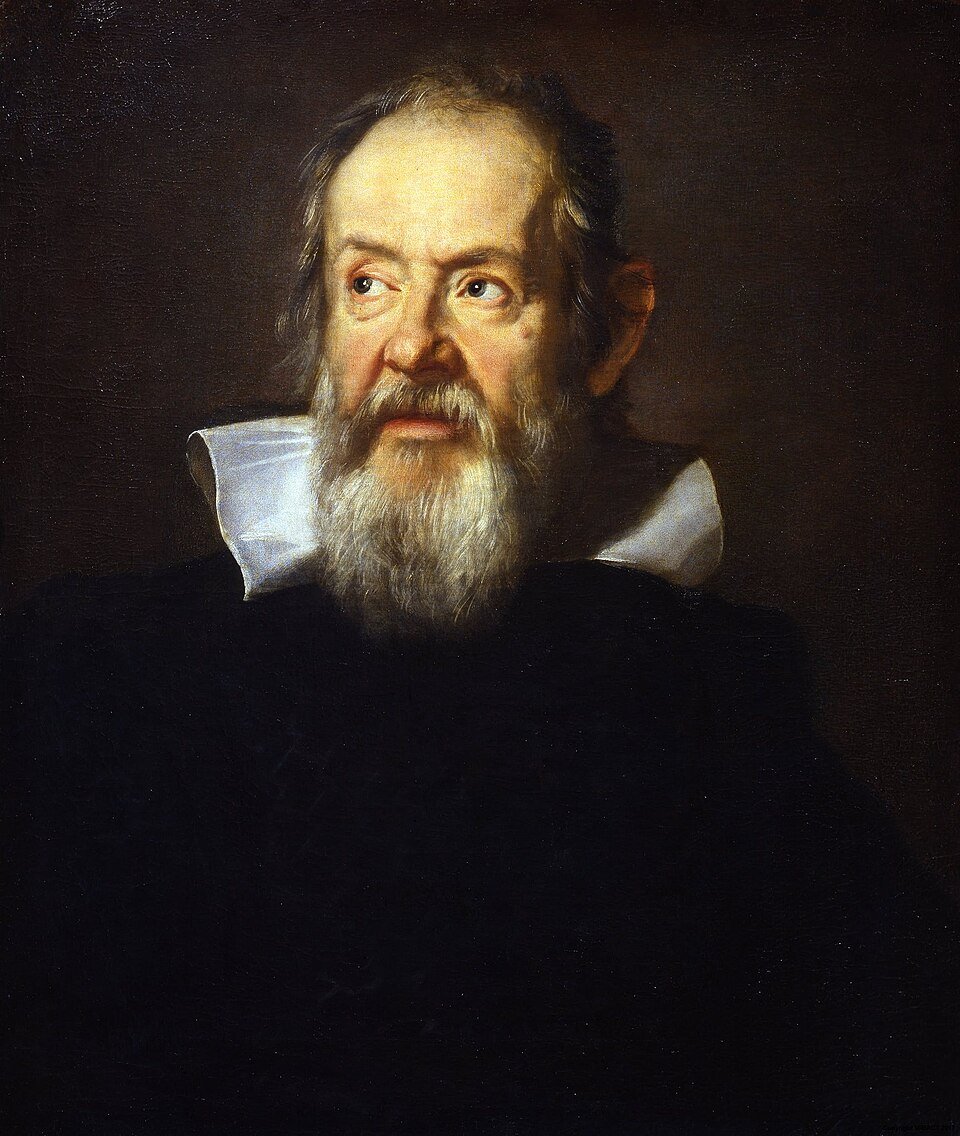
Galileo Galilei telescope design drawing
Galileo Galilei's historical sketch of his early refracting telescope, used to discover the moons of Jupiter.
โš–๏ธ

Historian Debate: Was the Scientific Revolution a Sudden Break?

The Radical Break

Historians like Herbert Butterfield argue that the 17th century represented a total intellectual break, replacing medieval scholasticism and religious dogma with empirical observation and mathematical law.

The Continuity Thesis

Medievalists like Pierre Duhem argue that the scientific revolution was built on foundations laid by medieval Catholic universities, Islamic astronomers, and Renaissance engineers.

The shift from Ptolemaic geocentrism to Newtonian physics redefined humanity's place in the cosmos.

"If I have seen further than others, it is by standing upon the shoulders of giants."

โ€” Isaac Newton, Letter to Robert Hooke (1675).

Further Reading

  • The Scientific Revolution โ€” by Steven Shapin. A brilliant, concise critique of the traditional narratives of scientific progress.
  • The Genesis of Science โ€” by James Hannam. An exploration of the medieval foundations of the scientific revolution.
๐Ÿ“– Scholar Mode Active โ€” Click to exit focused reading
Selected Era

Prehistoric Era

Millions of years ago to ~3000 BCE

The dawn of humanity. From the evolutionary split of early hominids to the mastery of stone tools, fire, and the birth of language.

Landmark Milestones

Welcome to Historia

Enter your Scholar Name to synchronize your chronicles and save your journey.