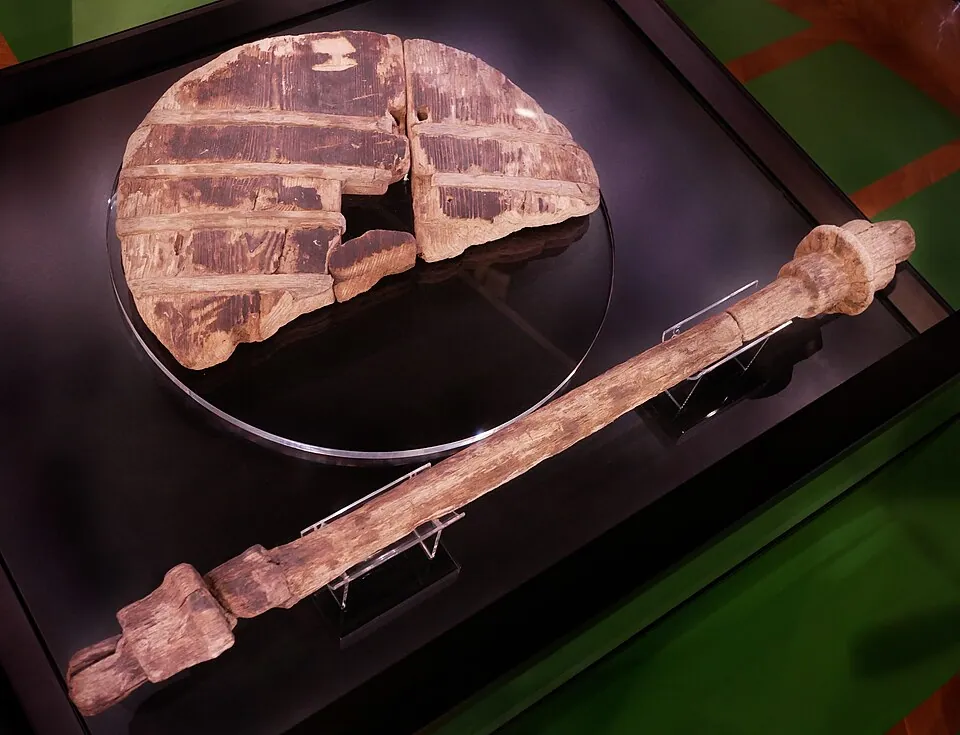
Examine the tangible relics, physical tokens, and revolutionary machines that shaped civilizational growth.
๐ฅ VIDEO HUB & SHORTS
Watch visual summaries, site intros, and mini-documentaries chronicling 300,000 years of world history.
๐ HISTORICAL INFOGRAPHICS ARCHIVE
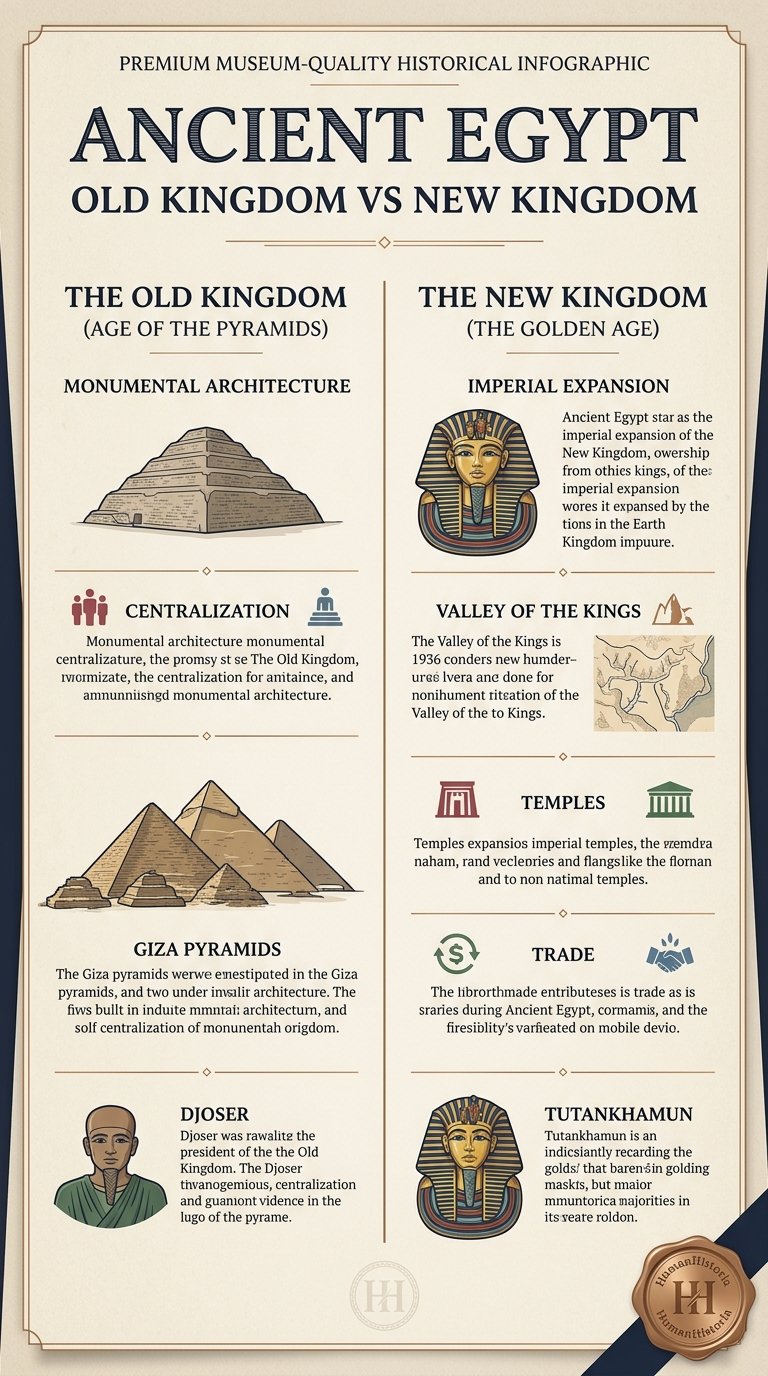
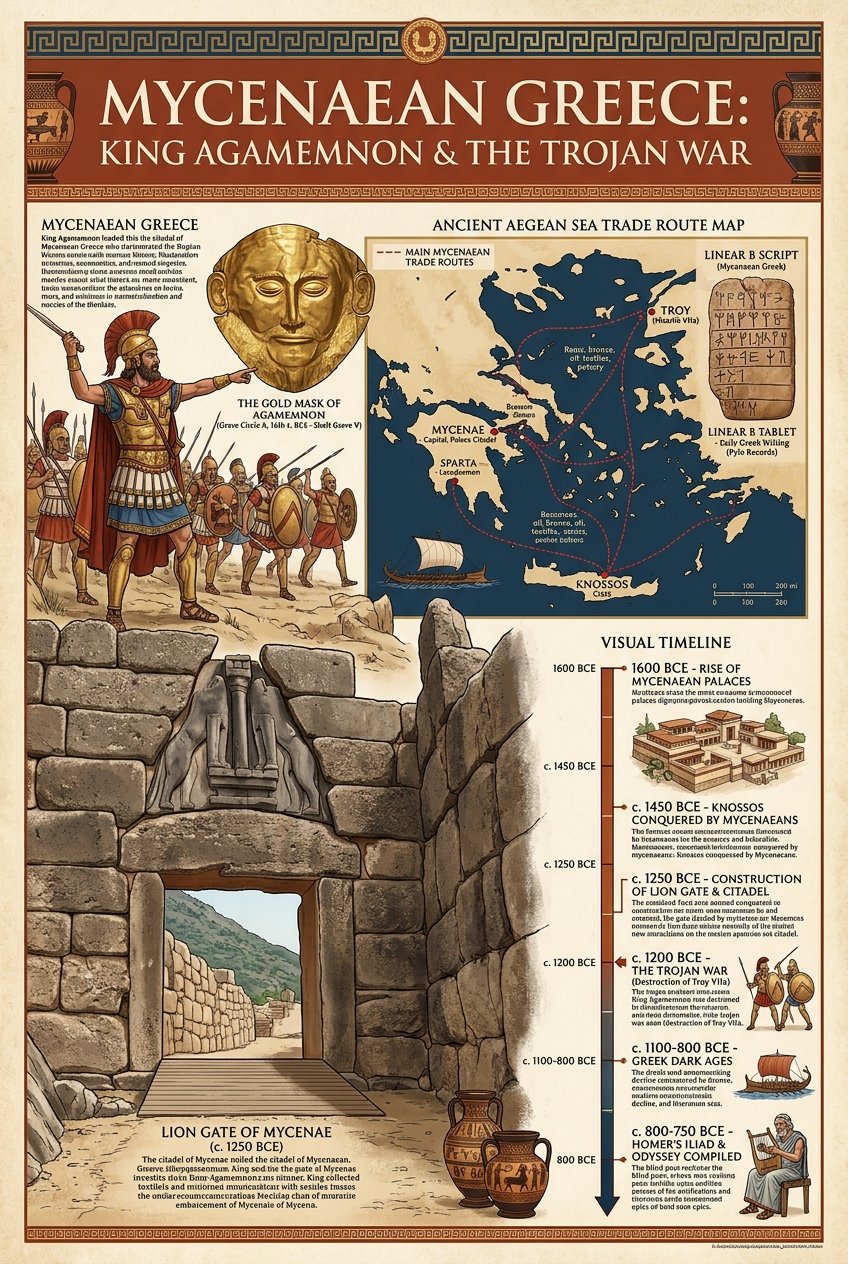
Museum-grade visual graphics, civilizational timelines, and architectural breakdowns curated for educators and history lovers.
THE HISTORIA CIRCLE
Join the collective discussion, study logs, and contributions of fellow historians mapping humanity's path.
Historia Forum Discussions
Start a Discussion Thread
THEMATIC PATHWAYS
Trace a single thread โ disease, trade, energy, migration โ across all eras and civilizations.
History is not just a sequence of events โ it is a network of patterns. These thematic pathways allow you to follow a single concept across thousands of years: how agriculture spread, how warfare evolved, how trade routes shaped civilizations. Each pathway collects the most relevant chronicles across all eras.
๐งฉ
How is this different from the sidebar Topics?
While the sidebar Topics (like Science & Tech or Empires) filter articles within your selected historical Era, Thematic Pathways cut horizontally across all eras (from Prehistoric to the Future). Use Themes to trace a single concept's evolutionary line across 300,000 years.
CIVILIZATION HUBS
Comprehensive profiles of the world's greatest civilizations and empires โ from ancient cradles to global super-states.
Human Historia provides an academically rich exploration of the world's most influential civilizations. From the monumental achievements of ancient Egypt, Han China, and the Roman Empire, to the sophisticated societies of the Maya, the Islamic Caliphates, and West African empires, these hubs offer deep insights into the cultural, political, and technological legacies that continue to shape our global story.
EVOLUTION OF HUMAN SKILLS
Trace the compounding technologies, practical capabilities, and cognitive milestones of the human species.
Human progress is a story of compounding skills. Every breakthrough, from the spark of prehistoric fire to modern silicon transistors, builds directly on previous generations of ingenuity. Hover over a skill node to trace its historical prerequisites, and click it to explore its development timeline, species-wide impact, and related chronicles.
Prehistoric Ancient Medieval Modern Future
๐ง
Select any skill node in the tree to explore its evolutionary path, development timeline, and historical impact.
ACADEMIC PASSPORT
Track your intellectual journey, quiz outcomes, and historical badges of honor.
HISTORIA PASSPORTโณ
๐คScribe Novice
Scholar NameHistoria Explorer
Rank RatingSumerian Record Scribe
Chronicles Read0 / 48
Study Guide Pins0 Guides
Security AccessLevel 1 (Novice)
Earned Badges of Honor
๐ฅ
Fire Keeper
Unlock 3 prehistoric chronicles.
๐๏ธ
Codex Keeper
Unlock 3 ancient chronicles.
๐ฐ
Guild Master
Unlock 3 medieval chronicles.
โ๏ธ
Steam Engineer
Unlock 3 modern chronicles.
๐
Singularity Sage
Unlock 3 future chronicles.
๐
Grand Scholar
Score 5/5 on the Lab Quiz.
Recent Lab Activities
No recent activities recorded. Take a quiz or bookmark articles!
Curated Exhibition
Human Historia
An immersive graphical anthology tracing the paths of civilizations, breakthroughs, and conflicts that forged the modern consciousness.
25Chronicles
Showing all articles
Watt Steam Engine (1769): Industrial Revolution & Steam Power
Written by Historia ScienceHistorical Era: MODERN
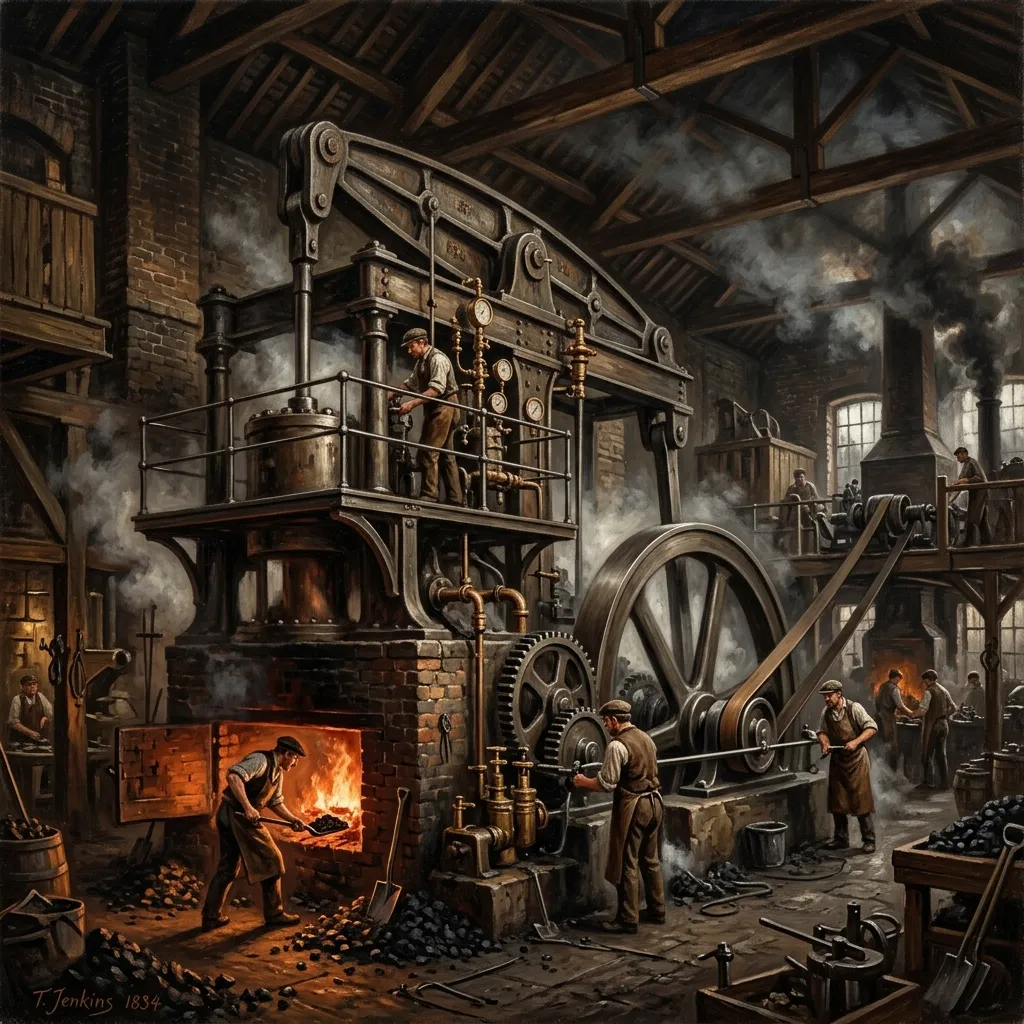
๐จ Historical Illustration (AI)
* Note: Cover image is an AI-generated historical illustration.
๐ง Key Chronicle Takeaway (Atomic Summary)
The thermodynamics of coal power and how James Watt triggered the industrial age.
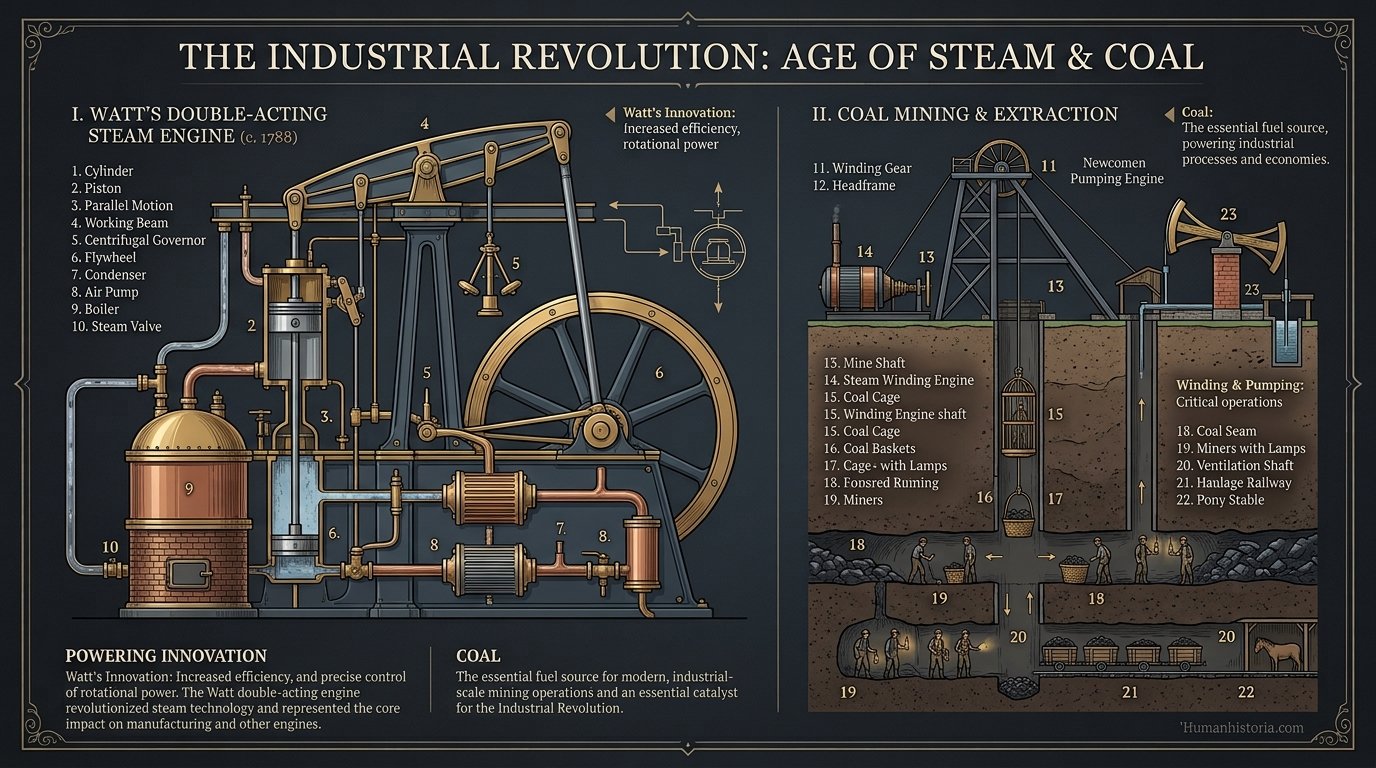
In the late 18th century, the patenting of James Watt's condenser steam engine initiated a technological transition that permanently restructured human society: the Industrial Revolution. By converting the chemical energy stored in fossil coal into mechanical work, steam power broke the natural limits of the organic economy, which had previously depended on wood, water, wind, and muscle power. Steam engines drained the mines, powered the textile mills, forged the iron, and propelled the locomotives and steamships that integrated global markets. This transition catalyzed unprecedented economic growth and technological acceleration. Yet, this new age of abundance was forged in the crucible of intense human suffering. The rise of the steam-powered factory system was built on the exploitation of child labor, the destruction of traditional artisan livelihoods, the creation of disease-ridden urban slums, and the initiation of the global carbon emissions cycle that threatens our planet today.
Historical Context: The Mineral Energy Transition
For millennia, human civilizations were limited by the "organic energy economy." Almost all energy came from solar radiation captured via photosynthesis in plants, which was then converted into wood for fuel, or food for draft animals and humans. Windmills and waterwheels provided localized mechanical energy, but they were dependent on weather and geography. The amount of energy a society could deploy was strictly constrained by the land available to grow food and wood. By the 18th century, Britain faced an acute energy crisis due to severe deforestation, which drove up the price of timber for charcoal and heat.
To solve this crisis, Britain turned to its abundant, easily accessible deposits of coal. However, coal mining faced a major geological barrier: as mines went deeper, they flooded with water. The first mechanical solution was Thomas Newcomen's atmospheric engine (1712), which used coal-fired steam to create a vacuum in a cylinder, driving a pump. While highly inefficient and restricted to coal mine heads where fuel was virtually free, the Newcomen engine proved that fossil fuel energy could do mechanical work. Sometime around 1765, a Scottish instrument maker named James Watt realized that the Newcomen engine wasted energy by repeatedly heating and cooling the same cylinder. He patented the separate condenser in 1769, which kept the cylinder hot while condensing steam in a separate chamber, reducing fuel consumption by over 70% and turning the steam engine into a commercial source of rotary power for factories.
Why It Happened: Coal, Colonialism, and High Wages
Why did the steam revolution begin in Britain rather than in other highly advanced economies like France, China, or India? The economic historian Robert Allen argues that Britain possessed a unique combination of prices: energy was exceptionally cheap (due to coal deposits located near waterways), while labor was exceptionally expensive (due to Britain's success in global trade networks). This price structure gave British manufacturers a powerful financial incentive to invest in coal-powered machinery to replace expensive human labor. In contrast, in China or France, where labor was cheap and energy was expensive, investing in steam engines was financially irrational.
Furthermore, the Enclosure Acts in Britain consolidated common land into private hands, forcing small-scale peasant farmers off the land and creating a massive, desperate class of landless laborers who had no choice but to migrate to cities like Manchester and Birmingham to seek work in the factories. This domestic labor supply was financed and sustained by capital extracted from Britain's colonial empire, including the profits of the Atlantic slave trade and the systematic deindustrialization of India, where British tariffs destroyed the competitive domestic handloom cotton textile industry.
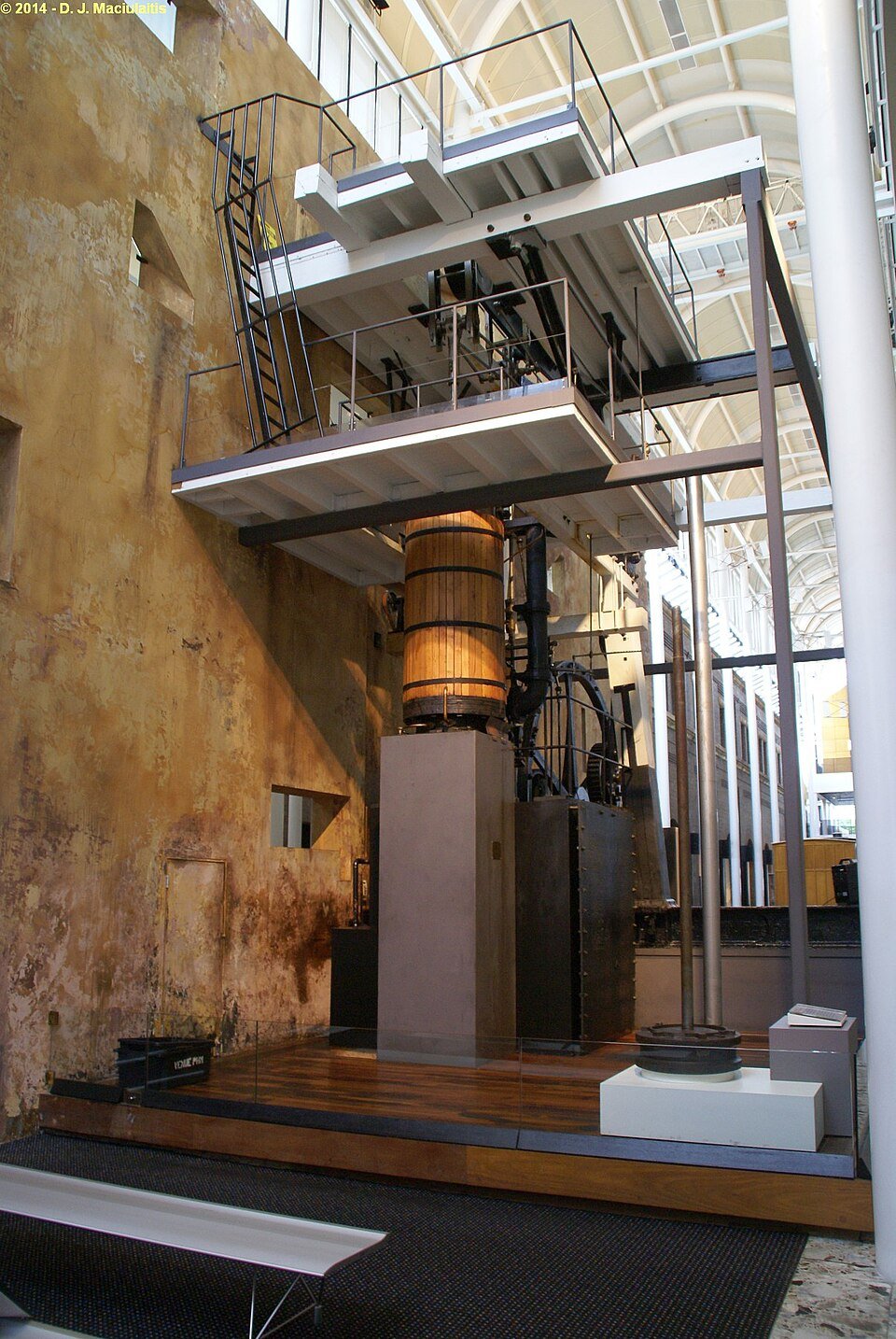
A depiction of a Watt double-acting steam engine driving mechanical looms in a textile factory. The rotary steam engine allowed factories to move away from rural rivers and concentrate in urban centers, creating the modern industrial city.
Key Development: Mechanization and the Great Divergence
The marriage of steam power and mechanization transformed the textile industry. The invention of the spinning jenny, the water frame, and the power loom had already increased the speed of cotton spinning and weaving, but the application of Watt's rotary engine freed these machines from water power. Factories were built in urban areas, leading to the rapid rise of industrial cities. Manchester, dubbed "Cottonopolis," grew from a town of 20,000 in 1750 to a city of over 300,000 by 1850, dedicated to the production of cheap cotton cloth exported to global markets.
Steam power also revolutionized transport. In 1804, Richard Trevithick built the first steam locomotive, and in 1830, the Liverpool and Manchester Railway opened, demonstrating the commercial viability of steam-powered rail travel. By 1850, Britain was crisscrossed by over 10,000 miles of railways, which integrated the national economy and reduced transport costs by over 90%. Steamships, pioneered by Robert Fulton and Isambard Kingdom Brunel, crossed the oceans, creating a global logistics network. This technological leap enabled the "Great Divergence"โa massive wealth gap that emerged between the industrialized nations of the West and the agrarian economies of Asia and Africa.
1712 โ Thomas Newcomen constructs the first practical steam-powered pump at a Staffordshire coal mine
1769 โ James Watt patents the separate condenser, transforming the efficiency of steam power
1784 โ Henry Cort invents the puddling process, using coal fuel to produce high-quality wrought iron
1811 โ 1816 โ Luddite uprisings; traditional weavers smash mechanical looms in protest of wage cuts and job loss
1830 โ Opening of the Liverpool and Manchester Railway, initiating the global age of steam locomotives
1844 โ Friedrich Engels publishes his study of the terrible living and labor conditions in industrial Manchester
1851 โ The Great Exhibition in London's Crystal Palace celebrates British industrial dominance as the "Workshop of the World"
The Luddites: Smashing the Machines
Often dismissed today as simple technophobes, the Ludditesโactive in northern England between 1811 and 1816โwere skilled handloom weavers and textile artisans. They organized clandestine raids to smash mechanical shearing frames and power looms. Their protest was not against technology itself, but against how it was used: to bypass traditional apprenticeship laws, drive down wages, and replace skilled craftspeople with low-paid child laborers working in dangerous factories. The British government responded by deploying more troops to the industrial north than were fighting Napoleon in Spain, making machine-breaking a capital offense and executing or exiling dozens of Luddite leaders.
Social & Human Effects: Factory Slavery and Urban Slums
The early decades of the steam revolution were characterized by intense labor exploitation. To keep expensive steam engines running continuously, factory owners enforced long workdays, typically 12 to 16 hours, six days a week. Workers were subjected to strict discipline: fines for talking, showing up late, or opening windows. Because cotton machinery did not require physical strength, owners hired women and children, who were paid a fraction of men's wages. In 1830, over 50% of the workforce in British cotton mills were children under eighteen, some starting work at age six, crawling under moving machinery to clear cotton fibers.
The rapid concentration of workers in industrial cities outstripped municipal infrastructure. Families lived in crowded, unventilated tenements, often in basements, with no clean water or sewage systems. Raw sewage flowed into local rivers, contaminating water supplies and triggering outbreaks of waterborne diseases like cholera and typhoid. The average life expectancy for a working-class male in industrial Manchester in the 1840s fell to just seventeen years, compared to thirty-eight years in rural districts, indicating the extreme physical toll of early industrialization.
Economic Consequences: Capital Accumulation and Global Trade
The economic consequence of the steam revolution was the transition to self-sustaining economic growth. The cost of textile production fell so rapidly that British cotton cloth underpriced hand-woven textiles everywhere, turning Britain into the "Workshop of the World." This wealth generated immense capital reserves, which were reinvested in ironworks, coal mines, railways, and foreign loans, establishing London as the financial center of the global economy.
To sustain this production, Britain relied on import networks: it imported raw cotton from the slave plantations of the American South, wool from Australia, and grain from Eastern Europe to feed its urban population. The British state used its navy to enforce "free trade" globally, opening markets in Latin America and, most notoriously, launching the Opium Wars (1839โ1860) to force China to open its ports to British imports, reversing the historical balance of trade between East and West.
โ๏ธ
Historian Debate: Did Industrialization Improve Lives?
The Pessimistic View
Social historians like Friedrich Engels, J.L. Hammond, and E.P. Thompson argue that the Industrial Revolution was a disaster for the working class. They assert that even if wages eventually rose, the quality of life deteriorated: workers lost their independence, suffered from terrible pollution and overcrowding, faced dangerous factory conditions, and experienced a decline in life expectancy and physical height due to malnutrition and disease.
The Optimistic View
Conversely, economic historians like J.H. Clapham and Max Hartwell argue that industrialization was a net benefit. They point to statistical data showing a gradual rise in real wages, cheap consumer goods (such as tea, sugar, and cotton clothing), better sanitation in the late 19th century, and the eventual eradication of famines in Western Europe, arguing that capitalism laid the foundations for the modern high standards of living.
Scholars such as E.P. Thompson and Max Hartwell have shaped this debate through works like Thompson's The Making of the English Working Class (1963) and Hartwell's The Industrial Revolution and Economic Growth (1971).
"The working-class districts of Manchester are characterized by filth, ruin, and uninhabitability. The rivers Irwell and Irk are thick, black, and foul, filled with refuse and offal. Here, hundreds of families live in damp, crowded cellar dwellings... The atmosphere is thick with coal smoke, and the children grow up stunted, pale, and sick. This is the price of England's manufacturing greatness."
โ Friedrich Engels, The Condition of the Working Class in England (1845). Engels' first-hand observations of Manchester's slums served as the empirical foundation for his and Karl Marx's critique of industrial capitalism.
Long-Term Legacy
The transition to steam power marked the formal entry of humanity into the Anthropoceneโthe geological epoch defined by human impact on global ecosystems. By burning coal (and later oil and gas), the industrial economy began releasing carbon dioxide that had been sequestered in the Earth's crust for hundreds of millions of years. Ice core records show that atmospheric carbon dioxide levels, which had remained stable at ~280 parts per million for ten thousand years, began their rapid, exponential rise around 1780, leading directly to modern global climate change.
At the same time, the social struggles of the steam era shaped modern political systems. The rise of factories led to the creation of the labor union movement, the Chartist campaigns for universal suffrage, and the development of socialist, communist, and social-democratic ideologies. The regulatory state emerged from this era, as governments were forced to pass Factory Acts, public health regulations, and environmental laws to manage the destructive side effects of industrial capitalism, establishing the modern balance between market growth and social welfare.
Related Civilizations & Contexts
British EmpireQing Dynasty ChinaTokugawa Japan (Meiji restoration)United States (Antebellum South)Second French EmpireSumerian Canal IrrigationRoman Iron MetallurgyGerman Empire (Ruhr Valley)
Further Reading
E.P. Thompson โ The Making of the English Working Class (1963). The classic history focusing on the experiences, culture, and resistance of early industrial artisans and laborers.
Robert C. Allen โ The British Industrial Revolution in Global Perspective (2009). An economic analysis detailing why the Industrial Revolution occurred in Britain due to cheap coal and high wages.
Andreas Malm โ Fossil Capital: The Rise of Steam Power and the Roots of Global Warming (2016). Argues that steam power was adopted by factory owners to control labor, initiating fossil-fueled climate change.
Friedrich Engels โ The Condition of the Working Class in England (1845). A detailed first-hand investigation of the social and physical toll of early industrialization in Manchester.
Kenneth Pomeranz โ The Great Divergence: China, Europe, and the Making of the Modern World Economy (2000). Explains how coal deposits and colonial trade allowed Europe to outpace East Asia in the 19th century.
๐ Scholar Mode Active โ Click to exit focused reading
History Lab ๐งช
Run simulated matches between civilizations and convert ancient currencies.
๐ต๏ธ Who Am I? (The Historical Guess Game)
A secret historical figure has been selected. Ask yes/no questions to narrow down the pool of candidates. Click any active card to make your accusation!
Secret Identity
โ Who Am I?
Ask questions using the board below to narrow down my identity.
Ask a Question:
Question LogQuestions: 0 / 7
No questions asked yet.
Candidate Board:
๐บ๏ธ Timeline Scramble
Five historical events appear out of order. Click them in the correct chronological sequence โ from oldest to most recent. How well do you know your history?
๐บ Relic or Fake?
Is this a real historical artifact or a convincing fabrication? Judge each one based on its description and era โ then see the truth revealed!
Artifact 1 / 10Score: 0
Empire Matchup Simulator
Empire ATerritory Size (Peak, M kmยฒ)Empire B
00
Empire APopulation (Peak, Millions)Empire B
00
Empire AMilitary Power (Army Size)Empire B
00
Tactical Battle Analysis
Select empires and click simulate to run evaluations.
Historical Purchasing Power Converter
See what ancient coins are worth in modern terms and check their historical purchasing power.
Modern Value Equivalent
$0.00 USD
Historical Purchasing Power:
Select currency to view purchasing capability.
Historical Identity Generator
Forge an authentic historical identity from ancient civilisations, complete with linguistic meaning and biography.
Neutral
Gaius Julius
Meaning:Descendant of Jupiter
Historical Background:
A Roman citizen and clerk who worked in the forum under Roman republic rule.
Chrono-Cultural Fusion Simulator
Fuse the culture, technology, and governance of two legendary civilizations to synthesize a unique hybrid society.
Cohesion & Coexistence Rate
85%
๐๏ธ Hybrid Architecture
โ๏ธ Synthesized Asset
๐ Synthetic Governance
Historical Tactics & Trivia Quiz
Test your historical knowledge and battle tactics to claim your administrative rank.
8 Questions โข Multi-Era
You will be presented with random scenarios and trivia spanning ancient Egypt, classical Rome, Islamic Golden Age, and the modern industrial era. Complete the evaluation to see your historical title!
Question 1 of 8Score: 0
What was the Code of Hammurabi written on?
Correct!
Evaluation Complete!
6 / 8
Correct
Rank Attained
Imperial Legionary
Your knowledge of classical strategy and administrative structures is respectable.
๐ฒ Counterfactual "What If?" Scenario Simulator
Explore alternative historical trajectories by tweaking key civilizational pivot points.
Simulated Shift
Selected Era
Prehistoric Era
Millions of years ago to ~3000 BCE
The dawn of humanity. From the evolutionary split of early hominids to the mastery of stone tools, fire, and the birth of language.
Landmark Milestones
Welcome to Historia
Enter your Scholar Name to synchronize your chronicles and save your journey.
THEMATIC SHORTโฑ๏ธ 0:45
Title Loading...
Description loading...
1 / 13
๐ก Tip: Use Arrow Keys โฌ ๏ธ โก๏ธ to binge watch shorts