~7,000 Years from farming to writing
๐Ÿ›๏ธ

Ancient Ages

c. 3,200 BCE โ€” 500 CE ยท Empires, Laws & Philosophy
~400 Years from Roman fall to medieval rebirth
๐Ÿฐ

Medieval Period

c. 500 CE โ€” 1500 CE ยท Empires of Faith, Trade & Castles
~50 Years from printing press to Scientific Revolution
โš™๏ธ

Modern Age

c. 1450 CE โ€” 2000 CE ยท Revolutions, Industry & Discovery
~50 Years from computers to quantum age

THE ARTIFACT GALLERY

Examine the tangible relics, physical tokens, and revolutionary machines that shaped civilizational growth.

๐ŸŽฅ VIDEO HUB & SHORTS

Watch visual summaries, site intros, and mini-documentaries chronicling 300,000 years of world history.

๐Ÿ“Š HISTORICAL INFOGRAPHICS ARCHIVE

Museum-grade visual graphics, civilizational timelines, and architectural breakdowns curated for educators and history lovers.

THE HISTORIA CIRCLE

Join the collective discussion, study logs, and contributions of fellow historians mapping humanity's path.

Historia Forum Discussions

Start a Discussion Thread

THEMATIC PATHWAYS

Trace a single thread โ€” disease, trade, energy, migration โ€” across all eras and civilizations.

History is not just a sequence of events โ€” it is a network of patterns. These thematic pathways allow you to follow a single concept across thousands of years: how agriculture spread, how warfare evolved, how trade routes shaped civilizations. Each pathway collects the most relevant chronicles across all eras.

๐Ÿงฉ
How is this different from the sidebar Topics?
While the sidebar Topics (like Science & Tech or Empires) filter articles within your selected historical Era, Thematic Pathways cut horizontally across all eras (from Prehistoric to the Future). Use Themes to trace a single concept's evolutionary line across 300,000 years.

CIVILIZATION HUBS

Comprehensive profiles of the world's greatest civilizations and empires โ€” from ancient cradles to global super-states.

Human Historia provides an academically rich exploration of the world's most influential civilizations. From the monumental achievements of ancient Egypt, Han China, and the Roman Empire, to the sophisticated societies of the Maya, the Islamic Caliphates, and West African empires, these hubs offer deep insights into the cultural, political, and technological legacies that continue to shape our global story.

EVOLUTION OF HUMAN SKILLS

Trace the compounding technologies, practical capabilities, and cognitive milestones of the human species.

Human progress is a story of compounding skills. Every breakthrough, from the spark of prehistoric fire to modern silicon transistors, builds directly on previous generations of ingenuity. Hover over a skill node to trace its historical prerequisites, and click it to explore its development timeline, species-wide impact, and related chronicles.

Prehistoric Ancient Medieval Modern Future
๐Ÿง 

Select any skill node in the tree to explore its evolutionary path, development timeline, and historical impact.

ACADEMIC PASSPORT

Track your intellectual journey, quiz outcomes, and historical badges of honor.
HISTORIA PASSPORT โณ
๐Ÿ‘ค Scribe Novice
Scholar Name Historia Explorer
Rank Rating Sumerian Record Scribe
Chronicles Read 0 / 48
Study Guide Pins 0 Guides
Security Access Level 1 (Novice)

Earned Badges of Honor

๐Ÿ”ฅ
Fire Keeper
Unlock 3 prehistoric chronicles.
๐Ÿ›๏ธ
Codex Keeper
Unlock 3 ancient chronicles.
๐Ÿฐ
Guild Master
Unlock 3 medieval chronicles.
โš™๏ธ
Steam Engineer
Unlock 3 modern chronicles.
๐Ÿš€
Singularity Sage
Unlock 3 future chronicles.
๐Ÿ‘‘
Grand Scholar
Score 5/5 on the Lab Quiz.

Recent Lab Activities

No recent activities recorded. Take a quiz or bookmark articles!
Curated Exhibition

Human Historia

An immersive graphical anthology tracing the paths of civilizations, breakthroughs, and conflicts that forged the modern consciousness.

25Chronicles
Showing all articles

Library of Alexandria: Universal Knowledge & Ancient Loss

Written by Historia Science Historical Era: ANCIENT
* Note: Cover image is an AI-generated historical illustration.

๐Ÿง Key Chronicle Takeaway (Atomic Summary)

Discover the rise, cataloging systems, and mathematical achievements of antiquity's greatest research repository.

The Library of Alexandria, founded in Egypt during the early 3rd century BCE under the Ptolemaic dynasty, represents the first systematic attempt to collect the entire sum of human knowledge in a single institution. Part of a larger research institute known as the Musaeum (temple of the Muses), the Library was not merely a repository for papyrus scrolls, but an intellectual powerhouse where scholars, astronomers, mathematicians, and grammarians lived, worked, and debated. It was here that Eratosthenes calculated the Earth's circumference, Euclid codified the laws of geometry, and Heron designed early steam-driven automatons. The Library established the standards of textual criticism, library science, and scientific inquiry that would shape Western and Islamic scholarship for centuries.

The Ptolemaic Foundation & Royal Ambition

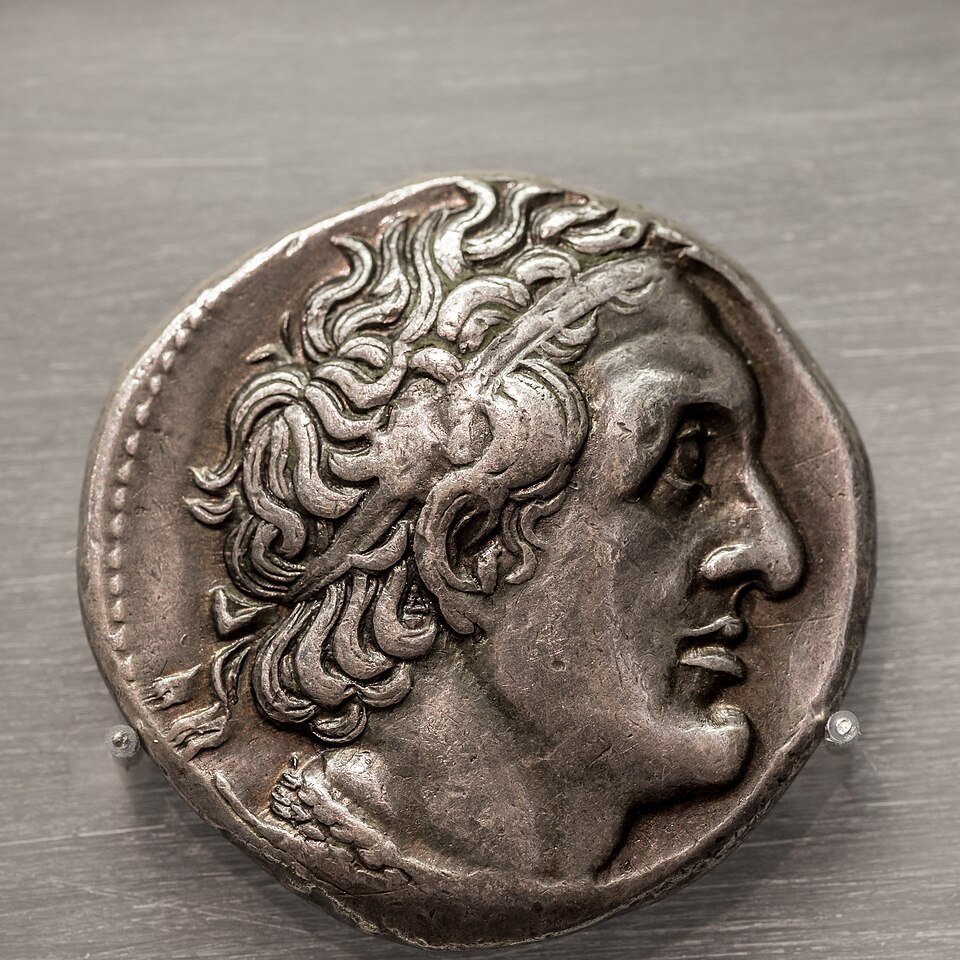
Following the death of Alexander the Great in 323 BCE, his vast empire was divided among his generals, the Diadochi. Ptolemy I Soter claimed Egypt, establishing a Greek-speaking ruling dynasty in the newly founded capital of Alexandria on the Mediterranean coast. Ptolemy I, and his successor Ptolemy II Philadelphus, recognized that political legitimacy in the Hellenistic world required more than military force; it required cultural supremacy. They set out to build an intellectual capital that would eclipse Athens.

To design this center of learning, Ptolemy I recruited Demetrius of Phalerum, an Athenian politician and student of Aristotle. Demetrius advised the king to establish a research institute modeled after the Peripatetic school in Athens. Founded around 285 BCE, the Musaeum was financed entirely by the royal treasury. Scholars were recruited from across the Greek world with promises of free lodging, gourmet meals, exemptions from taxes, and generous salaries, all in exchange for conducting research, copying texts, and educating the royal family.

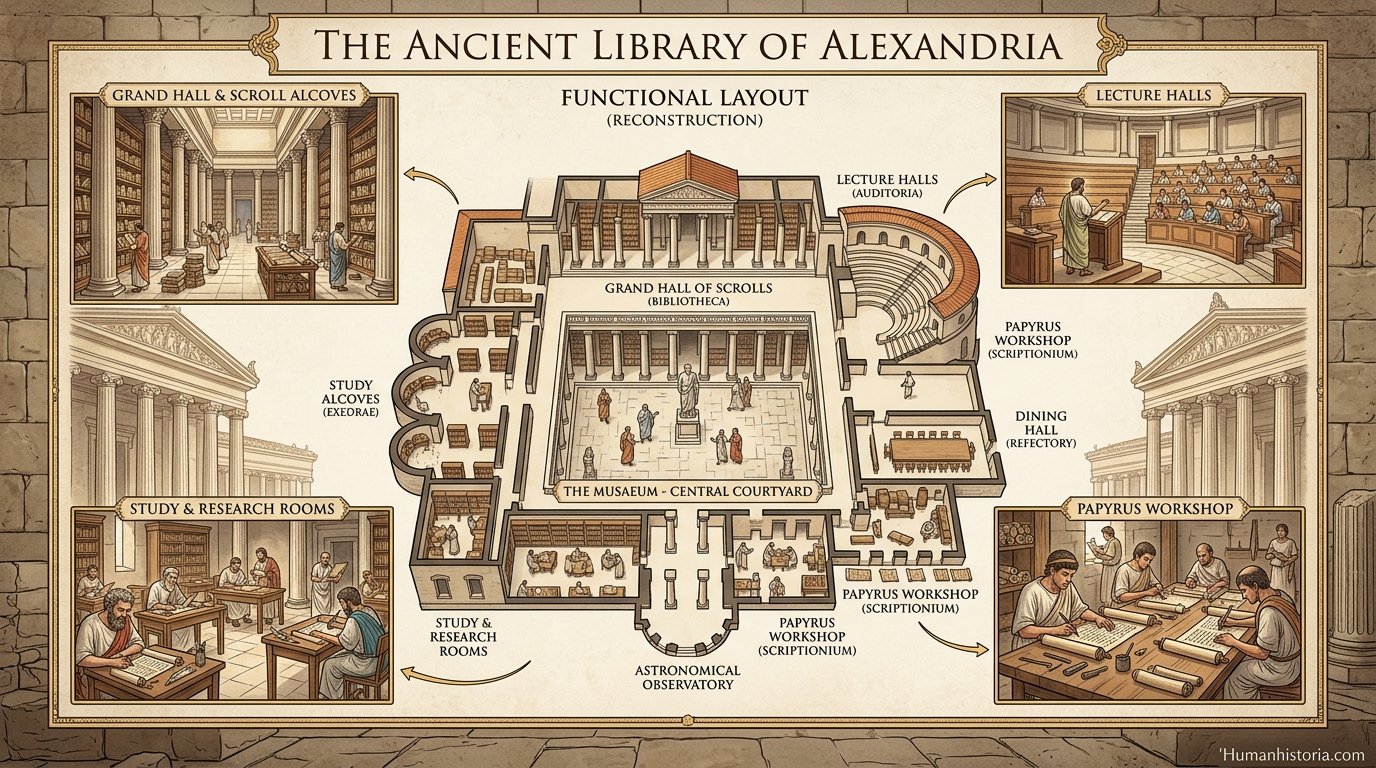
The Library itself was built within the royal palace district, known as the Bruchion. It consisted of colonnaded walkways (peripatoi), shared dining halls, private study rooms, and lecture halls. The main scroll repository featured niches carved into the walls (armaria) to store the fragile papyrus scrolls, protected from humidity by double-walled ventilation slots.

The Pinakes: Inventing Library Science

As the Libraryโ€™s collection grew to hundreds of thousands of scrolls, scholars faced a new challenge: how to find a specific text in a sea of unorganized papyrus. The poet and scholar Callimachus of Cyrene solved this problem by creating the first systematic library catalog, the Pinakes (Tables of Illustrious Men in Every Branch of Learning). The catalog spanned 120 scrolls and laid the foundations of modern bibliography.

Callimachus organized the scrolls into broad thematic categories, which he called "genres":

  • Poetry: Subdivided into epic, lyric, tragic, and comic poetry.
  • Prose: Subdivided into history, law, philosophy, medicine, rhetoric, and miscellanea.

Within each genre, authors were listed alphabetically by their first name. Callimachus provided a brief biography of each author, a list of their works, and the first line of each text to help distinguish between works with similar titles. He also recorded the number of lines in each scroll, which served as a quality check for copyists and determined the scholar's pay. Through the Pinakes, Callimachus transformed the Library from a passive warehouse into an active, searchable database, establishing cataloging principles still used in modern archives.

The Acquisitions: The Law of the Ships

To fulfill their ambition of collecting "all the books of the world," the Ptolemaic kings resorted to aggressive acquisition methods. Under Ptolemy III Euergetes, a royal decree established "The Law of the Ships." Every merchant vessel docking in Alexandria's harbor was searched by guards. Any book found on board was seized and taken to the Library. Scribes made a copy of the scroll on fresh papyrus; the copy was returned to the ship's owner, while the priceless original was kept for the Library's collection, labeled "from the ships." Ptolemy III also borrowed the official state copies of the tragedies of Aeschylus, Sophocles, and Euripides from Athens, paying a massive deposit of 15 talents of silver. He chose to forfeit the deposit, keeping the original manuscripts and sending back cheap copies to the furious Athenians.

Scientific Breakthroughs in the Musaeum

The concentration of resources, scientific instruments, and intellectual talent in Alexandria led to extraordinary breakthroughs across mathematics, physics, astronomy, and geography:

1. Calculating the Earth's Dimensions

The polymath Eratosthenes of Cyrene, who served as the third Chief Librarian, conducted the first accurate measurement of the Earth's circumference. He learned that at noon on the summer solstice in Syene (modern Aswan), the sun shone directly down a deep well, casting no shadow. At the exact same time in Alexandria, Eratosthenes measured the shadow cast by an obelisk, finding that the sun's rays were angled at 7.2 degrees (or 1/50th of a circle) from the vertical.

Using the distance between the two cities (5,000 stadia, measured by royal surveyors or "bematists"), Eratosthenes used simple geometry to calculate the Earth's circumference:
5,000 stadia ร— 50 = 250,000 stadia
Depending on the length of the "stadion" he used, this measurement was within 1% to 15% of the actual circumference of 40,075 kilometers, representing a triumph of empirical geography.

2. Codifying Geometry: Euclid

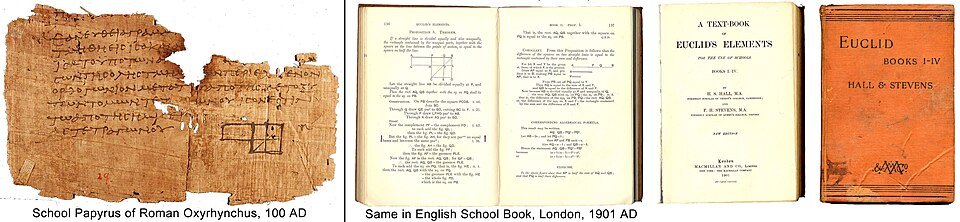
Working in Alexandria around 300 BCE, the mathematician Euclid wrote the Elements, a 13-volume treatise that synthesized all classical Greek mathematical knowledge. Euclid built a deductive system of geometry, starting from just five self-evident axioms (such as "a straight line segment can be drawn joining any two points") and deriving hundreds of complex theorems through rigorous logical proof. The Elements served as the primary textbook for mathematical education for over 2,000 years, establishing logic as the foundation of scientific proof.

3. Early Mechanics and Steam: Heron

In the 1st century CE, the mathematician and engineer Heron of Alexandria designed early automated machines at the Musaeum. He invented the Aeolipile, a steam-powered metal sphere that spun on an axle due to the reaction force of escaping steam jetsโ€”representing the first known prototype of a steam engine. Heron also designed coin-operated holy water vending machines, automated theatrical puppet shows driven by falling weights, and steam-powered organs, showcasing advanced understanding of pneumatics and mechanics centuries ahead of their time.

The Daughter Library: The Serapeum

As the collection grew, Ptolemy III constructed a secondary library known as the Serapeum, located on a hill in the south of the city next to the temple of Serapis. Open to the public, the Serapeum served as a general reading room and hosted up to 42,800 scrolls, while the main palace library remained reserved for the royal family and elite researchers. The Serapeum survived several fires that damaged the main library, remaining a center of scholarship until its destruction in 391 CE.

Decline, Fires, and Ultimate Fall

The popular story that the Library was destroyed in a single catastrophic fire is a historical myth. The Library of Alexandria experienced a slow decline over several centuries, marked by political instability, military campaigns, and religious conflicts:

1. Julius Caesarโ€™s Fire (48 BCE): During the Alexandrian War, Julius Caesar was besieged in the royal palace by the forces of Ptolemy XIII. To secure his escape, Caesar ordered his men to burn the fleet in the harbor. The fire spread to the docks, destroying dock warehouses containing 40,000 scrolls intended for export. While some scrolls in the palace complex may have been damaged, the main Library survived, as evidenced by later descriptions of scholars working there.

2. The Aurelian Destruction (272 CE): The most severe blow to the physical Library occurred during the reign of Roman Emperor Aurelian. While reclaiming Alexandria from Queen Zenobia of Palmyra, Aurelian's forces conducted a brutal siege of the Bruchion palace district. The entire district, including the Musaeum buildings and the main library collection, was razed to the ground. Scholars fled to the Serapeum and other cities.

3. The Decree of Theophilus (391 CE): Following the conversion of the Roman Empire to Christianity, Emperor Theodosius I banned pagan worship. In Alexandria, the Christian Patriarch Theophilus ordered the destruction of pagan temples, leading a mob to demolish the Serapeum. The scrolls stored in the Serapeum were burned or looted, marking the end of Alexandria's large-scale library system.

4. The Arab Conquest Myth (642 CE): A famous legend claims that when the Arab general Amr ibn al-As conquered Egypt, Caliph Umar ordered the scrolls of the Library to be burned as fuel for the city's 4,000 bathhouses. Modern historians dismiss this story, which first appeared in historical records 600 years after the conquest. By 642 CE, the Library of Alexandria had ceased to exist, having been destroyed centuries earlier by Roman civil wars and sectarian riots.

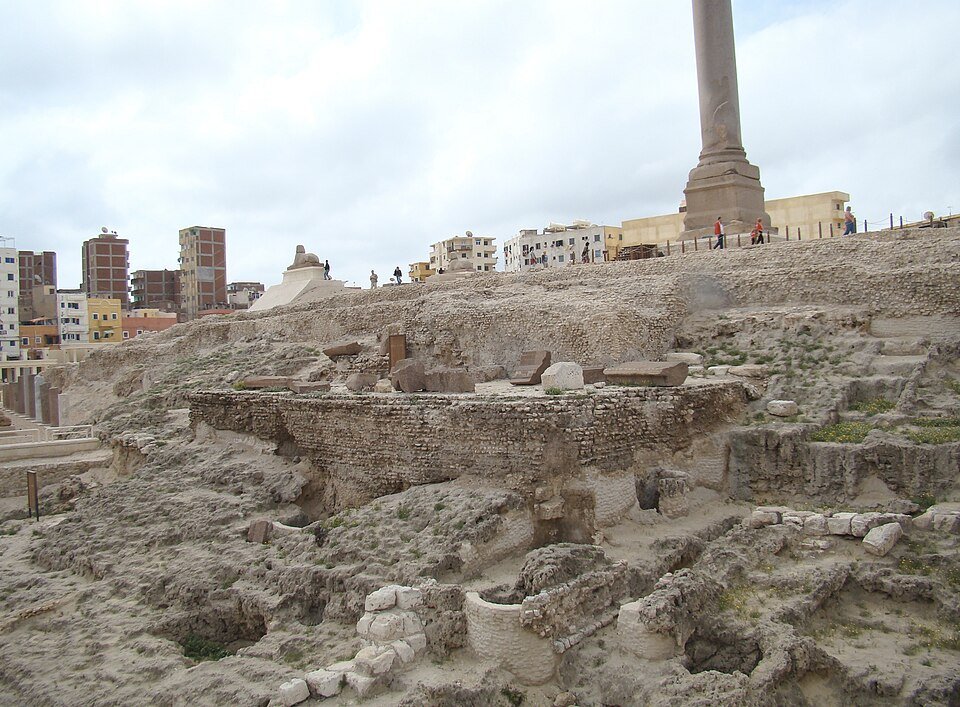
Archaeological ruins of the Serapeum of Alexandria
The archaeological remains of the Serapeum of Alexandria, which housed the daughter library of the Great Library of Alexandria.

Conclusion and Intellectual Legacy

The Library of Alexandria represents a critical milestone in human history. By gathering texts from Egyptian, Babylonian, Jewish, Persian, and Greek sources, it created the first multicultural scholarly community. The philological techniques developed there to verify and edit manuscripts laid the groundwork for modern literary criticism. Though the physical buildings and scrolls were lost, the ideas, translations, and scientific methodologies preserved by Alexandrian scholars were carried into the Byzantine Empire and the Islamic Golden Age, paving the way for the Renaissance and the modern scientific world.

โš–๏ธ

Historian Debate: Who Burned the Library of Alexandria?

Julius Caesar's Fire

Classical accounts state that when Julius Caesar was besieged in Alexandria in 48 BCE, he set fire to his own ships, which accidentally spread and consumed the dockside book repositories.

Christian and Islamic Fanaticism

Other theories attribute the destruction to the Christian decree of Theophilus in 391 CE destroying pagan temples, or the Arab conquest under Amr ibn al-As in 642 CE.

Most modern scholars believe the library died a slow death of budget cuts, lack of maintenance, and political neglect, rather than a single fire.

"Alexandria was the place where the world's knowledge was assembled. To destroy a book is to destroy a mind, and here a hundred thousand minds were turned to ash."

โ€” Seneca the Younger, De Tranquillitate Animi (c. 60 CE).

Further Reading

  • The Library of Alexandria โ€” by Roy MacLeod. A collection of essays examining the library's role as the intellectual center of the ancient world.
  • The Vanished Library โ€” by Luciano Canfora. A narrative reconstruction of the library's history, cataloging, and loss.
๐Ÿ“– Scholar Mode Active โ€” Click to exit focused reading
Selected Era

Prehistoric Era

Millions of years ago to ~3000 BCE

The dawn of humanity. From the evolutionary split of early hominids to the mastery of stone tools, fire, and the birth of language.

Landmark Milestones

Welcome to Historia

Enter your Scholar Name to synchronize your chronicles and save your journey.