Examine the tangible relics, physical tokens, and revolutionary machines that shaped civilizational growth.
๐ฅ VIDEO HUB & SHORTS
Watch visual summaries, site intros, and mini-documentaries chronicling 300,000 years of world history.
๐ HISTORICAL INFOGRAPHICS ARCHIVE
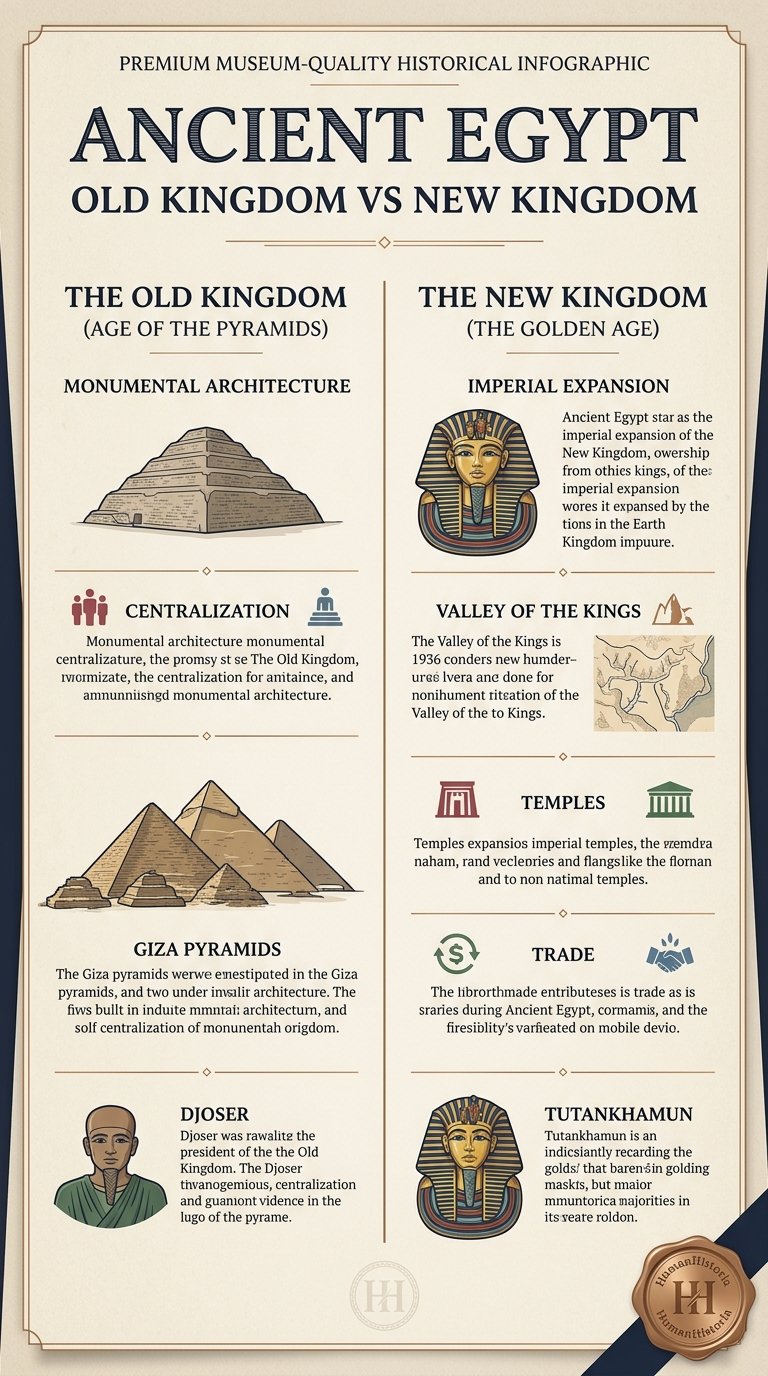
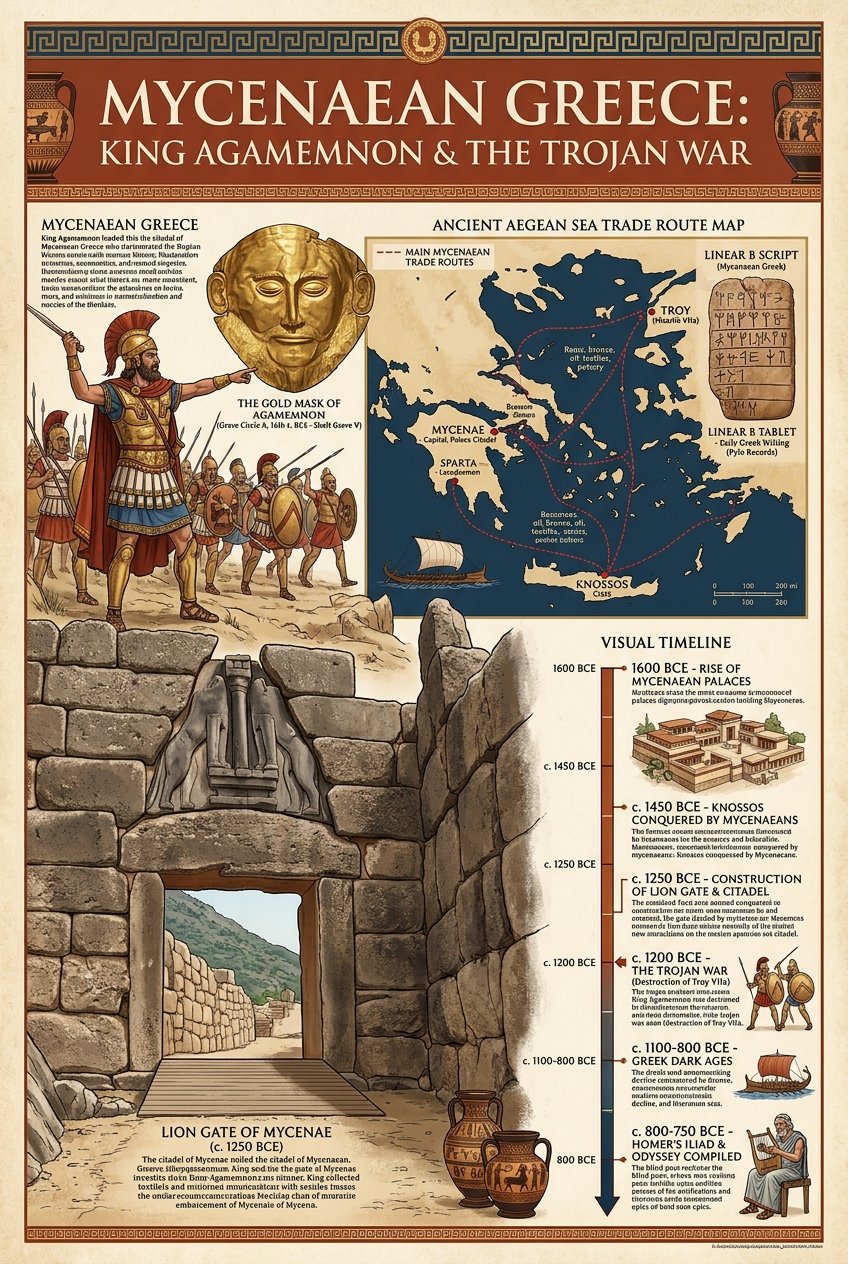
Museum-grade visual graphics, civilizational timelines, and architectural breakdowns curated for educators and history lovers.
THE HISTORIA CIRCLE
Join the collective discussion, study logs, and contributions of fellow historians mapping humanity's path.
Historia Forum Discussions
Start a Discussion Thread
THEMATIC PATHWAYS
Trace a single thread โ disease, trade, energy, migration โ across all eras and civilizations.
History is not just a sequence of events โ it is a network of patterns. These thematic pathways allow you to follow a single concept across thousands of years: how agriculture spread, how warfare evolved, how trade routes shaped civilizations. Each pathway collects the most relevant chronicles across all eras.
๐งฉ
How is this different from the sidebar Topics?
While the sidebar Topics (like Science & Tech or Empires) filter articles within your selected historical Era, Thematic Pathways cut horizontally across all eras (from Prehistoric to the Future). Use Themes to trace a single concept's evolutionary line across 300,000 years.
CIVILIZATION HUBS
Comprehensive profiles of the world's greatest civilizations and empires โ from ancient cradles to global super-states.
Human Historia provides an academically rich exploration of the world's most influential civilizations. From the monumental achievements of ancient Egypt, Han China, and the Roman Empire, to the sophisticated societies of the Maya, the Islamic Caliphates, and West African empires, these hubs offer deep insights into the cultural, political, and technological legacies that continue to shape our global story.
EVOLUTION OF HUMAN SKILLS
Trace the compounding technologies, practical capabilities, and cognitive milestones of the human species.
Human progress is a story of compounding skills. Every breakthrough, from the spark of prehistoric fire to modern silicon transistors, builds directly on previous generations of ingenuity. Hover over a skill node to trace its historical prerequisites, and click it to explore its development timeline, species-wide impact, and related chronicles.
Prehistoric Ancient Medieval Modern Future
๐ง
Select any skill node in the tree to explore its evolutionary path, development timeline, and historical impact.
ACADEMIC PASSPORT
Track your intellectual journey, quiz outcomes, and historical badges of honor.
HISTORIA PASSPORTโณ
๐คScribe Novice
Scholar NameHistoria Explorer
Rank RatingSumerian Record Scribe
Chronicles Read0 / 48
Study Guide Pins0 Guides
Security AccessLevel 1 (Novice)
Earned Badges of Honor
๐ฅ
Fire Keeper
Unlock 3 prehistoric chronicles.
๐๏ธ
Codex Keeper
Unlock 3 ancient chronicles.
๐ฐ
Guild Master
Unlock 3 medieval chronicles.
โ๏ธ
Steam Engineer
Unlock 3 modern chronicles.
๐
Singularity Sage
Unlock 3 future chronicles.
๐
Grand Scholar
Score 5/5 on the Lab Quiz.
Recent Lab Activities
No recent activities recorded. Take a quiz or bookmark articles!
Curated Exhibition
Human Historia
An immersive graphical anthology tracing the paths of civilizations, breakthroughs, and conflicts that forged the modern consciousness.
25Chronicles
Showing all articles
Sumerian Cuneiform 3200 BCE: The World's Oldest Written Language
Written by Historia LinguisticsHistorical Era: ANCIENT
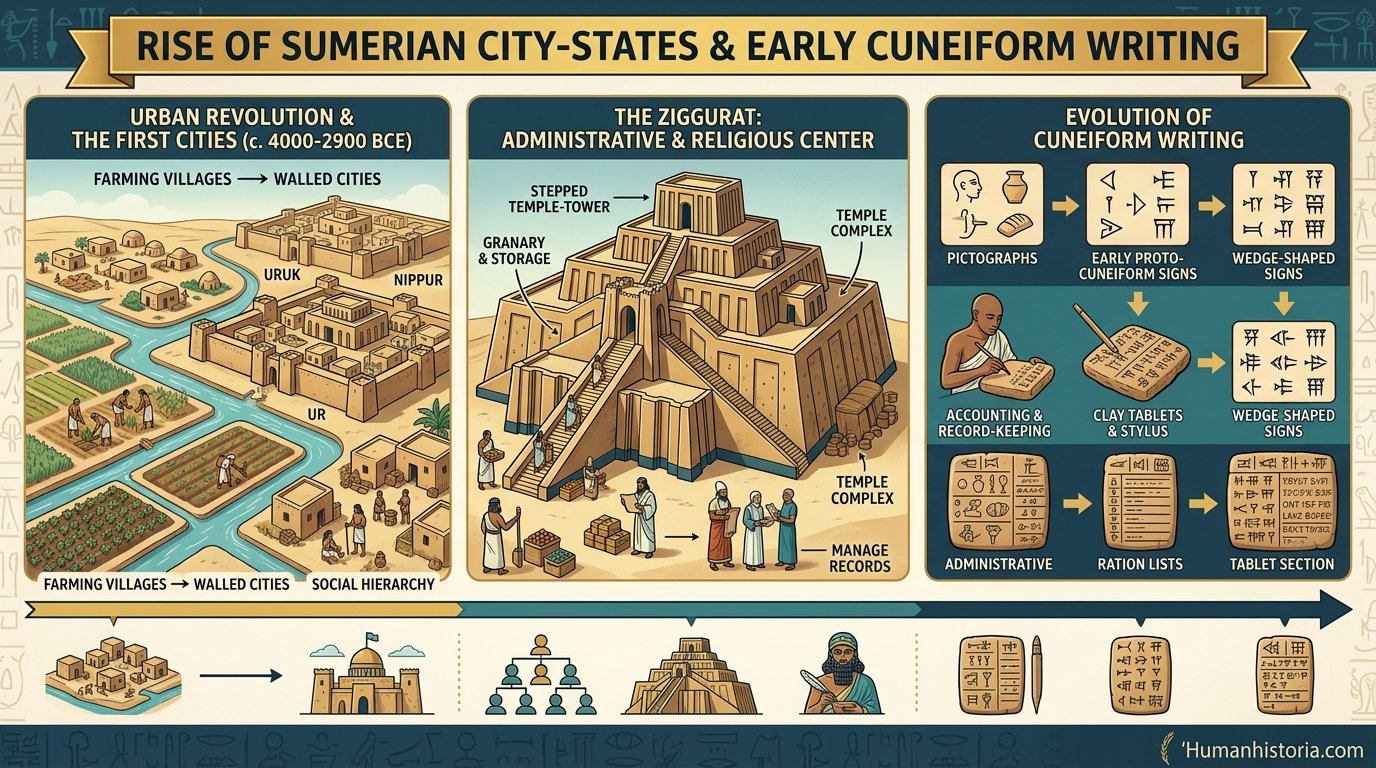
๐จ Historical Illustration (AI)
* Note: Cover image is an AI-generated historical illustration.
๐ง Key Chronicle Takeaway (Atomic Summary)
How Sumerian accountants seeking to track barley inventories invented the first writing system.
Writing is the technology that marks the boundary between prehistory and history. The earliest known system of writing is Cuneiform, developed by the Sumerians in Mesopotamia (modern Iraq) around 3200 BCE. Originally created as a simple bookkeeping tool by temple administrators to track deliveries of barley, sheep, and beer, cuneiform evolved over three millennia into a highly sophisticated, phonetic writing system. It was adapted by multiple language familiesโSumerian, Akkadian, Babylonian, Assyrian, Hittite, and Hurrianโand was used to draft the first legal codes, map the stars, write personal letters, and record humanity's oldest literary masterpiece, the Epic of Gilgamesh.
The Genesis: From Clay Tokens to Flat Tablets
To understand the invention of cuneiform, one must examine the agricultural and administrative expansion of the first city-states, such as Uruk and Ur, in the fertile Mesopotamian plains between the Tigris and Euphrates Rivers. As agricultural yields grew and populations expanded, temple administrators needed a reliable way to track taxes, tributary offerings, and resource distributions.
The system evolved through three stages:
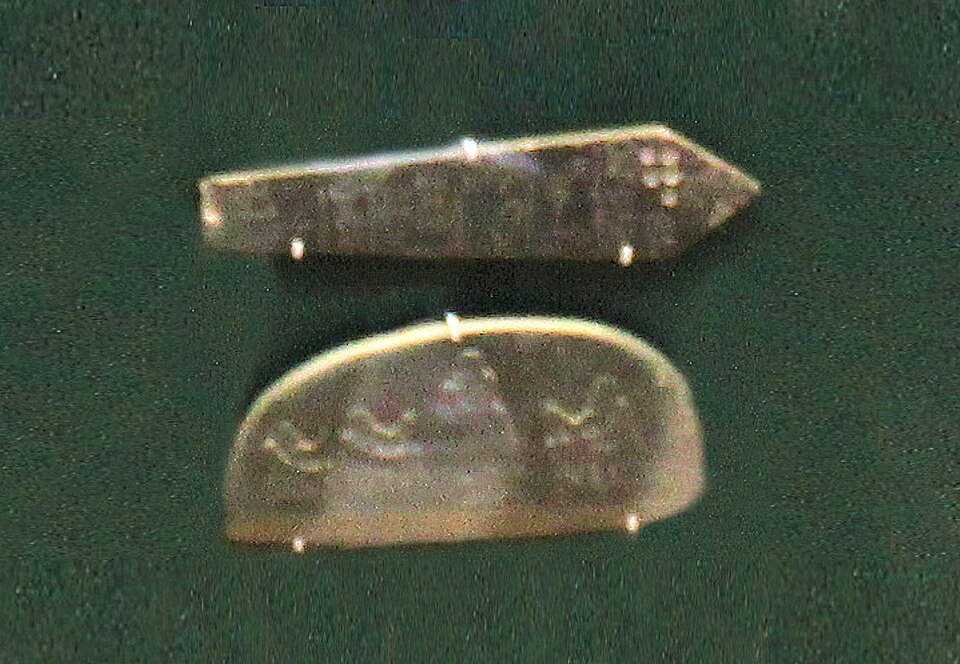
Clay Tokens (Calculi): Starting around 8000 BCE, Mesopotamians used small, hand-shaped clay tokens to represent commodities. A sphere represented a measure of grain; a cone represented a jar of oil; and a cylinder represented a sheep. If a farmer delivered three sheep and two jars of oil, he received three cylinder tokens and two cone tokens.
Clay Envelopes (Bullae): To prevent fraud and secure transactions, administrators began sealing these clay tokens inside a hollow, spherical clay envelope called a bulla. A merchant would carry the sealed bulla alongside his cargo. Upon arrival, the recipient could break the bulla to verify that the tokens inside matched the cargo delivered.
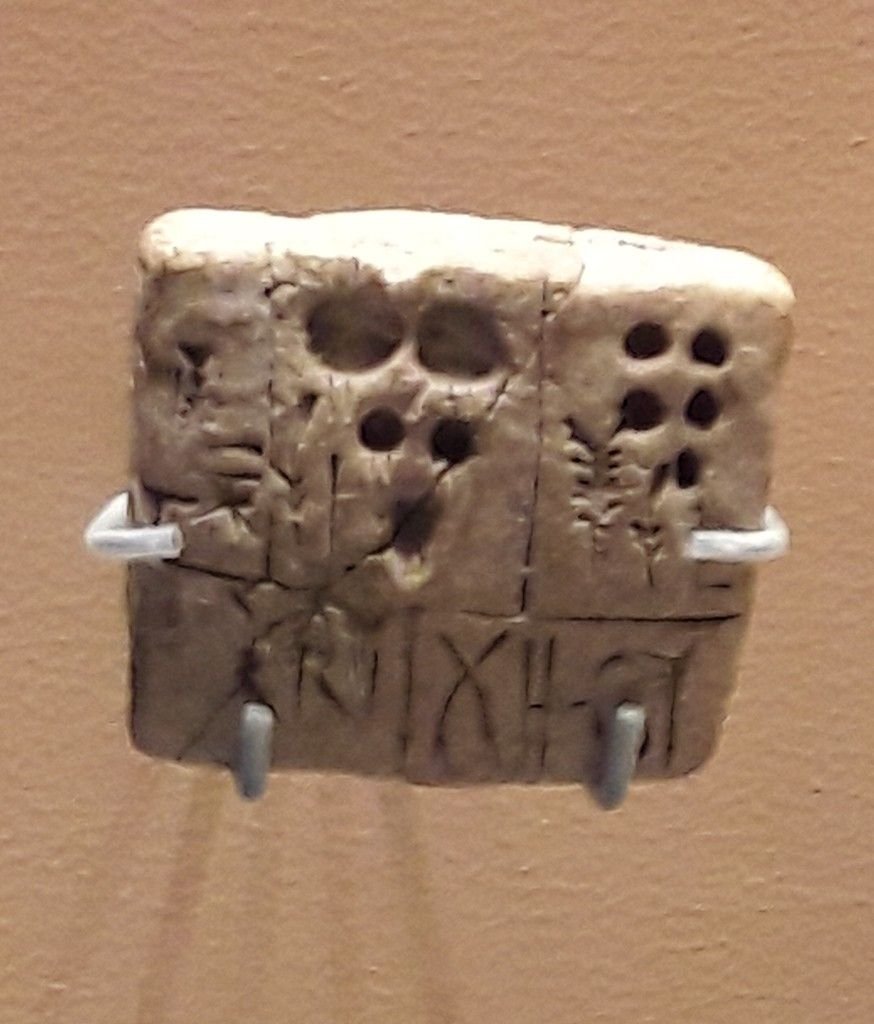
The Impression Breakthrough: Because breaking the bulla was inconvenient, scribes began pressing the tokens into the wet clay on the outside of the envelope before sealing it. This left an impression that showed the contents. Scribes quickly realized they did not need the physical tokens inside; the impressions on a flat clay tablet were sufficient to represent the commodities, marking the invention of the tablet.
By 3200 BCE, the three-dimensional tokens had disappeared, replaced by two-dimensional pictographs drawn onto flat clay tablets using a pointed reed stylus.
The Mechanics of Cuneiform: The Reed and the Wedge
The physical properties of cuneiform were shaped by the resources available in the Mesopotamian river valleys: clay and reeds.
Scribes gathered wet clay from riverbanks, shaping it into flat, rectangular, or cushion-shaped tablets. For writing, they used a stylus cut from the abundant river reed (Phragmites australis). Scribes cut the tip of the reed at an angle, giving it a triangular, wedge-shaped cross-section.
Instead of scratching lines into the wet clay (which created messy ridges that distorted the symbols as they dried), the scribe pressed the corner of the reed tip into the clay. This left a distinctive, wedge-shaped mark. The term cuneiform is derived from the Latin words cuneus ("wedge") and forma ("shape"), coined by 17th-century scholars who first inspected the tablets. Scribes combined four basic wedge directionsโvertical, horizontal, diagonal, and a triangular impression called the Winkelhaken (crescent wedge)โto form hundreds of distinct signs.
The Rebus Principle: Unlocking Phonetics
The transition from pictographic drawing to phonetic writing was achieved via the Rebus Principle. A rebus uses a picture of an object to represent the sound of the word, rather than the object itself. In Sumerian, the word for "arrow" was ti. The word for "life" was also pronounced ti. Because "life" is an abstract concept that is difficult to draw, scribes began using the pictogram for "arrow" to write the word "life." This allowed cuneiform to transition from representing objects to representing the sounds of spoken language, enabling the recording of complex speech, grammar, and abstract ideas.
Scribal Education: The Edubba
Cuneiform was a complex writing system containing over 600 distinct characters, requiring years of training to master. This led to the creation of a specialized social class: the scribes. Scribes were educated in the edubba (meaning "tablet house" or scribal school), which were elite institutions attached to temples or palaces.
The curriculum was demanding:
Students began by learning how to prepare clay and hold the reed stylus.
They copied long bilingual lexical lists (Sumerian-Akkadian dictionaries), memorizing the signs for animals, plants, minerals, and professions.
They practiced mathematics, surveying, accounting, and legal draftsmanship, preparing for careers as tax collectors, builders, diplomats, or administrators.
Discipline was strict; tablet house logs describe students being regularly beaten ("caned") by the school director or "the man in charge of the whip" for talking, leaving the school without permission, or writing messy tablets.
This rigorous education created a unified scribal culture across the Near East. Despite speaking different languages, scribes in Babylon, Hattusa, and Ugarit read the same literary texts, copied the same mathematical tables, and communicated using a shared cuneiform script.
The Behistun Inscription: Deciphering the Wedges
For centuries, cuneiform was a lost script. The key to its decipherment was the Behistun Inscription, carved high on a cliff in western Iran by order of the Persian King Darius the Great (c. 520 BCE). Like the Rosetta Stone, the inscription is trilingual, recording Darius' victories in three cuneiform scripts: Old Persian, Elamite, and Babylonian. In the 1830s and 1840s, the British officer Henry Rawlinson climbed the cliff to copy the texts. By translating the simpler Old Persian cuneiform first, Rawlinson and his contemporaries successfully deciphered the complex Babylonian script, unlocking the records of ancient Mesopotamia.
Literary and Administrative Legacy
Cuneiform was used to write the oldest literary works in human history. The most famous is the Epic of Gilgamesh, a collection of stories regarding the historical king of Uruk who searches for the secret to immortality. The tablets contain a flood narrative that shares structural details with the biblical account of Noah's Ark, causing a sensation when it was first translated in the 19th century by George Smith.
Cuneiform was also used to write the Code of Hammurabi (a Babylonian legal code), treaty accords (such as the Hittite copy of the Treaty of Kadesh), diplomatic letters (the Amarna Letters in Egypt), astronomical observations, and personal letters. In these letters, Assyrian merchants in Anatolia wrote to their wives in Ashur regarding silver shipments, wool prices, and family disputes, providing a window into the daily lives of people who lived 4,000 years ago.
The Library of Ashurbanipal at Nineveh
The preservation of cuneiform literature was accelerated by the royal patronage of the Assyrian King Ashurbanipal (reigned 668โ627 BCE). Ashurbanipal was a literate king who took pride in his scribal training. He established a grand royal library at his capital, Nineveh (modern Mosul, Iraq), with the goal of collecting, translating, and preserving the complete intellectual corpus of Mesopotamia. Scribes were dispatched to Babylonian temples to copy, catalog, and translate historical documents, medical texts, astronomical observations, and religious hymns into Assyrian cuneiform.
The library was destroyed in 612 BCE when a coalition of Babylonians and Medes sacked Nineveh, burning the palace. Ironically, this fire baked and preserved the clay tablets, which remained buried for over two millennia. In 1849, archaeologists discovered the ruins of the library, recovering over 30,000 clay tablets and fragments, including the complete text of the Epic of Gilgamesh and the Enuma Elish (the Babylonian creation myth). This discovery provided modern scholars with an archive of ancient Mesopotamian science, administration, and literature, proving that writing in clay remains the most durable form of information storage in human history.
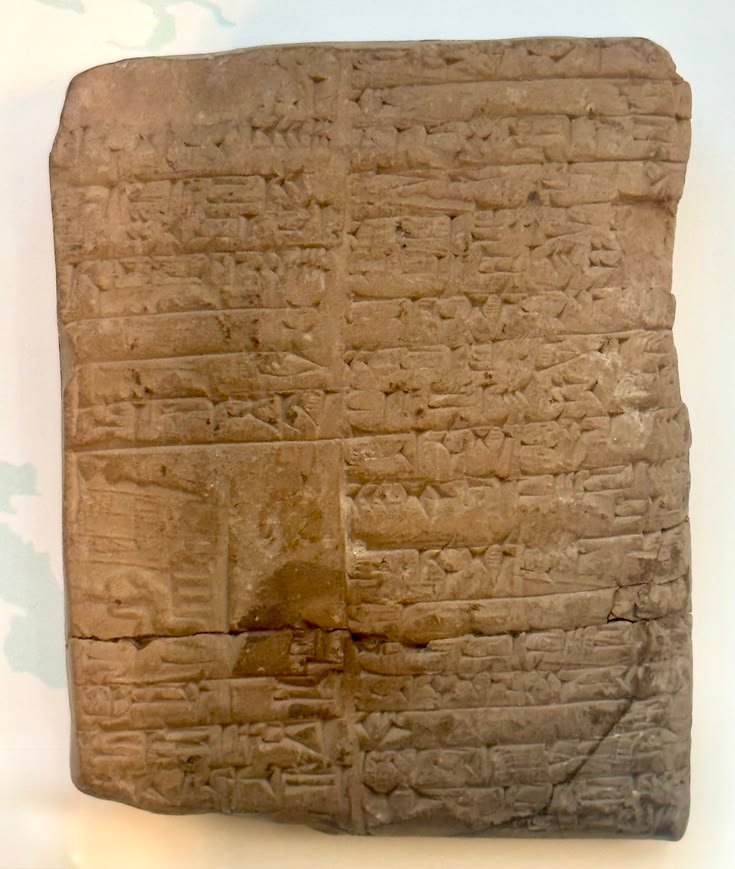
An authentic ancient Sumerian cuneiform clay tablet showing the wedge-shaped impressions used to record accounts, rations, and administrative transactions.
Deciphering the Behistun Inscription
The decipherment of cuneiform by Henry Rawlinson relied on the multilingual Behistun Inscription. Carved into a cliff face in western Iran, the inscription recorded the same text in Old Persian, Elamite, and Babylonian. Scribes realized that the Old Persian cuneiform was the simplest, using only 36 phonetic signs. By translating the Persian names of Darius' ancestors, Rawlinson established a phonetic alphabet. He then compared these names to the complex Babylonian cuneiform, which used over 500 signs. This comparative analysis proved that cuneiform was a phonetic and logographic script, unlocking the historical records of the Assyrian, Babylonian, and Sumerian civilisations.
Preservation and Baking of Clay Tablets
Maintaining cuneiform archives presents challenges for modern museums. While fired clay is highly durable, many recovered tablets were unfired or damaged by moisture, salt crystallization, and physical wear. To prevent these tablets from crumbling, museum conservators must carefully bake them in specialized kilns at high temperatures (around 700ยฐC), which hardens the clay and drives out moisture. Once baked, the tablets are soaked in distilled water to dissolve destructive salts. This preservation work ensures that the letters of Sumerian merchants and Babylonian kings remain readable for researchers, preserving the primary sources of ancient Mesopotamian history.
Diplomatic Correspondence: The Amarna Letters
As cuneiform evolved, it became the primary diplomatic tool of the ancient Near East, serving as the international script of administration. This is demonstrated by the Amarna Letters (discovered in Egypt, dating to the 14th century BCE). The archive consists of clay tablets containing correspondence between the Egyptian pharaohs (including Amenhotep III and Akhenaten) and the rulers of Babylon, Assyria, Mitanni, and the Hittite Empire, as well as their vassal states in Canaan.
Although the correspondence was sent to Egypt, the letters were not written in Egyptian hieroglyphs or on papyrus. They were written in Akkadian cuneiformโthe lingua franca of Bronze Age diplomacy. This required the Egyptian royal court to employ scribes who could read, write, and translate cuneiform wedges. The Amarna Letters contain administrative details regarding marriage alliances, diplomatic gifts (such as gold, lapis lazuli, and chariots), vassal petitions for military aid, and trade agreements, proving that cuneiform was the administrative network that coordinated the geopolitics of the Bronze Age Near East.
Conclusion and Legacy
Cuneiform writing was the first technology of information storage. By converting spoken language into physical, dried clay wedges, the peoples of Mesopotamia created a durable external memory that survived the collapse of their empires, proving that the records of human administration, science, and poetry can survive for millennia if written in clay.
โ๏ธ
Historian Debate: Why Did Cuneiform Survive the Alphabet?
Administrative Monopoly
Scribal guilds in Mesopotamia actively resisted alphabetic writing because the extreme complexity of cuneiform (hundreds of signs) protected their monopoly on state administration and high status.
Epigraphic Durability and Prestige
Proponents argue that cuneiform remained the language of diplomatic prestige and religious ritual, preserved on durable clay that outlasted papyrus scripts.
Cuneiform survived for 3,000 years, outlasting the Sumerian, Akkadian, and Assyrian empires.
"To write beautifully is the mark of a true scribe. The clay does not forget what is pressed into it by the reed stylus."
โ Sumerian Scribal School Tablet, Nippur (c. 2000 BCE).
Related Civilizations & Contexts
Sumerian City-StatesBabylonian EmpireAssyrian EmpireAchaemenid Persian Empire
Further Reading
Cuneiform: Ancient Scripts โ by Irving Finkel & Jonathan Taylor. A concise, engaging guide to the history and decipherment of cuneiform writing.
The Babylonians โ by H.W.F. Saggs. A comprehensive history of the Mesopotamian societies that utilized cuneiform.
๐ Scholar Mode Active โ Click to exit focused reading
History Lab ๐งช
Run simulated matches between civilizations and convert ancient currencies.
๐ต๏ธ Who Am I? (The Historical Guess Game)
A secret historical figure has been selected. Ask yes/no questions to narrow down the pool of candidates. Click any active card to make your accusation!
Secret Identity
โ Who Am I?
Ask questions using the board below to narrow down my identity.
Ask a Question:
Question LogQuestions: 0 / 7
No questions asked yet.
Candidate Board:
๐บ๏ธ Timeline Scramble
Five historical events appear out of order. Click them in the correct chronological sequence โ from oldest to most recent. How well do you know your history?
๐บ Relic or Fake?
Is this a real historical artifact or a convincing fabrication? Judge each one based on its description and era โ then see the truth revealed!
Artifact 1 / 10Score: 0
Empire Matchup Simulator
Empire ATerritory Size (Peak, M kmยฒ)Empire B
00
Empire APopulation (Peak, Millions)Empire B
00
Empire AMilitary Power (Army Size)Empire B
00
Tactical Battle Analysis
Select empires and click simulate to run evaluations.
Historical Purchasing Power Converter
See what ancient coins are worth in modern terms and check their historical purchasing power.
Modern Value Equivalent
$0.00 USD
Historical Purchasing Power:
Select currency to view purchasing capability.
Historical Identity Generator
Forge an authentic historical identity from ancient civilisations, complete with linguistic meaning and biography.
Neutral
Gaius Julius
Meaning:Descendant of Jupiter
Historical Background:
A Roman citizen and clerk who worked in the forum under Roman republic rule.
Chrono-Cultural Fusion Simulator
Fuse the culture, technology, and governance of two legendary civilizations to synthesize a unique hybrid society.
Cohesion & Coexistence Rate
85%
๐๏ธ Hybrid Architecture
โ๏ธ Synthesized Asset
๐ Synthetic Governance
Historical Tactics & Trivia Quiz
Test your historical knowledge and battle tactics to claim your administrative rank.
8 Questions โข Multi-Era
You will be presented with random scenarios and trivia spanning ancient Egypt, classical Rome, Islamic Golden Age, and the modern industrial era. Complete the evaluation to see your historical title!
Question 1 of 8Score: 0
What was the Code of Hammurabi written on?
Correct!
Evaluation Complete!
6 / 8
Correct
Rank Attained
Imperial Legionary
Your knowledge of classical strategy and administrative structures is respectable.
๐ฒ Counterfactual "What If?" Scenario Simulator
Explore alternative historical trajectories by tweaking key civilizational pivot points.
Simulated Shift
Selected Era
Prehistoric Era
Millions of years ago to ~3000 BCE
The dawn of humanity. From the evolutionary split of early hominids to the mastery of stone tools, fire, and the birth of language.
Landmark Milestones
Welcome to Historia
Enter your Scholar Name to synchronize your chronicles and save your journey.
THEMATIC SHORTโฑ๏ธ 0:45
Title Loading...
Description loading...
1 / 13
๐ก Tip: Use Arrow Keys โฌ ๏ธ โก๏ธ to binge watch shorts