Examine the tangible relics, physical tokens, and revolutionary machines that shaped civilizational growth.
🎥 VIDEO HUB & SHORTS
Watch visual summaries, site intros, and mini-documentaries chronicling 300,000 years of world history.
📊 HISTORICAL INFOGRAPHICS ARCHIVE
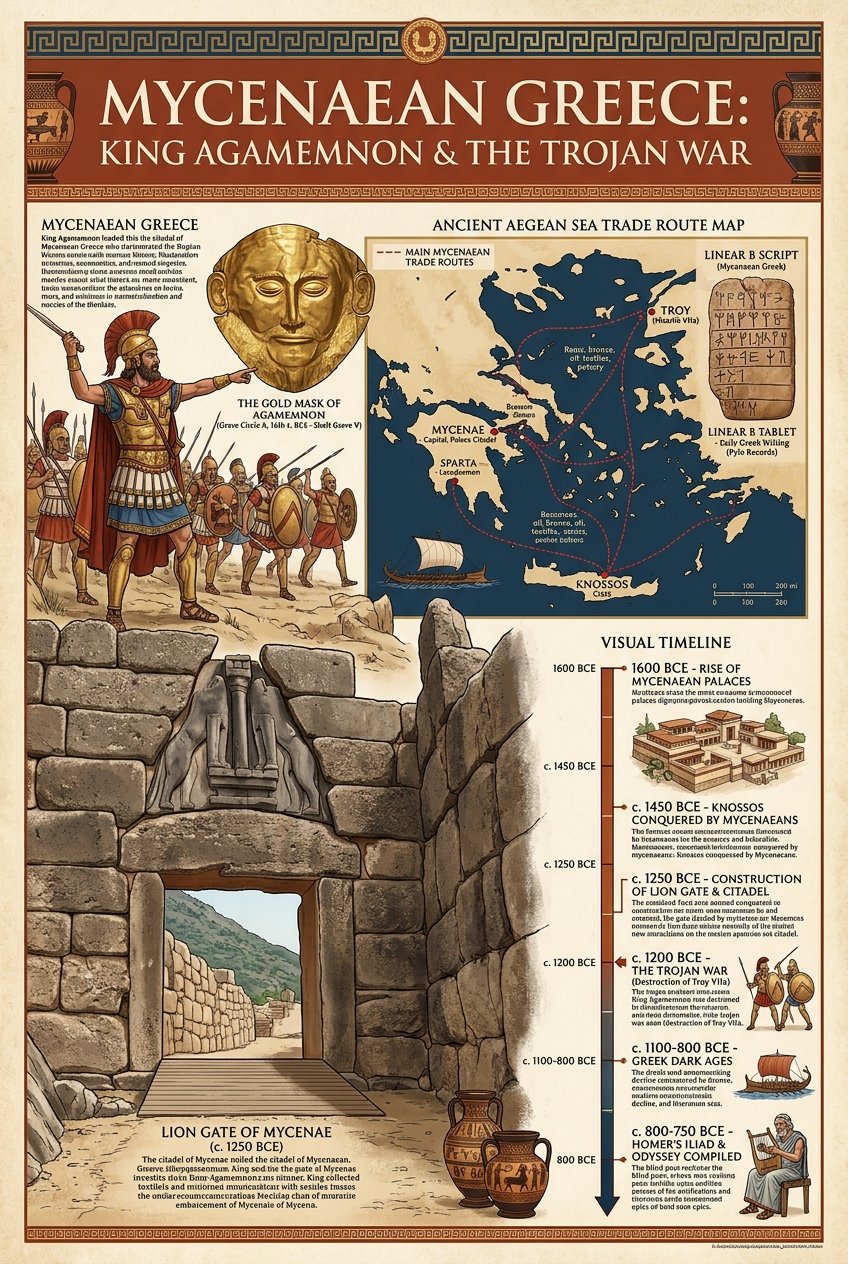
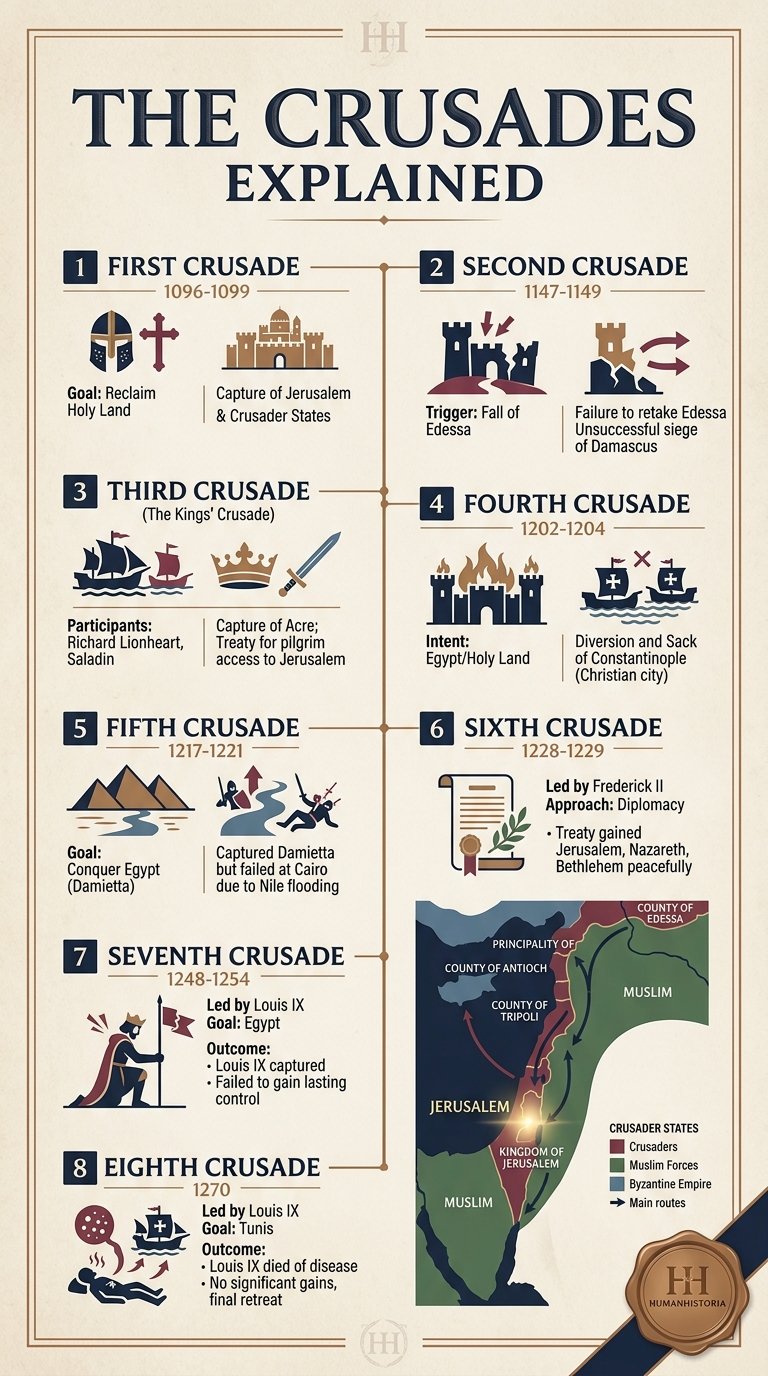
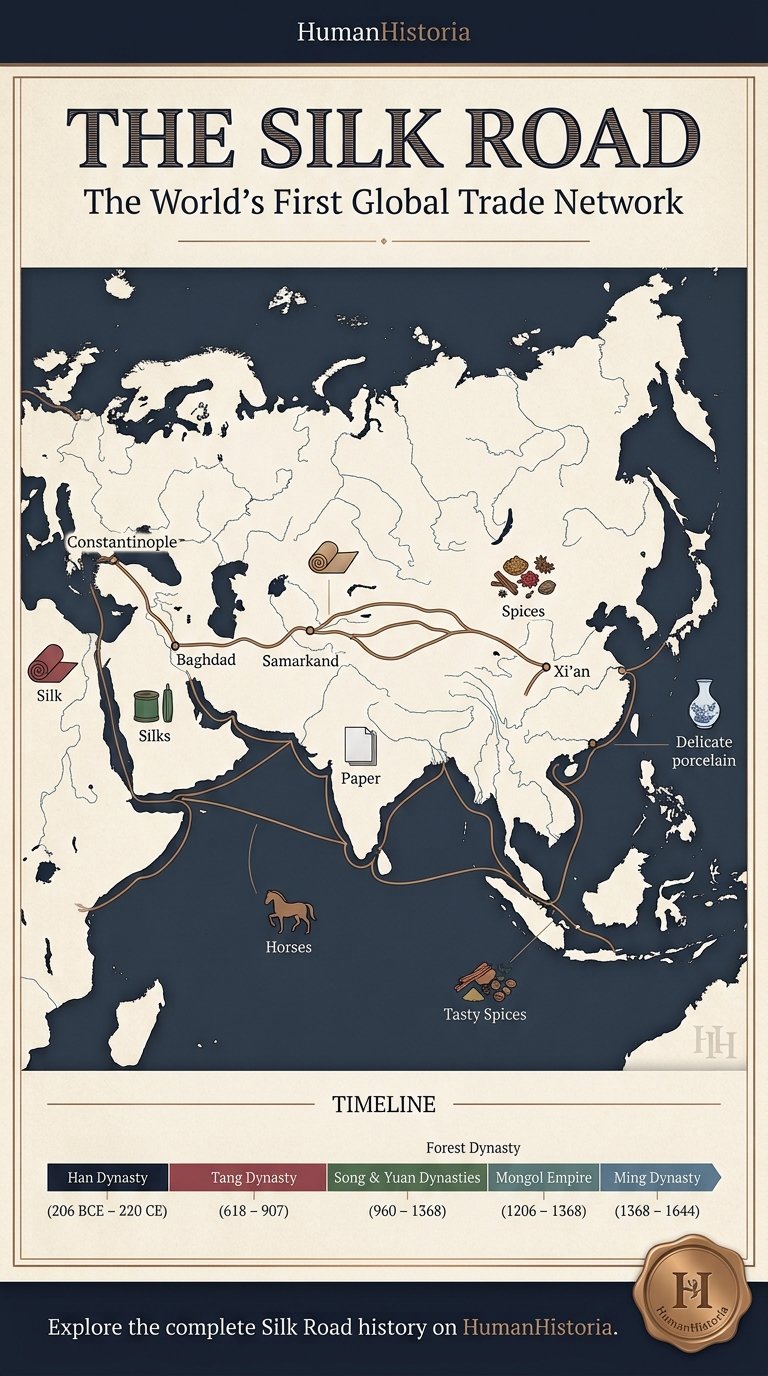
Museum-grade visual graphics, civilizational timelines, and architectural breakdowns curated for educators and history lovers.
THE HISTORIA CIRCLE
Join the collective discussion, study logs, and contributions of fellow historians mapping humanity's path.
Historia Forum Discussions
Start a Discussion Thread
THEMATIC PATHWAYS
Trace a single thread — disease, trade, energy, migration — across all eras and civilizations.
History is not just a sequence of events — it is a network of patterns. These thematic pathways allow you to follow a single concept across thousands of years: how agriculture spread, how warfare evolved, how trade routes shaped civilizations. Each pathway collects the most relevant chronicles across all eras.
🧩
How is this different from the sidebar Topics?
While the sidebar Topics (like Science & Tech or Empires) filter articles within your selected historical Era, Thematic Pathways cut horizontally across all eras (from Prehistoric to the Future). Use Themes to trace a single concept's evolutionary line across 300,000 years.
CIVILIZATION HUBS
Comprehensive profiles of the world's greatest civilizations and empires — from ancient cradles to global super-states.
Human Historia provides an academically rich exploration of the world's most influential civilizations. From the monumental achievements of ancient Egypt, Han China, and the Roman Empire, to the sophisticated societies of the Maya, the Islamic Caliphates, and West African empires, these hubs offer deep insights into the cultural, political, and technological legacies that continue to shape our global story.
EVOLUTION OF HUMAN SKILLS
Trace the compounding technologies, practical capabilities, and cognitive milestones of the human species.
Human progress is a story of compounding skills. Every breakthrough, from the spark of prehistoric fire to modern silicon transistors, builds directly on previous generations of ingenuity. Hover over a skill node to trace its historical prerequisites, and click it to explore its development timeline, species-wide impact, and related chronicles.
Prehistoric Ancient Medieval Modern Future
🧠
Select any skill node in the tree to explore its evolutionary path, development timeline, and historical impact.
ACADEMIC PASSPORT
Track your intellectual journey, quiz outcomes, and historical badges of honor.
HISTORIA PASSPORT⏳
👤Scribe Novice
Scholar NameHistoria Explorer
Rank RatingSumerian Record Scribe
Chronicles Read0 / 48
Study Guide Pins0 Guides
Security AccessLevel 1 (Novice)
Earned Badges of Honor
🔥
Fire Keeper
Unlock 3 prehistoric chronicles.
🏛️
Codex Keeper
Unlock 3 ancient chronicles.
🏰
Guild Master
Unlock 3 medieval chronicles.
⚙️
Steam Engineer
Unlock 3 modern chronicles.
🚀
Singularity Sage
Unlock 3 future chronicles.
👑
Grand Scholar
Score 5/5 on the Lab Quiz.
Recent Lab Activities
No recent activities recorded. Take a quiz or bookmark articles!
Curated Exhibition
Human Historia
An immersive graphical anthology tracing the paths of civilizations, breakthroughs, and conflicts that forged the modern consciousness.
25Chronicles
Showing all articles
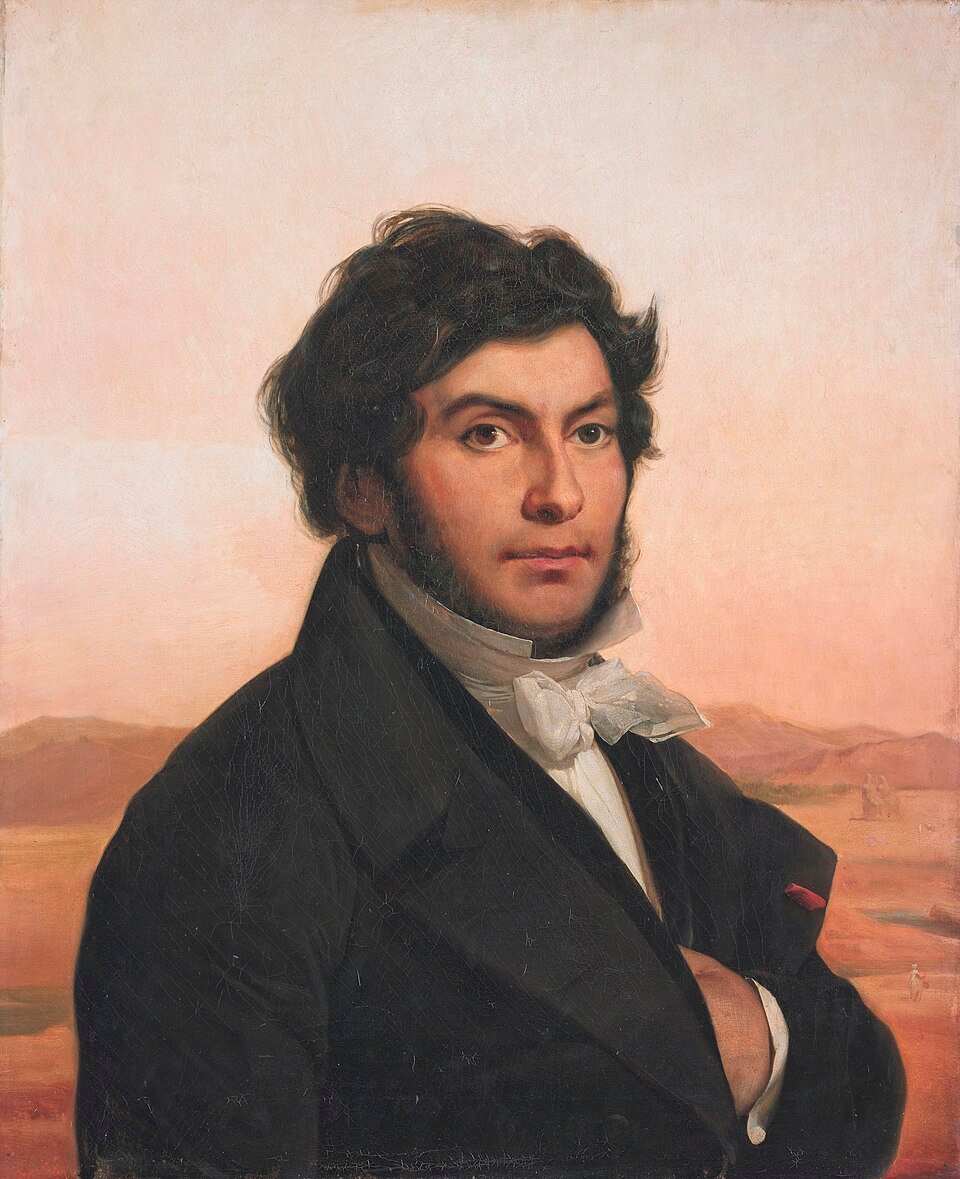
Rosetta Stone (199 BCE): Jean-François Champollion & Hieroglyphics
Written by Historia LinguisticsHistorical Era: ANCIENT
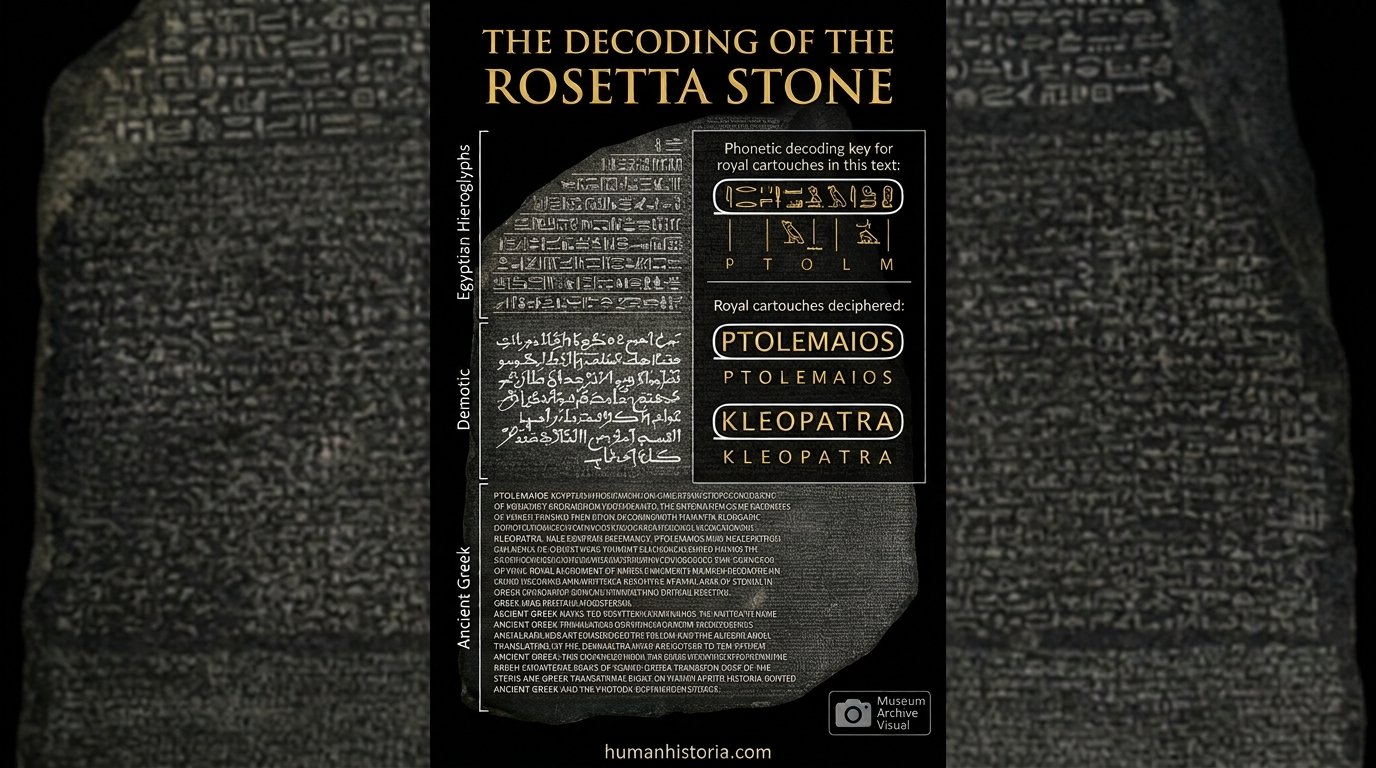
🎨 Historical Illustration (AI)
* Note: Cover image is an AI-generated historical illustration.
🧠Key Chronicle Takeaway (Atomic Summary)
How the discovery of a trilingual decree enabled Jean-François Champollion to decipher Egyptian hieroglyphs, unlocking 3,000 years of history.
For over fourteen centuries, the monumental ruins, tombs, and temples of ancient Egypt were silent. Although their walls were covered with thousands of detailed carvings and inscriptions, the knowledge of how to read Egyptian Hieroglyphs had vanished with the fall of the classical world and the rise of Christianity. The key that unlocked this silent library was a single, broken slab of black stone discovered in 1799: the Rosetta Stone. Containing a trilingual decree by the Ptolemaic King Ptolemy V, the stone enabled the brilliant French linguist Jean-François Champollion to decipher the hieroglyphic script, birth the science of modern Egyptology, and restore 3,000 years of history to the global story.
The Anatomy of the Sacred Script
Egyptian hieroglyphs (meaning "sacred carvings" in Greek) were developed around 3100 BCE, at the dawn of dynastic Egypt. Unlike cuneiform, which transformed into abstract wedge patterns, hieroglyphs preserved their figurative, pictorial nature throughout their history, depicting animals, humans, gods, and tools.
Hieroglyphic writing was a hybrid system, combining three types of signs:
Phonograms: Signs that represented spoken sounds, similar to letters in an alphabet. These could represent single consonants (uniliterals), two consonants (biliterals), or three consonants (triliterals).
Ideograms: Signs that represented the actual object depicted (such as drawing a sun to represent "sun" or "day").
Determinatives: Silent signs placed at the end of a word to clarify its meaning. For example, a word representing a verb of movement would be followed by a pair of walking legs to distinguish it from homophones.
Because hieroglyphs were slow and labor-intensive to carve, scribes developed two cursive scripts: Hieratic (used for administrative papyri) and Demotic (a highly cursive, simplified script used for daily business and contracts). As Rome integrated Egypt and closed the ancient temples to enforce Christianity, the priesthood died out, and the last known hieroglyphic inscription was carved on the walls of the Temple of Philae in 394 CE. For over a millennium, scholars erroneously believed hieroglyphs were purely symbolic, mystical pictures, preventing any scientific translation.
The Discovery at Rashid
The discovery of the stone occurred during Napoleon Bonaparte's Egyptian Campaign (1798–1801). Napoleon brought an army of 160 scholars, engineers, and scientists (known as the savants) to study Egypt’s history, topography, and natural resources.
In July 1799, during the reconstruction of Fort Julien near the port city of Rashid (Rosetta) in the Nile Delta, the French engineering officer Pierre-François Bouchard noticed a large, dark stone built into a medieval wall. Bouchard recognized the stone's importance: it was a broken fragment of a larger stela, containing three distinct bands of writing. He immediately dispatched the stone to the newly founded Institute of Egypt in Cairo, where scholars began creating ink squeezes and prints of the inscriptions to distribute to European universities.
The Three Inscribed Scripts
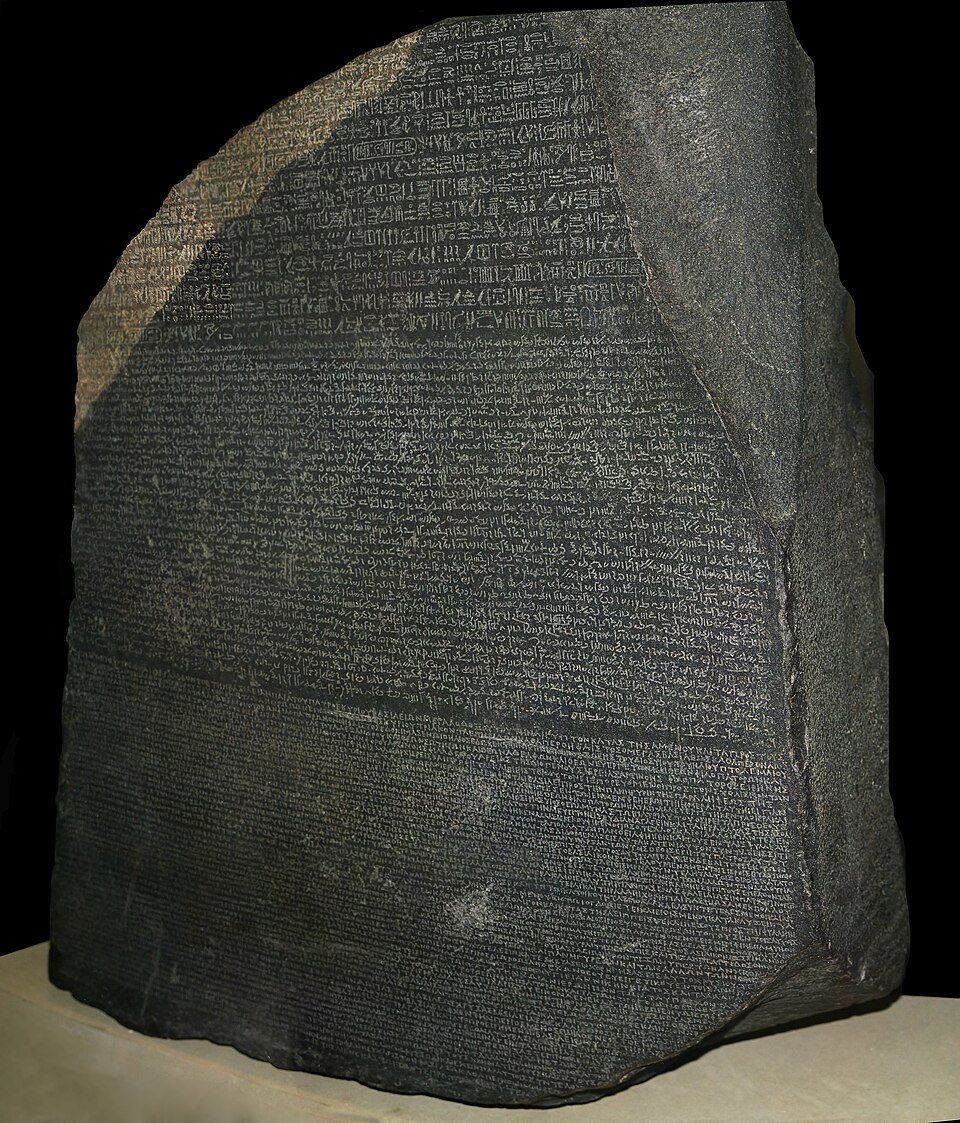
The Rosetta Stone is a slab of black granodiorite weighing approximately 1,680 pounds. The inscription is a copy of the Decree of Memphis, issued in 196 BCE by a council of priests to celebrate the coronation anniversary of King Ptolemy V Epiphanes.
Because Ptolemaic Egypt was a multicultural state ruled by a Greek dynasty, the decree had to be read by priests, administrators, and the public. It was written in three scripts:
Hieroglyphs (Top, 14 lines): The sacred script used for formal, monumental inscriptions, read by the priesthood and the gods.
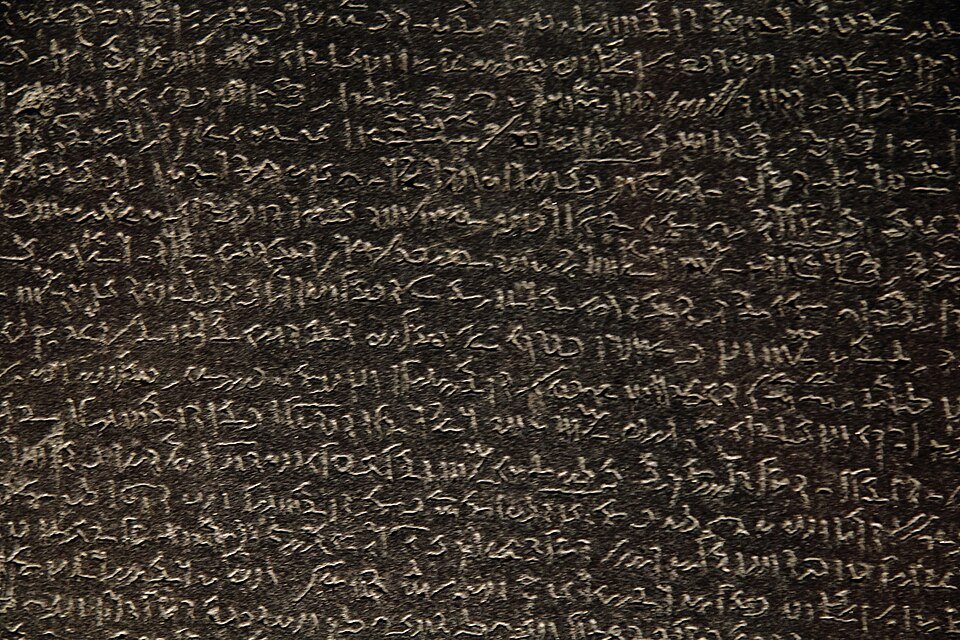
Demotic (Middle, 32 lines): The popular, daily script of the Egyptian administration, used for civic records and legal treaties.
Ancient Greek (Bottom, 54 lines): The administrative language of the Ptolemaic court and the ruling elite, which was widely read by scholars in Europe.
The authentic Rosetta Stone displayed at the British Museum, showing the three distinct zones of inscriptions: Hieroglyphic, Demotic, and Ancient Greek.
The Treaty of Alexandria and the British Museum
Following the military defeat of French forces in Egypt, the British claimed the Rosetta Stone and the French antiquities collections under the Treaty of Alexandria (1801). Despite French protests—with scholars threatening to burn their collections rather than yield them—the stone was shipped to England. In 1802, it was placed in the British Museum in London, where it has remained on public display ever since, serving as one of the museum's most visited artifacts.
The Race to Decipher: Young vs. Champollion
The Greek text was translated quickly, revealing that the stone recorded a royal decree granting tax exemptions to temples and describing Ptolemy V as a generous benefactor. Scholars realized that if the three texts were identical in content, the Greek could serve as a translation key. However, the decipherment was difficult because the hieroglyphic section was broken, with more than half of the lines missing.
The first major breakthrough was made by the British polymath Thomas Young (1773–1829). Young studied the Demotic and hieroglyphic scripts. He realized that:
The oval-shaped frames—known as cartouches—contained the names of royal figures, serving as phonetic labels.
By matching the letters of the Greek name "Ptolemaios" to the characters inside the hieroglyphic cartouche, Young identified several phonetic signs (such as P, T, O, L, M, and S).
Hieroglyphic writing was not purely symbolic; it contained phonetic components used to write foreign Greek names. However, Young believed phonetics were only used for foreign names and that native Egyptian words were purely symbolic pictures, which prevented him from cracking the complete grammar.
Champollion's Eureka: "Je tiens mon affaire!"
In September 1822, after receiving drawings of a newly discovered obelisk from Philae containing the cartouche of Cleopatra, Jean-François Champollion compared the cartouches of Ptolemy and Cleopatra. By matching the overlapping characters (P, L, O, and T), he confirmed the phonetic value of the signs. On September 14, he analyzed a cartouche from the older Abu Simbel temple and recognized the name of the Pharaoh Ramesses. Using his fluency in Coptic, Champollion realized that the first sign (a circle representing the sun) was the Coptic word Ra, followed by mes (to be born) and ss. He had read a native Egyptian word phonetically! He famously ran to his brother's office, shouted "Je tiens mon affaire!" ("I've got it!"), and collapsed from exhaustion, remaining bedridden for five days.
The Decipherment and the Legacy of Coptic
Champollion’s breakthrough relied on his mastery of Coptic—the language spoken by the Christian descendants of ancient Egypt, which was written in the Greek alphabet with a few additional signs. Champollion realized that Coptic was the final evolutionary stage of the ancient Egyptian spoken language. By reading the hieroglyphs phonetically and translating their vocabulary using Coptic grammar, he unlocked the grammar of the script.
In September 1822, Champollion published his findings in the Lettre à M. Dacier, presenting a phonetic alphabet of hieroglyphs and proving that the script was a hybrid phonetic-symbolic system. In 1824, he published his Précis du système hiéroglyphique, detailing the complete grammar, nouns, verbs, and syntax of the language. This allowed scholars to read temple walls, tomb inscriptions, and papyrus scrolls, restoring the poetry, science, and history of ancient Egypt to the world.
The Repatriation Debate: Who Owns the Past?
The Rosetta Stone remains at the center of a global debate regarding cultural heritage, museum ethics, and repatriation. In recent decades, Egypt has repeatedly requested the return of the stone. Led by prominent archaeologists (such as Zahi Hawass), Egypt argues that the stone was a national treasure illegally seized during colonial campaigns and should be displayed in the Grand Egyptian Museum in Giza, near the pyramids, as a symbol of Egyptian identity.
The British Museum has resisted these requests, citing the British Museum Act of 1963, which prohibits the museum from de-accessioning objects in its collection except under narrow conditions. The museum argues that the Rosetta Stone is a "universal artifact" that belongs to the shared heritage of humanity, and that its display in London alongside artifacts from Mesopotamia, Greece, and Rome allows for comparative study and historical education for millions of international visitors. This debate highlights the complex political and ethical questions surrounding colonial acquisitions and the administration of global cultural heritage in the modern world.
The Discovery's Impact on the French Public
The discovery of the Rosetta Stone and the subsequent decipherment of hieroglyphs had a profound impact on the French public during the Napoleonic era. In 1802, copies of the inscription were displayed in Paris, sparking a cultural phenomenon known as Egyptomania. Architects designed buildings with Egyptian columns, and artists decorated furniture with sphinxes and hieroglyphic motifs. Champollion’s breakthrough in 1822 was celebrated as a national triumph, proving that the French campaign, despite its military failure, had succeeded in restoring Egypt's ancient past to human knowledge, shaping the development of modern archaeology.
Unlocking Hieratic and Demotic Literacy
The decipherment of the Rosetta Stone did not merely unlock the hieroglyphs; it unlocked the cursive scripts of ancient Egypt. Scribes used hieroglyphs for formal monuments, but daily administration was recorded in hieratic and demotic on papyrus. By translating the demotic text on the Rosetta Stone first, Young and Champollion established the link between the monumental carvings and the cursive scripts. This allowed subsequent Egyptologists to read thousands of secular documents—including court trials, medical treatises, taxation accounts, school exercises, and letters—revealing the daily administrative and social history of the Nile Valley.
Ideograms vs. Phonetics: The Philological Debate
The decipherment of the Rosetta Stone was delayed for centuries by a fundamental philological misconception: the belief that Egyptian hieroglyphs were purely ideographic or symbolic picture-writing. This view was popularized by the ancient writer Horapollo in his 4th-century work Hieroglyphica, where he argued that each hieroglyph represented an abstract philosophical concept—such as a vulture representing a mother or a hare representing open eyes. This view led generations of European scholars, most notably Athanasius Kircher in the 17th century, to translate hieroglyphic texts into long mystical treatises that had no relation to the actual text.
The Rosetta Stone shattered this myth. Scribes like Thomas Young realized that the oval frames called cartouches contained the names of Greek rulers like Ptolemy and Cleopatra. Young reasoned that because these Greek names had no native Egyptian symbolic meaning, they had to be written phonetically. Champollion expanded on this, comparing the cartouches on the Rosetta Stone with those on the Philae Obelisk. He discovered that the hieroglyphic system was a sophisticated mix of logograms (symbols for words) and phonograms (symbols for sounds), proving that hieroglyphs were a spoken language, unlocking ancient Egyptian history.
Conclusion and Legacy
The Rosetta Stone remains the ultimate symbol of translation and cross-cultural communication. By serving as the trilingual key that linked Greek, Demotic, and Hieroglyphs, this ancient decree proved that no language is permanently lost, and that the recovery of the past depends on the patient study of linguistic connections, bringing the voices of the Pharaohs back to human knowledge.
⚖️
Historian Debate: Who Deciphered the Hieroglyphs First?
The French Genius of Champollion
French historians credit Jean-François Champollion, who recognized that hieroglyphs were both phonetic and symbolic, using the Rosetta Stone to decode the entire grammatical system in 1822.
The British Contributions of Young
British scholars highlight Thomas Young, who identified phonetic signs in the cartouches of Ptolemy and Cleopatra first, accusing Champollion of failing to credit his discoveries.
Deciphering the Rosetta Stone unlocked three millennia of Egyptian written history.
"I have got it! (Je tiens mon affaire!)"
— Jean-François Champollion, to his brother, before collapsing from exhaustion (September 14, 1822).
Related Civilizations & Contexts
Ptolemaic EgyptRoman EmpireFrench First RepublicBritish Empire
Further Reading
The Keys of Egypt — by Lesley & Roy Adkins. A thrilling biography of Champollion and the race to decode the hieroglyphs.
The Rosetta Stone — by John Ray. An exploration of the stone's political context in Ptolemaic Egypt and its modern discovery.
📖 Scholar Mode Active — Click to exit focused reading
History Lab 🧪
Run simulated matches between civilizations and convert ancient currencies.
🕵️ Who Am I? (The Historical Guess Game)
A secret historical figure has been selected. Ask yes/no questions to narrow down the pool of candidates. Click any active card to make your accusation!
Secret Identity
❓ Who Am I?
Ask questions using the board below to narrow down my identity.
Ask a Question:
Question LogQuestions: 0 / 7
No questions asked yet.
Candidate Board:
🗺️ Timeline Scramble
Five historical events appear out of order. Click them in the correct chronological sequence — from oldest to most recent. How well do you know your history?
🏺 Relic or Fake?
Is this a real historical artifact or a convincing fabrication? Judge each one based on its description and era — then see the truth revealed!
Artifact 1 / 10Score: 0
Empire Matchup Simulator
Empire ATerritory Size (Peak, M km²)Empire B
00
Empire APopulation (Peak, Millions)Empire B
00
Empire AMilitary Power (Army Size)Empire B
00
Tactical Battle Analysis
Select empires and click simulate to run evaluations.
Historical Purchasing Power Converter
See what ancient coins are worth in modern terms and check their historical purchasing power.
Modern Value Equivalent
$0.00 USD
Historical Purchasing Power:
Select currency to view purchasing capability.
Historical Identity Generator
Forge an authentic historical identity from ancient civilisations, complete with linguistic meaning and biography.
Neutral
Gaius Julius
Meaning:Descendant of Jupiter
Historical Background:
A Roman citizen and clerk who worked in the forum under Roman republic rule.
Chrono-Cultural Fusion Simulator
Fuse the culture, technology, and governance of two legendary civilizations to synthesize a unique hybrid society.
Cohesion & Coexistence Rate
85%
🏛️ Hybrid Architecture
⚙️ Synthesized Asset
📜 Synthetic Governance
Historical Tactics & Trivia Quiz
Test your historical knowledge and battle tactics to claim your administrative rank.
8 Questions • Multi-Era
You will be presented with random scenarios and trivia spanning ancient Egypt, classical Rome, Islamic Golden Age, and the modern industrial era. Complete the evaluation to see your historical title!
Question 1 of 8Score: 0
What was the Code of Hammurabi written on?
Correct!
Evaluation Complete!
6 / 8
Correct
Rank Attained
Imperial Legionary
Your knowledge of classical strategy and administrative structures is respectable.
🎲 Counterfactual "What If?" Scenario Simulator
Explore alternative historical trajectories by tweaking key civilizational pivot points.
Simulated Shift
Selected Era
Prehistoric Era
Millions of years ago to ~3000 BCE
The dawn of humanity. From the evolutionary split of early hominids to the mastery of stone tools, fire, and the birth of language.
Landmark Milestones
Welcome to Historia
Enter your Scholar Name to synchronize your chronicles and save your journey.