>
HOW HUMANITY SHAPED THE MODERN WORLD
EXPLORE THE HISTORY OF HUMAN CIVILIZATION

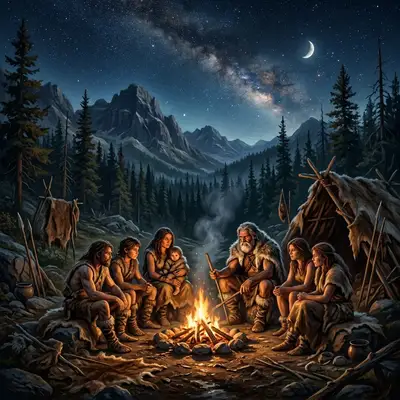
From prehistoric origins to the modern eraโ€”discover the turning points, lost empires, and breakthroughs of world history through interactive timelines and visual guides.
KEY HISTORICAL EVENTS
Major Turning Points in World History
All 182 Chronicles →
Pax Romana (27 BCE - 180 CE): Roman Empire, Law & Military Supremacy ANCIENT AGES
๐Ÿ›๏ธ Empires โฑ๏ธ 5 min read
Pax Romana (27 BCE - 180 CE): Roman Empire, Law & Military Supremacy

Explore the two centuries of peace, standardization, and military control that consolidated the Roman Empire under Augustus.

Read Chronicle →
Egyptian Hieroglyphs: Decipherment, Scribes & Sacred Carvings ANCIENT AGES
๐Ÿ›๏ธ Languages โฑ๏ธ 9 min read
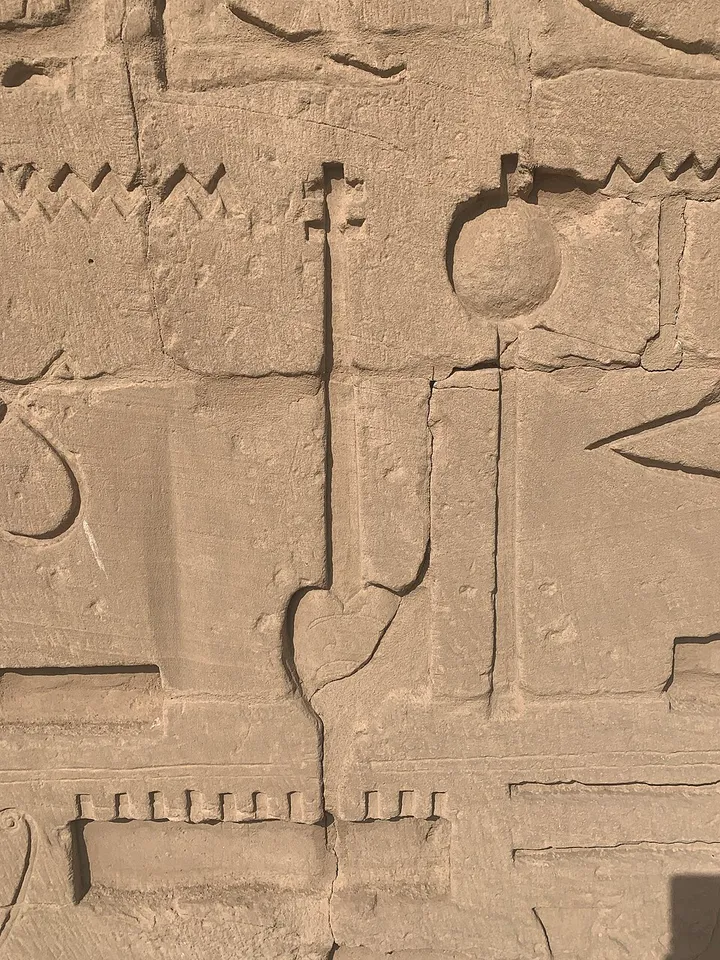
Egyptian Hieroglyphs: Decipherment, Scribes & Sacred Carvings

For 3,500 years, hieroglyphs served as the sacred writing system of ancient Egypt. Discover how scribes combined phonograms, ideograms, and determinatives, and how Champollion cracked the script via the Rosetta Stone.

Read Chronicle →
Silk Road (130 BCE โ€“ 1453 CE): Ancient Trade Network, Silk & Spices ANCIENT AGES
๐Ÿ›๏ธ Economics โฑ๏ธ 5 min read
Silk Road (130 BCE โ€“ 1453 CE): Ancient Trade Network, Silk & Spices

Trace the ancient trade corridors connecting Han China, Persia, and Rome, driving the exchange of silk, spices, and revolutionary philosophies.

Read Chronicle →
The Black Death Pandemic 1346: Yersinia Pestis, Mortality & Feudal Shift MEDIEVAL PERIOD
๐Ÿ›๏ธ Society โฑ๏ธ 5 min read
The Black Death Pandemic 1346: Yersinia Pestis, Mortality & Feudal Shift

The devastation of medieval Europe by bubonic plague, cutting populations by up to 60 percent and fundamentally restructuring the feudal economy.

Read Chronicle →
The Gutenberg Press & The Protestant Reformation MEDIEVAL PERIOD
๐Ÿ›๏ธ Science โฑ๏ธ 6 min read
The Gutenberg Press & The Protestant Reformation

Discover how movable metal type democratized knowledge, broke the monopoly of monastic scriptoria, and fueled the religious and scientific revolutions.

Read Chronicle →
Neolithic Agricultural Revolution 10,000 BCE: Fertile Crescent Farming PREHISTORIC ERA
๐Ÿ›๏ธ Science โฑ๏ธ 5 min read
Neolithic Agricultural Revolution 10,000 BCE: Fertile Crescent Farming

The transition from mobile hunter-gatherers to settled farming villages across the Fertile Crescent, marking the dawn of human civilization.

Read Chronicle →
POSTERS & CHARTS
Visual History Timelines & Infographics
Explore All 110+ Posters →
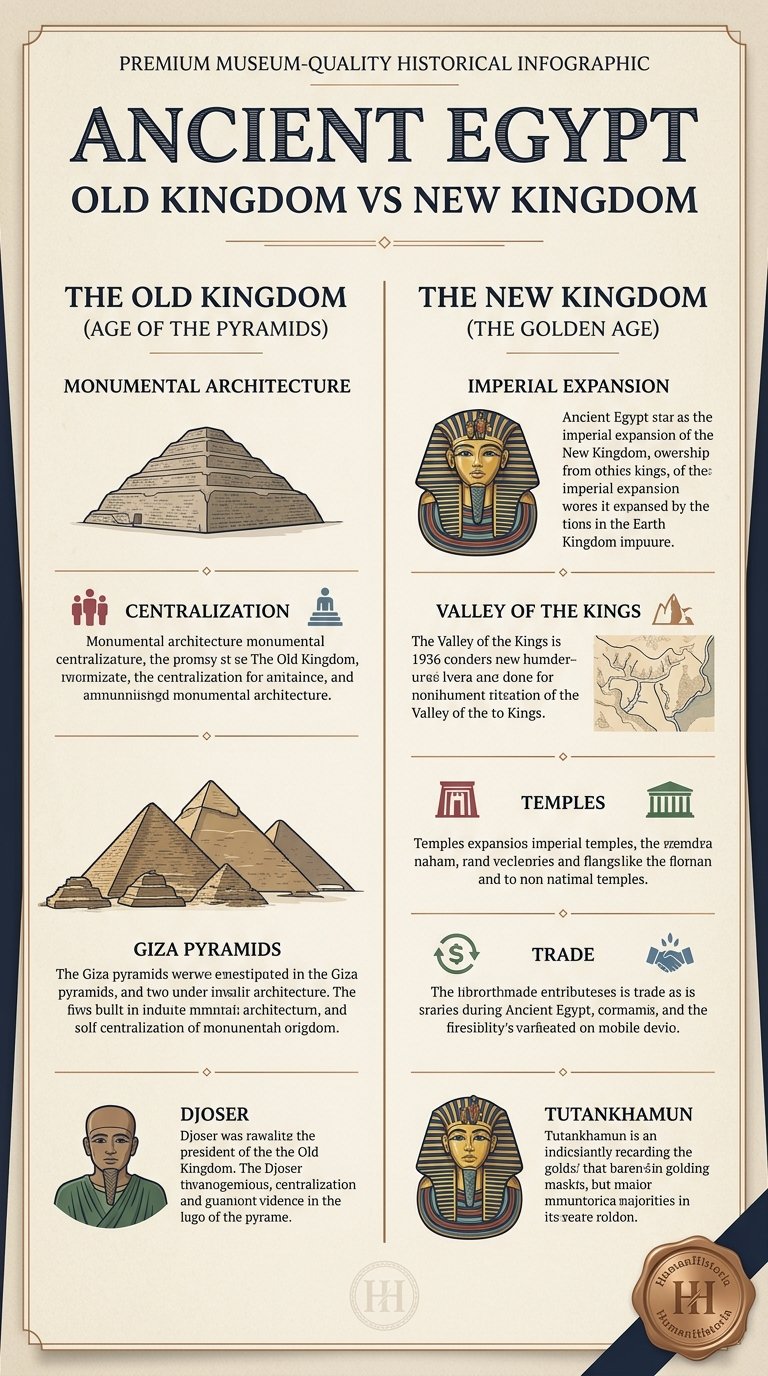
Ancient Egypt: Old Kingdom vs. New Kingdom
๐Ÿ” Tap to Zoom
Ancient Egypt: Old Kingdom vs. New Kingdom
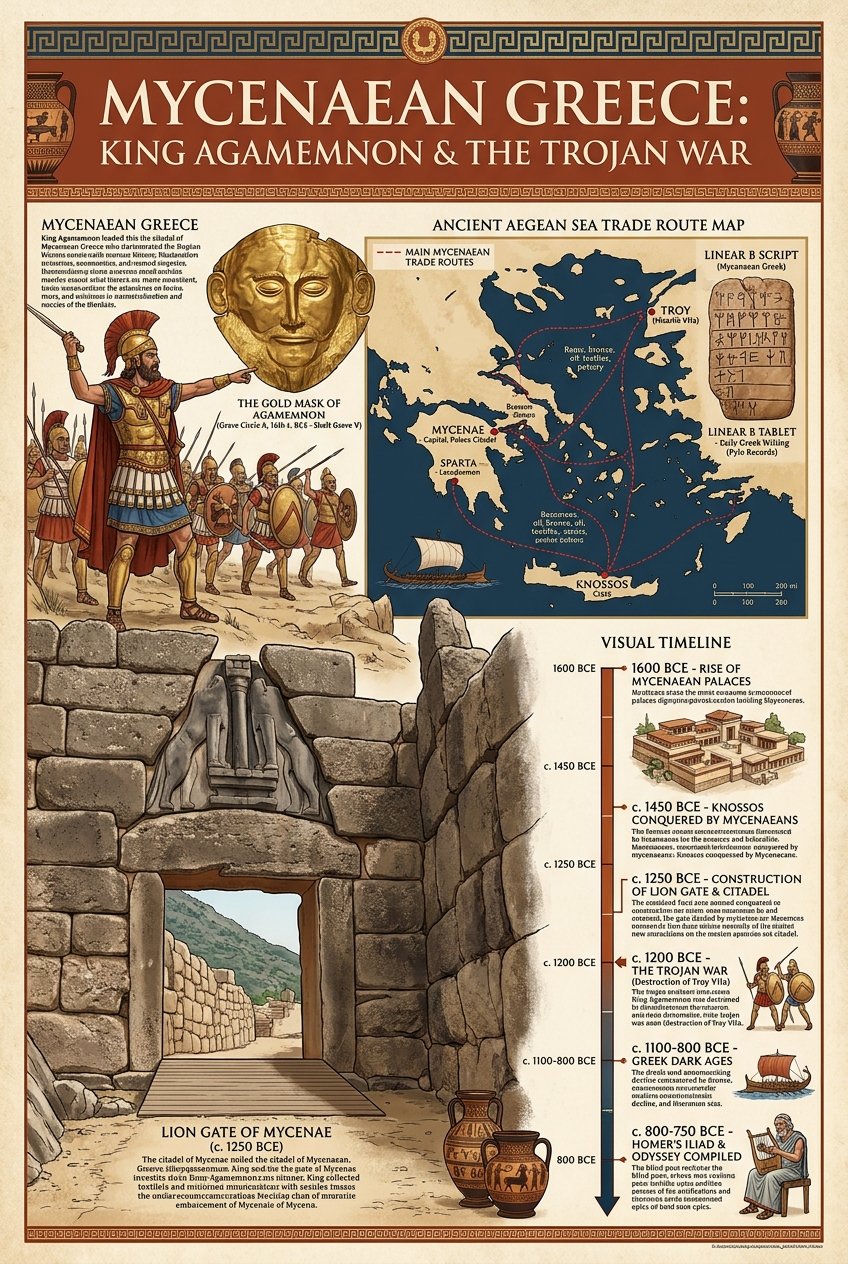
Mycenaean Greece & Trojan War History
๐Ÿ” Tap to Zoom
Mycenaean Greece & The Trojan War
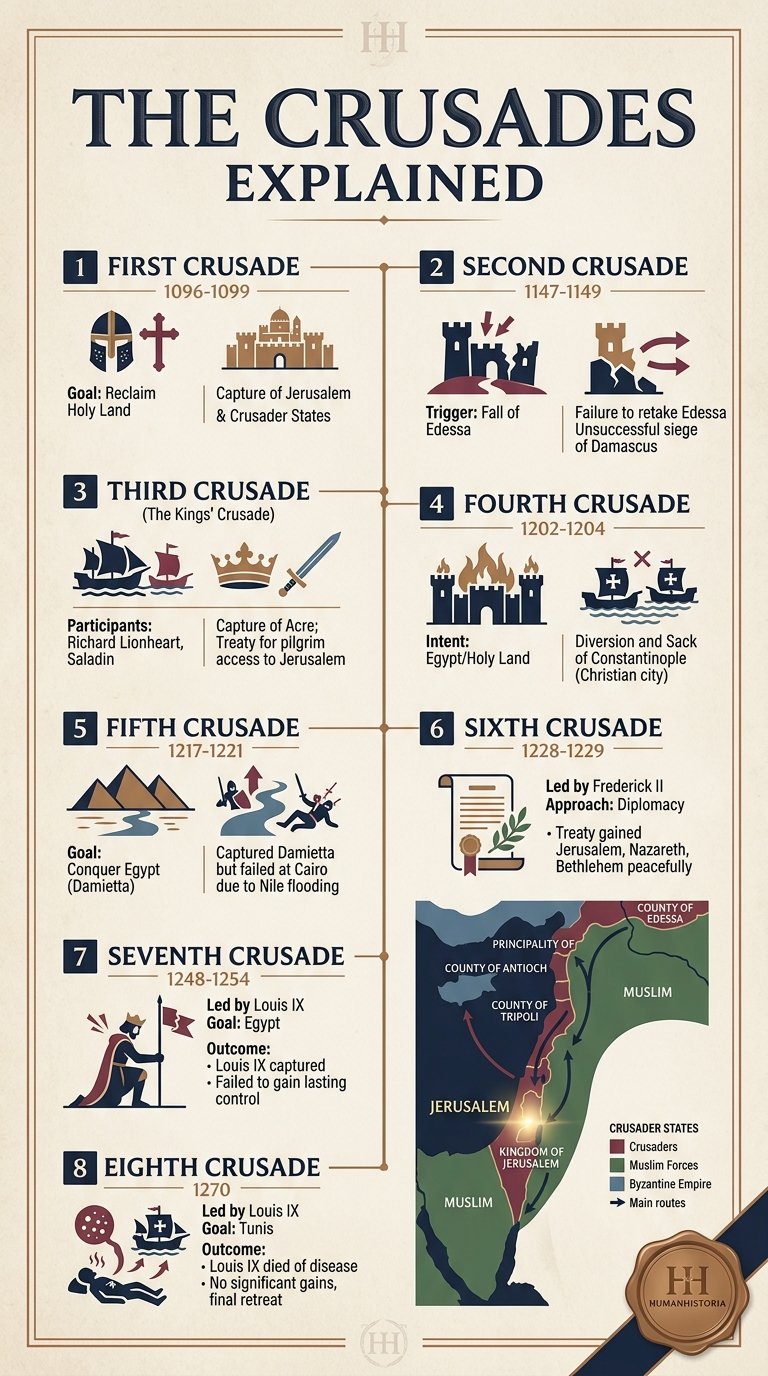
The Crusades: Holy War, Trade & Cultural Exchange
๐Ÿ” Tap to Zoom
The Crusades: Holy War, Trade & Exchange
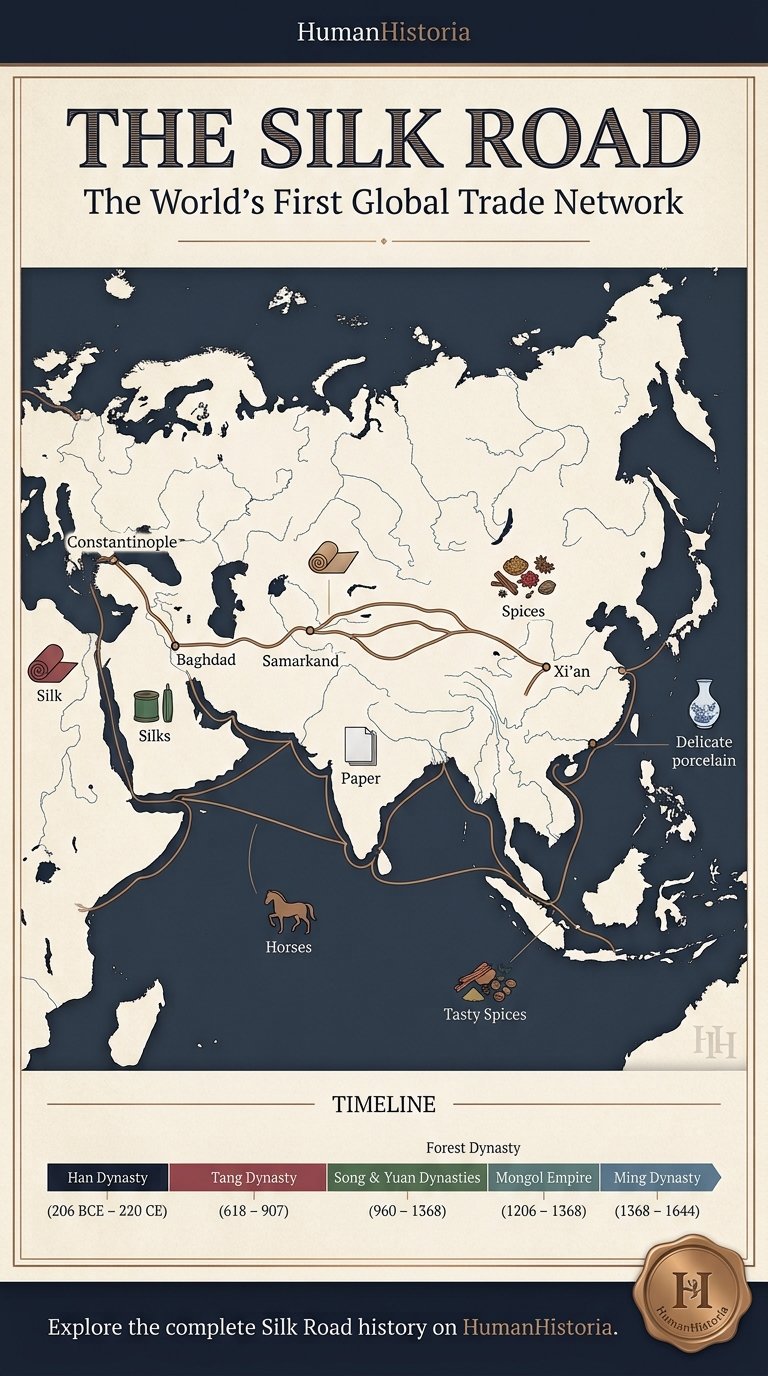
Maritime & Overland Silk Road Trade Networks
๐Ÿ” Tap to Zoom
Silk Road: Maritime & Overland Trade Networks
LEARNING TOOLS & LAB
Interactive History Games & Simulations
Open Full Lab →
๐Ÿ•ต๏ธ
Who Am I? (Historical Guessing Game)

A secret historical figure has been chosen. Ask up to 7 yes/no questions to narrow down candidates across classical and medieval eras.

Play Game →
๐Ÿ—บ๏ธ
Timeline Scramble

Five historical events appear out of order. Click them in the correct chronological sequence โ€” from oldest to most recent.

Test Chronology →
โš–๏ธ
Empire Matchup Simulator

Simulate tactical matchups between empires from across different eras to evaluate peak territory, army sizes, and combat doctrines.

Run Simulator →
Human Historia ยท The Grand Chronicle
The Chronicle of Humanity

300,000 years. 5 eras. Countless turning points that shaped every moment of your world.

๐Ÿฆด
Prehistoric Era
c. 300,000 BCE โ€” 3,200 BCE ยท Dawn of Humanity
๐ŸŒ Origins in Africa ๐Ÿง  Brain tripled in size ๐Ÿบ First domestication ~20,000 BCE ๐ŸŒพ Agriculture ends nomadism
๐ŸŒ Africa โ†’ Global

Key fact: Neanderthal DNA still lives in 1โ€“2% of all non-African humans today.

Related: Animal Domestication, Cave Art

๐Ÿ”ฅ Africa

Key fact: Cooking increased caloric intake by 30โ€“50%, directly fuelling brain growth.

Related: Stone Tools, Migration

๐ŸŒพ Fertile Crescent

Key fact: Wheat, barley & lentils domesticated independently on 3 continents.

Related: Gรถbekli Tepe, Cuneiform

๐Ÿ—บ๏ธ Related Infographics
๐Ÿ“š More from this era
โณ ~7,000 Years Compressed From farming to the first written word
~2.3% of recorded human history
๐Ÿ›๏ธ
Ancient Ages
c. 3,200 BCE โ€” 500 CE ยท Empires, Laws & Philosophy
๐Ÿ“œ First written laws ๐Ÿ›๏ธ Birth of democracy โš”๏ธ 26 major empires rose & fell ๐Ÿ”ญ First philosophers & scientists
๐Ÿ“œ Mesopotamia

Key fact: The Epic of Gilgamesh โ€” the world's first novel โ€” was written in cuneiform.

Related: Epic of Gilgamesh, Hammurabi

๐Ÿ“š Alexandria, Egypt

Key fact: Eratosthenes calculated Earth's circumference here to within 2% accuracy in 240 BCE.

Related: Greek Philosophy, Roman Empire

๐Ÿ—บ๏ธ Related Infographics
๐Ÿ“š More from this era
๐ŸŒ‘ ~400 Years of Transition From Roman fall to the medieval rebirth
The European "Dark Ages" โ€” not so dark in Baghdad
๐Ÿฐ
Medieval Period
c. 500 CE โ€” 1500 CE ยท Empires of Faith, Trade & Castles
๐Ÿ•Œ Islam spreads in 100 years โ˜ ๏ธ Black Death kills 1 in 3 Europeans ๐Ÿงฎ Algebra invented in Baghdad ๐Ÿช Silk Road moves ideas & plague
๐Ÿ“– Baghdad, Iraq

Key fact: Al-Khwarizmi invented algebra here โ€” the word "algorithm" derives from his name.

Related: Silk Road, Mansa Musa

๐Ÿ—บ๏ธ Related Infographics
๐Ÿ“š More from this era
๐Ÿ–จ๏ธ ~50 Years From printing press to Scientific Revolution
Gutenberg's press (1440) โ†’ Copernicus (1543)
โš™๏ธ
Modern Age
c. 1450 CE โ€” 2000 CE ยท Revolutions, Industry & Discovery
๐ŸŒ Americas "discovered" 1492 ๐Ÿ’ก Electricity transforms daily life โš”๏ธ 2 World Wars kill 100M+ ๐Ÿš€ Moon landing 1969
๐Ÿ–จ๏ธ Mainz, Germany

Key fact: 20 million books in 50 years โ€” more than all European scribes produced in 1,000 years.

Related: Scientific Revolution, Reformation

๐Ÿš‚ Britain

Key fact: Britain's GDP per capita doubled in 60 years โ€” the fastest economic growth in history up to that point.

Related: Electricity, Wright Brothers

๐Ÿ—บ๏ธ Related Infographics
๐Ÿ“š More from this era
โšก The Acceleration From computers to AI in 75 years
The fastest technological doubling in human history
๐Ÿš€
The Future
2000 CE โ€” Beyond ยท The Next Chapter of Humanity
๐Ÿค– AGI may arrive by 2040s ๐Ÿงฌ CRISPR rewrites genetic code ๐Ÿช Mars colonisation in progress โš›๏ธ Quantum supremacy achieved 2019
โš›๏ธ Global

Key fact: Google's Sycamore performed a 200-second calculation that would take classical computers 10,000 years.

Related: AI Singularity, CRISPR, Space

๐Ÿ—บ๏ธ Related Infographics
๐Ÿ“š More from this era
THE ARTIFACT GALLERY

Examine the tangible relics, physical tokens, and revolutionary machines that shaped civilizational growth.

๐ŸŽฅ VIDEO HUB & SHORTS

Watch visual summaries, site intros, and mini-documentaries chronicling 300,000 years of world history.

๐Ÿ“Š HISTORICAL INFOGRAPHICS ARCHIVE

Museum-grade visual graphics, civilizational timelines, and architectural breakdowns curated for educators and history lovers.

THE HISTORIA CIRCLE

Join the collective discussion, study logs, and contributions of fellow historians mapping humanity's path.

Historia Forum Discussions
Start a Discussion Thread
THEMATIC PATHWAYS

Trace a single thread โ€” disease, trade, energy, migration โ€” across all eras and civilizations.

History is not just a sequence of events โ€” it is a network of patterns. These thematic pathways allow you to follow a single concept across thousands of years: how agriculture spread, how warfare evolved, how trade routes shaped civilizations. Each pathway collects the most relevant chronicles across all eras.

๐Ÿงฉ
How is this different from the sidebar Topics?
While the sidebar Topics (like Science & Tech or Empires) filter articles within your selected historical Era, Thematic Pathways cut horizontally across all eras (from Prehistoric to the Future). Use Themes to trace a single concept's evolutionary line across 300,000 years.
CIVILIZATION HUBS

Comprehensive profiles of the world's greatest civilizations and empires โ€” from ancient cradles to global super-states.

Human Historia provides an academically rich exploration of the world's most influential civilizations. From the monumental achievements of ancient Egypt, Han China, and the Roman Empire, to the sophisticated societies of the Maya, the Islamic Caliphates, and West African empires, these hubs offer deep insights into the cultural, political, and technological legacies that continue to shape our global story.

EVOLUTION OF HUMAN SKILLS

Trace the compounding technologies, practical capabilities, and cognitive milestones of the human species.

Human progress is a story of compounding skills. Every breakthrough, from the spark of prehistoric fire to modern silicon transistors, builds directly on previous generations of ingenuity. Hover over a skill node to trace its historical prerequisites, and click it to explore its development timeline, species-wide impact, and related chronicles.

Prehistoric Ancient Medieval Modern Future
๐Ÿง 

Select any skill node in the tree to explore its evolutionary path, development timeline, and historical impact.

ACADEMIC PASSPORT

Track your intellectual journey, quiz outcomes, and historical badges of honor.
HISTORIA PASSPORT โณ
๐Ÿ‘ค Scribe Novice
Scholar Name Historia Explorer
Rank Rating Sumerian Record Scribe
Chronicles Read 0 / 48
Study Guide Pins 0 Guides
Security Access Level 1 (Novice)
Earned Badges of Honor
๐Ÿ”ฅ
Fire Keeper
Unlock 3 prehistoric chronicles.
๐Ÿ›๏ธ
Codex Keeper
Unlock 3 ancient chronicles.
๐Ÿฐ
Guild Master
Unlock 3 medieval chronicles.
โš™๏ธ
Steam Engineer
Unlock 3 modern chronicles.
๐Ÿš€
Singularity Sage
Unlock 3 future chronicles.
๐Ÿ‘‘
Grand Scholar
Score 5/5 on the Lab Quiz.
Recent Lab Activities
No recent activities recorded. Take a quiz or bookmark articles!
๐Ÿ›๏ธ MISSION & ARCHIVAL STANDARDS
About Human Historia

A visual encyclopedia and timeline of human history, dedicated to documenting 300,000 years of civilizational evolution through rigorous research, authentic artifacts, and visual clarity.

๐ŸŒ
The 300,000-Year Story

Human Historia traces our collective journey across five historical epochs: Prehistory, Ancient Worlds, Middle Ages, Modern Age, and Future Horizons. From the first control of fire to quantum computation, we organize turning points into interconnected timelines.

๐Ÿ“œ
Historiographical Rigor

Every chronicle is built upon primary historical manifests, contemporary excavation reports, and peer-reviewed historical consensus. We prioritize authentic public domain artifacts and clearly identify scholarly debates surrounding major civilizational transitions.

๐ŸŽจ
Museum-Grade Visuals

Complex historical transitions demand visual understanding. We develop high-resolution infographics, architectural cutaways, and comparative territorial maps to transform abstract timelines into vivid, unforgettable learning experiences.

๐Ÿ“–
Educational Access

Knowledge belongs to humanity. Human Historia is free, ad-light, and engineered as an educational resource for students, classroom educators, academic researchers, and curious minds across all continents.

Editorial Governance & Inquiries

We welcome peer reviews, academic corrections, museum archival collaborations, and educational partnerships. To submit historical inquiries or provide archival feedback, reach our editorial desk directly.

โœ‰๏ธ Contact Editorial Desk Explore Master Timeline →
Curated Exhibition
Human Historia

An immersive graphical anthology tracing the paths of civilizations, breakthroughs, and conflicts that forged the modern consciousness.

25Chronicles
Showing all articles

House of Wisdom: Baghdad's Islamic Golden Age & Scholars

Written by Humanhistoria Science Historical Era: MEDIEVAL

In the early 9th century CE, while Western Europe struggled through fragmented feudal warfare following the collapse of Rome, the circular capital of Baghdad (Madinat al-Salam) stood as the undisputed intellectual, commercial, and scientific metropolis of the known world. At its heart flourished the House of Wisdom (Bayt al-Hikma)โ€”a magnificent grand library, translation academy, and astronomical research institute founded under the Abbasid Caliphate. Here, under the patronage of enlightened caliphs, Muslim, Christian, Jewish, and Persian scholars gathered to translate the accumulated philosophical treasures of Greece, India, and Persia into Arabic, sparking groundbreaking leaps in mathematics, optics, medicine, and astronomy that defined the Islamic Golden Age.

House of Wisdom: Baghdad's Islamic Golden Age & Scholars
Archival visual record and historical depiction representing House of Wisdom: Baghdad's Islamic Golden Age & Scholars.

1. The Abbasid Translation Movement: A Global Knowledge Engine

The foundation of the Islamic Golden Age was the Graeco-Arabic Translation Movement. Following the founding of Baghdad in 762 CE along the fertile Tigris River, Abbasid Caliphs realized that imperial governance required mastery over mathematics, geography, agriculture, and astronomy. Caliph Al-Ma'mun (reigned 813โ€“833 CE) transformed the House of Wisdom into an international institute, dispatching emissaries to the Byzantine Empire and across Persia to purchase rare manuscripts of Plato, Aristotle, Euclid, Archimedes, Galen, and Ptolemy.

In a legendary display of intellectual meritocracy, scholars were rewarded with the equivalent weight of translated books in pure gold. Christian Syriac translators like Hunayn ibn Ishaq translated complex medical treatises from Greek into Syriac and Arabic, standardizing scientific terminology. Because Arabic served as the shared linguistic currency of an empire stretching from Spain to the borders of China, scientific ideas circulated across Eurasia with unprecedented speed.

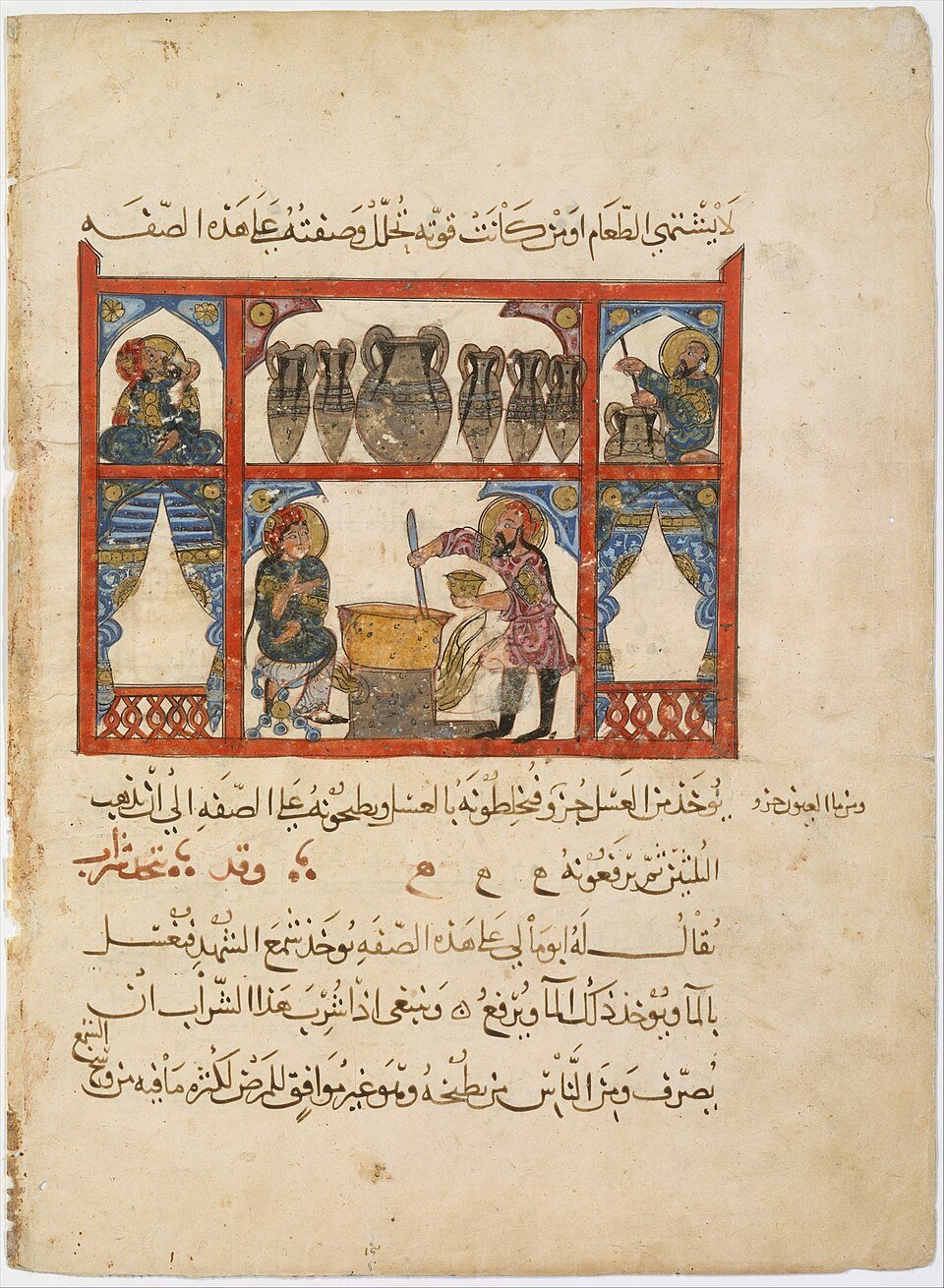
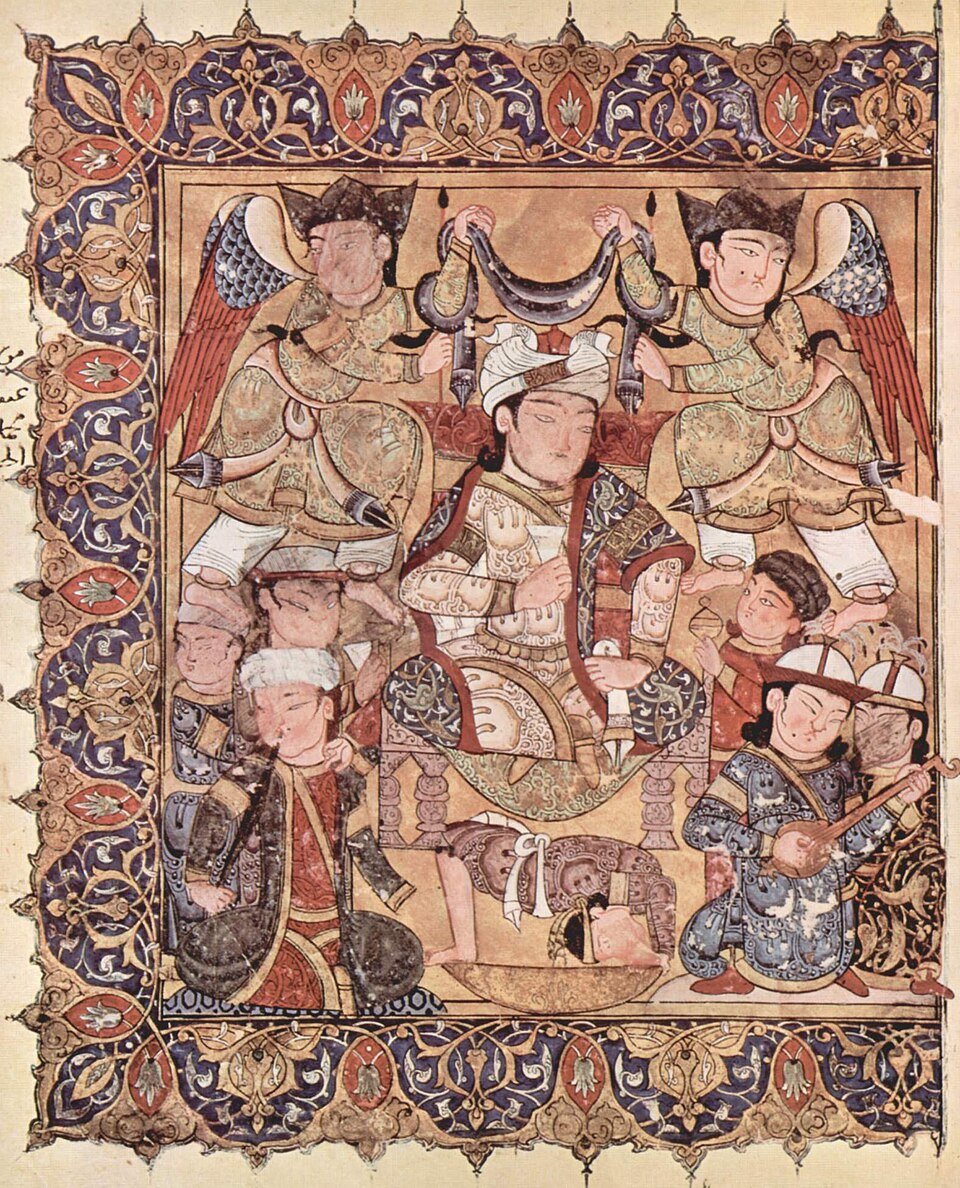
Scholars debating at the House of Wisdom Baghdad
A 13th-century illuminated manuscript illustration from Al-Hariri's Maqamat, depicting scholars debating and consulting volumes in an Abbasid library in Baghdad.

2. Scholars of the Golden Age: Breakthroughs Compared

The House of Wisdom was not merely a passive repository for ancient Greek texts; it was an active crucible of original experimental science:

Polymath Scholar Core Scientific Field Masterpiece Work Pioneering Scientific Breakthrough
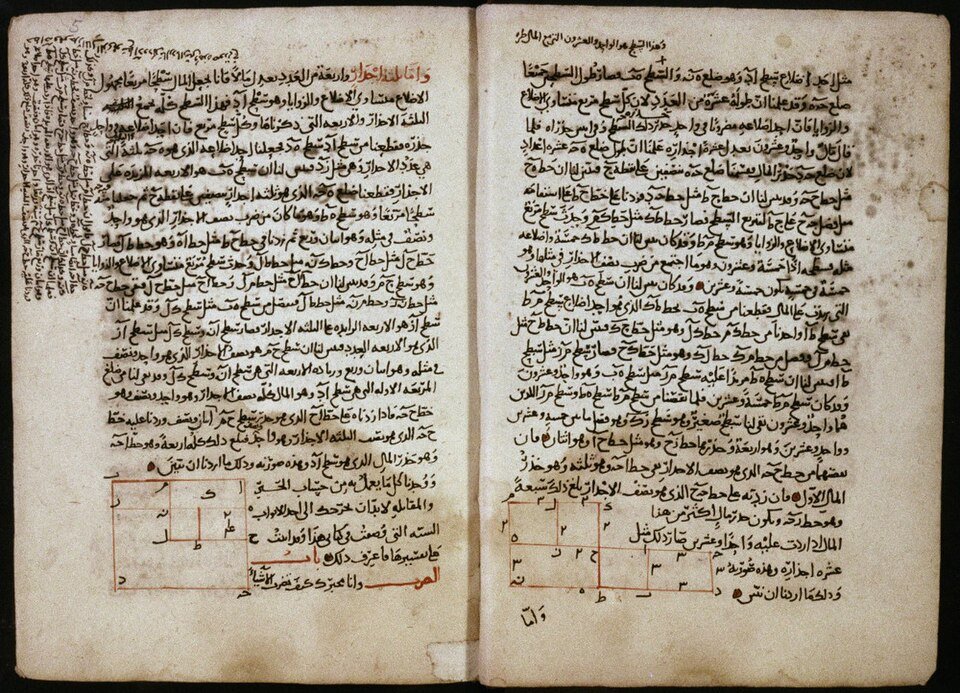
Muhammad al-Khwarizmi (c. 780โ€“850) Mathematics & Astronomy The Compendious Book on Calculation by Completion and Balancing Invented algebra (from al-jabr), introduced Hindu-Arabic numerals (0โ€“9) and decimal positional notation to the West; gave his name to the word algorithm.
Ibn al-Haytham (Alhazen) (c. 965โ€“1040) Optics & Physics Book of Optics (Kitab al-Manazir) Dismantled Greek intromission theory; proved light travels into the eye in straight lines; engineered the first camera obscura; father of the modern experimental scientific method.
Abu Bakr al-Razi (Rhazes) (c. 865โ€“925) Medicine & Chemistry The Comprehensive Book on Medicine First to medically distinguish smallpox from measles; pioneered pediatric medicine; established experimental clinical patient trials in Baghdad hospitals.
Ibn Sina (Avicenna) (c. 980โ€“1037) Medicine & Philosophy The Canon of Medicine (Al-Qanun fi al-Tibb) Codified holistic diagnostic medicine, contagion theory, and pharmacology; his encyclopedia served as the standard medical textbook in European universities for 500 years.

3. Islamic Golden Age Inventions: Medicine, Astronomy & Mechanics

The scientific revolution centered in Baghdad produced practical technologies that transformed everyday life across Afro-Eurasia:

  • The Public Teaching Hospital (Bimaristan): Baghdad introduced the world's first modern hospitals, offering free medical treatment to all citizens regardless of wealth or religion. They featured specialized wards for surgery, infectious diseases, and mental illness, alongside medical schools, pharmacies, and sanitary running water.
  • Precision Astrolabes: Islamic astronomers perfected the brass astrolabeโ€”a sophisticated analog computer that calculated the positions of stars, determined latitude at sea, and calculated prayer times. Women played pivotal roles in this engineering, notably Maryam al-Ijliya (Al-Asturlabiya), who designed celestial astrolabes for the court of Sayf al-Dawla.
  • Mechanical Automata: In the 9th century, the three Banu Musa Brothers at the House of Wisdom published the Book of Ingenious Devices, describing over 100 automated mechanical inventions, including programmable automatic flutes, float valves, and self-feeding oil lamps.
Islamic Brass Astrolabe from the Golden Age
An intricately engraved brass celestial astrolabe from the Islamic Golden Age. Combining spherical trigonometry with metallurgical precision, the astrolabe served as the essential scientific instrument for navigation and astronomy across medieval Eurasia.

4. The Catastrophe of 1258: The Mongol Sack of Baghdad

The glorious arc of the Abbasid House of Wisdom met a sudden, catastrophic end in the winter of 1258 CE. A colossal Mongol army commanded by Hulagu Khan (grandson of Genghis Khan) encircled Baghdad, breached its defensive walls, and subjected the metropolis to brutal destruction.

Over a siege lasting twelve days, the grand libraries of Baghdad were systematically ransacked. Priceless manuscripts representing centuries of accumulated Greek, Persian, Indian, and Arab wisdom were hurled into the Tigris River in such immense quantities that contemporary chroniclers recorded the waters of the Tigris ran black with ink, and then red with the blood of murdered scholars. Caliph Al-Musta'sim was rolled inside a woolen carpet and trampled to death by Mongol cavalry. The destruction of Baghdad permanently shattered the central intellectual institution of the Middle East, though surviving copies preserved in Cairo, Damascus, Cordoba, and Maragheh ensured that the knowledge endured.

5. The Enduring Legacy: Fueling the European Renaissance

During the 12th and 13th centuries, European scholars flocked to Islamic cultural frontier zones like Toledo in Spain and Palermo in Sicily. Teams of translators rendered Arabic translations of Aristotle, Al-Khwarizmi, and Ibn Sina into Latin. When Italian humanists initiated the Renaissance, they did so standing upon the shoulders of the scholars of the House of Wisdomโ€”whose mathematical notations, optical theories, and anatomical treatises had preserved, elevated, and ignited the flame of modern science.

๐Ÿ“– SCHOLARLY INQUIRIES

Frequently Asked Questions

Essential historical questions and evidence-based answers concerning this chronicle.

Why is House of Wisdom Baghdad 800 CE significant in world history?

House of Wisdom Baghdad 800 CE played a pivotal role by transforming technology, social structure, and regional connection, serving as a vital link in human civilization.

What was the House of Wisdom (Bayt al-Hikmah)?

The House of Wisdom was a grand library, translation institute, and academy established in Abbasid Baghdad that served as the intellectual heart of the Islamic Golden Age.

What did scholar Al-Biruni achieve?

Al-Biruni calculated the radius of the Earth with remarkable precision (within 1% of modern values) using trigonometry and a mountain observation method in modern Pakistan.

What destroyed the House of Wisdom?

The Mongol Siege of Baghdad in 1258 CE led to the destruction of the city and its libraries, with legend stating the Tigris River ran black with the ink of thrown books.

๐Ÿ“š Academic Sources & Scholarly Bibliography
  • Al-Khalili, J. (2011). The House of Wisdom: How Arabic Science Saved Ancient Knowledge and Gave Us the Renaissance. Penguin Press.
  • Lyons, J. (2009). The House of Wisdom. Bloomsbury.
  • Saliba, G. (2007). Islamic Science and the Making of the European Renaissance. MIT Press.
โšก Fast Facts
  • Historical EraMEDIEVAL
  • Region๐ŸŒ MIDDLE EAST
  • CategoryScience
  • Reading Timeโฑ 14 min read
๐Ÿ“– Scholar Mode Active โ€” Click to exit focused reading
Selected Era

Prehistoric Era

Millions of years ago to ~3000 BCE

The dawn of humanity. From the evolutionary split of early hominids to the mastery of stone tools, fire, and the birth of language.

Landmark Milestones

Welcome to Historia

Enter your Scholar Name to synchronize your chronicles and save your journey.