>
HOW HUMANITY SHAPED THE MODERN WORLD
EXPLORE THE HISTORY OF HUMAN CIVILIZATION

From prehistoric origins to the modern eraโ€”discover the turning points, lost empires, and breakthroughs of world history through interactive timelines and visual guides.
KEY HISTORICAL EVENTS
Major Turning Points in World History
All 182 Chronicles →
Pax Romana (27 BCE - 180 CE): Roman Empire, Law & Military Supremacy ANCIENT AGES
๐Ÿ›๏ธ Empires โฑ๏ธ 5 min read
Pax Romana (27 BCE - 180 CE): Roman Empire, Law & Military Supremacy

Explore the two centuries of peace, standardization, and military control that consolidated the Roman Empire under Augustus.

Read Chronicle →
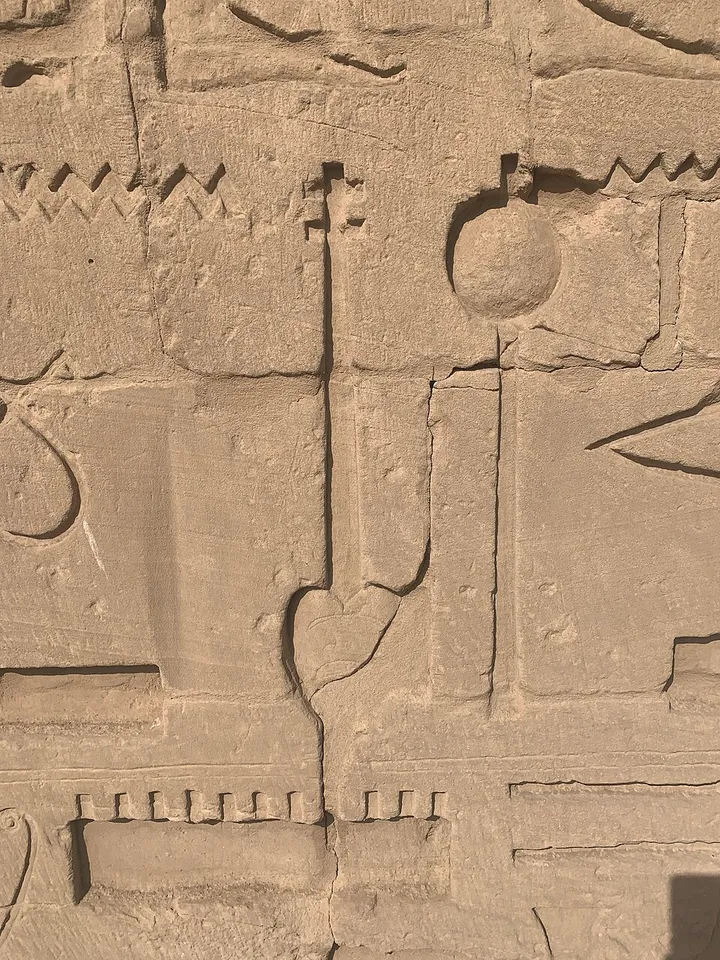
Egyptian Hieroglyphs: Decipherment, Scribes & Sacred Carvings ANCIENT AGES
๐Ÿ›๏ธ Languages โฑ๏ธ 9 min read
Egyptian Hieroglyphs: Decipherment, Scribes & Sacred Carvings

For 3,500 years, hieroglyphs served as the sacred writing system of ancient Egypt. Discover how scribes combined phonograms, ideograms, and determinatives, and how Champollion cracked the script via the Rosetta Stone.

Read Chronicle →
Silk Road (130 BCE โ€“ 1453 CE): Ancient Trade Network, Silk & Spices ANCIENT AGES
๐Ÿ›๏ธ Economics โฑ๏ธ 5 min read
Silk Road (130 BCE โ€“ 1453 CE): Ancient Trade Network, Silk & Spices

Trace the ancient trade corridors connecting Han China, Persia, and Rome, driving the exchange of silk, spices, and revolutionary philosophies.

Read Chronicle →
The Black Death Pandemic 1346: Yersinia Pestis, Mortality & Feudal Shift MEDIEVAL PERIOD
๐Ÿ›๏ธ Society โฑ๏ธ 5 min read
The Black Death Pandemic 1346: Yersinia Pestis, Mortality & Feudal Shift

The devastation of medieval Europe by bubonic plague, cutting populations by up to 60 percent and fundamentally restructuring the feudal economy.

Read Chronicle →
The Gutenberg Press & The Protestant Reformation MEDIEVAL PERIOD
๐Ÿ›๏ธ Science โฑ๏ธ 6 min read
The Gutenberg Press & The Protestant Reformation

Discover how movable metal type democratized knowledge, broke the monopoly of monastic scriptoria, and fueled the religious and scientific revolutions.

Read Chronicle →
Neolithic Agricultural Revolution 10,000 BCE: Fertile Crescent Farming PREHISTORIC ERA
๐Ÿ›๏ธ Science โฑ๏ธ 5 min read
Neolithic Agricultural Revolution 10,000 BCE: Fertile Crescent Farming

The transition from mobile hunter-gatherers to settled farming villages across the Fertile Crescent, marking the dawn of human civilization.

Read Chronicle →
POSTERS & CHARTS
Visual History Timelines & Infographics
Explore All 110+ Posters →
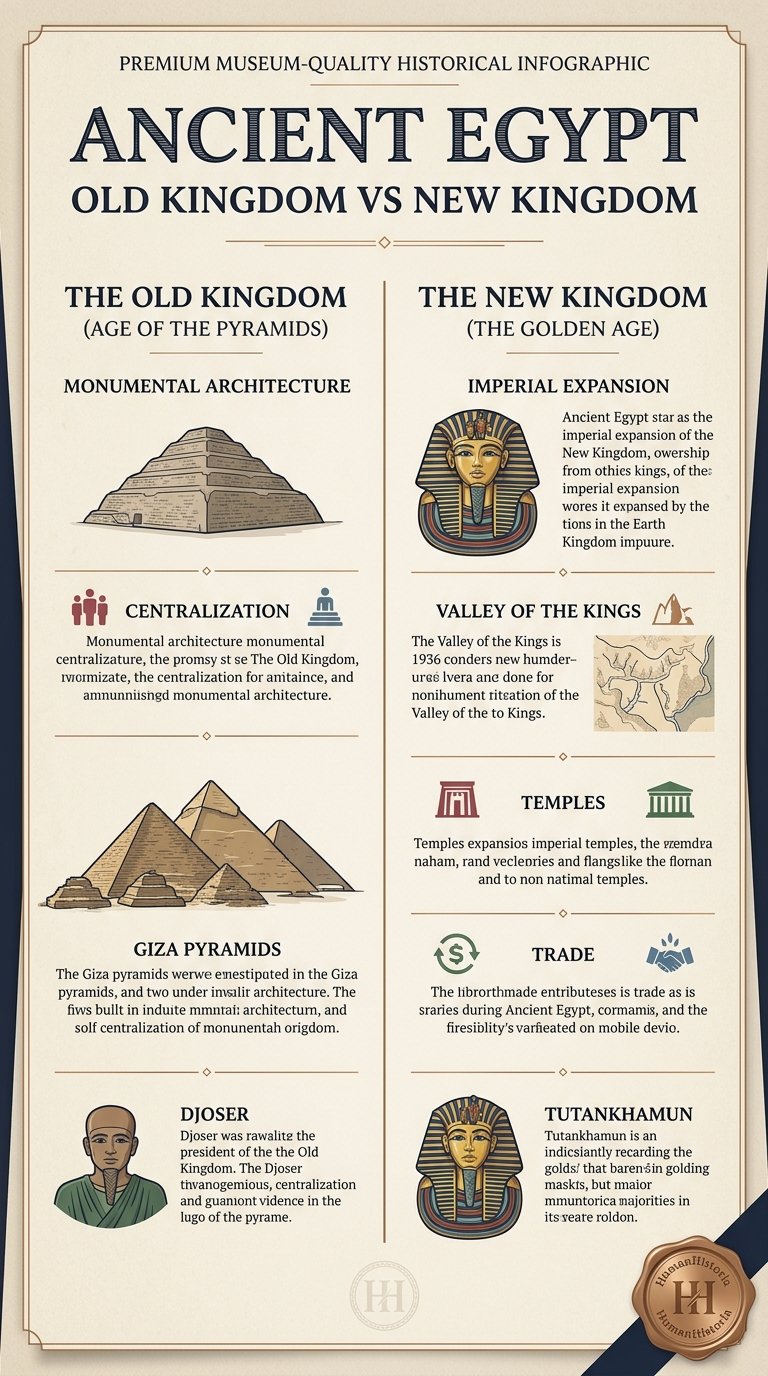
Ancient Egypt: Old Kingdom vs. New Kingdom
๐Ÿ” Tap to Zoom
Ancient Egypt: Old Kingdom vs. New Kingdom
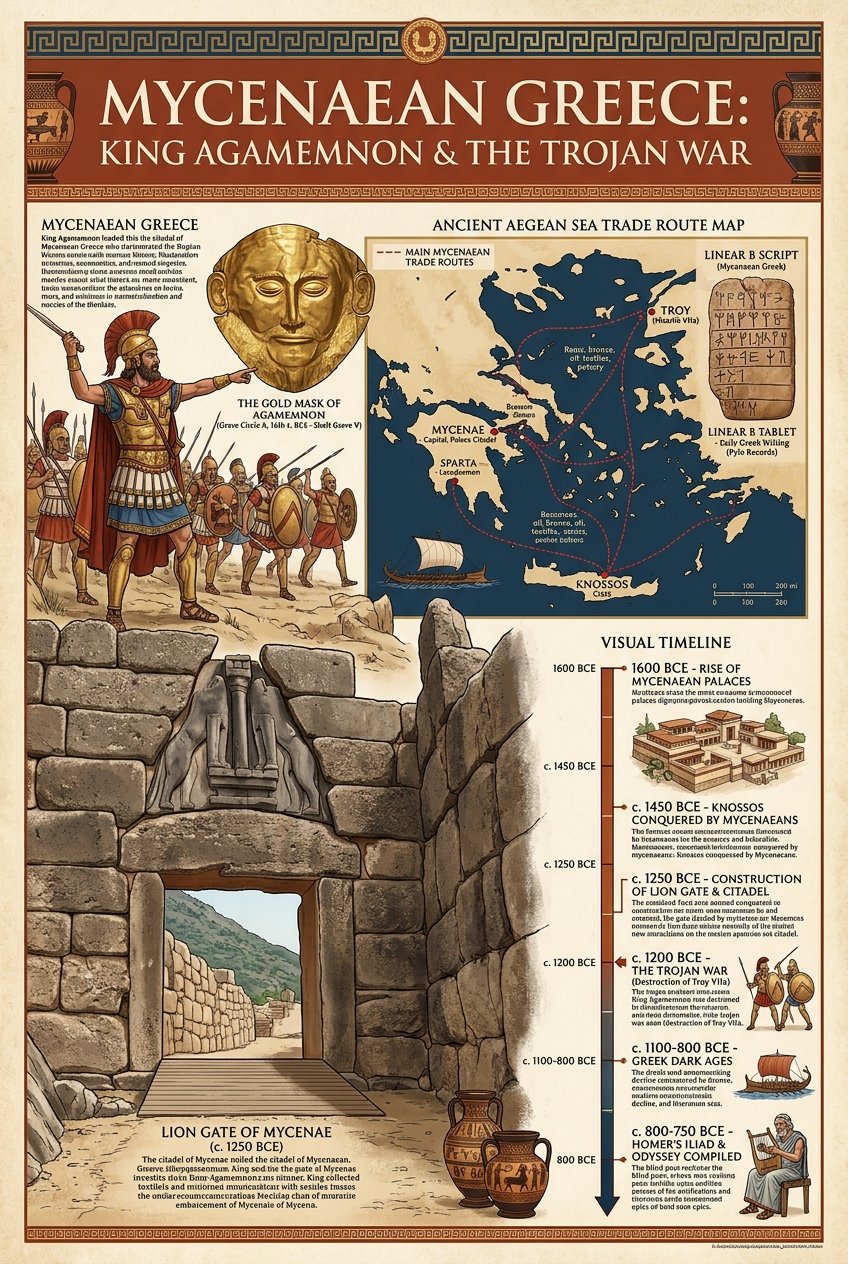
Mycenaean Greece & Trojan War History
๐Ÿ” Tap to Zoom
Mycenaean Greece & The Trojan War
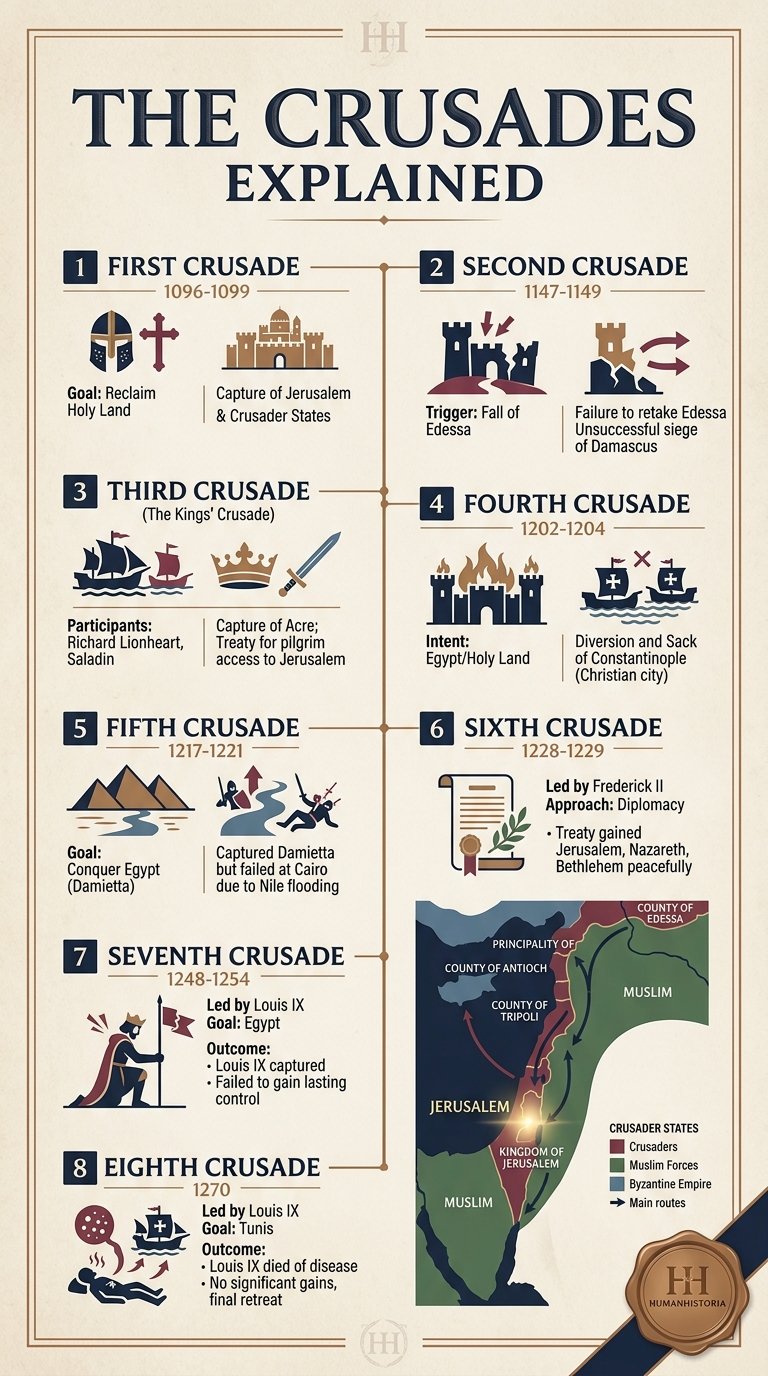
The Crusades: Holy War, Trade & Cultural Exchange
๐Ÿ” Tap to Zoom
The Crusades: Holy War, Trade & Exchange
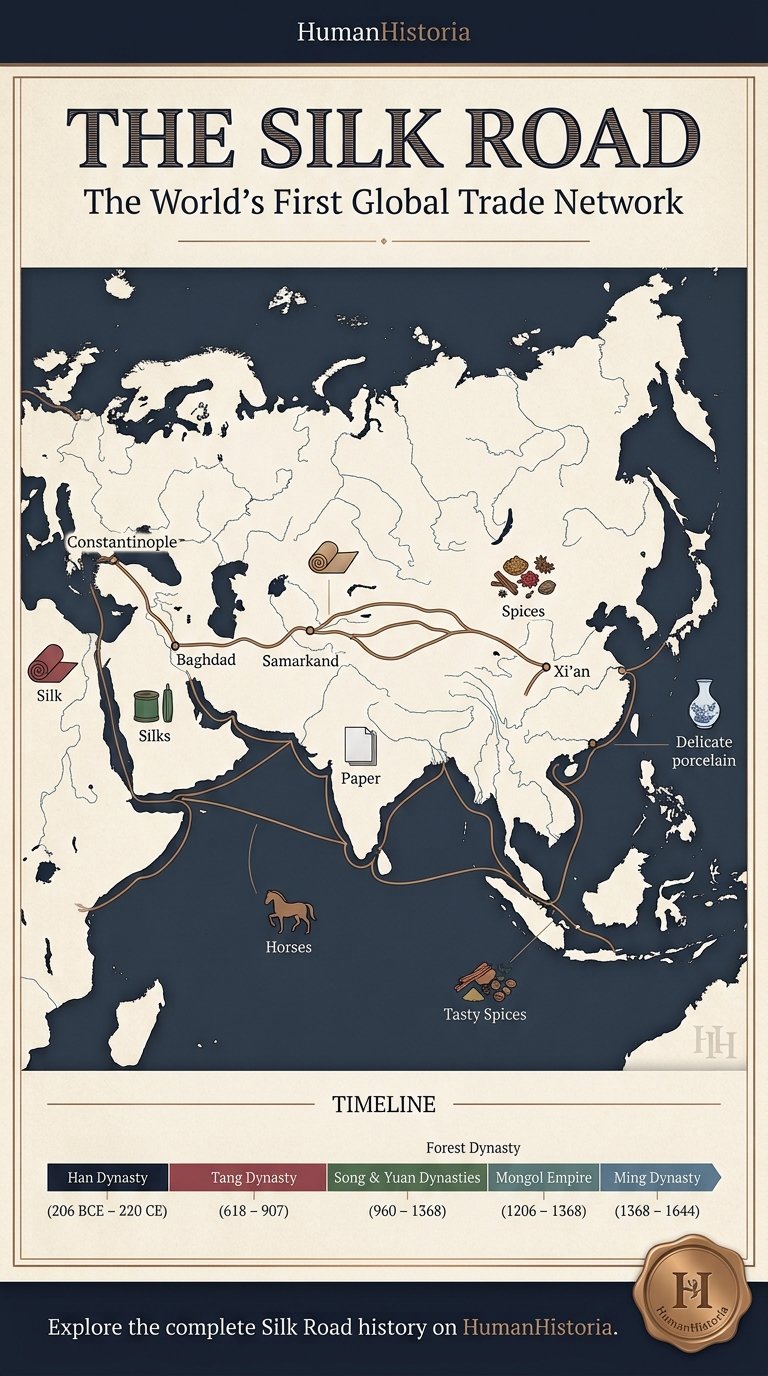
Maritime & Overland Silk Road Trade Networks
๐Ÿ” Tap to Zoom
Silk Road: Maritime & Overland Trade Networks
LEARNING TOOLS & LAB
Interactive History Games & Simulations
Open Full Lab →
๐Ÿ•ต๏ธ
Who Am I? (Historical Guessing Game)

A secret historical figure has been chosen. Ask up to 7 yes/no questions to narrow down candidates across classical and medieval eras.

Play Game →
๐Ÿ—บ๏ธ
Timeline Scramble

Five historical events appear out of order. Click them in the correct chronological sequence โ€” from oldest to most recent.

Test Chronology →
โš–๏ธ
Empire Matchup Simulator

Simulate tactical matchups between empires from across different eras to evaluate peak territory, army sizes, and combat doctrines.

Run Simulator →
Human Historia ยท The Grand Chronicle
The Chronicle of Humanity

300,000 years. 5 eras. Countless turning points that shaped every moment of your world.

๐Ÿฆด
Prehistoric Era
c. 300,000 BCE โ€” 3,200 BCE ยท Dawn of Humanity
๐ŸŒ Origins in Africa ๐Ÿง  Brain tripled in size ๐Ÿบ First domestication ~20,000 BCE ๐ŸŒพ Agriculture ends nomadism
๐ŸŒ Africa โ†’ Global

Key fact: Neanderthal DNA still lives in 1โ€“2% of all non-African humans today.

Related: Animal Domestication, Cave Art

๐Ÿ”ฅ Africa

Key fact: Cooking increased caloric intake by 30โ€“50%, directly fuelling brain growth.

Related: Stone Tools, Migration

๐ŸŒพ Fertile Crescent

Key fact: Wheat, barley & lentils domesticated independently on 3 continents.

Related: Gรถbekli Tepe, Cuneiform

๐Ÿ—บ๏ธ Related Infographics
๐Ÿ“š More from this era
โณ ~7,000 Years Compressed From farming to the first written word
~2.3% of recorded human history
๐Ÿ›๏ธ
Ancient Ages
c. 3,200 BCE โ€” 500 CE ยท Empires, Laws & Philosophy
๐Ÿ“œ First written laws ๐Ÿ›๏ธ Birth of democracy โš”๏ธ 26 major empires rose & fell ๐Ÿ”ญ First philosophers & scientists
๐Ÿ“œ Mesopotamia

Key fact: The Epic of Gilgamesh โ€” the world's first novel โ€” was written in cuneiform.

Related: Epic of Gilgamesh, Hammurabi

๐Ÿ“š Alexandria, Egypt

Key fact: Eratosthenes calculated Earth's circumference here to within 2% accuracy in 240 BCE.

Related: Greek Philosophy, Roman Empire

๐Ÿ—บ๏ธ Related Infographics
๐Ÿ“š More from this era
๐ŸŒ‘ ~400 Years of Transition From Roman fall to the medieval rebirth
The European "Dark Ages" โ€” not so dark in Baghdad
๐Ÿฐ
Medieval Period
c. 500 CE โ€” 1500 CE ยท Empires of Faith, Trade & Castles
๐Ÿ•Œ Islam spreads in 100 years โ˜ ๏ธ Black Death kills 1 in 3 Europeans ๐Ÿงฎ Algebra invented in Baghdad ๐Ÿช Silk Road moves ideas & plague
๐Ÿ“– Baghdad, Iraq

Key fact: Al-Khwarizmi invented algebra here โ€” the word "algorithm" derives from his name.

Related: Silk Road, Mansa Musa

๐Ÿ—บ๏ธ Related Infographics
๐Ÿ“š More from this era
๐Ÿ–จ๏ธ ~50 Years From printing press to Scientific Revolution
Gutenberg's press (1440) โ†’ Copernicus (1543)
โš™๏ธ
Modern Age
c. 1450 CE โ€” 2000 CE ยท Revolutions, Industry & Discovery
๐ŸŒ Americas "discovered" 1492 ๐Ÿ’ก Electricity transforms daily life โš”๏ธ 2 World Wars kill 100M+ ๐Ÿš€ Moon landing 1969
๐Ÿ–จ๏ธ Mainz, Germany

Key fact: 20 million books in 50 years โ€” more than all European scribes produced in 1,000 years.

Related: Scientific Revolution, Reformation

๐Ÿš‚ Britain

Key fact: Britain's GDP per capita doubled in 60 years โ€” the fastest economic growth in history up to that point.

Related: Electricity, Wright Brothers

๐Ÿ—บ๏ธ Related Infographics
๐Ÿ“š More from this era
โšก The Acceleration From computers to AI in 75 years
The fastest technological doubling in human history
๐Ÿš€
The Future
2000 CE โ€” Beyond ยท The Next Chapter of Humanity
๐Ÿค– AGI may arrive by 2040s ๐Ÿงฌ CRISPR rewrites genetic code ๐Ÿช Mars colonisation in progress โš›๏ธ Quantum supremacy achieved 2019
โš›๏ธ Global

Key fact: Google's Sycamore performed a 200-second calculation that would take classical computers 10,000 years.

Related: AI Singularity, CRISPR, Space

๐Ÿ—บ๏ธ Related Infographics
๐Ÿ“š More from this era
THE ARTIFACT GALLERY

Examine the tangible relics, physical tokens, and revolutionary machines that shaped civilizational growth.

๐ŸŽฅ VIDEO HUB & SHORTS

Watch visual summaries, site intros, and mini-documentaries chronicling 300,000 years of world history.

๐Ÿ“Š HISTORICAL INFOGRAPHICS ARCHIVE

Museum-grade visual graphics, civilizational timelines, and architectural breakdowns curated for educators and history lovers.

THE HISTORIA CIRCLE

Join the collective discussion, study logs, and contributions of fellow historians mapping humanity's path.

Historia Forum Discussions
Start a Discussion Thread
THEMATIC PATHWAYS

Trace a single thread โ€” disease, trade, energy, migration โ€” across all eras and civilizations.

History is not just a sequence of events โ€” it is a network of patterns. These thematic pathways allow you to follow a single concept across thousands of years: how agriculture spread, how warfare evolved, how trade routes shaped civilizations. Each pathway collects the most relevant chronicles across all eras.

๐Ÿงฉ
How is this different from the sidebar Topics?
While the sidebar Topics (like Science & Tech or Empires) filter articles within your selected historical Era, Thematic Pathways cut horizontally across all eras (from Prehistoric to the Future). Use Themes to trace a single concept's evolutionary line across 300,000 years.
CIVILIZATION HUBS

Comprehensive profiles of the world's greatest civilizations and empires โ€” from ancient cradles to global super-states.

Human Historia provides an academically rich exploration of the world's most influential civilizations. From the monumental achievements of ancient Egypt, Han China, and the Roman Empire, to the sophisticated societies of the Maya, the Islamic Caliphates, and West African empires, these hubs offer deep insights into the cultural, political, and technological legacies that continue to shape our global story.

EVOLUTION OF HUMAN SKILLS

Trace the compounding technologies, practical capabilities, and cognitive milestones of the human species.

Human progress is a story of compounding skills. Every breakthrough, from the spark of prehistoric fire to modern silicon transistors, builds directly on previous generations of ingenuity. Hover over a skill node to trace its historical prerequisites, and click it to explore its development timeline, species-wide impact, and related chronicles.

Prehistoric Ancient Medieval Modern Future
๐Ÿง 

Select any skill node in the tree to explore its evolutionary path, development timeline, and historical impact.

ACADEMIC PASSPORT

Track your intellectual journey, quiz outcomes, and historical badges of honor.
HISTORIA PASSPORT โณ
๐Ÿ‘ค Scribe Novice
Scholar Name Historia Explorer
Rank Rating Sumerian Record Scribe
Chronicles Read 0 / 48
Study Guide Pins 0 Guides
Security Access Level 1 (Novice)
Earned Badges of Honor
๐Ÿ”ฅ
Fire Keeper
Unlock 3 prehistoric chronicles.
๐Ÿ›๏ธ
Codex Keeper
Unlock 3 ancient chronicles.
๐Ÿฐ
Guild Master
Unlock 3 medieval chronicles.
โš™๏ธ
Steam Engineer
Unlock 3 modern chronicles.
๐Ÿš€
Singularity Sage
Unlock 3 future chronicles.
๐Ÿ‘‘
Grand Scholar
Score 5/5 on the Lab Quiz.
Recent Lab Activities
No recent activities recorded. Take a quiz or bookmark articles!
๐Ÿ›๏ธ MISSION & ARCHIVAL STANDARDS
About Human Historia

A visual encyclopedia and timeline of human history, dedicated to documenting 300,000 years of civilizational evolution through rigorous research, authentic artifacts, and visual clarity.

๐ŸŒ
The 300,000-Year Story

Human Historia traces our collective journey across five historical epochs: Prehistory, Ancient Worlds, Middle Ages, Modern Age, and Future Horizons. From the first control of fire to quantum computation, we organize turning points into interconnected timelines.

๐Ÿ“œ
Historiographical Rigor

Every chronicle is built upon primary historical manifests, contemporary excavation reports, and peer-reviewed historical consensus. We prioritize authentic public domain artifacts and clearly identify scholarly debates surrounding major civilizational transitions.

๐ŸŽจ
Museum-Grade Visuals

Complex historical transitions demand visual understanding. We develop high-resolution infographics, architectural cutaways, and comparative territorial maps to transform abstract timelines into vivid, unforgettable learning experiences.

๐Ÿ“–
Educational Access

Knowledge belongs to humanity. Human Historia is free, ad-light, and engineered as an educational resource for students, classroom educators, academic researchers, and curious minds across all continents.

Editorial Governance & Inquiries

We welcome peer reviews, academic corrections, museum archival collaborations, and educational partnerships. To submit historical inquiries or provide archival feedback, reach our editorial desk directly.

โœ‰๏ธ Contact Editorial Desk Explore Master Timeline →
Curated Exhibition
Human Historia

An immersive graphical anthology tracing the paths of civilizations, breakthroughs, and conflicts that forged the modern consciousness.

25Chronicles
Showing all articles

The Mongol Empire: Genghis Khan, Invasions & Steppe Warfare

Written by Humanhistoria Editorial Historical Era: MEDIEVAL

In the dawn of the 13th century, across the freezing, windswept grasslands of the Mongolian steppe, scattered pastoral clans that had spent centuries engaged in bitter blood feuds were forged into the most lethal military machine in antiquity. Led by a charismatic outcast named Temรผjinโ€”proclaimed Genghis Khan ("Universal Ruler") in 1206โ€”the Mongol army exploded across the Eurasian continent with terrifying speed and precision. In less than two generations, horse archers who grew up sleeping in felt yurts conquered northern China, annihilated the Khwarazmian Empire, subjugated the Russian principalities, invaded Poland and Hungary, and captured Baghdad. The Mongol Empire became the largest contiguous land empire in human history, stretching over 9 million square miles from the Sea of Japan to the banks of the Danube.

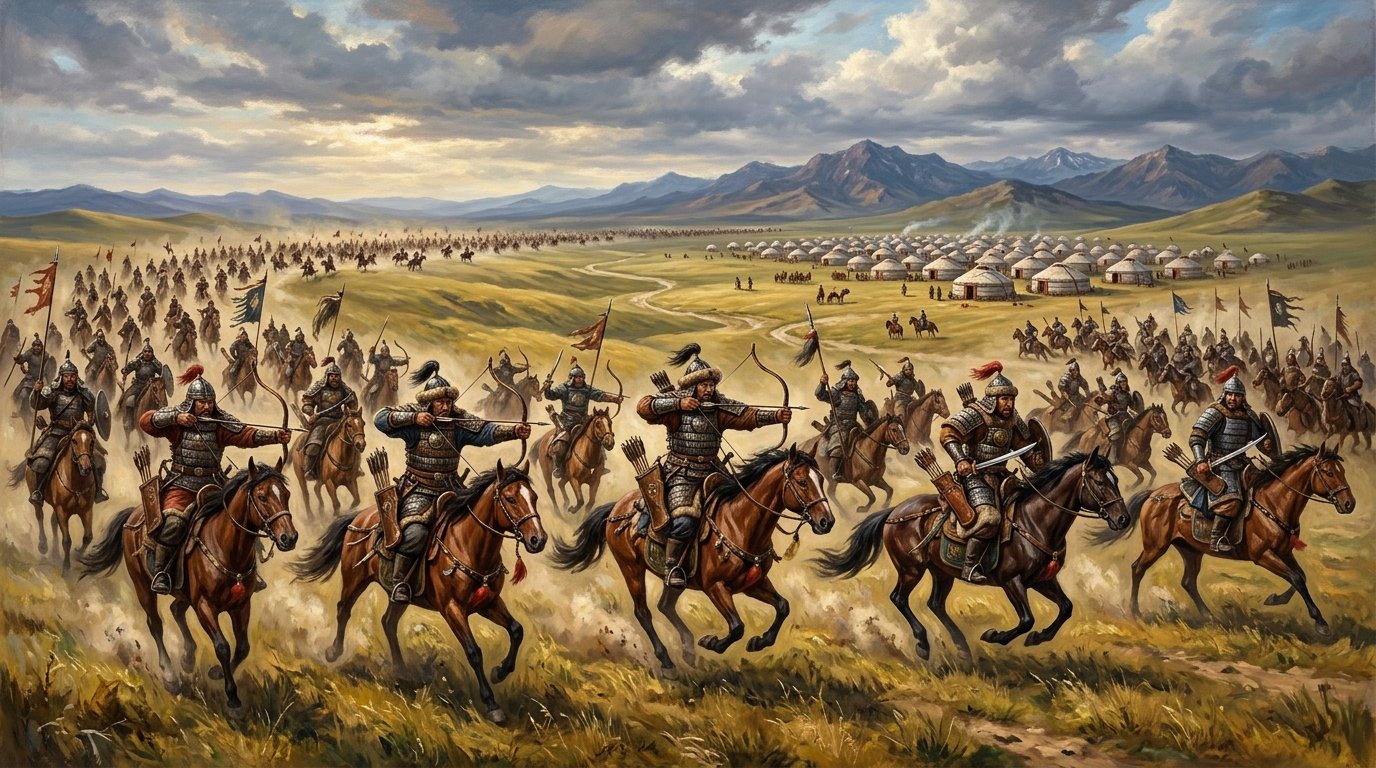
Mongol imperial horse cavalry maneuvering across the Eurasian steppe
Historical illustration of the Mongol imperial horse cavalry during the 13th century. By combining unmatched equestrian archery, decimal organization, and devastating mobile tactics across the Eurasian steppe, Genghis Khan's forces forged the largest contiguous land empire in human history.

1. Steppe Cavalry vs. Feudal Armies: Military Doctrines Compared

When the Mongol armies descended upon the settled civilizations of China, the Islamic world, and medieval Europe, they confronted traditional feudal armies. While European knights and Chinese infantry possessed heavy armor, their rigid tactics were completely dismantled by the fluid, coordinated maneuvers of the steppe:

Tactical Feature Mongol Steppe Cavalry (Imperial Horde) Sedentary Feudal Armies (Europe & Asia)
Mobility & Speed Could cover 60โ€“100 miles a day; each rider had a remount string of 4โ€“5 grass-fed ponies. Slow infantry baggage trains; 10โ€“15 miles a day; heavy grain-dependent warhorses.
Primary Weaponry Composite recurve horn-and-sinew bow (160+ lb draw weight); lance, curved saber. Crossbows, pikes, broadswords, and heavy cavalry lances.
Organizational Command Strict decimal system (Arban [10] to Tumen [10,000]); commanded via signal flags & whistles. Individualistic chivalric glory, disjointed feudal levies, lack of unified command.
Armor & Protection Lacquered leather lamellar, iron helmets, raw silk undershirts that wrapped arrowheads for clean removal. Heavy iron chainmail, padded gambesons, plate cuirasses for elite knights.
Logistical Supply Chain Self-sufficient nomad diet: dried curd (aaruul), smoked meat, mare's milk (airag); lived off grazing land. Vulnerable supply wagons, local forage looting, prone to starvation during prolonged campaigns.

2. Genghis Khan's Military Revolution: The Decimal Army

Before Genghis Khan, steppe warfare was plagued by clan nepotism and shifting blood loyalties. Genghis Khan abolished tribal distinctions entirely, reorganizing all warriors into a ruthless, standardized decimal hierarchy:

  • Arban: 10 men, commanded by an elected leader; bonded by oath to live and die together.
  • Jagun: 100 men (10 Arbans).
  • Mingghan: 1,000 men (10 Jaguns).
  • Tumen: 10,000 men (10 Mingghans)โ€”an independent, self-contained combined-arms division complete with light scouts, heavy shock cavalry, engineer corps, and logistical support.

Promotion was strictly based on battlefield merit and tactical brilliance rather than aristocratic birth. Genghis Khan's supreme field marshalsโ€”such as Subutai (who conquered 32 nations and won 65 pitched battles) and Jebeโ€”were former impoverished commoners or captured enemy archers who demonstrated exceptional military genius.

3. Nomadic Food, Yurts & Daily Life of the Steppe

The endurance of the Mongol army derived directly from the harsh environment of the Eurasian steppe. Steppe children were strapped to horses before they could walk and learned to hunt with small bows by age four.

Their daily survival relied on portable round felt tents known as yurts (or gers in Mongolian). Erected or dismantled in less than two hours, the yurt's lattice wooden frame covered in sheep's wool felt provided remarkable insulation against -40ยฐF winter blizzards while remaining fully transportable on ox-drawn carts.

Their diet was radically adapted for high-calorie mobility: warriors drank fermented mare's milk (airag), carried dried curd cakes (aaruul) that dissolved into hot water for instant protein rations, and packed strips of cured horse meat beneath their saddles to soften while riding. In desperate emergencies during winter traverses, a Mongol rider could make a small puncture in a pony's neck vein to drink a cup of blood before bandaging the wound, allowing units to cross hundreds of miles of frozen desert without supply lines.

Mongol messenger on horseback along the Yam Postal Relay
A Mongol imperial courier riding at gallop along the transcontinental Yam postal network. Carrying an inscribed bronze paiza tablet, messengers traversed thousands of miles between Karakorum, Beijing, and the Volga River.

4. The Invasions of Japan: The Kamikaze Typhoons (1274 & 1281)

Under Genghis Khan's grandson Kublai Khan, the founder of the Yuan Dynasty in China, the Mongol Empire launched two colossal maritime invasions against feudal Japan:

In 1274 and again in 1281, massive fleets carrying over 140,000 Mongol, Korean, and Chinese troops landed at Hakata Bay on Kyushu. Used to individual ritualistic single combat, Japanese Samurai were initially shocked by the Mongols' coordinated phalanx archery, exploding ceramic gunpowder bombs, and poison-tipped arrows.

However, the sea proved to be the Mongols' undoing. In both 1274 and 1281, ferocious late-summer tropical typhoons tore through Hakata Bay, destroying the Mongol transport fleets and drowning tens of thousands of invaders. Japanese chroniclers believed the storms were sent by Shinto storm gods to protect their sacred soil, naming the storms Kamikaze ("Divine Wind"). Japan remained unconquered.

5. Who Defeated the Mongols? The Limits of the Steppe

Despite their near-invincible reputation, the Mongols were eventually halted and defeated when forced to fight far from the open grazing pastures essential for their horses:

  • The Battle of Ain Jalut (1260 CE): In the Jezreel Valley of modern Israel, the Egyptian Mamluk Sultanate, led by Sultan Qutuz and General Baibars, decisively defeated a Mongol army commanded by Kitbuqa. As fellow steppe horsemen of Kipchak Turkic origin, the Mamluks turned the Mongols' signature tacticโ€”the feigned retreatโ€”against them, halting the Mongol advance into Egypt and North Africa forever.
  • The Battle of Kulikovo (1380 CE): Led by Prince Dmitry Donskoy of Moscow, united Russian principalities crushed the Golden Horde, initiating the liberation of Russia from the "Tatar Yoke".
  • The Ming Restoration (1368 CE): Peasant rebel Zhu Yuanzhang captured Beijing, overthrowing the Mongol Yuan Dynasty and driving the Mongols back into their ancestral northern steppes.

6. The Pax Mongolica & World History Legacy

While the Mongol conquests were accompanied by horrific slaughter, the unified empire established the Pax Mongolica ("Mongol Peace"). For a century, a single legal code (the Yassa) governed the entirety of the Silk Road. Bandits were eliminated, religious freedom was legally guaranteed for Christians, Muslims, Buddhists, and Daoists, and imperial envoys carrying golden passport tablets (paiza) could travel safely from the Mediterranean to Beijing.

It was this secure trade superhighway that allowed Italian merchant Marco Polo to journey across Asia, and it was along this network that Chinese gunpowder, printing, and the compass traveled to the Westโ€”unintentionally paving the way for the European Age of Exploration and the dawn of the modern global world.

โšก Fast Facts
  • Historical EraMEDIEVAL
  • Region๐ŸŒ ASIA
  • CategoryEmpires
  • Reading Timeโฑ 14 min read
๐Ÿ“– Scholar Mode Active โ€” Click to exit focused reading
Selected Era

Prehistoric Era

Millions of years ago to ~3000 BCE

The dawn of humanity. From the evolutionary split of early hominids to the mastery of stone tools, fire, and the birth of language.

Landmark Milestones

Welcome to Historia

Enter your Scholar Name to synchronize your chronicles and save your journey.