~7,000 Years from farming to writing
๐Ÿ›๏ธ

Ancient Ages

c. 3,200 BCE โ€” 500 CE ยท Empires, Laws & Philosophy
~400 Years from Roman fall to medieval rebirth
๐Ÿฐ

Medieval Period

c. 500 CE โ€” 1500 CE ยท Empires of Faith, Trade & Castles
~50 Years from printing press to Scientific Revolution
โš™๏ธ

Modern Age

c. 1450 CE โ€” 2000 CE ยท Revolutions, Industry & Discovery
~50 Years from computers to quantum age

THE ARTIFACT GALLERY

Examine the tangible relics, physical tokens, and revolutionary machines that shaped civilizational growth.

๐ŸŽฅ VIDEO HUB & SHORTS

Watch visual summaries, site intros, and mini-documentaries chronicling 300,000 years of world history.

๐Ÿ“Š HISTORICAL INFOGRAPHICS ARCHIVE

Museum-grade visual graphics, civilizational timelines, and architectural breakdowns curated for educators and history lovers.

THE HISTORIA CIRCLE

Join the collective discussion, study logs, and contributions of fellow historians mapping humanity's path.

Historia Forum Discussions

Start a Discussion Thread

THEMATIC PATHWAYS

Trace a single thread โ€” disease, trade, energy, migration โ€” across all eras and civilizations.

History is not just a sequence of events โ€” it is a network of patterns. These thematic pathways allow you to follow a single concept across thousands of years: how agriculture spread, how warfare evolved, how trade routes shaped civilizations. Each pathway collects the most relevant chronicles across all eras.

๐Ÿงฉ
How is this different from the sidebar Topics?
While the sidebar Topics (like Science & Tech or Empires) filter articles within your selected historical Era, Thematic Pathways cut horizontally across all eras (from Prehistoric to the Future). Use Themes to trace a single concept's evolutionary line across 300,000 years.

CIVILIZATION HUBS

Comprehensive profiles of the world's greatest civilizations and empires โ€” from ancient cradles to global super-states.

Human Historia provides an academically rich exploration of the world's most influential civilizations. From the monumental achievements of ancient Egypt, Han China, and the Roman Empire, to the sophisticated societies of the Maya, the Islamic Caliphates, and West African empires, these hubs offer deep insights into the cultural, political, and technological legacies that continue to shape our global story.

EVOLUTION OF HUMAN SKILLS

Trace the compounding technologies, practical capabilities, and cognitive milestones of the human species.

Human progress is a story of compounding skills. Every breakthrough, from the spark of prehistoric fire to modern silicon transistors, builds directly on previous generations of ingenuity. Hover over a skill node to trace its historical prerequisites, and click it to explore its development timeline, species-wide impact, and related chronicles.

Prehistoric Ancient Medieval Modern Future
๐Ÿง 

Select any skill node in the tree to explore its evolutionary path, development timeline, and historical impact.

ACADEMIC PASSPORT

Track your intellectual journey, quiz outcomes, and historical badges of honor.
HISTORIA PASSPORT โณ
๐Ÿ‘ค Scribe Novice
Scholar Name Historia Explorer
Rank Rating Sumerian Record Scribe
Chronicles Read 0 / 48
Study Guide Pins 0 Guides
Security Access Level 1 (Novice)

Earned Badges of Honor

๐Ÿ”ฅ
Fire Keeper
Unlock 3 prehistoric chronicles.
๐Ÿ›๏ธ
Codex Keeper
Unlock 3 ancient chronicles.
๐Ÿฐ
Guild Master
Unlock 3 medieval chronicles.
โš™๏ธ
Steam Engineer
Unlock 3 modern chronicles.
๐Ÿš€
Singularity Sage
Unlock 3 future chronicles.
๐Ÿ‘‘
Grand Scholar
Score 5/5 on the Lab Quiz.

Recent Lab Activities

No recent activities recorded. Take a quiz or bookmark articles!
Curated Exhibition

Human Historia

An immersive graphical anthology tracing the paths of civilizations, breakthroughs, and conflicts that forged the modern consciousness.

25Chronicles
Showing all articles

Rise of Global Capitalism: Joint-Stock Companies, VOC & Industrial Markets

Written by Historia Economics Historical Era: MODERN
* Note: Cover image is an AI-generated historical illustration.

๐Ÿง Key Chronicle Takeaway (Atomic Summary)

The transition from mercantilism to joint-stock companies, banking, and market-driven growth.

Industrial Capitalism is the dominant economic system of the modern world, characterized by the private ownership of capital, the allocation of resources through competitive markets, and the continuous reinvestment of profit to drive growth. Emerging in Western Europe during the 17th and 18th centuries, it replaced the pre-capitalist systems of feudalism and mercantilism. By pairing financial innovations (such as joint-stock companies and public stock exchanges) with the physical power of the Industrial Revolution, capitalism transformed the nature of human work, accelerated technological innovation, and triggered an unprecedented increase in global production and standards of living.

The Pre-Capitalist Era: Mercantilism and Feudalism

To understand the rise of capitalism, one must examine the economic systems it replaced. Under Feudalism, wealth was tied to land ownership, which was controlled by the nobility and the clergy. Peasants and serfs worked the land in exchange for military protection, and the economy was sustained by tradition, mutual obligation, and local agricultural consumption. There was little social mobility, and capital investment to improve productivity was rare.

In the 16th and 17th centuries, as European empires expanded, feudalism transitioned into Mercantilism. Mercantilism was an economic doctrine based on the idea that the world's wealth was fixed, measured in gold and silver bullion. Under this system:

  • States sought to maximize exports and minimize imports to maintain a positive balance of trade and accumulate gold.
  • Governments established monopolies, imposed high tariffs on foreign imports, and controlled colonial economies to ensure they exported raw materials to the mother country and imported its manufactured goods.
  • Colonial trade was operated by chartered monopolies, such as the British East India Company, which acted as branches of the state.

The Dutch Financial Revolution: VOC and the Beurs

The transition to modern capitalism began in the Dutch Republic in the early 17th century. The Dutch faced a commercial challenge: funding long-distance maritime voyages to the East Indies was expensive and highly risky, as ships were frequently lost to storms or pirates.

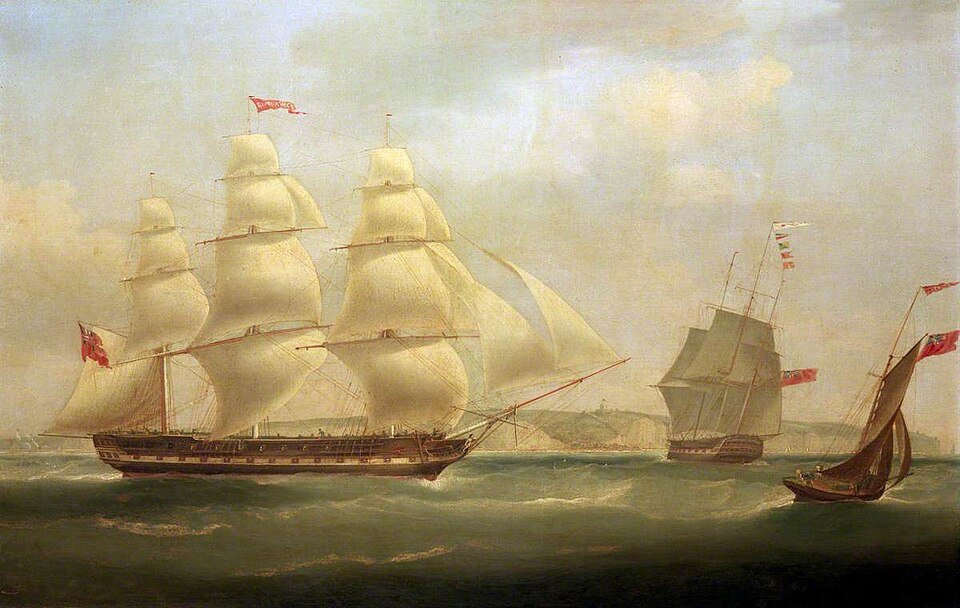
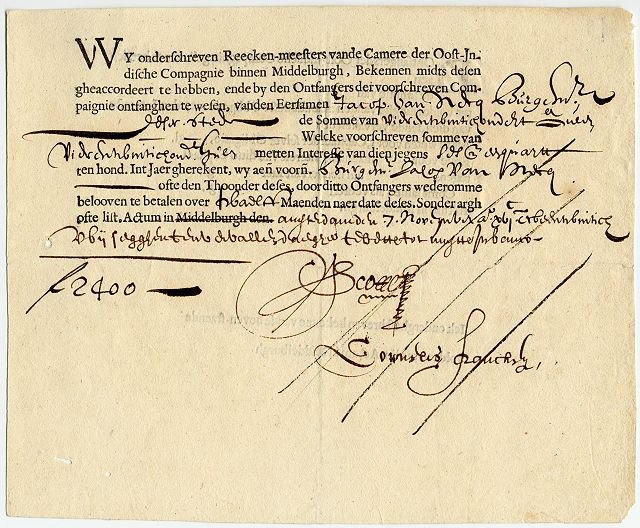
To spread this risk, the Dutch government chartered the Vereenigde Oostindische Compagnie (VOC, or the Dutch East India Company) in 1602. The VOC introduced two financial innovations:

  • The Joint-Stock Company: Unlike previous partnerships that dissolved after a single voyage, the VOC was established as a permanent corporation. Anyone could purchase shares in the company, raising capital on a scale that surpassed private merchants.
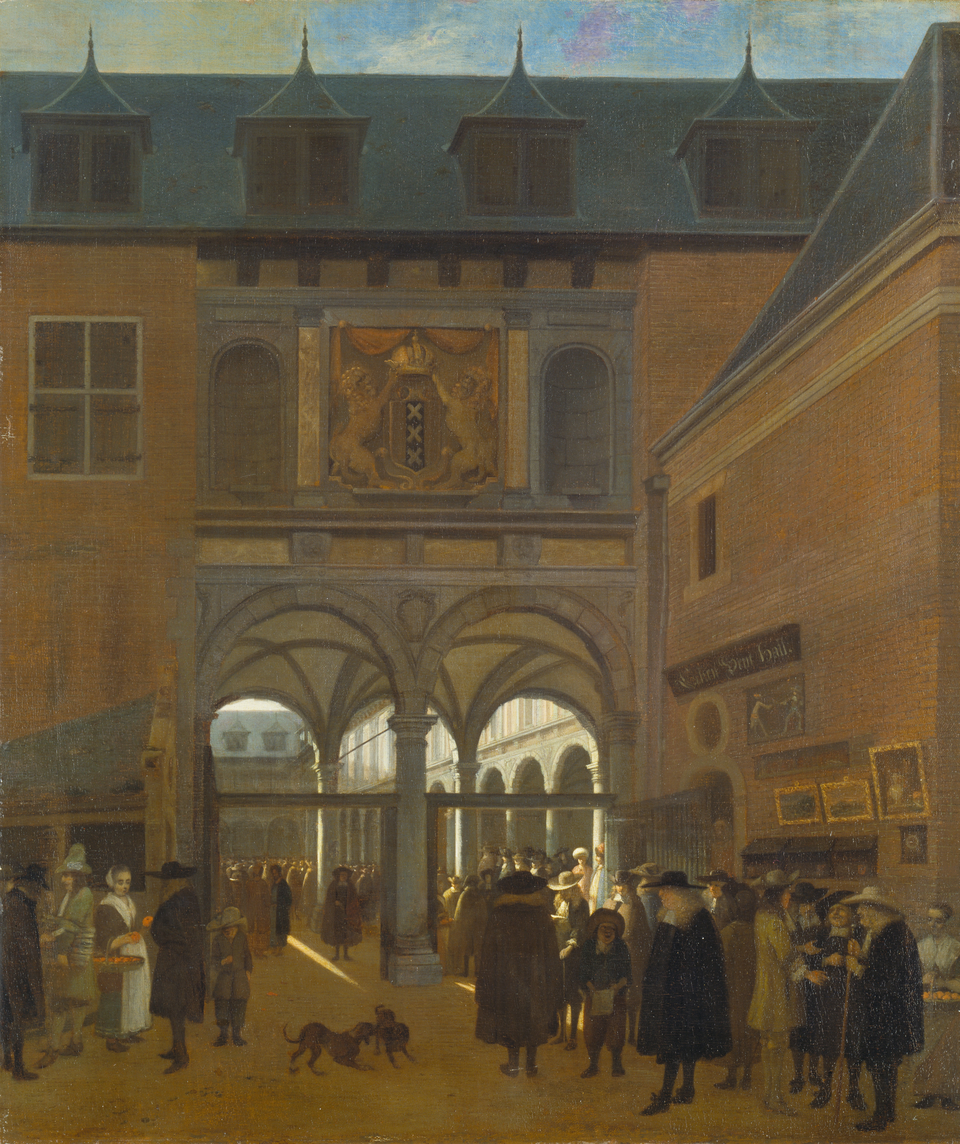
  • The Amsterdam Stock Exchange (Beurs): To allow investors to buy and sell their VOC shares, the Dutch established the first public stock exchange in Amsterdam. This created a liquid market in public equity, allowing capital to flow to the most profitable operations.

Supported by the Wisselbank (Amsterdam Wisselbank), which provided stable bank transfers and early fractional reserve banking, the Dutch Republic became the financial capital of Europe, proving that public investment and capital markets could generate more wealth than state mercantilism.

The Division of Labor: Adam Smith's Pin Factory

In The Wealth of Nations (1776), the Scottish philosopher Adam Smith explained the efficiency of division of labor using his famous pin factory example. He noted that a single worker, performing all the steps to manufacture a pin (drawing the wire, straightening it, cutting it, pointing it, grinding the head, and packaging it), could produce perhaps one pin a day. However, by dividing the manufacturing process into 18 distinct, specialized steps performed by 10 different workers, the factory could produce over 48,000 pins a day, showing how specialization drives productivity.

Adam Smith and the Invisible Hand

In The Wealth of Nations, Adam Smith formulated the theoretical foundations of free-market capitalism. Smith attacked the mercantilist system, arguing that wealth was not gold and silver, but the total goods and services produced by a nation's labor. He introduced the concept of the Invisible Hand:

"It is not from the benevolence of the butcher, the brewer, or the baker that we expect our dinner, but from their regard to their own interest. We address ourselves, not to their humanity but to their self-love."

According to Smith, when individuals pursue their own economic self-interest in a competitive free market, they are led by an "invisible hand" to allocate resources efficiently, innovate, and produce the goods that society desires, resulting in collective social prosperity. Smith argued for laissez-faire policiesโ€”proposing that governments should remove tariffs, monopolies, and restrictions on trade, and limit their role to enforcing property rights, contracts, and maintaining public infrastructure.

The Industrial Transition: Industrial Capitalism

In the late 18th century, the financial systems of joint-stock capital merged with the physical systems of the Industrial Revolution (coal, steam engines, and automated machinery), initiating the era of Industrial Capitalism.

This transition shifted the focus of the economy from merchant trade to industrial manufacturing. Producing goods was no longer dominated by individual craftsmen working in small shops (the domestic system). Instead, production was centralized in massive factories equipped with steam-powered machinery. This required investments in capital goodsโ€”machinery, factory buildings, coal mines, canals, and railways. The owners of this capital (the capitalists or bourgeoisie) hired wage laborers (the proletariat) to operate the machines, paying them hourly wages while retaining the surplus value of the manufactured goods to reinvest in expanding their operations.

The Marxist Critique: Surplus Value and Alienation

In Das Kapital (1867), the German philosopher Karl Marx analyzed the dynamics of industrial capitalism, formulating a critique. Marx argued that the value of a commodity is determined by the labor required to produce it. Under capitalism, the worker is paid a wage that is less than the value of the goods they produce. The differenceโ€”surplus valueโ€”is kept by the capitalist as profit, representing structural exploitation. Marx also identified the alienation of labor: in mechanized factories, workers perform repetitive tasks, losing control over their work and the products they make, becoming appendages of the machine.

Creative Destruction and Schumpeterian Growth

In the 20th century, the Austrian economist Joseph Schumpeter identified the driving engine of capitalist growth as Creative Destruction. Schumpeter argued that capitalism is not a static system, but an evolutionary process driven by innovation.

New technologies, new business models, and new markets continuously arise to destroy the old ones. The steam locomotive destroyed the horse-drawn carriage industry; the personal computer destroyed the typewriter industry; and digital streaming destroyed the physical rental shop. This process of creative destruction, while causing temporary job losses and business bankruptcies, is the mechanism through which capitalism increases productivity and living standards over the long term.

The Great Depression and the Keynesian Revolution

Industrial capitalism experienced its greatest structural crisis during the Great Depression of the 1930s. The crash of the US stock market in October 1929 exposed systemic weaknesses in the unregulated global economy. In the following years, industrial production collapsed, commercial banks shut down, and unemployment rose to over 25% in the United States and Germany. Classical economists, relying on Adam Smith's theories, argued that the market was self-correcting and would return to equilibrium if wages and prices fell. However, the prolonged depression proved that unregulated markets could remain trapped in a high-unemployment stalemate, prompting a revolution in economic policy.

In 1936, the British economist John Maynard Keynes published The General Theory of Employment, Interest, and Money. Keynes argued that during a depression, private demand falls, and the market cannot self-correct because of a "liquidity trap." To restore growth, Keynes proposed that the government must intervene, using fiscal policy to stimulate aggregate demand. By running budget deficits to fund public works projects, the state could hire unemployed workers, putting money back into circulation and stimulating private business. This Keynesian Revolution transformed capitalism, introducing the mixed economy model where free markets operate alongside state intervention, social safety nets, and regulatory oversight to stabilize the business cycle, a system that sustained the post-World War II economic boom.

Central Banking and Monetary Regulation

Modern industrial capitalism relies on the steering mechanism of Central Banking. Institutions like the Federal Reserve in the United States and the European Central Bank regulate the economy by controlling the money supply and adjusting interest rates. By lowering interest rates, central banks make borrowing cheap, encouraging businesses to invest capital and hire workers. Conversely, by raising interest rates, they cool the economy to prevent inflation. This monetary oversight represents a crucial adjustment to the free-market model, demonstrating that capitalism is not a purely laissez-faire system, but a regulated framework where state-directed monetary policy is used to prevent the boom-and-bust cycles that historically led to recessions and social instability.

The Joint-Stock Revolution and the Dutch East India Company

The structural transition from early merchant capitalism to modern corporate capitalism was driven by the Joint-Stock Revolution of the early 17th century. Prior to this period, merchants formed temporary partnerships for single voyages, which were liquidated upon the ship's return. This model was too risky and lacked the scale required for long-distance colonial trade. In 1602, the Dutch Republic chartered the Vereenigde Oostindische Compagnie (VOC), or the Dutch East India Company, creating the world's first permanent joint-stock corporation.

The VOC introduced three critical innovations:

  • Permanent Capital: Unlike temporary partnerships, the VOC's capital was locked in, allowing the company to build permanent naval fleets, fortresses, and trading stations in Asia.
  • Limited Liability: Shareholders were only liable for the value of their shares, protecting their personal wealth from corporate bankruptcy.
  • Public Trading: To allow investors to liquidate their holdings, the VOC established the Amsterdam Stock Exchange, where shares could be bought and sold daily.

This financial machinery allowed the VOC to mobilize unprecedented capital reserves, turning the corporation into a sovereign entity that could wage war, mint coins, and administer territory. The joint-stock corporate model became the structural engine of global industrial capitalism, separating ownership from management and enabling the construction of the large-scale infrastructure that defined the modern global economy.

Legacy and Challenges

Free-market capitalism has generated more wealth and technological progress than any economic system in human history. By encouraging competition, protecting property rights, and utilizing price signals to coordinate global trade, it has integrated the globe in real time.

However, the system faces challenges:

  • Inequality: Capital accumulation tends to concentrate wealth in fewer hands, leading to social and political tension.
  • Externalities: Market prices do not account for environmental costs, resulting in air pollution, resource depletion, and modern climate change.
  • Market Failures: Unregulated financial speculation can lead to speculative bubbles and depressions, such as the Great Depression of 1929 and the Financial Crisis of 2008, requiring state intervention and regulatory oversight.
Victorian textile mill interior with automated looms
An authentic historical photograph of a Victorian textile mill interior, filled with rows of steam-powered automated weaving looms.

Conclusion

Industrial Capitalism remains the primary engine of modern globalization and technology. By converting ideas and labor into tradeable shares, coordinating resources through global prices, and driving innovation through creative destruction, it has built the modern industrial world, presenting a choice between market-driven cosmic expansion or ecological collapse.

โš–๏ธ

Historian Debate: Did Colonialism Fund Industrial Capitalism?

The Eric Williams Thesis

Williams argued that the capital accumulated from the Atlantic slave trade and Caribbean sugar plantations directly funded the factories, steam engines, and banks of the Industrial Revolution.

Internal European Development

Alternative economic historians argue that British industrialization was financed by internal savings, agricultural improvements, and local capital markets, with colonial trade playing a minor role.

The debate over the role of slavery and colonialism in the rise of capitalism remains highly polarized.

"It is not from the benevolence of the butcher, the brewer, or the baker that we expect our dinner, but from their regard to their own interest."

โ€” Adam Smith, The Wealth of Nations (1776).

Further Reading

  • Capitalism and Slavery โ€” by Eric Williams. The classic, controversial thesis linking Britain's industrialization to the slave trade.
  • The Empire of Cotton: A Global History โ€” by Sven Beckert. A major modern history showing how global violence and cotton agriculture created industrial capitalism.
๐Ÿ“– Scholar Mode Active โ€” Click to exit focused reading
Selected Era

Prehistoric Era

Millions of years ago to ~3000 BCE

The dawn of humanity. From the evolutionary split of early hominids to the mastery of stone tools, fire, and the birth of language.

Landmark Milestones

Welcome to Historia

Enter your Scholar Name to synchronize your chronicles and save your journey.