Examine the tangible relics, physical tokens, and revolutionary machines that shaped civilizational growth.
๐ฅ VIDEO HUB & SHORTS
Watch visual summaries, site intros, and mini-documentaries chronicling 300,000 years of world history.
๐ HISTORICAL INFOGRAPHICS ARCHIVE
Museum-grade visual graphics, civilizational timelines, and architectural breakdowns curated for educators and history lovers.
THE HISTORIA CIRCLE
Join the collective discussion, study logs, and contributions of fellow historians mapping humanity's path.
Historia Forum Discussions
Start a Discussion Thread
THEMATIC PATHWAYS
Trace a single thread โ disease, trade, energy, migration โ across all eras and civilizations.
History is not just a sequence of events โ it is a network of patterns. These thematic pathways allow you to follow a single concept across thousands of years: how agriculture spread, how warfare evolved, how trade routes shaped civilizations. Each pathway collects the most relevant chronicles across all eras.
๐งฉ
How is this different from the sidebar Topics?
While the sidebar Topics (like Science & Tech or Empires) filter articles within your selected historical Era, Thematic Pathways cut horizontally across all eras (from Prehistoric to the Future). Use Themes to trace a single concept's evolutionary line across 300,000 years.
CIVILIZATION HUBS
Comprehensive profiles of the world's greatest civilizations and empires โ from ancient cradles to global super-states.
Human Historia provides an academically rich exploration of the world's most influential civilizations. From the monumental achievements of ancient Egypt, Han China, and the Roman Empire, to the sophisticated societies of the Maya, the Islamic Caliphates, and West African empires, these hubs offer deep insights into the cultural, political, and technological legacies that continue to shape our global story.
EVOLUTION OF HUMAN SKILLS
Trace the compounding technologies, practical capabilities, and cognitive milestones of the human species.
Human progress is a story of compounding skills. Every breakthrough, from the spark of prehistoric fire to modern silicon transistors, builds directly on previous generations of ingenuity. Hover over a skill node to trace its historical prerequisites, and click it to explore its development timeline, species-wide impact, and related chronicles.
Prehistoric Ancient Medieval Modern Future
๐ง
Select any skill node in the tree to explore its evolutionary path, development timeline, and historical impact.
ACADEMIC PASSPORT
Track your intellectual journey, quiz outcomes, and historical badges of honor.
HISTORIA PASSPORTโณ
๐คScribe Novice
Scholar NameHistoria Explorer
Rank RatingSumerian Record Scribe
Chronicles Read0 / 48
Study Guide Pins0 Guides
Security AccessLevel 1 (Novice)
Earned Badges of Honor
๐ฅ
Fire Keeper
Unlock 3 prehistoric chronicles.
๐๏ธ
Codex Keeper
Unlock 3 ancient chronicles.
๐ฐ
Guild Master
Unlock 3 medieval chronicles.
โ๏ธ
Steam Engineer
Unlock 3 modern chronicles.
๐
Singularity Sage
Unlock 3 future chronicles.
๐
Grand Scholar
Score 5/5 on the Lab Quiz.
Recent Lab Activities
No recent activities recorded. Take a quiz or bookmark articles!
Curated Exhibition
Human Historia
An immersive graphical anthology tracing the paths of civilizations, breakthroughs, and conflicts that forged the modern consciousness.
25Chronicles
Showing all articles
From Barter to Electrum Coins 600 BCE: Evolution of Ancient Money
Written by Historia EconomicsHistorical Era: PREHISTORIC
๐จ Historical Illustration (AI)
* Note: Cover image is an AI-generated historical illustration.
๐ง Key Chronicle Takeaway (Atomic Summary)
From debt ledgers and double-coincidence of wants to the invention of metallic coins.
Money is the lifeblood of human civilization, acting as the primary medium through which resources are allocated, labor is valued, and trade is coordinated. In classical economics, the story of money begins with the Barter Systemโa primitive market where individuals traded surplus goods directly. According to this traditional narrative, barter proved too complex due to the Double Coincidence of Wants, prompting societies to invent metallic coins as a neutral medium of exchange. However, modern anthropology and economic history have revealed a far more complex and fascinating truth: money did not arise from barter, but from debt ledgers, gift economies, and the administrative needs of early states.
The Double Coincidence of Wants and the Classical Barter Myth
In his 1776 economic classic The Wealth of Nations, Adam Smith formulated the traditional origin story of money. Smith argued that in early societies, a division of labor arose: one man made arrows, another built huts, and a third wove blankets. To exchange their goods, they engaged in barter. However, Smith identified a structural barrier in direct exchange: the Double Coincidence of Wants. For a trade to occur:
The arrow-maker had to find someone who possessed surplus meat.
That meat-owner had to simultaneously want arrows at that exact time.
If the meat-owner wanted blankets instead, the trade could not happen. To solve this, Smith argued, individuals began keeping a commodity that everyone wantedโsuch as salt, iron, or goldโto facilitate trade, leading directly to the invention of coinage.
However, modern anthropologists, most notably David Graeber in Debt: The First 5,000 Years, have pointed out a significant flaw in Smith's theory: there is no historical or archaeological evidence that a pure barter economy ever existed. Anthropologists have studied dozens of non-monetary societies and found that while barter occurred occasionally between strangers or enemy tribes to establish peace, it was never the primary internal economic mechanism of a community.
Gift Economies and Social Debt
Instead of barter, early human communities operated under a Gift Economy. In these small, kin-based bands, goods and services were distributed based on social relationships, mutual obligation, and need.
If a hunter returned with a large kill, he did not barter the meat for tools. He distributed it to the community. The recipients did not pay him immediately; instead, they acknowledged a social debt. They owed him a favor, help in a future hunt, or assistance in a time of crisis. The economy was sustained by a complex web of informal, unwritten credit relationships. Pricing goods in monetary units was unnecessary because everyone knew each other, and social reputation (trustworthiness) was the primary currency. Refusing to return a favor led to social isolation and loss of status.
Mesopotamian Temple Ledgers and Clay Tablets
The earliest formal money arose not in marketplaces, but in the temple and palace administrations of ancient Sumer (~3000 BCE). Sumerian temples operated centralized agricultural economies. The administrators did not use coins; they used clay tablets to record debts, taxes, and grain deliveries in a standardized unit of account: the shekel of barley or silver. The shekel represented a specific weight of grain or silver. The tablets served as the first formal ledger accounts, tracking who owed what to the temple treasury before physical money ever circulated in the market.
Commodity Money: The Intrinsic Standard
As trade expanded beyond local communities, societies needed a standardized way to measure value and settle transactions. This led to Commodity Moneyโitems that possessed intrinsic value and were widely accepted:
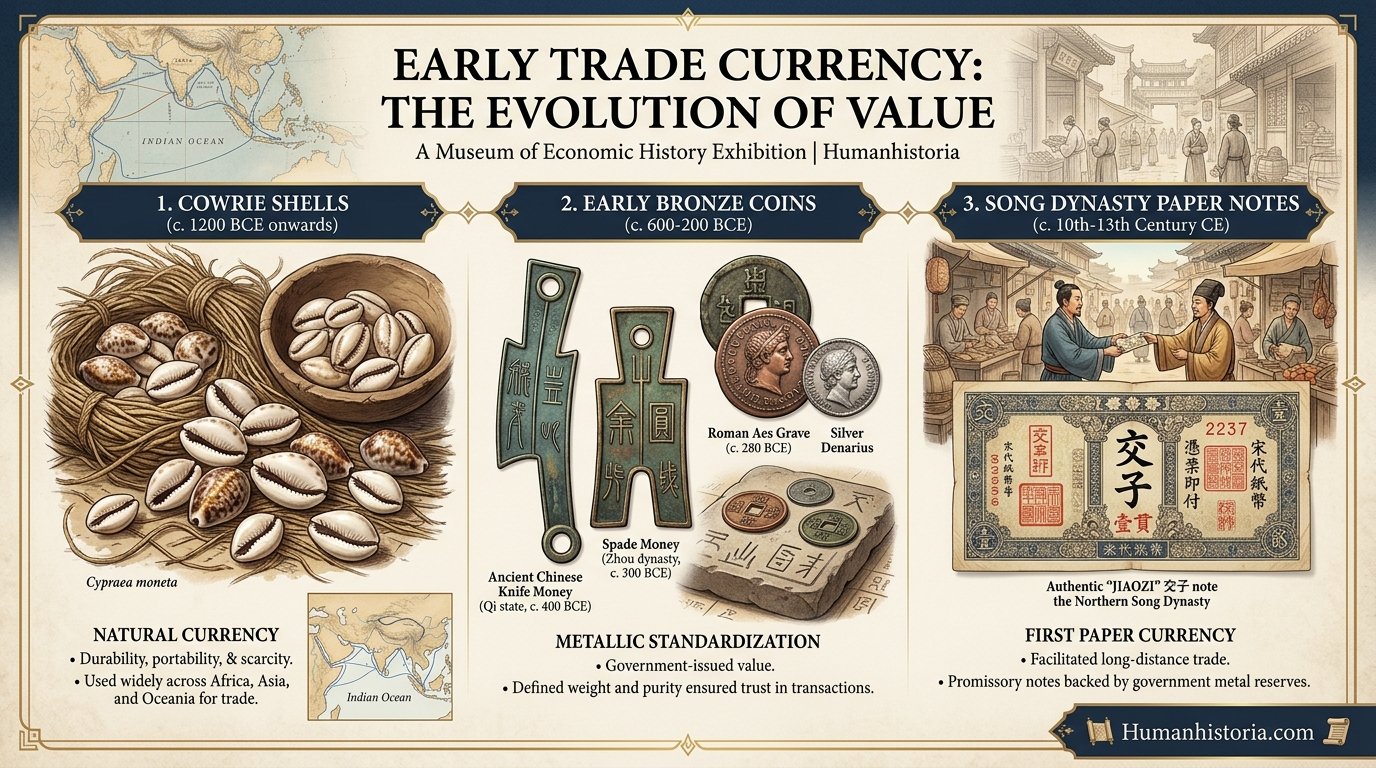
Cowrie Shells: Harvested in the Indian Ocean, cowrie shells were used as currency for thousands of years across China, India, and West Africa. They were durable, impossible to counterfeit, and easy to count and transport.
Barley and Grain: In Mesopotamia, barley served as a primary commodity currency. It had intrinsic value (it could be eaten) and was divisible, though it was heavy to transport and subject to decay.
Cacao Beans: In the Aztec and Mayan Empires of Mesoamerica, cacao beans were used as small-change currency to purchase goods in urban markets, with a pumpkin costing 4 beans and a slave costing 100.
Salt: In the Roman Empire, salt was a vital commodity used to preserve food. Roman soldiers were sometimes paid in salt, leading to the Latin word salarium, which is the origin of the modern word salary.
The Invention of Coinage in Lydia
While commodity money solved some exchange issues, it was difficult to standardize. Grains decayed, and metals had to be weighed and tested for purity during every transaction, which slowed down trade.
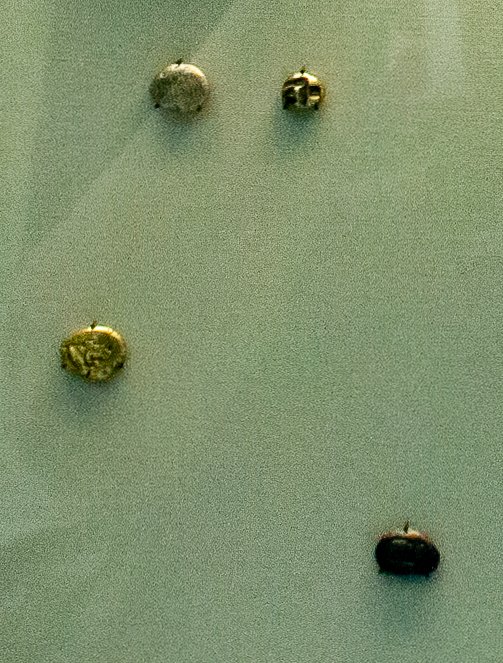
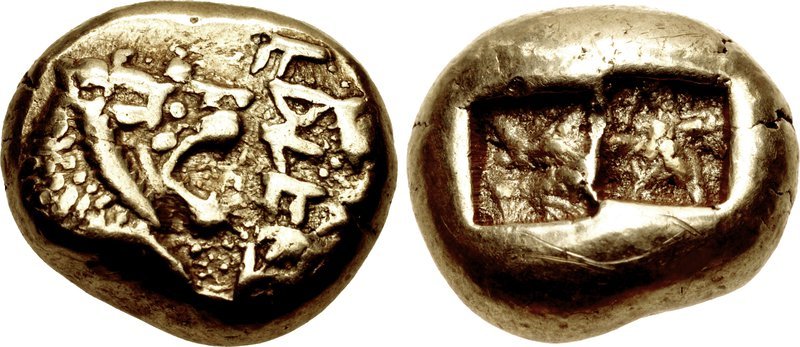
The breakthrough occurred around 600 BCE in the kingdom of Lydia (modern Turkey) under King Alyattes and his son, the wealthy King Croesus. Lydian metalworkers began minting the first standardized coins from electrumโa naturally occurring alloy of gold and silver found in the Pactolus River.
The Lydians introduced a critical innovation: they stamped each coin with a royal seal, depicting a roaring lion. This stamp was a state guarantee of the coin's weight and purity. Merchants no longer had to carry scales and acids to test the metal; they could count the coins directly. This Lydian coinage reduced transaction costs, leading to the rapid growth of retail markets, permanent shops, and international trade across the Mediterranean basin. The Lydian system was quickly copied by the Greek city-states, the Persian Empire, and Rome, establishing coinage as the standard currency of the ancient world.
The Three Functions of Money
To qualify as money, a medium must fulfill three distinct functions:
Medium of Exchange: Facilitates trade by eliminating the double coincidence of wants.
Unit of Account: Provides a standardized measure of the value of goods and services.
Store of Value: Allows individuals to save purchasing power for the future without decay.
From Coinage to Representative Money
Standardized coinage allowed for the growth of empires, but it was limited by the supply of precious metals. If a state ran out of gold or silver mines, its economy faced deflation. Furthermore, transporting large chests of metal coins over land and sea was hazardous, attracting bandits and pirates.
This limitation forced the next transition: Representative Money. Merchants began depositing their heavy coins with trusted temples, goldsmiths, or merchant guilds, receiving a paper receipt in return. These receipts, which could be exchanged for the physical metal at any time, began to circulate as currency. This transition paved the way for paper money, bank checks, and the modern financial systems that decoupled the money supply from the physical limits of metal extraction.
Sumerian Silver and the Shekel Currency Ledger
Before the invention of Lydian coins, ancient Mesopotamian civilizations had already developed a sophisticated credit and currency system based on the shekel of silver. The shekel was not a coin, but a standardized weight of silver, equivalent to roughly 8.3 grams (or 180 grains of barley). In the temple economies of Sumer and Babylon, silver shekels served as the primary unit of account, used to value goods, calculate debts, and set tax liabilities. However, physical silver did not frequently change hands. Scribes at the temples maintained clay ledgers, recording debts in shekels of silver. A merchant might purchase barley, oil, and textiles from the temple on credit, and the transactions were added to his ledger account.
At the end of the harvest season, the merchant settled his debt by delivering an equivalent value of barley or sheep to the temple, which was converted to its silver equivalent based on state-regulated exchange rates. This system demonstrates that money arose as an abstract unit of account and a credit-debt ledger, rather than as a physical medium of exchange to replace barter. The transition to physical coinage in Lydia simply materialized these pre-existing credit units, making transactions easier to settle without the oversight of temple scribes. This financial leap led to the rise of early private banking families in Babylon, such as the House of Egibi, who acted as lenders, property managers, and credit brokers, proving that banking and credit were central to the development of early global economies.
Merchants in a Mesopotamian market weighing raw silver pieces on a balance scale to settle transaction values based on temple shekel ledger standards.
Medieval Banking and the Bills of Exchange
The evolution of credit ledgers continued in medieval Europe. During the 12th and 13th centuries, the growth of trade fairs (most notably the Champagne Fairs in France) led to the development of the Bill of Exchange (lettera di cambio). Merchants traveling across Europe did not want to carry chests of gold and silver coins, which were heavy and attracted bandits. Instead, a merchant would deposit local currency with a banker in Florence and receive a bill of exchange. This paper document could be presented to a corresponding banker at a trade fair in France to receive local currency. This system bypassed the physical transfer of coins, increased liquidity, and allowed for the growth of international banking families like the Medici, proving that finance is an abstract system of credit and trust.
Tally Sticks and the Medieval Credit System
The historical reality of credit preceding coinage is demonstrated by the long-standing use of Tally Sticks in medieval Europe, particularly in England. Developed during the reign of King Henry I in the early 12th century, the tally stick was a physical ledger system used to record tax payments, debts, and commercial transactions. A shaft of polished hazelwood was marked with notches of varying widths to represent monetary values: a notch the width of a palm represented ยฃ1,000, a thumb's width represented ยฃ100, and smaller cuts represented shillings and pence.
Once the notches were carved, the stick was split lengthwise through the center, creating two matching halves: the foil (kept by the debtor or taxpayer) and the stock (kept by the Royal Treasury or creditor). The matching grain of the split wood made it impossible to counterfeit or alter the values on one half without detection. When the debt was settled, the two halves were brought together to "tally." The English Crown used these sticks not only to record taxes but to pay for supplies on credit, distributing royal stocks into the market. These stocks circulated as a form of paperless representative currency, proving that money is fundamentally an agreement of debt and trust rather than an intrinsic metal commodity, a system that remained in official use by the British government until 1826.
An authentic ancient silver ring currency ingot used in the Near East prior to the invention of coinage.
Conclusion and Legacy
The evolution of money shows that the medium has transitioned from physical, intrinsic commodities to abstract, trust-based digital ledger accounts. By moving from social debts in gift economies to Lydian coins, representative receipts, and modern digital currencies, humanity has built an abstract system of value that allows for complex global trade, coordinating the labor of billions of people across the globe.
โ๏ธ
Historian Debate: Did the Barter Economy Ever Exist?
The Classical Economic Myth
Adam Smith in The Wealth of Nations asserted that early societies operated via barter, which was so inefficient (due to double coincidence of wants) that humans invented money as a medium of exchange.
The Credit and Gift Economy Reality
Anthropologists like David Graeber state that there is no historical record of a society based on barter. Instead, early communities used complex credit networks, gift economies, and state tallies.
The debate over the origins of money divides formal economists from modern economic anthropologists.
"No anthropologist has ever found a community where barter was the primary means of exchange. Money arose as a measure of debt, not as a shortcut for trade."
โ David Graeber, Debt: The First 5,000 Years (2011).
Debt: The First 5,000 Years โ by David Graeber. A revolutionary history of debt, credit, and the true origins of monetary systems.
The Gift: Forms and Functions of Exchange โ by Marcel Mauss. The anthropological classic examining how gift-giving, not barter, structures early society.
๐ Scholar Mode Active โ Click to exit focused reading
History Lab ๐งช
Run simulated matches between civilizations and convert ancient currencies.
๐ต๏ธ Who Am I? (The Historical Guess Game)
A secret historical figure has been selected. Ask yes/no questions to narrow down the pool of candidates. Click any active card to make your accusation!
Secret Identity
โ Who Am I?
Ask questions using the board below to narrow down my identity.
Ask a Question:
Question LogQuestions: 0 / 7
No questions asked yet.
Candidate Board:
๐บ๏ธ Timeline Scramble
Five historical events appear out of order. Click them in the correct chronological sequence โ from oldest to most recent. How well do you know your history?
๐บ Relic or Fake?
Is this a real historical artifact or a convincing fabrication? Judge each one based on its description and era โ then see the truth revealed!
Artifact 1 / 10Score: 0
Empire Matchup Simulator
Empire ATerritory Size (Peak, M kmยฒ)Empire B
00
Empire APopulation (Peak, Millions)Empire B
00
Empire AMilitary Power (Army Size)Empire B
00
Tactical Battle Analysis
Select empires and click simulate to run evaluations.
Historical Purchasing Power Converter
See what ancient coins are worth in modern terms and check their historical purchasing power.
Modern Value Equivalent
$0.00 USD
Historical Purchasing Power:
Select currency to view purchasing capability.
Historical Identity Generator
Forge an authentic historical identity from ancient civilisations, complete with linguistic meaning and biography.
Neutral
Gaius Julius
Meaning:Descendant of Jupiter
Historical Background:
A Roman citizen and clerk who worked in the forum under Roman republic rule.
Chrono-Cultural Fusion Simulator
Fuse the culture, technology, and governance of two legendary civilizations to synthesize a unique hybrid society.
Cohesion & Coexistence Rate
85%
๐๏ธ Hybrid Architecture
โ๏ธ Synthesized Asset
๐ Synthetic Governance
Historical Tactics & Trivia Quiz
Test your historical knowledge and battle tactics to claim your administrative rank.
8 Questions โข Multi-Era
You will be presented with random scenarios and trivia spanning ancient Egypt, classical Rome, Islamic Golden Age, and the modern industrial era. Complete the evaluation to see your historical title!
Question 1 of 8Score: 0
What was the Code of Hammurabi written on?
Correct!
Evaluation Complete!
6 / 8
Correct
Rank Attained
Imperial Legionary
Your knowledge of classical strategy and administrative structures is respectable.
๐ฒ Counterfactual "What If?" Scenario Simulator
Explore alternative historical trajectories by tweaking key civilizational pivot points.
Simulated Shift
Selected Era
Prehistoric Era
Millions of years ago to ~3000 BCE
The dawn of humanity. From the evolutionary split of early hominids to the mastery of stone tools, fire, and the birth of language.
Landmark Milestones
Welcome to Historia
Enter your Scholar Name to synchronize your chronicles and save your journey.
THEMATIC SHORTโฑ๏ธ 0:45
Title Loading...
Description loading...
1 / 13
๐ก Tip: Use Arrow Keys โฌ ๏ธ โก๏ธ to binge watch shorts