>
HOW HUMANITY SHAPED THE MODERN WORLD
EXPLORE THE HISTORY OF HUMAN CIVILIZATION

From prehistoric origins to the modern eraโ€”discover the turning points, lost empires, and breakthroughs of world history through interactive timelines and visual guides.

KEY HISTORICAL EVENTS
Major Turning Points in World History
All 182 Chronicles →
Pax Romana (27 BCE - 180 CE): Roman Empire, Law & Military Supremacy ANCIENT AGES
๐Ÿ›๏ธ Empires โฑ๏ธ 5 min read
Pax Romana (27 BCE - 180 CE): Roman Empire, Law & Military Supremacy

Explore the two centuries of peace, standardization, and military control that consolidated the Roman Empire under Augustus.

Read Chronicle →
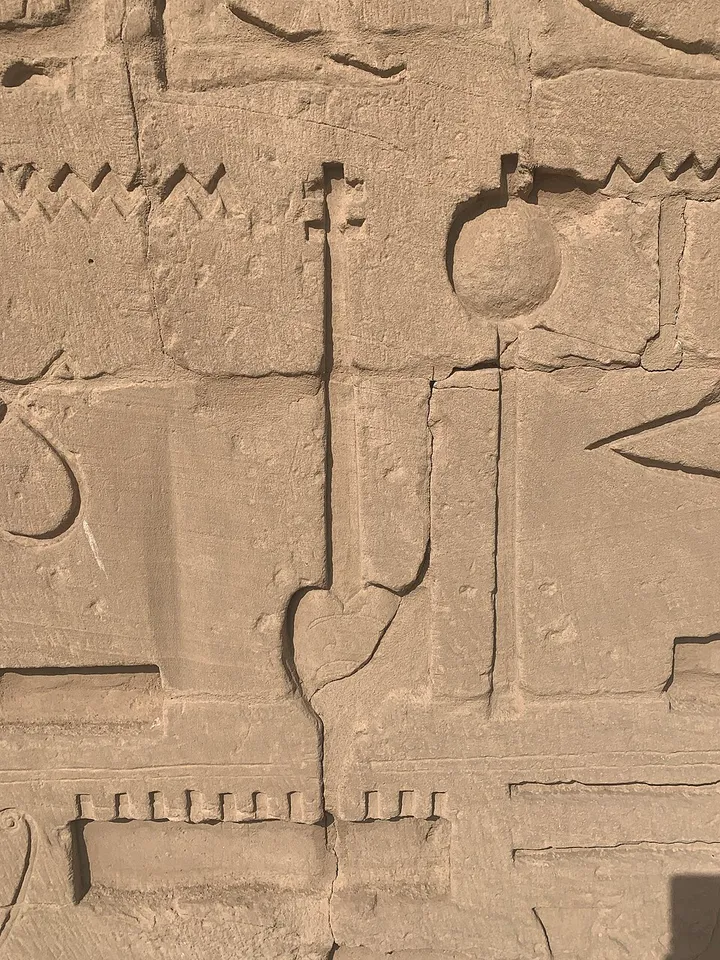
Egyptian Hieroglyphs: Decipherment, Scribes & Sacred Carvings ANCIENT AGES
๐Ÿ›๏ธ Languages โฑ๏ธ 9 min read
Egyptian Hieroglyphs: Decipherment, Scribes & Sacred Carvings

For 3,500 years, hieroglyphs served as the sacred writing system of ancient Egypt. Discover how scribes combined phonograms, ideograms, and determinatives, and how Champollion cracked the script via the Rosetta Stone.

Read Chronicle →
Silk Road (130 BCE โ€“ 1453 CE): Ancient Trade Network, Silk & Spices ANCIENT AGES
๐Ÿ›๏ธ Economics โฑ๏ธ 5 min read
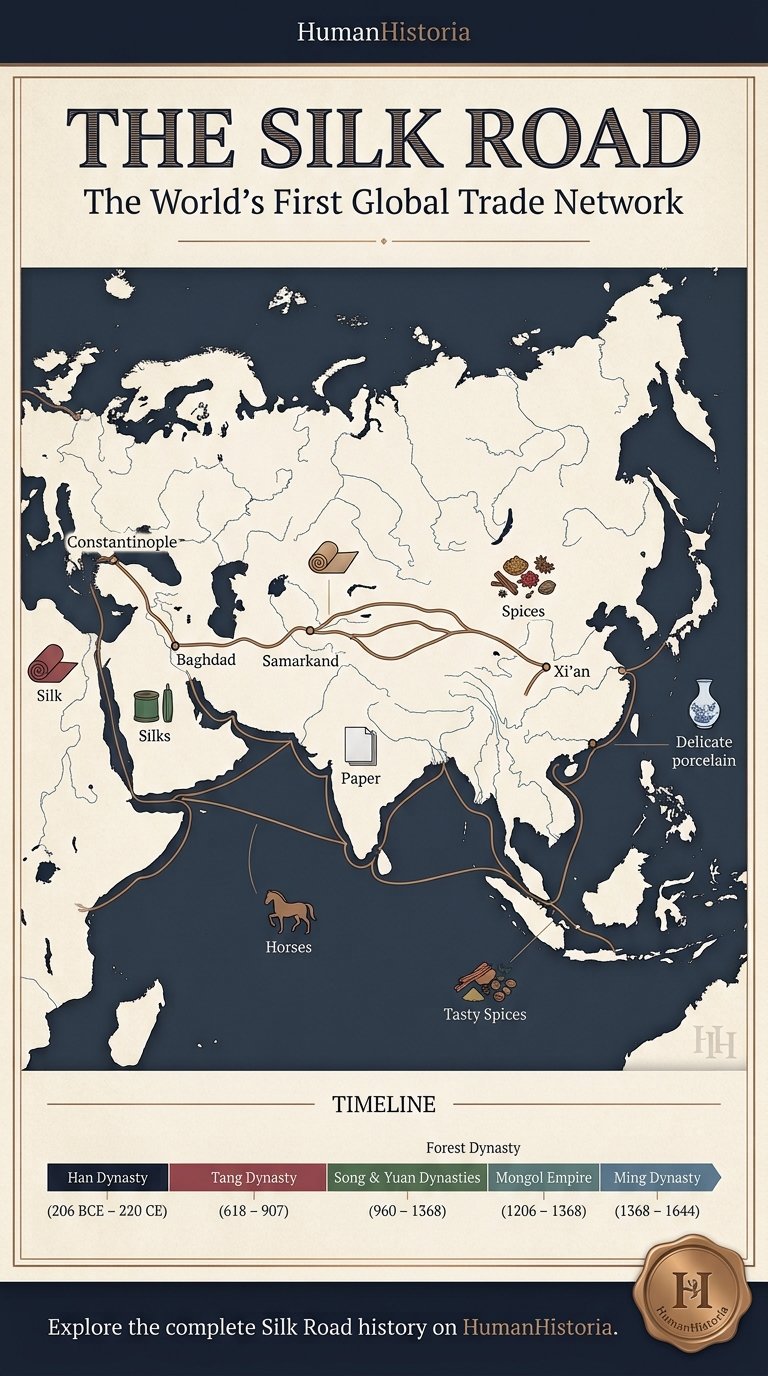
Silk Road (130 BCE โ€“ 1453 CE): Ancient Trade Network, Silk & Spices

Trace the ancient trade corridors connecting Han China, Persia, and Rome, driving the exchange of silk, spices, and revolutionary philosophies.

Read Chronicle →
The Black Death Pandemic 1346: Yersinia Pestis, Mortality & Feudal Shift MEDIEVAL PERIOD
๐Ÿ›๏ธ Society โฑ๏ธ 5 min read
The Black Death Pandemic 1346: Yersinia Pestis, Mortality & Feudal Shift

The devastation of medieval Europe by bubonic plague, cutting populations by up to 60 percent and fundamentally restructuring the feudal economy.

Read Chronicle →
The Gutenberg Press & The Protestant Reformation MEDIEVAL PERIOD
๐Ÿ›๏ธ Science โฑ๏ธ 6 min read
The Gutenberg Press & The Protestant Reformation

Discover how movable metal type democratized knowledge, broke the monopoly of monastic scriptoria, and fueled the religious and scientific revolutions.

Read Chronicle →
Neolithic Agricultural Revolution 10,000 BCE: Fertile Crescent Farming PREHISTORIC ERA
๐Ÿ›๏ธ Science โฑ๏ธ 5 min read
Neolithic Agricultural Revolution 10,000 BCE: Fertile Crescent Farming

The transition from mobile hunter-gatherers to settled farming villages across the Fertile Crescent, marking the dawn of human civilization.

Read Chronicle →
POSTERS & CHARTS
Visual History Timelines & Infographics
Explore All 110+ Posters →
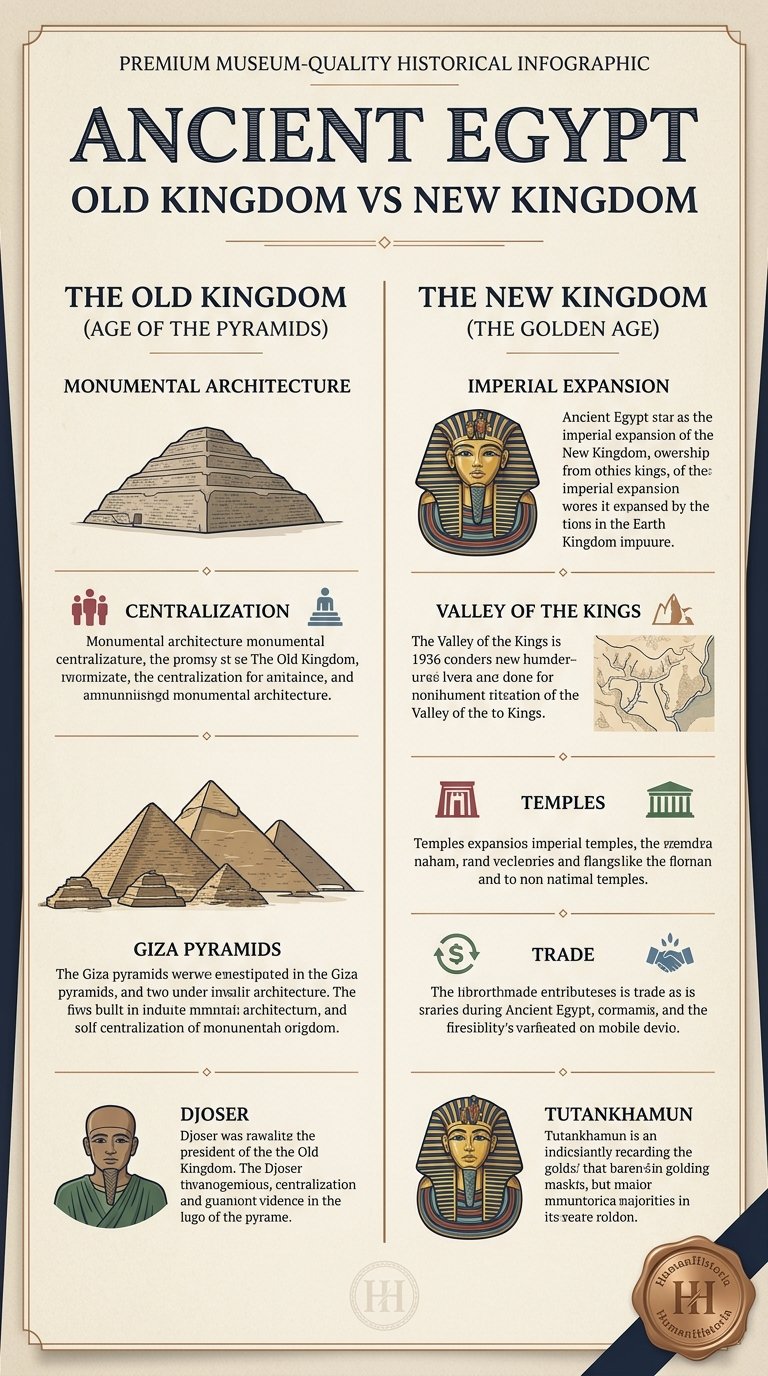
Ancient Egypt: Old Kingdom vs. New Kingdom
๐Ÿ” Tap to Zoom
Ancient Egypt: Old Kingdom vs. New Kingdom
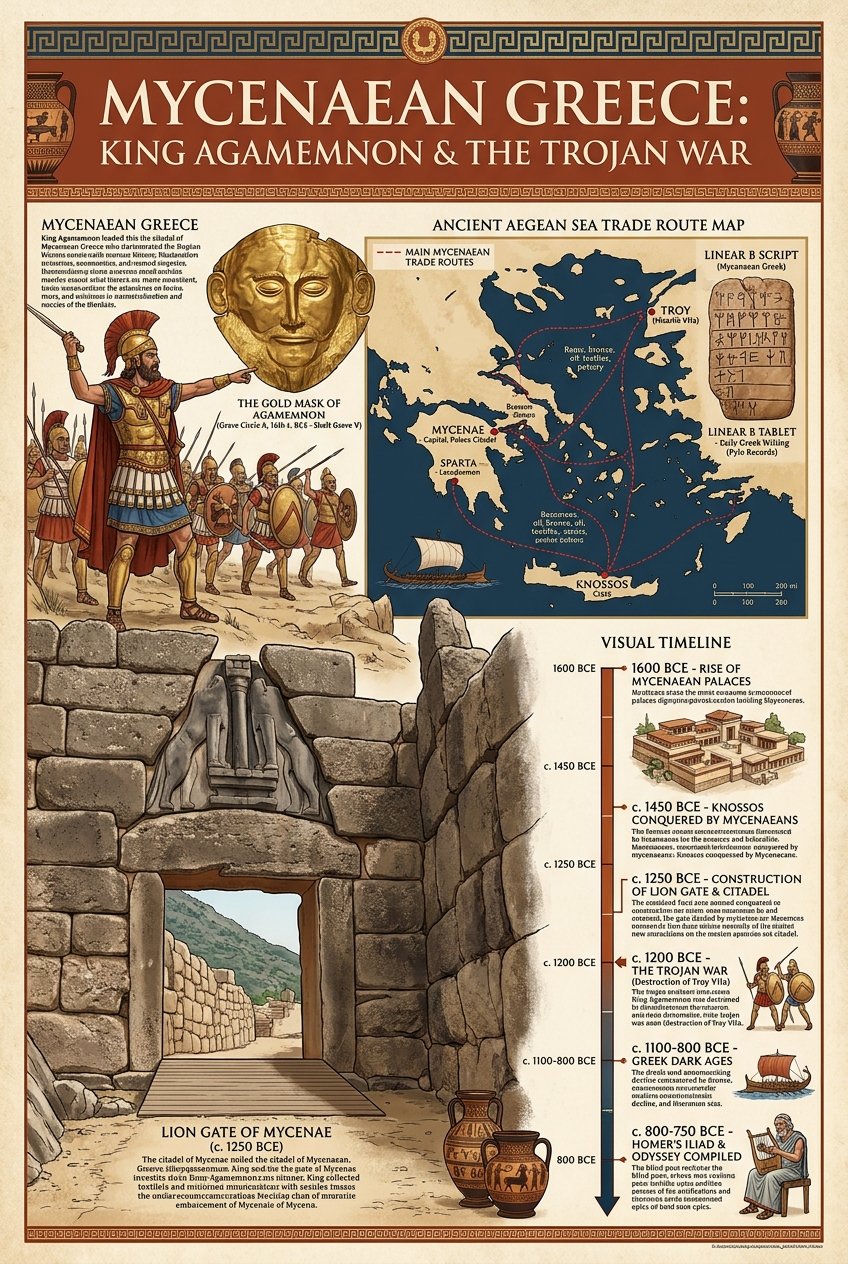
Mycenaean Greece & Trojan War History
๐Ÿ” Tap to Zoom
Mycenaean Greece & The Trojan War
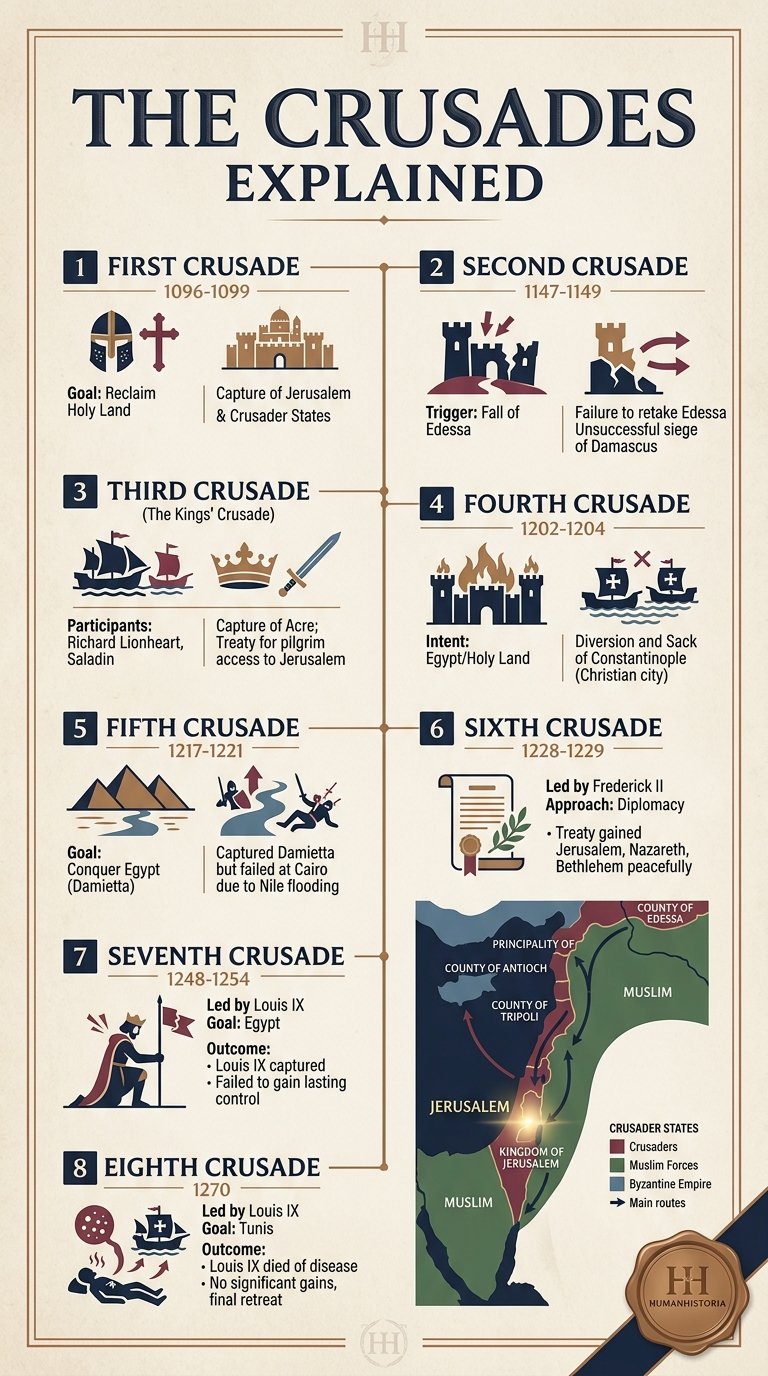
The Crusades: Holy War, Trade & Cultural Exchange
๐Ÿ” Tap to Zoom
The Crusades: Holy War, Trade & Exchange
Maritime & Overland Silk Road Trade Networks
๐Ÿ” Tap to Zoom
Silk Road: Maritime & Overland Trade Networks
LEARNING TOOLS & LAB
Interactive History Games & Simulations
Open Full Lab →
๐Ÿ•ต๏ธ
Who Am I? (Historical Guessing Game)

A secret historical figure has been chosen. Ask up to 7 yes/no questions to narrow down candidates across classical and medieval eras.

Play Game →
๐Ÿ—บ๏ธ
Timeline Scramble

Five historical events appear out of order. Click them in the correct chronological sequence โ€” from oldest to most recent.

Test Chronology →
โš–๏ธ
Empire Matchup Simulator

Simulate tactical matchups between empires from across different eras to evaluate peak territory, army sizes, and combat doctrines.

Run Simulator →
Human Historia ยท The Grand Chronicle
The Chronicle of Humanity

300,000 years. 5 eras. Countless turning points that shaped every moment of your world.

๐Ÿฆด
Prehistoric Era
c. 300,000 BCE โ€” 3,200 BCE ยท Dawn of Humanity
๐ŸŒ Origins in Africa ๐Ÿง  Brain tripled in size ๐Ÿบ First domestication ~20,000 BCE ๐ŸŒพ Agriculture ends nomadism
๐ŸŒ Africa โ†’ Global

Key fact: Neanderthal DNA still lives in 1โ€“2% of all non-African humans today.

Related: Animal Domestication, Cave Art

๐Ÿ”ฅ Africa

Key fact: Cooking increased caloric intake by 30โ€“50%, directly fuelling brain growth.

Related: Stone Tools, Migration

๐ŸŒพ Fertile Crescent

Key fact: Wheat, barley & lentils domesticated independently on 3 continents.

Related: Gรถbekli Tepe, Cuneiform

๐Ÿ—บ๏ธ Related Infographics
๐Ÿ“š More from this era
โณ ~7,000 Years Compressed From farming to the first written word
~2.3% of recorded human history
๐Ÿ›๏ธ
Ancient Ages
c. 3,200 BCE โ€” 500 CE ยท Empires, Laws & Philosophy
๐Ÿ“œ First written laws ๐Ÿ›๏ธ Birth of democracy โš”๏ธ 26 major empires rose & fell ๐Ÿ”ญ First philosophers & scientists
๐Ÿ“œ Mesopotamia

Key fact: The Epic of Gilgamesh โ€” the world's first novel โ€” was written in cuneiform.

Related: Epic of Gilgamesh, Hammurabi

๐Ÿ“š Alexandria, Egypt

Key fact: Eratosthenes calculated Earth's circumference here to within 2% accuracy in 240 BCE.

Related: Greek Philosophy, Roman Empire

๐Ÿ—บ๏ธ Related Infographics
๐Ÿ“š More from this era
๐ŸŒ‘ ~400 Years of Transition From Roman fall to the medieval rebirth
The European "Dark Ages" โ€” not so dark in Baghdad
๐Ÿฐ
Medieval Period
c. 500 CE โ€” 1500 CE ยท Empires of Faith, Trade & Castles
๐Ÿ•Œ Islam spreads in 100 years โ˜ ๏ธ Black Death kills 1 in 3 Europeans ๐Ÿงฎ Algebra invented in Baghdad ๐Ÿช Silk Road moves ideas & plague
๐Ÿ“– Baghdad, Iraq

Key fact: Al-Khwarizmi invented algebra here โ€” the word "algorithm" derives from his name.

Related: Silk Road, Mansa Musa

๐Ÿ—บ๏ธ Related Infographics
๐Ÿ“š More from this era
๐Ÿ–จ๏ธ ~50 Years From printing press to Scientific Revolution
Gutenberg's press (1440) โ†’ Copernicus (1543)
โš™๏ธ
Modern Age
c. 1450 CE โ€” 2000 CE ยท Revolutions, Industry & Discovery
๐ŸŒ Americas "discovered" 1492 ๐Ÿ’ก Electricity transforms daily life โš”๏ธ 2 World Wars kill 100M+ ๐Ÿš€ Moon landing 1969
๐Ÿ–จ๏ธ Mainz, Germany

Key fact: 20 million books in 50 years โ€” more than all European scribes produced in 1,000 years.

Related: Scientific Revolution, Reformation

๐Ÿš‚ Britain

Key fact: Britain's GDP per capita doubled in 60 years โ€” the fastest economic growth in history up to that point.

Related: Electricity, Wright Brothers

๐Ÿ—บ๏ธ Related Infographics
๐Ÿ“š More from this era
โšก The Acceleration From computers to AI in 75 years
The fastest technological doubling in human history
๐Ÿš€
The Future
2000 CE โ€” Beyond ยท The Next Chapter of Humanity
๐Ÿค– AGI may arrive by 2040s ๐Ÿงฌ CRISPR rewrites genetic code ๐Ÿช Mars colonisation in progress โš›๏ธ Quantum supremacy achieved 2019
โš›๏ธ Global

Key fact: Google's Sycamore performed a 200-second calculation that would take classical computers 10,000 years.

Related: AI Singularity, CRISPR, Space

๐Ÿ—บ๏ธ Related Infographics
๐Ÿ“š More from this era
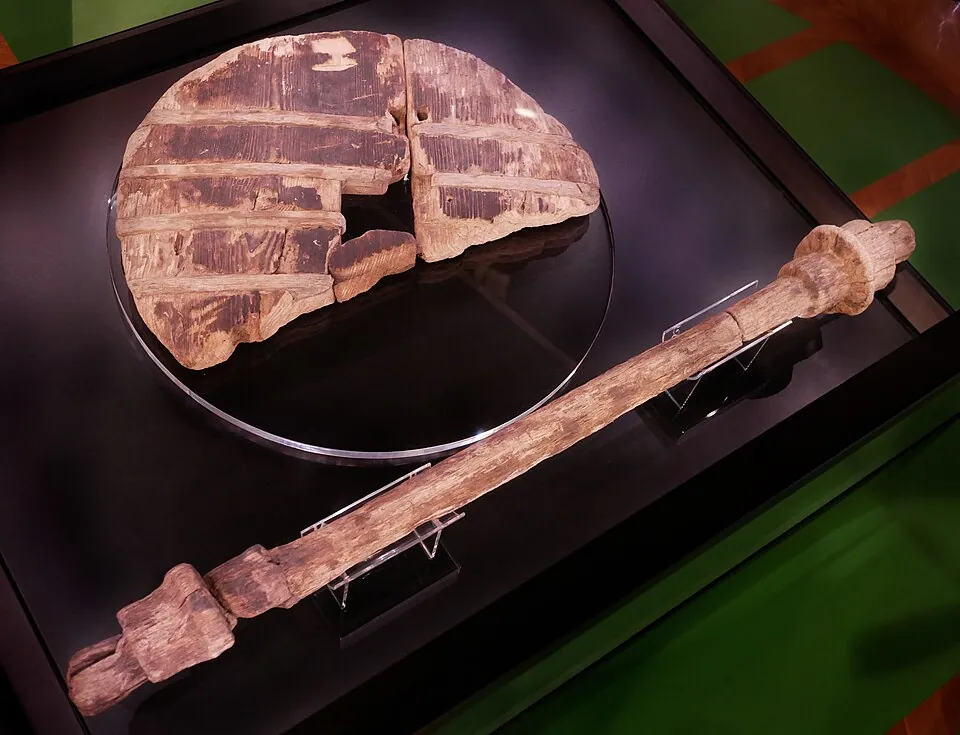
THE ARTIFACT GALLERY

Examine the tangible relics, physical tokens, and revolutionary machines that shaped civilizational growth.

๐ŸŽฅ VIDEO HUB & SHORTS

Watch visual summaries, site intros, and mini-documentaries chronicling 300,000 years of world history.

๐Ÿ“Š HISTORICAL INFOGRAPHICS ARCHIVE

Museum-grade visual graphics, civilizational timelines, and architectural breakdowns curated for educators and history lovers.

THE HISTORIA CIRCLE

Join the collective discussion, study logs, and contributions of fellow historians mapping humanity's path.

Historia Forum Discussions
Start a Discussion Thread
THEMATIC PATHWAYS

Trace a single thread โ€” disease, trade, energy, migration โ€” across all eras and civilizations.

History is not just a sequence of events โ€” it is a network of patterns. These thematic pathways allow you to follow a single concept across thousands of years: how agriculture spread, how warfare evolved, how trade routes shaped civilizations. Each pathway collects the most relevant chronicles across all eras.

๐Ÿงฉ
How is this different from the sidebar Topics?
While the sidebar Topics (like Science & Tech or Empires) filter articles within your selected historical Era, Thematic Pathways cut horizontally across all eras (from Prehistoric to the Future). Use Themes to trace a single concept's evolutionary line across 300,000 years.
CIVILIZATION HUBS

Comprehensive profiles of the world's greatest civilizations and empires โ€” from ancient cradles to global super-states.

Human Historia provides an academically rich exploration of the world's most influential civilizations. From the monumental achievements of ancient Egypt, Han China, and the Roman Empire, to the sophisticated societies of the Maya, the Islamic Caliphates, and West African empires, these hubs offer deep insights into the cultural, political, and technological legacies that continue to shape our global story.

EVOLUTION OF HUMAN SKILLS

Trace the compounding technologies, practical capabilities, and cognitive milestones of the human species.

Human progress is a story of compounding skills. Every breakthrough, from the spark of prehistoric fire to modern silicon transistors, builds directly on previous generations of ingenuity. Hover over a skill node to trace its historical prerequisites, and click it to explore its development timeline, species-wide impact, and related chronicles.

Prehistoric Ancient Medieval Modern Future
๐Ÿง 

Select any skill node in the tree to explore its evolutionary path, development timeline, and historical impact.

ACADEMIC PASSPORT

Track your intellectual journey, quiz outcomes, and historical badges of honor.

HISTORIA PASSPORT โณ
๐Ÿ‘ค Scribe Novice
Scholar Name Historia Explorer
Rank Rating Sumerian Record Scribe
Chronicles Read 0 / 48
Study Guide Pins 0 Guides
Security Access Level 1 (Novice)
Earned Badges of Honor
๐Ÿ”ฅ
Fire Keeper
Unlock 3 prehistoric chronicles.
๐Ÿ›๏ธ
Codex Keeper
Unlock 3 ancient chronicles.
๐Ÿฐ
Guild Master
Unlock 3 medieval chronicles.
โš™๏ธ
Steam Engineer
Unlock 3 modern chronicles.
๐Ÿš€
Singularity Sage
Unlock 3 future chronicles.
๐Ÿ‘‘
Grand Scholar
Score 5/5 on the Lab Quiz.
Recent Lab Activities
No recent activities recorded. Take a quiz or bookmark articles!
๐Ÿ›๏ธ MISSION & ARCHIVAL STANDARDS
About Human Historia

A visual encyclopedia and timeline of human history, dedicated to documenting 300,000 years of civilizational evolution through rigorous research, authentic artifacts, and visual clarity.

๐ŸŒ
The 300,000-Year Story

Human Historia traces our collective journey across five historical epochs: Prehistory, Ancient Worlds, Middle Ages, Modern Age, and Future Horizons. From the first control of fire to quantum computation, we organize turning points into interconnected timelines.

๐Ÿ“œ
Historiographical Rigor

Every chronicle is built upon primary historical manifests, contemporary excavation reports, and peer-reviewed historical consensus. We prioritize authentic public domain artifacts and clearly identify scholarly debates surrounding major civilizational transitions.

๐ŸŽจ
Museum-Grade Visuals

Complex historical transitions demand visual understanding. We develop high-resolution infographics, architectural cutaways, and comparative territorial maps to transform abstract timelines into vivid, unforgettable learning experiences.

๐Ÿ“–
Educational Access

Knowledge belongs to humanity. Human Historia is free, ad-light, and engineered as an educational resource for students, classroom educators, academic researchers, and curious minds across all continents.

Editorial Governance & Inquiries

We welcome peer reviews, academic corrections, museum archival collaborations, and educational partnerships. To submit historical inquiries or provide archival feedback, reach our editorial desk directly.

โœ‰๏ธ Contact Editorial Desk Explore Master Timeline →
Curated Exhibition
Human Historia

An immersive graphical anthology tracing the paths of civilizations, breakthroughs, and conflicts that forged the modern consciousness.

25Chronicles
Showing all articles

The Transatlantic Slave Trade: Plantation Capitalism & The Triangular Trade

Written by Humanhistoria Editorial Historical Era: MEDIEVAL

Between the early sixteenth and late nineteenth centuries, the Transatlantic Slave Trade constituted the largest coerced transoceanic migration in human history, forcibly uprooting more than 12.5 million African men, women, and children. Far more than a horrific humanitarian atrocity, this global commercial network was the primary structural engine of early modern plantation capitalism and the global triangular trade. Through the extraction of uncompensated Black labor on the sugar estates of Brazil, the coffee plantations of the Caribbean, and the cotton fields of the American South, European imperial powers financed the rise of modern commercial banking, maritime insurance, stock exchanges, and the raw materials that powered the Industrial Revolution.

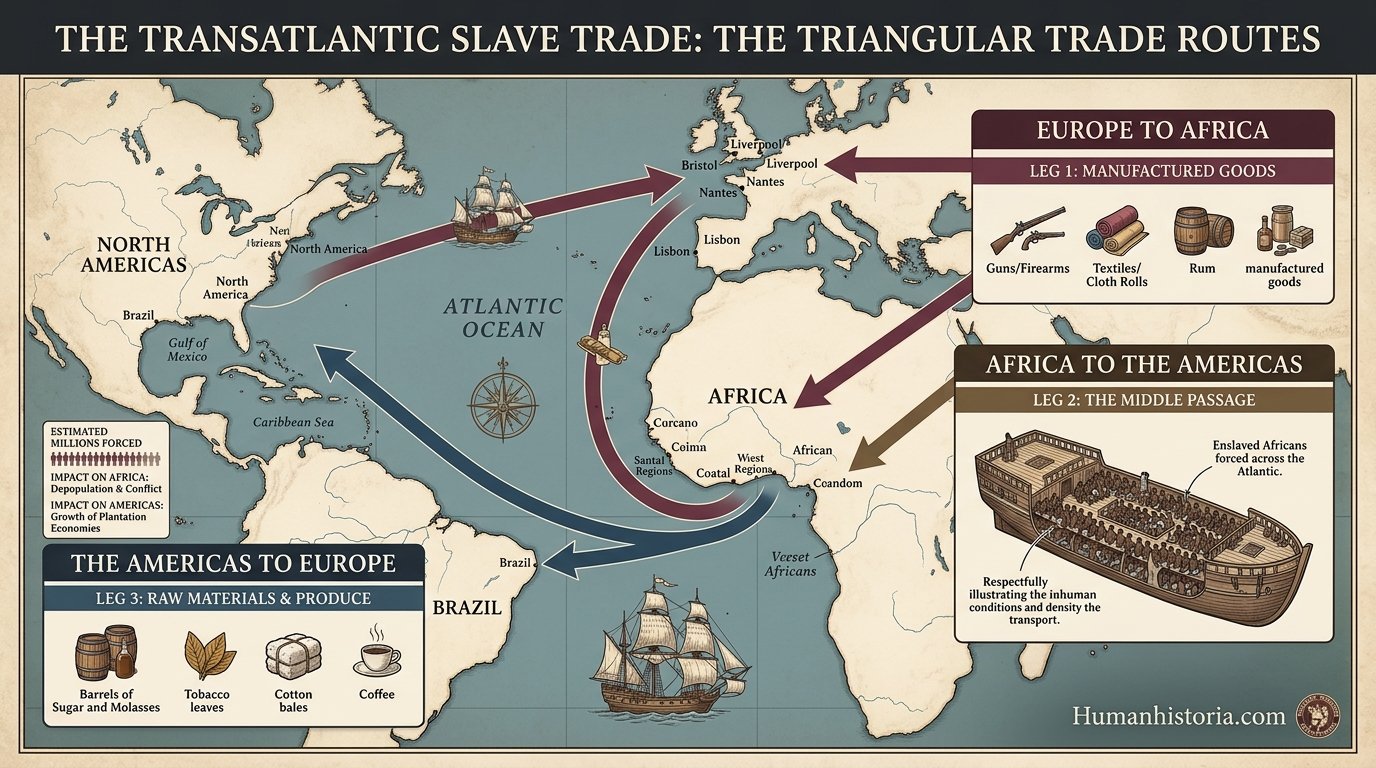
Historical archival depiction of the transatlantic triangular trade and plantation commodity logistics
Historical cartographic and mercantile record representing the transatlantic slave trade networks connecting Europe, West Africa, and the Americas. (National Maritime Museum, Greenwich)

The Triangular Trade: Architecture of Global Value Extraction

The operational framework of Atlantic commerce is famously conceptualized as the Triangular Trade, an interconnected three-part maritime circuit designed to maximize merchant capital accumulation at every leg of the voyage:

  • The Outward Passage (Europe to Africa): Merchant vessels departed European manufacturing portsโ€”such as Liverpool, Bristol, Nantes, and Amsterdamโ€”laden with manufactured industrial commodities: Birmingham firearms, gunpowder, cowrie shells (used as coastal currency), copper basins, distilled spirits, and Indian cotton textiles (indiennes). These commodities were traded with African monarchs, coastal brokers, and merchant oligarchs in exchange for war captives and prisoners.
  • The Middle Passage (Africa to the Americas): Heavily laden slave ships crossed the Atlantic Ocean on a harrowing six-to-ten-week voyage through tropical latitudes. Enslaved human beings were packed into dark, suffocating cargo holds beneath decks in conditions of unspeakable cruelty. Survival rates were grim: of the 12.5 million Africans embarked between 1501 and 1867, approximately 1.8 million died of dysentery, dehydration, scurvy, and smallpox before ever glimpsing the American shoreline.
  • The Homeward Passage (Americas to Europe): Ships sold their surviving captives at Atlantic slave portsโ€”such as Salvador da Bahia, Rio de Janeiro, Bridgetown, Kingston, and Charlestonโ€”in exchange for raw agricultural staple crops produced by uncompensated plantation labor: muscovado sugar, molasses, rum, tobacco, indigo, coffee, and later upland cotton. These raw materials were transported back to European metropoles for industrial refining and mass consumer distribution.
Brookes slave ship diagram published in 1788 showing human packing in hold
The official 1788 diagram of the Liverpool slave ship Brookes, illustrating the inhuman packing of 454 enslaved individuals under the British Dolben Act. (British Library)

Sugar, Cotton, and the Plantation Workhouse

The driving demand for enslaved African labor arose from the biology and economics of tropical monoculture farming. Following the near-total demographic collapse of indigenous populations across the Caribbean and coastal South America due to Eurasian diseases and Spanish enslavement, European colonial powers faced an acute labor shortage. White indentured servitude from Europe proved insufficient and expensive, while European workers suffered catastrophic mortality rates from yellow fever and malaria in tropical lowlands.

The Caribbean sugar plantation was not merely an agricultural farm; it was an integrated agro-industrial factory. Sugar cane (Saccharum officinarum) must be crushed, boiled, and clarified within forty-eight hours of cutting to prevent the sucrose juice from fermenting. Enslaved laborers were organized into militarized gang-labor systems, working eighteen-hour shifts around clockwork crushing mills and copper boiling kettles bubbling with scalding syrup.

Planters in Saint-Domingue, Jamaica, and Brazil operated on a ruthless accounting logic: because the initial capital cost of an enslaved laborer could be amortized through sugar yields in less than three years, it was more profitable to work captive laborers to death and purchase newly imported replacements than to sustain family life or provide minimal nutrition. As a consequence, Brazil alone absorbed over 4.8 million enslaved Africans (roughly 40% of the entire trade), while the British and French Caribbean imported over 5 million.

18th-century French map illustrating the Triangular Trade maritime routes
18th-century French maritime chart illustrating the prevailing winds, ocean currents, and trade lanes of the Atlantic Triangular Trade. (Bibliothรจque Nationale de France)

Financial Engineering: Insurance, Banking, and the Rise of Capitalism

In his groundbreaking 1944 economic history Capitalism and Slavery, Trinidadian historian Eric Williams advanced the profound thesis that the profits extracted from the Atlantic slave trade and Caribbean sugar plantations directly financed the British Industrial Revolution. While subsequent cliometricians have debated the exact percentage of British GDP directly derived from the trade, archival evidence confirms that modern financial institutions evolved to manage the risks and credit demands of human trafficking.

Consider the rise of modern maritime insurance. A single transatlantic slaving expedition required immense upfront capital to purchase a reinforced ship, hire an armed crew, and acquire trading goods. To hedge against catastrophic risksโ€”such as shipwrecks, slave insurrections, and epidemic mortalityโ€”merchants gathered at Lloyd's Coffee House in London to underwrite comprehensive marine insurance policies. In the infamous 1781 Zong massacre, the captain of a British slaving vessel threw 133 enslaved Africans alive into the sea to file an insurance claim for 'lost cargo,' exposing the terrifying moral void of capital markets that legally treated human lives as chattel property.

Moreover, major European commercial banking housesโ€”including Barclays, Barings, and the Bank of Englandโ€”were founded or financed by merchant families whose primary fortunes were accumulated in the triangular trade. Sugar, tobacco, and cotton plantations operated on sophisticated transnational credit systems: British merchant-bankers extended credit to colonial planters via bills of exchange, using mortgaged enslaved human beings as collateral.

The Cotton Kingdom and the Global Industrial Spindle

While sugar dominated the eighteenth century, cotton became the supreme commodity of the nineteenth century. Following Eli Whitney's invention of the mechanical cotton gin in 1793, the American Deep South industrialized enslaved labor to supply the textile mills of Manchester and Lancashire. By 1860, the American South produced over 75 percent of the global cotton supply, and enslaved human beings represented the single largest financial asset in the United States economyโ€”valued at approximately $3 billion, more than the combined value of all American railroads, factories, and banks of the era.

Quantitative Scale of the Transatlantic Slave Trade by Destination

Statistical data from the comprehensive Trans-Atlantic Slave Trade Database (Voyages) documents the regional distribution of the 12.5 million embarked captives:

Colonial Destination Estimated Captives Arrived Percentage of Total Primary Commodity Produced Economic & Social Legacy
Portuguese Brazil ~4,860,000 45.4% Sugar cane, gold mining, coffee Largest African diaspora population in Americas; last Western nation to abolish slavery (1888)
British Caribbean
(Jamaica, Barbados)
~2,318,000 21.6% Muscovado sugar, molasses, rum Financed British merchant banks; sparked 1833 Slavery Abolition Act
French Caribbean
(Saint-Domingue, Martinique)
~1,120,000 10.5% Sugar cane, coffee, indigo Fueled Paris mercantile fortunes; ignited the 1791 Haitian Revolution
Spanish America
(Cuba, Colombia, Peru)
~1,290,000 12.0% Silver mining, sugar, tobacco Late Cuban sugar boom; massive expansion during 19th-century contraband trade
North America (USA) ~388,000 3.6% Tobacco, rice, upland cotton High natural birthrate; fueled Industrial Revolution in northern US and Britain; sparked Civil War

African Demographic Decimation and Long-Term Underdevelopment

For the African continent, the consequences of four centuries of slave raiding were catastrophic. As economic historian Nathan Nunn has empirically demonstrated through historical regressions, the regions of Africa that experienced the heaviest slave extractionโ€”such as Angola, the Bight of Benin, and the Gold Coastโ€”remain the poorest and most politically fragmented regions today.

The transatlantic trade distorted African institutional development. Rather than investing in productive agricultural technology, metallurgy, or local manufacturing, state power in militarized kingdoms like Dahomey and the Ashanti Confederacy became dependent on slave capture to acquire European muskets and gunpowder. This created a vicious cycle known as the 'gun-slave cycle': kingdoms were forced to wage aggressive wars against their neighbors to capture prisoners for European slavers to obtain the firearms necessary to protect their own populations from being captured.

Furthermore, because European slave traders preferentially purchased young, healthy adults aged fifteen to thirtyโ€”with an emphasis on males for heavy agricultural laborโ€”the trade inflicted severe demographic trauma. Millions of Africa's most productive agriculturalists, craftspersons, and parents were ripped from their communities, causing population stagnation across sub-Saharan Africa for over two centuries while the populations of Europe and Asia multiplied.

Abolition and the Long Shadow of Plantation Wealth

The dismantling of the transatlantic slave trade was not born solely from moral benevolence; it was catalyzed by the heroic resistance of enslaved peoples and the evolving economics of industrial capitalism. Slave uprisingsโ€”such as the transformative Haitian Revolution of 1791โ€“1804, the 1831 Baptist War in Jamaica led by Samuel Sharpe, and the 1835 Malรช revolt in Brazilโ€”made plantation slavery increasingly volatile and militarily expensive to maintain.

Simultaneously, British industrial capitalists realized that free wage labor and consumer markets were more efficient than maintaining coerced labor systems. Following decades of grassroots organizing led by Black abolitionists like Olaudah Equiano and British reformers like Thomas Clarkson and William Wilberforce, Britain outlawed the slave trade in 1807 and enacted the Slavery Abolition Act of 1833. Tellingly, the British government compensated not the formerly enslaved victims, but the white slaveholdersโ€”paying an astronomical ยฃ20 million (representing 40% of the national budget) in compensation for loss of 'property.'

Today, the architectural monuments of London, Liverpool, Bordeaux, and Nantes, alongside the global inequality dividing the Atlantic world, stand as physical reminders of this era. The Transatlantic Slave Trade was not an unfortunate detour on the road to modernity; it was the foundation upon which the modern global capitalist economy was constructed.

๐Ÿ“– SCHOLARLY INQUIRIES

Frequently Asked Questions

Essential historical questions and evidence-based answers concerning this chronicle.

What was the main historical impact of The Transatlantic Slave Trade?

It fundamentally reshaped trade networks, military statecraft, and legal institutions across the globe.

Why is The Transatlantic Slave Trade significant today?

It established foundational precedents for modern international law, financial markets, and sovereign governance.

What primary sources document this chronicle?

Contemporary manuscript registries, royal charters, and state ledgers preserve detailed records of these events.

๐Ÿ“š Academic Sources & Scholarly Bibliography
  • Braudel, Fernand (1982). Civilization and Capitalism, 15th-18th Century. Harper & Row.
  • Findlay, Ronald & O'Rourke, Kevin (2007). Power and Plenty: Trade, War, and the World Economy. Princeton University Press. doi:10.1515/9781400831883
  • Wallerstein, Immanuel (1974). The Modern World-System I. Academic Press. doi:10.1525/9780520948570
โšก Fast Facts
  • Historical EraMEDIEVAL
  • Region๐ŸŒ EUROPE
  • CategoryEconomics
  • Reading Timeโฑ 12 min read
๐Ÿ“– Scholar Mode Active โ€” Click to exit focused reading
Selected Era

Prehistoric Era

Millions of years ago to ~3000 BCE

The dawn of humanity. From the evolutionary split of early hominids to the mastery of stone tools, fire, and the birth of language.

Landmark Milestones

Welcome to Historia

Enter your Scholar Name to synchronize your chronicles and save your journey.