>
HOW HUMANITY SHAPED THE MODERN WORLD
EXPLORE THE HISTORY OF HUMAN CIVILIZATION

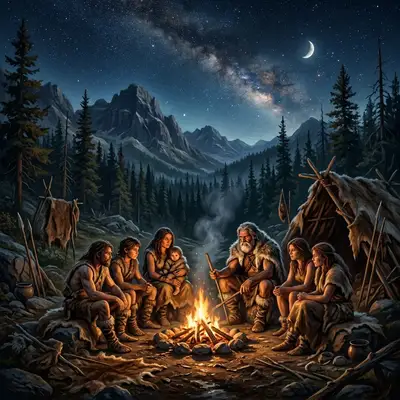
From prehistoric origins to the modern eraโ€”discover the turning points, lost empires, and breakthroughs of world history through interactive timelines and visual guides.
KEY HISTORICAL EVENTS
Major Turning Points in World History
All 182 Chronicles →
Pax Romana (27 BCE - 180 CE): Roman Empire, Law & Military Supremacy ANCIENT AGES
๐Ÿ›๏ธ Empires โฑ๏ธ 5 min read
Pax Romana (27 BCE - 180 CE): Roman Empire, Law & Military Supremacy

Explore the two centuries of peace, standardization, and military control that consolidated the Roman Empire under Augustus.

Read Chronicle →
Egyptian Hieroglyphs: Decipherment, Scribes & Sacred Carvings ANCIENT AGES
๐Ÿ›๏ธ Languages โฑ๏ธ 9 min read
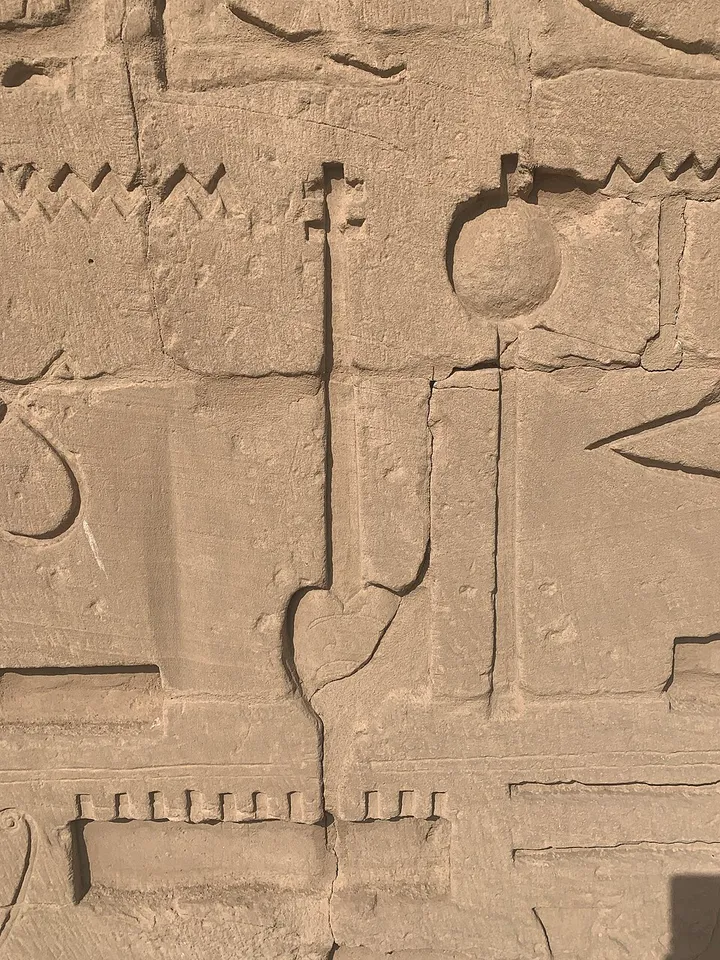
Egyptian Hieroglyphs: Decipherment, Scribes & Sacred Carvings

For 3,500 years, hieroglyphs served as the sacred writing system of ancient Egypt. Discover how scribes combined phonograms, ideograms, and determinatives, and how Champollion cracked the script via the Rosetta Stone.

Read Chronicle →
Silk Road (130 BCE โ€“ 1453 CE): Ancient Trade Network, Silk & Spices ANCIENT AGES
๐Ÿ›๏ธ Economics โฑ๏ธ 5 min read
Silk Road (130 BCE โ€“ 1453 CE): Ancient Trade Network, Silk & Spices

Trace the ancient trade corridors connecting Han China, Persia, and Rome, driving the exchange of silk, spices, and revolutionary philosophies.

Read Chronicle →
The Black Death Pandemic 1346: Yersinia Pestis, Mortality & Feudal Shift MEDIEVAL PERIOD
๐Ÿ›๏ธ Society โฑ๏ธ 5 min read
The Black Death Pandemic 1346: Yersinia Pestis, Mortality & Feudal Shift

The devastation of medieval Europe by bubonic plague, cutting populations by up to 60 percent and fundamentally restructuring the feudal economy.

Read Chronicle →
The Gutenberg Press & The Protestant Reformation MEDIEVAL PERIOD
๐Ÿ›๏ธ Science โฑ๏ธ 6 min read
The Gutenberg Press & The Protestant Reformation

Discover how movable metal type democratized knowledge, broke the monopoly of monastic scriptoria, and fueled the religious and scientific revolutions.

Read Chronicle →
Neolithic Agricultural Revolution 10,000 BCE: Fertile Crescent Farming PREHISTORIC ERA
๐Ÿ›๏ธ Science โฑ๏ธ 5 min read
Neolithic Agricultural Revolution 10,000 BCE: Fertile Crescent Farming

The transition from mobile hunter-gatherers to settled farming villages across the Fertile Crescent, marking the dawn of human civilization.

Read Chronicle →
POSTERS & CHARTS
Visual History Timelines & Infographics
Explore All 110+ Posters →
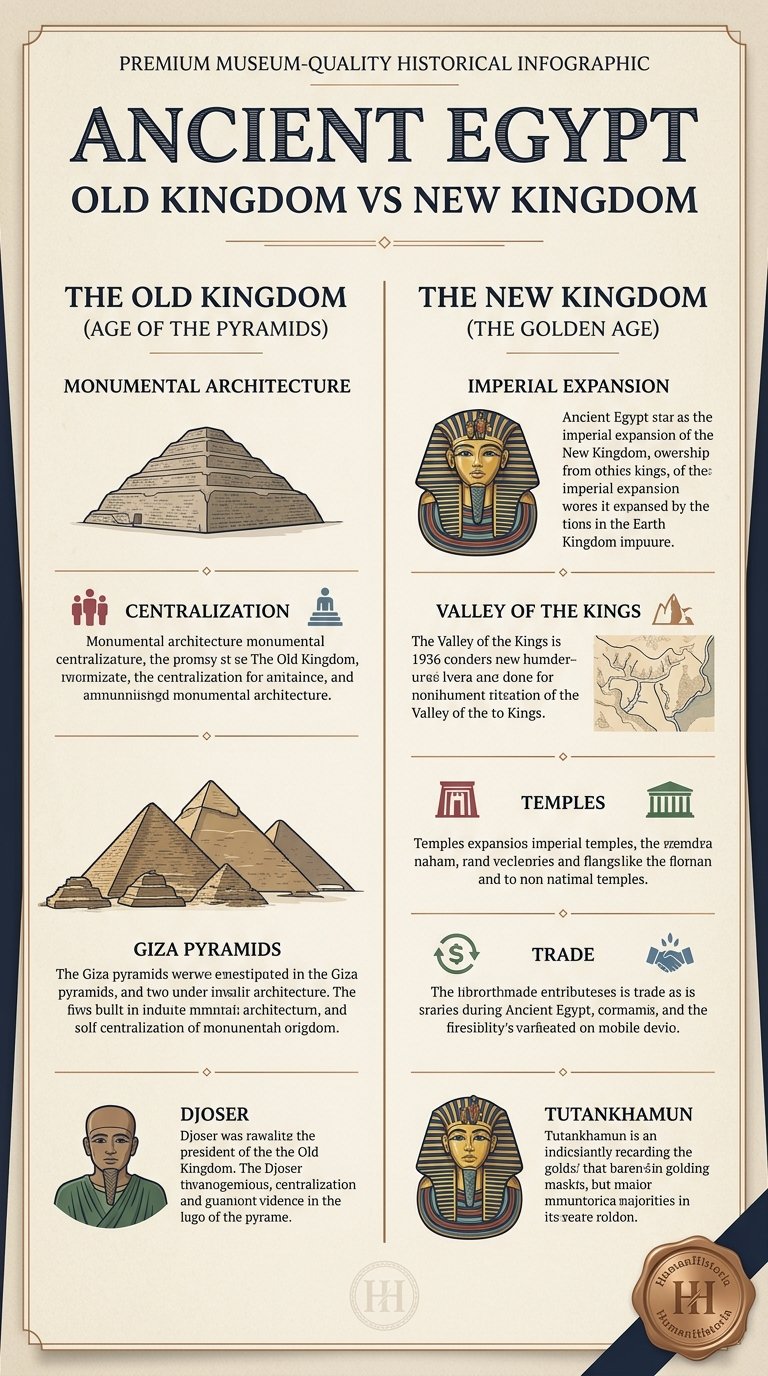
Ancient Egypt: Old Kingdom vs. New Kingdom
๐Ÿ” Tap to Zoom
Ancient Egypt: Old Kingdom vs. New Kingdom
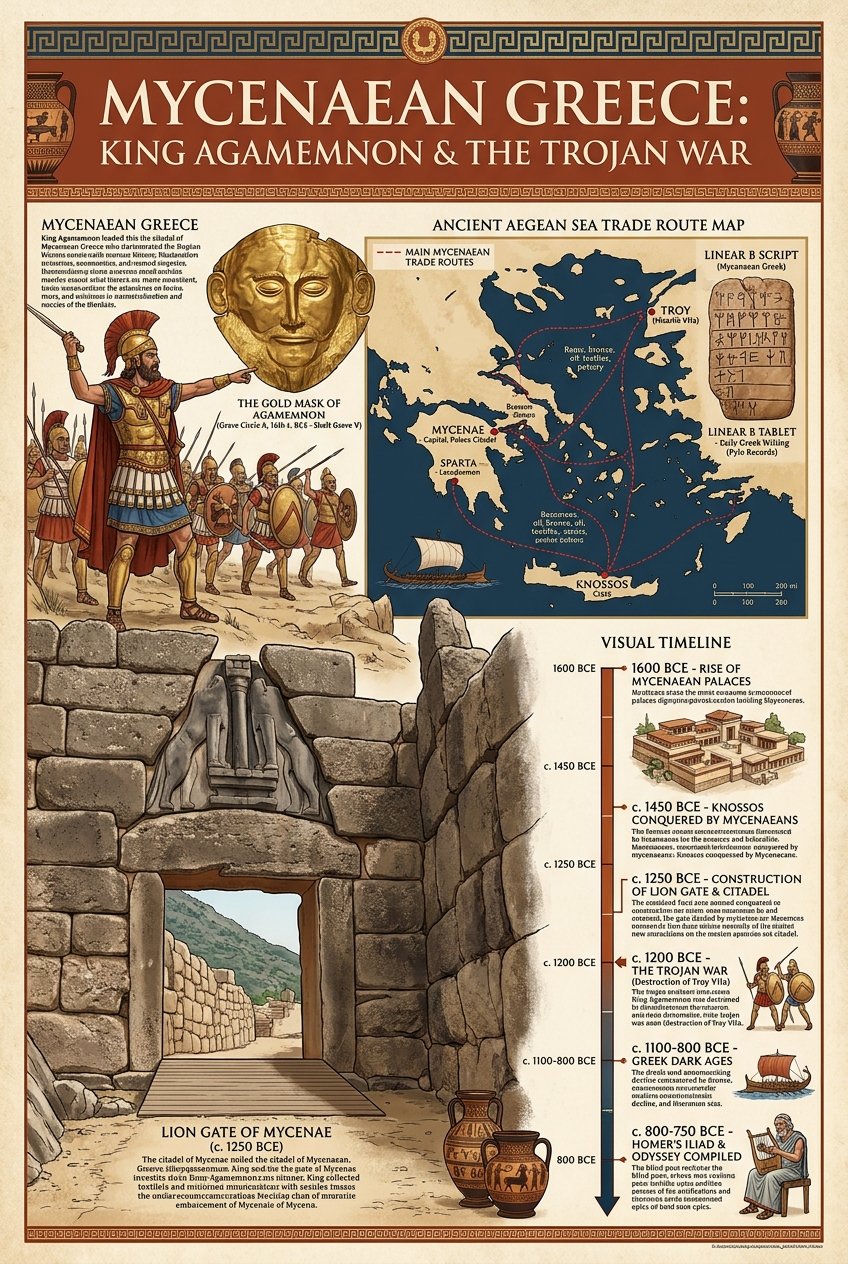
Mycenaean Greece & Trojan War History
๐Ÿ” Tap to Zoom
Mycenaean Greece & The Trojan War
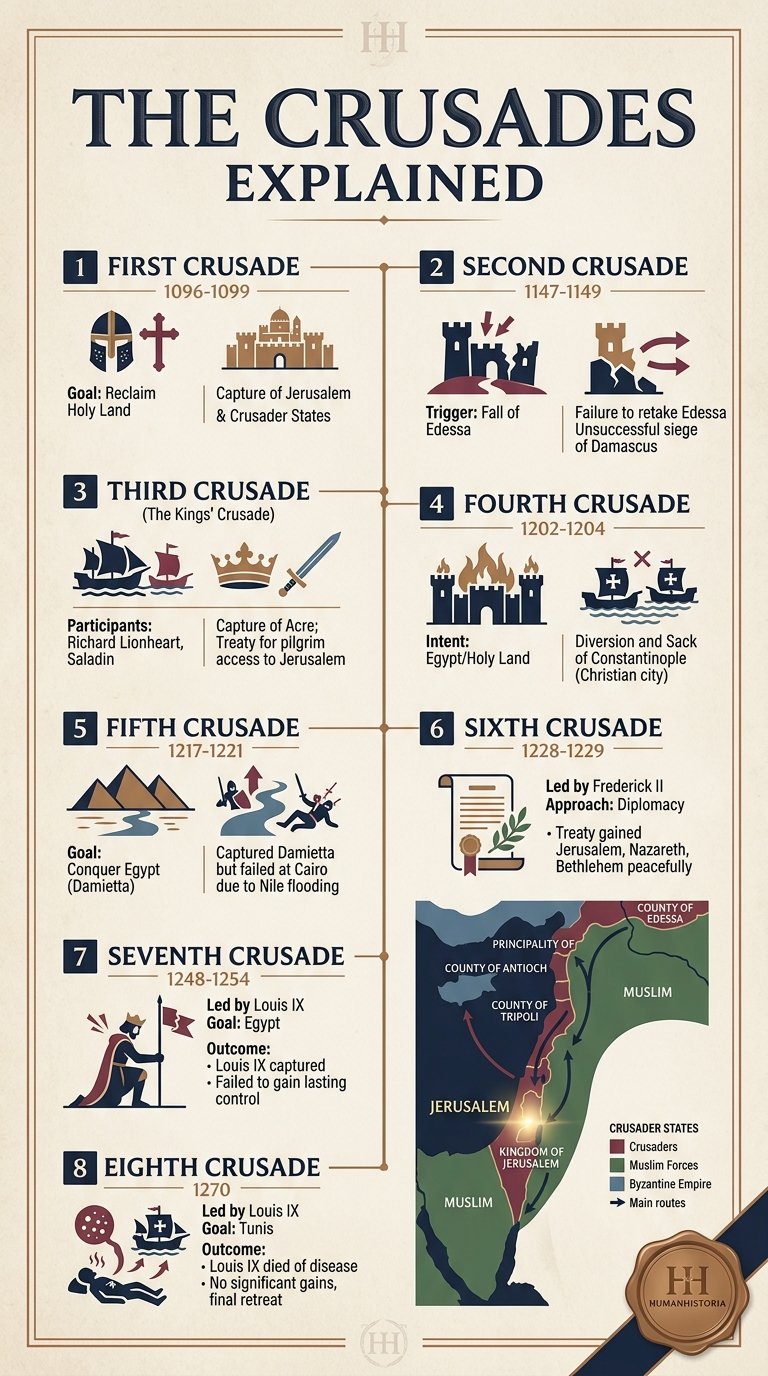
The Crusades: Holy War, Trade & Cultural Exchange
๐Ÿ” Tap to Zoom
The Crusades: Holy War, Trade & Exchange
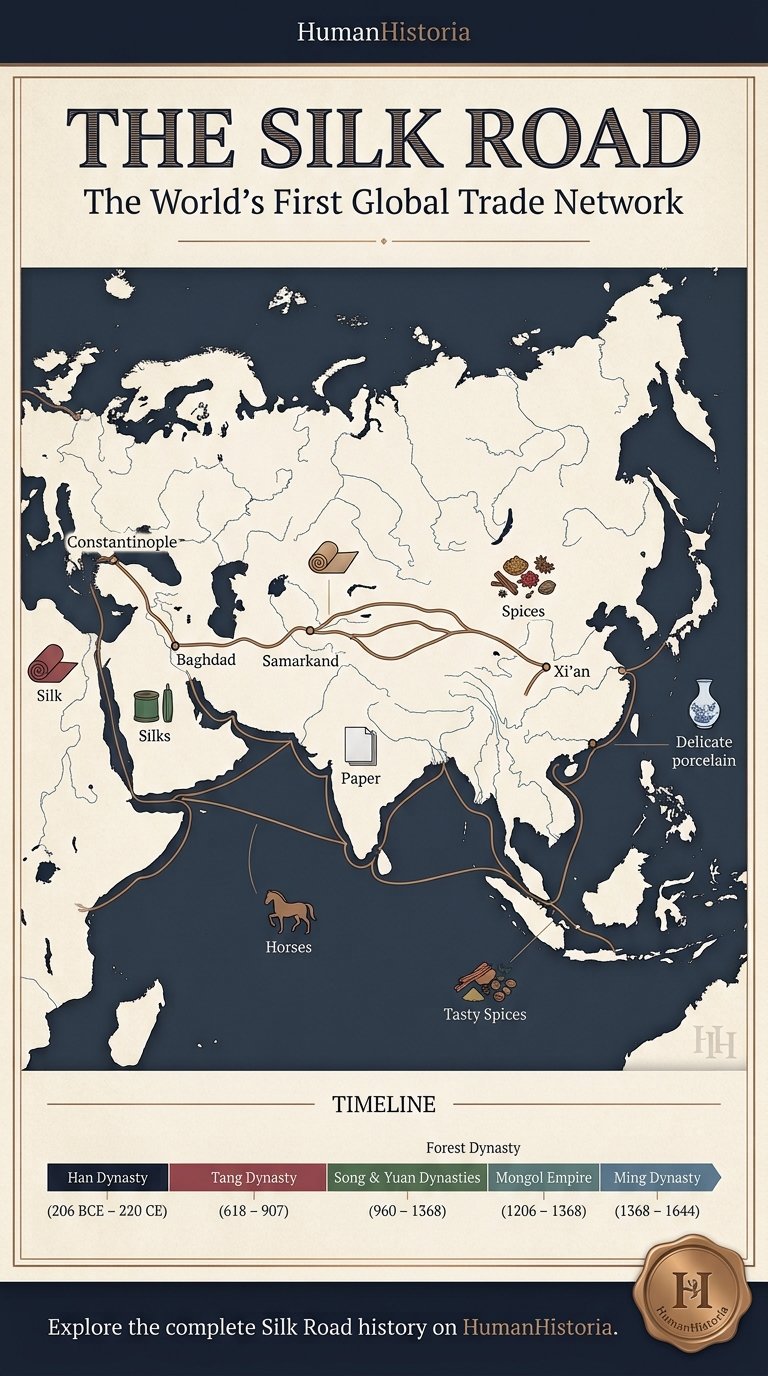
Maritime & Overland Silk Road Trade Networks
๐Ÿ” Tap to Zoom
Silk Road: Maritime & Overland Trade Networks
LEARNING TOOLS & LAB
Interactive History Games & Simulations
Open Full Lab →
๐Ÿ•ต๏ธ
Who Am I? (Historical Guessing Game)

A secret historical figure has been chosen. Ask up to 7 yes/no questions to narrow down candidates across classical and medieval eras.

Play Game →
๐Ÿ—บ๏ธ
Timeline Scramble

Five historical events appear out of order. Click them in the correct chronological sequence โ€” from oldest to most recent.

Test Chronology →
โš–๏ธ
Empire Matchup Simulator

Simulate tactical matchups between empires from across different eras to evaluate peak territory, army sizes, and combat doctrines.

Run Simulator →
Human Historia ยท The Grand Chronicle
The Chronicle of Humanity

300,000 years. 5 eras. Countless turning points that shaped every moment of your world.

๐Ÿฆด
Prehistoric Era
c. 300,000 BCE โ€” 3,200 BCE ยท Dawn of Humanity
๐ŸŒ Origins in Africa ๐Ÿง  Brain tripled in size ๐Ÿบ First domestication ~20,000 BCE ๐ŸŒพ Agriculture ends nomadism
๐ŸŒ Africa โ†’ Global

Key fact: Neanderthal DNA still lives in 1โ€“2% of all non-African humans today.

Related: Animal Domestication, Cave Art

๐Ÿ”ฅ Africa

Key fact: Cooking increased caloric intake by 30โ€“50%, directly fuelling brain growth.

Related: Stone Tools, Migration

๐ŸŒพ Fertile Crescent

Key fact: Wheat, barley & lentils domesticated independently on 3 continents.

Related: Gรถbekli Tepe, Cuneiform

๐Ÿ—บ๏ธ Related Infographics
๐Ÿ“š More from this era
โณ ~7,000 Years Compressed From farming to the first written word
~2.3% of recorded human history
๐Ÿ›๏ธ
Ancient Ages
c. 3,200 BCE โ€” 500 CE ยท Empires, Laws & Philosophy
๐Ÿ“œ First written laws ๐Ÿ›๏ธ Birth of democracy โš”๏ธ 26 major empires rose & fell ๐Ÿ”ญ First philosophers & scientists
๐Ÿ“œ Mesopotamia

Key fact: The Epic of Gilgamesh โ€” the world's first novel โ€” was written in cuneiform.

Related: Epic of Gilgamesh, Hammurabi

๐Ÿ“š Alexandria, Egypt

Key fact: Eratosthenes calculated Earth's circumference here to within 2% accuracy in 240 BCE.

Related: Greek Philosophy, Roman Empire

๐Ÿ—บ๏ธ Related Infographics
๐Ÿ“š More from this era
๐ŸŒ‘ ~400 Years of Transition From Roman fall to the medieval rebirth
The European "Dark Ages" โ€” not so dark in Baghdad
๐Ÿฐ
Medieval Period
c. 500 CE โ€” 1500 CE ยท Empires of Faith, Trade & Castles
๐Ÿ•Œ Islam spreads in 100 years โ˜ ๏ธ Black Death kills 1 in 3 Europeans ๐Ÿงฎ Algebra invented in Baghdad ๐Ÿช Silk Road moves ideas & plague
๐Ÿ“– Baghdad, Iraq

Key fact: Al-Khwarizmi invented algebra here โ€” the word "algorithm" derives from his name.

Related: Silk Road, Mansa Musa

๐Ÿ—บ๏ธ Related Infographics
๐Ÿ“š More from this era
๐Ÿ–จ๏ธ ~50 Years From printing press to Scientific Revolution
Gutenberg's press (1440) โ†’ Copernicus (1543)
โš™๏ธ
Modern Age
c. 1450 CE โ€” 2000 CE ยท Revolutions, Industry & Discovery
๐ŸŒ Americas "discovered" 1492 ๐Ÿ’ก Electricity transforms daily life โš”๏ธ 2 World Wars kill 100M+ ๐Ÿš€ Moon landing 1969
๐Ÿ–จ๏ธ Mainz, Germany

Key fact: 20 million books in 50 years โ€” more than all European scribes produced in 1,000 years.

Related: Scientific Revolution, Reformation

๐Ÿš‚ Britain

Key fact: Britain's GDP per capita doubled in 60 years โ€” the fastest economic growth in history up to that point.

Related: Electricity, Wright Brothers

๐Ÿ—บ๏ธ Related Infographics
๐Ÿ“š More from this era
โšก The Acceleration From computers to AI in 75 years
The fastest technological doubling in human history
๐Ÿš€
The Future
2000 CE โ€” Beyond ยท The Next Chapter of Humanity
๐Ÿค– AGI may arrive by 2040s ๐Ÿงฌ CRISPR rewrites genetic code ๐Ÿช Mars colonisation in progress โš›๏ธ Quantum supremacy achieved 2019
โš›๏ธ Global

Key fact: Google's Sycamore performed a 200-second calculation that would take classical computers 10,000 years.

Related: AI Singularity, CRISPR, Space

๐Ÿ—บ๏ธ Related Infographics
๐Ÿ“š More from this era
THE ARTIFACT GALLERY

Examine the tangible relics, physical tokens, and revolutionary machines that shaped civilizational growth.

๐ŸŽฅ VIDEO HUB & SHORTS

Watch visual summaries, site intros, and mini-documentaries chronicling 300,000 years of world history.

๐Ÿ“Š HISTORICAL INFOGRAPHICS ARCHIVE

Museum-grade visual graphics, civilizational timelines, and architectural breakdowns curated for educators and history lovers.

THE HISTORIA CIRCLE

Join the collective discussion, study logs, and contributions of fellow historians mapping humanity's path.

Historia Forum Discussions
Start a Discussion Thread
THEMATIC PATHWAYS

Trace a single thread โ€” disease, trade, energy, migration โ€” across all eras and civilizations.

History is not just a sequence of events โ€” it is a network of patterns. These thematic pathways allow you to follow a single concept across thousands of years: how agriculture spread, how warfare evolved, how trade routes shaped civilizations. Each pathway collects the most relevant chronicles across all eras.

๐Ÿงฉ
How is this different from the sidebar Topics?
While the sidebar Topics (like Science & Tech or Empires) filter articles within your selected historical Era, Thematic Pathways cut horizontally across all eras (from Prehistoric to the Future). Use Themes to trace a single concept's evolutionary line across 300,000 years.
CIVILIZATION HUBS

Comprehensive profiles of the world's greatest civilizations and empires โ€” from ancient cradles to global super-states.

Human Historia provides an academically rich exploration of the world's most influential civilizations. From the monumental achievements of ancient Egypt, Han China, and the Roman Empire, to the sophisticated societies of the Maya, the Islamic Caliphates, and West African empires, these hubs offer deep insights into the cultural, political, and technological legacies that continue to shape our global story.

EVOLUTION OF HUMAN SKILLS

Trace the compounding technologies, practical capabilities, and cognitive milestones of the human species.

Human progress is a story of compounding skills. Every breakthrough, from the spark of prehistoric fire to modern silicon transistors, builds directly on previous generations of ingenuity. Hover over a skill node to trace its historical prerequisites, and click it to explore its development timeline, species-wide impact, and related chronicles.

Prehistoric Ancient Medieval Modern Future
๐Ÿง 

Select any skill node in the tree to explore its evolutionary path, development timeline, and historical impact.

ACADEMIC PASSPORT

Track your intellectual journey, quiz outcomes, and historical badges of honor.
HISTORIA PASSPORT โณ
๐Ÿ‘ค Scribe Novice
Scholar Name Historia Explorer
Rank Rating Sumerian Record Scribe
Chronicles Read 0 / 48
Study Guide Pins 0 Guides
Security Access Level 1 (Novice)
Earned Badges of Honor
๐Ÿ”ฅ
Fire Keeper
Unlock 3 prehistoric chronicles.
๐Ÿ›๏ธ
Codex Keeper
Unlock 3 ancient chronicles.
๐Ÿฐ
Guild Master
Unlock 3 medieval chronicles.
โš™๏ธ
Steam Engineer
Unlock 3 modern chronicles.
๐Ÿš€
Singularity Sage
Unlock 3 future chronicles.
๐Ÿ‘‘
Grand Scholar
Score 5/5 on the Lab Quiz.
Recent Lab Activities
No recent activities recorded. Take a quiz or bookmark articles!
๐Ÿ›๏ธ MISSION & ARCHIVAL STANDARDS
About Human Historia

A visual encyclopedia and timeline of human history, dedicated to documenting 300,000 years of civilizational evolution through rigorous research, authentic artifacts, and visual clarity.

๐ŸŒ
The 300,000-Year Story

Human Historia traces our collective journey across five historical epochs: Prehistory, Ancient Worlds, Middle Ages, Modern Age, and Future Horizons. From the first control of fire to quantum computation, we organize turning points into interconnected timelines.

๐Ÿ“œ
Historiographical Rigor

Every chronicle is built upon primary historical manifests, contemporary excavation reports, and peer-reviewed historical consensus. We prioritize authentic public domain artifacts and clearly identify scholarly debates surrounding major civilizational transitions.

๐ŸŽจ
Museum-Grade Visuals

Complex historical transitions demand visual understanding. We develop high-resolution infographics, architectural cutaways, and comparative territorial maps to transform abstract timelines into vivid, unforgettable learning experiences.

๐Ÿ“–
Educational Access

Knowledge belongs to humanity. Human Historia is free, ad-light, and engineered as an educational resource for students, classroom educators, academic researchers, and curious minds across all continents.

Editorial Governance & Inquiries

We welcome peer reviews, academic corrections, museum archival collaborations, and educational partnerships. To submit historical inquiries or provide archival feedback, reach our editorial desk directly.

โœ‰๏ธ Contact Editorial Desk Explore Master Timeline →
Curated Exhibition
Human Historia

An immersive graphical anthology tracing the paths of civilizations, breakthroughs, and conflicts that forged the modern consciousness.

25Chronicles
Showing all articles

The Kalinga War: Ashoka, the Mauryan Empire & the Path to Non-Violence

Written by Humanhistoria Editorial Historical Era: ANCIENT

The Kalinga War (261 BCE), fought along the banks of the Daya River in modern-day Odisha, India, stands as one of the most consequential turning points in ancient world history. Waged by Ashoka the Great (also spelled Asoka), the third emperor of the Mauryan Empire, the conflict resulted in the slaughter of over 100,000 soldiers, the forced exile of 150,000 civilians, and catastrophic regional devastation. Yet, in an unprecedented historical transformation, the sight of the blood-drenched battlefield moved Emperor Ashoka to profound remorse. He renounced military conquest (Digvijaya), embraced Buddhist moral ethics (Dharmavijaya), and codified principles of religious tolerance, animal welfare, and universal compassion across monumental stone pillars throughout the Indian subcontinent.

Dhauli Ashoka Rock Edict elephant
The carved elephant above the Major Rock Edicts of Ashoka at Dhauli, Odisha, marking the site of the Kalinga battlefield and Ashoka's moral awakening. .

Ashoka and the Mauryan Empire: The Third Emperor

The Mauryan Empire (322โ€“185 BCE) was the first centralized state to unify almost the entire Indian subcontinent. Founded by Ashoka's grandfather, Chandragupta Maurya, and guided by the political strategist Kautilya (Chanakya), author of the Arthashastra, the Mauryan dynasty established an administrative apparatus of immense sophistication. The empire expanded further under Ashoka's father, Bindusara, who consolidated territory stretching from modern-day Afghanistan to the Deccan Plateau.

Where did Ashoka live and rule? Ashoka governed from the imperial capital of Pataliputra (modern-day Patna in Bihar), a fortified metropolis along the confluence of the Ganges and Son rivers described by the Greek ambassador Megasthenes as having 64 gates and 570 defensive towers. Ashoka ascended the throne around 268 BCE as the third Mauryan emperor following a fierce four-year succession struggle among royal princes. Initially known as Chandashoka ("Ashoka the Fierce"), he was renowned for ruthlessness and administrative discipline, maintaining imperial palaces, royal spy networks, and provincial governors across Taxila, Ujjain, and Tosali.

Why the Kalinga War Happened: Geopolitics and Maritime Routes

Kalinga, an independent, wealthy seafaring kingdom along the Bay of Bengal (modern Odisha and northern Andhra Pradesh), posed a strategic challenge to the Mauryan hegemony. Kalinga controlled vital maritime trade corridors to Southeast Asia (Sri Lanka, Burma, and the Indonesian archipelago) and key overland arteries connecting the Ganges basin to southern India.

Chandragupta Maurya had earlier refrained from conquering Kalinga, and under Bindusara the republic retained its independence. However, for Ashoka, a sovereign enclave right along his eastern flank was unacceptable. In 261 BCE, in the eighth year of his reign, Ashoka mobilized the massive Mauryan imperial armyโ€”comprising hundreds of thousands of infantry, cavalry, and armored war elephantsโ€”and invaded Kalinga.

The Battle of Kalinga: Carnage, Remorse, and Spiritual Conversion

The people of Kalinga mounted fierce resistance against the Mauryan forces, culminating in a climactic battle fought near the Dhauli hills along the Daya River. Legend records that the river turned crimson with the blood of the fallen. Over 100,000 soldiers perished in combat, 150,000 civilians and soldiers were taken captive and deported as forced labor, and countless more perished from pestilence and starvation in the war's aftermath.

Surveying the sheer human suffering, Ashoka experienced an overwhelming existential crisis and deep spiritual revulsion. Unlike other ancient conquerors who celebrated carnage on victory stelae, Ashoka documented his guilt and grief openly. Influenced by Buddhist monks, most notably Upagupta, Ashoka adopted the teachings of Siddhartha Gautama (Buddhism) and made an unprecedented royal vow: imperial expansion would no longer be achieved through bloodshed (Bherighosha, the sound of the war drum), but through the dissemination of righteous conduct (Dharmaghosha, the sound of the moral law).

Major Achievements of Emperor Ashoka

Ashoka's post-Kalinga reign is widely celebrated as one of the golden ages of Indian civilization. His defining achievements transformed ethics, administration, and regional architecture:

  • The Edicts of Ashoka: Commissioned across rocks and 40-to-50-foot polished sandstone pillars throughout India, Pakistan, Nepal, and Afghanistan, written in Prakrit (Brahmi and Kharosthi scripts), Greek, and Aramaic. They remain the oldest decipherable historical inscriptions in South Asian history.
  • Codification of Dhamma: Promoted universal ethical principles: obedience to parents, generosity toward ascetics and Brahmins, humane treatment of servants and prisoners, and non-injury to all living creatures (Ahimsa).
  • Public Welfare & Healthcare Infrastructure: Built free botanical gardens, imported medicinal herbs, established veterinary hospitals (the world's first recorded animal hospitals), dug roadside wells, and planted shade-giving banyan trees every half-mile along trade routes.
  • Global Dissemination of Buddhism: Convened the Third Buddhist Council at Pataliputra (c. 250 BCE) to standardize Buddhist scriptures, and dispatched diplomatic missionaries (Dharmamahamatras) to Sri Lanka (led by his son Mahendra and daughter Sanghamitra), Burma, Hellenistic Greece (Ptolemaic Egypt, Syria, Macedonia, and Cyrene).
  • Monumental Architecture: Commissioned the construction of 84,000 stupas across the empire, including the core of the Great Stupa at Sanchi and the Mahabodhi Temple at Bodh Gaya.
โš–๏ธ

Historical DBQ Debate: Was Ashoka a Ruthless Conqueror or an Enlightened Ruler?

Perspective A: The Pragmatic Imperial Conqueror

Historians examining the political realism of the Mauryan state point out that Ashoka never disbanded his standing army after Kalinga, nor did he return the annexed territory of Kalinga to its surviving population. In his Rock Edicts, Ashoka explicitly warned rebellious forest tribes (Atavikas) that despite his peaceful demeanor, the emperor possessed the military power to punish and execute them if they disrupted imperial order. From this perspective, Ashoka's adoption of Dhamma was a masterstroke of imperial statecraftโ€”a unifying civil religion designed to pacify a multi-ethnic, multi-religious empire without the unsustainable economic cost of perpetual warfare.

Perspective B: The Genuinely Enlightened Moral Monarch

Conversely, scholars such as Romila Thapar and Vincent Smith emphasize that no other monarch in world antiquity ever publicly confessed personal remorse for an imperial victory or dedicated immense state treasury revenues to public healthcare, tree-planting, and universal welfare. Ashoka fundamentally dismantled royal hunting expeditions, banned animal sacrifices at royal banquets, and appointed specialized ministers (Dhamma-Mahamatras) specifically tasked with ensuring humane treatment for prisoners, orphans, and the elderly regardless of caste or creed.

Scholars analyze both perspectives by comparing Ashoka's Major Rock Edicts (particularly Edicts XIII and VII) against the realpolitik principles found in Kautilya's Arthashastra.

"Beloved-of-the-Gods, King Piyadasi, conquered the Kalingas eight years after his coronation. One hundred and fifty thousand were deported, one hundred thousand were killed, and many times that number perished from other causes... Now it is repentance that Beloved-of-the-Gods feels on conquering Kalinga, for when an independent country is conquered the slaughter, death and deportation of the people is extremely grievous to Beloved-of-the-Gods... Even one who does wrong should be forgiven, so far as he can be forgiven."

โ€” Ashoka the Great, Major Rock Edict XIII (c. 256 BCE), carved onto cliff faces at Girnar, Kalsi, and Shahbazgarhi.
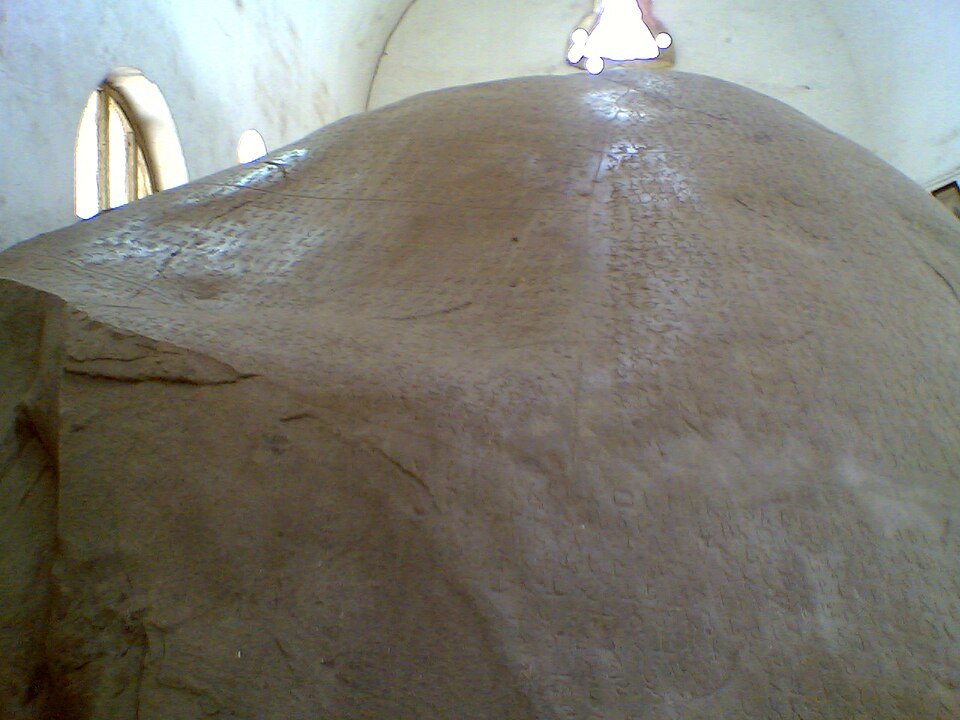
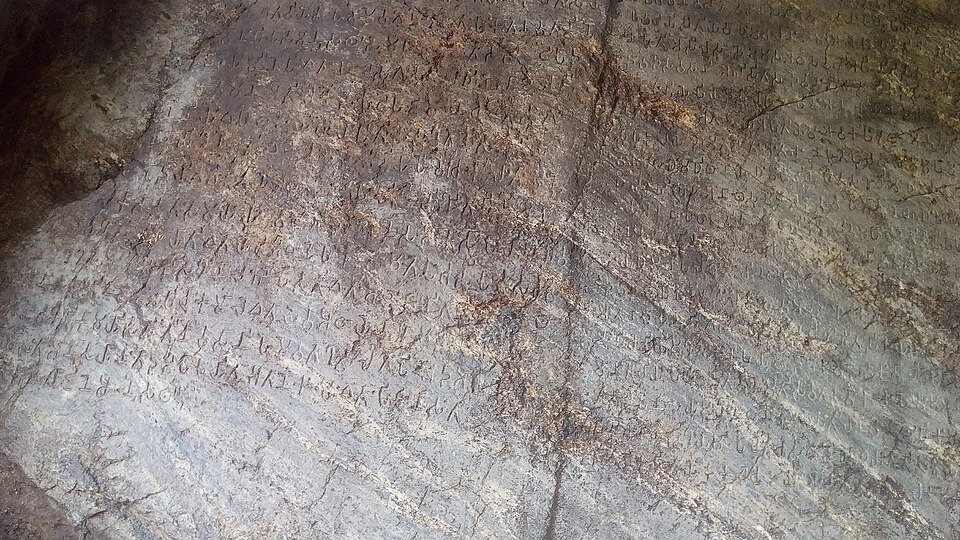
Ashoka inscription Brahmi script
Brahmi characters carved on the pillars of Ashoka, deciphered by James Prinsep in 1837, revealing the true identity of "Devanampiya Piyadasi" as Emperor Ashoka. (British Museum)
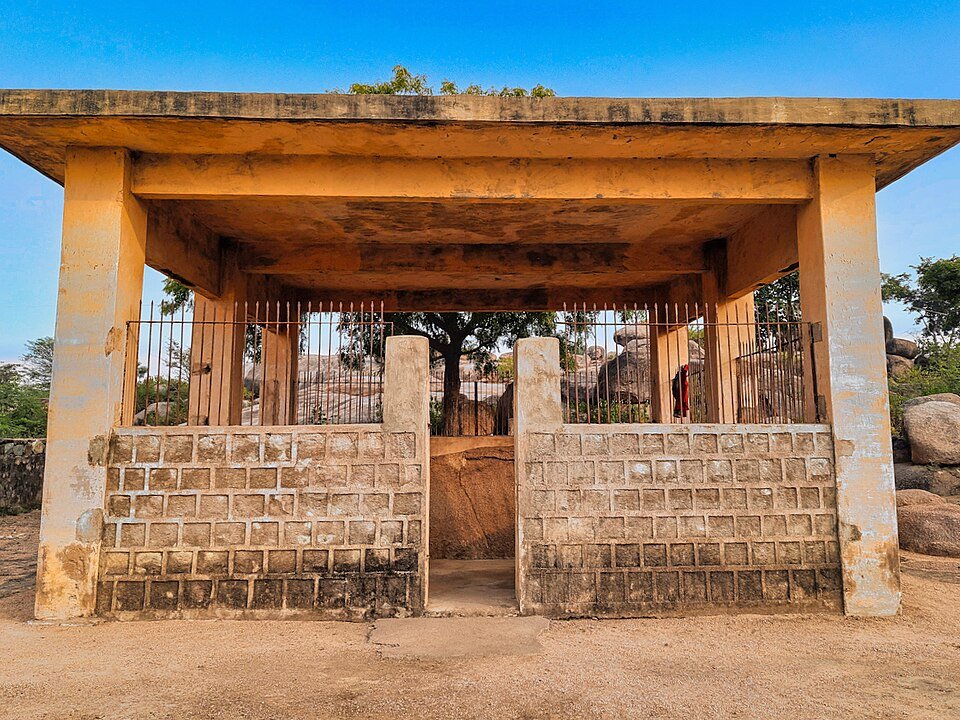
Ashoka Rock Edict Girnar
The massive granite rock face at Junagadh, Girnar, Gujarat, inscribed with fourteen Major Rock Edicts of Emperor Ashoka. .

Long-Term Legacy & Modern National Symbols

The institutional legacy of the Kalinga War altered the religious landscape of Asia. By converting a regional monastic community into a pan-Asian world religion, Ashoka's patronage enabled Buddhism to flourish along the Silk Road, in Sri Lanka, and throughout East Asia.

In modern times, when independent India adopted its national symbols in 1947โ€“1950, it turned directly to Ashoka's monuments: the Lion Capital of Ashoka from Sarnath was chosen as the official State Emblem of India, and the 24-spoke Ashoka Chakra (the Wheel of Moral Law) was placed at the center of the National Flag of India, standing as a permanent testament to an ancient conqueror who chose righteousness over conquest.

๐Ÿ“– SCHOLARLY INQUIRIES

Frequently Asked Questions

Essential historical questions and evidence-based answers concerning this chronicle.

Why is The Kalinga War significant in world history?

The Kalinga War played a pivotal role by transforming technology, social structure, and regional connection, serving as a vital link in human civilization.

Why was the Kalinga War significant?

The Kalinga War (c. 261 BCE) was one of the deadliest battles in ancient Indian history, causing Ashoka intense remorse and triggering his conversion from military conqueror to Buddhist patron.

What were the Rock and Pillar Edicts of Ashoka?

They were 33 inscriptions carved on sandstone pillars and cliff faces across modern India, Pakistan, and Afghanistan, promoting religious tolerance, animal welfare, and moral duty (Dhamma).

How did Ashoka spread Buddhism internationally?

Ashoka dispatched Buddhist ambassadors and missionaries, including his children Mahindra and Sanghamitta, to Sri Lanka, Greece, Syria, and Southeast Asia.

๐Ÿ“š Academic Sources & Scholarly Bibliography
  • Thapar, R. (1997). Asoka and the Decline of the Mauryas. Oxford University Press.
  • Dhammika, S. (1993). The Edicts of King Asoka. Buddhist Publication Society.
  • Lahiri, N. (2015). Ashoka in Ancient India. Harvard University Press.
โšก Fast Facts
  • Historical EraANCIENT
  • Region๐ŸŒ SOUTH ASIA
  • CategoryEmpires
  • Reading Timeโฑ 10 min read
๐Ÿ“– Scholar Mode Active โ€” Click to exit focused reading
Selected Era

Prehistoric Era

Millions of years ago to ~3000 BCE

The dawn of humanity. From the evolutionary split of early hominids to the mastery of stone tools, fire, and the birth of language.

Landmark Milestones

Welcome to Historia

Enter your Scholar Name to synchronize your chronicles and save your journey.