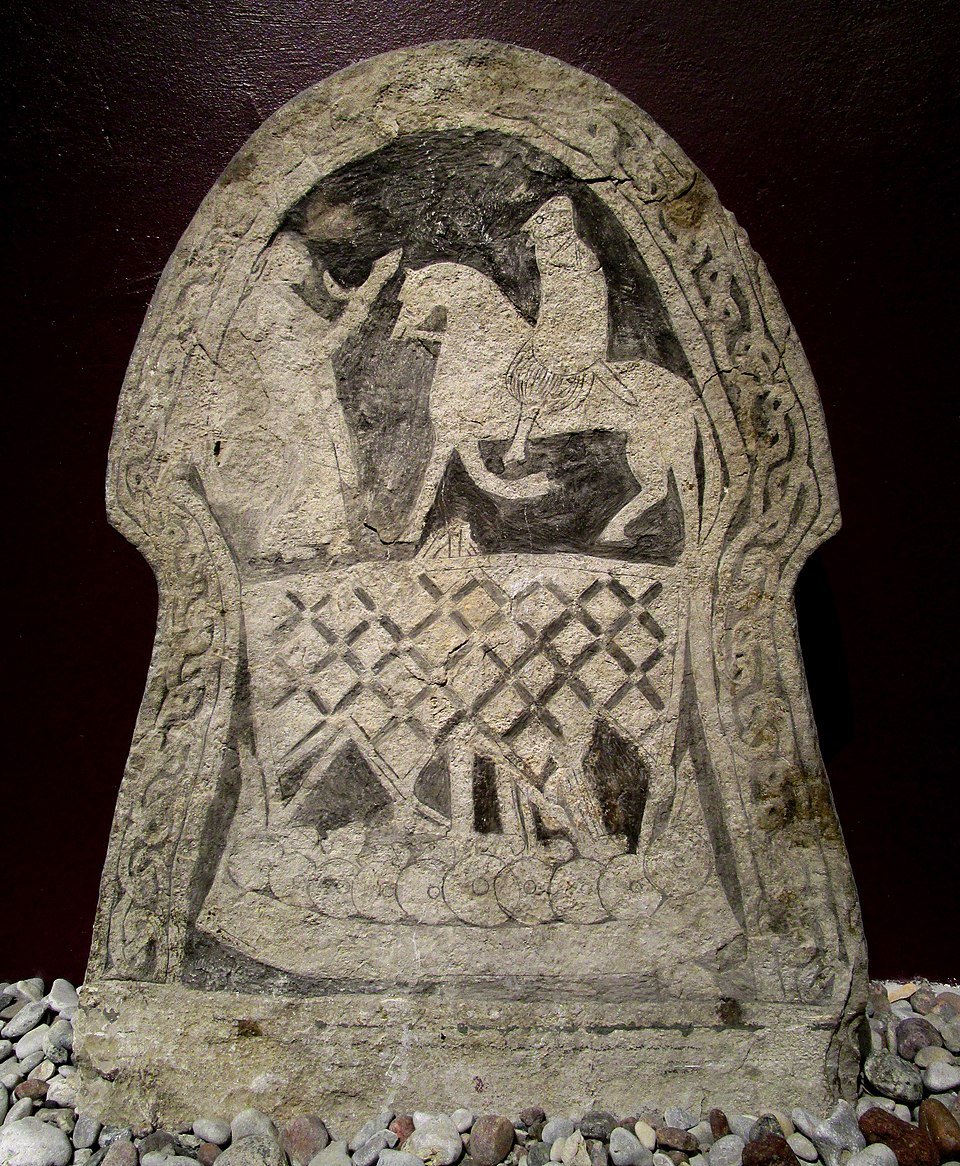
~7,000 Years from farming to writing
๐Ÿ›๏ธ

Ancient Ages

c. 3,200 BCE โ€” 500 CE ยท Empires, Laws & Philosophy
~400 Years from Roman fall to medieval rebirth
๐Ÿฐ

Medieval Period

c. 500 CE โ€” 1500 CE ยท Empires of Faith, Trade & Castles
~50 Years from printing press to Scientific Revolution
โš™๏ธ

Modern Age

c. 1450 CE โ€” 2000 CE ยท Revolutions, Industry & Discovery
~50 Years from computers to quantum age

THE ARTIFACT GALLERY

Examine the tangible relics, physical tokens, and revolutionary machines that shaped civilizational growth.

๐ŸŽฅ VIDEO HUB & SHORTS

Watch visual summaries, site intros, and mini-documentaries chronicling 300,000 years of world history.

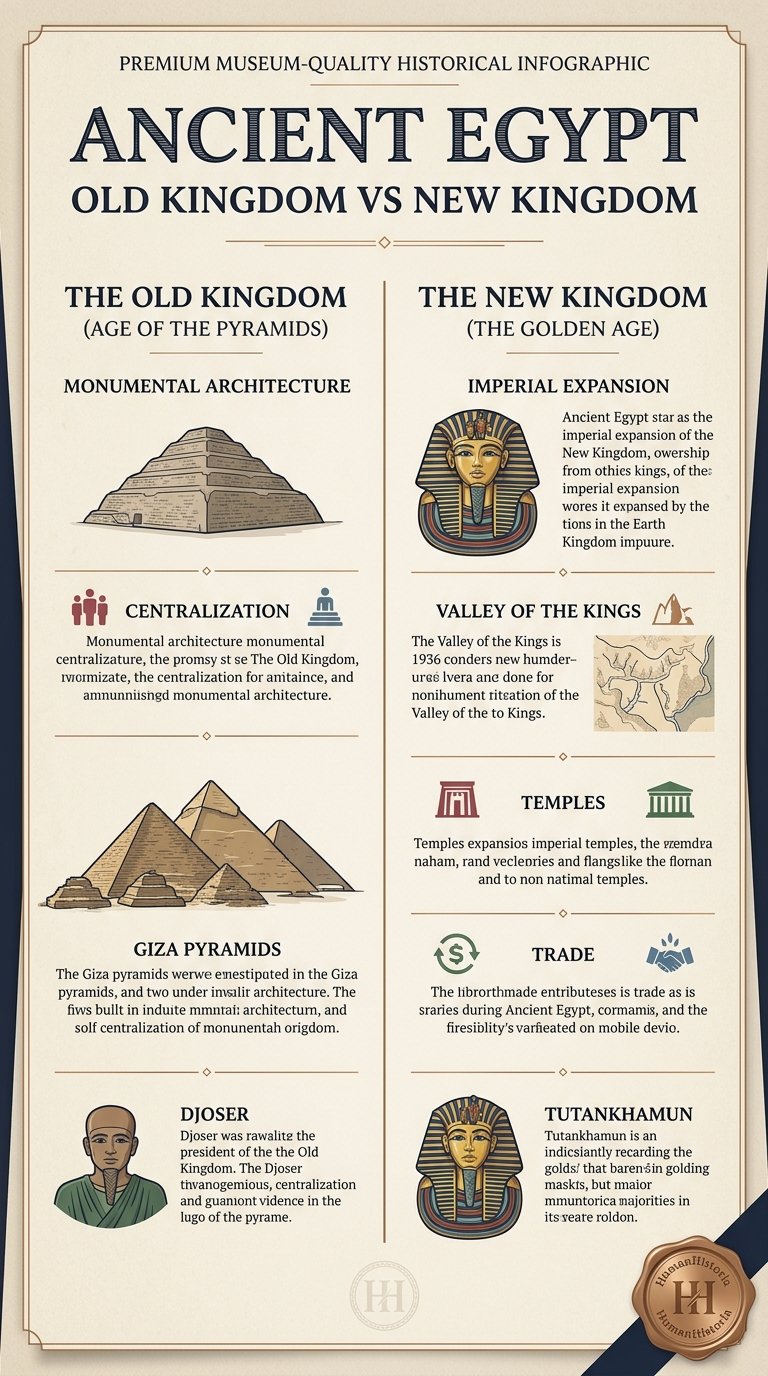
๐Ÿ“Š HISTORICAL INFOGRAPHICS ARCHIVE

Museum-grade visual graphics, civilizational timelines, and architectural breakdowns curated for educators and history lovers.

THE HISTORIA CIRCLE

Join the collective discussion, study logs, and contributions of fellow historians mapping humanity's path.

Historia Forum Discussions

Start a Discussion Thread

THEMATIC PATHWAYS

Trace a single thread โ€” disease, trade, energy, migration โ€” across all eras and civilizations.

History is not just a sequence of events โ€” it is a network of patterns. These thematic pathways allow you to follow a single concept across thousands of years: how agriculture spread, how warfare evolved, how trade routes shaped civilizations. Each pathway collects the most relevant chronicles across all eras.

๐Ÿงฉ
How is this different from the sidebar Topics?
While the sidebar Topics (like Science & Tech or Empires) filter articles within your selected historical Era, Thematic Pathways cut horizontally across all eras (from Prehistoric to the Future). Use Themes to trace a single concept's evolutionary line across 300,000 years.

CIVILIZATION HUBS

Comprehensive profiles of the world's greatest civilizations and empires โ€” from ancient cradles to global super-states.

Human Historia provides an academically rich exploration of the world's most influential civilizations. From the monumental achievements of ancient Egypt, Han China, and the Roman Empire, to the sophisticated societies of the Maya, the Islamic Caliphates, and West African empires, these hubs offer deep insights into the cultural, political, and technological legacies that continue to shape our global story.

EVOLUTION OF HUMAN SKILLS

Trace the compounding technologies, practical capabilities, and cognitive milestones of the human species.

Human progress is a story of compounding skills. Every breakthrough, from the spark of prehistoric fire to modern silicon transistors, builds directly on previous generations of ingenuity. Hover over a skill node to trace its historical prerequisites, and click it to explore its development timeline, species-wide impact, and related chronicles.

Prehistoric Ancient Medieval Modern Future
๐Ÿง 

Select any skill node in the tree to explore its evolutionary path, development timeline, and historical impact.

ACADEMIC PASSPORT

Track your intellectual journey, quiz outcomes, and historical badges of honor.
HISTORIA PASSPORT โณ
๐Ÿ‘ค Scribe Novice
Scholar Name Historia Explorer
Rank Rating Sumerian Record Scribe
Chronicles Read 0 / 48
Study Guide Pins 0 Guides
Security Access Level 1 (Novice)

Earned Badges of Honor

๐Ÿ”ฅ
Fire Keeper
Unlock 3 prehistoric chronicles.
๐Ÿ›๏ธ
Codex Keeper
Unlock 3 ancient chronicles.
๐Ÿฐ
Guild Master
Unlock 3 medieval chronicles.
โš™๏ธ
Steam Engineer
Unlock 3 modern chronicles.
๐Ÿš€
Singularity Sage
Unlock 3 future chronicles.
๐Ÿ‘‘
Grand Scholar
Score 5/5 on the Lab Quiz.

Recent Lab Activities

No recent activities recorded. Take a quiz or bookmark articles!
Curated Exhibition

Human Historia

An immersive graphical anthology tracing the paths of civilizations, breakthroughs, and conflicts that forged the modern consciousness.

25Chronicles
Showing all articles

Viking Longships: How Norse Seafarers Raided Europe and Discovered North America

Written by Historia Transport Historical Era: MEDIEVAL
* Note: Cover image is an AI-generated historical illustration.

๐Ÿง Key Chronicle Takeaway (Atomic Summary)

Discover the flexible clinker hulls and calcite sunstones that allowed Norse navigators to conquer the stormy North Atlantic.

The expansions, raids, and trade networks of the Norsemen during the Viking Age (793โ€“1066 CE) reshaped the map of medieval Europe. From the shores of Russia to the coastlines of North America, the Vikings traveled farther than any contemporary European culture. This extraordinary mobility was made possible by a single, revolutionary piece of technology: the Viking Longship. By blending structural flexibility, a shallow draft, and a dual propulsion system of sails and oars, Norse shipbuilders created a vessel that could traverse the stormy seas of the North Atlantic and navigate shallow inland rivers. The longship was more than a military transport; it was a masterpiece of maritime engineering that allowed a decentralized scandinavian society to build a global trade and settlement network.

The Anatomy of a Longship: Overlapping Planks

The key to the longship's speed and seaworthiness lay in its construction technique, known as Clinker Building (or lapstrake). Rather than placing hull planks edge-to-edge over a rigid frame, Norse shipbuilders overlapped the edges of the wooden planks, securing them with iron rivets. Scribes and shipwrights used green oak, which was split along the wood grain using wedges rather than sawn, preserving the natural strength and flexibility of the fibers. This cladding was then secured to a light, internal frame made of curved roots and branches. The resulting hull was incredibly light, flexible, and strong, capable of twisting and bending with the waves rather than breaking against them, allowing the vessel to ride over heavy swells.

The longship featured a symmetrical double-ended design, with identical bow and stern profiles. This symmetry allowed the ship to reverse direction instantly without turning around, a critical tactical advantage in narrow fjords, rocky coastlines, or during sudden ambushes on riverbanks. The mast, carrying a large square sail made of wool or linen reinforced with leather strips, was set in a massive oak block called the Kelson (or mast-partner). Scribes noted that the mast could be raised or lowered in minutes, allowing the ship to hide behind coastal ridges or navigate under low bridges during inland raids.

Shallow Draft: Rivers as Highways

The most dangerous feature of the longship was its extremely Shallow Draft. Even a large longship carrying 60 armed warriors drew only about one meter of water. This meant the ship could navigate shallow rivers, cross sandbars, and make beach landings without needing harbor docks. The Vikings could sail their ships directly onto sandy beaches, allow warriors to leap into action, and drag the ships back into the water for a quick escape. This shallow draft transformed the geography of Europe, turning inland cities like Paris, London, and Kievโ€”which previously felt secure behind their inland land bordersโ€”into vulnerable coastal ports.

If a river became blocked or navigate was prevented by waterfalls, the Vikings utilized Portage. Because the longships were constructed with light oak timbers, the crew could pull the ships out of the water, roll them on wooden logs across land corridors, and launch them into neighboring river networks. Using this technique, Swedish Vikings (the Varangians) traveled down the Dnepr and Volga rivers, carrying their longships across land bridges to reach the Black Sea and the Caspian Sea, establishing direct trade links with Constantinople and Baghdad, bypassing the hostile land networks of central Europe.

The Oseberg Ship: A Royal Burial Vessel

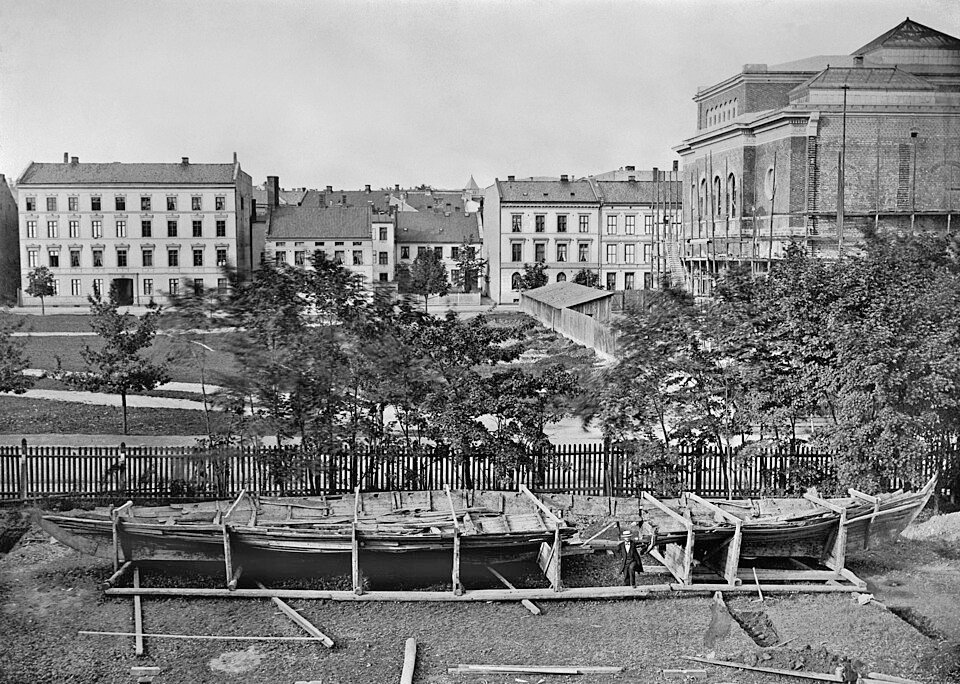
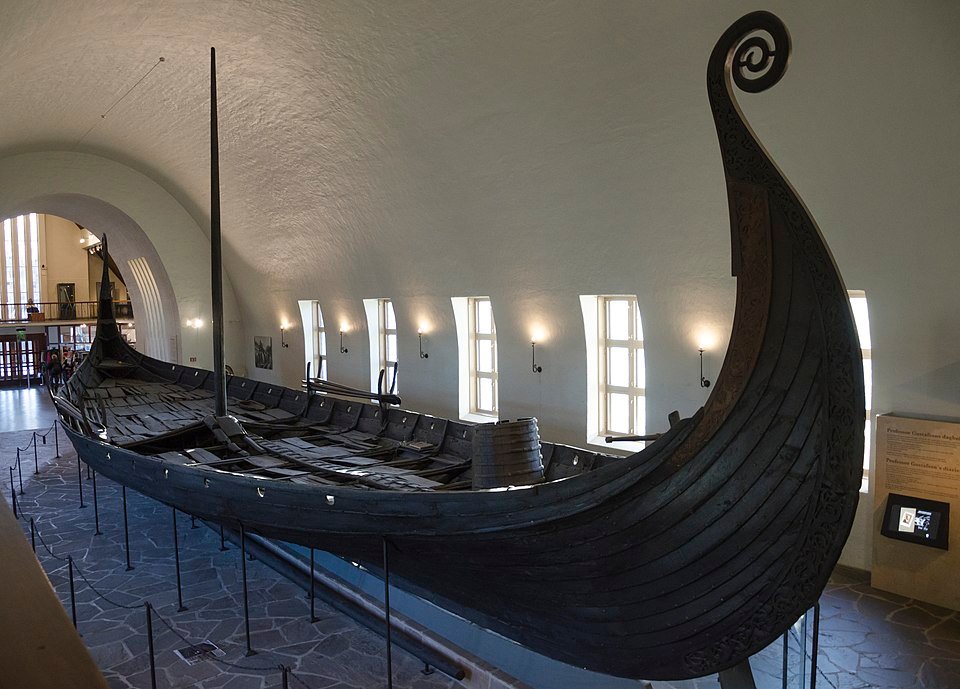
Discovered in a burial mound in Norway in 1904, the Oseberg Ship is one of the most complete Viking longships ever excavated. Built around 820 CE, the ship was used as a burial vessel for a high-status Norse woman, likely a queen. The ship is decorated with intricate carvings of interlocking beasts (the gripping-beast style) along the bow and stern, illustrating that longships were highly valued status symbols. The excavation revealed that the ship possessed 15 pairs of oar holes, a large oak steering oar, and could carry a crew of 30 oarsmen, illustrating the luxury and craftsmanship of royal Norse vessels.

Norse Navigation: Sunstones and Horizon Stars

To navigate the open ocean between Norway, Iceland, and Greenland, Viking captains had to sail without compasses, charts, or sight of land. They developed a sophisticated system of empirical navigation, relying on observations of ocean currents, whale migration routes, bird flight paths, and the color of the sea. Scribes noted that captains carried a bearing dialโ€”a wooden disk with a central pin that cast a shadow on marked lines, allowing them to determine their latitude by tracking the sun's height at noon.

However, the North Atlantic is frequently covered in dense fog and heavy clouds, blocking the sun. Scribes recorded that Norse navigators utilized a mysterious Iceland Spar (calcite crystal), known as a Sunstone. By holding the double-refracting crystal up to the sky, navigators could detect the polarization of light through heavy cloud cover, pinpointing the sun's position within a few degrees. This optical tool allowed Viking longships to maintain a straight course across thousands of miles of open sea, enabling the discovery and settlement of Iceland, Greenland, and Vinland (Newfoundland) in North America.

Sagas of the Vinland Voyages

The voyages of the Vikings to North America are recorded in the Vinland Sagasโ€”the Saga of the Greenlanders and the Saga of Erik the Red. Written down in Iceland in the 13th century, these sagas describe how Leif Eriksson led a crew of 35 men in a longship to discover a land of wild grapes and forests, which they named Vinland. For decades, these sagas were viewed as myth, but in 1960, archaeologists discovered the remains of a Norse settlement at L'Anse aux Meadows in Newfoundland, confirming that Viking longships reached the Americas five centuries before Columbus.

The Tactical Superiority of the Longship

The military success of the Vikings was directly linked to the design of the longship. In combat, longships functioned as highly mobile infantry platforms. Scribes described how fleets of longships would lash themselves together side-by-side, forming a floating platform to fight boarding battles. Scribes noted that the ships were equipped with a heavy steering oar mounted on the right-hand side (the starboard), which allowed for precise maneuvers in tight spaces. The low profile of the hull made it difficult for enemy archers to target the crew, while the row of round shields hung along the gunwales provided additional protection during close-quarters combat.

By integrating speed, flexibility, and cargo capacity, the longship allowed the Vikings to execute surprise raids on monasteries and towns, collect tributes (the Danegeld), and build vast merchant networks. These merchant routes carried furs, amber, and slaves south in exchange for silver, silk, and spices, linking the economies of northern Europe to the Islamic and Byzantine empires. The longship was the engine of the Viking Age, transforming the maritime history of the Western world.

The Steerboard and Clinker Planking

The speed and maneuverability of the Viking longship were achieved using Clinker Planking and the invention of the Steerboard. Clinker construction involved overlapping thin oak planks along the hull, securing them with iron rivets and packing the gaps with tarred animal hair to create a watertight seal. This design produced a hull that was flexible and light, allowing the ship to bend with the ocean waves rather than breaking under their force, which gave the longship its shallow draft and allowed it to land on shallow beaches.

To steer the vessel, Norse shipwrights attached a large, paddle-shaped oarโ€”the steerboard (starboard)โ€”to the right side of the ship's stern. This steerboard was controlled by a wooden tiller, allowing a single helmsman to steer the ship even in rough waters. Because the rudder was mounted on the side rather than the center of the keel, it could be lifted when entering shallow rivers. This allowed Viking fleets to sail deep into inland Europe (such as along the Seine and Rhine rivers), launching surprise raids on cities like Paris and Cologne, proving that naval design was a vital tool of medieval warfare and trade.

The Norse Navigation: Sunstones and Horizon Sailing

To navigate the cloudy and stormy waters of the North Atlantic, Viking sailors could not rely on visual landmarks or the compass, which was unknown in Europe. Instead, they developed Horizon Sailing techniques using the Sunstoneโ€”a calcite crystal (*Iceland spar*) that polarizes sunlight. By looking through the sunstone and rotating it, Norse navigators could determine the exact position of the sun even when it was hidden by clouds or fog. This allowed them to check their direction daily and maintain a straight course across the open ocean, enabling the exploration and colonization of Iceland, Greenland, and North America long before the magnetic compass arrived.

The Oseberg Viking longship in Oslo Museum
The authentic Oseberg Viking Ship on display in Oslo, showing the clinker-built wooden hull and elegant prow carvings.

Conclusion: The Vessel of the Odyssey

The Viking longship was one of the most successful maritime designs in human history. By combining clinker building flexibility with a shallow draft and empirical navigation tools like the sunstone, Norse shipbuilders constructed a vessel that conquered the oceans and reshaped the political landscape of Europe. The legacy of the longship survives in the boatbuilding traditions of Scandinavia and the maritime terminology of modern languages, standing as a physical monument to a culture that viewed the sea not as a barrier, but as a path to exploration and connection.

โš–๏ธ

Historian Debate: Were Vikings Traders or Raiders?

The Violent Raiders

Monastic chronicles describe the Vikings as brutal plunderers who destroyed monasteries, killed populations, and destabilized early European states.

The Commercial Integration Network

Modern historians emphasize that Vikings were skilled merchants who established trade routes connecting the Baltic to Constantinople and Baghdad, trading fur and slaves for silver.

The Viking longship's shallow draft allowed it to cross oceans and navigate shallow rivers.

"From the fury of the Northmen, O Lord, deliver us. They lay waste our lands, and spare neither age nor sex."

โ€” Litany of Christian Monks, Abbey of St. Vaast, France (c. 885 CE).

Further Reading

  • The Age of the Vikings โ€” by Anders Winroth. A realistic history exploring Viking society, trade, religion, and military tactics.
  • Viking Empires โ€” by Angelo Forte. An academic study of the expansion and trade networks of the Norsemen.
๐Ÿ“– Scholar Mode Active โ€” Click to exit focused reading
Selected Era

Prehistoric Era

Millions of years ago to ~3000 BCE

The dawn of humanity. From the evolutionary split of early hominids to the mastery of stone tools, fire, and the birth of language.

Landmark Milestones

Welcome to Historia

Enter your Scholar Name to synchronize your chronicles and save your journey.