>
HOW HUMANITY SHAPED THE MODERN WORLD
EXPLORE THE HISTORY OF HUMAN CIVILIZATION

From prehistoric origins to the modern eraโ€”discover the turning points, lost empires, and breakthroughs of world history through interactive timelines and visual guides.
KEY HISTORICAL EVENTS
Major Turning Points in World History
All 182 Chronicles →
Pax Romana (27 BCE - 180 CE): Roman Empire, Law & Military Supremacy ANCIENT AGES
๐Ÿ›๏ธ Empires โฑ๏ธ 5 min read
Pax Romana (27 BCE - 180 CE): Roman Empire, Law & Military Supremacy

Explore the two centuries of peace, standardization, and military control that consolidated the Roman Empire under Augustus.

Read Chronicle →
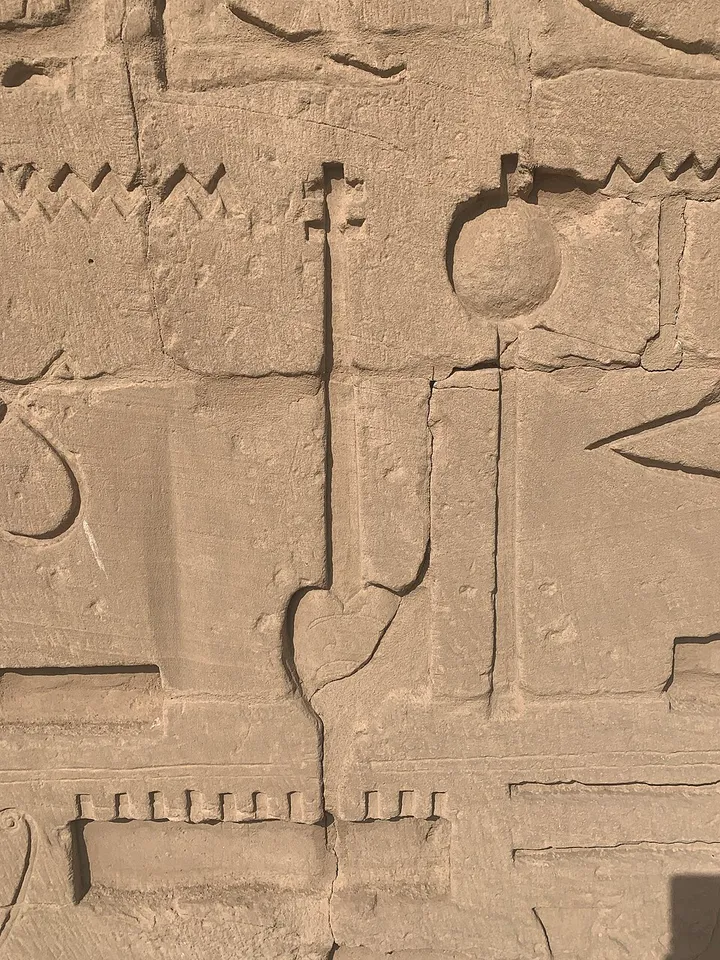
Egyptian Hieroglyphs: Decipherment, Scribes & Sacred Carvings ANCIENT AGES
๐Ÿ›๏ธ Languages โฑ๏ธ 9 min read
Egyptian Hieroglyphs: Decipherment, Scribes & Sacred Carvings

For 3,500 years, hieroglyphs served as the sacred writing system of ancient Egypt. Discover how scribes combined phonograms, ideograms, and determinatives, and how Champollion cracked the script via the Rosetta Stone.

Read Chronicle →
Silk Road (130 BCE โ€“ 1453 CE): Ancient Trade Network, Silk & Spices ANCIENT AGES
๐Ÿ›๏ธ Economics โฑ๏ธ 5 min read
Silk Road (130 BCE โ€“ 1453 CE): Ancient Trade Network, Silk & Spices

Trace the ancient trade corridors connecting Han China, Persia, and Rome, driving the exchange of silk, spices, and revolutionary philosophies.

Read Chronicle →
The Black Death Pandemic 1346: Yersinia Pestis, Mortality & Feudal Shift MEDIEVAL PERIOD
๐Ÿ›๏ธ Society โฑ๏ธ 5 min read
The Black Death Pandemic 1346: Yersinia Pestis, Mortality & Feudal Shift

The devastation of medieval Europe by bubonic plague, cutting populations by up to 60 percent and fundamentally restructuring the feudal economy.

Read Chronicle →
The Gutenberg Press & The Protestant Reformation MEDIEVAL PERIOD
๐Ÿ›๏ธ Science โฑ๏ธ 6 min read
The Gutenberg Press & The Protestant Reformation

Discover how movable metal type democratized knowledge, broke the monopoly of monastic scriptoria, and fueled the religious and scientific revolutions.

Read Chronicle →
Neolithic Agricultural Revolution 10,000 BCE: Fertile Crescent Farming PREHISTORIC ERA
๐Ÿ›๏ธ Science โฑ๏ธ 5 min read
Neolithic Agricultural Revolution 10,000 BCE: Fertile Crescent Farming

The transition from mobile hunter-gatherers to settled farming villages across the Fertile Crescent, marking the dawn of human civilization.

Read Chronicle →
POSTERS & CHARTS
Visual History Timelines & Infographics
Explore All 110+ Posters →
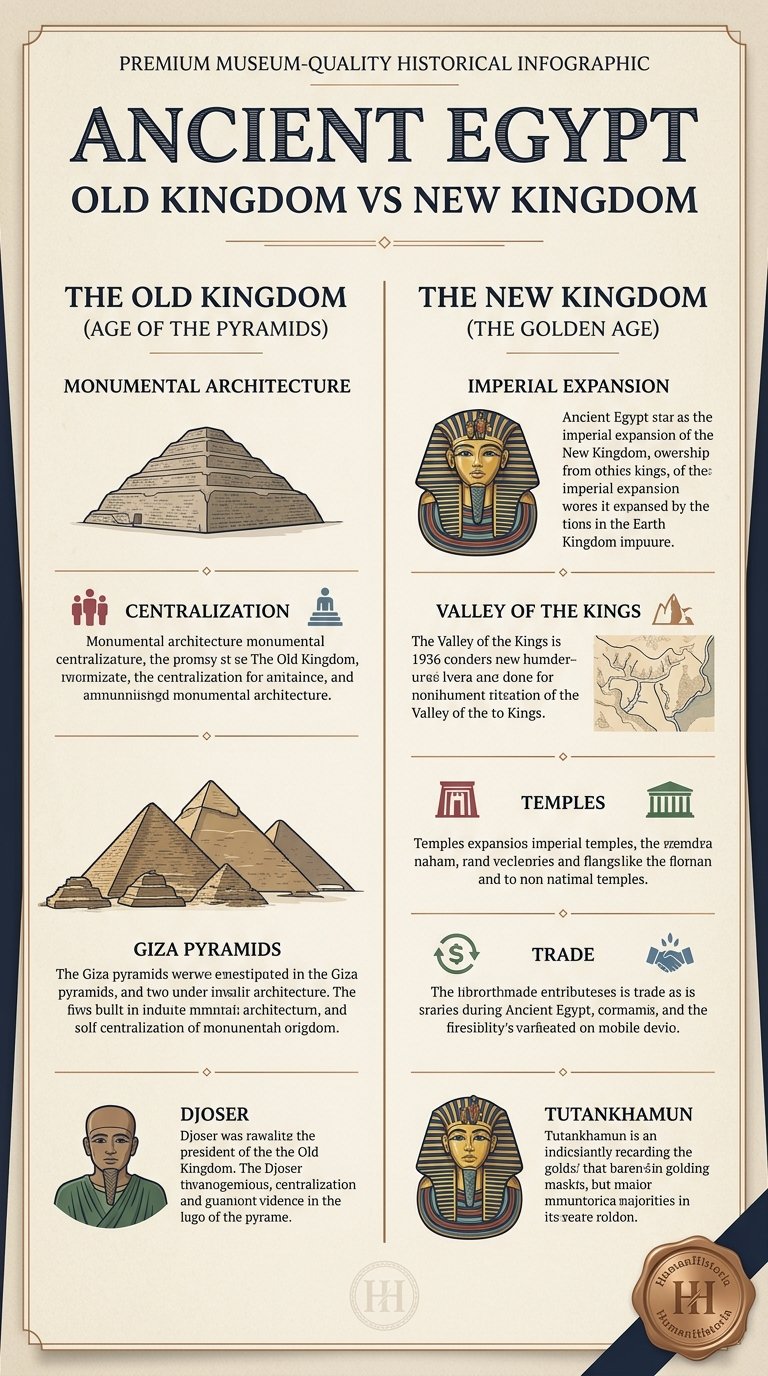
Ancient Egypt: Old Kingdom vs. New Kingdom
๐Ÿ” Tap to Zoom
Ancient Egypt: Old Kingdom vs. New Kingdom
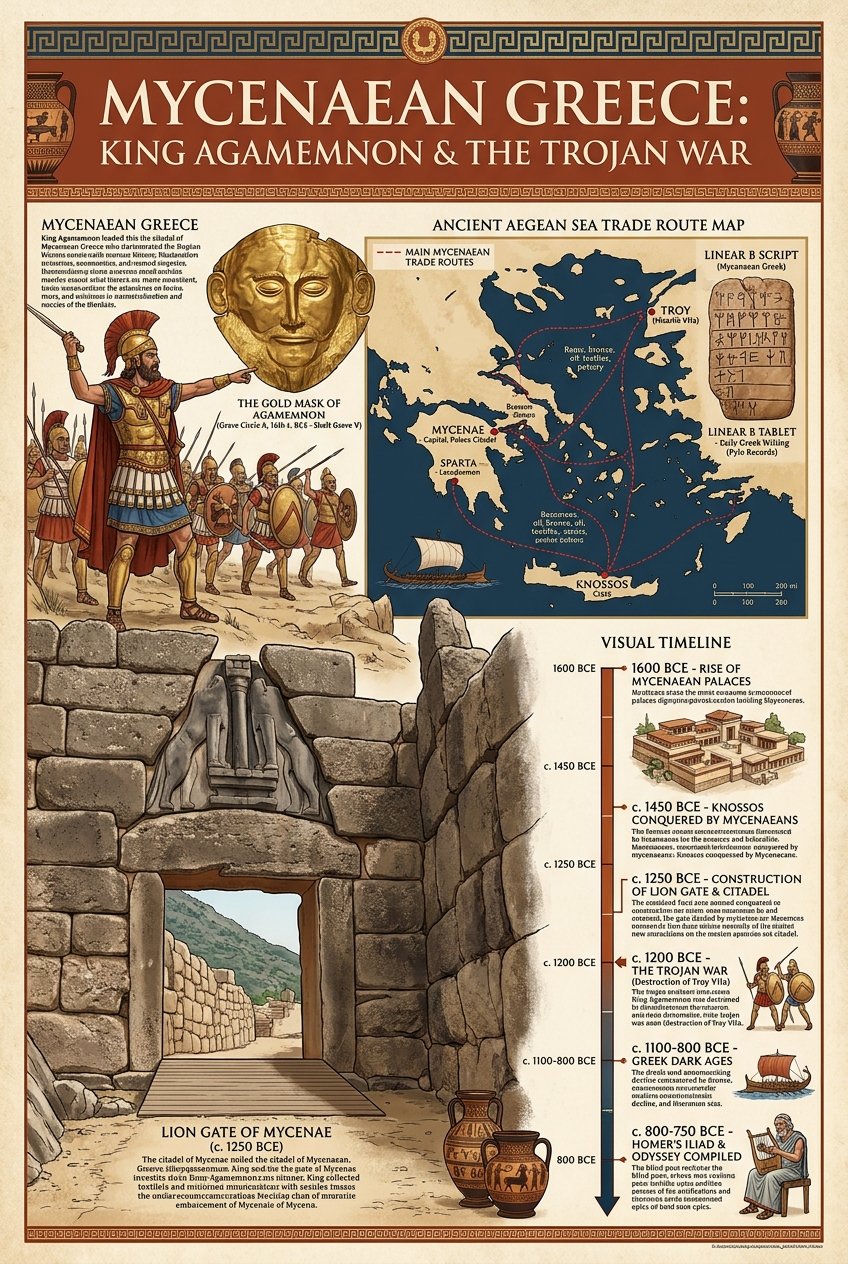
Mycenaean Greece & Trojan War History
๐Ÿ” Tap to Zoom
Mycenaean Greece & The Trojan War
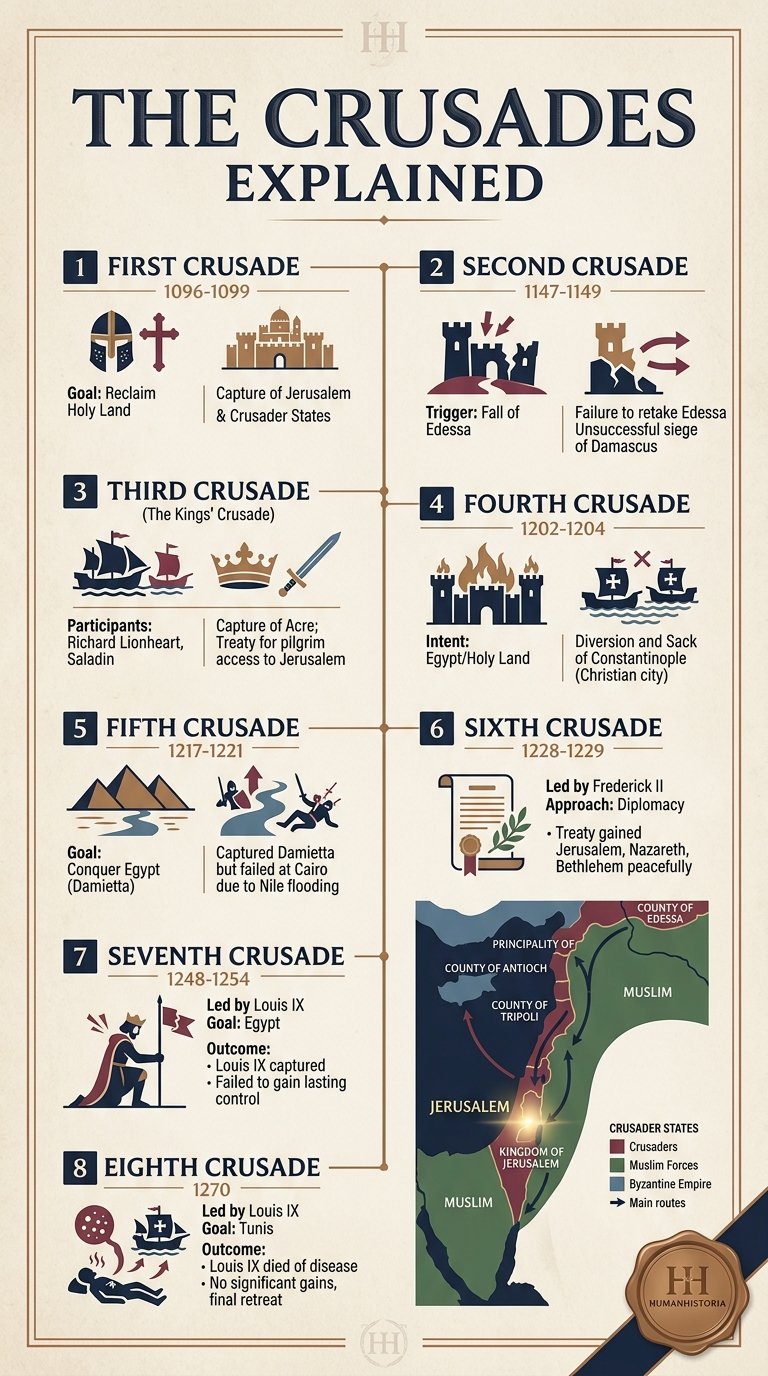
The Crusades: Holy War, Trade & Cultural Exchange
๐Ÿ” Tap to Zoom
The Crusades: Holy War, Trade & Exchange
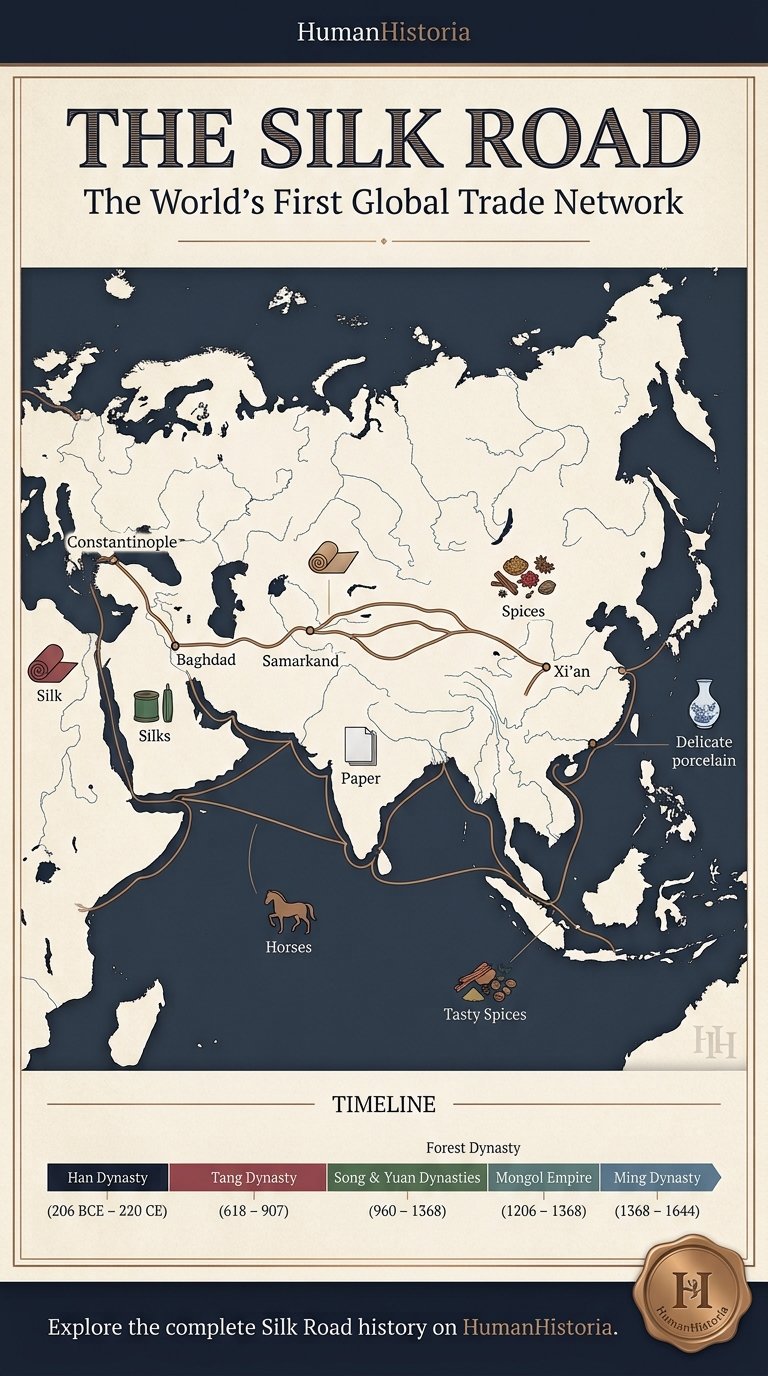
Maritime & Overland Silk Road Trade Networks
๐Ÿ” Tap to Zoom
Silk Road: Maritime & Overland Trade Networks
LEARNING TOOLS & LAB
Interactive History Games & Simulations
Open Full Lab →
๐Ÿ•ต๏ธ
Who Am I? (Historical Guessing Game)

A secret historical figure has been chosen. Ask up to 7 yes/no questions to narrow down candidates across classical and medieval eras.

Play Game →
๐Ÿ—บ๏ธ
Timeline Scramble

Five historical events appear out of order. Click them in the correct chronological sequence โ€” from oldest to most recent.

Test Chronology →
โš–๏ธ
Empire Matchup Simulator

Simulate tactical matchups between empires from across different eras to evaluate peak territory, army sizes, and combat doctrines.

Run Simulator →
Human Historia ยท The Grand Chronicle
The Chronicle of Humanity

300,000 years. 5 eras. Countless turning points that shaped every moment of your world.

๐Ÿฆด
Prehistoric Era
c. 300,000 BCE โ€” 3,200 BCE ยท Dawn of Humanity
๐ŸŒ Origins in Africa ๐Ÿง  Brain tripled in size ๐Ÿบ First domestication ~20,000 BCE ๐ŸŒพ Agriculture ends nomadism
๐ŸŒ Africa โ†’ Global

Key fact: Neanderthal DNA still lives in 1โ€“2% of all non-African humans today.

Related: Animal Domestication, Cave Art

๐Ÿ”ฅ Africa

Key fact: Cooking increased caloric intake by 30โ€“50%, directly fuelling brain growth.

Related: Stone Tools, Migration

๐ŸŒพ Fertile Crescent

Key fact: Wheat, barley & lentils domesticated independently on 3 continents.

Related: Gรถbekli Tepe, Cuneiform

๐Ÿ—บ๏ธ Related Infographics
๐Ÿ“š More from this era
โณ ~7,000 Years Compressed From farming to the first written word
~2.3% of recorded human history
๐Ÿ›๏ธ
Ancient Ages
c. 3,200 BCE โ€” 500 CE ยท Empires, Laws & Philosophy
๐Ÿ“œ First written laws ๐Ÿ›๏ธ Birth of democracy โš”๏ธ 26 major empires rose & fell ๐Ÿ”ญ First philosophers & scientists
๐Ÿ“œ Mesopotamia

Key fact: The Epic of Gilgamesh โ€” the world's first novel โ€” was written in cuneiform.

Related: Epic of Gilgamesh, Hammurabi

๐Ÿ“š Alexandria, Egypt

Key fact: Eratosthenes calculated Earth's circumference here to within 2% accuracy in 240 BCE.

Related: Greek Philosophy, Roman Empire

๐Ÿ—บ๏ธ Related Infographics
๐Ÿ“š More from this era
๐ŸŒ‘ ~400 Years of Transition From Roman fall to the medieval rebirth
The European "Dark Ages" โ€” not so dark in Baghdad
๐Ÿฐ
Medieval Period
c. 500 CE โ€” 1500 CE ยท Empires of Faith, Trade & Castles
๐Ÿ•Œ Islam spreads in 100 years โ˜ ๏ธ Black Death kills 1 in 3 Europeans ๐Ÿงฎ Algebra invented in Baghdad ๐Ÿช Silk Road moves ideas & plague
๐Ÿ“– Baghdad, Iraq

Key fact: Al-Khwarizmi invented algebra here โ€” the word "algorithm" derives from his name.

Related: Silk Road, Mansa Musa

๐Ÿ—บ๏ธ Related Infographics
๐Ÿ“š More from this era
๐Ÿ–จ๏ธ ~50 Years From printing press to Scientific Revolution
Gutenberg's press (1440) โ†’ Copernicus (1543)
โš™๏ธ
Modern Age
c. 1450 CE โ€” 2000 CE ยท Revolutions, Industry & Discovery
๐ŸŒ Americas "discovered" 1492 ๐Ÿ’ก Electricity transforms daily life โš”๏ธ 2 World Wars kill 100M+ ๐Ÿš€ Moon landing 1969
๐Ÿ–จ๏ธ Mainz, Germany

Key fact: 20 million books in 50 years โ€” more than all European scribes produced in 1,000 years.

Related: Scientific Revolution, Reformation

๐Ÿš‚ Britain

Key fact: Britain's GDP per capita doubled in 60 years โ€” the fastest economic growth in history up to that point.

Related: Electricity, Wright Brothers

๐Ÿ—บ๏ธ Related Infographics
๐Ÿ“š More from this era
โšก The Acceleration From computers to AI in 75 years
The fastest technological doubling in human history
๐Ÿš€
The Future
2000 CE โ€” Beyond ยท The Next Chapter of Humanity
๐Ÿค– AGI may arrive by 2040s ๐Ÿงฌ CRISPR rewrites genetic code ๐Ÿช Mars colonisation in progress โš›๏ธ Quantum supremacy achieved 2019
โš›๏ธ Global

Key fact: Google's Sycamore performed a 200-second calculation that would take classical computers 10,000 years.

Related: AI Singularity, CRISPR, Space

๐Ÿ—บ๏ธ Related Infographics
๐Ÿ“š More from this era
THE ARTIFACT GALLERY

Examine the tangible relics, physical tokens, and revolutionary machines that shaped civilizational growth.

๐ŸŽฅ VIDEO HUB & SHORTS

Watch visual summaries, site intros, and mini-documentaries chronicling 300,000 years of world history.

๐Ÿ“Š HISTORICAL INFOGRAPHICS ARCHIVE

Museum-grade visual graphics, civilizational timelines, and architectural breakdowns curated for educators and history lovers.

THE HISTORIA CIRCLE

Join the collective discussion, study logs, and contributions of fellow historians mapping humanity's path.

Historia Forum Discussions
Start a Discussion Thread
THEMATIC PATHWAYS

Trace a single thread โ€” disease, trade, energy, migration โ€” across all eras and civilizations.

History is not just a sequence of events โ€” it is a network of patterns. These thematic pathways allow you to follow a single concept across thousands of years: how agriculture spread, how warfare evolved, how trade routes shaped civilizations. Each pathway collects the most relevant chronicles across all eras.

๐Ÿงฉ
How is this different from the sidebar Topics?
While the sidebar Topics (like Science & Tech or Empires) filter articles within your selected historical Era, Thematic Pathways cut horizontally across all eras (from Prehistoric to the Future). Use Themes to trace a single concept's evolutionary line across 300,000 years.
CIVILIZATION HUBS

Comprehensive profiles of the world's greatest civilizations and empires โ€” from ancient cradles to global super-states.

Human Historia provides an academically rich exploration of the world's most influential civilizations. From the monumental achievements of ancient Egypt, Han China, and the Roman Empire, to the sophisticated societies of the Maya, the Islamic Caliphates, and West African empires, these hubs offer deep insights into the cultural, political, and technological legacies that continue to shape our global story.

EVOLUTION OF HUMAN SKILLS

Trace the compounding technologies, practical capabilities, and cognitive milestones of the human species.

Human progress is a story of compounding skills. Every breakthrough, from the spark of prehistoric fire to modern silicon transistors, builds directly on previous generations of ingenuity. Hover over a skill node to trace its historical prerequisites, and click it to explore its development timeline, species-wide impact, and related chronicles.

Prehistoric Ancient Medieval Modern Future
๐Ÿง 

Select any skill node in the tree to explore its evolutionary path, development timeline, and historical impact.

ACADEMIC PASSPORT

Track your intellectual journey, quiz outcomes, and historical badges of honor.

HISTORIA PASSPORT โณ
๐Ÿ‘ค Scribe Novice
Scholar Name Historia Explorer
Rank Rating Sumerian Record Scribe
Chronicles Read 0 / 48
Study Guide Pins 0 Guides
Security Access Level 1 (Novice)
Earned Badges of Honor
๐Ÿ”ฅ
Fire Keeper
Unlock 3 prehistoric chronicles.
๐Ÿ›๏ธ
Codex Keeper
Unlock 3 ancient chronicles.
๐Ÿฐ
Guild Master
Unlock 3 medieval chronicles.
โš™๏ธ
Steam Engineer
Unlock 3 modern chronicles.
๐Ÿš€
Singularity Sage
Unlock 3 future chronicles.
๐Ÿ‘‘
Grand Scholar
Score 5/5 on the Lab Quiz.
Recent Lab Activities
No recent activities recorded. Take a quiz or bookmark articles!
๐Ÿ›๏ธ MISSION & ARCHIVAL STANDARDS
About Human Historia

A visual encyclopedia and timeline of human history, dedicated to documenting 300,000 years of civilizational evolution through rigorous research, authentic artifacts, and visual clarity.

๐ŸŒ
The 300,000-Year Story

Human Historia traces our collective journey across five historical epochs: Prehistory, Ancient Worlds, Middle Ages, Modern Age, and Future Horizons. From the first control of fire to quantum computation, we organize turning points into interconnected timelines.

๐Ÿ“œ
Historiographical Rigor

Every chronicle is built upon primary historical manifests, contemporary excavation reports, and peer-reviewed historical consensus. We prioritize authentic public domain artifacts and clearly identify scholarly debates surrounding major civilizational transitions.

๐ŸŽจ
Museum-Grade Visuals

Complex historical transitions demand visual understanding. We develop high-resolution infographics, architectural cutaways, and comparative territorial maps to transform abstract timelines into vivid, unforgettable learning experiences.

๐Ÿ“–
Educational Access

Knowledge belongs to humanity. Human Historia is free, ad-light, and engineered as an educational resource for students, classroom educators, academic researchers, and curious minds across all continents.

Editorial Governance & Inquiries

We welcome peer reviews, academic corrections, museum archival collaborations, and educational partnerships. To submit historical inquiries or provide archival feedback, reach our editorial desk directly.

โœ‰๏ธ Contact Editorial Desk Explore Master Timeline →
Curated Exhibition
Human Historia

An immersive graphical anthology tracing the paths of civilizations, breakthroughs, and conflicts that forged the modern consciousness.

25Chronicles
Showing all articles

The Varangian Guard & Viking Trade: From the Baltic to Constantinople

Written by Humanhistoria Editorial Historical Era: MEDIEVAL

In the early morning mist of the ninth century, along the pine-fringed riverbanks of the Volkhov, Dnieper, and Volga rivers, slender, shallow-draft wooden longships cut silently through the waters of Eastern Europe. Manned by fierce Scandinavian seafaring merchants and warriors known to the medieval world as the Varangians (or Rus'), these Norse explorers carved out history's most lucrative and hazardous riverine trade arteries: the legendary "Route from the Varangians to the Greeks", connecting the icy Baltic Sea to the golden domes of Constantinople, and the Volga trade highway into the heart of the Islamic Abbasid Caliphate. Portaging their clinker-built ships overland on greased pine rollers over roaring cataracts while fending off horse archer ambushes from steppe nomads, the Varangians traded northern amber, honey, walrus ivory, and enslaved captives for mountains of silver Islamic dirhams and Byzantine imperial silks. In doing so, Scandinavian warlords like Rurik, Oleg, and Vladimir the Great colonized the river networks, founded the cities of Novgorod and Kyiv, created the medieval realm of the Kievan Rus', and formed the elite Varangian Guardโ€”the legendary axe-wielding palace bodyguard of the Byzantine Emperors.

Viking Varangian longships sailing along the Dnieper River toward Constantinople
Historical illustration of Scandinavian Varangian longships navigating Eastern European river networks, portaging between waterways along the historic trade route from the Baltic to Constantinople. (Archival Collection)

Austrvegr: The Eastern Viking Expansion & Staraya Ladoga

While Western Viking raiders in the eighth and ninth centuries plundered Anglo-Saxon monasteries in Britain and established dukedoms along the Atlantic coasts of Francia, a very different Scandinavian expansion was unfolding eastward across the Baltic Sea. Known in Old Norse sagas as Austrvegr ("The Eastern Way"), Swedish Vikings sailed eastward into the Gulf of Finland and navigated the river systems flowing into the Russian interior.

The earliest staging post of this Eastern Viking presence was Staraya Ladoga (Old Norse: Aldeigjuborg), founded around 753 CE on the banks of the Volkhov River near Lake Ladoga. Archaeological excavations at Staraya Ladoga have unearthed Scandinavian smithies, bronze oval brooches, and gaming pieces alongside Slavic ceramics and thousands of silver coins from the Islamic Middle East, demonstrating that long before the sack of Lindisfarne in the West, Norse merchants were integrating Eastern European trade corridors.

The Two Great River Highways: The Volga and the Dnieper

The geographic brilliance of the Varangian network lay in utilizing Eastern Europeโ€™s dense, interconnected river systems. From the Baltic basin, Norse longships navigated two colossal transcontinental corridors:

1. The Volga Route to the Islamic Caliphate

By traversing Lake Ladoga, the Syas River, and portaging into the Volga, Varangian flotillas sailed south through the territories of the Volga Bulgars and the Khazar Khaganate, reaching the Caspian Sea. From there, camel caravans transported goods directly to Baghdad, the cosmopolitan capital of the Abbasid Caliphate.

The primary attraction was Islamic silver dirhams. The Islamic world possessed rich silver mines in Central Asia and minted high-purity coins, whereas Scandinavia had zero native silver reserves. Norse merchants sold northern luxury commoditiesโ€”sable, ermine, fox furs, beeswax, and Slavic slaves (from which the English word slave derives)โ€”in exchange for dirhams. Tens of thousands of these coins have been unearthed in Scandinavian hoards, such as the Spillings Hoard in Gotland, which contained over 14,000 Islamic silver coins.

2. The Route to the Greeks: The Dnieper to Constantinople

The second and most famous artery connected the Baltic Sea to the Black Sea: sailing south along the Volkhov to Lake Ilmen, navigating the Lovat River, and portaging overland across the swampy Valdai Hills into the headwaters of the Dnieper River. Following the Dnieper south past Smolensk and Kyiv, the ships emerged into the Black Sea, crossing directly to Constantinople (Old Norse: Miklagard, "The Great City").

Miniature from the Madrid Skylitzes manuscript showing the Varangian Guard
11th-century illuminated miniature from the Madrid Skylitzes manuscript (folio 26v), depicting the elite Varangian Guard armed with their distinctive two-handed battleaxes, serving as the personal imperial bodyguard in Constantinople. (National Library of Spain, Madrid)

The Ordeal of the Rapids: Portaging Longships on Rollers

Navigating the Dnieper River was an epic test of engineering and physical endurance. South of modern Dnipro, the river dropped over a series of seven roaring granite cataracts (the Dnieper Rapids) spanning forty miles, where water churned with lethal velocity over jagged submerged rocks.

In his 950 CE treatise De Administrando Imperio, Byzantine Emperor Constantine VII Porphyrogenitus recorded a detailed eyewitness account of how the Varangian Rus' tackled these obstacles. At the most perilous cataractโ€”named Aifor ("The Insatiable") in Old Norseโ€”the crews had to beach their ships, disembark their passengers and merchandise, and drag their heavy forty-foot longships overland along the muddy cliffs using tree-trunk rollers (volok):

"When they arrive at the fourth cataract, which is called in Russian 'Do Not Sleep' and in Norse 'Aifor', because the pelicans nest in the stones of the cataract... they haul their ships out onto dry land, some towing, others dragging them bodily. And they convey them past the barrier, walking along the rocks in chains. But they are closely watched by the Pechenegs, who lie in wait to ambush them while they are burdened."

โ€” Constantine VII Porphyrogenitus, De Administrando Imperio (Chapter 9, c. 950 CE)

While portaging, the Varangians were exposed to constant archery ambushes by the fierce nomadic Pechenegs who inhabited the Pontic steppe. Armed guards formed a circular shield wall around the laborers as they dragged the vessels over logs. In 972 CE, the legendary Grand Prince of Kyiv, Sviatoslav I, was caught by a Pecheneg ambush at these very rapids; his army was slaughtered, and the Pecheneg khan Kurya ordered Sviatoslavโ€™s skull cleaved and mounted in gold as a ceremonial drinking cup.

From Merchants to Monarchs: Rurik and the Birth of Kievan Rus'

The Varangians were not merely transient traders; they became the ruling aristocracy of the Eastern Slavic world. According to the twelfth-century Primary Chronicle (Tale of Bygone Years), the local Slavic and Finno-Ugric tribes, torn by continuous clan warfare, sent an embassy across the Baltic Sea to the Varangians around 862 CE with a desperate appeal: "Our land is great and rich, but there is no order in it. Come reign and rule over us."

A Norse chieftain named Rurik accepted the invitation, establishing his seat of power at Novgorod (Holmgard). In 882 CE, Rurik's successor, Prince Oleg, sailed south along the Dnieper with a flotilla of longships, captured the fortified hill town of Kyiv from the Khazars, and proclaimed: "Let this be the mother of all Rus' cities!"

By uniting Novgorod in the north with Kyiv in the south, Oleg established the Kievan Rus' federation, controlling the entire Dnieper waterway from the Baltic to the Black Sea. Under Vladimir the Great (reigned 980โ€“1015 CE), the Norse ruling class thoroughly assimilated with the Slavic population. In 988 CE, Vladimir sealed his alliance with Byzantium by converting to Orthodox Christianity, baptizing his people in the Dnieper River and marrying Princess Anna Porphyrogenita, the sister of Byzantine Emperor Basil II.

Viking Trajectories: Western Atlantic Raids vs. Eastern Varangian Trade

The contrast between the Western Viking raids across the British Isles and Francia and the Eastern Varangian colonization along Eurasian river networks is highlighted below.

Historical Metric Western Viking Expansion (Britain, Ireland, Francia) Eastern Varangian Expansion (Novgorod, Kyiv, Byzantium)
Primary Navigational Arena Oceanic coastal seas (North Sea, Atlantic, Irish Sea) Inland river networks (Volkhov, Dnieper, Volga, Don)
Primary Economic Strategy Monastery plundering, coastal extortion (), land seizure Long-distance merchant trade (furs, slaves, amber, silk, silver)
Primary Wealth Medium Anglo-Saxon silver pennies, Frankish church liturgical gold Islamic Abbasid silver dirhams (millions hoarded in Baltic)
Ship Engineering Deep-sea clinker warships (skeid) with ocean keels Light, shallow-draft river longships easily portaged over logs
Relationship with Natives Destructive warfare followed by agricultural Danelaw settlements Integration with Slavic elites; established dynastic states
Imperial Military Service Mercenaries in Normandy; Anglo-Scandinavian royal housecarls The Varangian Guard (elite personal bodyguard to Byzantine Emperors)

The Axe-Bearing Guard: Defenders of the Byzantine Throne

In 988 CE, as part of his diplomatic treaty with Vladimir the Great, Byzantine Emperor Basil II requested six thousand elite Norse warriors to help him crush a dangerous domestic rebellion led by Bardas Phokas. Arriving in Constantinople, the gigantic Scandinavian warriors, wielding five-foot two-handed Dane axes and heavy broadswords, routed the rebel army with terrifying ferocity.

Deeply impressed by their fanatical loyalty and disregard for court intrigue, Basil II established the Varangian Guard (Greek: Tagma ton Varangon) as his permanent, elite personal bodyguard. For three centuries, these Scandinavian warriors stood watch outside the emperorโ€™s bedchamber, escorted him into battle, and guarded the sacred gates of Hagia Sophia.

The most famous Varangian commander was Prince Harald Hardrada (later King Harald III of Norway), who served in Constantinople from 1034 to 1042 CE. Harald fought in Sicily, Anatolia, and the Holy Land, amassing immense gold treasure before returning north to claim the Norwegian crown. He died in 1066 at the Battle of Stamford Bridge, ending the Viking Age.

โš–๏ธ

Historian Debate: The Normanist Controversy in Russian & Ukrainian Origins

The Normanist School (G.S. Bayer, Simon Franklin)

Argues that the foundational political institutions, statecraft, and military organization of early Rus' were Scandinavian in origin. The name derives from the Finnic word for Swedes (, meaning "the rowers"), and Norse longship trade networks were the primary catalyst for Slavic political unification.

The Anti-Normanist School (Mikhail Lomonosov, Soviet Historiography)

Contends that Eastern Slavic society already possessed advanced agricultural, urban, and tribal structures prior to Norse arrival. The Varangians were merely transient foreign mercenaries and merchant adventurers who were rapidly absorbed into an indigenous Slavic culture.

Modern archaeological and genomic consensus confirms that while the Rus' elite was initially ethnically Scandinavian, they swiftly assimilated into the Slavic majority within three generations.

The Enduring Legacy: The Spine of Eastern Europe

The river routes of the Varangians declined during the twelfth and thirteenth centuries, disrupted by the collapse of Byzantine authority following the Fourth Crusade (1204 CE) and severed entirely by the devastating Mongol invasion of Kievan Rus' in 1237โ€“1240 CE.

Yet the Varangian enterprise permanently shaped European history. By connecting the Baltic Sea to the Black Sea and the Caspian, Norse rivermen linked Scandinavian metalwork, Slavic agriculture, Byzantine Christianity, and Islamic silver into a single transcontinental economic ecosystem. Their longships laid the urban, religious, and political foundations of modern Ukraine, Russia, and Belarus, transforming wild river rapids into the cradle of Eastern European civilization.

๐Ÿ“– SCHOLARLY INQUIRIES

Frequently Asked Questions

Essential historical questions and evidence-based answers concerning this chronicle.

What was the Varangian trade route to the Greeks?

The Route from the Varangians to the Greeks was a medieval river and maritime trading corridor connecting the Baltic Sea to Constantinople and the Black Sea. Norse traders navigated the Gulf of Finland, the Neva River, Lake Ladoga, the Volkhov River, Lake Ilmen, and the Dnieper River, using overland portages to haul ships between river basins.

What goods were traded along the Varangian river networks?

Varangian merchants traded raw northern commoditiesโ€”forest furs (sable, beaver, ermine), Baltic amber, beeswax, honey, and enslaved captives (saqaliba)โ€”in exchange for Islamic silver dirhams, Byzantine silks, fine wines, spices, glassware, and Christian ecclesiastical relics.

How did the Vikings get their ships over land portages?

Norse clinker-built longships were lightweight, flexible, and possessed shallow drafts. At continental drainage divides (voloki), crews unloaded cargo, dragged the vessels over greased wooden log rollers or earthen paths across several miles of wilderness, and relaunched them into downstream river systems.

What was the Varangian Guard in Constantinople?

The Varangian Guard was an elite imperial bodyguard regiment created in 988 CE when Vladimir the Great sent 6,000 Norse warriors to Byzantine Emperor Basil II. Renowned for their two-handed battle axes and fierce loyalty to the throne, the guardsmen received lavish pay, imperial prestige, and the privilege of pillaging palace treasuries upon an emperor's death.

๐Ÿ“š Academic Sources & Scholarly Bibliography
  • Franklin, Simon & Shepard, Jonathan (1996). The Emergence of Rus 750โ€“1200. Routledge.
  • Noonan, Thomas S. (1998). The Islamic World, Russia and the Vikings, 750โ€“900: The Numismatic Evidence. Variorum.
  • Winroth, Anders (2014). The Age of the Vikings. Princeton University Press.
  • Montgomery, James E. (2000). Ibn Fadlan and the Rusiyyah. Journal of Arabic and Islamic Studies.
โšก Fast Facts
  • Historical EraMEDIEVAL
  • Region๐ŸŒ EUROPE
  • CategoryScience
  • Reading Timeโฑ 12 min read
๐Ÿ“– Scholar Mode Active โ€” Click to exit focused reading
Selected Era

Prehistoric Era

Millions of years ago to ~3000 BCE

The dawn of humanity. From the evolutionary split of early hominids to the mastery of stone tools, fire, and the birth of language.

Landmark Milestones

Welcome to Historia

Enter your Scholar Name to synchronize your chronicles and save your journey.