From prehistoric origins to the modern era—discover the turning points, lost empires, and breakthroughs of world history through interactive timelines and visual guides.
Examine the tangible relics, physical tokens, and revolutionary machines that shaped civilizational growth.
🎥 VIDEO HUB & SHORTS
Watch visual summaries, site intros, and mini-documentaries chronicling 300,000 years of world history.
📊 HISTORICAL INFOGRAPHICS ARCHIVE
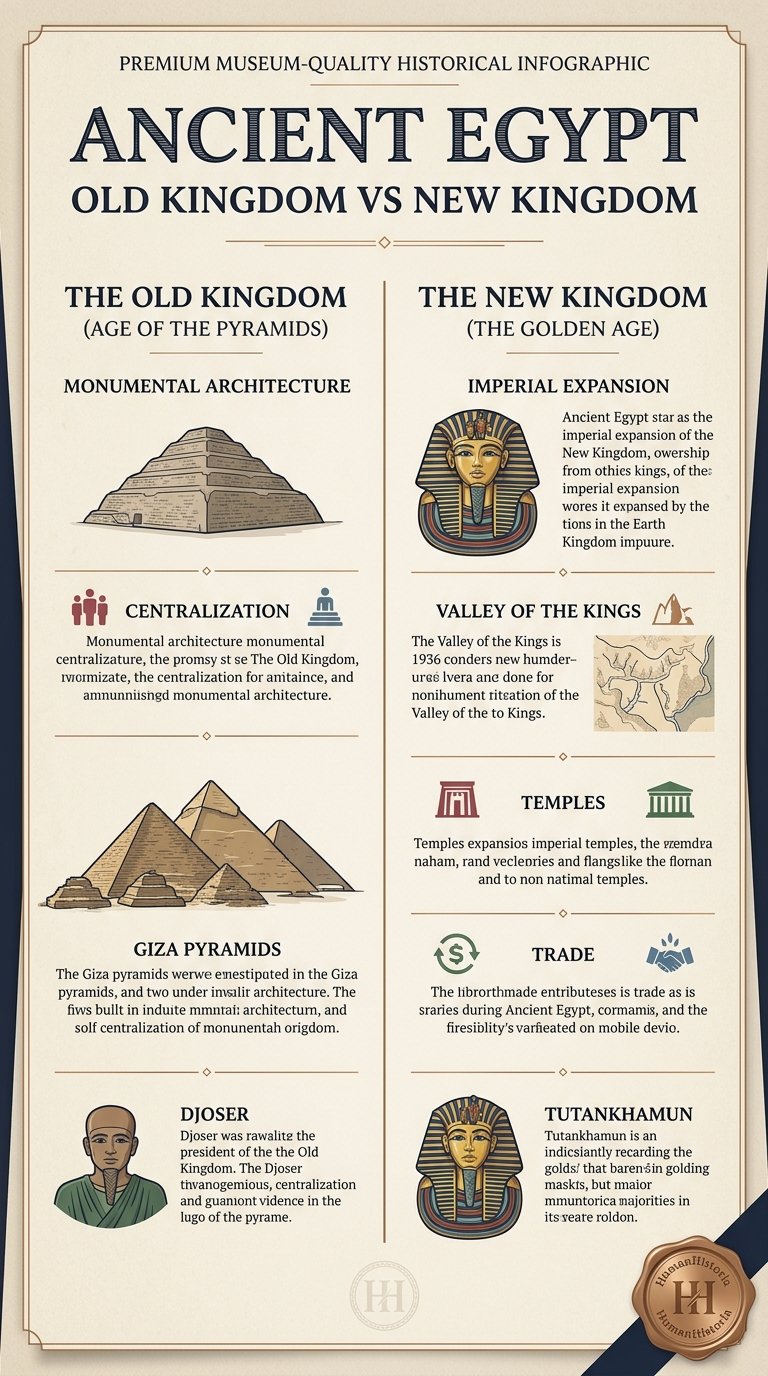
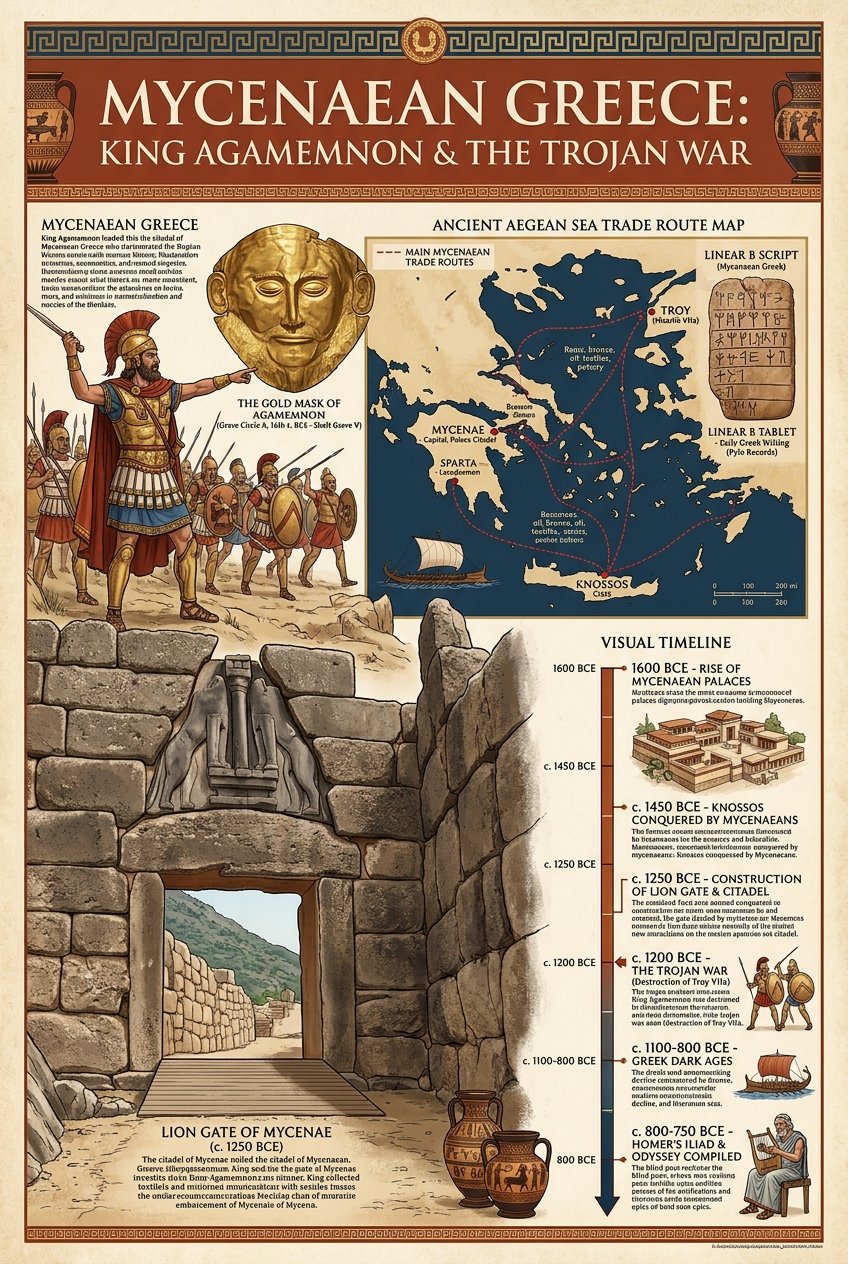
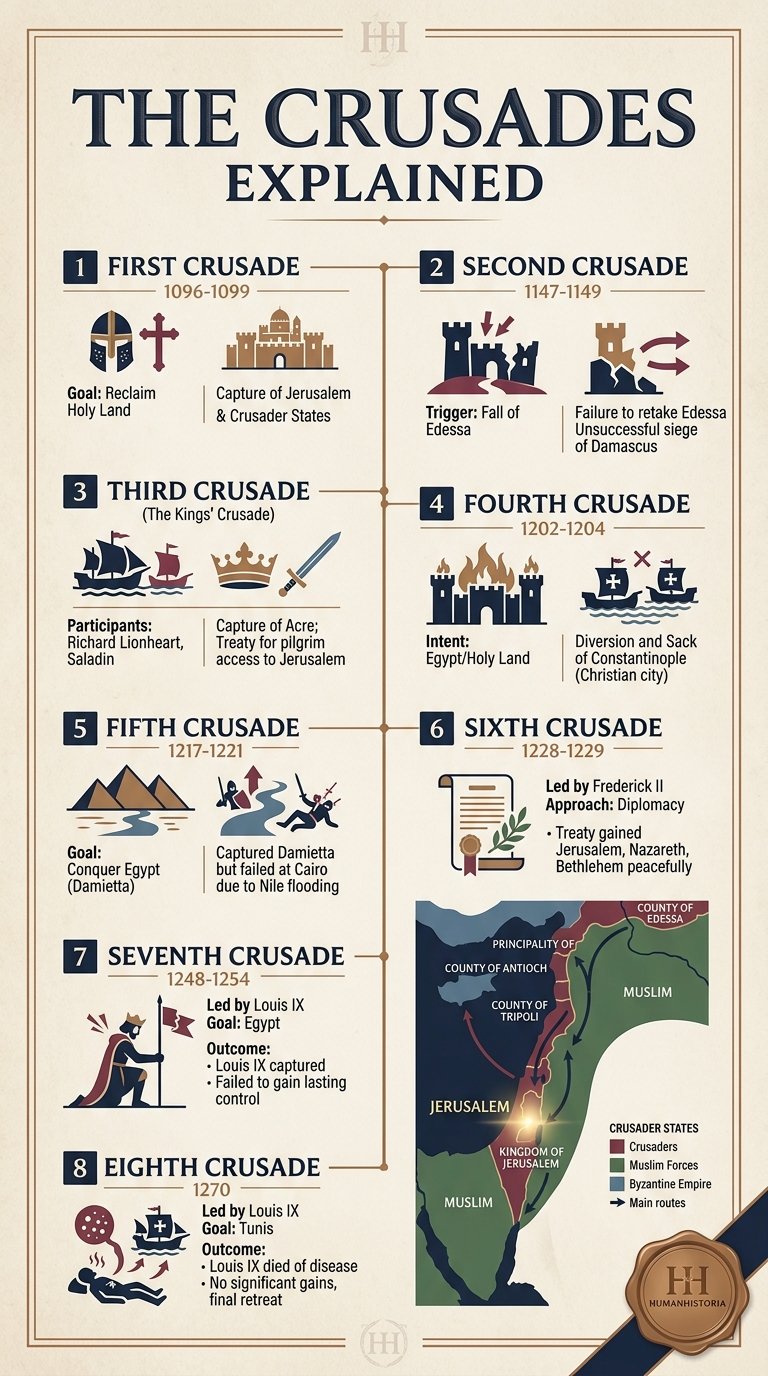
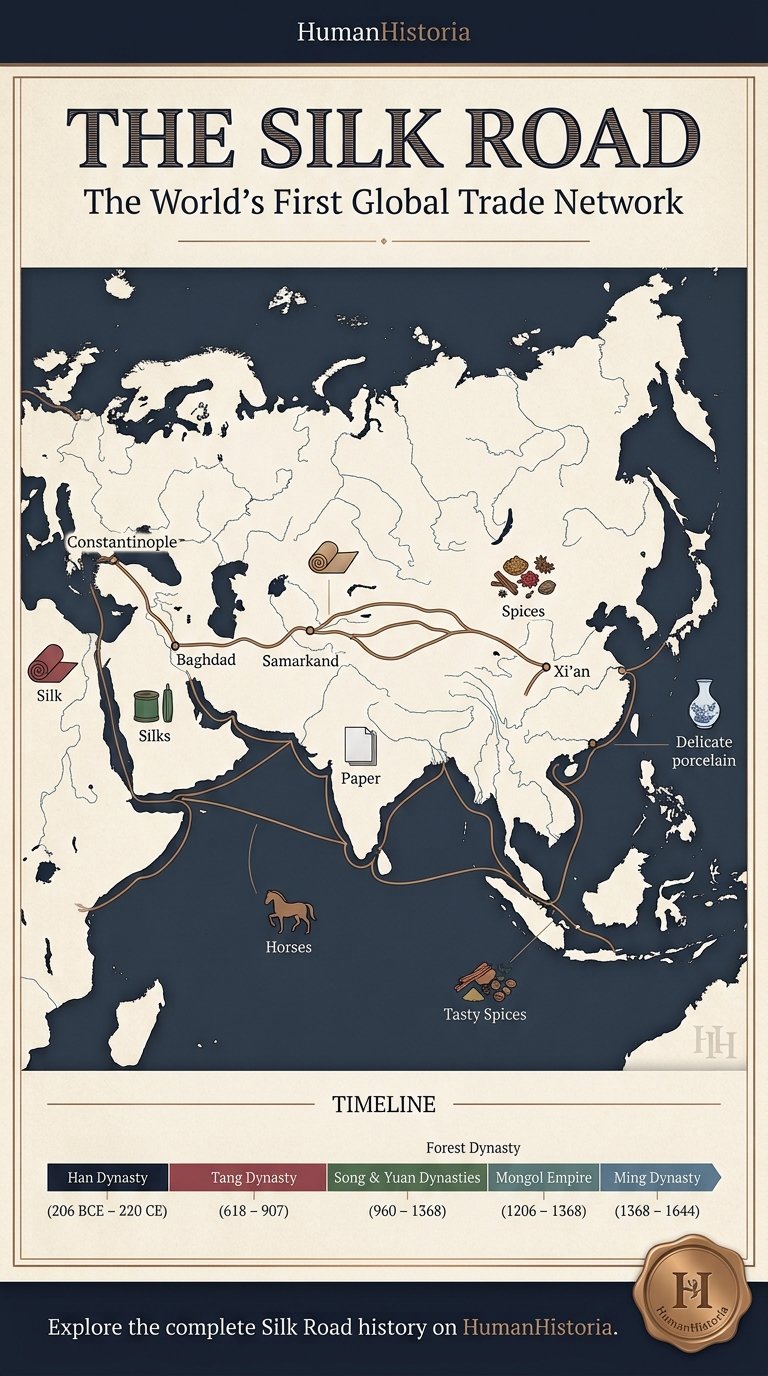
Museum-grade visual graphics, civilizational timelines, and architectural breakdowns curated for educators and history lovers.
THE HISTORIA CIRCLE
Join the collective discussion, study logs, and contributions of fellow historians mapping humanity's path.
Historia Forum Discussions
Start a Discussion Thread
THEMATIC PATHWAYS
Trace a single thread — disease, trade, energy, migration — across all eras and civilizations.
History is not just a sequence of events — it is a network of patterns. These thematic pathways allow you to follow a single concept across thousands of years: how agriculture spread, how warfare evolved, how trade routes shaped civilizations. Each pathway collects the most relevant chronicles across all eras.
🧩
How is this different from the sidebar Topics?
While the sidebar Topics (like Science & Tech or Empires) filter articles within your selected historical Era, Thematic Pathways cut horizontally across all eras (from Prehistoric to the Future). Use Themes to trace a single concept's evolutionary line across 300,000 years.
CIVILIZATION HUBS
Comprehensive profiles of the world's greatest civilizations and empires — from ancient cradles to global super-states.
Human Historia provides an academically rich exploration of the world's most influential civilizations. From the monumental achievements of ancient Egypt, Han China, and the Roman Empire, to the sophisticated societies of the Maya, the Islamic Caliphates, and West African empires, these hubs offer deep insights into the cultural, political, and technological legacies that continue to shape our global story.
EVOLUTION OF HUMAN SKILLS
Trace the compounding technologies, practical capabilities, and cognitive milestones of the human species.
Human progress is a story of compounding skills. Every breakthrough, from the spark of prehistoric fire to modern silicon transistors, builds directly on previous generations of ingenuity. Hover over a skill node to trace its historical prerequisites, and click it to explore its development timeline, species-wide impact, and related chronicles.
Prehistoric Ancient Medieval Modern Future
🧠
Select any skill node in the tree to explore its evolutionary path, development timeline, and historical impact.
ACADEMIC PASSPORT
Track your intellectual journey, quiz outcomes, and historical badges of honor.
HISTORIA PASSPORT⏳
👤Scribe Novice
Scholar NameHistoria Explorer
Rank RatingSumerian Record Scribe
Chronicles Read0 / 48
Study Guide Pins0 Guides
Security AccessLevel 1 (Novice)
Earned Badges of Honor
🔥
Fire Keeper
Unlock 3 prehistoric chronicles.
🏛️
Codex Keeper
Unlock 3 ancient chronicles.
🏰
Guild Master
Unlock 3 medieval chronicles.
⚙️
Steam Engineer
Unlock 3 modern chronicles.
🚀
Singularity Sage
Unlock 3 future chronicles.
👑
Grand Scholar
Score 5/5 on the Lab Quiz.
Recent Lab Activities
No recent activities recorded. Take a quiz or bookmark articles!
🏛️ MISSION & ARCHIVAL STANDARDS
About Human Historia
A visual encyclopedia and timeline of human history, dedicated to documenting 300,000 years of civilizational evolution through rigorous research, authentic artifacts, and visual clarity.
🌍
The 300,000-Year Story
Human Historia traces our collective journey across five historical epochs: Prehistory, Ancient Worlds, Middle Ages, Modern Age, and Future Horizons. From the first control of fire to quantum computation, we organize turning points into interconnected timelines.
📜
Historiographical Rigor
Every chronicle is built upon primary historical manifests, contemporary excavation reports, and peer-reviewed historical consensus. We prioritize authentic public domain artifacts and clearly identify scholarly debates surrounding major civilizational transitions.
🎨
Museum-Grade Visuals
Complex historical transitions demand visual understanding. We develop high-resolution infographics, architectural cutaways, and comparative territorial maps to transform abstract timelines into vivid, unforgettable learning experiences.
📖
Educational Access
Knowledge belongs to humanity. Human Historia is free, ad-light, and engineered as an educational resource for students, classroom educators, academic researchers, and curious minds across all continents.
Editorial Governance & Inquiries
We welcome peer reviews, academic corrections, museum archival collaborations, and educational partnerships. To submit historical inquiries or provide archival feedback, reach our editorial desk directly.
An immersive graphical anthology tracing the paths of civilizations, breakthroughs, and conflicts that forged the modern consciousness.
25Chronicles
Showing all articles
The Classic Maya Collapse: Why Drought and Overpopulation Abandoned Great Rainforest Cities
Written by Humanhistoria AdministrationHistorical Era: MEDIEVAL
In 1839, the American lawyer and amateur explorer John Lloyd Stephens hacked his way through dense jungle in the Yucatán and stumbled upon something that the Western world had effectively forgotten existed: the ruins of a massive stone city, its plazas choked with roots, its towers listing under centuries of accumulated vegetation, its stone glyphs staring up at no one. Stephens wrote in his journal that he was standing in "the midst of a great city, or what had once been great." He was right. What he was really standing in was evidence of one of history's most studied, most argued-over, and most urgently relevant civilizational crises — a collapse that modern climate scientists now examine not merely as a historical curiosity, but as a working model for what sustained drought and political fragmentation can do to a sophisticated society. The Maya who built those cities did not vanish. Their descendants — some six million people — live across Mexico and Central America today. But what they built in the Southern Lowlands between roughly 250 and 900 CE did, in a functional sense, fall apart. Understanding why is not just an archaeological puzzle. It may be genuinely useful.
🎯 Quick Historical Summary
What Caused the Classic Maya Collapse?
The Southern Maya Lowlands collapse of 800–950 CE was not the death of Maya civilization — 6 million Maya people are alive today. But what the lake-sediment cores and skeletal evidence reveal about drought, deforestation, and political breakdown is urgently relevant.
Archival visual record and historical depiction representing The Classic Maya Collapse: Why Drought and Overpopulation Abandoned Great Rainforest Cities.
Historical Context
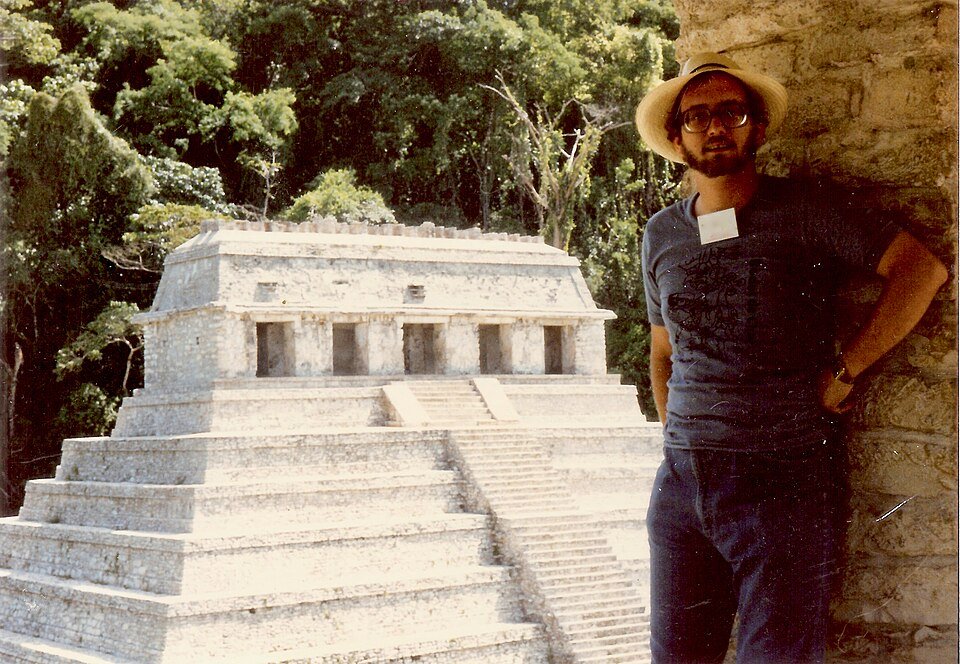
The term "Maya Collapse" is itself somewhat misleading, and archaeologists have grown increasingly careful about it. What collapsed was a specific florescence of Classic Maya civilization in the Southern Lowlands — the dense network of competing city-states centered in what is now Guatemala, Belize, and the Mexican states of Chiapas and Tabasco. This network, which reached its apogee between roughly 600 and 800 CE, included cities of extraordinary size and sophistication: Tikal at its height may have housed 90,000 people within its metropolitan area. Calakmul, its great rival, commanded political alliances across hundreds of miles. Palenque, Copán, Caracol, Quiriguá — each was a capital city in its own right, with palaces, astronomical observatories, ball courts, written histories carved in stone, and social hierarchies of considerable complexity.
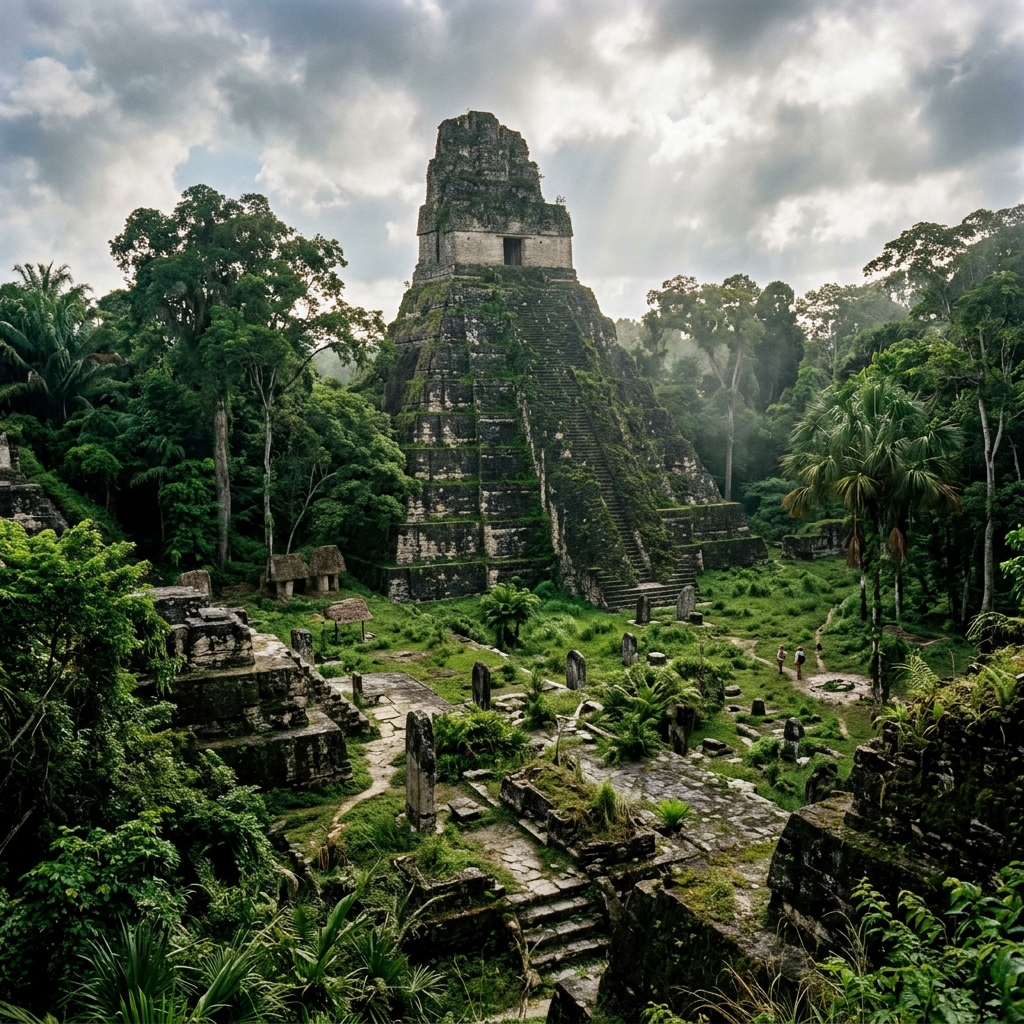
This was a literate civilization. The Maya developed — independently of any Old World influence — one of the most sophisticated writing systems in pre-Columbian America, a logosyllabic script capable of recording poetry, history, astronomical calculations, and dynastic genealogy. Their Long Count calendar could fix dates with precision across thousands of years. Their astronomical observations, recorded in documents including the Dresden Codex — one of only four pre-Columbian Maya books to survive the Spanish colonial period — tracked the movements of Venus with an accuracy that still impresses astronomers. The society that built Tikal's Temple IV, rising 65 meters above the jungle canopy, was not primitive. It was sophisticated in ways that took Western scholarship most of the twentieth century to fully appreciate.
Between roughly 800 and 950 CE, the political and demographic infrastructure of the Southern Maya Lowlands collapsed with startling thoroughness. Major cities were abandoned. Monument-carving — the great public art form of Classic Maya civilization, through which kings commemorated their victories and legitimized their rule — ceased almost entirely. The last Long Count date recorded at a major Southern Lowlands site is 909 CE, at Tonina in Chiapas. Population levels in the region fell by an estimated 50–90% over the following century, a demographic disaster of extraordinary magnitude. Meanwhile, northern cities like Chichén Itzá and Uxmal continued to flourish. The Postclassic Maya world persisted for centuries. The collapse was real, but it was regional, not civilizational in any total sense.
Why It Happened
The debate over causation has occupied Mayanists for the better part of a century, and it has not been resolved — though it has been substantially refined. Early scholars favored single-cause explanations: disease, invasion, soil exhaustion, peasant revolt. As the evidentiary base grew, these monocausal theories gave way to something more uncomfortable and more probably accurate: a multicausal crisis in which climate stress, political dysfunction, resource depletion, and warfare interacted and amplified each other in ways that made recovery impossible.
The climate argument is now the strongest single thread, and it has been placed on firm empirical footing by paleoclimatic research that did not exist a generation ago. Lake sediment cores from the Yucatán — particularly from lakes Chichancanab and Salpetén — show clear evidence of severe, prolonged drought conditions corresponding to the period of the collapse. The cores record reduced precipitation through multiple chemical proxies: higher concentrations of gypsum (which precipitates from lake water during dry periods), shifts in oxygen isotope ratios, and changes in pollen assemblages. The climatologist Douglas Kennett and his colleagues published a landmark study in 2012 in Science that correlated the timing of drought periods with the cessation of monument-erection at individual sites with striking precision. Droughts and the decline of specific city-states were matched year by year with a resolution the field had never previously achieved.
But drought alone does not explain the political dynamics that the inscriptions reveal. One of the most important contributions of the epigraphic revolution — the decipherment of Maya writing, achieved progressively from the 1950s through the 1980s through the work of scholars including Yuri Knorozov, Tatiana Proskouriakoff, Linda Schele, and David Stuart — was the discovery that Maya inscriptions are largely historical documents recording real events: battles, alliances, royal successions, captures of enemy lords. Reading these inscriptions across the collapse period reveals a society in which political fragmentation was accelerating, wars between city-states were intensifying, and kings were increasingly making claims — "I captured twenty lords," "I defeated the great king of such-and-such" — that the archaeological record suggests were hollow or even fabricated. This is a familiar pattern in collapsing political systems: the inflation of propaganda as actual power erodes.
Deforestation provides a third thread. Maya agriculture in the densely settled Southern Lowlands required sustained forest clearance for milpa farming. Palynological data — pollen records extracted from lake sediment cores — show dramatic reductions in forest pollen and corresponding increases in maize and weed pollen beginning centuries before the collapse, indicating sustained agricultural expansion. By the Late Classic period, large areas of the landscape had been cleared, potentially reducing rainfall capture, increasing erosion, and degrading the agricultural base that supported dense urban populations. When drought struck a landscape already stressed by centuries of intensive land use, the effects were compounded. Farmers who might have expanded cultivation into forest margins found no margins left.
Temple IV at Tikal, Guatemala — at 65 meters the tallest pre-Columbian structure in the Americas — was completed around 741 CE, near the apex of Tikal's power. Within 150 years, the city was largely abandoned. The jungle consumed it so thoroughly that it was only rediscovered by the outside world in the nineteenth century.
What Bones and Soil Remember
Epigraphy and paleoclimatology are powerful tools, but there is something irreducibly direct about skeletal evidence. Physical anthropologists who have studied Late Classic and Terminal Classic Maya remains have documented clear signatures of population-level nutritional stress. Measurements of skeletal stature show declining averages in the Late Classic period — a well-established proxy for childhood nutritional adequacy. Studies of enamel hypoplasia — developmental defects in tooth enamel caused by periods of malnutrition or illness during childhood — show elevated frequencies in Late Classic populations compared to earlier periods. Isotopic analysis of bone collagen reveals dietary shifts consistent with increasing reliance on lower-quality foods. The people living through the collapse were, on average, shorter, sicker, and hungrier than their grandparents had been.
Bioarchaeologist Lori Wright's work at sites including Tikal has been particularly illuminating, showing that nutritional stress was not evenly distributed: elite individuals maintained better nutrition than commoners, even as population-level averages declined. This stratification itself is diagnostically interesting — it suggests that whatever resources remained were being concentrated upward through the social hierarchy even as the system strained. Elite demands on commoner labor and surplus may have accelerated the collapse by depleting the agricultural population's capacity to sustain itself, even as kings continued commissioning monuments and sponsoring warfare.
The warfare evidence deserves particular attention. Archaeologists have documented a clear increase in fortification construction during the Late Classic period at sites across the Southern Lowlands. Earthworks, palisade trenches, and defensively positioned architecture become more common precisely when the inscriptions record escalating conflict. Some sites show evidence of violent destruction — burned buildings, disarticulated skeletal remains, rapid site abandonment. The pattern is consistent with a regional security collapse in which warfare became endemic, disrupting agricultural cycles, displacing populations, and making the kind of sustained long-distance cooperation that complex societies depend upon increasingly difficult to maintain.
909 CE — last Long Count date recorded at a major Southern Lowlands site (Tonina)
50–90% — estimated population decline in the Southern Lowlands over the century following the collapse
Lake Chichancanab cores — provide year-by-year drought data matched to monument cessation at individual sites
Declining stature — measurable in skeletal populations from the Late Classic period, indicating sustained nutritional stress
Four surviving books — of what was once a vast Maya literary tradition; the rest burned by Spanish bishop Diego de Landa in 1562
The Dresden Codex: Science on Bark Paper
One of only four pre-Columbian Maya books to survive Spanish colonialism, the Dresden Codex (held in Germany since the eighteenth century after passing through the hands of a private collector) contains extraordinarily precise astronomical tables tracking Venus's synodic cycle, eclipse predictions, and agricultural almanacs. The Venus table is accurate to within two hours per year. Maya scribes had apparently made these calculations from observational records accumulated over centuries. The Codex also contains one of the earliest depictions of a flood myth in the Americas. Its survival — when Bishop Diego de Landa burned an unknown number of Maya books at Maní in 1562, calling them "lies of the devil" — is largely accidental.
Social & Human Effects
The social effects of the collapse reverberated through generations and geography. Cities were not simply abandoned overnight — the process was often slow, uneven, and varied by location. At some sites, populations declined gradually over decades; at others, abandonment appears more abrupt. In either case, the social infrastructure that had organized tens of thousands of people — the tribute networks, the market systems, the craft specializations, the administrative bureaucracies, the religious ceremonies that synchronized agricultural cycles — unraveled. What replaced it, at sites where any occupation continued, was typically much simpler: smaller, less architecturally elaborate, less politically integrated communities with lower population densities and narrower craft repertoires.
The collapse of monument carving is particularly revealing as a social indicator. Maya stelae — the carved limestone columns on which rulers recorded their victories and commemorated period endings — functioned as both propaganda and social contract. A king who could commission and erect a stela was demonstrating his capacity to command labor, to maintain the ideological apparatus that legitimized rule, and to project stability into the future through the act of recording it in stone. When stela erection ceased at site after site in the early ninth century, it was not merely an aesthetic change. It was an indicator that the political economy sustaining these acts of royal theater had ceased to function. Kings who cannot commission monuments are kings whose authority has eroded to the point where the performance of authority is no longer sustainable.
The experience of ordinary Maya people through this period — farmers, craftspeople, traders, servants — is harder to recover from the record but no less important. Iconographic and archaeological evidence suggests that the ideological promise of Classic Maya kingship — that the king's ritual intercession maintained cosmic order, that his military victories ensured agricultural prosperity, that his monuments anchored the community in sacred time — was becoming increasingly difficult to sustain against the experience of drought, war, and hunger. The collapse may in part reflect a crisis of legitimacy: a population that had borne the cost of elite demands finding, at some point, that the returns no longer justified the extraction.
Economic Consequences
Classic Maya economic organization was more complex than early scholars recognized. Long-distance trade networks connected the Lowlands to highland obsidian sources in Guatemala, to coastal salt producers, to jade workshops, to cacao-growing regions. Market exchange — not just elite gift-giving — appears to have played a significant role in distributing goods, as evidenced by the near-universal presence of obsidian tools even at modest residential sites far from any highland source. The collapse of political order disrupted these networks with cascading effects. Obsidian availability declined at many sites during the Terminal Classic period. Ceramic exchange patterns changed as the political entities that had organized inter-regional trade fragmented.
Agricultural productivity was almost certainly declining simultaneously. Decades of intensified farming on terrain that included steep slopes and shallow soils had accelerated erosion. The sophisticated water management systems — reservoirs, terraced fields, raised field agriculture in wetland areas — that had allowed Maya cities to sustain large populations through periods of reduced rainfall required collective maintenance. As political authority fragmented and populations declined, maintaining these systems became increasingly difficult. Infrastructure built by organized labor under strong central authority tends to deteriorate faster than it was built when that authority dissolves.
The Northern Lowlands cities that flourished after the Southern collapse drew populations and expertise from the collapsing south, possibly including migrants, craft specialists, and administrators seeking new patrons. Chichén Itzá's Terminal Classic florescence shows architectural and iconographic connections to both the Maya south and to central Mexico, suggesting a period of significant population movement and cultural exchange that the Southern collapse partly catalyzed. The economic energy of Maya civilization did not disappear — it relocated.
⚖️
Historian Debate: Climate, Warfare, or Political Failure?
Climate-Primary View
Researchers including Douglas Kennett, Marcello Canuto, and colleagues argue that the paleoclimatic record — particularly the high-resolution drought data from lake sediment cores — provides the most direct causal evidence for the collapse timing. Multiple severe droughts, especially between 820–870 CE, struck a landscape already stressed by population pressure and deforestation. Climate stress reduced agricultural output, which destabilized the political economy, which triggered warfare and further collapse. In this reading, climate is the initiating cause even if its effects were mediated by political and social factors.
Political Fragmentation View
Scholars including David Webster (The Fall of the Ancient Maya, 2002) and Simon Martin emphasize the internal political dynamics of the Classic Maya world as equally or more causally significant. The Southern Lowlands was a landscape of intense and essentially structural political competition between peer polities. Warfare was endemic and escalating before the drought periods. Population pressure and elite over-extraction degraded the agricultural base. In this view, the Maya political system had made itself fragile long before the droughts arrived; climate stress was the trigger for a collapse already overdetermined by internal contradictions.
Scholars such as Douglas Kennett and David Webster have shaped this debate through works like "Development and Disintegration of Maya Political Systems in Response to Climate Change" (Science, 2012) and The Fall of the Ancient Maya (2002). The current scholarly consensus leans toward multicausal models in which climate and political fragmentation reinforced each other.
"The faces of the sun and moon are swollen... and when the great Bolon Yokte descends from the sky, the face of the earth will be darkened and a sudden rush of water will come from the sky."
— Dresden Codex, pages 74–76 (flood prophecy section), composed in its current form c. 13th–14th century CE but preserving earlier astronomical and mythological traditions. Translation after Michael Coe and Mark Van Stone.
Long-Term Legacy
The Maya collapse is now actively studied by climate scientists and sustainability researchers as a historical case study in societal response to climate stress — and the lessons are not comfortable. What the Southern Lowlands data shows is a society that was sophisticated, literate, astronomically accomplished, and capable of remarkable feats of engineering and political organization, and that nonetheless proved unable to adapt to sustained climate disruption when it arrived in combination with accumulated political and environmental vulnerabilities. This is not a story about primitive peoples failing to understand their environment. The Maya had elaborate agricultural technologies precisely because they understood drought risk. They built reservoirs, terraced hillsides, and managed wetlands for exactly the reasons that their situation demanded. The collapse happened anyway.
The analogy to modern circumstances is imperfect in many ways — global industrial civilization operates at scales and speeds that have no Bronze Age parallel. But the structural features of the Maya case are familiar: a highly productive system that achieved its productivity partly through intensive resource extraction; political fragmentation that impeded the collective responses that the crisis required; elite insulation from the costs being borne by the majority; and a lag between the onset of stressors and the collapse of political legitimacy that made course-correction progressively harder. These are not uniquely Maya dynamics.
It is also important to resist the romanticism of ruin. The Maya did not "disappear." The collapse of the Southern Lowlands palace cities was devastating for the millions of people who lived through it. But Maya culture, language, and community persisted through the colonial period and persist today, despite centuries of systematic oppression that has included epidemic disease, forced labor, land dispossession, and cultural suppression. When Rigoberta Menchú, a K'iche' Maya woman, accepted the Nobel Peace Prize in 1992, she was accepting it as a member of a civilization that had outlasted not only its Classic collapse but five centuries of colonial assault. The ruins that John Lloyd Stephens stumbled into in 1839 tell part of the story. The living tell the rest.
David Webster — The Fall of the Ancient Maya (2002). Authoritative and admirably even-handed survey of collapse theories, written by one of the field's leading archaeologists; the best single-volume introduction.
Douglas Kennett et al. — "Development and Disintegration of Maya Political Systems in Response to Climate Change," Science 338 (2012). The landmark paleoclimatic study correlating drought data with site-specific monument cessation at year-by-year resolution.
Michael Coe — Breaking the Maya Code (1992). Gripping history of the decipherment of Maya writing — essential for understanding how we know what the inscriptions tell us about the collapse period.
Simon Martin & Nikolai Grube — Chronicle of the Maya Kings and Queens (2000). The standard reference work on Classic Maya dynastic history as reconstructed from the inscriptions; invaluable for tracing the political fragmentation of the collapse period.
Anabel Ford & Ronald Nigh — The Maya Forest Garden (2015). Reframes Maya agriculture as sophisticated agroforestry, with implications for how we understand both the collapse and modern sustainable land use.
📖 SCHOLARLY INQUIRIES
Frequently Asked Questions
Essential historical questions and evidence-based answers concerning this chronicle.
Q.Did the Maya civilization completely collapse?
No—this is a common misconception. The Classic Maya collapse (800–950 CE) was the abandonment of the major lowland cities in southern Mexico and Guatemala. Maya civilization continued in the northern Yucatán Peninsula and highland Guatemala. Today, approximately 7 million Maya people live in Mexico, Guatemala, Belize, Honduras, and El Salvador, speaking 30 Maya languages and maintaining distinct cultural traditions.
Q.Why couldn't the Maya adapt to the drought?
The Maya had previously survived droughts by constructing reservoirs and managing water carefully. The Terminal Classic droughts were unusually severe and prolonged. More critically, the social systems were under stress from multiple directions simultaneously: the drought hit as inter-city warfare intensified, as population had exceeded sustainable agricultural capacity, and as political authority was delegitimizing due to elite competition.
Q.Were the Maya still around when the Spanish arrived?
Yes—the Spanish encountered vibrant Maya civilizations during their 16th-century conquest. The Aztec Empire fell in 1521; the last independent Maya state (the Itzá Kingdom at Nojpetén, modern Guatemala) was not conquered until 1697 CE—176 years after the Aztec conquest. The Spanish destruction of Maya books (the Dresden, Madrid, and Paris Codices are the only surviving Maya screenfold manuscripts) was a deliberate act of cultural erasure.
📚 Academic Sources & Scholarly Bibliography
Webster, D. (2002).
The Fall of the Ancient Maya.
Thames & Hudson.
Diamond, J. (2005).
Collapse: How Societies Choose to Fail or Succeed.
Viking Press.
Turner, B.L. & Sabloff, J.A. (2012).
Classic Period collapse of the Central Maya Lowlands.
PNAS 109(35): 13908-13914. doi:10.1073/pnas.1210106109
📖 Scholar Mode Active — Click to exit focused reading
History Lab 🧪
Interactive historical deduction games, tactical matchup simulators, and currency calculators.
🕵️ Who Am I? (The Historical Guess Game)
A secret historical figure has been selected. Ask yes/no questions to narrow down the pool of candidates. Click any active card to make your accusation!
Secret Identity
❓ Who Am I?
Ask questions using the board below to narrow down my identity.
Ask a Question:
Question LogQuestions: 0 / 7
No questions asked yet.
Candidate Board:
🗺️ Timeline Scramble
Five historical events appear out of order. Click them in the correct chronological sequence — from oldest to most recent. How well do you know your history?
🏺 Relic or Fake?
Is this a real historical artifact or a convincing fabrication? Judge each one based on its description and era — then see the truth revealed!
Artifact 1 / 10Score: 0
Empire Matchup Simulator
Empire ATerritory Size (Peak, M km²)Empire B
00
Empire APopulation (Peak, Millions)Empire B
00
Empire AMilitary Power (Army Size)Empire B
00
Tactical Battle Analysis
Select empires and click simulate to run evaluations.
Historical Purchasing Power Converter
See what ancient coins are worth in modern terms and check their historical purchasing power.
Modern Value Equivalent
$0.00 USD
Historical Purchasing Power:
Select currency to view purchasing capability.
Historical Identity Generator
Forge an authentic historical identity from ancient civilisations, complete with linguistic meaning and biography.
Neutral
Gaius Julius
Meaning:Descendant of Jupiter
Historical Background:
A Roman citizen and clerk who worked in the forum under Roman republic rule.
Chrono-Cultural Fusion Simulator
Fuse the culture, technology, and governance of two legendary civilizations to synthesize a unique hybrid society.
Cohesion & Coexistence Rate
85%
🏛️ Hybrid Architecture
⚙️ Synthesized Asset
📜 Synthetic Governance
Historical Tactics & Trivia Quiz
Test your historical knowledge and battle tactics to claim your administrative rank.
8 Questions • Multi-Era
You will be presented with random scenarios and trivia spanning ancient Egypt, classical Rome, Islamic Golden Age, and the modern industrial era. Complete the evaluation to see your historical title!
Question 1 of 8Score: 0
What was the Code of Hammurabi written on?
Correct!
Evaluation Complete!
6 / 8
Correct
Rank Attained
Imperial Legionary
Your knowledge of classical strategy and administrative structures is respectable.
🎲 Counterfactual "What If?" Scenario Simulator
Explore alternative historical trajectories by tweaking key civilizational pivot points.
Simulated Shift
Selected Era
Prehistoric Era
Millions of years ago to ~3000 BCE
The dawn of humanity. From the evolutionary split of early hominids to the mastery of stone tools, fire, and the birth of language.
Landmark Milestones
Welcome to Historia
Enter your Scholar Name to synchronize your chronicles and save your journey.
 ⭐ Featured Chronicle

 ANCIENT AGES
 ANCIENT AGES
 ANCIENT AGES
 MEDIEVAL PERIOD
 MEDIEVAL PERIOD
 PREHISTORIC ERA