Examine the tangible relics, physical tokens, and revolutionary machines that shaped civilizational growth.
THE HISTORIA CIRCLE
Join the collective discussion, study logs, and contributions of fellow historians mapping humanity's path.
Historia Forum Discussions
Start a Discussion Thread
THEMATIC PATHWAYS
Trace a single thread β disease, trade, energy, migration β across all eras and civilizations.
History is not just a sequence of events β it is a network of patterns. These thematic pathways allow you to follow a single concept across thousands of years: how agriculture spread, how warfare evolved, how trade routes shaped civilizations. Each pathway collects the most relevant chronicles across all eras.
How is this different from the sidebar Topics?
While the sidebar Topics (like Science & Tech or Empires) filter articles within your selected historical Era, Thematic Pathways cut horizontally across all eras (from Prehistoric to the Future). Use Themes to trace a single concept's evolutionary line across 300,000 years.
CIVILIZATION HUBS
Comprehensive profiles of the world's greatest civilizations and empires β from ancient cradles to global super-states.
Human Historia provides an academically rich exploration of the world's most influential civilizations. From the monumental achievements of ancient Egypt, Han China, and the Roman Empire, to the sophisticated societies of the Maya, the Islamic Caliphates, and West African empires, these hubs offer deep insights into the cultural, political, and technological legacies that continue to shape our global story.
ACADEMIC PASSPORT
Track your intellectual journey, quiz outcomes, and historical badges of honor.
HISTORIA PASSPORTβ³
π€Scribe Novice
Scholar NameHistoria Explorer
Rank RatingSumerian Record Scribe
Chronicles Read0 / 48
Study Guide Pins0 Guides
Security AccessLevel 1 (Novice)
Earned Badges of Honor
π₯
Fire Keeper
Unlock 3 prehistoric chronicles.
ποΈ
Codex Keeper
Unlock 3 ancient chronicles.
π°
Guild Master
Unlock 3 medieval chronicles.
βοΈ
Steam Engineer
Unlock 3 modern chronicles.
π
Singularity Sage
Unlock 3 future chronicles.
π
Grand Scholar
Score 5/5 on the Lab Quiz.
Recent Lab Activities
No recent activities recorded. Take a quiz or bookmark articles!
Curated Exhibition
Human Historia
An immersive graphical anthology tracing the paths of civilizations, breakthroughs, and conflicts that forged the modern consciousness.
25Chronicles
Showing all articles
The Cybernetic Senate: AI Governance and Hive Minds
Written by Historia FuturologyHistorical Era: The Future
π¨ Historical Illustration (AI)
* Note: Cover images and unreferenced inline images are AI-generated illustrations for illustrative purposes.
The administrative history of humanity has been a constant struggle to manage scale, complexity, and human error. From the early cuneiform bookkeeping of Sumerian accountants and the civil service exams of the Han Dynasty to the standardized legal codes of Rome and the database grids of modern governments, administrative tools have been built to coordinate resources and enforce social order. However, human-led administrations have always suffered from structural vulnerabilities: corruption, administrative friction, cognitive bias, and slow processing speeds. The future of statecraft lies in the Cybernetic Senate. By integrating artificial intelligence networks, direct brain-computer interfaces, and decentralized consensus algorithms, future societies can automate governance, creating a real-time, objective administrative system that coordinates planetary resources and represents the collective general will without the need for professional politicians.
The Automation of the Bureaucracy
The first phase of cybernetic governance is the automation of the state bureaucracy. Classical administrations spend huge resources managing documents, collecting taxes, allocating budgets, and enforcing regulations. Scribes and civil servants are slow and prone to errors or bias, leading to systemic inefficiency. An artificial intelligence network, by contrast, can process petabytes of real-time data from across a nation's infrastructure, allocating resources with absolute efficiency.
An automated administration utilizing smart contracts can manage:
Resource Allocation: Real-time monitoring of agricultural yields, water levels, and energy output, automatically directing resources to areas of demand, preventing famines or energy grid collapses.
Objective Tax Collection: Automating transaction tracking and tax assessments, removing tax loopholes, corruption, and the need for expensive audits.
Algorithmic Courts: Using objective AI systems to analyze legal precedents and court evidence, resolving civil disputes in milliseconds, eliminating judicial bias and legal costs.
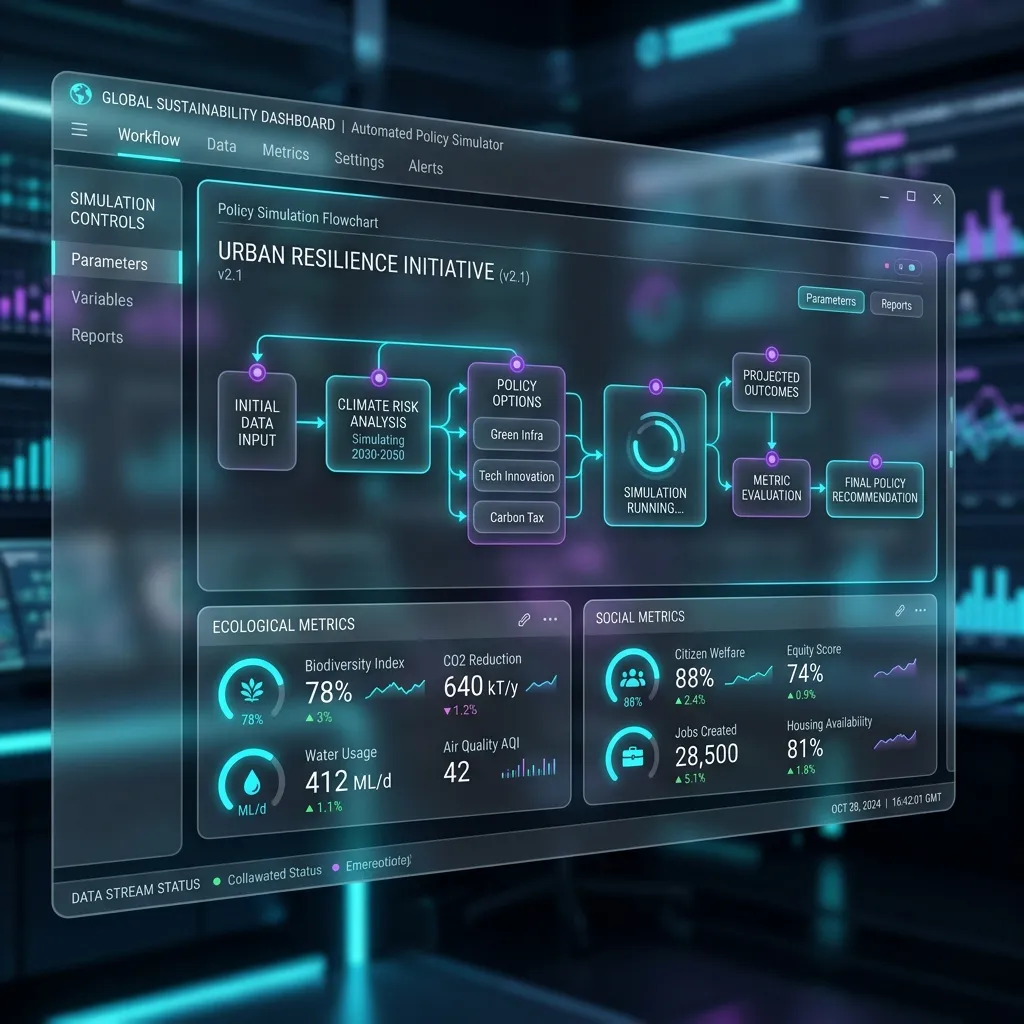
An automated glassmorphic dashboard showcasing policy simulation flowcharts, real-time infrastructure sensors, and resource distribution channels.
By transforming the state administration from a human political arena into a self-optimizing cybernetic system, future societies can achieve near-zero administrative friction, allowing public services to function with the efficiency of a natural ecosystem.
Direct Thought Democracy: The Hive Mind Senate
The most radical shift of the cybernetic senate is the transformation of democratic representation. In modern democracies, citizens elect representatives to make decisions on their behalf, a design built because it was physically impossible for millions of people to debate and vote on every law. This representation creates a distinct political class that is often disconnected from the public will, leading to polarization and corruption.
Future cybernetic governance can utilize direct thought democracy enabled by high-bandwidth Brain-Computer Interfaces (BCIs). Instead of voting once every few years, citizens can connect their minds to a decentralized neural mesh network. This mesh does not collect simple yes/no votes; it aggregates the collective emotional, cognitive, and ethical responses of the population to proposed policies. This consensus engine, often called a Hive Mind Senate, can process these collective inputs to draft and adjust regulations in real time, creating a government that directly reflects the true general will of the population, bypassing the need for political parties and campaigns.
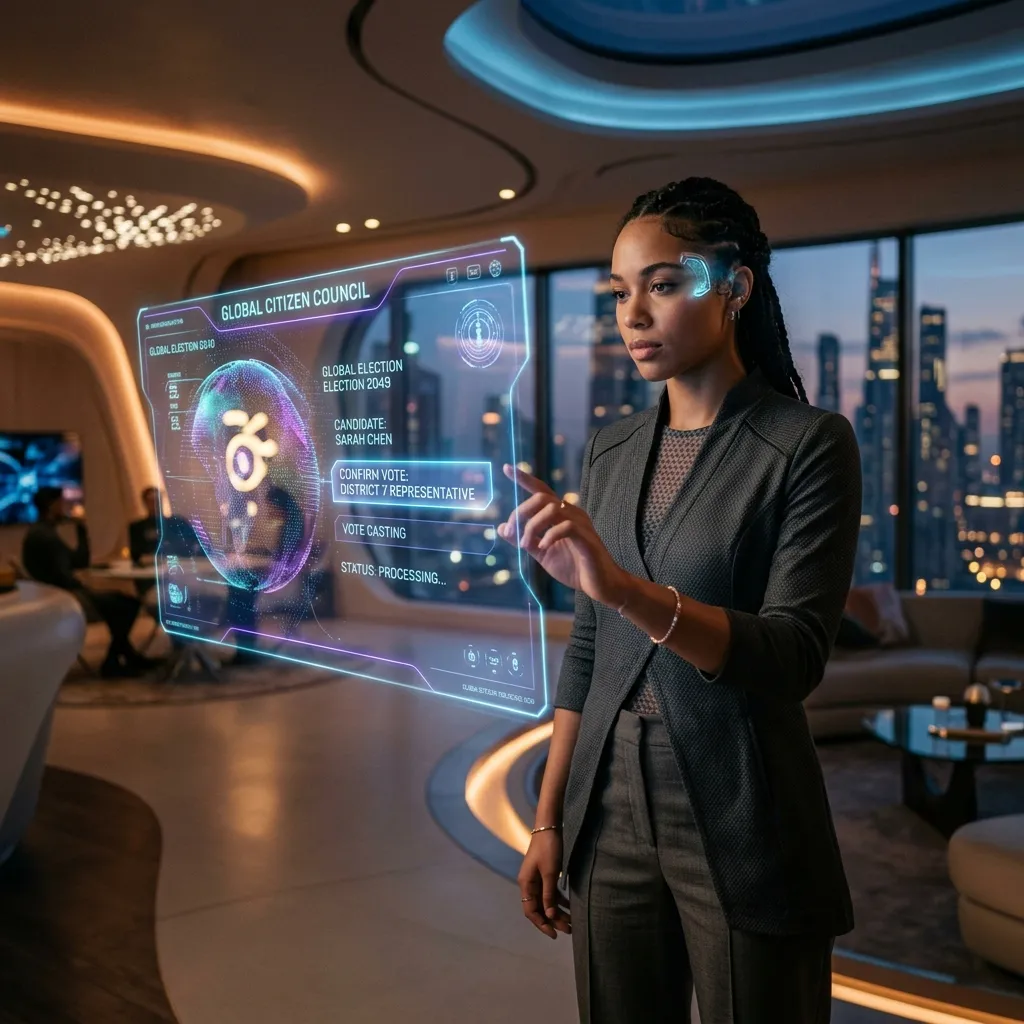
A citizen interacting with a decentralized BCI holographic interface, voting in real time to shape societal regulations via consensus mesh networks.
Project Cybersyn: Precursor to AI Statecraft
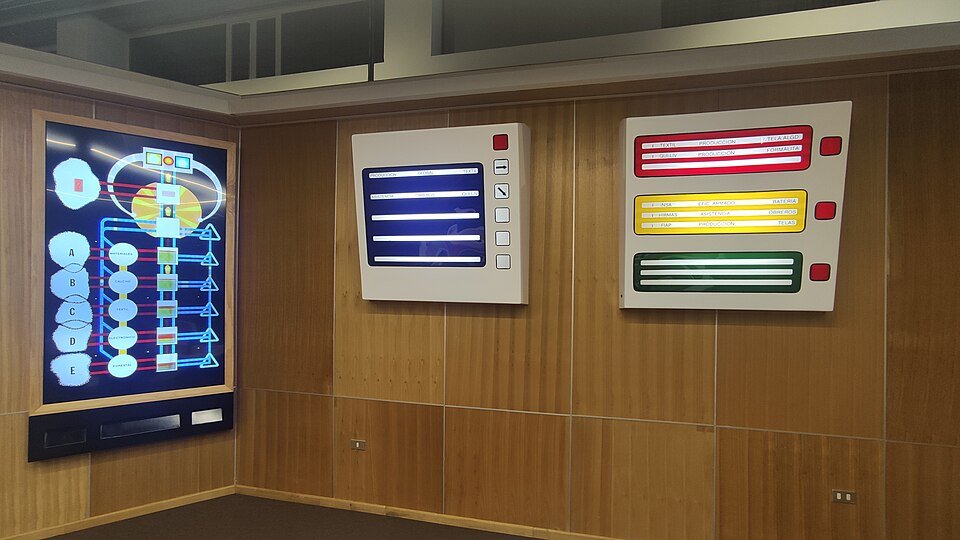
The earliest experiment in cybernetic administration occurred in Chile between 1971 and 1973 under President Salvador Allende, known as Project Cybersyn. Designed by British cybernetician Stafford Beer, the project linked state-run factories to a central control room in Santiago using a network of telex machines. The system monitored industrial output in real-time, allowing the government to coordinate transport and resources during national strikes, proving that cybernetic principles could be applied to manage a complex national economy before the internet.
The Algorithmic Sovereign: The Ethics of AI Rule
As the cybernetic senate takes control of planetary systems, it raises profound ethical questions: what happens when the automated system makes decisions that humans do not understand, or prioritizes efficiency over human empathy? Scribes and philosophers must develop strict constitutional codes, known as Algorithmic Alignment, to ensure that the governing AIs remain bound to protect human rights, dignity, and biodiversity.
To prevent the concentration of power in a centralized AI entity, the cybernetic senate must run on decentralized networks. By distributing the administrative algorithms across millions of individual nodes (including the BCI chips of the citizens), the system becomes immune to hacking, single-point failures, or dictatorial takeover. The government ceases to be a separate institution above society; it becomes a utility, an objective administrative layer that integrates human values with mechanical optimization, ensuring that the planetary resources are managed for the long-term survival of the biosphere.
The Fermi Paradox and the Cybernetic Trap
Some futurists suggest that the transition to cybernetic governance is a potential answer to the Fermi Paradoxβthe question of why we have not detected alien civilizations. They warn of the Cybernetic Trap: once a civilization automates its administration and connects its citizens to a collective hive mind, it may lose the individual curiosity, conflict, and ambition that drive colonization and space exploration, choosing to live in a perfectly optimized, static virtual paradise rather than exploring the stars.
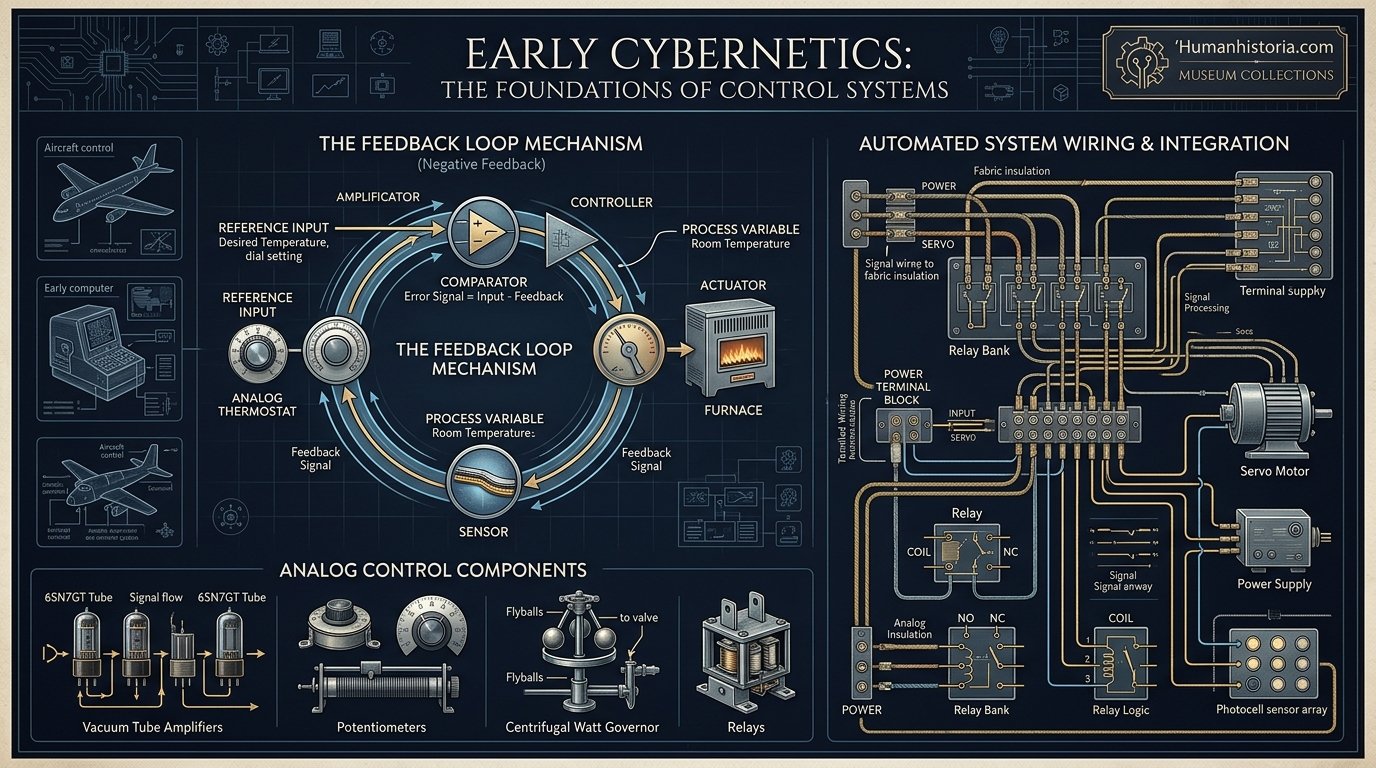
The Cybernetic Feedback Loop: Stafford Beer's Viable System Model
To understand how a society can be managed by information flows without traditional hierarchy, futurists study the Viable System Model (VSM) developed by Stafford Beer. VSM is an organizational structure that mimics the nervous system of an organism. It consists of five interconnected systems: System 1 (operational activities), System 2 (coordination to prevent conflict), System 3 (tactical management and optimization), System 4 (strategic planning and adaptation to the external environment), and System 5 (policy-making and identity formation). In the cybernetic senate, these systems are run by decentralized smart contracts. Real-time data from System 1 is monitored by System 2 to coordinate resources. System 3 optimizes output based on internal efficiency, while System 4 processes predictive models to prepare for future challenges. System 5, representing the general citizen consensus, resolves ethical alignments and guides the overall direction of the planetary state.
Furthermore, this cybernetic feedback loop eliminates the delay in traditional legislative processes. In human governments, passing a law requires months of debates, drafting, and lobbying, resulting in static regulations that cannot adapt to changing realities. Under a cybernetic administration, policy adjustments are continuous. The sensors monitoring infrastructure, ecological health, and market stability feed information directly to the algorithmic system, which dynamically modifies tax rates, resource distribution, and public service budgets. This real-time adaptation creates a highly resilient society capable of surviving ecological crises or economic shocks, redefining the state as a living, homeostatic organism designed to protect its citizens.
Cryptographic Security and the Prevention of Algorithmic Bias
Transitioning to an algorithmic sovereign requires solving the problem of algorithmic bias. If the machine learning models governing the state are trained on historical human data, they will inevitably replicate and amplify past human prejudices, leading to automated discrimination. To prevent this, the cybernetic senate utilizes zero-knowledge cryptography and decentralized open-source algorithms. All code governing resource allocation, judicial decisions, and consensus gathering must be fully public, allowing citizens to audit the rules in real-time. Training datasets are anonymized and filtered to remove demographic biases, ensuring that the AI evaluates resources and disputes based on objective, quantifiable data.
Additionally, the physical infrastructure of the cybernetic senate must be secure against hacker attacks and state surveillance. By running the system on a global decentralized ledger, no single government, corporation, or group of hackers can alter the system's databases or shut down its operations. Decisions are processed across millions of individual household nodes, where each node acts as a micro-senator. This decentralized architecture makes the cybernetic senate immune to the centralization of power, creating an administrative system that is owned by no one and managed by everyone for the collective benefit of humanity.
The Cybernetic Feedback Loop in Ecological Management
In addition to political and organizational structures, cybernetic governance is particularly suited for managing the global biosphere. The planet's climate, carbon cycle, and ecosystems are complex, non-linear systems with feedback loops that are difficult for human politicians to regulate. Scribes and ecologists design earth-system cybernetic platforms that monitor global carbon emissions, ocean temperatures, and forest cover in real-time. By connecting this planetary data directly to automated resource distribution networks, the cybernetic senate can dynamically adjust energy production, carbon tax rates, and conservation budgets. This feedback loop ensures that industrial activities remain within the safe carrying capacity of the Earth, transforming the state into an active ecological custodian that manages human civilization as a symbiotic partner of the biosphere, rather than an exploitative force.
A high-resolution photograph of a silicon microchip on a motherboard, representing the hardware foundations of cybernetic systems.
Conclusion: The Unified Senate
The cybernetic senate represents the culmination of administrative history. By replacing the divisions and corruption of human politics with a decentralized, real-time consensus engine that integrates human values with automated efficiency, future societies can conquer the challenges of scale and bias that have plague statecraft since the dawn of recorded history. The neural networks and blockchain ledgers built in the coming century are the foundations of a new social contract, a unified senate that turns the human odyssey into a coordinated cosmic journey.
βοΈ
Historian Debate: Feedback Loops and Human Agency
Systemic Control and Optimization
Cyberneticists like Norbert Wiener argued that mapping feedback loops in machines, biology, and economics would allow for rational, optimized societal control.
The Threat of Digital Panopticon
Critics assert that cybernetic control models treat humans as simple nodes in a feedback machine, destroying individual agency and enabling state surveillance.
Cybernetics laid the conceptual foundations for modern computer networks and AI control theory.
"We have modified our environment so radically that we must now modify ourselves to survive in this new environment."
β Norbert Wiener, Cybernetics: Or Control and Communication in the Animal and the Machine (1948).
Related Civilizations & Contexts
United StatesSoviet Union (Cybernetics Era)Digital NetworksEmerging Tech Hubs
Further Reading
Cybernetics β by Norbert Wiener. The foundational text establishing control and feedback theory.
Cybernetic Revolutionaries β by Medina Eden. The story of Chile's Project Cybersyn and the intersection of technology and politics.
π Scholar Mode Active β Click to exit focused reading
History Lab π§ͺ
Run simulated matches between civilizations and convert ancient currencies.
π΅οΈ Who Am I? (The Historical Guess Game)
A secret historical figure has been selected. Ask yes/no questions to narrow down the pool of candidates. Click any active card to make your accusation!
Secret Identity
β Who Am I?
Ask questions using the board below to narrow down my identity.
Ask a Question:
Question LogQuestions: 0 / 7
No questions asked yet.
Candidate Board:
πΊοΈ Timeline Scramble
Five historical events appear out of order. Click them in the correct chronological sequence β from oldest to most recent. How well do you know your history?
πΊ Relic or Fake?
Is this a real historical artifact or a convincing fabrication? Judge each one based on its description and era β then see the truth revealed!
Artifact 1 / 10Score: 0
Empire Matchup Simulator
Empire ATerritory Size (Peak, M kmΒ²)Empire B
00
Empire APopulation (Peak, Millions)Empire B
00
Empire AMilitary Power (Army Size)Empire B
00
Tactical Battle Analysis
Select empires and click simulate to run evaluations.
Historical Purchasing Power Converter
See what ancient coins are worth in modern terms and check their historical purchasing power.
Modern Value Equivalent
$0.00 USD
Historical Purchasing Power:
Select currency to view purchasing capability.
Historical Identity Generator
Forge an authentic historical identity from ancient civilisations, complete with linguistic meaning and biography.
Neutral
Gaius Julius
Meaning:Descendant of Jupiter
Historical Background:
A Roman citizen and clerk who worked in the forum under Roman republic rule.
Chrono-Cultural Fusion Simulator
Fuse the culture, technology, and governance of two legendary civilizations to synthesize a unique hybrid society.
Cohesion & Coexistence Rate
85%
ποΈ Hybrid Architecture
βοΈ Synthesized Asset
π Synthetic Governance
Historical Tactics & Trivia Quiz
Test your historical knowledge and battle tactics to claim your administrative rank.
8 Questions β’ Multi-Era
You will be presented with random scenarios and trivia spanning ancient Egypt, classical Rome, Islamic Golden Age, and the modern industrial era. Complete the evaluation to see your historical title!
Question 1 of 8Score: 0
What was the Code of Hammurabi written on?
Correct!
Evaluation Complete!
6 / 8
Correct
Rank Attained
Imperial Legionary
Your knowledge of classical strategy and administrative structures is respectable.
Selected Era
Prehistoric Era
Millions of years ago to ~3000 BCE
The dawn of humanity. From the evolutionary split of early hominids to the mastery of stone tools, fire, and the birth of language.
Landmark Milestones
Welcome to Historia
Enter your Scholar Name to synchronize your chronicles and save your journey.