From prehistoric origins to the modern era—discover the turning points, lost empires, and breakthroughs of world history through interactive timelines and visual guides.
Examine the tangible relics, physical tokens, and revolutionary machines that shaped civilizational growth.
🎥 VIDEO HUB & SHORTS
Watch visual summaries, site intros, and mini-documentaries chronicling 300,000 years of world history.
📊 HISTORICAL INFOGRAPHICS ARCHIVE
Museum-grade visual graphics, civilizational timelines, and architectural breakdowns curated for educators and history lovers.
THE HISTORIA CIRCLE
Join the collective discussion, study logs, and contributions of fellow historians mapping humanity's path.
Historia Forum Discussions
Start a Discussion Thread
THEMATIC PATHWAYS
Trace a single thread — disease, trade, energy, migration — across all eras and civilizations.
History is not just a sequence of events — it is a network of patterns. These thematic pathways allow you to follow a single concept across thousands of years: how agriculture spread, how warfare evolved, how trade routes shaped civilizations. Each pathway collects the most relevant chronicles across all eras.
🧩
How is this different from the sidebar Topics?
While the sidebar Topics (like Science & Tech or Empires) filter articles within your selected historical Era, Thematic Pathways cut horizontally across all eras (from Prehistoric to the Future). Use Themes to trace a single concept's evolutionary line across 300,000 years.
CIVILIZATION HUBS
Comprehensive profiles of the world's greatest civilizations and empires — from ancient cradles to global super-states.
Human Historia provides an academically rich exploration of the world's most influential civilizations. From the monumental achievements of ancient Egypt, Han China, and the Roman Empire, to the sophisticated societies of the Maya, the Islamic Caliphates, and West African empires, these hubs offer deep insights into the cultural, political, and technological legacies that continue to shape our global story.
EVOLUTION OF HUMAN SKILLS
Trace the compounding technologies, practical capabilities, and cognitive milestones of the human species.
Human progress is a story of compounding skills. Every breakthrough, from the spark of prehistoric fire to modern silicon transistors, builds directly on previous generations of ingenuity. Hover over a skill node to trace its historical prerequisites, and click it to explore its development timeline, species-wide impact, and related chronicles.
Prehistoric Ancient Medieval Modern Future
🧠
Select any skill node in the tree to explore its evolutionary path, development timeline, and historical impact.
ACADEMIC PASSPORT
Track your intellectual journey, quiz outcomes, and historical badges of honor.
HISTORIA PASSPORT⏳
👤Scribe Novice
Scholar NameHistoria Explorer
Rank RatingSumerian Record Scribe
Chronicles Read0 / 48
Study Guide Pins0 Guides
Security AccessLevel 1 (Novice)
Earned Badges of Honor
🔥
Fire Keeper
Unlock 3 prehistoric chronicles.
🏛️
Codex Keeper
Unlock 3 ancient chronicles.
🏰
Guild Master
Unlock 3 medieval chronicles.
⚙️
Steam Engineer
Unlock 3 modern chronicles.
🚀
Singularity Sage
Unlock 3 future chronicles.
👑
Grand Scholar
Score 5/5 on the Lab Quiz.
Recent Lab Activities
No recent activities recorded. Take a quiz or bookmark articles!
🏛️ MISSION & ARCHIVAL STANDARDS
About Human Historia
A visual encyclopedia and timeline of human history, dedicated to documenting 300,000 years of civilizational evolution through rigorous research, authentic artifacts, and visual clarity.
🌍
The 300,000-Year Story
Human Historia traces our collective journey across five historical epochs: Prehistory, Ancient Worlds, Middle Ages, Modern Age, and Future Horizons. From the first control of fire to quantum computation, we organize turning points into interconnected timelines.
📜
Historiographical Rigor
Every chronicle is built upon primary historical manifests, contemporary excavation reports, and peer-reviewed historical consensus. We prioritize authentic public domain artifacts and clearly identify scholarly debates surrounding major civilizational transitions.
🎨
Museum-Grade Visuals
Complex historical transitions demand visual understanding. We develop high-resolution infographics, architectural cutaways, and comparative territorial maps to transform abstract timelines into vivid, unforgettable learning experiences.
📖
Educational Access
Knowledge belongs to humanity. Human Historia is free, ad-light, and engineered as an educational resource for students, classroom educators, academic researchers, and curious minds across all continents.
Editorial Governance & Inquiries
We welcome peer reviews, academic corrections, museum archival collaborations, and educational partnerships. To submit historical inquiries or provide archival feedback, reach our editorial desk directly.
An immersive graphical anthology tracing the paths of civilizations, breakthroughs, and conflicts that forged the modern consciousness.
25Chronicles
Showing all articles
Indigenous Australian Oral History: How 65,000 Years of Memory Transmitted Ecological Knowledge
Written by Humanhistoria LinguisticsHistorical Era: PREHISTORIC
For at least 65,000 years, the indigenous peoples of Australia have maintained a continuous connection to their land, preserving a body of geographical, astronomical, and ecological knowledge that represents the oldest living intellectual tradition on Earth. Lacking written alphabets, they encoded this vast archive in a complex, multi-layered system of song, story, dance, and visual art. For generations, European colonizers dismissed these traditions as mere folklore or mythology—primitive stories told by people they presumed had no history. Today, however, a revolutionary collaboration between indigenous elders and Western scientists is revealing that these oral traditions encode precise empirical observations of natural phenomena that occurred thousands of years ago. From the inundation of Australia's coastline at the end of the last Ice Age to meteor impacts, volcanic eruptions, and stellar variability, the "Dreaming" stories are proving to be highly accurate, scientifically verifiable historical records. This convergence of ancient oral memory and modern empirical science is forcing a profound reassessment of what constitutes historical evidence, challenging the Western monopoly on academic authority.
🎯 Quick Historical Summary
What Was the Significance of Indigenous Australian Oral History?
A 65,000-year-old knowledge tradition that encodes precise geographical, astronomical, and ecological information in song, story, and ceremony — and what Western science is only beginning to understand about its depth.
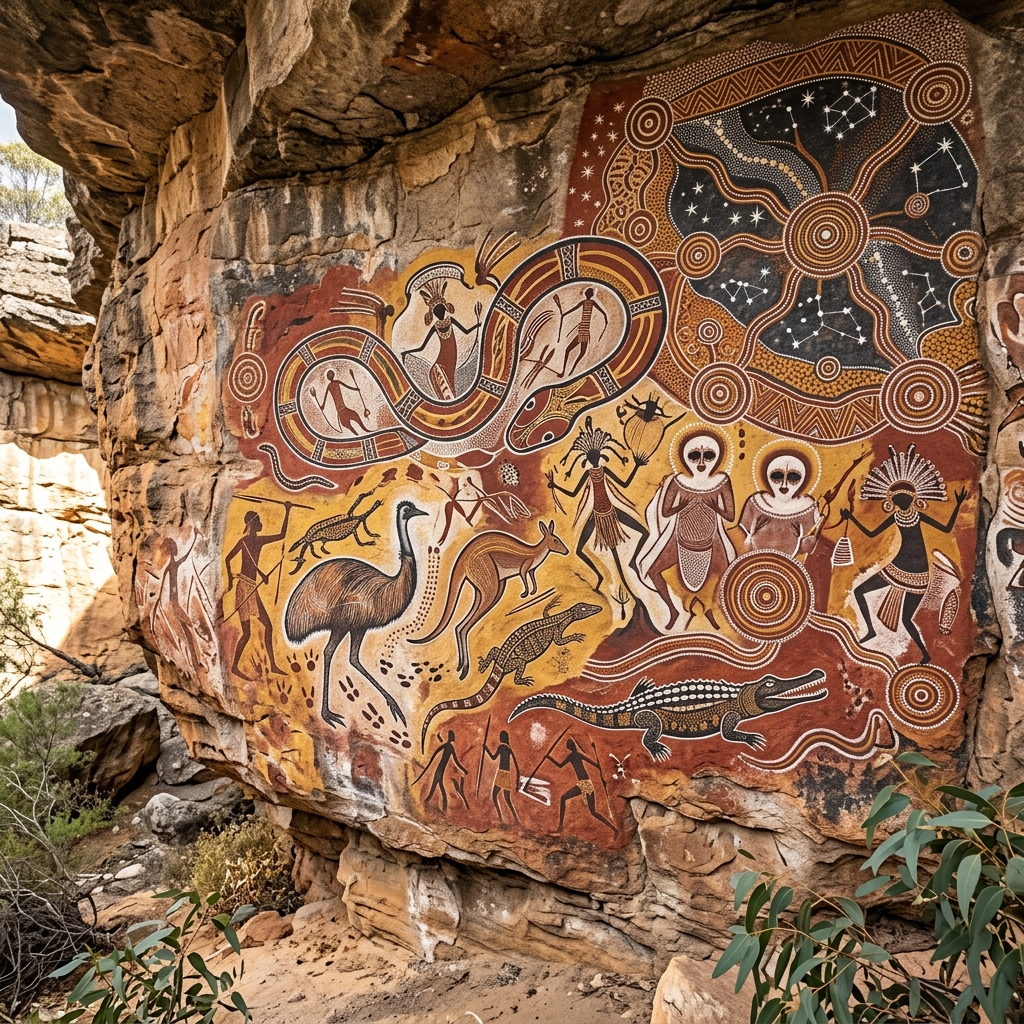
Archival visual record and historical depiction representing Indigenous Australian Oral History: How 65,000 Years of Memory Transmitted Ecological Knowledge.
Historical Context
Archaeological evidence from sites like Madjedbebe in the Northern Territory establishes that humans arrived on the Australian continent at least 65,000 years ago. These first peoples spread across a landscape that was dramatically different from today's. During the Last Glacial Maximum (around 20,000 years ago), sea levels were up to 120 meters lower than their current height, connecting mainland Australia to Tasmania and New Guinea to form the super-continent of Sahul. As the glaciers melted between 15,000 and 7,000 years ago, rising seas drowned more than two million square kilometers of the coastal fringe—an area larger than the state of Alaska.
Indigenous communities did not merely survive this environmental upheaval; they recorded it. Across diverse linguistic groups around the Australian coast, researchers have identified dozens of oral accounts that describe the sea rising over dry land, flooding hunting grounds, and turning hills into islands. These stories, passed down through hundreds of generations of oral transmission, correspond precisely to geological reconstructions of the post-glacial sea rise. The preservation of these memories for over 7,000 years represents an unprecedented feat of cultural preservation, demonstrating the extreme durability of structured oral traditions.
At the heart of this knowledge system is the concept of the "Dreaming" (or Altyerrenge in Arrernte, Tjukurpa in Pitjantjatjara). Often misunderstood by Westerners as a mythical past or a dream state, the Dreaming is a multi-dimensional philosophy. It represents a continuous, non-linear reality in which ancestral beings traveled across the formless earth, creating the landforms, naming the plants and animals, and establishing the laws that govern human society. The routes taken by these ancestral creators are known as "Songlines" or dreaming tracks.
How It Worked: Songlines, Star Lore, and Fire Management
The Songlines functioned as an ingenious system of spatial navigation and information storage. A Songline is a sequence of songs, stories, and ceremonies associated with specific landmarks along a geographical route. By memorizing a song cycle, a traveler could navigate hundreds of kilometers through unfamiliar, hyper-arid territory. The lyrics of the song described the landscape: the shape of a rock formation, the presence of a hidden waterhole, the availability of seasonal food plants, and the borders of different tribal territories. As long as the traveler sang the song in the correct sequence, they could find their way from one landmark to the next, effectively reading the landscape as a three-dimensional map.
Astronomy was equally integral to this survival system. Indigenous Australians are often described as the world's first astronomers. They used the movements of the night sky to regulate their calendars, predict weather changes, navigate at night, and manage resources. Unlike Western astronomy, which focuses almost exclusively on stars and constellations, indigenous astronomers also mapped the "dark spaces" between the stars. The most famous example is the "Emu in the Sky," a shape formed by the dark dust clouds of the Milky Way. The orientation of the Emu in the night sky at different times of the year signaled when emu eggs were ready to be harvested, when the birds were nesting, and when they were migrating.
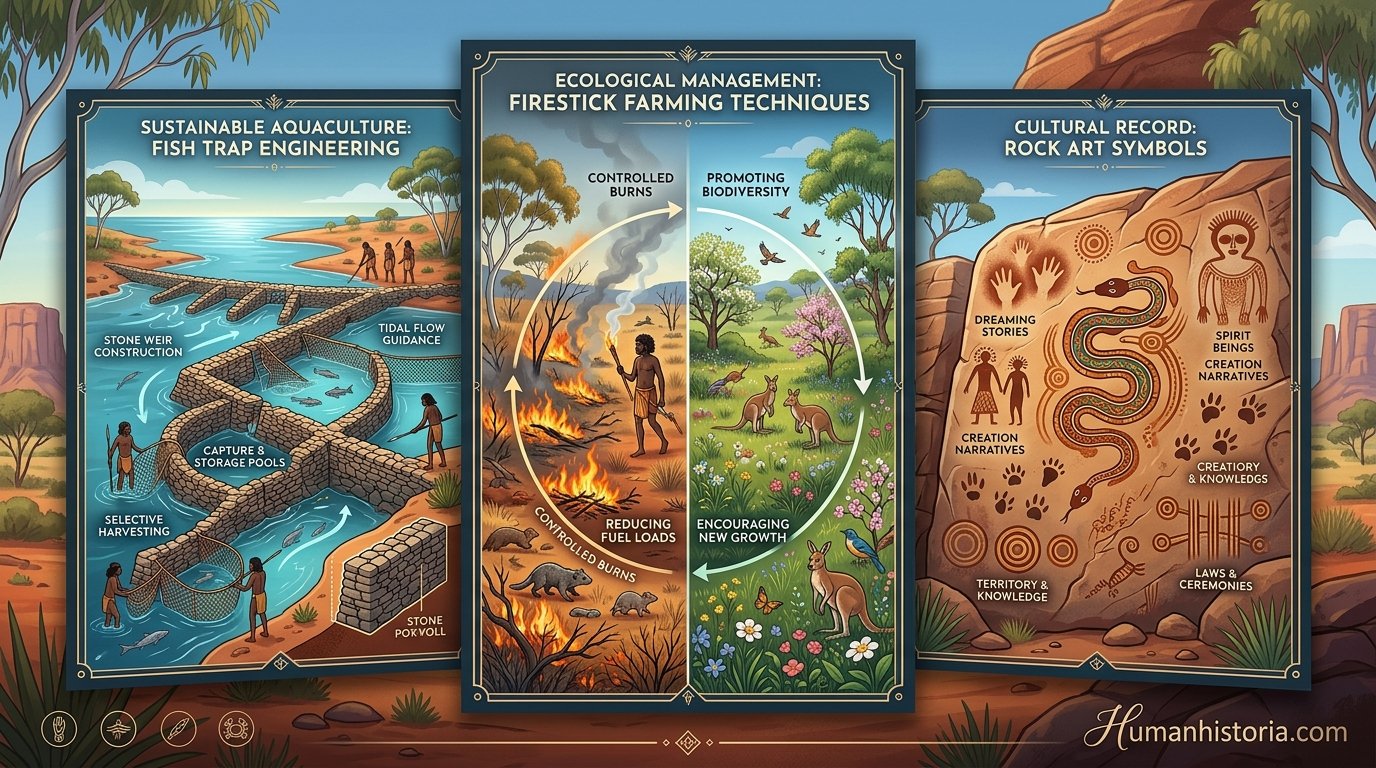
This astronomical knowledge was coupled with sophisticated ecological practices, most notably "fire-stick farming" (cultural burning). Rather than allowing fuel loads to build up and trigger catastrophic wildfires, indigenous land managers practiced systematic, cool-flame, low-intensity burning. These controlled fires cleared the undergrowth, stimulated the growth of new grass that attracted game animals, maintained forest openings, and promoted biodiversity. It was a highly managed, reciprocal relationship with the environment that sustained human populations and diverse ecosystems for tens of thousands of years without depleting the soil or exhausting resources.
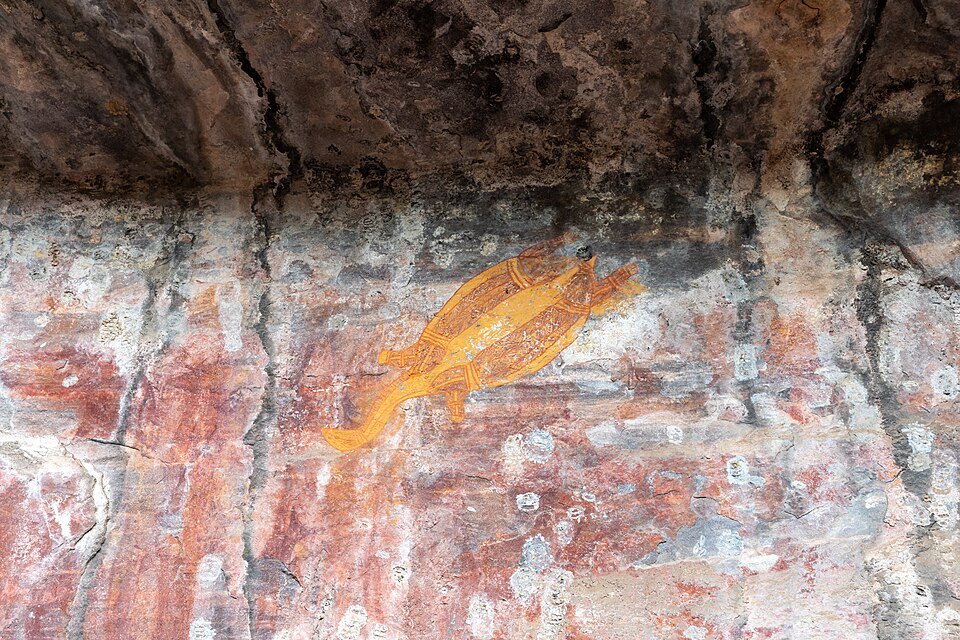
Ancient rock art in Arnhem Land, Northern Territory, depicting ancestral spirit figures and animals. Rock art sites serve as physical anchors for the oral traditions, mapping out local water resources, animal migration patterns, and the sacred law paths of the Songlines.
The Science of Oral Memory: Empirical Validation
For decades, historians trained in Western traditions assumed that oral memories could not remain accurate beyond a few centuries. However, recent scientific studies have validated several indigenous oral histories as precise records of geological and astronomical events. In 2015, researchers analyzed 21 different stories from Aboriginal communities around the Australian coast, matching their descriptions of sea-level rise to local bathymetric data. The results showed that these stories accurately described coastal configurations that existed between 7,000 and 10,000 years ago, meaning the memories had survived intact for more than 300 generations.
Similarly, astronomers have investigated Aboriginal stories about variable stars. In the oral traditions of the Kokatha people of South Australia, the story of Nyeerru (Orion) and the Yugurilya (the Pleiades) describes Nyeerru's right hand (the variable star Betelgeuse) and left hand (Aldebaran) brightening and dimming in a competitive display. Betelgeuse is a red supergiant whose periodic brightness changes were first recorded by Western astronomers in 1836. The Kokatha story proves that indigenous observers had noticed and recorded this stellar variability thousands of years before the invention of the telescope.
65,000 BCE — Humans arrive in Australia, establishing the foundational knowledge traditions of Sahul
8,000 BCE – 5,000 BCE — Melting glaciers trigger sea-level rise; coastal drownings are observed and encoded in oral songlines
2,700 BCE — The Henbury meteorite impact in central Australia is witnessed by local Luritja people and recorded in oral lore
1788 CE — British colonization begins; systematic attempts to suppress indigenous languages, ceremonies, and land management practices
1992 CE — The High Court of Australia's Mabo decision rejects the doctrine of terra nullius (empty land), recognizing native title based on traditional connection to country
2010s — Collaborations between scientists and indigenous elders validate oral traditions regarding Ice Age sea levels, meteor impacts, and variable stars
The Henbury Meteorite: A 4,700-Year-Old Witness Account
Approximately 4,700 years ago, a nickel-iron meteorite split into pieces as it entered the atmosphere, slamming into the red desert of central Australia and creating a cluster of 12 craters at Henbury, south of Alice Springs. When scientists first investigated the site in the early 20th century, they noted that the local Luritja people avoided the area, calling it chindu chinna waru chilla, which translates to "sun walk fire devil." An elder told a visiting government resident in 1921 that a fire-devil had come down from the sun, struck the earth, and killed the people. He pointed to the craters as the spot. The story describes a classic meteorite impact: fire falling from the sky, a ground strike, and smoke. In 2014, scientists confirmed that the age of the craters matches the Luritja timeline, indicating that the oral story is a continuous witness account of an astronomical event that occurred nearly five millennia ago.
Social & Human Effects: Colonial Erasure and the Fight for Survival
The British colonization of Australia, which began in 1788, was justified by the legal doctrine of terra nullius—"land belonging to no one." Because the indigenous peoples did not build stone towns, fence fields, or write books, the British declared the land legally empty and claimed ownership by discovery. Under this regime, the complex land management systems of the indigenous population were ignored, their sacred sites were desecrated, and their populations were decimated by frontier violence, forced displacement, and introduced diseases.
Throughout the 19th and 20th centuries, government policies actively sought to eradicate indigenous culture. Children were forcibly removed from their families (the "Stolen Generations") and placed in missions or state institutions where they were forbidden from speaking their languages, singing their songs, or practicing their ceremonies. Because this knowledge system relies entirely on oral transmission from elders to younger generations, the destruction of language and family structures was a direct threat to the survival of the knowledge database itself. Dozens of indigenous languages were lost, and many Songlines were broken.
Despite this systematic erasure, indigenous communities fought to maintain their traditions. Elders secretly passed down stories, mapped their country in paintings, and recorded their laws. In 1992, the High Court of Australia's historic Mabo decision overturned the doctrine of terra nullius, ruling that native title existed and had survived British colonization. Crucially, the court accepted oral histories and traditional songlines as legitimate legal evidence of continuous ownership and connection to the land. This legal recognition marked a turning point, transforming oral traditions from "folklore" into legally binding historical documents.
Ecological & Economic Consequences: Relearning Fire
The suppression of indigenous fire management had catastrophic environmental consequences. When the British colonized Australia, they banned cultural burning, viewing fire as a purely destructive force that threatened their sheep runs and timber supplies. Without regular, low-intensity cool burns, massive amounts of dry leaf litter and woody debris accumulated on the forest floor.
The result has been a dramatic increase in the frequency, scale, and intensity of catastrophic "megafires." Unlike cool burns, which creep slowly along the ground and leave the tree canopy intact, megafires burn hot enough to consume entire forests, sterilize the soil, and wipe out native wildlife. The devastating "Black Summer" bushfires of 2019–2020, which burned more than 18 million hectares and killed billions of animals, demonstrated the failure of Western suppression-based fire management in the face of climate change.
In response, governments and land managers are increasingly turning to indigenous rangers to revive cultural burning. In northern Australia, the West Arnhem Land Fire Agreement (WALFA) employs traditional owners to carry out early-season cool burns. This program has successfully reduced late-season wildfires, restored biodiversity, and prevented millions of tonnes of greenhouse gas emissions, earning carbon credits that fund indigenous community development. Ecological restoration is thus proving to be inseparable from the restoration of indigenous historical knowledge.
⚖️
Historian Debate: Is Oral Tradition a Reliable Historical Source?
Scientific Validation View
Scholars like Patrick Nunn have argued that structured oral traditions are highly reliable historical archives. Nunn asserts that communities living in volatile environments developed strict mnemonic devices—including song rhythm, ritual repetition, and taboos against changing stories—specifically to ensure the survival of critical ecological and geological information over millennia. On this view, oral histories should be treated with the same academic seriousness as archaeological or geological records, as they provide unique human-scale observations of past environments.
Skeptical Historiography View
Conversely, traditional Western historians have maintained that oral memory is too fluid to serve as reliable historical data over long periods. Skeptics argue that oral stories are subject to "telescoping" (conflating separate historical events into one), "social chartering" (modifying stories to serve contemporary political or territorial claims), and the loss of specific details over generations. They suggest that while oral traditions may hold metaphoric or cultural value, they cannot be used to reconstruct a chronological sequence of events without external empirical verification.
Scholars such as Patrick Nunn and his indigenous collaborators have advanced this debate through works like Nunn's The Edge of Memory: Ancient Stories, Oral Traditions, and the Post-Glacial World (2018).
"Our story is in the land... it is written in those sacred places. My grandmother told me those stories, and her grandmother told her. The white people did not see it because they do not know how to read the country. They look at the trees and the rocks and see nothing. But we see the trails of the ancestors, we hear the songs they sang. The song does not change, because if you change the song, you lose the country."
— Silas Hobson, Kuuku Ya’u Elder, Lockhart River, Cape York (2012). Elder Silas Hobson has worked alongside geographers to document traditional sea-level rise stories in northern Queensland, linking oral songlines to bathymetric maps of the Great Barrier Reef.
Long-Term Legacy
The legacy of Australia's indigenous knowledge systems is a story of resilience against extraordinary odds. It challenges the conventional definition of "civilization," which has long been tied to agriculture, written records, and monumental architecture. The indigenous peoples of Australia built no pyramids or coloseums, yet they constructed a continent-spanning intellectual infrastructure that outlasted the rise and fall of Rome, the Maya, and the dynasties of China.
The recognition of this heritage is transforming education and research in Australia. Universities are integrating indigenous perspectives into astronomy, ecology, law, and history curricula. Archaeologists are using Songlines to locate ancient occupation sites, and climatologists are studying indigenous calendars to understand changing weather patterns. What was once dismissed as primitive superstition is now recognized as a sophisticated, empirical system of ecological literacy.
Ultimately, the story of these traditions suggests that history is not merely a record of what was written down by the winners of conflicts. It is a record of how humans have lived in relationship with the land over deep time. In an era of global ecological crisis, the survival of the world's oldest living knowledge system is not just an archaeological curiosity; it is a vital repository of wisdom for how humanity might live sustainably on a changing planet.
Related Civilizations & Contexts
Sahul ContinentPolynesian WayfindersGreat Zimbabwe Cattle KingdomsIce Age MigrationsPrehistoric Rock Art TraditionsSongline Navigation NetworksArrernte and Pitjantjatjara LawIndigenous Fire Ecology
Further Reading
Patrick Nunn — The Edge of Memory: Ancient Stories, Oral Traditions, and the Post-Glacial World (2018). An excellent study by a geologist detailing how oral traditions accurately preserve memories of natural events from thousands of years ago.
Bruce Pascoe — Dark Emu: Black Seeds: Agriculture or Accident? (2014). A controversial but highly influential re-evaluation of colonial records regarding pre-colonial indigenous agriculture, aquaculture, and land management.
Bill Gammage — The Biggest Estate on Earth: How Aborigines Made Australia (2011). A detailed historical reconstruction of how indigenous Australians systematically managed the entire continent through fire and resource rotation.
Ray Norris & Cilla Norris — Emu Dreaming: An Introduction to Aboriginal Astronomy (2009). A concise survey of the astronomical traditions of indigenous Australians and their practical applications.
Lynette Russell — Roving Mariners: Aboriginal Whalers and Sealers in the Southern Oceans (2012). Explores how indigenous Australians adapted their maritime skills to the colonial shipping and whaling economies of the 19th century.
📊 Museum-Grade Infographic Poster
Indigenous Australian Firestick Farming Infographic
💡 Click anywhere on poster to expand in high resolution🔎 Expand Lightbox
Environmental diagram showing Aboriginal controlled cool-burn fire management, seasonal wildlife patterns, and bush harvest zones.
📖 SCHOLARLY INQUIRIES
Frequently Asked Questions
Essential historical questions and evidence-based answers concerning this chronicle.
Q.How old is Aboriginal Australian culture?
Archaeological evidence from Madjedbebe rock shelter in the Northern Territory (2017) places human occupation of Australia at least 65,000 years ago—making Aboriginal Australians the oldest continuous cultural tradition on Earth. Genetic analysis suggests the ancestors of Aboriginal Australians diverged from other human populations approximately 70,000 years ago, shortly after the Out of Africa migration.
Q.What are the Songlines?
Songlines (also called Dreaming tracks or Dreaming paths) are invisible routes across the Australian landscape that trace the journeys of ancestral creator beings in the Dreamtime. These routes are encoded in song, each verse of which describes the next landmark. A person who knows the songs for a route can navigate thousands of kilometres across unfamiliar country by singing—the songs function as an oral map system.
Q.What happened to Aboriginal Australians under colonisation?
British colonization after 1788 CE caused catastrophic population decline: from an estimated 750,000–1,000,000 people at contact to approximately 117,000 by 1900—a reduction of 85–90% through frontier violence, disease, dispossession, and forced family separation ('Stolen Generations'). Many languages (of an original ~250) were lost entirely. Australia's 2008 National Apology to the Stolen Generations was a formal governmental acknowledgment of this history.
📚 Academic Sources & Scholarly Bibliography
Gammage, B. (2011).
The Biggest Estate on Earth: How Aborigines Made Australia.
Allen & Unwin.
Clarkson, C. et al. (2017).
Human occupation of northern Australia by 65,000 years ago.
Nature 547: 306-310. doi:10.1038/nature22968
Norris, R.P. & Hamacher, D. (2011).
The Astronomy of Aboriginal Australia.
The Role of Astronomy in Society and Culture (IAU).
📖 Scholar Mode Active — Click to exit focused reading
History Lab 🧪
Interactive historical deduction games, tactical matchup simulators, and currency calculators.
🕵️ Who Am I? (The Historical Guess Game)
A secret historical figure has been selected. Ask yes/no questions to narrow down the pool of candidates. Click any active card to make your accusation!
Secret Identity
❓ Who Am I?
Ask questions using the board below to narrow down my identity.
Ask a Question:
Question LogQuestions: 0 / 7
No questions asked yet.
Candidate Board:
🗺️ Timeline Scramble
Five historical events appear out of order. Click them in the correct chronological sequence — from oldest to most recent. How well do you know your history?
🏺 Relic or Fake?
Is this a real historical artifact or a convincing fabrication? Judge each one based on its description and era — then see the truth revealed!
Artifact 1 / 10Score: 0
Empire Matchup Simulator
Empire ATerritory Size (Peak, M km²)Empire B
00
Empire APopulation (Peak, Millions)Empire B
00
Empire AMilitary Power (Army Size)Empire B
00
Tactical Battle Analysis
Select empires and click simulate to run evaluations.
Historical Purchasing Power Converter
See what ancient coins are worth in modern terms and check their historical purchasing power.
Modern Value Equivalent
$0.00 USD
Historical Purchasing Power:
Select currency to view purchasing capability.
Historical Identity Generator
Forge an authentic historical identity from ancient civilisations, complete with linguistic meaning and biography.
Neutral
Gaius Julius
Meaning:Descendant of Jupiter
Historical Background:
A Roman citizen and clerk who worked in the forum under Roman republic rule.
Chrono-Cultural Fusion Simulator
Fuse the culture, technology, and governance of two legendary civilizations to synthesize a unique hybrid society.
Cohesion & Coexistence Rate
85%
🏛️ Hybrid Architecture
⚙️ Synthesized Asset
📜 Synthetic Governance
Historical Tactics & Trivia Quiz
Test your historical knowledge and battle tactics to claim your administrative rank.
8 Questions • Multi-Era
You will be presented with random scenarios and trivia spanning ancient Egypt, classical Rome, Islamic Golden Age, and the modern industrial era. Complete the evaluation to see your historical title!
Question 1 of 8Score: 0
What was the Code of Hammurabi written on?
Correct!
Evaluation Complete!
6 / 8
Correct
Rank Attained
Imperial Legionary
Your knowledge of classical strategy and administrative structures is respectable.
🎲 Counterfactual "What If?" Scenario Simulator
Explore alternative historical trajectories by tweaking key civilizational pivot points.
Simulated Shift
Selected Era
Prehistoric Era
Millions of years ago to ~3000 BCE
The dawn of humanity. From the evolutionary split of early hominids to the mastery of stone tools, fire, and the birth of language.
Landmark Milestones
Welcome to Historia
Enter your Scholar Name to synchronize your chronicles and save your journey.
 ⭐ Featured Chronicle

 ANCIENT AGES
 ANCIENT AGES
 ANCIENT AGES
 MEDIEVAL PERIOD
 MEDIEVAL PERIOD
 PREHISTORIC ERA