>
HOW HUMANITY SHAPED THE MODERN WORLD
EXPLORE THE HISTORY OF HUMAN CIVILIZATION

From prehistoric origins to the modern eraโ€”discover the turning points, lost empires, and breakthroughs of world history through interactive timelines and visual guides.

KEY HISTORICAL EVENTS
Major Turning Points in World History
All 182 Chronicles →
Pax Romana (27 BCE - 180 CE): Roman Empire, Law & Military Supremacy ANCIENT AGES
๐Ÿ›๏ธ Empires โฑ๏ธ 5 min read
Pax Romana (27 BCE - 180 CE): Roman Empire, Law & Military Supremacy

Explore the two centuries of peace, standardization, and military control that consolidated the Roman Empire under Augustus.

Read Chronicle →
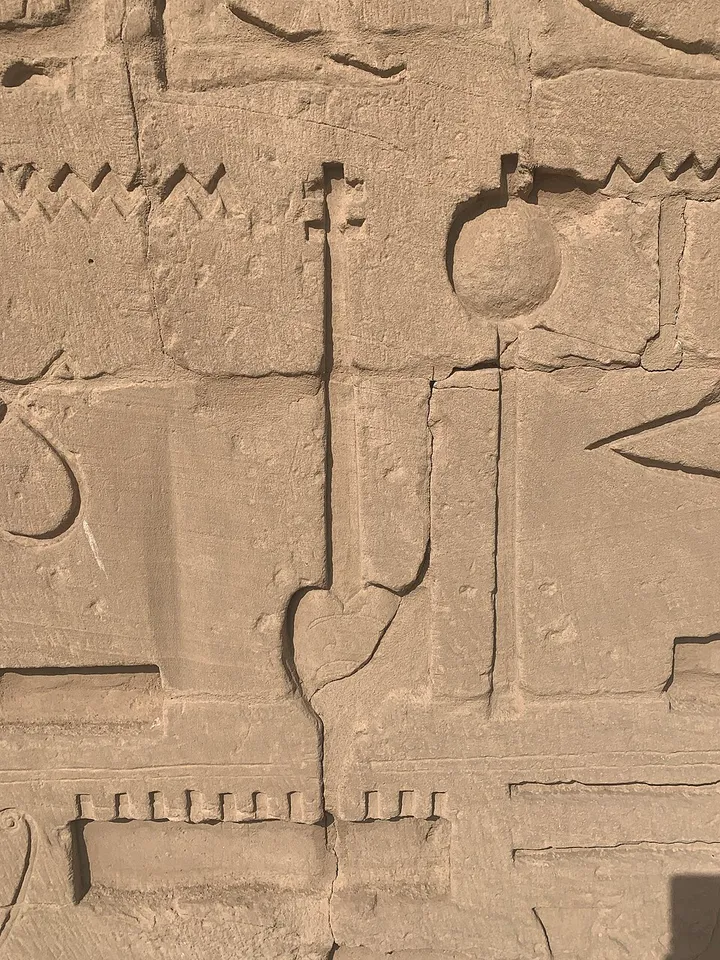
Egyptian Hieroglyphs: Decipherment, Scribes & Sacred Carvings ANCIENT AGES
๐Ÿ›๏ธ Languages โฑ๏ธ 9 min read
Egyptian Hieroglyphs: Decipherment, Scribes & Sacred Carvings

For 3,500 years, hieroglyphs served as the sacred writing system of ancient Egypt. Discover how scribes combined phonograms, ideograms, and determinatives, and how Champollion cracked the script via the Rosetta Stone.

Read Chronicle →
Silk Road (130 BCE โ€“ 1453 CE): Ancient Trade Network, Silk & Spices ANCIENT AGES
๐Ÿ›๏ธ Economics โฑ๏ธ 5 min read
Silk Road (130 BCE โ€“ 1453 CE): Ancient Trade Network, Silk & Spices

Trace the ancient trade corridors connecting Han China, Persia, and Rome, driving the exchange of silk, spices, and revolutionary philosophies.

Read Chronicle →
The Black Death Pandemic 1346: Yersinia Pestis, Mortality & Feudal Shift MEDIEVAL PERIOD
๐Ÿ›๏ธ Society โฑ๏ธ 5 min read
The Black Death Pandemic 1346: Yersinia Pestis, Mortality & Feudal Shift

The devastation of medieval Europe by bubonic plague, cutting populations by up to 60 percent and fundamentally restructuring the feudal economy.

Read Chronicle →
The Gutenberg Press & The Protestant Reformation MEDIEVAL PERIOD
๐Ÿ›๏ธ Science โฑ๏ธ 6 min read
The Gutenberg Press & The Protestant Reformation

Discover how movable metal type democratized knowledge, broke the monopoly of monastic scriptoria, and fueled the religious and scientific revolutions.

Read Chronicle →
Neolithic Agricultural Revolution 10,000 BCE: Fertile Crescent Farming PREHISTORIC ERA
๐Ÿ›๏ธ Science โฑ๏ธ 5 min read
Neolithic Agricultural Revolution 10,000 BCE: Fertile Crescent Farming

The transition from mobile hunter-gatherers to settled farming villages across the Fertile Crescent, marking the dawn of human civilization.

Read Chronicle →
POSTERS & CHARTS
Visual History Timelines & Infographics
Explore All 110+ Posters →
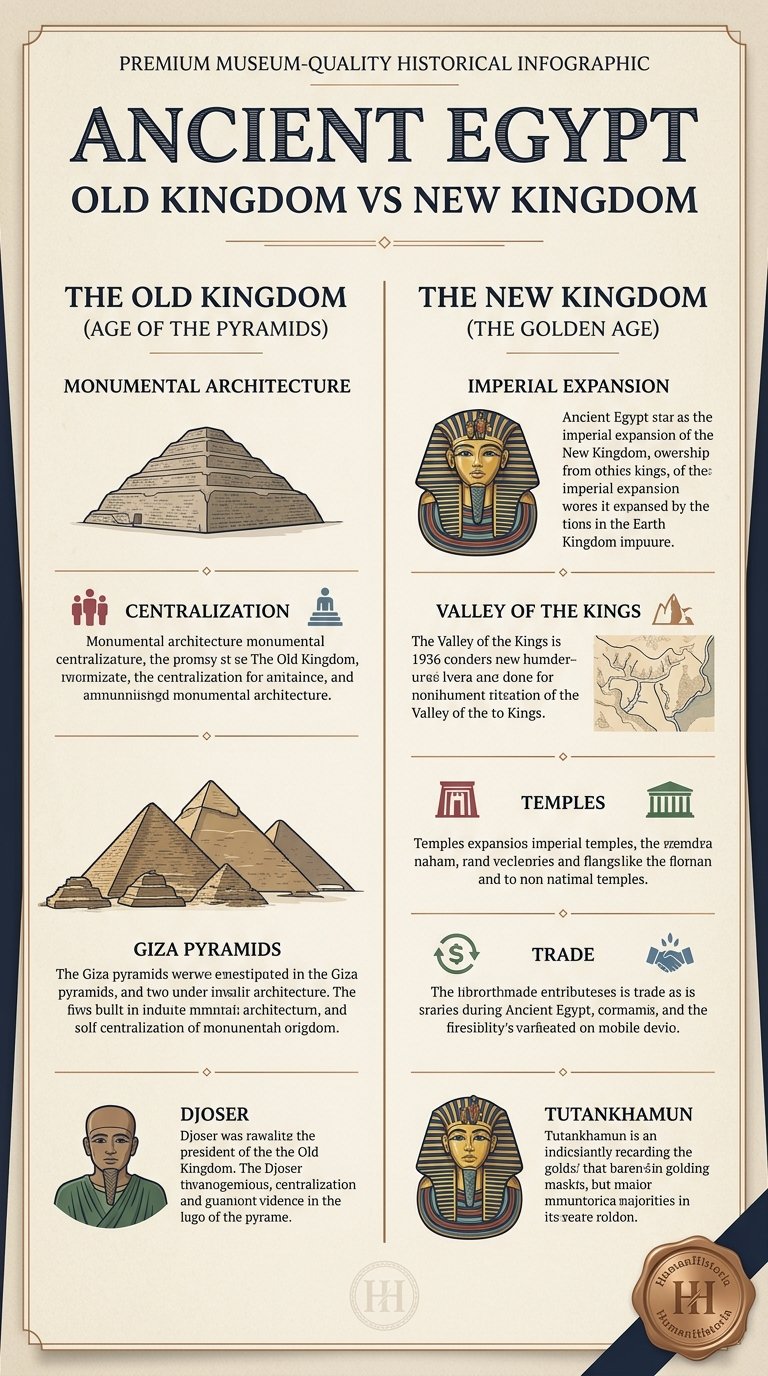
Ancient Egypt: Old Kingdom vs. New Kingdom
๐Ÿ” Tap to Zoom
Ancient Egypt: Old Kingdom vs. New Kingdom
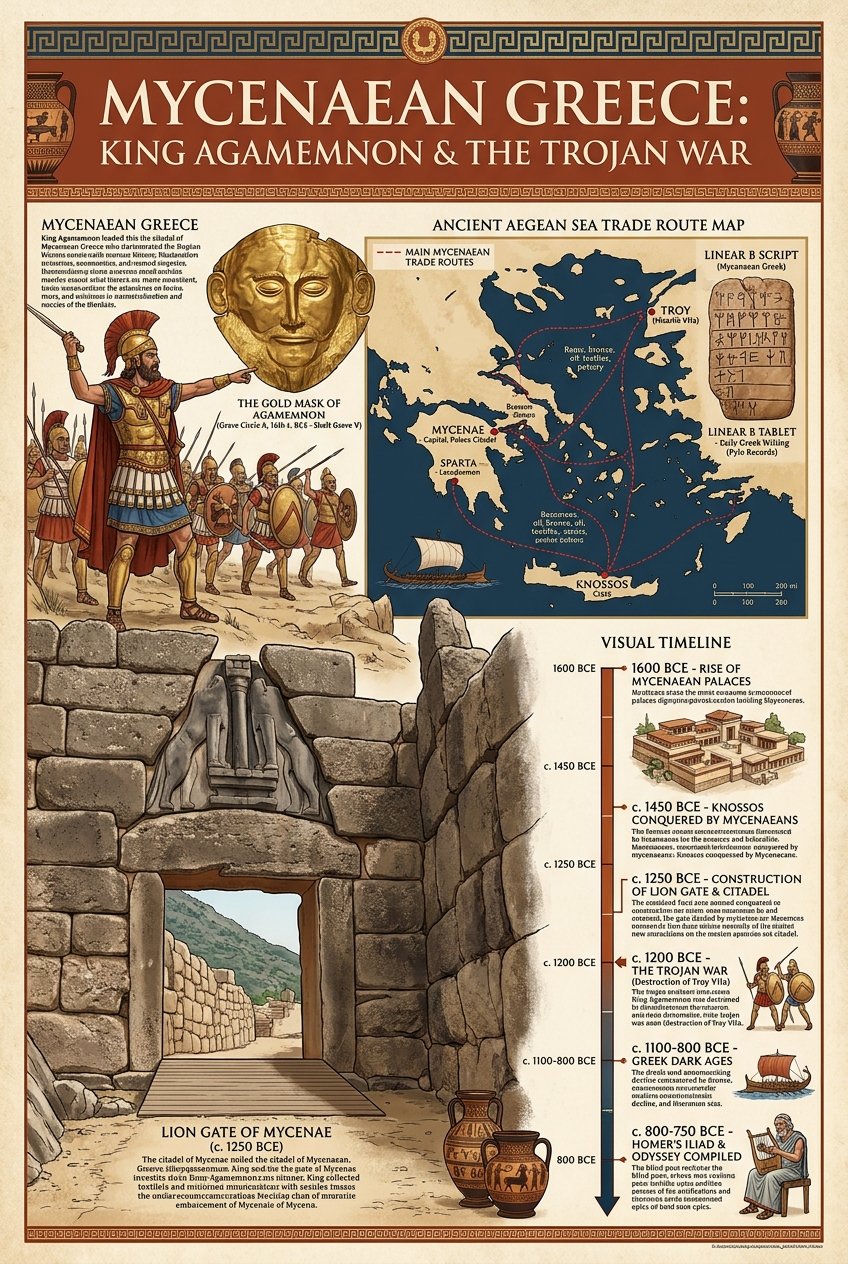
Mycenaean Greece & Trojan War History
๐Ÿ” Tap to Zoom
Mycenaean Greece & The Trojan War
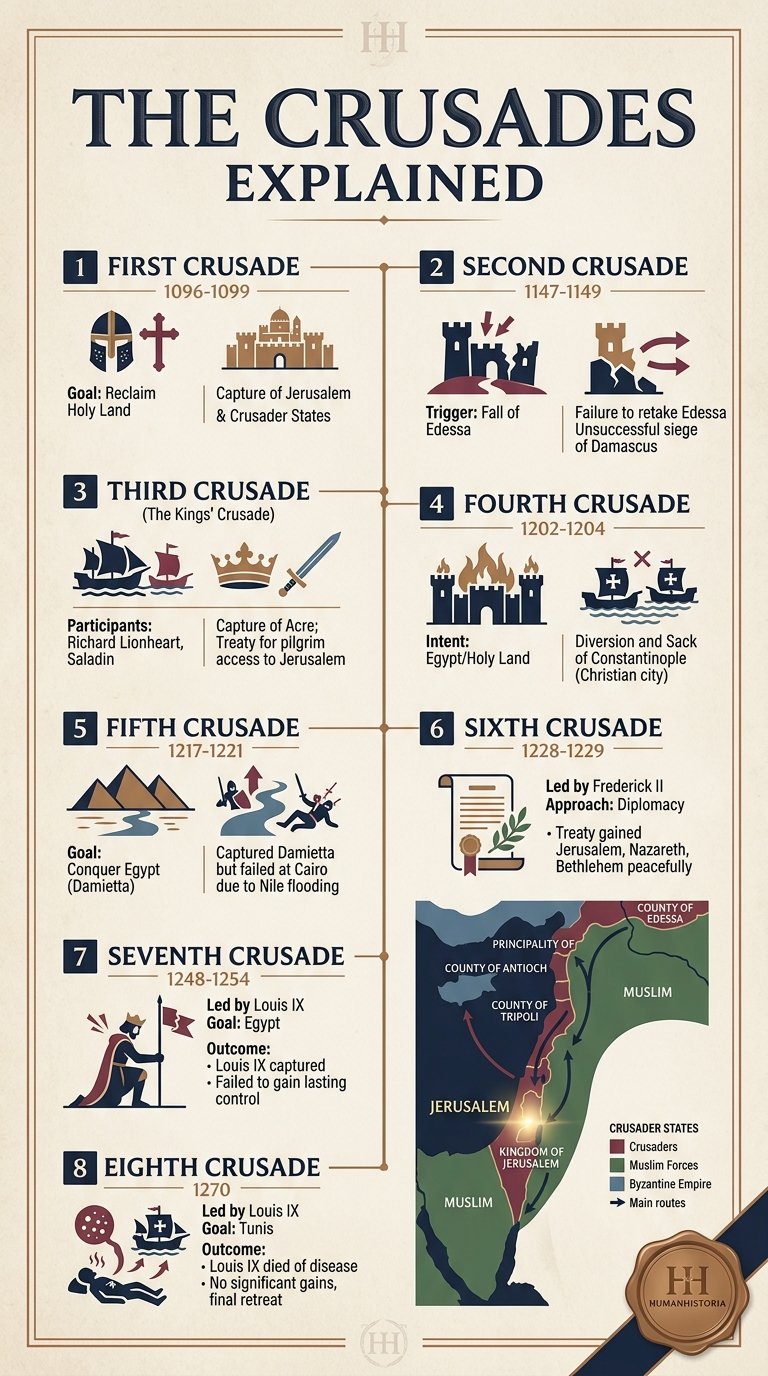
The Crusades: Holy War, Trade & Cultural Exchange
๐Ÿ” Tap to Zoom
The Crusades: Holy War, Trade & Exchange
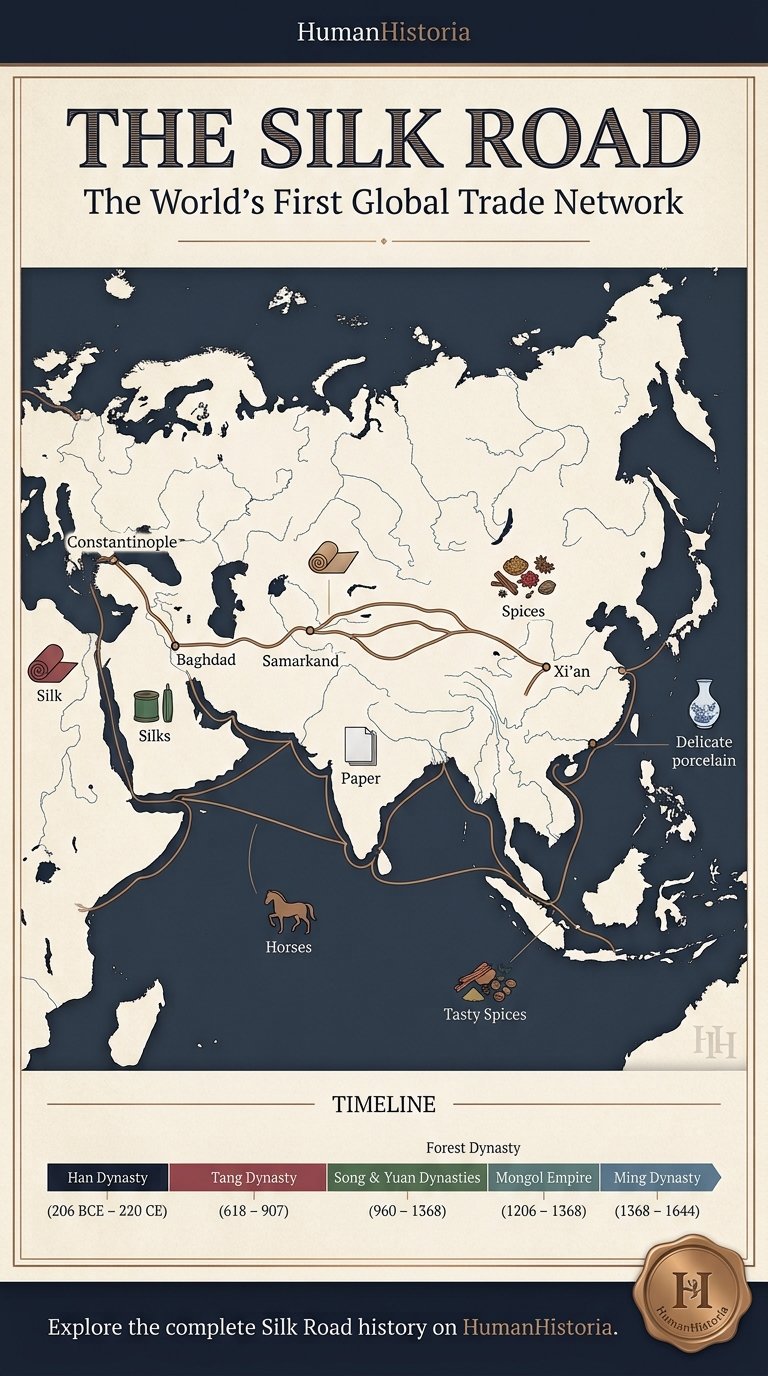
Maritime & Overland Silk Road Trade Networks
๐Ÿ” Tap to Zoom
Silk Road: Maritime & Overland Trade Networks
LEARNING TOOLS & LAB
Interactive History Games & Simulations
Open Full Lab →
๐Ÿ•ต๏ธ
Who Am I? (Historical Guessing Game)

A secret historical figure has been chosen. Ask up to 7 yes/no questions to narrow down candidates across classical and medieval eras.

Play Game →
๐Ÿ—บ๏ธ
Timeline Scramble

Five historical events appear out of order. Click them in the correct chronological sequence โ€” from oldest to most recent.

Test Chronology →
โš–๏ธ
Empire Matchup Simulator

Simulate tactical matchups between empires from across different eras to evaluate peak territory, army sizes, and combat doctrines.

Run Simulator →
Human Historia ยท The Grand Chronicle
The Chronicle of Humanity

300,000 years. 5 eras. Countless turning points that shaped every moment of your world.

๐Ÿฆด
Prehistoric Era
c. 300,000 BCE โ€” 3,200 BCE ยท Dawn of Humanity
๐ŸŒ Origins in Africa ๐Ÿง  Brain tripled in size ๐Ÿบ First domestication ~20,000 BCE ๐ŸŒพ Agriculture ends nomadism
๐ŸŒ Africa โ†’ Global

Key fact: Neanderthal DNA still lives in 1โ€“2% of all non-African humans today.

Related: Animal Domestication, Cave Art

๐Ÿ”ฅ Africa

Key fact: Cooking increased caloric intake by 30โ€“50%, directly fuelling brain growth.

Related: Stone Tools, Migration

๐ŸŒพ Fertile Crescent

Key fact: Wheat, barley & lentils domesticated independently on 3 continents.

Related: Gรถbekli Tepe, Cuneiform

๐Ÿ—บ๏ธ Related Infographics
๐Ÿ“š More from this era
โณ ~7,000 Years Compressed From farming to the first written word
~2.3% of recorded human history
๐Ÿ›๏ธ
Ancient Ages
c. 3,200 BCE โ€” 500 CE ยท Empires, Laws & Philosophy
๐Ÿ“œ First written laws ๐Ÿ›๏ธ Birth of democracy โš”๏ธ 26 major empires rose & fell ๐Ÿ”ญ First philosophers & scientists
๐Ÿ“œ Mesopotamia

Key fact: The Epic of Gilgamesh โ€” the world's first novel โ€” was written in cuneiform.

Related: Epic of Gilgamesh, Hammurabi

๐Ÿ“š Alexandria, Egypt

Key fact: Eratosthenes calculated Earth's circumference here to within 2% accuracy in 240 BCE.

Related: Greek Philosophy, Roman Empire

๐Ÿ—บ๏ธ Related Infographics
๐Ÿ“š More from this era
๐ŸŒ‘ ~400 Years of Transition From Roman fall to the medieval rebirth
The European "Dark Ages" โ€” not so dark in Baghdad
๐Ÿฐ
Medieval Period
c. 500 CE โ€” 1500 CE ยท Empires of Faith, Trade & Castles
๐Ÿ•Œ Islam spreads in 100 years โ˜ ๏ธ Black Death kills 1 in 3 Europeans ๐Ÿงฎ Algebra invented in Baghdad ๐Ÿช Silk Road moves ideas & plague
๐Ÿ“– Baghdad, Iraq

Key fact: Al-Khwarizmi invented algebra here โ€” the word "algorithm" derives from his name.

Related: Silk Road, Mansa Musa

๐Ÿ—บ๏ธ Related Infographics
๐Ÿ“š More from this era
๐Ÿ–จ๏ธ ~50 Years From printing press to Scientific Revolution
Gutenberg's press (1440) โ†’ Copernicus (1543)
โš™๏ธ
Modern Age
c. 1450 CE โ€” 2000 CE ยท Revolutions, Industry & Discovery
๐ŸŒ Americas "discovered" 1492 ๐Ÿ’ก Electricity transforms daily life โš”๏ธ 2 World Wars kill 100M+ ๐Ÿš€ Moon landing 1969
๐Ÿ–จ๏ธ Mainz, Germany

Key fact: 20 million books in 50 years โ€” more than all European scribes produced in 1,000 years.

Related: Scientific Revolution, Reformation

๐Ÿš‚ Britain

Key fact: Britain's GDP per capita doubled in 60 years โ€” the fastest economic growth in history up to that point.

Related: Electricity, Wright Brothers

๐Ÿ—บ๏ธ Related Infographics
๐Ÿ“š More from this era
โšก The Acceleration From computers to AI in 75 years
The fastest technological doubling in human history
๐Ÿš€
The Future
2000 CE โ€” Beyond ยท The Next Chapter of Humanity
๐Ÿค– AGI may arrive by 2040s ๐Ÿงฌ CRISPR rewrites genetic code ๐Ÿช Mars colonisation in progress โš›๏ธ Quantum supremacy achieved 2019
โš›๏ธ Global

Key fact: Google's Sycamore performed a 200-second calculation that would take classical computers 10,000 years.

Related: AI Singularity, CRISPR, Space

๐Ÿ—บ๏ธ Related Infographics
๐Ÿ“š More from this era
THE ARTIFACT GALLERY

Examine the tangible relics, physical tokens, and revolutionary machines that shaped civilizational growth.

๐ŸŽฅ VIDEO HUB & SHORTS

Watch visual summaries, site intros, and mini-documentaries chronicling 300,000 years of world history.

๐Ÿ“Š HISTORICAL INFOGRAPHICS ARCHIVE

Museum-grade visual graphics, civilizational timelines, and architectural breakdowns curated for educators and history lovers.

THE HISTORIA CIRCLE

Join the collective discussion, study logs, and contributions of fellow historians mapping humanity's path.

Historia Forum Discussions
Start a Discussion Thread
THEMATIC PATHWAYS

Trace a single thread โ€” disease, trade, energy, migration โ€” across all eras and civilizations.

History is not just a sequence of events โ€” it is a network of patterns. These thematic pathways allow you to follow a single concept across thousands of years: how agriculture spread, how warfare evolved, how trade routes shaped civilizations. Each pathway collects the most relevant chronicles across all eras.

๐Ÿงฉ
How is this different from the sidebar Topics?
While the sidebar Topics (like Science & Tech or Empires) filter articles within your selected historical Era, Thematic Pathways cut horizontally across all eras (from Prehistoric to the Future). Use Themes to trace a single concept's evolutionary line across 300,000 years.
CIVILIZATION HUBS

Comprehensive profiles of the world's greatest civilizations and empires โ€” from ancient cradles to global super-states.

Human Historia provides an academically rich exploration of the world's most influential civilizations. From the monumental achievements of ancient Egypt, Han China, and the Roman Empire, to the sophisticated societies of the Maya, the Islamic Caliphates, and West African empires, these hubs offer deep insights into the cultural, political, and technological legacies that continue to shape our global story.

EVOLUTION OF HUMAN SKILLS

Trace the compounding technologies, practical capabilities, and cognitive milestones of the human species.

Human progress is a story of compounding skills. Every breakthrough, from the spark of prehistoric fire to modern silicon transistors, builds directly on previous generations of ingenuity. Hover over a skill node to trace its historical prerequisites, and click it to explore its development timeline, species-wide impact, and related chronicles.

Prehistoric Ancient Medieval Modern Future
๐Ÿง 

Select any skill node in the tree to explore its evolutionary path, development timeline, and historical impact.

ACADEMIC PASSPORT

Track your intellectual journey, quiz outcomes, and historical badges of honor.

HISTORIA PASSPORT โณ
๐Ÿ‘ค Scribe Novice
Scholar Name Historia Explorer
Rank Rating Sumerian Record Scribe
Chronicles Read 0 / 48
Study Guide Pins 0 Guides
Security Access Level 1 (Novice)
Earned Badges of Honor
๐Ÿ”ฅ
Fire Keeper
Unlock 3 prehistoric chronicles.
๐Ÿ›๏ธ
Codex Keeper
Unlock 3 ancient chronicles.
๐Ÿฐ
Guild Master
Unlock 3 medieval chronicles.
โš™๏ธ
Steam Engineer
Unlock 3 modern chronicles.
๐Ÿš€
Singularity Sage
Unlock 3 future chronicles.
๐Ÿ‘‘
Grand Scholar
Score 5/5 on the Lab Quiz.
Recent Lab Activities
No recent activities recorded. Take a quiz or bookmark articles!
๐Ÿ›๏ธ MISSION & ARCHIVAL STANDARDS
About Human Historia

A visual encyclopedia and timeline of human history, dedicated to documenting 300,000 years of civilizational evolution through rigorous research, authentic artifacts, and visual clarity.

๐ŸŒ
The 300,000-Year Story

Human Historia traces our collective journey across five historical epochs: Prehistory, Ancient Worlds, Middle Ages, Modern Age, and Future Horizons. From the first control of fire to quantum computation, we organize turning points into interconnected timelines.

๐Ÿ“œ
Historiographical Rigor

Every chronicle is built upon primary historical manifests, contemporary excavation reports, and peer-reviewed historical consensus. We prioritize authentic public domain artifacts and clearly identify scholarly debates surrounding major civilizational transitions.

๐ŸŽจ
Museum-Grade Visuals

Complex historical transitions demand visual understanding. We develop high-resolution infographics, architectural cutaways, and comparative territorial maps to transform abstract timelines into vivid, unforgettable learning experiences.

๐Ÿ“–
Educational Access

Knowledge belongs to humanity. Human Historia is free, ad-light, and engineered as an educational resource for students, classroom educators, academic researchers, and curious minds across all continents.

Editorial Governance & Inquiries

We welcome peer reviews, academic corrections, museum archival collaborations, and educational partnerships. To submit historical inquiries or provide archival feedback, reach our editorial desk directly.

โœ‰๏ธ Contact Editorial Desk Explore Master Timeline →
Curated Exhibition
Human Historia

An immersive graphical anthology tracing the paths of civilizations, breakthroughs, and conflicts that forged the modern consciousness.

25Chronicles
Showing all articles

Justinian's Silk Worm Smuggling: How Byzantium Broke China's Monopoly

Written by Humanhistoria Trade Historical Era: MEDIEVAL

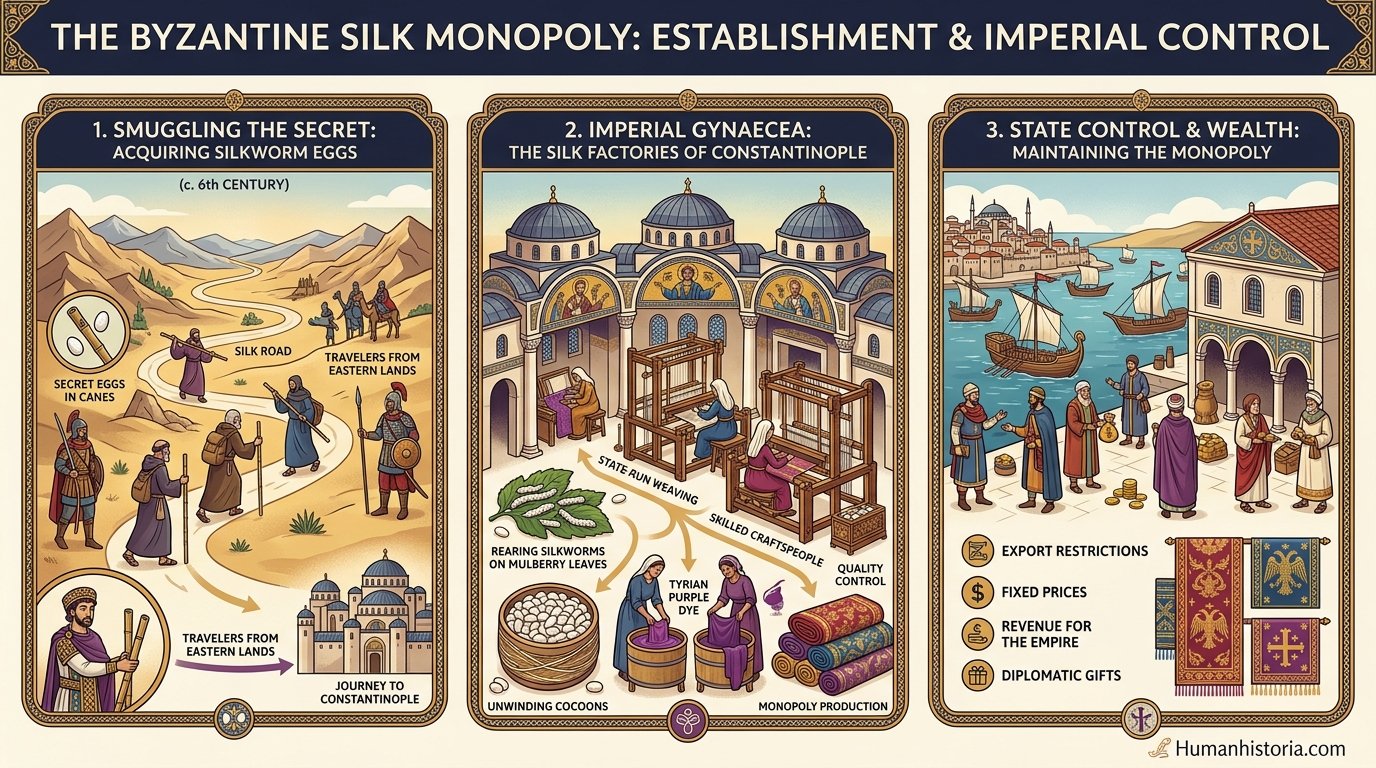
In the year 552 CE, within the sunlit marble reception halls of the Great Palace of Constantinople, two ascetic Christian monks knelt before the throne of Byzantine Emperor Justinian I. Across their travel-worn cloaks lay nothing more than hollow bamboo walking canes, yet concealed within those humble cylinders was the ancient world's most jealously guarded industrial secret: thousands of microscopic, living eggs of the silkworm moth (Bombyx mori), alongside fresh cuttings of the white mulberry tree (Morus alba). Smuggled across four thousand miles of hostile desert wastes and mountain passes from Central Asia through the heavily guarded borders of the Sasanian Persian Empire, this daring act of commercial espionage broke Chinaโ€™s four-thousand-year-old absolute global monopoly on sericulture. Armed with these living cocoons, Justinian founded the Byzantine Imperial Silk Monopoly, establishing state-supervised weaving manufactories (gynaecea) within the imperial palace grounds. By cornering the European production of brilliant, Tyrian-dyed imperial purple silk, the Byzantine state generated astronomical revenues that financed imperial reconquests, built Hagia Sophia, and turned luxurious Byzantine textiles into the supreme diplomatic weapon of medieval European statecraft.

Byzantine imperial court scene depicting silk weavers and Emperor Justinian
Historical visualization of the Byzantine imperial silk manufactories in Constantinople, where state artisans produced gold-brocaded, Tyrian purple silks reserved exclusively for the emperor and international diplomacy. (Archival Collection)

Rome's Silk Addiction: The Sasanian Trade Chokepoint

To understand the immense stakes of Justinian's espionage operation, one must examine the insatiable Western appetite for silk. Since the late Roman Republic, silk had been the ultimate status symbol of Mediterranean luxury. Roman aristocrats paid astronomical sums for the shimmering, feather-light fabric, prompting the naturalist Pliny the Elder to complain bitter that Romeโ€™s trade deficit to the Far East exceeded one hundred million sesterces annually: "So dearly do we pay for our luxuries and our women!"

However, the Mediterranean world was completely ignorant of how silk was produced. Classical writers like Virgil and Pliny believed silk was a delicate vegetable fleece combed from the leaves of Chinese trees. All silk was transported across the vast overland Silk Road, a trade corridor firmly controlled by Rome's bitter geopolitical rival, the Sasanian Empire of Persia. During the endless Roman-Persian wars of the sixth century, Sasanian kings weaponized this monopoly, shutting down silk caravans, manipulating exchange rates, and imposing crushing customs duties that starved Constantinople's merchant guilds and drained imperial gold reserves.

Justinian initially attempted to bypass the Sasanian blockade through maritime diplomacy. He sent envoys to the Christian Kingdom of Aksum (modern Ethiopia) and the Jewish and Christian tribes of Yemen, urging them to purchase raw Chinese silk directly from Indian merchant ports in the Indian Ocean and transport it up the Red Sea to Roman ports. But the Persians outmaneuvered him: Persian naval fleets dominated the waters of the Arabian Sea, buying up every scrap of raw silk in Indian harbors before Aksumite merchants could arrive.

The Great Bamboo Heist: Smuggling the Golden Cocoon

Faced with economic strangulation, Justinian received an unexpected breakthrough in 551 CE. Two Nestorian (or Persian) monks, who had lived for years in Serinda (likely the Tarim Basin kingdoms of Sogdiana or Khotan in Central Asia, where sericulture had recently taken root), arrived in Constantinople. Appearing before the emperor, the monks revealed the biological truth: silk was not a plant fiber, but the product of a caterpillar that hatched from tiny eggs, fed voraciously upon fresh mulberry leaves, and spun an unbroken cocoon of gleaming thread.

Justinian recognized the staggering strategic value of this knowledge. Promising the monks immense royal subsidies and ecclesiastical privileges, the emperor commissioned them to return to the East and retrieve the living organisms necessary to launch domestic production.

The mission was exceptionally hazardous. Exporting silkworm eggs from Chinese or Central Asian territories was punishable by agonizing torture and death. In 552 CE, the monks completed their covert mission. They gathered thousands of tiny, sesame-seed-sized silkworm eggs, keeping them warm inside hollow bamboo traveling staves packed with animal manure to prevent premature hatching or freezing during the brutal winter crossing of the Pamir Mountains. Simultaneously, they smuggled saplings and seeds of the white mulberry tree (Morus alba), the silkwormโ€™s sole food source.

"Certain monks arrived from India, and having learned that the Emperor Justinian had taken it greatly to heart that the Romans should no longer buy silk from the Persians, came to the Emperor and promised that they would manage that the Romans should not purchase the article either from the Persians or from any other nation... They said that the worms were the manufacturers of silk, and that it was impossible to bring them alive, but that their breeding was easy; for the eggs of one generation were produced in countless numbers... Having made these promises, the monks were sent back by the Emperor to bring the eggs. And having arrived in Serinda, they concealed the eggs in hollow canes and brought them safely to Byzantium."

โ€” Procopius of Caesarea, History of the Wars (Book VIII.17, c. 553 CE)
Byzantine imperial silk textile fragment with gold brocade
Byzantine imperial silk textile fragment (c. 800 CE) featuring intricate gold brocade work and medallion motifs, preserved in the Musรฉe de Cluny in Paris, illustrating the luxurious state-controlled weaving that fueled the Byzantine economy. (Musรฉe de Cluny, Paris)

The Imperial Silk Monopoly: The Zeuxippos Workshops & The Gynaecea

Upon the monks' safe return, imperial botanists established vast mulberry groves in the temperate coastal microclimates of Thrace, the Peloponnese (which became so densely planted with mulberries that it was renamed the Morea, from the Greek word for mulberry, morea), and the Levantine coast around Beirut and Tyre.

Justinian immediately enacted a comprehensive state monopoly over silk production and commerce. Private manufacturing and unauthorized foreign sales were strictly outlawed. The entire production pipeline was centralized under the Count of the Sacred Largesses (Comes Sacrarum Largitionum) and the Eidikon, the specialized imperial treasury department managing crown properties:

  • The Imperial Gynaecea: The spinning and weaving of raw silk were conducted within fortified state workshops located inside the Great Palace complex and adjacent to the Baths of Zeuxippos. Scribes and master weavers, primarily skilled women (gynaeciariae) and state artisans, unraveled cocoons in steaming copper basins, winding continuous filaments up to one thousand meters long onto wooden reels.
  • The Mystery of Tyrian Purple: Byzantine imperial silks were dyed with the legendary Tyrian purple (purpura), extracted drop by drop from the hypobranchial glands of predatory sea snails (Murex brandaris) harvested along the Phoenician coast. When exposed to Mediterranean sunlight, the glandular fluid transformed from pale yellow to deep, lustrous violet-purple that never faded with washing.
  • The Strict Prohibition on Blatta: The highest grade of double-dyed murex silk, known as blatta or oxyporphyron, was reserved exclusively for the Emperor, the Empress, and immediate imperial family members. Wearing or selling imperial purple without royal authorization was codified as high treason (laesa majestas), punishable by execution.

Economic Warfare: Silk Production Models Compared

The transition from Asian import dependency to the centralized Byzantine state monopoly fundamentally altered medieval Eurasian trade, as detailed below.

Economic Metric Chinese Sericulture Monopoly (c. 2000 BCEโ€“500 CE) Sasanian Persian Middleman Trade (c. 224โ€“550 CE) Byzantine Imperial Monopoly (552โ€“1204 CE)
Production Geography Yellow & Yangtze River basins; tightly guarded agrarian secrets No domestic silkworms; raw thread imported via Silk Road Thrace, Greece (Morea), Constantinople, Beirut, Tyre
State Regulatory Framework Imperial tributary courts; export of live worms punished by death Strategic toll tariffs; controlled desert caravan staging hubs Total state monopoly (Imperial gynaecea & Eidikon)
Dyeing & Chemistry Plant pigments, cinnabar, indigo, madder, gold leaf thread Vegetable dyes, Central Asian geometric and hunting patterns Marine Murex snail purple (blatta) and gold wire brocade
Fiscal Contribution Primary international currency for purchasing horses from nomads Customs revenues and high-markup re-export margins to Rome Massive state revenue; funded military defense & civil administration
Diplomatic Strategic Role Gift diplomacy with steppe nomads (Xiongnu, Turks) Geopolitical economic weapon used to pressure Rome in treaties Imperial soft power: gifted to popes, kings, and foreign khans

Silk as Imperial Soft Power: The Shroud of Charlemagne

For seven centuries, Byzantine silk functioned as the supreme currency of international diplomacy. When foreign ambassadors were granted an audience with the Byzantine basileus inside the magnificent Magnaura Palace, they were subjected to psychological theater designed to overwhelm: golden mechanical lions roared, gilded bronze trees with mechanical birds chirped, and the imperial throne hovered upward toward the ceiling, revealing the Emperor draped in shimmering Tyrian purple silk encrusted with pearls.

Byzantium utilized silk as a non-violent instrument of foreign policy. Hostile barbarian chieftains, Lombard dukes, and Bulgarian khans were bribed and pacified with bolts of imperial silk. In 800 CE, when Charlemagne was crowned Emperor of the Romans in Rome, he was interred in Aachen Cathedral wrapped in a breathtaking Byzantine silk shroud embroidered with elephants within circular medallions. Similarly, when Princess Theophanu married Holy Roman Emperor Otto II in 972 CE, her marriage charter was written on purple-dyed vellum and accompanied by dozens of chests of imperial silks that revolutionized German court fashion.

โš–๏ธ

Historian Debate: Economic Miracle vs. Parasitic State Monopoly

The "Fiscal Salvation" Perspective (Robert Lopez, Peter Brown)

Argues that the silk monopoly provided the Byzantine Empire with a resilient, high-margin export surplus that stabilized the hyper-valued gold nomisma (the "dollar of the Middle Ages") and funded imperial armies against Arab and Slavic sieges for centuries.

The "Extractive Oligarchy" Critique (Procopius of Caesarea, Modern Economists)

Contends in the Secret History that Justinian's monopoly ruined independent merchant guilds, drove private textile weavers into bankruptcy, and imposed arbitrary price caps that enriched corrupt palace bureaucrats while stifling private innovation.

Economic consensus recognizes that without state silk profits, the Byzantine Empire would have lacked the cash liquidity required to maintain its military frontiers during the early medieval crisis.

The Sacking of 1204 & The Rise of Italian Silk

The Byzantine silk monopoly endured until the twelfth century, when Norman raiders from Sicily under King Roger II sacked Corinth and Thebes in 1147, capturing hundreds of Jewish master silk weavers and carrying them to Palermo to establish the royal Norman silk workshops (the Tiraz).

The fatal blow struck in April 1204 during the catastrophic Fourth Crusade, when Venetian and French crusaders stormed Constantinople, looting centuries of imperial silk archives and destroying the ancient palace workshops. Venetian merchants systematically appropriated Byzantine sericulture techniques, transferring master artisans to Venice, Lucca, and Florence.

By the fourteenth century, the Italian Renaissance cities became the new silk capitals of Europe, using the very techniques brought to Constantinople by Justinian's monks eight hundred years earlier. Yet Justinian's daring espionage operation remains history's most audacious and successful act of industrial theft: an operation that unlocked the biology of a tiny moth to rescue an empire and redefine global trade.

๐Ÿ“– SCHOLARLY INQUIRIES

Frequently Asked Questions

Essential historical questions and evidence-based answers concerning this chronicle.

How did Nestorian monks smuggle silkworm eggs out of China?

The monks hid live silkworm eggs and mulberry seeds inside hollowed-out bamboo walking sticks, keeping them warm with dung during the multi-month journey across the Silk Road to Constantinople in 552 CE.

Why was the silk monopoly so important to the Byzantine Empire?

Silk was the ultimate luxury currency and diplomatic gift of the Middle Ages. Controlling European production generated vast tax revenues for Emperor Justinian I and funded imperial armies.

Did China lose its silk market after the smuggling incident?

China remained a massive producer, but lost its total global monopoly, as Byzantine imperial workshops in Constantinople, Antioch, and Beirut began supplying Western European courts.

๐Ÿ“š Academic Sources & Scholarly Bibliography
  • Lopez, Robert S. (1945). Silk Industry in the Byzantine Empire. Speculum, 20(1), 1-42.
  • Muthesius, Anna (1997). Byzantine Silk Weaving: AD 400 to AD 1204. Vienna: Verlag Fassbaender.
  • Haldon, John (1990). Byzantium in the Seventh Century. Cambridge University Press. doi:10.1017/CBO9780511582318
โšก Fast Facts
  • Historical EraMEDIEVAL
  • Region๐ŸŒ EUROPE
  • CategoryEmpires
  • Reading Timeโฑ 11 min read
๐Ÿ“– Scholar Mode Active โ€” Click to exit focused reading
Selected Era

Prehistoric Era

Millions of years ago to ~3000 BCE

The dawn of humanity. From the evolutionary split of early hominids to the mastery of stone tools, fire, and the birth of language.

Landmark Milestones

Welcome to Historia

Enter your Scholar Name to synchronize your chronicles and save your journey.