>
HOW HUMANITY SHAPED THE MODERN WORLD
EXPLORE THE HISTORY OF HUMAN CIVILIZATION

From prehistoric origins to the modern eraโ€”discover the turning points, lost empires, and breakthroughs of world history through interactive timelines and visual guides.
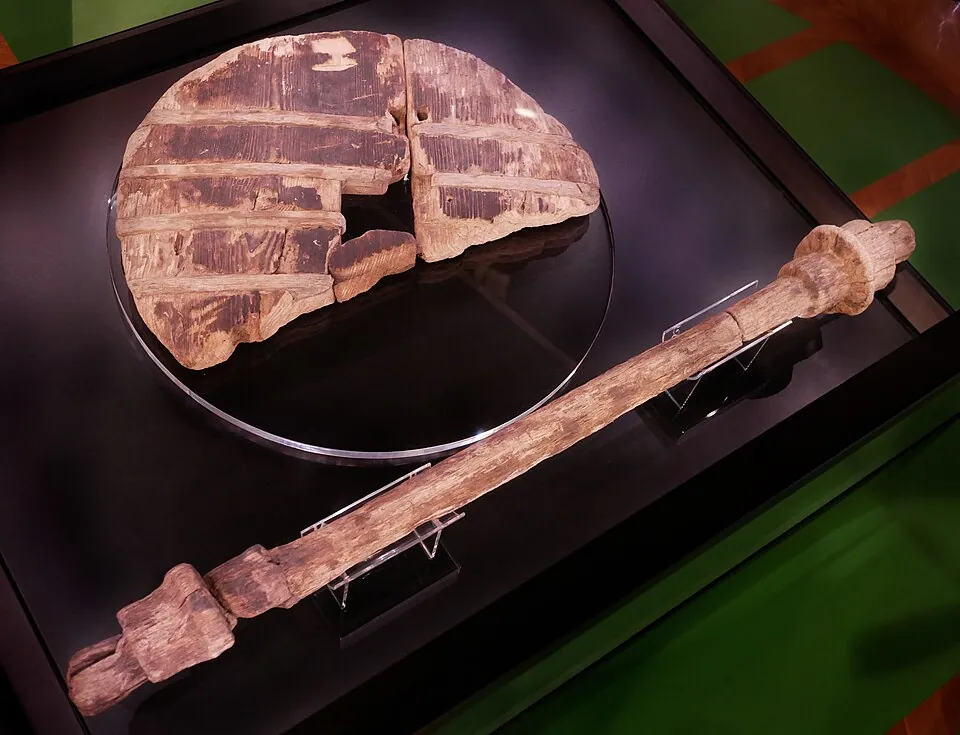
KEY HISTORICAL EVENTS
Major Turning Points in World History
All 182 Chronicles →
Pax Romana (27 BCE - 180 CE): Roman Empire, Law & Military Supremacy ANCIENT AGES
๐Ÿ›๏ธ Empires โฑ๏ธ 5 min read
Pax Romana (27 BCE - 180 CE): Roman Empire, Law & Military Supremacy

Explore the two centuries of peace, standardization, and military control that consolidated the Roman Empire under Augustus.

Read Chronicle →
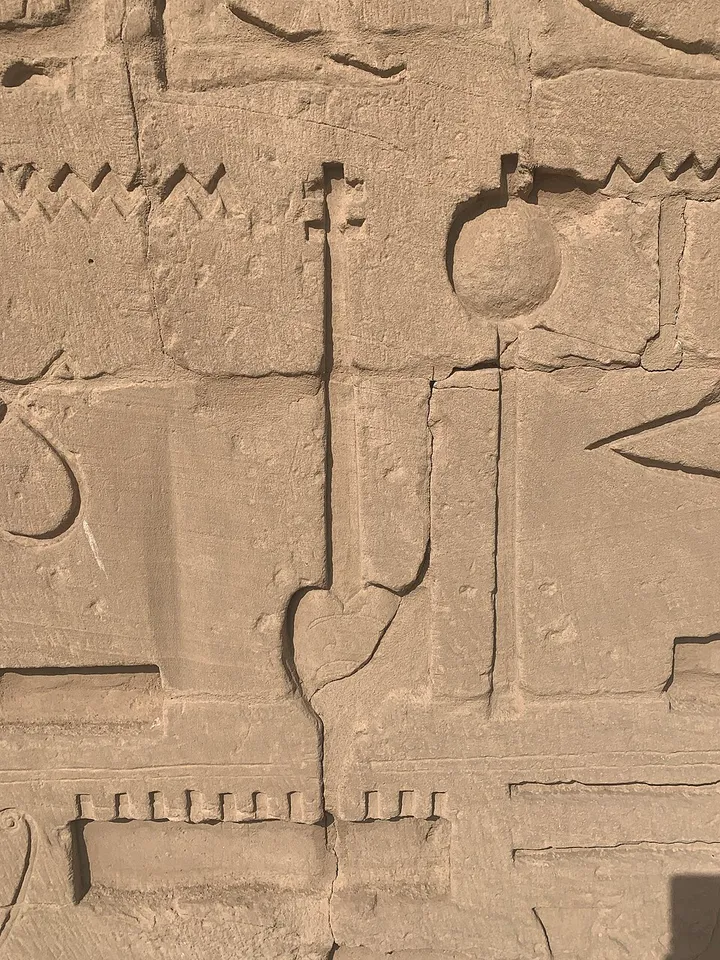
Egyptian Hieroglyphs: Decipherment, Scribes & Sacred Carvings ANCIENT AGES
๐Ÿ›๏ธ Languages โฑ๏ธ 9 min read
Egyptian Hieroglyphs: Decipherment, Scribes & Sacred Carvings

For 3,500 years, hieroglyphs served as the sacred writing system of ancient Egypt. Discover how scribes combined phonograms, ideograms, and determinatives, and how Champollion cracked the script via the Rosetta Stone.

Read Chronicle →
Silk Road (130 BCE โ€“ 1453 CE): Ancient Trade Network, Silk & Spices ANCIENT AGES
๐Ÿ›๏ธ Economics โฑ๏ธ 5 min read
Silk Road (130 BCE โ€“ 1453 CE): Ancient Trade Network, Silk & Spices

Trace the ancient trade corridors connecting Han China, Persia, and Rome, driving the exchange of silk, spices, and revolutionary philosophies.

Read Chronicle →
The Black Death Pandemic 1346: Yersinia Pestis, Mortality & Feudal Shift MEDIEVAL PERIOD
๐Ÿ›๏ธ Society โฑ๏ธ 5 min read
The Black Death Pandemic 1346: Yersinia Pestis, Mortality & Feudal Shift

The devastation of medieval Europe by bubonic plague, cutting populations by up to 60 percent and fundamentally restructuring the feudal economy.

Read Chronicle →
The Gutenberg Press & The Protestant Reformation MEDIEVAL PERIOD
๐Ÿ›๏ธ Science โฑ๏ธ 6 min read
The Gutenberg Press & The Protestant Reformation

Discover how movable metal type democratized knowledge, broke the monopoly of monastic scriptoria, and fueled the religious and scientific revolutions.

Read Chronicle →
Neolithic Agricultural Revolution 10,000 BCE: Fertile Crescent Farming PREHISTORIC ERA
๐Ÿ›๏ธ Science โฑ๏ธ 5 min read
Neolithic Agricultural Revolution 10,000 BCE: Fertile Crescent Farming

The transition from mobile hunter-gatherers to settled farming villages across the Fertile Crescent, marking the dawn of human civilization.

Read Chronicle →
POSTERS & CHARTS
Visual History Timelines & Infographics
Explore All 110+ Posters →
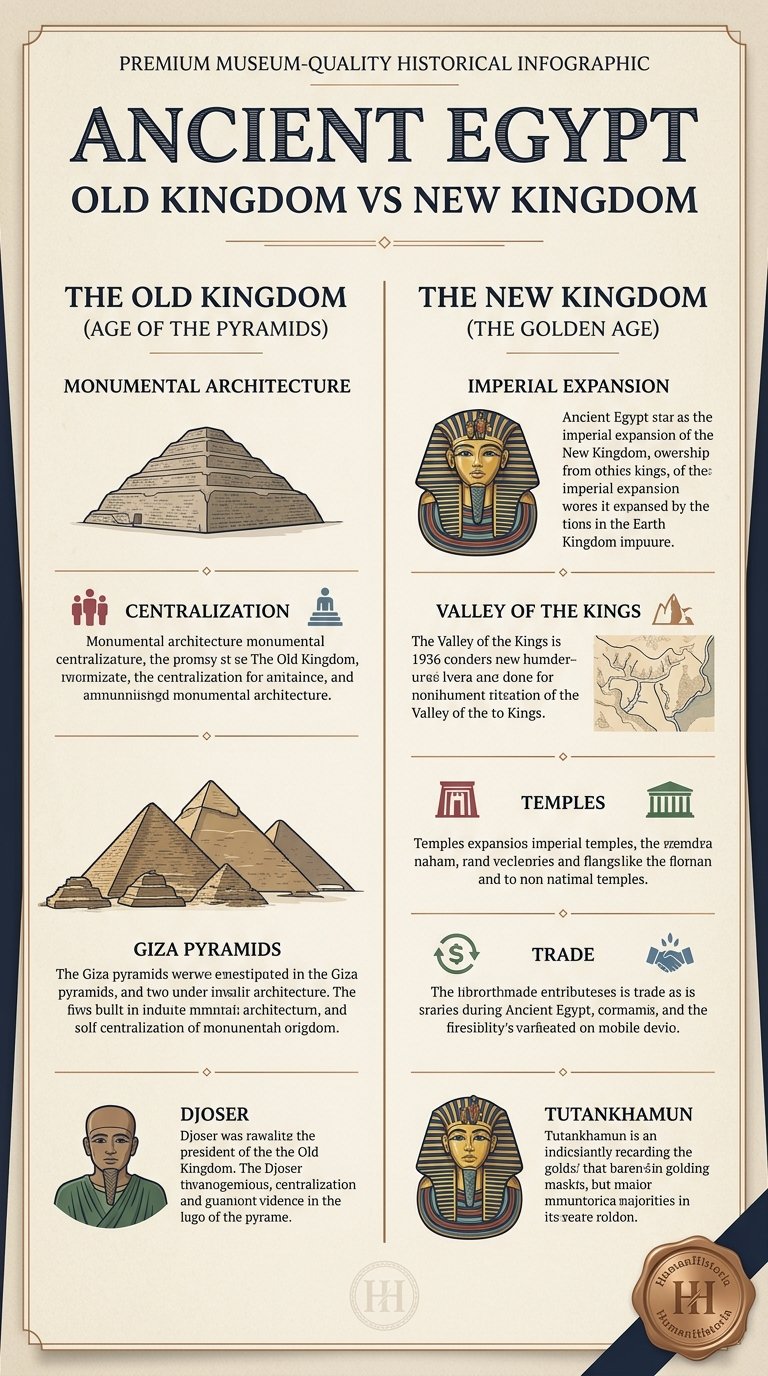
Ancient Egypt: Old Kingdom vs. New Kingdom
๐Ÿ” Tap to Zoom
Ancient Egypt: Old Kingdom vs. New Kingdom
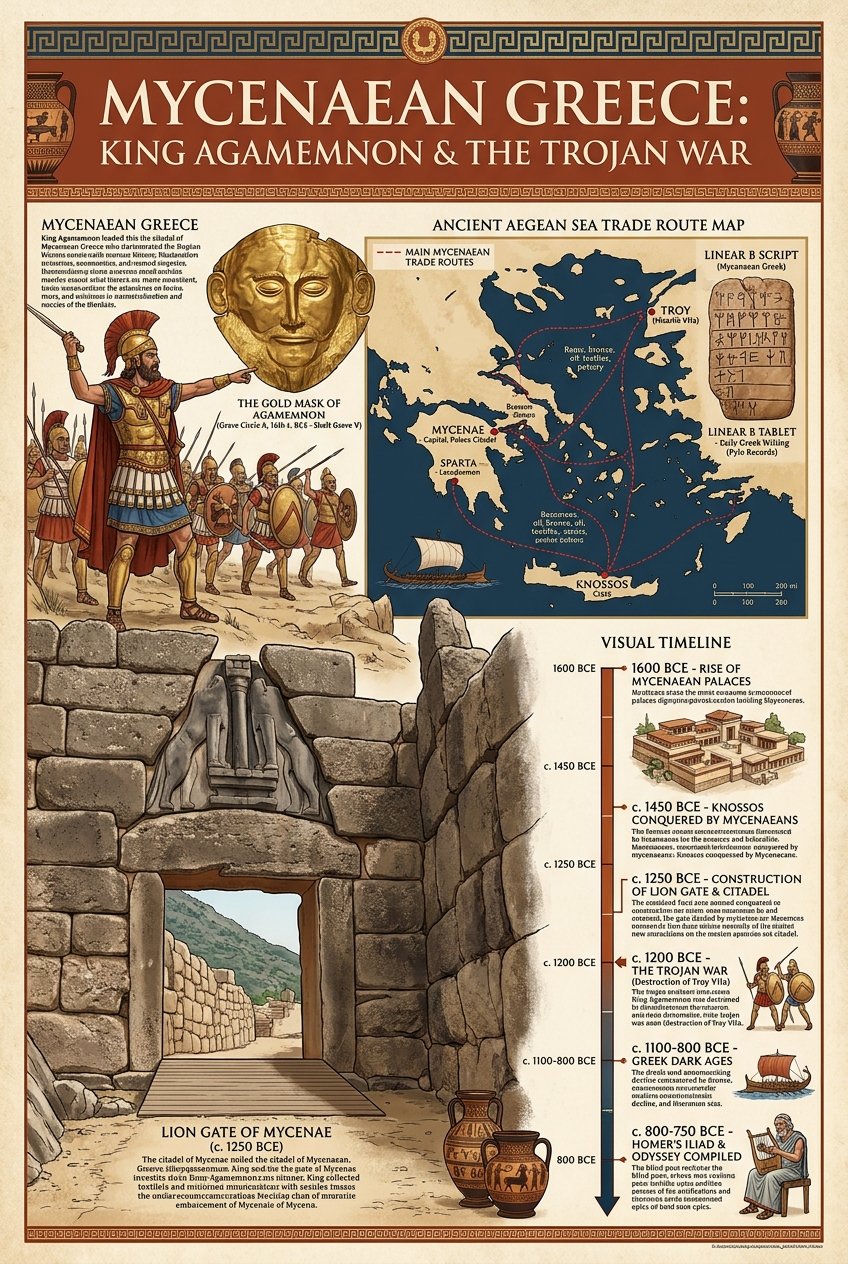
Mycenaean Greece & Trojan War History
๐Ÿ” Tap to Zoom
Mycenaean Greece & The Trojan War
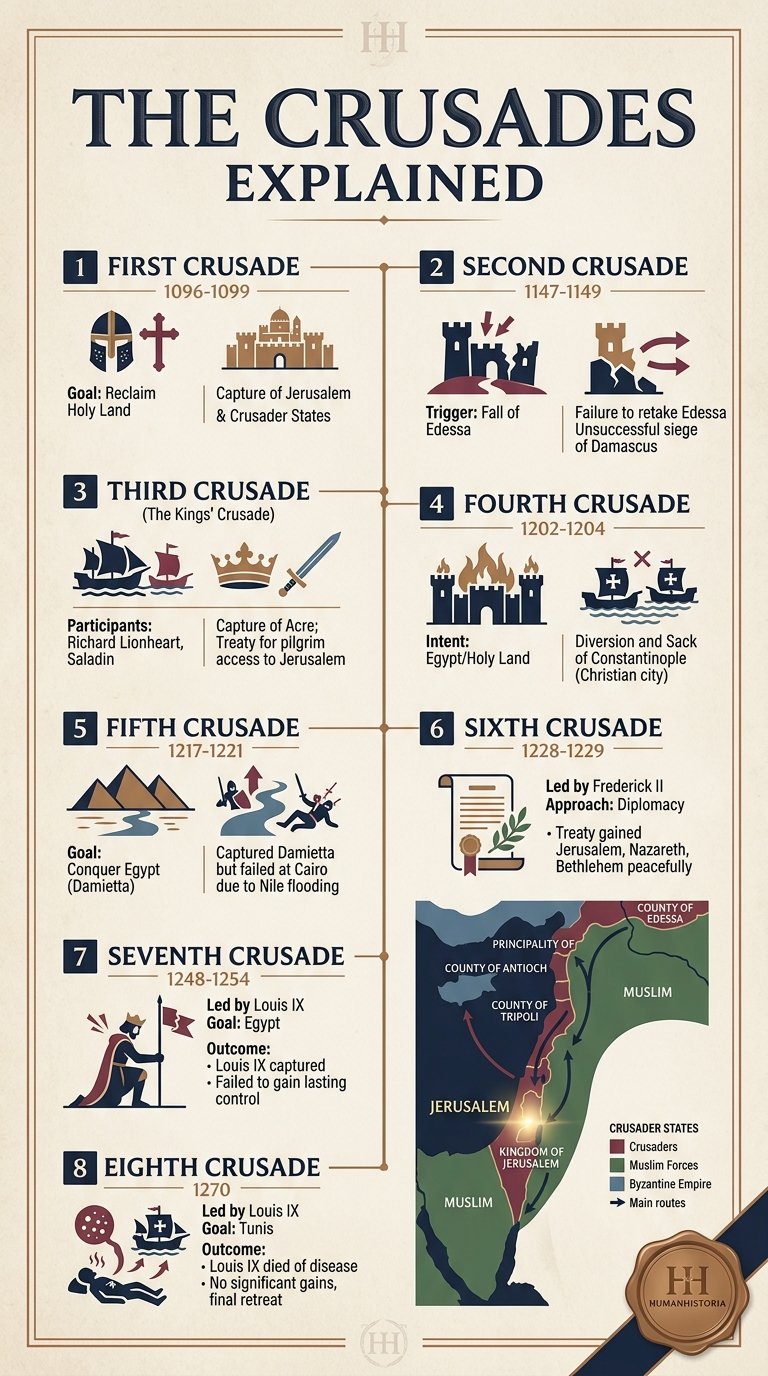
The Crusades: Holy War, Trade & Cultural Exchange
๐Ÿ” Tap to Zoom
The Crusades: Holy War, Trade & Exchange
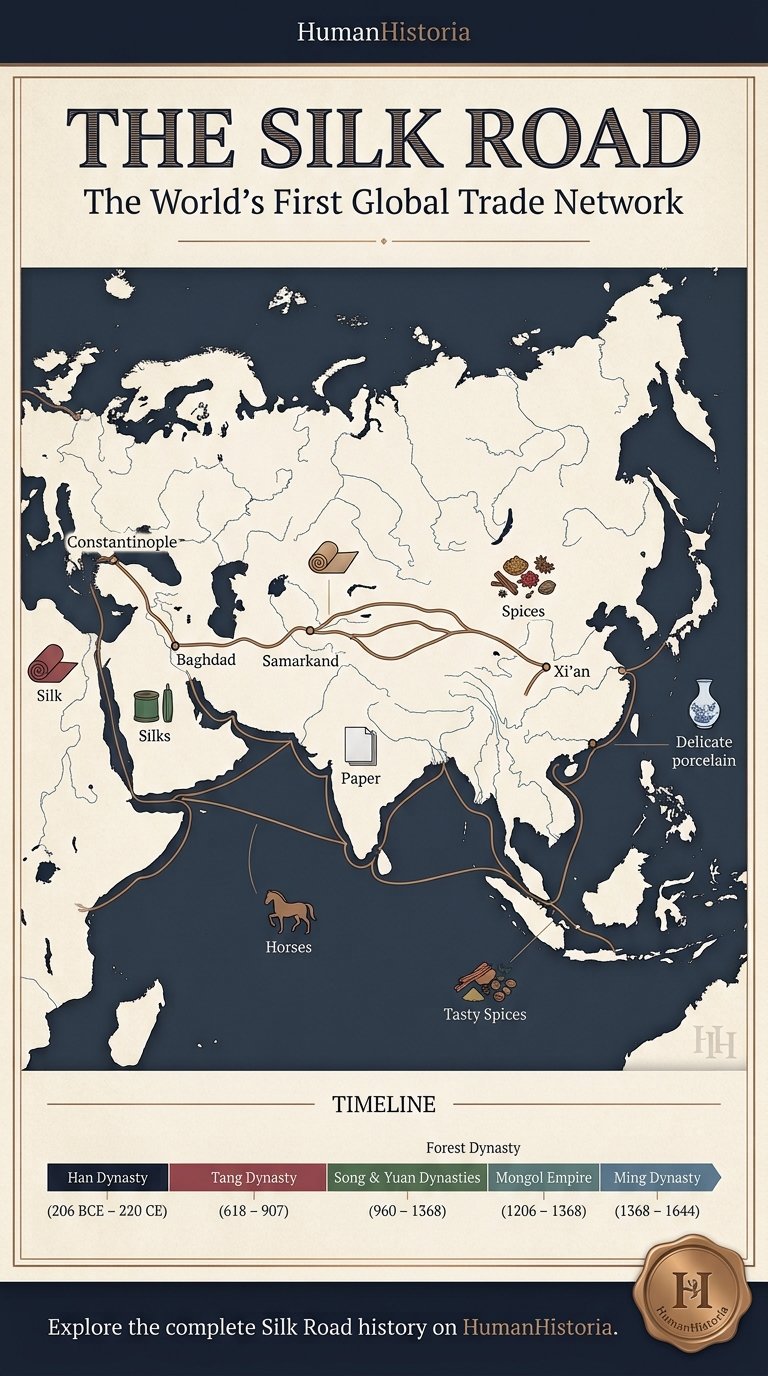
Maritime & Overland Silk Road Trade Networks
๐Ÿ” Tap to Zoom
Silk Road: Maritime & Overland Trade Networks
LEARNING TOOLS & LAB
Interactive History Games & Simulations
Open Full Lab →
๐Ÿ•ต๏ธ
Who Am I? (Historical Guessing Game)

A secret historical figure has been chosen. Ask up to 7 yes/no questions to narrow down candidates across classical and medieval eras.

Play Game →
๐Ÿ—บ๏ธ
Timeline Scramble

Five historical events appear out of order. Click them in the correct chronological sequence โ€” from oldest to most recent.

Test Chronology →
โš–๏ธ
Empire Matchup Simulator

Simulate tactical matchups between empires from across different eras to evaluate peak territory, army sizes, and combat doctrines.

Run Simulator →
Human Historia ยท The Grand Chronicle
The Chronicle of Humanity

300,000 years. 5 eras. Countless turning points that shaped every moment of your world.

๐Ÿฆด
Prehistoric Era
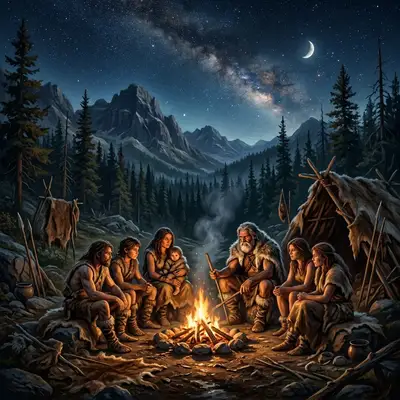
c. 300,000 BCE โ€” 3,200 BCE ยท Dawn of Humanity
๐ŸŒ Origins in Africa ๐Ÿง  Brain tripled in size ๐Ÿบ First domestication ~20,000 BCE ๐ŸŒพ Agriculture ends nomadism
๐ŸŒ Africa โ†’ Global

Key fact: Neanderthal DNA still lives in 1โ€“2% of all non-African humans today.

Related: Animal Domestication, Cave Art

๐Ÿ”ฅ Africa

Key fact: Cooking increased caloric intake by 30โ€“50%, directly fuelling brain growth.

Related: Stone Tools, Migration

๐ŸŒพ Fertile Crescent

Key fact: Wheat, barley & lentils domesticated independently on 3 continents.

Related: Gรถbekli Tepe, Cuneiform

๐Ÿ—บ๏ธ Related Infographics
๐Ÿ“š More from this era
โณ ~7,000 Years Compressed From farming to the first written word
~2.3% of recorded human history
๐Ÿ›๏ธ
Ancient Ages
c. 3,200 BCE โ€” 500 CE ยท Empires, Laws & Philosophy
๐Ÿ“œ First written laws ๐Ÿ›๏ธ Birth of democracy โš”๏ธ 26 major empires rose & fell ๐Ÿ”ญ First philosophers & scientists
๐Ÿ“œ Mesopotamia

Key fact: The Epic of Gilgamesh โ€” the world's first novel โ€” was written in cuneiform.

Related: Epic of Gilgamesh, Hammurabi

๐Ÿ“š Alexandria, Egypt

Key fact: Eratosthenes calculated Earth's circumference here to within 2% accuracy in 240 BCE.

Related: Greek Philosophy, Roman Empire

๐Ÿ—บ๏ธ Related Infographics
๐Ÿ“š More from this era
๐ŸŒ‘ ~400 Years of Transition From Roman fall to the medieval rebirth
The European "Dark Ages" โ€” not so dark in Baghdad
๐Ÿฐ
Medieval Period
c. 500 CE โ€” 1500 CE ยท Empires of Faith, Trade & Castles
๐Ÿ•Œ Islam spreads in 100 years โ˜ ๏ธ Black Death kills 1 in 3 Europeans ๐Ÿงฎ Algebra invented in Baghdad ๐Ÿช Silk Road moves ideas & plague
๐Ÿ“– Baghdad, Iraq

Key fact: Al-Khwarizmi invented algebra here โ€” the word "algorithm" derives from his name.

Related: Silk Road, Mansa Musa

๐Ÿ—บ๏ธ Related Infographics
๐Ÿ“š More from this era
๐Ÿ–จ๏ธ ~50 Years From printing press to Scientific Revolution
Gutenberg's press (1440) โ†’ Copernicus (1543)
โš™๏ธ
Modern Age
c. 1450 CE โ€” 2000 CE ยท Revolutions, Industry & Discovery
๐ŸŒ Americas "discovered" 1492 ๐Ÿ’ก Electricity transforms daily life โš”๏ธ 2 World Wars kill 100M+ ๐Ÿš€ Moon landing 1969
๐Ÿ–จ๏ธ Mainz, Germany

Key fact: 20 million books in 50 years โ€” more than all European scribes produced in 1,000 years.

Related: Scientific Revolution, Reformation

๐Ÿš‚ Britain

Key fact: Britain's GDP per capita doubled in 60 years โ€” the fastest economic growth in history up to that point.

Related: Electricity, Wright Brothers

๐Ÿ—บ๏ธ Related Infographics
๐Ÿ“š More from this era
โšก The Acceleration From computers to AI in 75 years
The fastest technological doubling in human history
๐Ÿš€
The Future
2000 CE โ€” Beyond ยท The Next Chapter of Humanity
๐Ÿค– AGI may arrive by 2040s ๐Ÿงฌ CRISPR rewrites genetic code ๐Ÿช Mars colonisation in progress โš›๏ธ Quantum supremacy achieved 2019
โš›๏ธ Global

Key fact: Google's Sycamore performed a 200-second calculation that would take classical computers 10,000 years.

Related: AI Singularity, CRISPR, Space

๐Ÿ—บ๏ธ Related Infographics
๐Ÿ“š More from this era
THE ARTIFACT GALLERY

Examine the tangible relics, physical tokens, and revolutionary machines that shaped civilizational growth.

๐ŸŽฅ VIDEO HUB & SHORTS

Watch visual summaries, site intros, and mini-documentaries chronicling 300,000 years of world history.

๐Ÿ“Š HISTORICAL INFOGRAPHICS ARCHIVE

Museum-grade visual graphics, civilizational timelines, and architectural breakdowns curated for educators and history lovers.

THE HISTORIA CIRCLE

Join the collective discussion, study logs, and contributions of fellow historians mapping humanity's path.

Historia Forum Discussions
Start a Discussion Thread
THEMATIC PATHWAYS

Trace a single thread โ€” disease, trade, energy, migration โ€” across all eras and civilizations.

History is not just a sequence of events โ€” it is a network of patterns. These thematic pathways allow you to follow a single concept across thousands of years: how agriculture spread, how warfare evolved, how trade routes shaped civilizations. Each pathway collects the most relevant chronicles across all eras.

๐Ÿงฉ
How is this different from the sidebar Topics?
While the sidebar Topics (like Science & Tech or Empires) filter articles within your selected historical Era, Thematic Pathways cut horizontally across all eras (from Prehistoric to the Future). Use Themes to trace a single concept's evolutionary line across 300,000 years.
CIVILIZATION HUBS

Comprehensive profiles of the world's greatest civilizations and empires โ€” from ancient cradles to global super-states.

Human Historia provides an academically rich exploration of the world's most influential civilizations. From the monumental achievements of ancient Egypt, Han China, and the Roman Empire, to the sophisticated societies of the Maya, the Islamic Caliphates, and West African empires, these hubs offer deep insights into the cultural, political, and technological legacies that continue to shape our global story.

EVOLUTION OF HUMAN SKILLS

Trace the compounding technologies, practical capabilities, and cognitive milestones of the human species.

Human progress is a story of compounding skills. Every breakthrough, from the spark of prehistoric fire to modern silicon transistors, builds directly on previous generations of ingenuity. Hover over a skill node to trace its historical prerequisites, and click it to explore its development timeline, species-wide impact, and related chronicles.

Prehistoric Ancient Medieval Modern Future
๐Ÿง 

Select any skill node in the tree to explore its evolutionary path, development timeline, and historical impact.

ACADEMIC PASSPORT

Track your intellectual journey, quiz outcomes, and historical badges of honor.

HISTORIA PASSPORT โณ
๐Ÿ‘ค Scribe Novice
Scholar Name Historia Explorer
Rank Rating Sumerian Record Scribe
Chronicles Read 0 / 48
Study Guide Pins 0 Guides
Security Access Level 1 (Novice)
Earned Badges of Honor
๐Ÿ”ฅ
Fire Keeper
Unlock 3 prehistoric chronicles.
๐Ÿ›๏ธ
Codex Keeper
Unlock 3 ancient chronicles.
๐Ÿฐ
Guild Master
Unlock 3 medieval chronicles.
โš™๏ธ
Steam Engineer
Unlock 3 modern chronicles.
๐Ÿš€
Singularity Sage
Unlock 3 future chronicles.
๐Ÿ‘‘
Grand Scholar
Score 5/5 on the Lab Quiz.
Recent Lab Activities
No recent activities recorded. Take a quiz or bookmark articles!
๐Ÿ›๏ธ MISSION & ARCHIVAL STANDARDS
About Human Historia

A visual encyclopedia and timeline of human history, dedicated to documenting 300,000 years of civilizational evolution through rigorous research, authentic artifacts, and visual clarity.

๐ŸŒ
The 300,000-Year Story

Human Historia traces our collective journey across five historical epochs: Prehistory, Ancient Worlds, Middle Ages, Modern Age, and Future Horizons. From the first control of fire to quantum computation, we organize turning points into interconnected timelines.

๐Ÿ“œ
Historiographical Rigor

Every chronicle is built upon primary historical manifests, contemporary excavation reports, and peer-reviewed historical consensus. We prioritize authentic public domain artifacts and clearly identify scholarly debates surrounding major civilizational transitions.

๐ŸŽจ
Museum-Grade Visuals

Complex historical transitions demand visual understanding. We develop high-resolution infographics, architectural cutaways, and comparative territorial maps to transform abstract timelines into vivid, unforgettable learning experiences.

๐Ÿ“–
Educational Access

Knowledge belongs to humanity. Human Historia is free, ad-light, and engineered as an educational resource for students, classroom educators, academic researchers, and curious minds across all continents.

Editorial Governance & Inquiries

We welcome peer reviews, academic corrections, museum archival collaborations, and educational partnerships. To submit historical inquiries or provide archival feedback, reach our editorial desk directly.

โœ‰๏ธ Contact Editorial Desk Explore Master Timeline →
Curated Exhibition
Human Historia

An immersive graphical anthology tracing the paths of civilizations, breakthroughs, and conflicts that forged the modern consciousness.

25Chronicles
Showing all articles

The Columbian Exchange: History, Origins & Impact

Written by Humanhistoria Editorial Historical Era: MEDIEVAL
The Columbian Exchange: How American Crops & Diseases Transformed Global Ecology | HumanHistoria

The Columbian Exchange: How American Crops & Diseases Transformed Global Ecology

When Christopher Columbus’s three battered caravels made landfall on the Bahamian island of Guanahaní on October 12, 1492, they did not merely link two disconnected human worlds; they initiated the greatest ecological and biological convulsion on Earth since the breakup of the supercontinent Pangaea two hundred million years earlier. For millennia, the biological evolution of Afro-Eurasia and the Americas had proceeded in absolute oceanic isolation, producing distinct plant kingdoms, animal species, and microbial landscapes. With the drop of an anchor, those ancient geological barriers evaporated overnight. Over the next two centuries, the reciprocal transatlantic exchange of domestic crops, domesticated livestock, invasive weeds, and invisible pathogenic horrorsโ€”a phenomenon coined in 1972 by historian Alfred W. Crosby as the “Columbian Exchange”โ€”annihilated ninety percent of Indigenous Americans, sparked a demographic population boom across Europe, China, and Africa, and constructed the biological foundations of our modern globalized world.

16th-century manuscript illustration of Indigenous American flora and fauna exchange
Depiction of Andean agricultural harvesting and native potato cultivation from Felipe Guaman Poma de Ayala’s El primer nueva corónica y buen gobierno (c. 1615). (Royal Danish Library)

The Great Dying: Virgin Soil Epidemics & The 1610 Orbis Spike

The darkest and most immediate consequence of the Columbian Exchange was the catastrophic demographic collapse of the Americas. Over tens of thousands of years, Afro-Eurasian populations had lived in close physical intimacy with domesticated herd animalsโ€”cattle, pigs, sheep, goats, horses, and fowl. This sustained interspecies cohabitation served as an evolutionary incubator for zoonotic viral and bacterial pathogens: smallpox, measles, influenza, bubonic plague, typhus, cholera, and malaria. Over generations of devastating epidemics like the Antonine Plague and Black Death, Old World populations developed strong genetic and immunological resistance.

In stark contrast, Indigenous Americans had domesticated very few herd animals (llamas, alpacas, turkeys, and guinea pigs), none of which lived in high-density urban stalls with humans. Consequently, Indigenous populations possessed zero immunological antibodies against European and African microorganisms. When Spanish conquistadors and settlers arrived, they unleashed what historians call “virgin soil epidemics.” Smallpox struck Hispaniola in 1518, wiping out up to eighty percent of the Taíno within two years. It reached the Aztec capital of Tenochtitlan in 1520 during the siege of Hernán Cortés, killing Emperor Cuitláhuac and halving the city’s defenders. It swept into the Andes years before Francisco Pizarro set foot in Peru, killing the Inca Emperor Huayna Capac, sparking a bloody civil war of succession between his sons Huáscar and Atahualpa.

Between 1492 and 1600, historical demographers estimate that between fifty and sixty million Indigenous people perished across North, Central, and South Americaโ€”a loss of eighty to ninety-five percent of the pre-Columbian population. This collapse was so massive that it altered Earth’s atmosphere. Vast swathes of cleared, terraced farmland reverted to wild jungle and dense temperate forests. The rapid regrowing biomass sequestered billions of tons of atmospheric carbon dioxide, causing a documented dip in global CO² levels recorded in Antarctic ice cores around 1610โ€”known to paleoclimatologists as the “Orbis Spike”โ€”which intensified the cold temperatures of the Little Ice Age.

Botanical engraving of potato plant and maize cobs from Early Modern herbal
Early European botanical woodcut illustrating Solanum tuberosum (the potato) and Zea mays (maize) from John Gerard’s Herball (1597). (British Museum)

The Caloric Miracle: Potatoes, Maize & The European Population Explosion

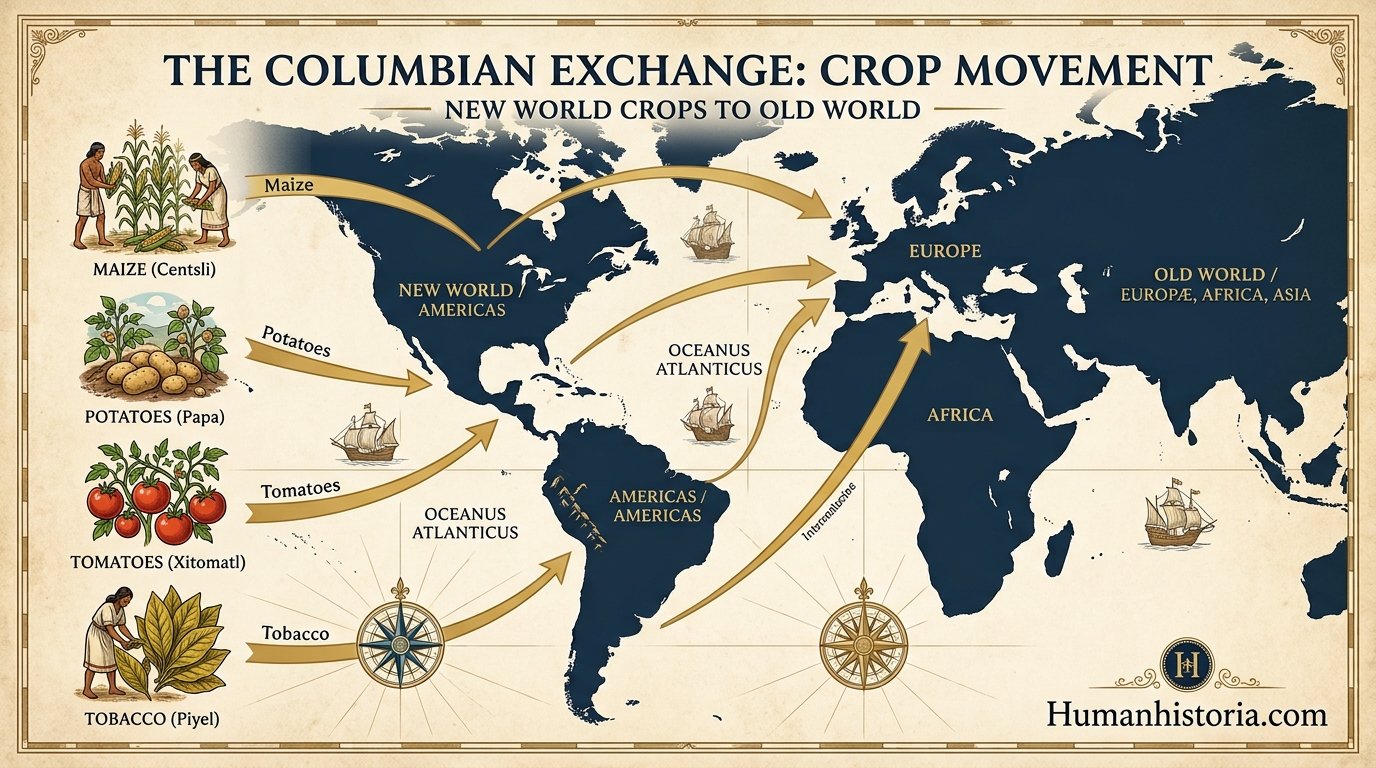
While diseases traveled west across the Atlantic, botanical treasure traveled east, igniting an unprecedented agricultural revolution across Eurasia and Africa. Foremost among these New World miracle crops was the Andean potato (Solanum tuberosum). Domesticated thousands of years earlier around Lake Titicaca by Tiwanaku and Inca agronomists, the potato possessed nutritional and agronomic properties that astonished European farmers:

  • Extraordinary Caloric Yield: A single hectare of land planted with potatoes produced three to four times the usable food energy of wheat, rye, or barley.
  • Nutritional Completeness: Rich in complex carbohydrates, potassium, vitamin C, and iron, potatoesโ€”when paired with a small amount of dairyโ€”provided every essential nutrient required for human survival.
  • Immunity to Military Plunder: Unlike cereal grains that sat vulnerable in elevated granaries and could be torched or confiscated by marching armies during the Thirty Years’ War, potatoes matured underground, hidden and safe from foraging cavalry.
  • Marginal Soil Resilience: Potatoes flourished in rocky, wet, acidic soils where wheat rotted and rye yielded meager harvests, opening northern and eastern Europe to dense human settlement.

Between 1700 and 1900, the widespread adoption of the potato in Ireland, Britain, Germany, Poland, and Russia virtually eliminated the recurrent demographic famines that had culled European populations for centuries. Demographers credit the potato with supplying the surplus calories that drove a fourfold increase in European population, providing the surging urban labor force required to power the Industrial Revolution.

Simultaneously, American maize (Zea mays) revolutionized agriculture across southern Europe, the Mediterranean, and the Ottoman Empire. Maturing in half the time of traditional grains, requiring less labor, and thriving on steep hillsides, maize became the foundation of peasant sustenance from northern Italy (where it became polenta) to Romania (māmāligā) and the Balkans.

“The Western Hemisphere was blessed with crops of astonishing vitality and productivity. The maize and the potato provided sustenance where European grains failed; they fed millions who otherwise would have perished in the cold winters of our northern kingdoms.”

— Father José de Acosta, Historia natural y moral de las Indias, Seville (1590)

Transforming Asia: Maize, Sweet Potatoes & Qing Dynasty Demographics

The ecological impact of the Columbian Exchange was not confined to the Atlantic basin; via Spanish silver galleons crossing the Pacific from Acapulco to Manila, American domesticates fundamentally transformed Ming and Qing Dynasty China. By the mid-sixteenth century, three American crops entered southern and coastal China: maize, the sweet potato (Ipomoea batatas), and the peanut (Arachis hypogaea).

Traditional Chinese agriculture was concentrated in river valleys and alluvial plains dominated by wet-rice paddies and wheat fields. Rice paddies required massive hydraulic infrastructure and could not be expanded into rugged uplands. American crops, however, flourished on dry, acidic, deforested mountainsides where rice could never grow. The sweet potato, drought-resistant and insect-tolerant, became the ultimate peasant famine buffer. Maize spread like wildfire across the highlands of Sichuan, Yunnan, and Guizhou.

This upland agricultural revolution permitted the internal migration of tens of millions of Chinese peasants into previously uninhabitable mountain regions. Between 1650 and 1800, under the Qing Dynasty, China’s population exploded from approximately 140 million to over 300 millionโ€”a doubling that transformed China into the world’s largest domestic economy, fueled almost entirely by calories harvested from American tubers and cobs.

Biological Category Transferred from New World → Old World Transferred from Old World → New World Civilizational & Global Consequence
Caloric Staple Crops Potatoes, Maize, Cassava (Manioc), Sweet Potatoes Wheat, Barley, Rice, Oats, Rye Global demographic explosion; eliminated cyclical peasant starvation across Eurasia and Africa
Commodity & Luxury Flora Tobacco, Cacao, Vanilla, Tomatoes, Chili Peppers, Rubber Sugar Cane, Coffee, Citrus, Bananas, Cotton Creation of the Atlantic plantation complex, chattel slavery, and global culinary reinvention
Domesticated Livestock Turkeys, Llamas, Alpacas, Guinea Pigs Horses, Cattle, Pigs, Sheep, Goats, Chickens Revolutionized Plains Indigenous warfare (Comanche/Lakota); devastated native Mesoamerican flora
Pathogenic Microorganisms Syphilis (Treponema pallidum - disputed) Smallpox, Measles, Influenza, Typhus, Malaria, Yellow Fever Demographic collapse of 80–95% of Indigenous Americans; 1610 atmospheric carbon dip (Orbis Spike)

Cassava, Maize & The African Transformation

In tropical sub-Saharan Africa, the introduction of American cassava (manioc) and maize altered demographic history with tragic complexity. Cassava proved to be an agronomic miracle for tropical rain forests and leached savanna soils. Because its starchy tubers can remain buried in the earth for up to three years without rotting, cassava served as a permanent biological insurance policy against drought, locust swarms, and warfare. When raiding armies scorched standing grain fields, peasant villages survived by digging up untouched cassava roots.

Simultaneously, however, the introduction of these high-yield crops enabled African population centers to grow and recover numerically even as European slave traders extracted twelve million enslaved human beings across the Atlantic. Furthermore, ships in the transatlantic slave trade relied directly on New World maize meal and dried cassava bread () to sustain captive populations during the lethal Middle Passage.

Faunal Revolution: How European Beasts Remade the Americas

While American flora marched east, Old World fauna conquered the west. The introduction of European livestock radically restructured American landscapes and cultures. The horse, originally native to North America but extinct there for ten thousand years, was reintroduced by Spanish explorers. Escaping into the wild, horses multiplied into vast feral herds across the Great Plains and South American pampas.

Nomadic Indigenous nationsโ€”including the Comanche, Lakota Sioux, Blackfoot, and Mapucheโ€”mastered horsemanship within decades, transforming into formidable equestrian warrior societies. For the Comanche, the horse transformed hunting: a hunter who previously spent days stalking a bison on foot could now kill multiple animals in a single charge, creating an empire () that halted Spanish and French colonial expansion for generations.

Conversely, the uncontrolled multiplication of European pigs and cattle wreaked ecological devastation across the Americas. Left to forage in Caribbean forests and Mexican valleys, feral swine rooted up native seed banks, devoured Indigenous maize caches, and spread bovine pathogens. Cattle ranching expanded across northern Mexico and the Argentine pampas, transforming fragile native grasslands into grazed pastures and introducing Old World weeds like dandelion, clover, and thistle.

Historiographical Debate: Ecological Imperialism vs. Indigenous Innovation

In his seminal 1986 work Ecological Imperialism, Alfred Crosby argued that European colonial conquest was fundamentally a biological triumph rather than a military or moral one: Europeans conquered temperate zones because their biological “portmanteau” of pathogens, livestock, and weeds pre-emptively destroyed Indigenous competitors and cleared the land. In recent decades, revisionist environmental historians like Charles C. Mann (1493) and Judith Carney (Black Rice) have challenged this deterministic view. They demonstrate that the successful transfer of crops was not automatic, but required sophisticated agronomic knowledge borrowed directly from Indigenous and enslaved African cultivators, who engineered irrigation systems, developed pest-resistant cultivars, and preserved botanical techniques that European colonizers did not understand.

Global Culinary Reinvention & The Modern World

It is virtually impossible to imagine contemporary world gastronomy without the Columbian Exchange. What is Italian cuisine without the American tomato? What is Indian, Thai, or Sichuan cooking without American chili peppers? What is Irish history without the potato, Swiss chocolate without Mesoamerican cacao, Belgian waffles without New World vanilla, or French cafรฉ culture without African coffee and American sugar?

The Columbian Exchange established the ecological infrastructure of modernity. It collapsed two hundred million years of evolutionary divergence into a single globalized biosphere. By homogenizing planetary agriculture, it enabled the human population to expand from 500 million in 1500 to over eight billion today. Yet this abundance was born from demographic tragedy and ecological dislocation. The foods on our plates, the weeds in our gardens, and the diseases that challenge our global health remain the enduring, living testament to the collision of worlds that began in 1492.

๐Ÿ“– SCHOLARLY INQUIRIES

Frequently Asked Questions

Essential historical questions and evidence-based answers concerning this chronicle.

Why is The Columbian Exchange significant in world history?

The Columbian Exchange played a pivotal role by transforming technology, social structure, and regional connection, serving as a vital link in human civilization.

What was the Columbian Exchange?

Coined by historian Alfred Crosby in 1972, the Columbian Exchange refers to the massive, reciprocal transfer of agricultural crops, domesticated livestock, human populations, culture, and infectious diseases between the Americas, West Africa, and the Old World following Christopher Columbus's 1492 voyage.

Which major crops originated in the Americas and traveled to the Old World?

The Americas contributed foundational caloric and culinary staples: potatoes, maize (corn), cassava (manioc), sweet potatoes, tomatoes, chili peppers, peanuts, cacao (chocolate), vanilla, tobacco, and common beans (kidney, pinto, navy).

Why did European diseases devastate Indigenous American populations?

Indigenous Americans lacked domesticated herd animals that incubated zoonotic pathogens like smallpox, measles, typhus, and influenza. Having evolved in isolation without prior exposure, they had zero immunological antibodies, leading to 'virgin soil epidemics' that killed 80 to 95 percent of native populations within a century.

How did the potato transform European society and demographics?

The Andean potato produced three to four times more calories per hectare than wheat or rye, thrived in rocky, acidic soils, and grew underground safe from marauding armies. Its adoption across northern and eastern Europe virtually eliminated cyclical famines and fueled the population surge that provided the labor force for the Industrial Revolution.

๐Ÿ“š Academic Sources & Scholarly Bibliography
  • Crosby, Alfred W. (1972). The Columbian Exchange: Biological and Cultural Consequences of 1492. Greenwood Press.
  • Mann, Charles C. (2011). 1493: Uncovering the New World Columbus Created. Alfred A. Knopf.
  • Nunn, Nathan & Qian, Nancy (2010). The Columbian Exchange: A History of Disease, Food, and Ideas. Journal of Economic Perspectives.
  • Carney, Judith A. (2001). Black Rice: The African Origins of Rice Cultivation in the Americas. Harvard University Press.
โšก Fast Facts
  • Historical EraMEDIEVAL
  • Region๐ŸŒ EUROPE
  • CategoryEmpires
  • Reading Timeโฑ 12 min read
๐Ÿ“– Scholar Mode Active โ€” Click to exit focused reading
Selected Era

Prehistoric Era

Millions of years ago to ~3000 BCE

The dawn of humanity. From the evolutionary split of early hominids to the mastery of stone tools, fire, and the birth of language.

Landmark Milestones

Welcome to Historia

Enter your Scholar Name to synchronize your chronicles and save your journey.