From prehistoric origins to the modern era—discover the turning points, lost empires, and breakthroughs of world history through interactive timelines and visual guides.
Examine the tangible relics, physical tokens, and revolutionary machines that shaped civilizational growth.
🎥 VIDEO HUB & SHORTS
Watch visual summaries, site intros, and mini-documentaries chronicling 300,000 years of world history.
📊 HISTORICAL INFOGRAPHICS ARCHIVE
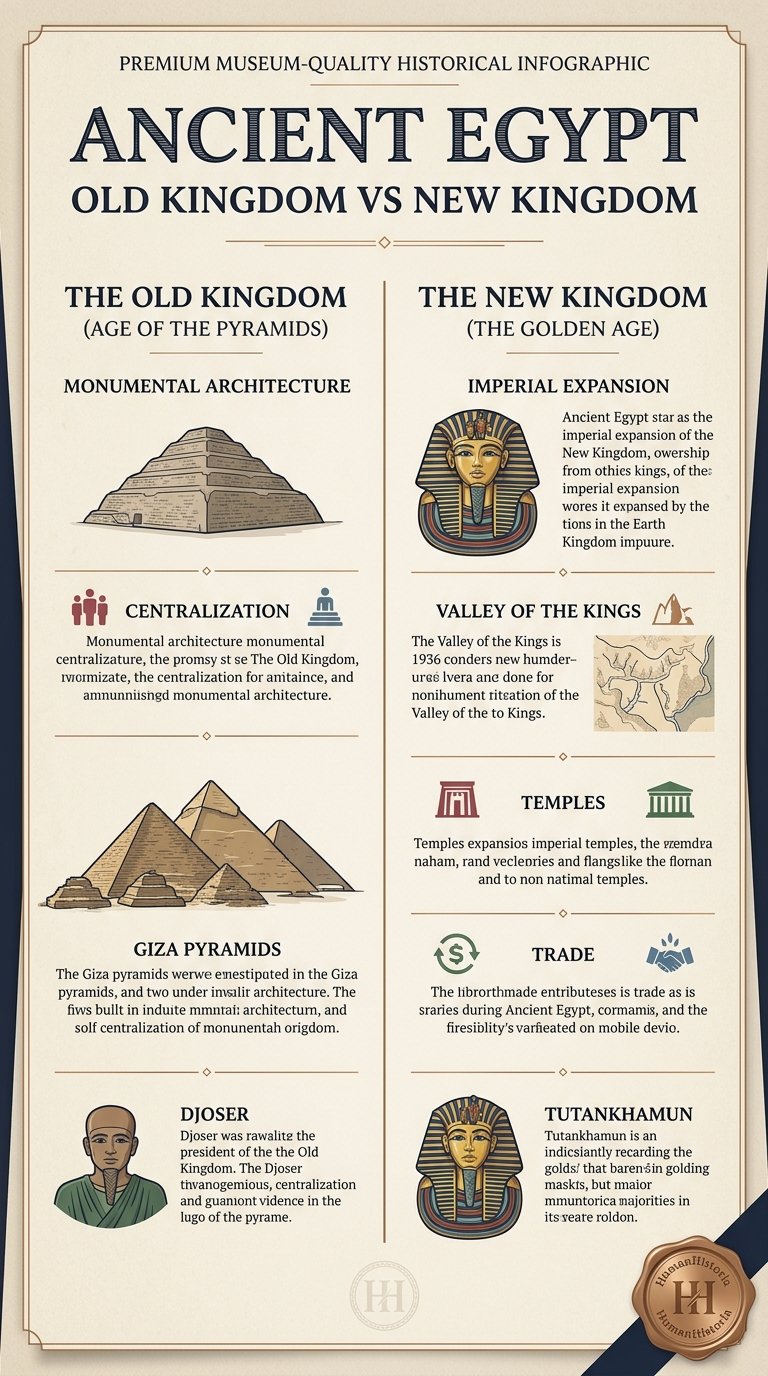
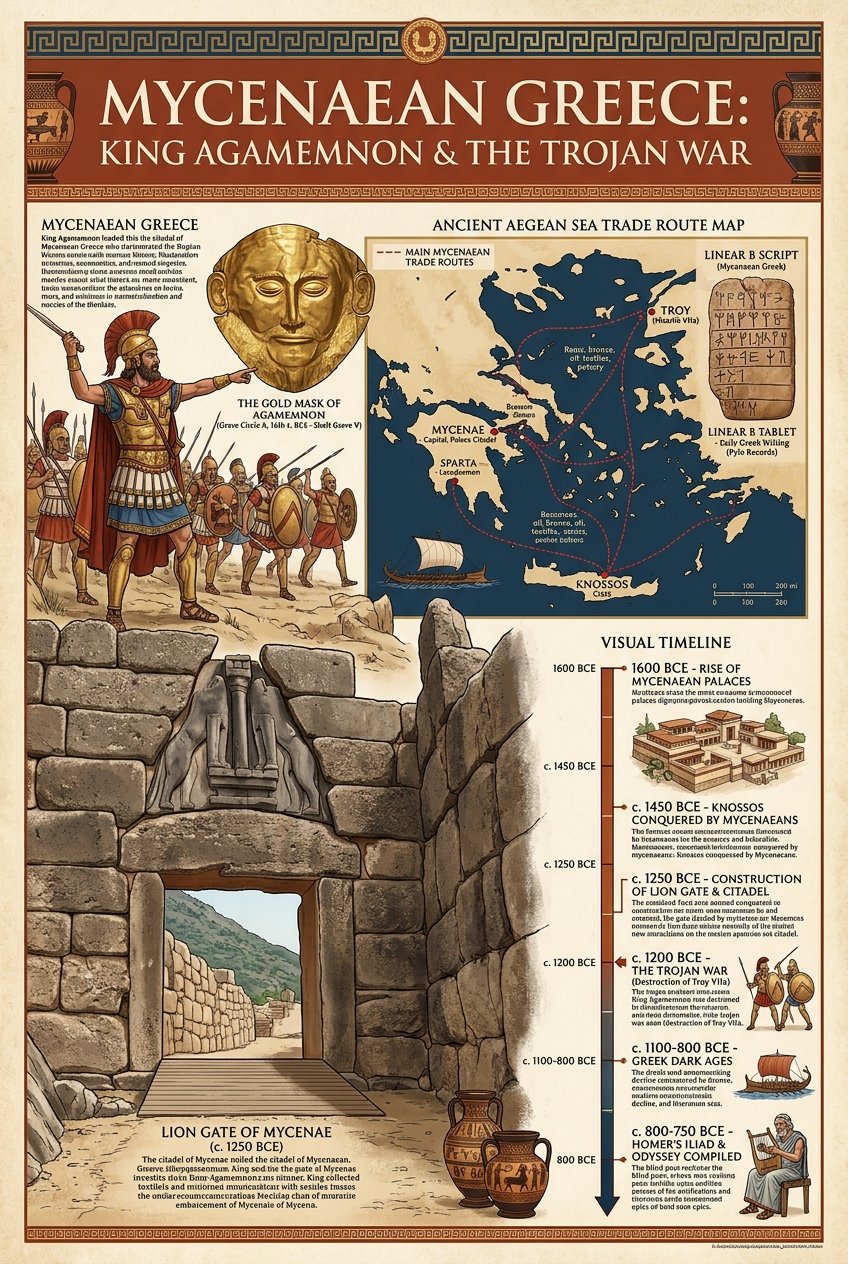
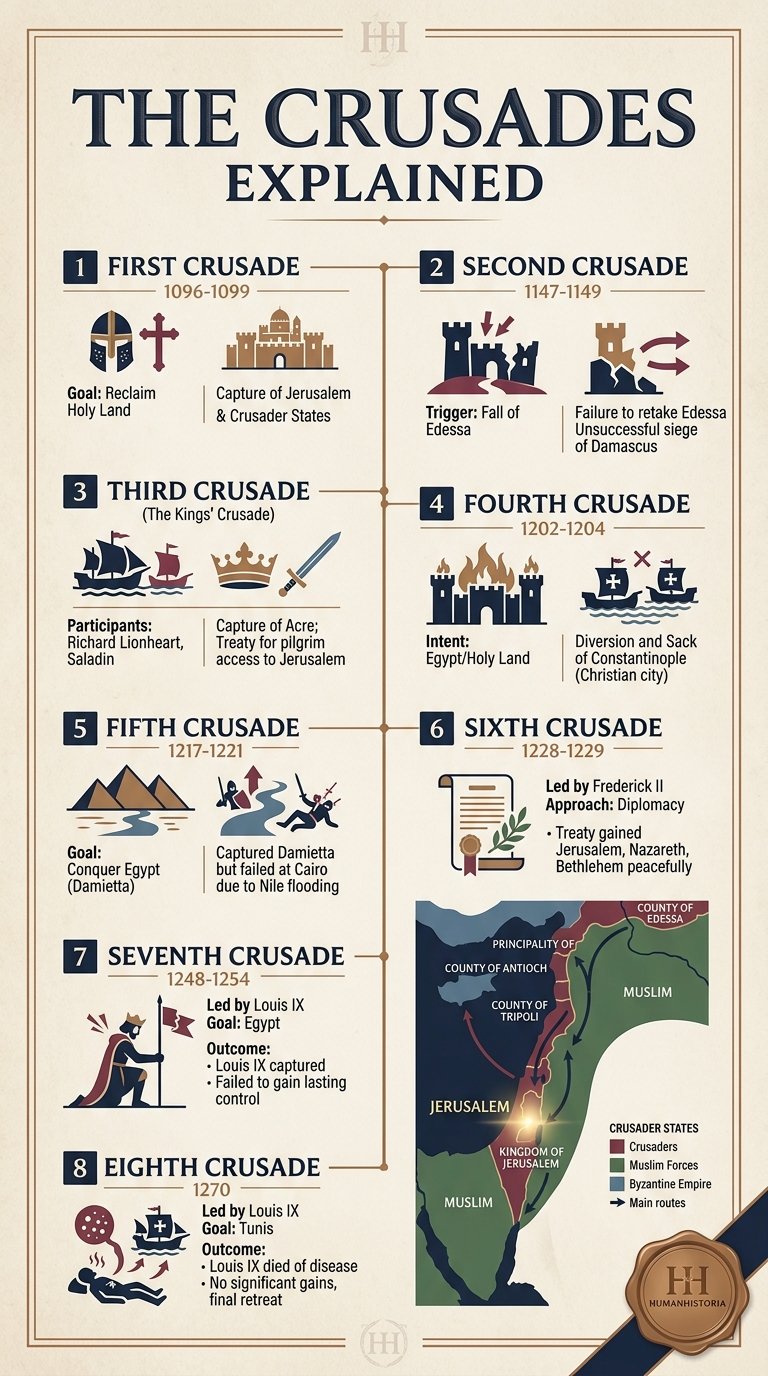
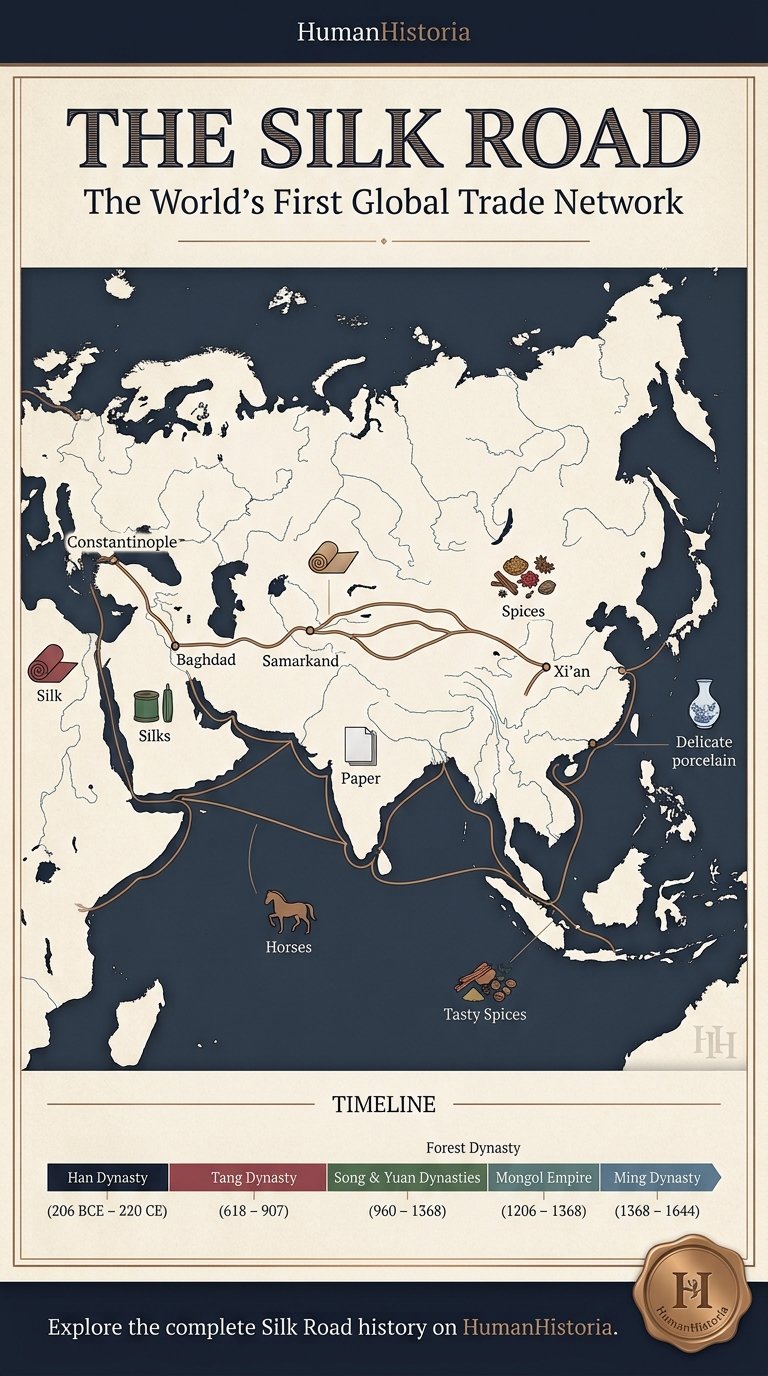
Museum-grade visual graphics, civilizational timelines, and architectural breakdowns curated for educators and history lovers.
THE HISTORIA CIRCLE
Join the collective discussion, study logs, and contributions of fellow historians mapping humanity's path.
Historia Forum Discussions
Start a Discussion Thread
THEMATIC PATHWAYS
Trace a single thread — disease, trade, energy, migration — across all eras and civilizations.
History is not just a sequence of events — it is a network of patterns. These thematic pathways allow you to follow a single concept across thousands of years: how agriculture spread, how warfare evolved, how trade routes shaped civilizations. Each pathway collects the most relevant chronicles across all eras.
🧩
How is this different from the sidebar Topics?
While the sidebar Topics (like Science & Tech or Empires) filter articles within your selected historical Era, Thematic Pathways cut horizontally across all eras (from Prehistoric to the Future). Use Themes to trace a single concept's evolutionary line across 300,000 years.
CIVILIZATION HUBS
Comprehensive profiles of the world's greatest civilizations and empires — from ancient cradles to global super-states.
Human Historia provides an academically rich exploration of the world's most influential civilizations. From the monumental achievements of ancient Egypt, Han China, and the Roman Empire, to the sophisticated societies of the Maya, the Islamic Caliphates, and West African empires, these hubs offer deep insights into the cultural, political, and technological legacies that continue to shape our global story.
EVOLUTION OF HUMAN SKILLS
Trace the compounding technologies, practical capabilities, and cognitive milestones of the human species.
Human progress is a story of compounding skills. Every breakthrough, from the spark of prehistoric fire to modern silicon transistors, builds directly on previous generations of ingenuity. Hover over a skill node to trace its historical prerequisites, and click it to explore its development timeline, species-wide impact, and related chronicles.
Prehistoric Ancient Medieval Modern Future
🧠
Select any skill node in the tree to explore its evolutionary path, development timeline, and historical impact.
ACADEMIC PASSPORT
Track your intellectual journey, quiz outcomes, and historical badges of honor.
HISTORIA PASSPORT⏳
👤Scribe Novice
Scholar NameHistoria Explorer
Rank RatingSumerian Record Scribe
Chronicles Read0 / 48
Study Guide Pins0 Guides
Security AccessLevel 1 (Novice)
Earned Badges of Honor
🔥
Fire Keeper
Unlock 3 prehistoric chronicles.
🏛️
Codex Keeper
Unlock 3 ancient chronicles.
🏰
Guild Master
Unlock 3 medieval chronicles.
⚙️
Steam Engineer
Unlock 3 modern chronicles.
🚀
Singularity Sage
Unlock 3 future chronicles.
👑
Grand Scholar
Score 5/5 on the Lab Quiz.
Recent Lab Activities
No recent activities recorded. Take a quiz or bookmark articles!
🏛️ MISSION & ARCHIVAL STANDARDS
About Human Historia
A visual encyclopedia and timeline of human history, dedicated to documenting 300,000 years of civilizational evolution through rigorous research, authentic artifacts, and visual clarity.
🌍
The 300,000-Year Story
Human Historia traces our collective journey across five historical epochs: Prehistory, Ancient Worlds, Middle Ages, Modern Age, and Future Horizons. From the first control of fire to quantum computation, we organize turning points into interconnected timelines.
📜
Historiographical Rigor
Every chronicle is built upon primary historical manifests, contemporary excavation reports, and peer-reviewed historical consensus. We prioritize authentic public domain artifacts and clearly identify scholarly debates surrounding major civilizational transitions.
🎨
Museum-Grade Visuals
Complex historical transitions demand visual understanding. We develop high-resolution infographics, architectural cutaways, and comparative territorial maps to transform abstract timelines into vivid, unforgettable learning experiences.
📖
Educational Access
Knowledge belongs to humanity. Human Historia is free, ad-light, and engineered as an educational resource for students, classroom educators, academic researchers, and curious minds across all continents.
Editorial Governance & Inquiries
We welcome peer reviews, academic corrections, museum archival collaborations, and educational partnerships. To submit historical inquiries or provide archival feedback, reach our editorial desk directly.
An immersive graphical anthology tracing the paths of civilizations, breakthroughs, and conflicts that forged the modern consciousness.
25Chronicles
Showing all articles
The Transatlantic Slave Trade: How Forced Migration Built Colonial Empires and Wealth
Written by Humanhistoria EconomicsHistorical Era: MODERN
In 1789, a Bristol merchant named James Rogers insured a cargo of "goods" for a voyage from West Africa to the Caribbean. The goods were 230 human beings. The language of the insurance document — the same language used to insure bales of cloth or barrels of sugar — was not accidental. It was the linguistic expression of a legal and economic architecture that had, over two and a half centuries, systematically transformed African people into commodities: items of capital that could be bought, sold, insured, inherited, and used as collateral for loans. Understanding the Atlantic slave trade requires confronting this architecture directly — not as an aberration of history's otherwise progressive arc, but as a rational system, internally coherent by its own logic, that served the interests of a specific set of actors with such efficiency that it endured for centuries and left economic traces so durable they are measurable today.
🎯 Quick Historical Summary
What Was the Significance of the Transatlantic Slave Trade?
Not a simple moral tale but a rigorous economic and political history. 12.5 million people transported. 1.8 million dead on the Middle Passage. The Triangle Trade as a system — and the debate over whether enslaved labor funded the Industrial Revolution.
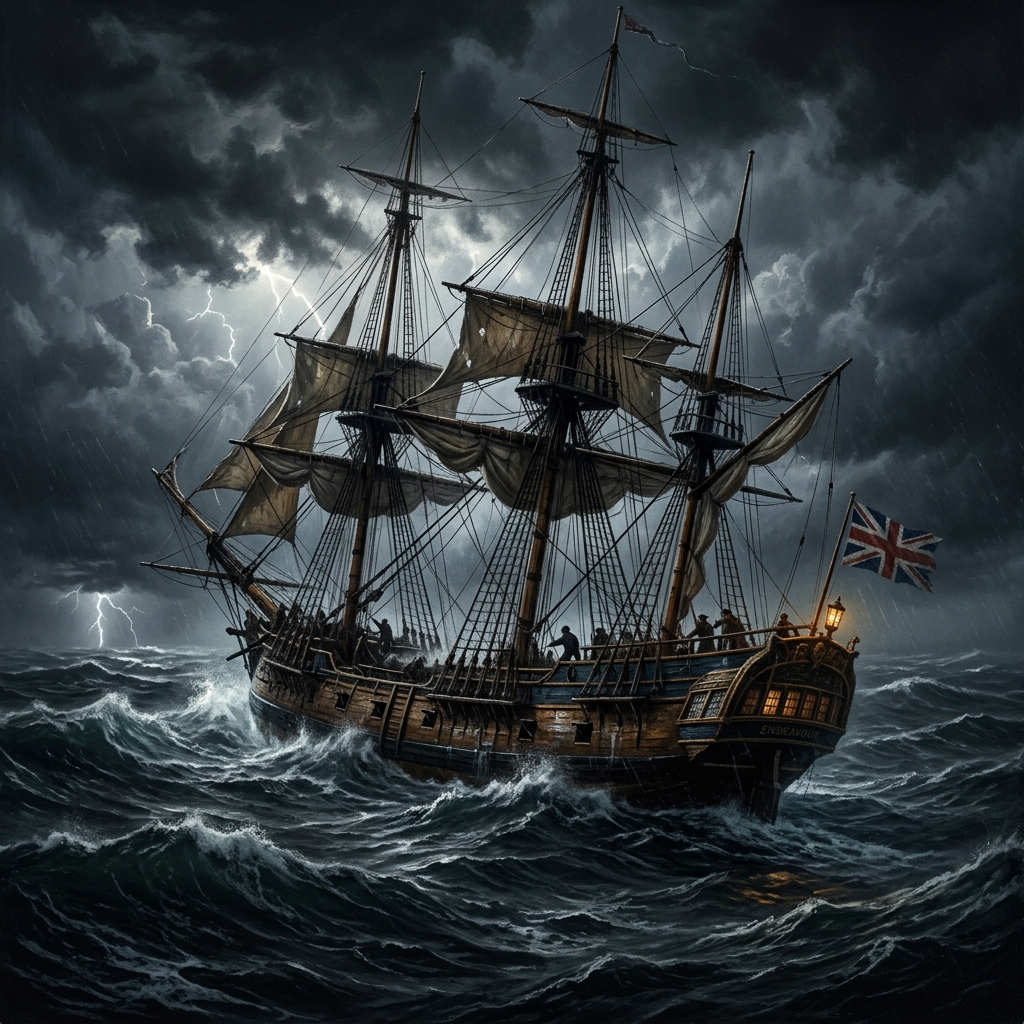
Archival visual record and historical depiction representing The Transatlantic Slave Trade: How Forced Migration Built Colonial Empires and Wealth.
Historical Context
The Atlantic slave trade was not the first system of slavery in human history, nor was it the largest in absolute terms over all of history. Slavery existed in ancient Mesopotamia, Greece, Rome, and across medieval Islamic civilization. The Indian Ocean slave trade predated the Atlantic trade and continued alongside it. What distinguished the Atlantic system was its scale within a compressed time period, its racial codification (the identification of African descent as the defining marker of enslaved status in a way that earlier slave systems had not systematized), its integration into an emerging capitalist world economy, and its geographic consequences — the forced migration of at least 12.5 million people, the largest forced migration in recorded history, across the Atlantic Ocean.
The trade developed in stages. Portuguese sailors, pushing south along the African coast in the fifteenth century under the patronage of Prince Henry the Navigator, established contact with West African kingdoms and began bringing small numbers of enslaved people to Portugal and to the new sugar plantations of the Atlantic islands — Madeira, the Azores, São Tomé. The establishment of European colonies in the Americas from the late fifteenth century onward created a demand for agricultural labor that the indigenous populations — decimated by epidemic disease — could not supply and that European indentured laborers would not tolerate indefinitely. The solution reached by planters, traders, and colonial governments was the systematic importation of enslaved Africans, whose supply could be maintained through networks of trade and capture that European actors increasingly organized and financed.
By the seventeenth century the trade had achieved industrial scale. The Portuguese, Dutch, British, French, Spanish, and Danish all operated slaving enterprises. The trade reached its peak in the eighteenth century: between 1700 and 1800, roughly 6 million people were forcibly transported across the Atlantic, generating enormous profits for merchants, planters, ship-builders, insurers, and the governments that taxed their activities. It was not abolished by Britain — which carried by that point approximately 40% of the total trade — until 1807, and legal slavery continued in the Americas until Brazil's emancipation in 1888.
The Triangle Trade as a System
The "Triangle Trade" is a pedagogical simplification, but a useful one. In its classic form, European ships departed for West Africa carrying manufactured goods — textiles from Manchester and Rouen, iron bars, firearms, alcohol, copper ware — that were traded with African merchants and rulers in exchange for enslaved people. The ships then crossed the Atlantic on the "Middle Passage," delivering their human cargo to colonial ports in the Caribbean, Brazil, or North America. There they loaded colonial produce — sugar, tobacco, cotton, indigo, rice — and returned to Europe. Each leg of the triangle generated profit; each leg fed the others.
The system was more complex than this triangular image suggests. Many voyages did not follow the exact triangular pattern. Some ships operated between West Africa and the Americas without returning to Europe. Brazilian slavers operated primarily bilateral voyages between Brazil and Angola. The range of trade goods, African trade partners, and American destinations was enormous. But the essential economic logic held: European manufactured goods purchased African labor, which produced American raw materials, which financed European industrial development. The triangle was not geography so much as a description of flows of value, and the flows all ran in directions that enriched European metropolitan economies at the expense of African societies and enslaved people.
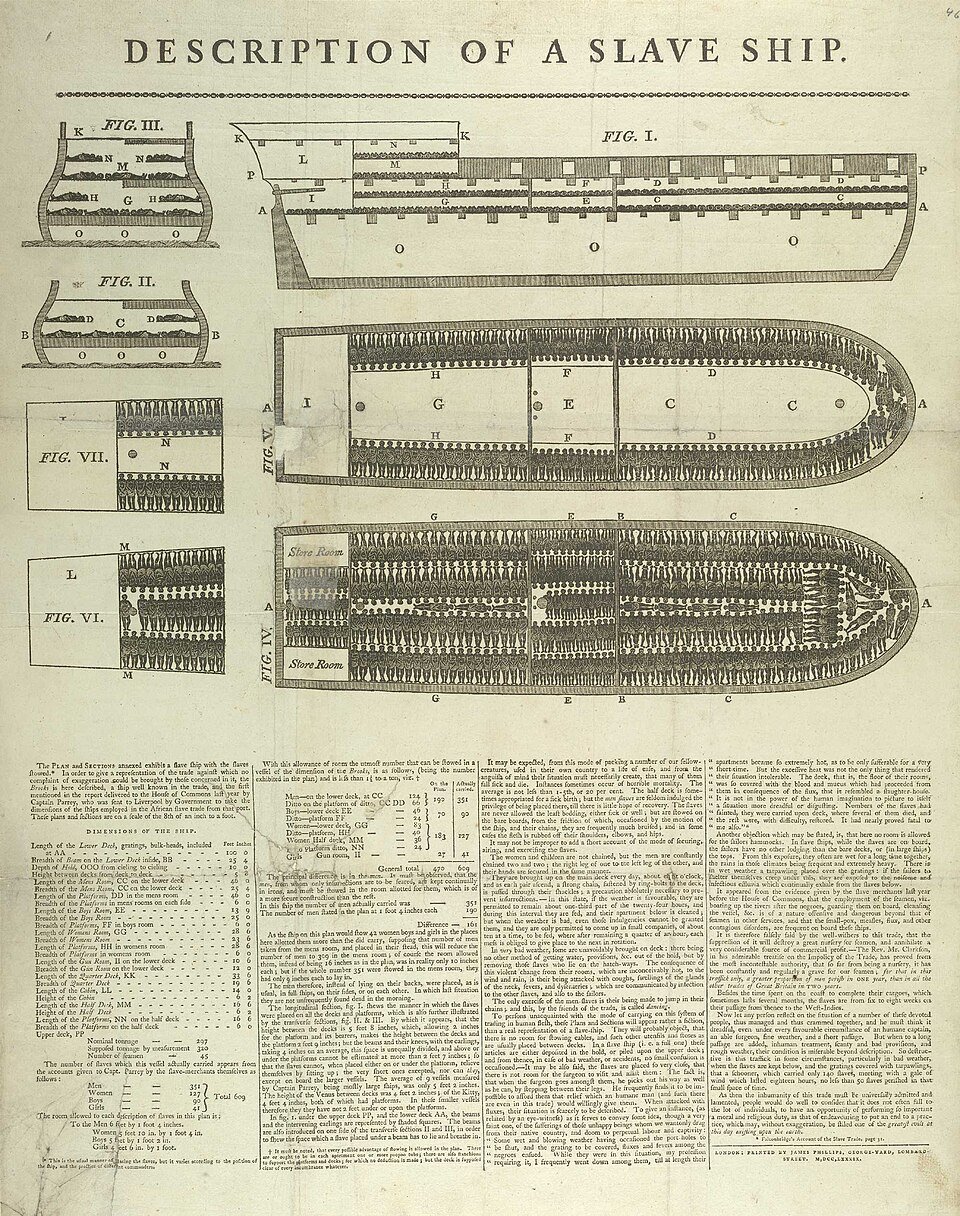
The Middle Passage deserves particular attention because it is where the system's violence was most concentrated and most visible. Enslaved people were loaded onto ships in conditions designed to maximize cargo density and therefore profit. The Regulated Slave Trade Act of 1788 — the Dolben Act, introduced by British abolitionists as a reform measure — sought to limit overcrowding by specifying that ships could carry no more than five enslaved people for every three tons of ship's capacity. That this was considered a reform gives some sense of the conditions it was improving upon. People were chained in holds where they could not sit upright, lying in their own waste, for a crossing that typically took six to twelve weeks depending on winds and routing. Mortality on the Middle Passage is estimated, across the entire history of the trade, at approximately 15% — meaning that roughly 1.8 million people died at sea, in the holds of ships, without reaching the American coast.
The "Brooks" diagram, published by the Society for Effecting the Abolition of the Slave Trade in 1788, showed the arrangement of 454 enslaved people in the hold of a Liverpool slaving vessel. It became one of the most effective pieces of abolitionist propaganda in history — though it depicted conditions that were already nominally "regulated" by the Dolben Act.
African Kingdoms: Victims, Participants, and Resisters
The role of African kingdoms in the Atlantic slave trade is one of the most historically and morally complex dimensions of the story, and one that is frequently either oversimplified (into narratives that either ignore African agency entirely or use it to deflect from European culpability) or avoided altogether. The historical reality requires holding multiple things simultaneously: that African rulers and merchants were participants in the trade who benefited materially from it, that many of these same rulers and peoples were also victims of it in profound ways, and that the ultimate structural power over the trade resided with European consumers, merchants, and governments who created and sustained the demand.
The Kingdom of Dahomey (in present-day Benin) became in the eighteenth century one of the most active participants in supplying enslaved people to European traders. Dahomean armies conducted systematic raids on neighboring peoples, capturing prisoners who were then sold at the coastal port of Ouidah. The Dahomean state was economically dependent on the trade — historian Robin Law estimates that by the late eighteenth century, enslaved people exports accounted for a significant proportion of Dahomey's government revenues. The Dahomean kings were not passive brokers; they were active military entrepreneurs whose state power was partly constituted by and for the slave trade. The same was broadly true of the Ashanti Confederacy in present-day Ghana, which became a major supplier of enslaved people to British traders at Cape Coast Castle and Anomabo.
Other African polities resisted, at significant cost. The Kingdom of Benin (distinct from the modern country, centered in present-day Nigeria) refused to sell enslaved people to Portuguese traders in the late fifteenth century and maintained restrictions on the trade for decades. The Kongo kingdom, initially a trading partner with the Portuguese, found itself increasingly victimized as demand grew and Portuguese traders encouraged internal Kongolese conflicts to generate captives. King Afonso I of Kongo, a Christian ruler who had cultivated close ties with Portugal, wrote a series of letters to the Portuguese king João III in the 1520s that remain among the most remarkable primary sources of the entire slave trade era — a ruler watching his kingdom being hollowed out by a trade he had initially sought to manage and could no longer control.
12.5 million people forcibly transported across the Atlantic, 1500–1867 (Slave Voyages Database estimate)
1.8 million died on the Middle Passage — approximately 15% mortality rate across the entire trade
Dahomey and the Ashanti Confederacy were major suppliers; Benin and early Kongo actively resisted
40% of the trade carried in British ships at the peak period (1700–1807)
Brazil received the largest share — approximately 4.8 million people, roughly 40% of the total trade
Eric Williams and the Capitalism Question
In 1944, Eric Williams — then a Trinidad-born Oxford-educated historian, later Prime Minister of Trinidad and Tobago — published Capitalism and Slavery, arguing that profits from the slave trade and enslaved labor directly financed Britain's Industrial Revolution. The thesis was specific: slavery generated the capital that funded the banks, insurance companies, and manufacturing enterprises of the eighteenth century, and abolition came when slavery became economically less useful rather than because of moral awakening. Williams' argument was partly polemical and partly empirical. Later economic historians, including Stanley Engerman and Robert Fogel, found his direct capital-flow arguments overstated. More recent work by economists including Joseph Inikori and historians including Catherine Hall has rehabilitated much of Williams' thesis, arguing that while slave-trade profits were not the sole source of industrial capital, the interconnections between enslaved-labor commodity production and British industrial development were deeper and more pervasive than Williams' critics allowed.
Social & Human Effects
Olaudah Equiano's 1789 autobiography, The Interesting Narrative of the Life of Olaudah Equiano, or Gustavus Vassa, the African, is the most widely read first-person account of enslavement from the eighteenth century, and it remains deeply disturbing reading. Equiano describes his capture in what is now Nigeria at approximately age eleven, his separation from his sister, the Middle Passage ("the closeness of the place and the heat of the climate, added to the number in the ship, which was so crowded that each had scarcely room to turn himself, almost suffocated us"), his sale in Barbados, his years of enslavement under multiple masters, and eventually his self-purchase and path to freedom. The narrative is simultaneously a piece of abolitionist advocacy — Equiano was an active political organizer — and a remarkably precise document of the social violence that the slave system required at every stage of its operation.
What Equiano's narrative and the broader historical record document is a system of social violence that went far beyond the physical brutality of the Middle Passage and plantation labor, pervasive as that was. The slave trade systematically destroyed the social infrastructure of the regions from which it drew: families were broken up at capture and sale, linguistic and cultural communities were deliberately dispersed across plantations to impede solidarity, names were changed, religious practices suppressed, and the basic legal personhood that would have made any of these harms remediable was denied. Enslaved people in British colonial law were property; they could not testify in court, make contracts, own property, or appeal for legal protection. The violence was not incidental to the system. It was structural — the mechanism by which people were maintained as property rather than as persons.
The demographic effects on West and Central Africa were profound and lasting. The slave trade removed, over three and a half centuries, roughly 12.5 million people from the most productive age cohorts — predominantly young adults between fifteen and thirty-five — from societies that needed them for agricultural production, defense, and family formation. The economic historian Nathan Nunn's careful empirical work has demonstrated a robust statistical relationship between the intensity of historical slave-trade exposure and lower present-day economic development across African countries. The causal pathway is not simple, but includes the disruption of political institutions (states that had to organize for slave-raiding were different, and less economically productive, than states organized for agricultural development), the demographic losses themselves, and the long-term effects on social trust in communities that had lived with the threat of capture.
Economic Consequences
The economic consequences of the Atlantic slave trade operated across multiple scales and time horizons. In the short and medium term, the trade generated substantial profits for merchants, ship-owners, plantation owners, and the colonial governments and metropolitan states that taxed them. The profits were real and measurable, if contested in their precise magnitude. Slave-trade merchant families in Liverpool, Bristol, Nantes, and Bordeaux accumulated fortunes that were reinvested in manufacturing, banking, and property. The insurance industry in London and Lloyd's of Coffee House developed partly through the need to insure slave cargoes. West Indian plantation profits were invested in British country estates, parliamentary seats, and early industrial ventures. The connections were real, though their aggregate weight in financing the Industrial Revolution remains debated among economic historians.
The abolitionist movement, which Eric Williams controversially argued was at least partly economically motivated, drew on a genuine moral awakening — the evangelical religious movement in Britain produced a sustained, organizationally sophisticated campaign against the trade that cannot be explained purely by economic interest. But Williams' observation that abolition came when free-labor Caribbean production was being undercut by slave-labor Brazilian and Cuban competition, and that the slave-trade abolition of 1807 did not end British consumption of slave-produced goods, contains an important partial truth. The abolition of the British slave trade was not the abolition of slavery; the enslaved people on British colonial plantations were not freed until the Slavery Abolition Act of 1833, and even then the emancipation was accompanied by a £20 million compensation payment — paid not to the formerly enslaved but to the slave-owners. The formerly enslaved received a period of unpaid "apprenticeship" that lasted until 1838.
The long-term economic legacy is the most difficult to measure and the most politically charged. Nathan Nunn's Africa work, the broader literature on the "colonial origins of comparative development" pursued by economists including Daron Acemoglu and James Robinson, and historical analyses of Atlantic wealth accumulation by scholars including David Brion Davis and Joseph Inikori collectively build a picture in which the wealth gap between North Atlantic economies and the regions that supplied enslaved labor and raw materials is not a natural feature of differential human capacities but a specific historical outcome with identifiable causes. The sugar wealth of the Caribbean was extracted; the cotton wealth of the American South was extracted; the institutional distortions imposed on African societies by three and a half centuries of slave-trading left legacies that persist in measurable economic outcomes today. These are not rhetorical claims. They are empirical findings, however imperfectly measured, from mainstream economic history.
⚖️
Historian Debate: Did Slavery Fund the Industrial Revolution?
Williams' Thesis
Eric Williams argued in Capitalism and Slavery (1944) that slave-trade profits were a primary source of the capital that financed British industrialization, and that abolition came when the West Indian plantation economy had ceased to be economically central to British interests. The moral arguments of Wilberforce and the abolitionists were, in Williams' reading, sincere but ultimately secondary to economic calculation. This thesis was provocative, partly because Williams was himself from the Caribbean and wrote with explicit awareness of the political stakes — he was challenging the "moral triumph" narrative of British abolition at a moment when Caribbean independence movements were gaining strength.
Revisionist Economics
Economic historians including Stanley Engerman and Seymour Drescher challenged Williams' thesis empirically, arguing that the slave trade's profits were too small a share of total British capital formation to have been decisive in funding industrialization, and that abolition came when the trade was still economically profitable — undermining the "declining interest" thesis. More recent work by Joseph Inikori (Africans and the Industrial Revolution in England, 2002) and economic historians using the UCL Legacies of British Slavery database has partially rehabilitated Williams, showing deeper and more pervasive connections between enslaved-labor economies and British manufacturing than the Engerman-Drescher critique allowed.
Scholars such as Eric Williams, Joseph Inikori, Seymour Drescher, and Catherine Hall have shaped this debate through works like Capitalism and Slavery (1944), Africans and the Industrial Revolution in England (2002), and the UCL Legacies of British Slavery project (ongoing from 2009). The debate is empirically active and politically significant.
"The stench of the hold while we were on the coast was so intolerably loathsome, that it was dangerous to remain there for any time... The shrieks of the women, and the groans of the dying, rendered the whole a scene of horror almost inconceivable... I now wished for the last friend, Death, to relieve me."
— Olaudah Equiano, The Interesting Narrative of the Life of Olaudah Equiano, or Gustavus Vassa, the African, London, 1789. Chapter 2, describing the Middle Passage.
Long-Term Legacy
The Atlantic slave trade's long-term legacies are everywhere and nowhere in the contemporary world — everywhere if you know how to look for them, nowhere if you accept the comfortable narrative that history is past and its consequences dissolved by time. The racial taxonomies that the slave trade helped create and that slavery's legal requirements enforced — the "one-drop rule," the hypodescent classification systems of American and Brazilian law, the biological racism of the eighteenth and nineteenth centuries that retroactively justified the trade it had grown up alongside — did not disappear with emancipation. They persisted in Jim Crow law, in apartheid, in patterns of residential segregation, educational inequality, and criminal justice disparity that can be documented across Atlantic societies in the twenty-first century.
The wealth legacies are similarly traceable. The UCL Legacies of British Slavery database, which documented the recipients of the £20 million paid to slave-owners at emancipation in 1834, identified more than 46,000 claimants. Among them were the ancestors of figures as varied as novelists, politicians, and business dynasties whose wealth and social position in Victorian and Edwardian Britain derived in documented part from enslaved-labor compensation. The money that was not paid to the formerly enslaved — who received nothing — was the money that seeded institutions, endowments, and family fortunes. This is not ancient history in any sense that makes it economically irrelevant: compound returns on capital invested in the mid-nineteenth century are substantial over a century and a half.
In Africa, Nathan Nunn's economic research has shown that regions more heavily affected by the slave trade show significantly lower levels of economic development, institutional quality, and social trust today, controlling for other variables. The mechanism includes both the direct demographic losses and the institutional distortions — the creation of predatory states organized around slave-raiding rather than productive economic development, the erosion of kinship networks and community trust in regions where capture was endemic. Three and a half centuries of systematic human extraction does not leave a society unchanged, and those changes do not dissolve in a generation or two of post-colonial independence. The Atlantic slave trade was not a historical episode with a beginning, a middle, and a clean ending. It was a structural intervention in the organization of the global economy whose consequences are still unfolding.
Related Civilizations & Contexts
Kingdom of DahomeyAshanti ConfederacyKingdom of KongoKingdom of BeninBritish Colonial EmpirePortuguese EmpireCaribbean Plantation SystemAmerican South
Further Reading
Eric Williams — Capitalism and Slavery (1944). The foundational — and still provocative — argument for slavery's role in British industrialization; indispensable for understanding the entire subsequent historiographic debate.
Olaudah Equiano — The Interesting Narrative of the Life of Olaudah Equiano (1789). The essential first-person account; every history of the trade should be read alongside it.
Joseph Inikori — Africans and the Industrial Revolution in England (2002). The most rigorous modern rehabilitation of the Williams thesis, using detailed economic data on the connections between African trade and British manufacturing.
Nathan Nunn — "The Long-Term Effects of Africa's Slave Trades," Quarterly Journal of Economics 123 (2008). The landmark econometric study demonstrating the correlation between historical slave-trade intensity and present-day economic underdevelopment across African regions.
David Brion Davis — Inhuman Bondage: The Rise and Fall of Slavery in the New World (2006). The most comprehensive single-volume history of New World slavery by one of the field's great historians; essential reading.
Robin Law — The Slave Coast of West Africa 1550–1750 (1991). Definitive study of the Dahomean and related West African kingdoms' participation in the trade, based on African and European sources.
📖 SCHOLARLY INQUIRIES
Frequently Asked Questions
Essential historical questions and evidence-based answers concerning this chronicle.
Q.How many people were enslaved in the Atlantic slave trade?
The Trans-Atlantic Slave Trade Database (Voyages Project) documents approximately 36,000 slave-trading voyages between 1514 and 1866, transporting an estimated 12.5 million Africans. Of these, approximately 10.7 million survived the Middle Passage. Mortality rates during the Middle Passage averaged 10–15%, but on some voyages reached 50% due to disease, violence, and dehydration.
Q.How was the slave trade eventually abolished?
Abolition was driven by a combination of enslaved people's resistance (the Haitian Revolution of 1791–1804, the most successful slave revolt in history, created the first Black republic), British Evangelical abolitionist campaigning (the Society for Effecting the Abolition of the Slave Trade, founded 1787), and economic arguments that free labour was more productive than slave labour. Britain abolished the slave trade in 1807 and slavery in 1833. The US abolished slavery through the 13th Amendment in 1865 after the Civil War.
Q.Did African rulers participate in the slave trade?
Yes—African coastal kingdoms (Dahomey, Oyo, Ashanti) actively participated as slave-sellers, raiding interior peoples and selling war captives to European traders. This is a historical fact, not an absolution of European responsibility. The African kingdoms did not invent transatlantic plantation slavery, did not control the ships or destination, and often did not understand the scale of what they were participating in. The demand was European; the system was European; the profits were European.
📚 Academic Sources & Scholarly Bibliography
Williams, E. (1944).
Capitalism and Slavery.
University of North Carolina Press.
Rediker, M. (2007).
The Slave Ship: A Human History.
Viking Press.
Blackburn, R. (1997).
The Making of New World Slavery.
Verso.
📖 Scholar Mode Active — Click to exit focused reading
History Lab 🧪
Interactive historical deduction games, tactical matchup simulators, and currency calculators.
🕵️ Who Am I? (The Historical Guess Game)
A secret historical figure has been selected. Ask yes/no questions to narrow down the pool of candidates. Click any active card to make your accusation!
Secret Identity
❓ Who Am I?
Ask questions using the board below to narrow down my identity.
Ask a Question:
Question LogQuestions: 0 / 7
No questions asked yet.
Candidate Board:
🗺️ Timeline Scramble
Five historical events appear out of order. Click them in the correct chronological sequence — from oldest to most recent. How well do you know your history?
🏺 Relic or Fake?
Is this a real historical artifact or a convincing fabrication? Judge each one based on its description and era — then see the truth revealed!
Artifact 1 / 10Score: 0
Empire Matchup Simulator
Empire ATerritory Size (Peak, M km²)Empire B
00
Empire APopulation (Peak, Millions)Empire B
00
Empire AMilitary Power (Army Size)Empire B
00
Tactical Battle Analysis
Select empires and click simulate to run evaluations.
Historical Purchasing Power Converter
See what ancient coins are worth in modern terms and check their historical purchasing power.
Modern Value Equivalent
$0.00 USD
Historical Purchasing Power:
Select currency to view purchasing capability.
Historical Identity Generator
Forge an authentic historical identity from ancient civilisations, complete with linguistic meaning and biography.
Neutral
Gaius Julius
Meaning:Descendant of Jupiter
Historical Background:
A Roman citizen and clerk who worked in the forum under Roman republic rule.
Chrono-Cultural Fusion Simulator
Fuse the culture, technology, and governance of two legendary civilizations to synthesize a unique hybrid society.
Cohesion & Coexistence Rate
85%
🏛️ Hybrid Architecture
⚙️ Synthesized Asset
📜 Synthetic Governance
Historical Tactics & Trivia Quiz
Test your historical knowledge and battle tactics to claim your administrative rank.
8 Questions • Multi-Era
You will be presented with random scenarios and trivia spanning ancient Egypt, classical Rome, Islamic Golden Age, and the modern industrial era. Complete the evaluation to see your historical title!
Question 1 of 8Score: 0
What was the Code of Hammurabi written on?
Correct!
Evaluation Complete!
6 / 8
Correct
Rank Attained
Imperial Legionary
Your knowledge of classical strategy and administrative structures is respectable.
🎲 Counterfactual "What If?" Scenario Simulator
Explore alternative historical trajectories by tweaking key civilizational pivot points.
Simulated Shift
Selected Era
Prehistoric Era
Millions of years ago to ~3000 BCE
The dawn of humanity. From the evolutionary split of early hominids to the mastery of stone tools, fire, and the birth of language.
Landmark Milestones
Welcome to Historia
Enter your Scholar Name to synchronize your chronicles and save your journey.

 ⭐ Featured Chronicle

 ANCIENT AGES
 ANCIENT AGES
 ANCIENT AGES
 MEDIEVAL PERIOD
 MEDIEVAL PERIOD
 PREHISTORIC ERA