>
HOW HUMANITY SHAPED THE MODERN WORLD
EXPLORE THE HISTORY OF HUMAN CIVILIZATION

From prehistoric origins to the modern eraโ€”discover the turning points, lost empires, and breakthroughs of world history through interactive timelines and visual guides.

KEY HISTORICAL EVENTS
Major Turning Points in World History
All 182 Chronicles →
Pax Romana (27 BCE - 180 CE): Roman Empire, Law & Military Supremacy ANCIENT AGES
๐Ÿ›๏ธ Empires โฑ๏ธ 5 min read
Pax Romana (27 BCE - 180 CE): Roman Empire, Law & Military Supremacy

Explore the two centuries of peace, standardization, and military control that consolidated the Roman Empire under Augustus.

Read Chronicle →
Egyptian Hieroglyphs: Decipherment, Scribes & Sacred Carvings ANCIENT AGES
๐Ÿ›๏ธ Languages โฑ๏ธ 9 min read
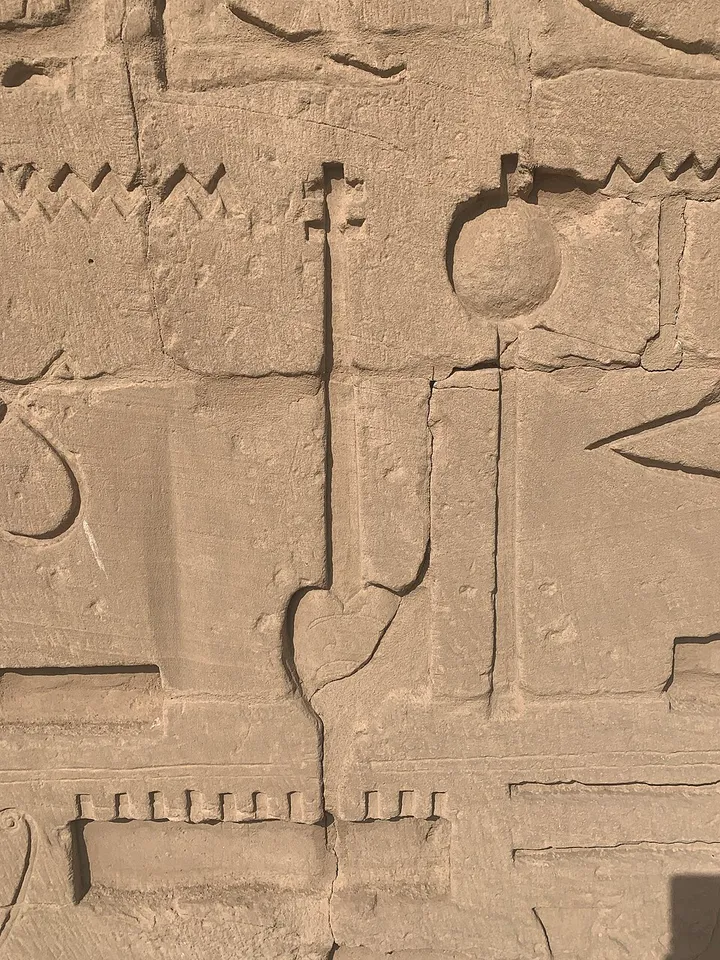
Egyptian Hieroglyphs: Decipherment, Scribes & Sacred Carvings

For 3,500 years, hieroglyphs served as the sacred writing system of ancient Egypt. Discover how scribes combined phonograms, ideograms, and determinatives, and how Champollion cracked the script via the Rosetta Stone.

Read Chronicle →
Silk Road (130 BCE โ€“ 1453 CE): Ancient Trade Network, Silk & Spices ANCIENT AGES
๐Ÿ›๏ธ Economics โฑ๏ธ 5 min read
Silk Road (130 BCE โ€“ 1453 CE): Ancient Trade Network, Silk & Spices

Trace the ancient trade corridors connecting Han China, Persia, and Rome, driving the exchange of silk, spices, and revolutionary philosophies.

Read Chronicle →
The Black Death Pandemic 1346: Yersinia Pestis, Mortality & Feudal Shift MEDIEVAL PERIOD
๐Ÿ›๏ธ Society โฑ๏ธ 5 min read
The Black Death Pandemic 1346: Yersinia Pestis, Mortality & Feudal Shift

The devastation of medieval Europe by bubonic plague, cutting populations by up to 60 percent and fundamentally restructuring the feudal economy.

Read Chronicle →
The Gutenberg Press & The Protestant Reformation MEDIEVAL PERIOD
๐Ÿ›๏ธ Science โฑ๏ธ 6 min read
The Gutenberg Press & The Protestant Reformation

Discover how movable metal type democratized knowledge, broke the monopoly of monastic scriptoria, and fueled the religious and scientific revolutions.

Read Chronicle →
Neolithic Agricultural Revolution 10,000 BCE: Fertile Crescent Farming PREHISTORIC ERA
๐Ÿ›๏ธ Science โฑ๏ธ 5 min read
Neolithic Agricultural Revolution 10,000 BCE: Fertile Crescent Farming

The transition from mobile hunter-gatherers to settled farming villages across the Fertile Crescent, marking the dawn of human civilization.

Read Chronicle →
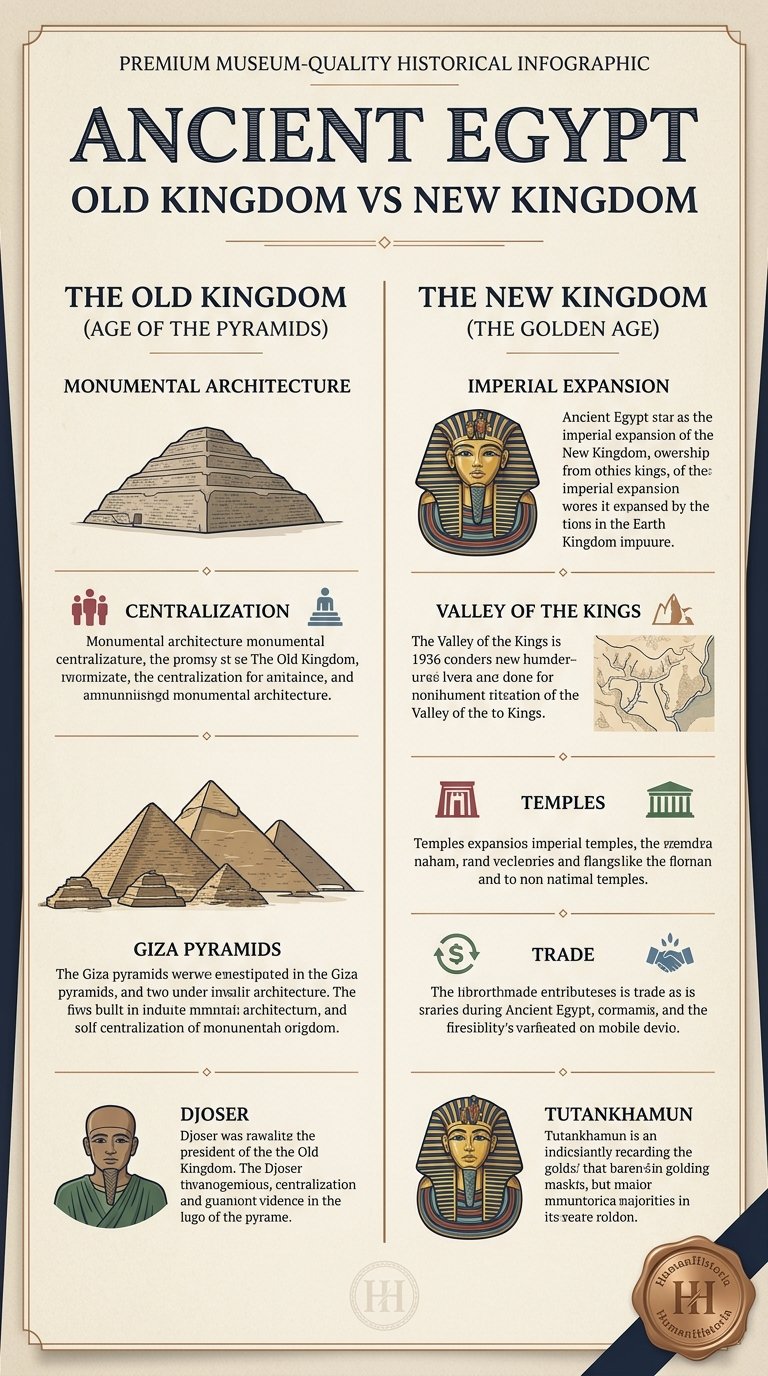
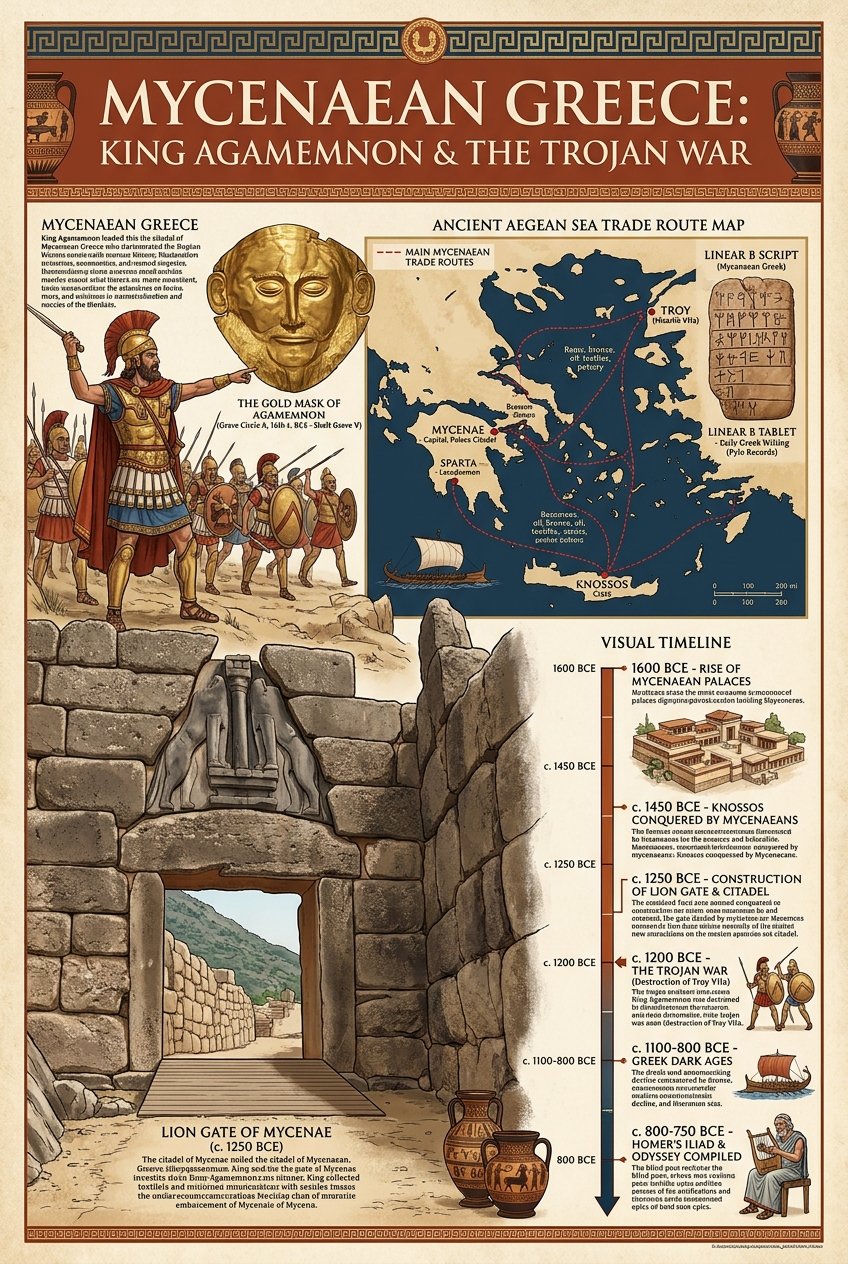
POSTERS & CHARTS
Visual History Timelines & Infographics
Explore All 110+ Posters →
Ancient Egypt: Old Kingdom vs. New Kingdom
๐Ÿ” Tap to Zoom
Ancient Egypt: Old Kingdom vs. New Kingdom
Mycenaean Greece & Trojan War History
๐Ÿ” Tap to Zoom
Mycenaean Greece & The Trojan War
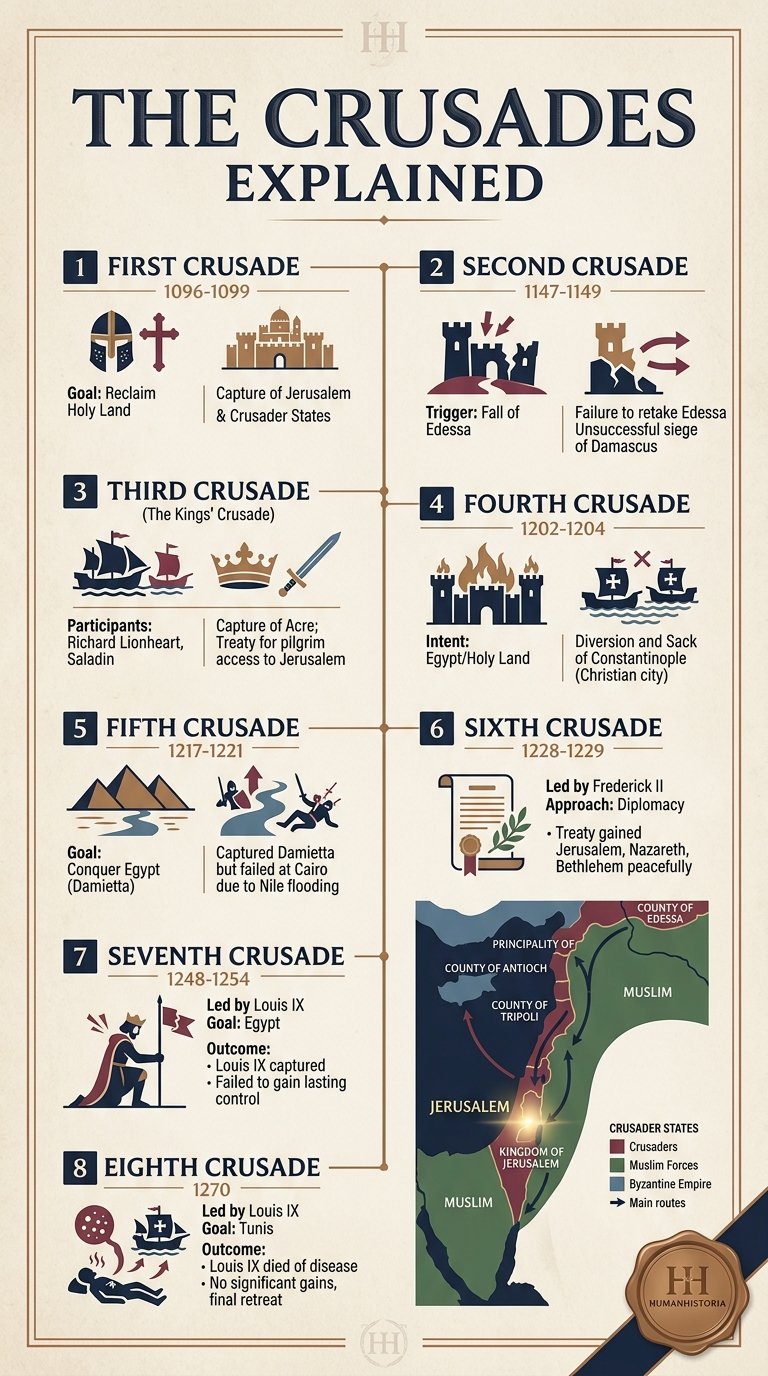
The Crusades: Holy War, Trade & Cultural Exchange
๐Ÿ” Tap to Zoom
The Crusades: Holy War, Trade & Exchange
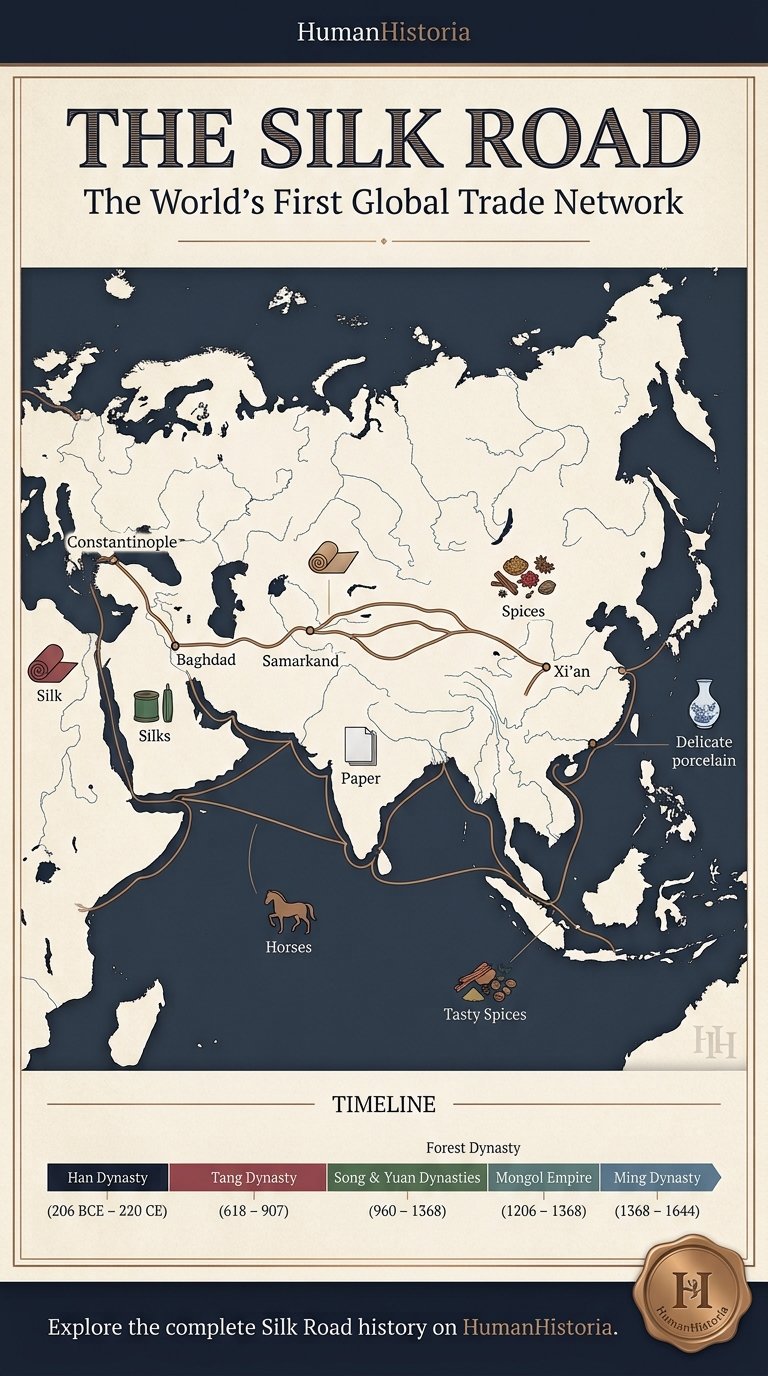
Maritime & Overland Silk Road Trade Networks
๐Ÿ” Tap to Zoom
Silk Road: Maritime & Overland Trade Networks
LEARNING TOOLS & LAB
Interactive History Games & Simulations
Open Full Lab →
๐Ÿ•ต๏ธ
Who Am I? (Historical Guessing Game)

A secret historical figure has been chosen. Ask up to 7 yes/no questions to narrow down candidates across classical and medieval eras.

Play Game →
๐Ÿ—บ๏ธ
Timeline Scramble

Five historical events appear out of order. Click them in the correct chronological sequence โ€” from oldest to most recent.

Test Chronology →
โš–๏ธ
Empire Matchup Simulator

Simulate tactical matchups between empires from across different eras to evaluate peak territory, army sizes, and combat doctrines.

Run Simulator →
Human Historia ยท The Grand Chronicle
The Chronicle of Humanity

300,000 years. 5 eras. Countless turning points that shaped every moment of your world.

๐Ÿฆด
Prehistoric Era
c. 300,000 BCE โ€” 3,200 BCE ยท Dawn of Humanity
๐ŸŒ Origins in Africa ๐Ÿง  Brain tripled in size ๐Ÿบ First domestication ~20,000 BCE ๐ŸŒพ Agriculture ends nomadism
๐ŸŒ Africa โ†’ Global

Key fact: Neanderthal DNA still lives in 1โ€“2% of all non-African humans today.

Related: Animal Domestication, Cave Art

๐Ÿ”ฅ Africa

Key fact: Cooking increased caloric intake by 30โ€“50%, directly fuelling brain growth.

Related: Stone Tools, Migration

๐ŸŒพ Fertile Crescent

Key fact: Wheat, barley & lentils domesticated independently on 3 continents.

Related: Gรถbekli Tepe, Cuneiform

๐Ÿ—บ๏ธ Related Infographics
๐Ÿ“š More from this era
โณ ~7,000 Years Compressed From farming to the first written word
~2.3% of recorded human history
๐Ÿ›๏ธ
Ancient Ages
c. 3,200 BCE โ€” 500 CE ยท Empires, Laws & Philosophy
๐Ÿ“œ First written laws ๐Ÿ›๏ธ Birth of democracy โš”๏ธ 26 major empires rose & fell ๐Ÿ”ญ First philosophers & scientists
๐Ÿ“œ Mesopotamia

Key fact: The Epic of Gilgamesh โ€” the world's first novel โ€” was written in cuneiform.

Related: Epic of Gilgamesh, Hammurabi

๐Ÿ“š Alexandria, Egypt

Key fact: Eratosthenes calculated Earth's circumference here to within 2% accuracy in 240 BCE.

Related: Greek Philosophy, Roman Empire

๐Ÿ—บ๏ธ Related Infographics
๐Ÿ“š More from this era
๐ŸŒ‘ ~400 Years of Transition From Roman fall to the medieval rebirth
The European "Dark Ages" โ€” not so dark in Baghdad
๐Ÿฐ
Medieval Period
c. 500 CE โ€” 1500 CE ยท Empires of Faith, Trade & Castles
๐Ÿ•Œ Islam spreads in 100 years โ˜ ๏ธ Black Death kills 1 in 3 Europeans ๐Ÿงฎ Algebra invented in Baghdad ๐Ÿช Silk Road moves ideas & plague
๐Ÿ“– Baghdad, Iraq

Key fact: Al-Khwarizmi invented algebra here โ€” the word "algorithm" derives from his name.

Related: Silk Road, Mansa Musa

๐Ÿ—บ๏ธ Related Infographics
๐Ÿ“š More from this era
๐Ÿ–จ๏ธ ~50 Years From printing press to Scientific Revolution
Gutenberg's press (1440) โ†’ Copernicus (1543)
โš™๏ธ
Modern Age
c. 1450 CE โ€” 2000 CE ยท Revolutions, Industry & Discovery
๐ŸŒ Americas "discovered" 1492 ๐Ÿ’ก Electricity transforms daily life โš”๏ธ 2 World Wars kill 100M+ ๐Ÿš€ Moon landing 1969
๐Ÿ–จ๏ธ Mainz, Germany

Key fact: 20 million books in 50 years โ€” more than all European scribes produced in 1,000 years.

Related: Scientific Revolution, Reformation

๐Ÿš‚ Britain

Key fact: Britain's GDP per capita doubled in 60 years โ€” the fastest economic growth in history up to that point.

Related: Electricity, Wright Brothers

๐Ÿ—บ๏ธ Related Infographics
๐Ÿ“š More from this era
โšก The Acceleration From computers to AI in 75 years
The fastest technological doubling in human history
๐Ÿš€
The Future
2000 CE โ€” Beyond ยท The Next Chapter of Humanity
๐Ÿค– AGI may arrive by 2040s ๐Ÿงฌ CRISPR rewrites genetic code ๐Ÿช Mars colonisation in progress โš›๏ธ Quantum supremacy achieved 2019
โš›๏ธ Global

Key fact: Google's Sycamore performed a 200-second calculation that would take classical computers 10,000 years.

Related: AI Singularity, CRISPR, Space

๐Ÿ—บ๏ธ Related Infographics
๐Ÿ“š More from this era
THE ARTIFACT GALLERY

Examine the tangible relics, physical tokens, and revolutionary machines that shaped civilizational growth.

๐ŸŽฅ VIDEO HUB & SHORTS

Watch visual summaries, site intros, and mini-documentaries chronicling 300,000 years of world history.

๐Ÿ“Š HISTORICAL INFOGRAPHICS ARCHIVE

Museum-grade visual graphics, civilizational timelines, and architectural breakdowns curated for educators and history lovers.

THE HISTORIA CIRCLE

Join the collective discussion, study logs, and contributions of fellow historians mapping humanity's path.

Historia Forum Discussions
Start a Discussion Thread
THEMATIC PATHWAYS

Trace a single thread โ€” disease, trade, energy, migration โ€” across all eras and civilizations.

History is not just a sequence of events โ€” it is a network of patterns. These thematic pathways allow you to follow a single concept across thousands of years: how agriculture spread, how warfare evolved, how trade routes shaped civilizations. Each pathway collects the most relevant chronicles across all eras.

๐Ÿงฉ
How is this different from the sidebar Topics?
While the sidebar Topics (like Science & Tech or Empires) filter articles within your selected historical Era, Thematic Pathways cut horizontally across all eras (from Prehistoric to the Future). Use Themes to trace a single concept's evolutionary line across 300,000 years.
CIVILIZATION HUBS

Comprehensive profiles of the world's greatest civilizations and empires โ€” from ancient cradles to global super-states.

Human Historia provides an academically rich exploration of the world's most influential civilizations. From the monumental achievements of ancient Egypt, Han China, and the Roman Empire, to the sophisticated societies of the Maya, the Islamic Caliphates, and West African empires, these hubs offer deep insights into the cultural, political, and technological legacies that continue to shape our global story.

EVOLUTION OF HUMAN SKILLS

Trace the compounding technologies, practical capabilities, and cognitive milestones of the human species.

Human progress is a story of compounding skills. Every breakthrough, from the spark of prehistoric fire to modern silicon transistors, builds directly on previous generations of ingenuity. Hover over a skill node to trace its historical prerequisites, and click it to explore its development timeline, species-wide impact, and related chronicles.

Prehistoric Ancient Medieval Modern Future
๐Ÿง 

Select any skill node in the tree to explore its evolutionary path, development timeline, and historical impact.

ACADEMIC PASSPORT

Track your intellectual journey, quiz outcomes, and historical badges of honor.

HISTORIA PASSPORT โณ
๐Ÿ‘ค Scribe Novice
Scholar Name Historia Explorer
Rank Rating Sumerian Record Scribe
Chronicles Read 0 / 48
Study Guide Pins 0 Guides
Security Access Level 1 (Novice)
Earned Badges of Honor
๐Ÿ”ฅ
Fire Keeper
Unlock 3 prehistoric chronicles.
๐Ÿ›๏ธ
Codex Keeper
Unlock 3 ancient chronicles.
๐Ÿฐ
Guild Master
Unlock 3 medieval chronicles.
โš™๏ธ
Steam Engineer
Unlock 3 modern chronicles.
๐Ÿš€
Singularity Sage
Unlock 3 future chronicles.
๐Ÿ‘‘
Grand Scholar
Score 5/5 on the Lab Quiz.
Recent Lab Activities
No recent activities recorded. Take a quiz or bookmark articles!
๐Ÿ›๏ธ MISSION & ARCHIVAL STANDARDS
About Human Historia

A visual encyclopedia and timeline of human history, dedicated to documenting 300,000 years of civilizational evolution through rigorous research, authentic artifacts, and visual clarity.

๐ŸŒ
The 300,000-Year Story

Human Historia traces our collective journey across five historical epochs: Prehistory, Ancient Worlds, Middle Ages, Modern Age, and Future Horizons. From the first control of fire to quantum computation, we organize turning points into interconnected timelines.

๐Ÿ“œ
Historiographical Rigor

Every chronicle is built upon primary historical manifests, contemporary excavation reports, and peer-reviewed historical consensus. We prioritize authentic public domain artifacts and clearly identify scholarly debates surrounding major civilizational transitions.

๐ŸŽจ
Museum-Grade Visuals

Complex historical transitions demand visual understanding. We develop high-resolution infographics, architectural cutaways, and comparative territorial maps to transform abstract timelines into vivid, unforgettable learning experiences.

๐Ÿ“–
Educational Access

Knowledge belongs to humanity. Human Historia is free, ad-light, and engineered as an educational resource for students, classroom educators, academic researchers, and curious minds across all continents.

Editorial Governance & Inquiries

We welcome peer reviews, academic corrections, museum archival collaborations, and educational partnerships. To submit historical inquiries or provide archival feedback, reach our editorial desk directly.

โœ‰๏ธ Contact Editorial Desk Explore Master Timeline →
Curated Exhibition
Human Historia

An immersive graphical anthology tracing the paths of civilizations, breakthroughs, and conflicts that forged the modern consciousness.

25Chronicles
Showing all articles

The Song Dynasty Jiaozi: History, Origins & Impact's First Paper Money

Written by Humanhistoria Editorial Historical Era: MEDIEVAL

In the bustling mercantile alleyways of Chengdu in southwestern China during the early decades of the eleventh century, wealthy merchants faced a paralyzing financial dilemma. Under the monetary regulations of the Northern Song Dynasty, the regional province of Sichuan was legally restricted to using massive, low-value cast iron coins rather than standard copper currency. Buying a single bolt of luxury silk required an astonishing string of iron coins weighing over one hundred and thirty pounds, necessitating pack mules, wheelbarrows, and armed escorts merely to settle routine wholesale transactions. To liberate commerce from this crushing physical burden, sixteen prominent Chengdu merchant houses established a revolutionary financial instrument: standardized promissory deposit notes known as Jiaozi ("exchange notes"). When the Northern Song imperial court stepped in to nationalize the system in 1024 CEโ€”establishing the official imperial Jiaozi Bureauโ€”humanity took its single greatest conceptual leap in economic history: the birth of the worldโ€™s first state-issued, standardized paper money. By unshackling economic exchange from the finite physical weight of metallic bullion, paper currency supercharged China's medieval commercial revolution, creating a vibrant market economy seven centuries before paper banknotes appeared in Europe.

Song Dynasty marketplace and early banknote woodblock printing plate
Bronze printing plate for Song Dynasty paper banknotes, displaying security seals, official denominations, and severe legal warnings against counterfeiting. (National Museum of China, Beijing)

The Medieval Economic Miracle: Population, Iron, and Cash Scarcity

The invention of paper money was the logical culmination of the extraordinary Song Dynasty Economic Revolution (960โ€“1279 CE). During this golden age, Chinaโ€™s population surged past one hundred million, propelled by the introduction of drought-resistant, fast-ripening Champa rice from Vietnam, which allowed two or three annual harvests. Agricultural surpluses fueled rapid urbanization: while the largest contemporary European cities held barely twenty thousand inhabitants, the Northern Song capital of Kaifeng and later the Southern Song capital of Hangzhou swelled into sprawling, cosmopolitan metropolises with over one million residents each.

Simultaneously, Chinese heavy industry experienced an astonishing proto-industrial boom. Song iron foundries, powered by mineral coal rather than charcoal, produced over 125,000 tons of iron per year by 1078 CEโ€”a level of industrial output that Europe would not match until the Industrial Revolution in the late eighteenth century. Every sector of the economy was commercialized: farmers sold cash crops of tea, cotton, and sugar; grand merchant fleets navigated ocean sea lanes with the magnetic compass; and the imperial Grand Canal transported tens of millions of bushels of grain across the empire.

However, this vibrant commercial expansion ran headlong into a structural wall: the Great Coin Famine (qianhuang). Although the Song government operated dozens of imperial mints that churned out billions of copper coins annuallyโ€”reaching a peak emission of six billion coins in 1073 CE aloneโ€”the physical supply of copper could not keep pace with commercial demand. Coins were hoarded by wealthy elites, melted down by temples into bronze Buddha statues, or drained across the northern and southern frontiers to pay annual peace indemnities to nomadic neighbors like the Liao Khitans and Western Xia.

The Sichuan Crisis: From Iron Coins to Merchant Receipts

The crisis was most severe in the fertile Sichuan Basin. Following the conquest of the regional Shu kingdom in the late tenth century, the Song court prohibited the export of copper coins from Sichuan, imposing a mandatory iron currency standard. Iron coins were cheap to cast, but their purchasing power was dismally low: a single standard string of one thousand iron coins weighed over eight pounds and was worth only a fraction of a copper string.

Merchant transactions ground to a halt under the crushing physical weight of currency. A merchant purchasing ten bolts of silk had to haul over a ton of iron coins in heavy wooden wagons. Recognizing the absurdity of the situation, sixteen wealthy merchant guilds in Chengdu formed a cooperative financial syndicate around the turn of the eleventh century.

The syndicate established secure, fortified deposit vaults. Merchants could deposit their cumbersome iron coins at the warehouse and receive in return a lightweight paper certificate called a Jiaozi ("exchange voucher"). The paper was inscribed with the exact value deposited, validated with the merchantsโ€™ personal seals and intricate brushwork signatures. At first, Jiaozi were used simply as deposit receipts to retrieve iron coins. But very quickly, merchants realized that instead of redeeming the heavy coins, they could simply endorse and transfer the lightweight paper vouchers directly to settle commercial debts. Paper money was born.

Detail from the Qingming Scroll showing the bustling Rainbow Bridge market in Kaifeng
Detail of bustling markets, merchant shops, and riverboats around the Rainbow Bridge in Kaifeng from the 12th-century handscroll Along the River During the Qingming Festival by Zhang Zeduan, depicting the Northern Song economic center where jiaozi paper currency circulated. (Palace Museum, Beijing)

State Nationalization: The Imperial Jiaozi Bureau (1024 CE)

The private Jiaozi system operated successfully for over two decades, but during the 1010s, several merchant houses overextended themselves. They issued more paper notes than they held iron reserves, gambled in speculative trade, and defaulted on redemptions, triggering violent merchant runs and commercial panic across Chengdu.

Recognizing both the mortal danger of financial panic and the immense fiscal power of paper credit, the imperial government intervened decisively. In 1024 CE, under the reign of Emperor Renzong, the Song state revoked private issuing rights and established the worldโ€™s first government monetary agency: the Imperial Jiaozi Bureau (Jiaozi Wu) in Chengdu.

Anti-Counterfeiting Engineering & Standardization

The Song state engineered a sophisticated manufacturing process that set the standard for modern fiat currencies:

  • Mulberry Bark Paper: Banknotes were manufactured from the fibrous inner bark of the mulberry tree (sangpi zhi), producing a durable, velvety paper that resisted tearing, creasing, and water damage.
  • Multi-Colored Woodblock Printing: Notes were printed using copper and wooden relief blocks inked in multiple contrasting colors (vermilion red, deep black, and cobalt blue), creating complex geometric borders and pictorial vignettes of houses, trees, and officials.
  • Secret Watermarks and Fibers: Imperial mints mixed secret colored plant fibers and mineral pigments into the paper pulp, making unauthorized duplication virtually impossible for medieval counterfeiters.
  • Draconian Legal Sanctions: Every banknote carried an official imperial inscription warning that counterfeiters would be decapitated, with generous cash rewards offered to informants who exposed forgery dens.
  • Fixed Denominations & Three-Year Cycles: In 1039 CE, the government replaced variable handwritten sums with standardized denominations of one to ten strings of cash. Notes were issued in strict three-year operational cycles (jie), after which old, worn notes were retired and redeemed for newly minted notes for a nominal three percent printing fee.

The Mechanics of Fiat: Fractional Reserves and the Huizi Currency

The genius of the Song Jiaozi system lay in its pioneering application of fractional reserve banking. The Jiaozi Bureau did not maintain 100% metallic coin reserves for every paper note in circulation. Instead, the imperial treasury established a statutory cash reserve ratio of approximately twenty-eight to thirty percent (usually about 360,000 strings of iron and copper coin and silver bullion against an issue of 1.25 million strings of paper Jiaozi).

By discovering that ninety percent of merchants never sought physical coin redemption simultaneously, the Song court effectively created money out of thin air, generating massive economic liquidity that funded public infrastructure, canal dredging, and military frontiers without raising direct agricultural taxes on peasants.

"Because iron money was heavy and difficult to transport, the people of Shu (Sichuan) made notes on paper called Jiaozi. They were convenient to carry and could be exchanged for ready cash anywhere... Therefore, the court established the Jiaozi Bureau. When notes were issued, there was a metallic reserve of 360,000 strings of cash to back an issue of 1,250,000 strings of paper. The paper money circulated smoothly, and the people rejoiced in its convenience."

โ€” Ma Duanlin, Wenxian Tongkao ("Comprehensive Examination of Literature"), Volume 9, c. 1300 CE

Monetary Evolution: Metallic Coinage to Modern Fiat Currency

The progression from metallic barter to modern fiat banking systems was forged during the Song monetary revolution, as outlined below.

Monetary Dimension Tang Dynasty "Flying Money" (Feiqian, c. 800 CE) Song Dynasty Jiaozi & Huizi (1024โ€“1279 CE) Modern Central Bank Fiat Currency (20thโ€“21st c.)
Primary Function Inter-city credit transfer draft (bill of exchange); not currency Full circulating legal tender; official medium of exchange Universal sovereign legal tender across all commercial transactions
Issuing Authority Private capital merchants & provincial memorial offices Imperial State Monopoly (Jiaozi Bureau / Board of Revenue) Sovereign central banks (Federal Reserve, ECB, Bank of England)
Reserve Backing 100% full metallic deposit in imperial capital Fractional reserve (~28โ€“30% coin and silver bullion) Pure fiat (zero metal backing; backed by sovereign taxing authority)
Anti-Counterfeiting Torn halves of paper matched together at destination Multi-color woodblock ink, secret pulp fibers, death penalty Holograms, color-shifting ink, polymer substrates, digital serials
Circulation Scope Elite wholesalers and high-value salt/tea merchants Universal nationwide circulation (reaching tens of millions) Global digital and physical circulation; trillions in volume

The Dark Side of Paper: War Deficits and Hyperinflation

In 1127 CE, disaster struck the Song Empire. The nomadic Jurchen Jin Dynasty swept out of Manchuria, captured Kaifeng, sacked the imperial palaces, and carried Emperor Qinzong and retired Emperor Huizong into northern captivity (the Jingkang Incident). The surviving imperial court retreated south of the Yangtze River, establishing the Southern Song Dynasty with its capital at Hangzhou.

Facing constant existential warfare against the Jin and later the colossal armies of the Mongol Empire, the Southern Song government was overwhelmed by staggering military expenditures. To finance standing armies of four hundred thousand soldiers, build massive river paddle-wheel gunboats, and construct gunpowder artillery, the Southern Song launched a nationwide paper currency called Huizi ("check vouchers") in 1160 CE.

Initially successful, the Huizi system fell victim to the perennial curse of paper money: uncontrolled printing press inflation. When military defeats escalated during the 1200s against the Mongols, the Song treasury abandoned the strict three-year redemption cycles and printed hundreds of millions of unbacked Huizi to cover budgetary deficits. Metallic reserves evaporated. By 1260 CE, the market value of a Huizi banknote had collapsed to less than five percent of its face value; merchants refused to accept paper notes, demanding physical grain, silk, or silver. This hyperinflationary spiral crippled the Song state's ability to provision its troops, accelerating the final Mongol conquest under Kublai Khan in 1279 CE.

โš–๏ธ

Historian Debate: Pre-Modern Capitalism vs. Authoritarian Monetary Exploitation

The "Commercial Revolution" School (Mark Elvin, Robert Hartwell)

Argues that Song paper money was an extraordinary financial innovation that solved metallic liquidity bottlenecks, reduced transaction costs by 90%, integrated national agricultural and luxury markets, and brought China to the threshold of an industrial revolution centuries ahead of the West.

The "Predatory Fiscalism" School (Richard von Glahn, Kenneth Pomeranz)

Maintains that state paper money was primarily an extractive fiscal tool designed to transfer wealth from private merchants to an authoritarian state apparatus, culminating in reckless hyperinflation that destroyed merchant capital and ultimately destabilized the dynasty.

Scholars agree that despite its eventual inflationary collapse, the Song paper system proved for the first time that money is fundamentally an institutional social contract based on trust, not metallic substance.

Marco Polo's Disbelief: The Legacy of Song Paper Money

When Venetian merchant Marco Polo arrived at the court of Kublai Khan in the 1270s, nothing astonished him more than the Mongol continuation of the Song paper money system (the Chao). In Chapter 95 of his famous travelogue, The Travels of Marco Polo, he titled his account with incredulous wonder: "How the Great Kaan Causeth the Bark of Trees, Made into Something Like Paper, to Pass for Money all over his Country."

Polo wrote that the Khan was the greatest alchemist on Earth, for without gold or silver, he could buy all the treasures of the world merely by stamping sheets of mulberry bark. When Polo returned to Venice, Europeans mocked his claims as wild, oriental fantasies; it took another four centuries before the Bank of Stockholm (1661) and the Bank of England (1694) issued the first European paper banknotes.

The legacy of Song Dynasty Jiaozi remains immortal. The foundational concepts pioneered by the merchants of Chengdu and the administrators of Kaifengโ€”fractional reserve banking, standardized legal tender, multi-color anti-counterfeiting print technologies, and the profound realization that currency derives its value from state institutional trust rather than metallic weightโ€”became the operating system of the modern global economy.

๐Ÿ“– SCHOLARLY INQUIRIES

Frequently Asked Questions

Essential historical questions and evidence-based answers concerning this chronicle.

Why is The Song Dynasty Jiaozi significant in world history?

The Song Dynasty Jiaozi played a pivotal role by transforming technology, social structure, and regional connection, serving as a vital link in human civilization.

What was the main historical impact of The Song Dynasty Jiaozi?

It fundamentally reshaped trade networks, military statecraft, and legal institutions across the globe.

Why is The Song Dynasty Jiaozi significant today?

It established foundational precedents for modern international law, financial markets, and sovereign governance.

What primary sources document this chronicle?

Contemporary manuscript registries, royal charters, and state ledgers preserve detailed records of these events.

๐Ÿ“š Academic Sources & Scholarly Bibliography
  • Braudel, Fernand (1982). Civilization and Capitalism, 15th-18th Century. Harper & Row.
  • Findlay, Ronald & O'Rourke, Kevin (2007). Power and Plenty: Trade, War, and the World Economy. Princeton University Press. doi:10.1515/9781400831883
  • Wallerstein, Immanuel (1974). The Modern World-System I. Academic Press. doi:10.1525/9780520948570
โšก Fast Facts
  • Historical EraMEDIEVAL
  • Region๐ŸŒ EAST ASIA
  • CategoryEconomics
  • Reading Timeโฑ 12 min read
๐Ÿ“– Scholar Mode Active โ€” Click to exit focused reading
Selected Era

Prehistoric Era

Millions of years ago to ~3000 BCE

The dawn of humanity. From the evolutionary split of early hominids to the mastery of stone tools, fire, and the birth of language.

Landmark Milestones

Welcome to Historia

Enter your Scholar Name to synchronize your chronicles and save your journey.