>
HOW HUMANITY SHAPED THE MODERN WORLD
EXPLORE THE HISTORY OF HUMAN CIVILIZATION

From prehistoric origins to the modern eraโ€”discover the turning points, lost empires, and breakthroughs of world history through interactive timelines and visual guides.
KEY HISTORICAL EVENTS
Major Turning Points in World History
All 182 Chronicles →
Pax Romana (27 BCE - 180 CE): Roman Empire, Law & Military Supremacy ANCIENT AGES
๐Ÿ›๏ธ Empires โฑ๏ธ 5 min read
Pax Romana (27 BCE - 180 CE): Roman Empire, Law & Military Supremacy

Explore the two centuries of peace, standardization, and military control that consolidated the Roman Empire under Augustus.

Read Chronicle →
Egyptian Hieroglyphs: Decipherment, Scribes & Sacred Carvings ANCIENT AGES
๐Ÿ›๏ธ Languages โฑ๏ธ 9 min read
Egyptian Hieroglyphs: Decipherment, Scribes & Sacred Carvings

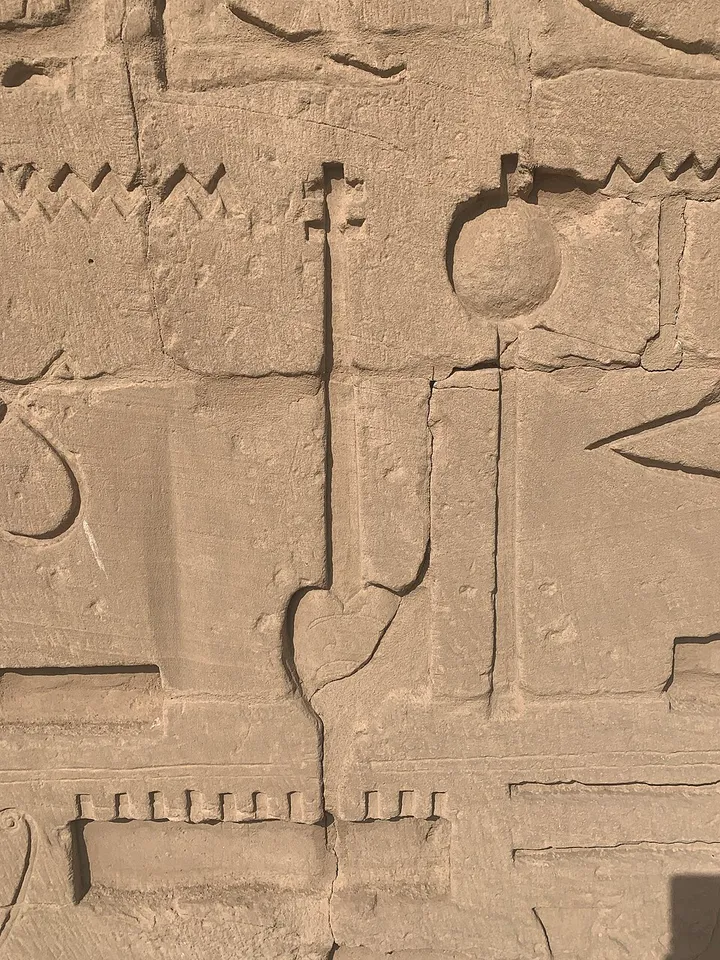
For 3,500 years, hieroglyphs served as the sacred writing system of ancient Egypt. Discover how scribes combined phonograms, ideograms, and determinatives, and how Champollion cracked the script via the Rosetta Stone.

Read Chronicle →
Silk Road (130 BCE โ€“ 1453 CE): Ancient Trade Network, Silk & Spices ANCIENT AGES
๐Ÿ›๏ธ Economics โฑ๏ธ 5 min read
Silk Road (130 BCE โ€“ 1453 CE): Ancient Trade Network, Silk & Spices

Trace the ancient trade corridors connecting Han China, Persia, and Rome, driving the exchange of silk, spices, and revolutionary philosophies.

Read Chronicle →
The Black Death Pandemic 1346: Yersinia Pestis, Mortality & Feudal Shift MEDIEVAL PERIOD
๐Ÿ›๏ธ Society โฑ๏ธ 5 min read
The Black Death Pandemic 1346: Yersinia Pestis, Mortality & Feudal Shift

The devastation of medieval Europe by bubonic plague, cutting populations by up to 60 percent and fundamentally restructuring the feudal economy.

Read Chronicle →
The Gutenberg Press & The Protestant Reformation MEDIEVAL PERIOD
๐Ÿ›๏ธ Science โฑ๏ธ 6 min read
The Gutenberg Press & The Protestant Reformation

Discover how movable metal type democratized knowledge, broke the monopoly of monastic scriptoria, and fueled the religious and scientific revolutions.

Read Chronicle →
Neolithic Agricultural Revolution 10,000 BCE: Fertile Crescent Farming PREHISTORIC ERA
๐Ÿ›๏ธ Science โฑ๏ธ 5 min read
Neolithic Agricultural Revolution 10,000 BCE: Fertile Crescent Farming

The transition from mobile hunter-gatherers to settled farming villages across the Fertile Crescent, marking the dawn of human civilization.

Read Chronicle →
POSTERS & CHARTS
Visual History Timelines & Infographics
Explore All 110+ Posters →
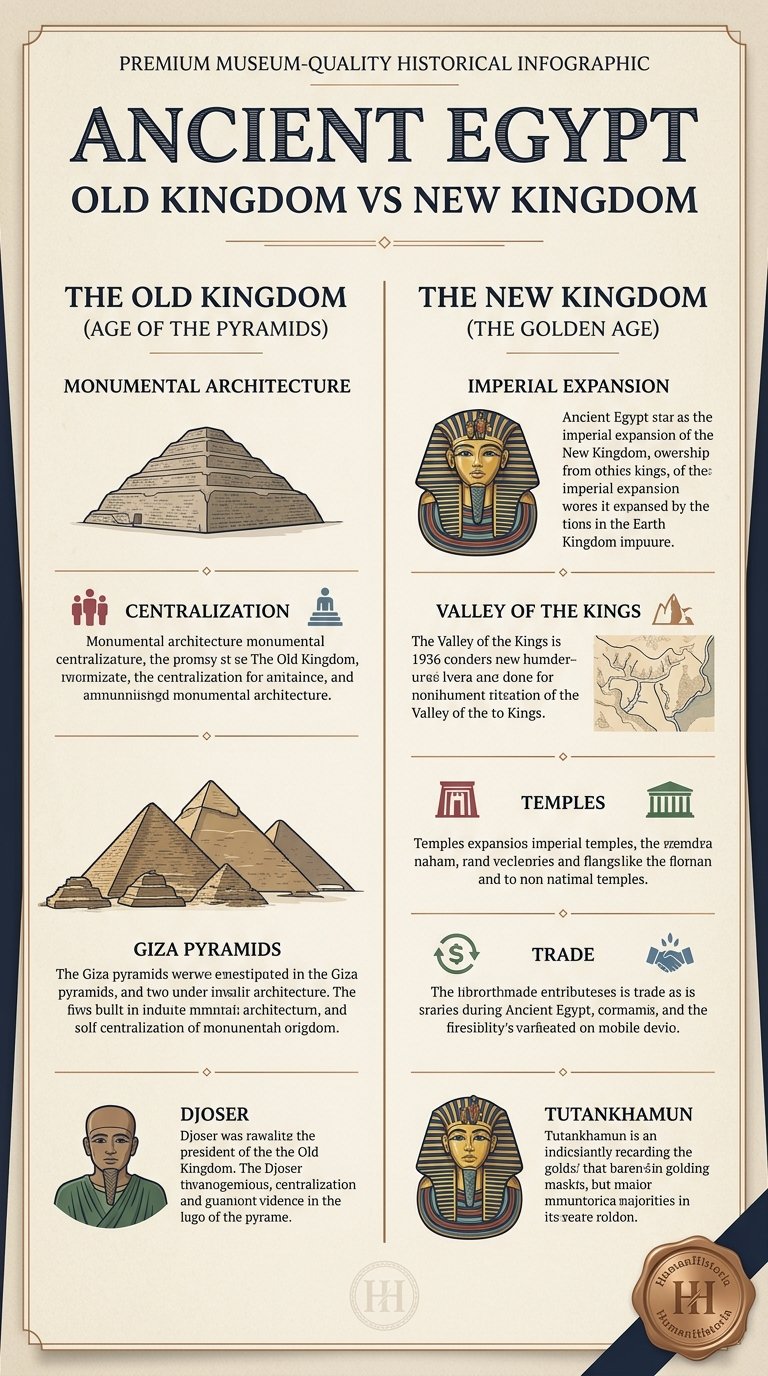
Ancient Egypt: Old Kingdom vs. New Kingdom
๐Ÿ” Tap to Zoom
Ancient Egypt: Old Kingdom vs. New Kingdom
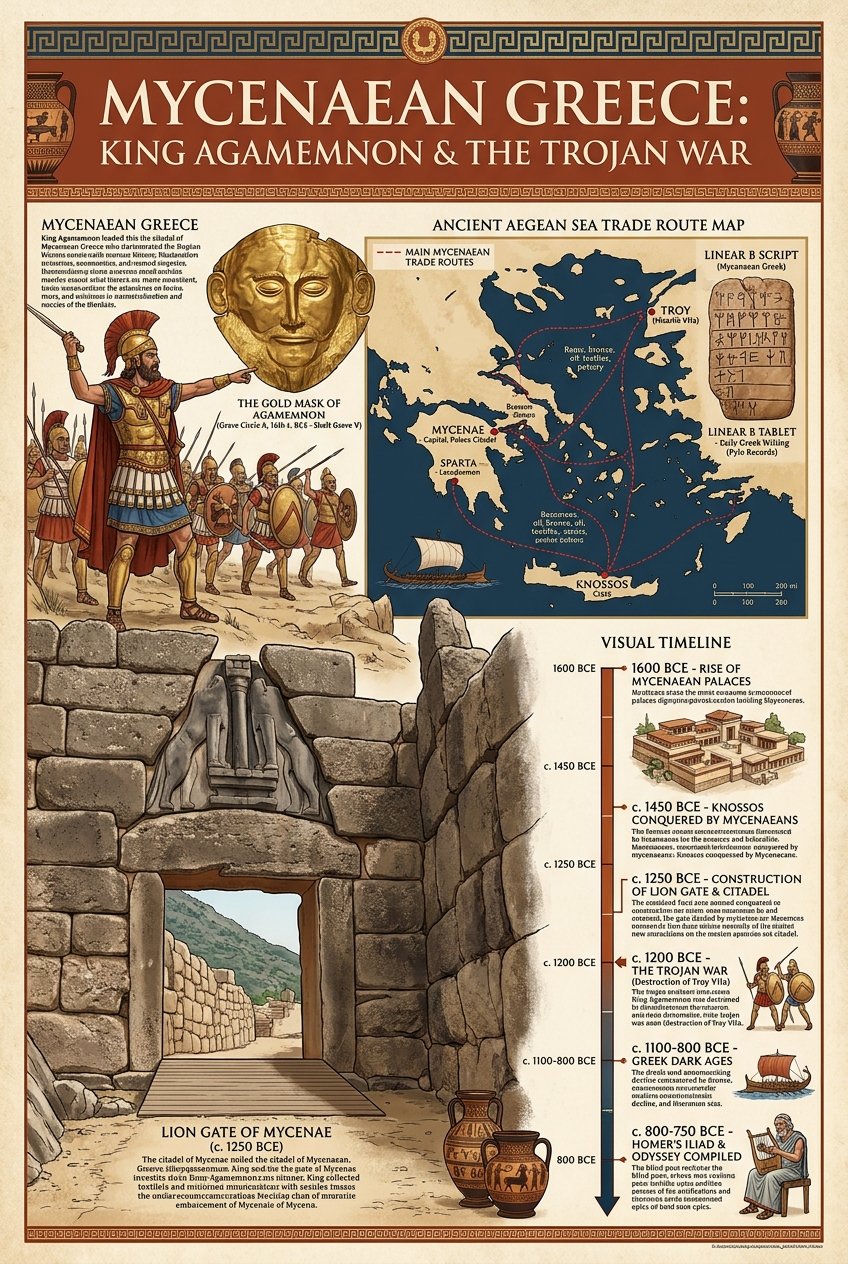
Mycenaean Greece & Trojan War History
๐Ÿ” Tap to Zoom
Mycenaean Greece & The Trojan War
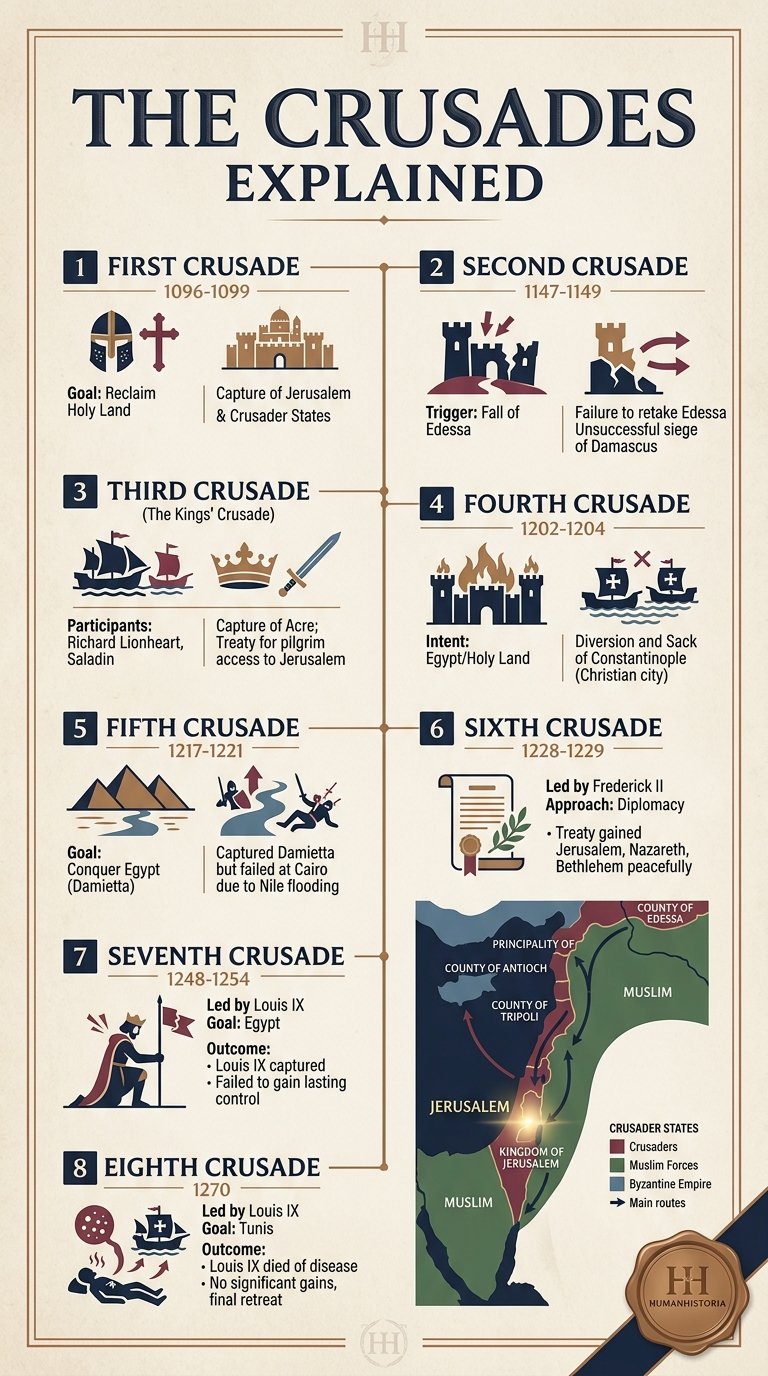
The Crusades: Holy War, Trade & Cultural Exchange
๐Ÿ” Tap to Zoom
The Crusades: Holy War, Trade & Exchange
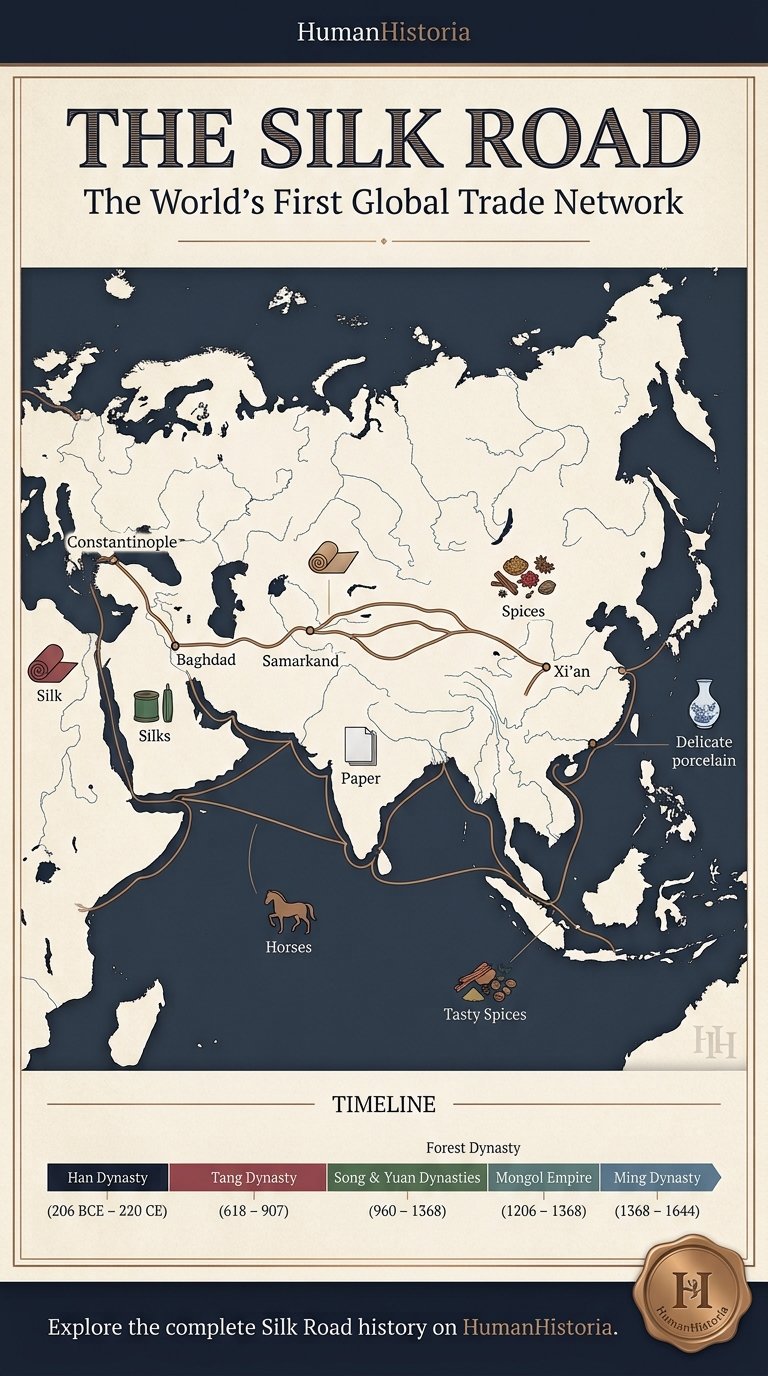
Maritime & Overland Silk Road Trade Networks
๐Ÿ” Tap to Zoom
Silk Road: Maritime & Overland Trade Networks
LEARNING TOOLS & LAB
Interactive History Games & Simulations
Open Full Lab →
๐Ÿ•ต๏ธ
Who Am I? (Historical Guessing Game)

A secret historical figure has been chosen. Ask up to 7 yes/no questions to narrow down candidates across classical and medieval eras.

Play Game →
๐Ÿ—บ๏ธ
Timeline Scramble

Five historical events appear out of order. Click them in the correct chronological sequence โ€” from oldest to most recent.

Test Chronology →
โš–๏ธ
Empire Matchup Simulator

Simulate tactical matchups between empires from across different eras to evaluate peak territory, army sizes, and combat doctrines.

Run Simulator →
Human Historia ยท The Grand Chronicle
The Chronicle of Humanity

300,000 years. 5 eras. Countless turning points that shaped every moment of your world.

๐Ÿฆด
Prehistoric Era
c. 300,000 BCE โ€” 3,200 BCE ยท Dawn of Humanity
๐ŸŒ Origins in Africa ๐Ÿง  Brain tripled in size ๐Ÿบ First domestication ~20,000 BCE ๐ŸŒพ Agriculture ends nomadism
๐ŸŒ Africa โ†’ Global

Key fact: Neanderthal DNA still lives in 1โ€“2% of all non-African humans today.

Related: Animal Domestication, Cave Art

๐Ÿ”ฅ Africa

Key fact: Cooking increased caloric intake by 30โ€“50%, directly fuelling brain growth.

Related: Stone Tools, Migration

๐ŸŒพ Fertile Crescent

Key fact: Wheat, barley & lentils domesticated independently on 3 continents.

Related: Gรถbekli Tepe, Cuneiform

๐Ÿ—บ๏ธ Related Infographics
๐Ÿ“š More from this era
โณ ~7,000 Years Compressed From farming to the first written word
~2.3% of recorded human history
๐Ÿ›๏ธ
Ancient Ages
c. 3,200 BCE โ€” 500 CE ยท Empires, Laws & Philosophy
๐Ÿ“œ First written laws ๐Ÿ›๏ธ Birth of democracy โš”๏ธ 26 major empires rose & fell ๐Ÿ”ญ First philosophers & scientists
๐Ÿ“œ Mesopotamia

Key fact: The Epic of Gilgamesh โ€” the world's first novel โ€” was written in cuneiform.

Related: Epic of Gilgamesh, Hammurabi

๐Ÿ“š Alexandria, Egypt

Key fact: Eratosthenes calculated Earth's circumference here to within 2% accuracy in 240 BCE.

Related: Greek Philosophy, Roman Empire

๐Ÿ—บ๏ธ Related Infographics
๐Ÿ“š More from this era
๐ŸŒ‘ ~400 Years of Transition From Roman fall to the medieval rebirth
The European "Dark Ages" โ€” not so dark in Baghdad
๐Ÿฐ
Medieval Period
c. 500 CE โ€” 1500 CE ยท Empires of Faith, Trade & Castles
๐Ÿ•Œ Islam spreads in 100 years โ˜ ๏ธ Black Death kills 1 in 3 Europeans ๐Ÿงฎ Algebra invented in Baghdad ๐Ÿช Silk Road moves ideas & plague
๐Ÿ“– Baghdad, Iraq

Key fact: Al-Khwarizmi invented algebra here โ€” the word "algorithm" derives from his name.

Related: Silk Road, Mansa Musa

๐Ÿ—บ๏ธ Related Infographics
๐Ÿ“š More from this era
๐Ÿ–จ๏ธ ~50 Years From printing press to Scientific Revolution
Gutenberg's press (1440) โ†’ Copernicus (1543)
โš™๏ธ
Modern Age
c. 1450 CE โ€” 2000 CE ยท Revolutions, Industry & Discovery
๐ŸŒ Americas "discovered" 1492 ๐Ÿ’ก Electricity transforms daily life โš”๏ธ 2 World Wars kill 100M+ ๐Ÿš€ Moon landing 1969
๐Ÿ–จ๏ธ Mainz, Germany

Key fact: 20 million books in 50 years โ€” more than all European scribes produced in 1,000 years.

Related: Scientific Revolution, Reformation

๐Ÿš‚ Britain

Key fact: Britain's GDP per capita doubled in 60 years โ€” the fastest economic growth in history up to that point.

Related: Electricity, Wright Brothers

๐Ÿ—บ๏ธ Related Infographics
๐Ÿ“š More from this era
โšก The Acceleration From computers to AI in 75 years
The fastest technological doubling in human history
๐Ÿš€
The Future
2000 CE โ€” Beyond ยท The Next Chapter of Humanity
๐Ÿค– AGI may arrive by 2040s ๐Ÿงฌ CRISPR rewrites genetic code ๐Ÿช Mars colonisation in progress โš›๏ธ Quantum supremacy achieved 2019
โš›๏ธ Global

Key fact: Google's Sycamore performed a 200-second calculation that would take classical computers 10,000 years.

Related: AI Singularity, CRISPR, Space

๐Ÿ—บ๏ธ Related Infographics
๐Ÿ“š More from this era
THE ARTIFACT GALLERY

Examine the tangible relics, physical tokens, and revolutionary machines that shaped civilizational growth.

๐ŸŽฅ VIDEO HUB & SHORTS

Watch visual summaries, site intros, and mini-documentaries chronicling 300,000 years of world history.

๐Ÿ“Š HISTORICAL INFOGRAPHICS ARCHIVE

Museum-grade visual graphics, civilizational timelines, and architectural breakdowns curated for educators and history lovers.

THE HISTORIA CIRCLE

Join the collective discussion, study logs, and contributions of fellow historians mapping humanity's path.

Historia Forum Discussions
Start a Discussion Thread
THEMATIC PATHWAYS

Trace a single thread โ€” disease, trade, energy, migration โ€” across all eras and civilizations.

History is not just a sequence of events โ€” it is a network of patterns. These thematic pathways allow you to follow a single concept across thousands of years: how agriculture spread, how warfare evolved, how trade routes shaped civilizations. Each pathway collects the most relevant chronicles across all eras.

๐Ÿงฉ
How is this different from the sidebar Topics?
While the sidebar Topics (like Science & Tech or Empires) filter articles within your selected historical Era, Thematic Pathways cut horizontally across all eras (from Prehistoric to the Future). Use Themes to trace a single concept's evolutionary line across 300,000 years.
CIVILIZATION HUBS

Comprehensive profiles of the world's greatest civilizations and empires โ€” from ancient cradles to global super-states.

Human Historia provides an academically rich exploration of the world's most influential civilizations. From the monumental achievements of ancient Egypt, Han China, and the Roman Empire, to the sophisticated societies of the Maya, the Islamic Caliphates, and West African empires, these hubs offer deep insights into the cultural, political, and technological legacies that continue to shape our global story.

EVOLUTION OF HUMAN SKILLS

Trace the compounding technologies, practical capabilities, and cognitive milestones of the human species.

Human progress is a story of compounding skills. Every breakthrough, from the spark of prehistoric fire to modern silicon transistors, builds directly on previous generations of ingenuity. Hover over a skill node to trace its historical prerequisites, and click it to explore its development timeline, species-wide impact, and related chronicles.

Prehistoric Ancient Medieval Modern Future
๐Ÿง 

Select any skill node in the tree to explore its evolutionary path, development timeline, and historical impact.

ACADEMIC PASSPORT

Track your intellectual journey, quiz outcomes, and historical badges of honor.
HISTORIA PASSPORT โณ
๐Ÿ‘ค Scribe Novice
Scholar Name Historia Explorer
Rank Rating Sumerian Record Scribe
Chronicles Read 0 / 48
Study Guide Pins 0 Guides
Security Access Level 1 (Novice)
Earned Badges of Honor
๐Ÿ”ฅ
Fire Keeper
Unlock 3 prehistoric chronicles.
๐Ÿ›๏ธ
Codex Keeper
Unlock 3 ancient chronicles.
๐Ÿฐ
Guild Master
Unlock 3 medieval chronicles.
โš™๏ธ
Steam Engineer
Unlock 3 modern chronicles.
๐Ÿš€
Singularity Sage
Unlock 3 future chronicles.
๐Ÿ‘‘
Grand Scholar
Score 5/5 on the Lab Quiz.
Recent Lab Activities
No recent activities recorded. Take a quiz or bookmark articles!
๐Ÿ›๏ธ MISSION & ARCHIVAL STANDARDS
About Human Historia

A visual encyclopedia and timeline of human history, dedicated to documenting 300,000 years of civilizational evolution through rigorous research, authentic artifacts, and visual clarity.

๐ŸŒ
The 300,000-Year Story

Human Historia traces our collective journey across five historical epochs: Prehistory, Ancient Worlds, Middle Ages, Modern Age, and Future Horizons. From the first control of fire to quantum computation, we organize turning points into interconnected timelines.

๐Ÿ“œ
Historiographical Rigor

Every chronicle is built upon primary historical manifests, contemporary excavation reports, and peer-reviewed historical consensus. We prioritize authentic public domain artifacts and clearly identify scholarly debates surrounding major civilizational transitions.

๐ŸŽจ
Museum-Grade Visuals

Complex historical transitions demand visual understanding. We develop high-resolution infographics, architectural cutaways, and comparative territorial maps to transform abstract timelines into vivid, unforgettable learning experiences.

๐Ÿ“–
Educational Access

Knowledge belongs to humanity. Human Historia is free, ad-light, and engineered as an educational resource for students, classroom educators, academic researchers, and curious minds across all continents.

Editorial Governance & Inquiries

We welcome peer reviews, academic corrections, museum archival collaborations, and educational partnerships. To submit historical inquiries or provide archival feedback, reach our editorial desk directly.

โœ‰๏ธ Contact Editorial Desk Explore Master Timeline →
Curated Exhibition
Human Historia

An immersive graphical anthology tracing the paths of civilizations, breakthroughs, and conflicts that forged the modern consciousness.

25Chronicles
Showing all articles

Emperor Trajan: History, Origins & Impact

Written by Humanhistoria Editorial Historical Era: ANCIENT

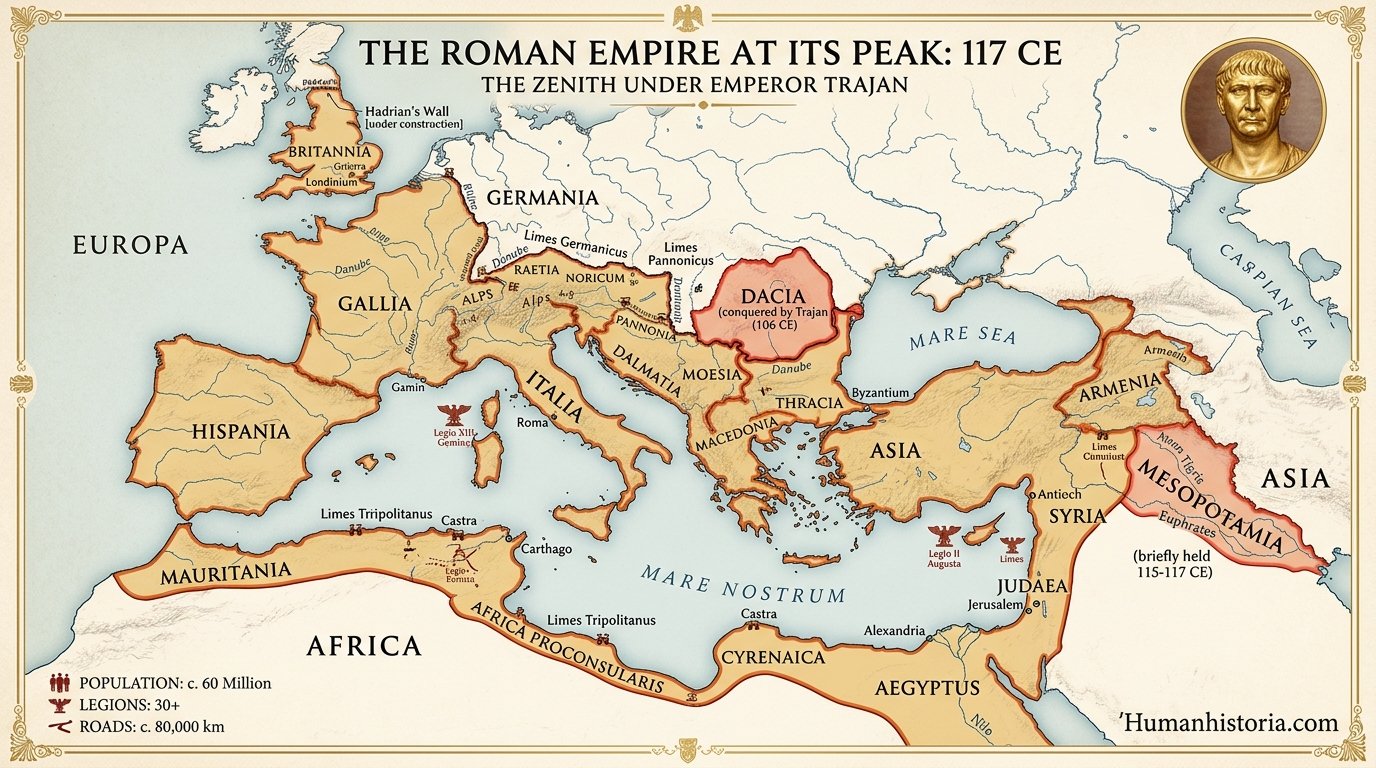
In the midsummer heat of August 117 CE, upon a quiet military camp at Selinus in rugged Cilicia, Roman Emperor Marcus Ulpius Traianus (Trajan) drew his final breath. Behind him lay a Roman world transformed: under his nineteen-year reign, the Roman Empire had expanded to its absolute maximum geographic boundaries, encompassing over five million square kilometers across three continents, inhabited by an estimated seventy million souls. From the fog-shrouded moors of Caledonia to the scorching sands of the Persian Gulf, and from the Atlantic breakers of Lusitania to the snow-crested Caucasus Mountains, Rome held unchallenged dominion over the Mediterranean basin, proudly referring to it as Mare Nostrum ("Our Sea"). Born in the provincial Spanish colony of Italica, Trajan shattered the aristocratic Italian monopoly on imperial power, earning from the Roman Senate the unprecedented, immortal accolade Optimus Princeps ("The Best Princeps"). Through the brutal subjugation of Dacia, the conquest of Arabia Petraea, and his audacious blitzkrieg down the Tigris and Euphrates into Mesopotamia, Trajan pushed the limits of Roman martial capability to their furthest horizon, using the plunder of his conquests to construct the most monumental civic architecture in ancient history.

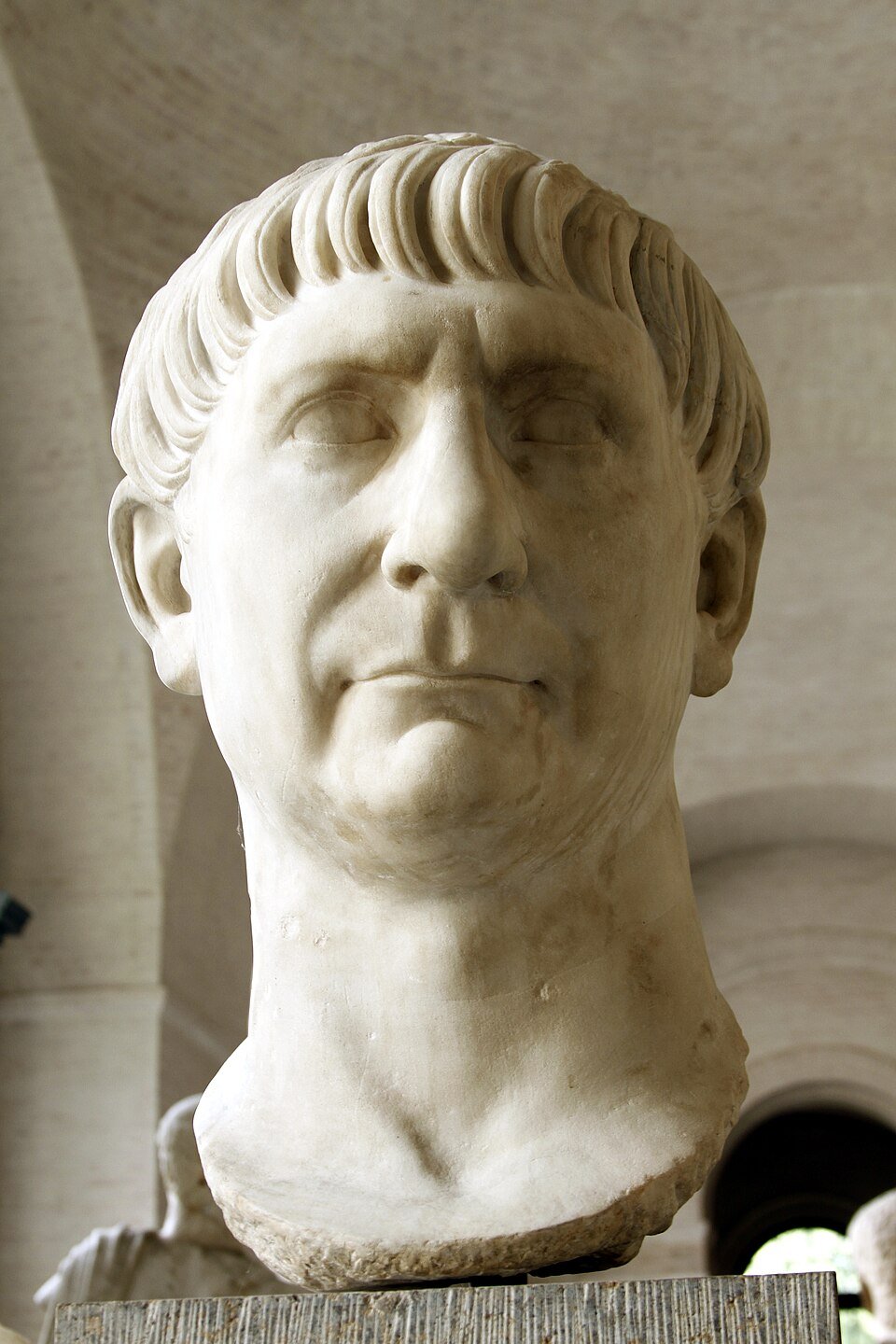
Marble bust of Roman Emperor Trajan
Marble portrait bust of Emperor Trajan (reigned 98โ€“117 CE) carved from Parian marble, portraying the general-emperor who conquered Dacia and Parthia and brought Rome to its territorial zenith. (Glyptothek, Munich)

The Provincial General: From Nerva's Adoption to the Principate

The rise of Trajan marked a critical institutional evolution in Roman governance. In September 96 CE, the tyrannical emperor Domitian was assassinated in a palace conspiracy, ending the Flavian dynasty. The elderly senator Nerva was elevated to the throne, but Nerva possessed no military prestige, and in late 97 CE, mutinous Praetorian Guards seized the imperial palace, demanding the execution of Domitian's assassins. Recognizing that imperial survival required the backing of the legions, Nerva made an inspired choice: he bypassed Italian patricians and officially adopted Marcus Ulpius Traianus, the revered governor of Upper Germany.

Trajan was a soldier's soldier. Born in Italica near modern Seville in Hispania Baetica, he had spent decades living among the legionaries on the Rhine and Danube frontiers, sharing their coarse rations, marching on foot in heavy armor, and learning every nuance of Roman military engineering. When Nerva died in January 98 CE, Trajan ascended the purple with undisputed legionary support. Rather than rushing to Rome, Trajan spent a full year inspecting the Rhine and Danube frontiers, reinforcing fortifications and testing supply lines before making a modest, pedestrian entry into the capital on foot, embracing senators as civic equals.

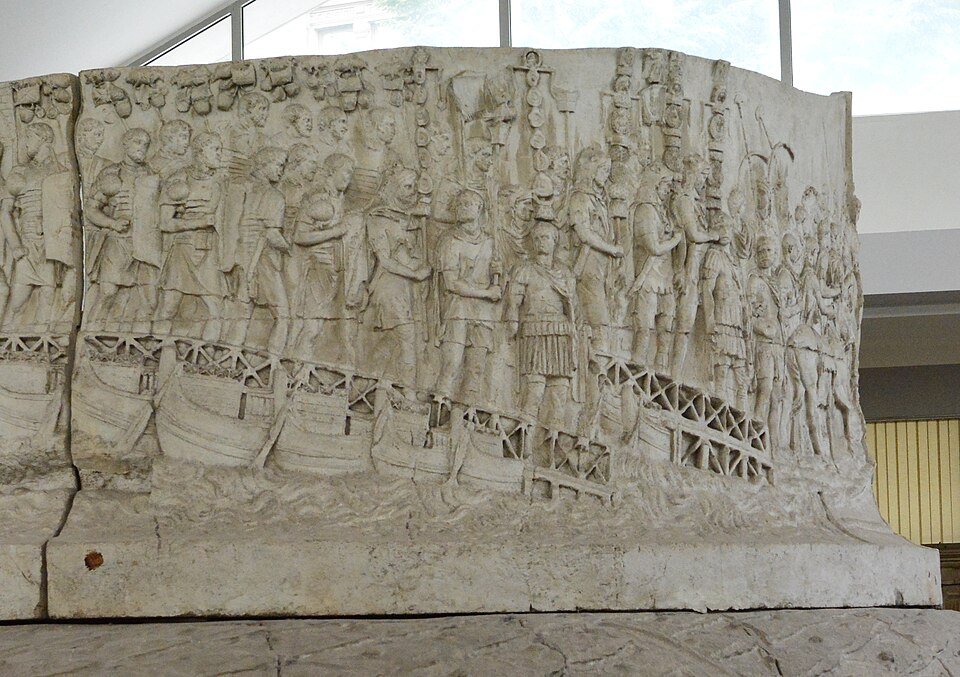
Relief carving from Trajan's Column depicting Roman troops crossing the Danube
Helical relief from Trajan's Column in Rome (dedicated 113 CE), showing Roman legionaries in segmented armor crossing the Danube River on a pontoon bridge supervised by the river god Danuvius. (Forum of Trajan, Rome)

The Dacian Wars (101โ€“106 CE): Apollodorus' Bridge & The Golden Hoard

Trajan's primary strategic challenge lay across the turbulent Danube River in the mountainous kingdom of Dacia (modern Romania). Under their warlike king Decebalus, the Dacians had repeatedly raided Roman Moesia, ambushing Roman legions and forcing Domitian into an embarrassing treaty involving an annual cash subsidy. To Trajan, paying barbarian tribute was an intolerable stain upon Roman honor.

In two massive campaignsโ€”the First Dacian War (101โ€“102 CE) and the Second Dacian War (105โ€“106 CE)โ€”Trajan marshaled thirteen legions, nearly one hundred thousand men. To secure permanent supply lines across the wide, fast-flowing Danube at the Iron Gates, Trajan commissioned the legendary Greco-Syrian architect Apollodorus of Damascus to construct the Bridge of Trajan. Spanning 1,135 meters with twenty massive masonry piers standing in the riverbed and soaring timber arches, it remained the longest arch bridge in the world for over a millennium.

Storming through the rugged Carpathian passes, Roman legions deployed artillery and disciplined trench works, encircling the mountain fortress of Sarmizegetusa Regia. When the citadel's water aqueducts were severed, Sarmizegetusa fell. King Decebalus fled into the dense pine forests; cornered by Roman auxiliary cavalry, he slit his own throat with his curved sica dagger to avoid capture. His severed head was preserved in honey and dispatched to Rome to be thrown down the Gemonian Stairs.

The Richest Spoils in Roman History

The conquest of Dacia was an economic windfall of staggering proportions. Trajan's legionaries captured the secret subterranean royal vaults hidden beneath the bed of the Sargetia River: an estimated five hundred thousand pounds of pure gold and one million pounds of silver, alongside the rich auriferous mines of the Transylvanian mountains. To celebrate the victory, Trajan proclaimed one hundred and twenty-three days of uninterrupted games in Rome, during which eleven thousand wild beasts were slain and ten thousand gladiators fought in the Colosseum.

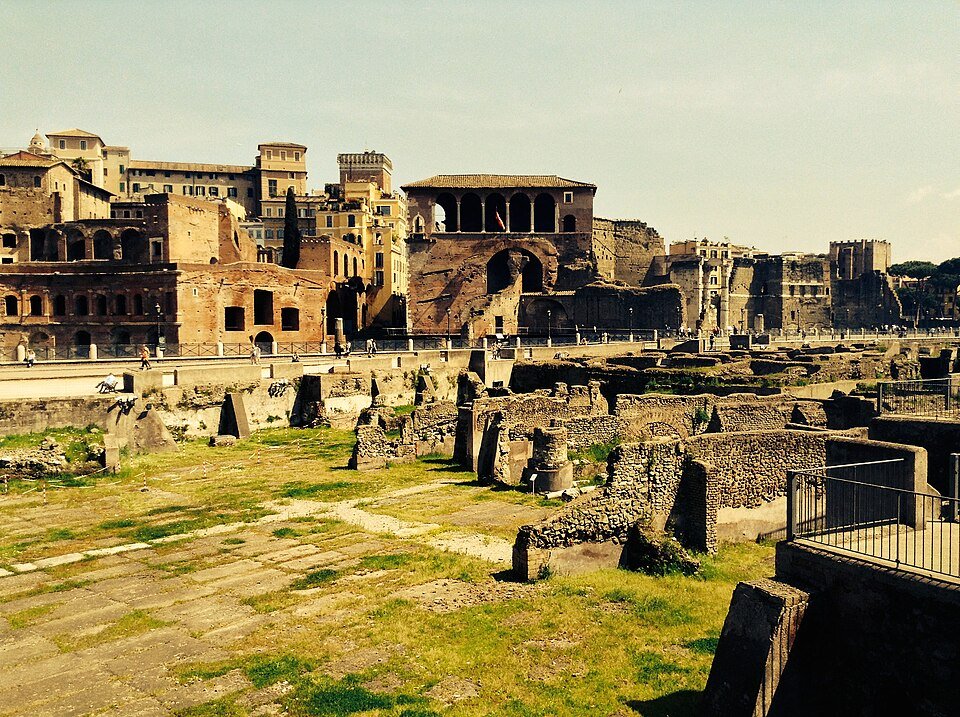
Ruins of Trajan's Forum and Market in Rome
The brick-and-concrete arches of Trajan's Market, adjacent to the Forum of Trajan in Rome, designed by Apollodorus of Damascus as the ancient world's first multi-level shopping and administrative complex. (Rome, Italy)

Building the Eternal City: The Forum, the Column, and the Alimenta

With the boundless wealth of Dacia, Trajan and Apollodorus of Damascus remade the civic heart of Rome. Between the Capitoline and Quirinal hills, Apollodorus excavated forty million cubic feet of earth to construct the Forum of Trajanโ€”the largest and most majestic forum complex in the Roman world. Anchored by the colossal Basilica Ulpia with its double colonnades of gilded bronze and polychrome marble, the forum housed two magnificent public libraries (one for Latin, one for Greek texts).

In the courtyard between the libraries stood the architectural marvel of antiquity: Trajan's Column. Rising one hundred and twenty-five feet into the Roman sky, the marble column is wrapped in a continuous 625-foot spiral frieze containing 2,662 carved human figures across 155 narrative scenes, depicting every engineering, tactical, and medical detail of the Dacian campaigns with documentary precision.

The Alimenta Welfare System

Beyond monumental stone, Trajan institutionalized an unprecedented imperial welfare system known as the Alimenta. The imperial treasury issued low-interest loans (typically 5%) to Italian landowners, secured against their agricultural estates. The annual interest collected on these loans was funneled directly into municipal trust funds across Italy to provide monthly cash stipends for the nourishment and primary education of poor, orphaned, and freeborn Italian children. By nurturing the next generation of Roman citizens, Trajan secured both social peace and legionary recruitment.

Imperial Grand Strategy: Augustan Defense vs. Trajanic Expansion

The contrast between Augustus's policy of natural frontier containment and Trajan's aggressive forward conquest represents the fundamental debate of Roman grand strategy.

Strategic Metric Augustus' Frontier Containment (27 BCEโ€“14 CE) Trajan's Offensive Imperialism (98โ€“117 CE)
Grand Strategy Defensive consolidation along natural river barriers (Rhine & Danube) Aggressive forward conquest across river barriers to eliminate threats
Territorial Conquests Hispania pacified, Raetia, Noricum, Pannonia up to the Danube Dacia, Arabia Petraea, Armenia, Assyria, Mesopotamia
Maximum Empire Size ~4.2 million square kilometers; ~50 million population 5.0 million square kilometers; ~70 million population (peak 117 CE)
Fiscal Methodology Prudent fiscal retrenchment; inheritance and auction taxes Direct plunder of enemy gold mines (Dacian hoard) funding massive infrastructure
Eastern Policy Diplomatic buffer states with Parthia; return of Roman battle standards Direct annexation of Parthian capital (Ctesiphon) and march to Persian Gulf
Successor Reaction Tiberius maintained Augustan borders strictly Hadrian immediately abandoned Mesopotamia and built defensive walls

The Parthian Blitzkrieg (113โ€“116 CE): Rome at the Persian Gulf

In 113 CE, after annexing the wealthy caravan kingdom of Arabia Petraea (the Nabataean realm centered on Petra), Trajan turned his attention to Rome's perennial superpower rival: the Parthian Empire. The Parthian king Osroes I had deposed the pro-Roman ruler of Armenia, violating long-standing treaties.

Sixty-year-old Trajan marched eastward at the head of eighty thousand veteran troops. In a breathtaking operational sweep, Trajan annexed Armenia, marched south along the Euphrates and Tigris, captured Nisibis and Seleucia, and stormed the imperial Parthian capital of Ctesiphon in late 115 CE. Trajan deposed Osroes, placing a Roman puppet ruler, Parthamaspates, upon the golden Parthian throne.

Boarding a Roman fleet on the Tigris, Trajan sailed downriver until he reached Charax Spasinu at the mouth of the Persian Gulf. Standing upon the shore of the Indian Oceanโ€”the furthest east any Roman emperor would ever standโ€”Trajan watched merchant ships setting sail for India. Contemporary historians record that the aging emperor wept openly, lamenting that his advanced age prevented him from following the footsteps of Alexander the Great.

"When Trajan came to the Ocean itself, he learned what its nature was and saw a vessel sailing to India; and he said: 'I should certainly have crossed over to the Indians, too, if I were still young.' For he began to think about the Indians and was curious about their affairs, and he counted Alexander a lucky man."

โ€” Cassius Dio, Roman History (Book LXVIII.29, c. 229 CE)
โš–๏ธ

Historian Debate: Strategic Masterstroke vs. Reckless Imperial Overreach

The "Unsustainable Overstretch" Critique (Theodor Mommsen, Edward Gibbon)

Argues that Trajan's eastern conquests were an irrational, vainglorious pursuit of Alexandrian glory that exhausted Roman military manpower, triggered the bloody Jewish Diaspora revolt (Kitos War), and left provinces that were geographically indefensible against Parthian counter-offensives.

The "Grand Strategic Realism" Defense (Julian Bennett, F.A. Lepper)

Maintains that Trajan sought to permanently control the trans-Eurasian Persian Gulf silk and spice maritime trade routes, eliminating Parthian middlemen and establishing defensible, river-anchored outer bastions that neutralized eastern aggression for generations.

While his successor Hadrian deemed Mesopotamia untenable and withdrew to the Euphrates, Dacia remained a deeply Romanized province whose Latin linguistic heritage survives in Romania today.

The End at Selinus: Hadrian and the Retrenched Empire

Trajan's triumphs in the East were cut short by the harsh realities of asymmetric rebellion. Behind his frontline legions, a massive uprising erupted among the Jewish communities of Cyrenaica, Cyprus, Egypt, and Mesopotamia (the Kitos War), while Parthian counter-insurgencies cut Roman supply lines. Besieging the desert fortress of Hatra in extreme summer heat, Trajan's health collapsed. Suffering from edema and an apparent stroke, he began the long journey back to Rome.

On August 8 or 9, 117 CE, at the Cilician coastal port of Selinus, Trajan died at the age of sixty-three. On his deathbed, his influential empress Plotina arranged the formal adoption of his brilliant kinsman and lieutenant, Publius Aelius Hadrianus (Hadrian).

Hadrian recognized that the empire had stretched beyond its administrative and military elastic limit. In an act of courageous strategic realism, Hadrian immediately abandoned Trajanโ€™s newly annexed eastern provinces of Mesopotamia, Assyria, and Armenia, returning the imperial frontier to the Euphrates River and constructing permanent fortified barriersโ€”most famously Hadrian's Wall across northern Britain. Yet Trajan's reputation was so revered that for the remainder of the Roman Empire, whenever a new emperor was inaugurated by the Senate, the senators greeted him with the solemn ritual prayer: "Felicior Augusto, melior Traiano"โ€”"May you be luckier than Augustus, and better than Trajan."

๐Ÿ“– SCHOLARLY INQUIRIES

Frequently Asked Questions

Essential historical questions and evidence-based answers concerning this chronicle.

Why is Emperor Trajan significant in world history?

Emperor Trajan played a pivotal role by transforming technology, social structure, and regional connection, serving as a vital link in human civilization.

Why was Trajan called 'Optimus Princeps'?

The Roman Senate officially bestowed the title 'Optimus Princeps' (Best Emperor) on Trajan due to his military conquests, public works, welfare programs (Alimenta), and respectful senate governance.

What was the significance of Trajan's Dacian Wars?

Conquering King Decebalus of Dacia (modern Romania) in 106 CE yielded over 160,000 kg of gold and 330,000 kg of silver, funding massive public works across Italy.

How far did the Roman Empire stretch under Trajan?

At Trajan's death in 117 CE, the Empire spanned 5 million square kilometers across 40 modern nations from Scotland to the Persian Gulf.

๐Ÿ“š Academic Sources & Scholarly Bibliography
  • Cassius Dio (1925). Roman History (Book LXVIII: Trajan). Loeb Classical Library.
  • Bennett, J. (2001). Trajan: Optimus Princeps. Routledge.
  • Goldsworthy, A. (2016). Pax Romana: War, Peace and Conquest in the Roman World. Yale University Press.
โšก Fast Facts
  • Historical EraANCIENT
  • Region๐ŸŒ EUROPE
  • CategoryEmpires
  • Reading Timeโฑ 11 min read
๐Ÿ“– Scholar Mode Active โ€” Click to exit focused reading
Selected Era

Prehistoric Era

Millions of years ago to ~3000 BCE

The dawn of humanity. From the evolutionary split of early hominids to the mastery of stone tools, fire, and the birth of language.

Landmark Milestones

Welcome to Historia

Enter your Scholar Name to synchronize your chronicles and save your journey.