~7,000 Years from farming to writing
🏛️

Ancient Ages

c. 3,200 BCE — 500 CE · Empires, Laws & Philosophy
~400 Years from Roman fall to medieval rebirth
🏰

Medieval Period

c. 500 CE — 1500 CE · Empires of Faith, Trade & Castles
~50 Years from printing press to Scientific Revolution
⚙️

Modern Age

c. 1450 CE — 2000 CE · Revolutions, Industry & Discovery
~50 Years from computers to quantum age

THE ARTIFACT GALLERY

Examine the tangible relics, physical tokens, and revolutionary machines that shaped civilizational growth.

🎥 VIDEO HUB & SHORTS

Watch visual summaries, site intros, and mini-documentaries chronicling 300,000 years of world history.

📊 HISTORICAL INFOGRAPHICS ARCHIVE

Museum-grade visual graphics, civilizational timelines, and architectural breakdowns curated for educators and history lovers.

THE HISTORIA CIRCLE

Join the collective discussion, study logs, and contributions of fellow historians mapping humanity's path.

Historia Forum Discussions

Start a Discussion Thread

THEMATIC PATHWAYS

Trace a single thread — disease, trade, energy, migration — across all eras and civilizations.

History is not just a sequence of events — it is a network of patterns. These thematic pathways allow you to follow a single concept across thousands of years: how agriculture spread, how warfare evolved, how trade routes shaped civilizations. Each pathway collects the most relevant chronicles across all eras.

🧩
How is this different from the sidebar Topics?
While the sidebar Topics (like Science & Tech or Empires) filter articles within your selected historical Era, Thematic Pathways cut horizontally across all eras (from Prehistoric to the Future). Use Themes to trace a single concept's evolutionary line across 300,000 years.

CIVILIZATION HUBS

Comprehensive profiles of the world's greatest civilizations and empires — from ancient cradles to global super-states.

Human Historia provides an academically rich exploration of the world's most influential civilizations. From the monumental achievements of ancient Egypt, Han China, and the Roman Empire, to the sophisticated societies of the Maya, the Islamic Caliphates, and West African empires, these hubs offer deep insights into the cultural, political, and technological legacies that continue to shape our global story.

EVOLUTION OF HUMAN SKILLS

Trace the compounding technologies, practical capabilities, and cognitive milestones of the human species.

Human progress is a story of compounding skills. Every breakthrough, from the spark of prehistoric fire to modern silicon transistors, builds directly on previous generations of ingenuity. Hover over a skill node to trace its historical prerequisites, and click it to explore its development timeline, species-wide impact, and related chronicles.

Prehistoric Ancient Medieval Modern Future
🧠

Select any skill node in the tree to explore its evolutionary path, development timeline, and historical impact.

ACADEMIC PASSPORT

Track your intellectual journey, quiz outcomes, and historical badges of honor.
HISTORIA PASSPORT
👤 Scribe Novice
Scholar Name Historia Explorer
Rank Rating Sumerian Record Scribe
Chronicles Read 0 / 48
Study Guide Pins 0 Guides
Security Access Level 1 (Novice)

Earned Badges of Honor

🔥
Fire Keeper
Unlock 3 prehistoric chronicles.
🏛️
Codex Keeper
Unlock 3 ancient chronicles.
🏰
Guild Master
Unlock 3 medieval chronicles.
⚙️
Steam Engineer
Unlock 3 modern chronicles.
🚀
Singularity Sage
Unlock 3 future chronicles.
👑
Grand Scholar
Score 5/5 on the Lab Quiz.

Recent Lab Activities

No recent activities recorded. Take a quiz or bookmark articles!
Curated Exhibition

Human Historia

An immersive graphical anthology tracing the paths of civilizations, breakthroughs, and conflicts that forged the modern consciousness.

25Chronicles
Showing all articles

Spread of Latin Language: Roman Law, Vulgate & Linguistic Legacy

Written by Historia Linguistics Historical Era: ANCIENT
* Note: Cover image is an AI-generated historical illustration.

🧠Key Chronicle Takeaway (Atomic Summary)

Explore the structural similarities between Sanskrit and Latin, tracing them back to a single lost ancestral tongue.

In 1786, the British philologist and judge Sir William Jones delivered a presidential address to the Asiatic Society in Calcutta that revolutionized our understanding of human migration and linguistics. Jones, having studied Sanskrit—the ancient sacred language of India—observed structural and vocabulary similarities between Sanskrit, Classical Greek, and Latin. He concluded that these distant tongues must have sprung from a single, lost ancestral source. This discovery birthed the science of comparative linguistics and established the existence of the Proto-Indo-European (PIE) language family, proving that peoples stretching from Iceland to India share a common ancestral heritage, vocabulary, and mythic tradition.

The Discovery: Sir William Jones' Address

Before the late 18th century, European scholars believed that Hebrew was the original language of humanity, from which all other languages diverged after the biblical fall of the Tower of Babel. Latin and Greek were studied in isolation, and their similarities were attributed to either direct borrowing or coincidence.

Sir William Jones, arriving in India to serve as a judge, studied Sanskrit to understand local legal texts. He was astonished by the language's complexity and its structural parallels to European classical tongues. In his historic 1786 address, he wrote:

"The Sanscrit language, whatever be its antiquity, is of a wonderful structure; more perfect than the Greek, more copious than the Latin, and more exquisitely refined than either, yet bearing to both of them a stronger affinity, both in the roots of verbs and in the forms of grammar, than could possibly have been produced by accident; so strong indeed, that no philologer could examine them all three, without believing them to have sprung from some common source, which, perhaps, no longer exists."

Jones also noted that Germanic (Gothic), Celtic, and Persian belonged to this same linguistic family, initiating a massive comparative project to reconstruct the lost ancestral tongue.

Proto-Indo-European: The Steppe Nomads

Linguists call this reconstructed ancestral language Proto-Indo-European (PIE). Because PIE was spoken before the invention of writing, no physical records exist. Scribes and historical linguists have reconstructed the vocabulary and grammar of PIE by comparing the oldest daughter languages (such as Sanskrit, Homeric Greek, Classical Latin, Hittite, and Old Church Slavonic) and working backward through sound laws.

By analyzing the reconstructed vocabulary of PIE, historical linguists and archaeologists have identified the culture and homeland of the original speakers. The vocabulary contains terms for:

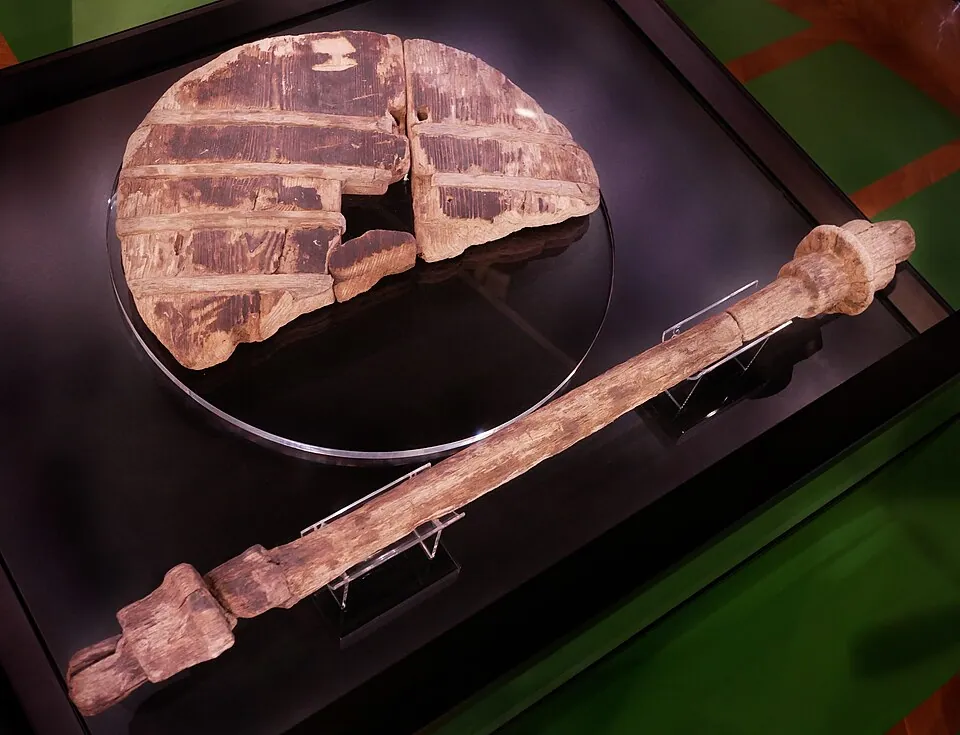
  • Wheeled Vehicles: Reconstructed words for wheel (kʷekʷlos, the root of the Greek kyklos and English cycle), axle (aks), and yoke (yugom).
  • Animal Husbandry: Words for domestic horse (ekʷos), sheep (owis), cattle (gʷōus), and wool (wḷneh₂).
  • Colder Climate: Words for snow (sneygʷh) and beech trees (bhāgos), pointing to a northern Eurasian climate rather than a tropical one.

This vocabulary aligns with the Kurgan Hypothesis (formulated by Marija Gimbutas), which identifies the speakers of PIE as the Yamnaya Culture—pastoral nomads who lived in the Pontic-Caspian steppe (modern Ukraine and Russia) between 4000 and 3000 BCE. Armed with domestic horse technology, wheeled carts, and bronze metallurgy, the Yamnaya migrated in waves across Europe and South Asia, spreading their language, technology, and patriarchal social structures, replacing or blending with local populations.

The Science of Comparative Linguistics: Cognates and Sound Laws

The relationship between Indo-European languages is demonstrated by cognates—words that share a common linguistic origin. Despite thousands of miles of geographic separation and millennia of independent evolution, the core vocabulary of daily life remains recognizable across the family:

English Sanskrit Latin Greek Reconstructed PIE
Mother mātr̥ māter mētēr *méh₂tēr
Father pitr̥ pater patēr *ph₂tḗr
Brother bhrātr̥ frāter phrātēr *bhréh₂tēr
Three trayas trēs treis *tréyes

Grimm's Law: The Consonant Shift

To prove that similarities were not accidental, linguists identified systematic sound shifts. The most famous is Grimm's Law (formulated by the folklorist Jacob Grimm). Grimm showed that as Germanic languages split from PIE, certain consonants shifted in a predictable sequence: PIE voiceless stops (p, t, k) shifted to voiceless fricatives (f, th, h). This explains why the Latin pater corresponds to the English father, the Latin tres corresponds to the English three, and the Latin cannabis corresponds to the English hemp.

Sanskrit: Paninian Grammar and Oral Preservation

Sanskrit played a crucial role in comparative linguistics because of its antiquity and its phonetic preservation.

Sanskrit was the language of the Vedas—the ancient sacred hymns of Hinduism. Because the power of the hymns was believed to depend on their exact pronunciation, the Brahmins (the priestly class) developed oral transmission techniques. Scribes and priests memorized long texts syllable-by-syllable, using mathematical metrics and chanting rhythms to prevent any phonetic drift over generations.

In the 4th century BCE, the Sanskrit grammarian Panini wrote the Ashtadhyayi—a systematic, formal grammar of Sanskrit containing 3,959 rules. Panini’s grammar functioned like a programming language, defining the rules of word formation, syntax, and phonetics, securing Sanskrit against decay and preserving its structure for millennia, making it a valuable tool for historical linguists.

Latin: Vulgar Roots and the Romance Languages

While Sanskrit was preserved as a sacred, static tongue, Latin underwent rapid, organic evolution.

Originally the regional dialect of the Latium region along the Tiber River, Latin expanded with the Roman conquests, becoming the administrative, military, and commercial language of the Western Mediterranean. In Rome, a distinction arose between Classical Latin (the formal language used by Cicero, Virgil, and the political elite) and Vulgar Latin (the daily, spoken language of soldiers, merchants, slaves, and provincial citizens).

Following the fall of the Western Roman Empire in 476 CE, the administrative unity that sustained Classical Latin collapsed. Isolated in different provinces, Vulgar Latin began to diverge organically, influenced by local languages:

  • In Iberia, it blended with Celtic and Arabic, leading to Spanish and Portuguese.
  • In Gaul, it was influenced by Germanic Frankish, leading to French.
  • On the Italian peninsula, it remained closest to its roots, leading to Italian.
  • In the east, it was isolated by Slavic migrations, leading to Romanian.

These Romance Languages represent the organic, living descendants of Vulgar Latin, demonstrating how a single imperial tongue diverges into distinct national languages once centralized political control disappears.

The Indo-European Mythological Synthesis

Linguistics has also enabled the reconstruction of Proto-Indo-European mythology. Scribes have noted thematic and linguistic parallels between the sky god of the Vedas (Dyaus Pita), the king of the Greek gods (Zeus Pater), and the Roman sky god (Jupiter or Diespiter). These names trace back to the PIE sky father deity, Dyēus Ph₂tḗr, proving that these cultures shared a common mythological worldview.

Sanskrit Paninian Grammar and Computer Science

The grammatical structure of Sanskrit, codified by Panini in the 4th century BCE, has had an impact on modern computer science. In the Ashtadhyayi, Panini formulated a system of 3,959 rules that defined the phonetics, morphology, and syntax of Sanskrit. This system operated like a programming language, utilizing auxiliary symbols, recursive rules, and algebraic-like formulas to generate correct Sanskrit words from base roots.

In the 1950s, when computer scientists John Backus and Peter Naur designed the first formal metalanguage to specify the syntax of programming languages (known as Backus-Naur Form or BNF), they independently created a system that was structurally equivalent to Panini's grammar. Today, computational linguists and programmers recognize Panini's work as the first formal grammar system, proving that the mathematical structures of Sanskrit are highly suited for natural language processing and computer compiler design, bridging ancient speech and modern software engineering.

Sanskrit and Latin Verb Conjugation Parallels

The grammatical affinity between Latin and Sanskrit is demonstrated by their verb conjugation paradigms. In both languages, verbs are conjugated using suffixes that indicate person, number, tense, and mood. For example, the verb "to be" shares cognate forms: the Sanskrit asmi (I am), asi (you are), and asti (he is) correspond directly to the Latin sum, es, and est, and the Greek eimi, eis, and esti. These structural parallels, which extend to noun cases and declensions, proved that these languages share a common grammatical system, which tracing back to a single ancestral Proto-Indo-European tongue.

The Grammatical Legacy of Sanskrit and Panini

The preservation and study of Sanskrit led to the birth of formal linguistics through the work of the ancient Indian grammarian Panini (c. 4th century BCE). Panini wrote the Astadhyayi ("Eight Chapters"), a treatise that defined the grammar of Sanskrit in 3,959 rules. Panini’s grammar was a generative linguistic system, using a formal structure of rules, auxiliary markers, and phonology to generate any correct Sanskrit word or sentence.

Panini’s work predated modern formal language theory by over two thousand years. Scribes and computer scientists note that his rules are equivalent to the Backus-Naur Form (BNF) used to define modern computer programming languages. By analyzing Sanskrit's structural rules, Panini preserved the oral tradition of the Vedic texts. When Sir William Jones and subsequent European linguists discovered Panini's work in the 18th century, it revolutionized their understanding of language, leading to the development of comparative grammar, historical linguistics, and the reconstruction of the Proto-Indo-European ancestral tongue, proving the structural link between Latin, Sanskrit, and modern languages.

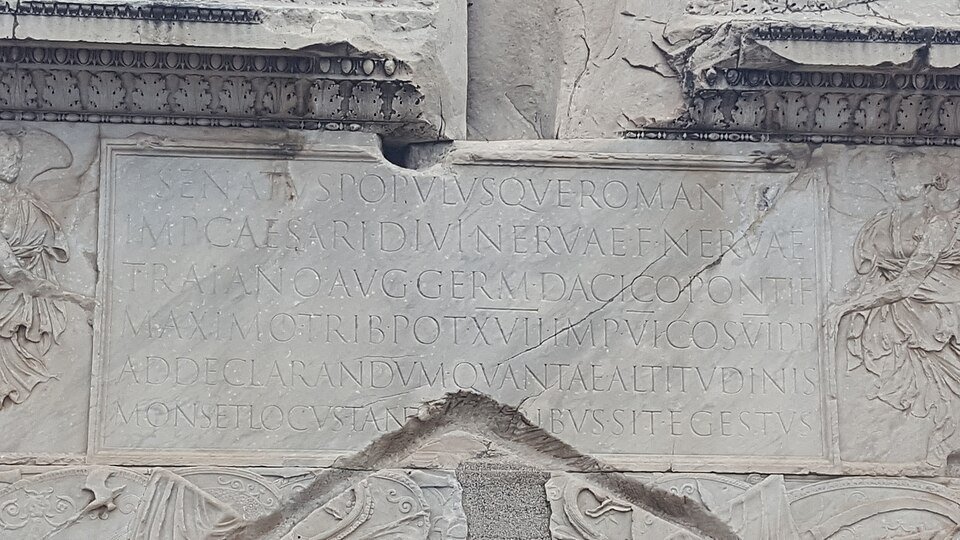
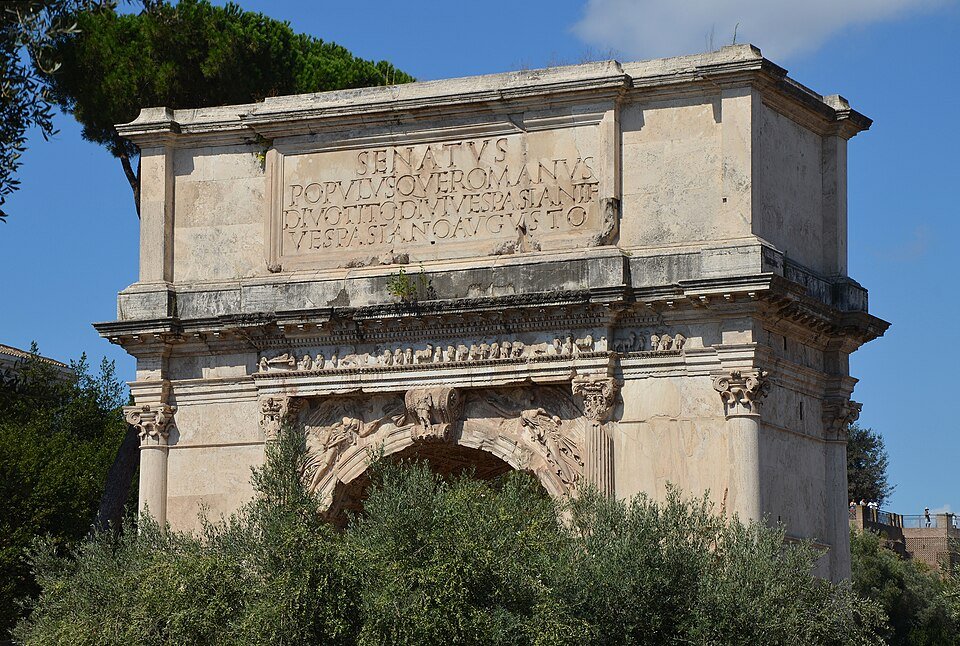
Ancient Roman stone inscription in Latin
An authentic Roman monumental stone inscription displaying classical Latin lapidary script.

Conclusion and Legacy

The discovery of the Indo-European language family proved that languages are not static, isolated codes, but are living systems that preserve the history of human migration and technology. By linking Latin and Sanskrit to a single steppe homeland, comparative linguistics has shown that across differences in culture, religion, and geography, a significant portion of the global population speaks with the same ancient vocabulary, tracing back to the nomads of the prehistoric steppe.

⚖️

Historian Debate: Why Did Latin Fragment into Romance Languages?

Colonial Accent and Substrate Influences

Linguists argue that local Celtic and Iberian languages acted as 'substrates,' modifying Vulgar Latin pronunciation and grammar in different provinces, leading to French, Spanish, and Italian.

Administrative Collapse and Isolation

Alternative views emphasize that the fall of Rome broke the transport and educational networks, isolating regions and allowing local dialects to drift rapidly.

Latin transitioned from a local Lazio dialect to the universal language of European scholarship.

"Vulgar Latin was the language of the soldier, the merchant, and the slave — a language of change that broke the classical rules to build the Romance world."

— Vulgar Latin inscription, graffiti on the walls of Pompeii (79 CE).

Further Reading

  • Latin Story: A Linguistic Historyby Tore Janson. A fascinating biography of the Latin language from its origins to modern times.
  • The Romance Languagesby Rebecca Posner. A detailed study of how Vulgar Latin evolved into the Romance family.
📖 Scholar Mode Active — Click to exit focused reading
Selected Era

Prehistoric Era

Millions of years ago to ~3000 BCE

The dawn of humanity. From the evolutionary split of early hominids to the mastery of stone tools, fire, and the birth of language.

Landmark Milestones

Welcome to Historia

Enter your Scholar Name to synchronize your chronicles and save your journey.