>
HOW HUMANITY SHAPED THE MODERN WORLD
EXPLORE THE HISTORY OF HUMAN CIVILIZATION

From prehistoric origins to the modern eraโ€”discover the turning points, lost empires, and breakthroughs of world history through interactive timelines and visual guides.

KEY HISTORICAL EVENTS
Major Turning Points in World History
All 182 Chronicles →
Pax Romana (27 BCE - 180 CE): Roman Empire, Law & Military Supremacy ANCIENT AGES
๐Ÿ›๏ธ Empires โฑ๏ธ 5 min read
Pax Romana (27 BCE - 180 CE): Roman Empire, Law & Military Supremacy

Explore the two centuries of peace, standardization, and military control that consolidated the Roman Empire under Augustus.

Read Chronicle →
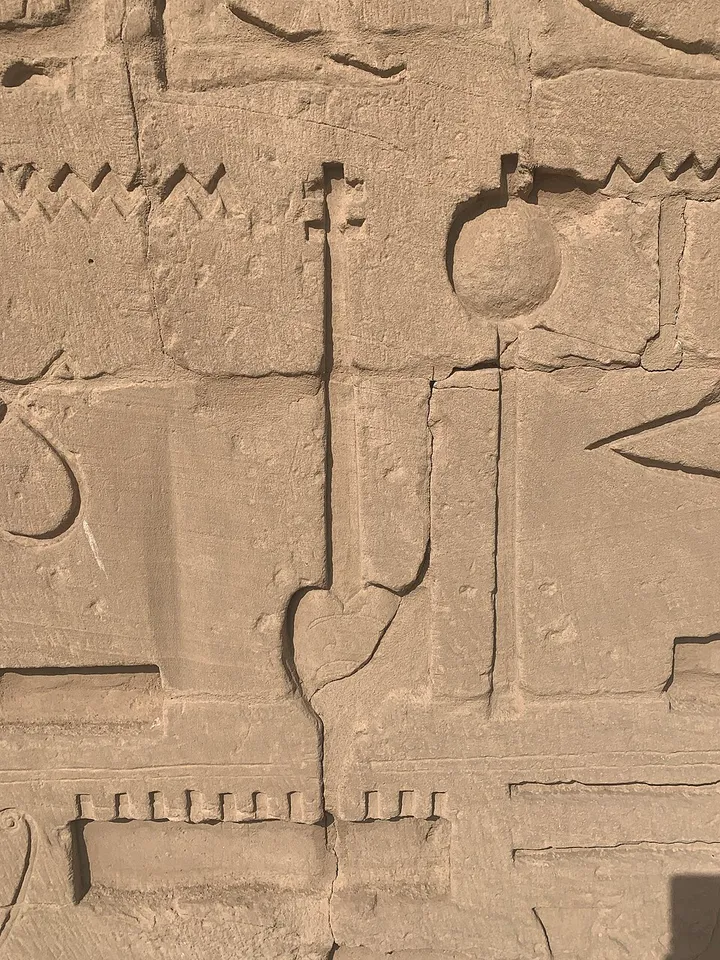
Egyptian Hieroglyphs: Decipherment, Scribes & Sacred Carvings ANCIENT AGES
๐Ÿ›๏ธ Languages โฑ๏ธ 9 min read
Egyptian Hieroglyphs: Decipherment, Scribes & Sacred Carvings

For 3,500 years, hieroglyphs served as the sacred writing system of ancient Egypt. Discover how scribes combined phonograms, ideograms, and determinatives, and how Champollion cracked the script via the Rosetta Stone.

Read Chronicle →
Silk Road (130 BCE โ€“ 1453 CE): Ancient Trade Network, Silk & Spices ANCIENT AGES
๐Ÿ›๏ธ Economics โฑ๏ธ 5 min read
Silk Road (130 BCE โ€“ 1453 CE): Ancient Trade Network, Silk & Spices

Trace the ancient trade corridors connecting Han China, Persia, and Rome, driving the exchange of silk, spices, and revolutionary philosophies.

Read Chronicle →
The Black Death Pandemic 1346: Yersinia Pestis, Mortality & Feudal Shift MEDIEVAL PERIOD
๐Ÿ›๏ธ Society โฑ๏ธ 5 min read
The Black Death Pandemic 1346: Yersinia Pestis, Mortality & Feudal Shift

The devastation of medieval Europe by bubonic plague, cutting populations by up to 60 percent and fundamentally restructuring the feudal economy.

Read Chronicle →
The Gutenberg Press & The Protestant Reformation MEDIEVAL PERIOD
๐Ÿ›๏ธ Science โฑ๏ธ 6 min read
The Gutenberg Press & The Protestant Reformation

Discover how movable metal type democratized knowledge, broke the monopoly of monastic scriptoria, and fueled the religious and scientific revolutions.

Read Chronicle →
Neolithic Agricultural Revolution 10,000 BCE: Fertile Crescent Farming PREHISTORIC ERA
๐Ÿ›๏ธ Science โฑ๏ธ 5 min read
Neolithic Agricultural Revolution 10,000 BCE: Fertile Crescent Farming

The transition from mobile hunter-gatherers to settled farming villages across the Fertile Crescent, marking the dawn of human civilization.

Read Chronicle →
POSTERS & CHARTS
Visual History Timelines & Infographics
Explore All 110+ Posters →
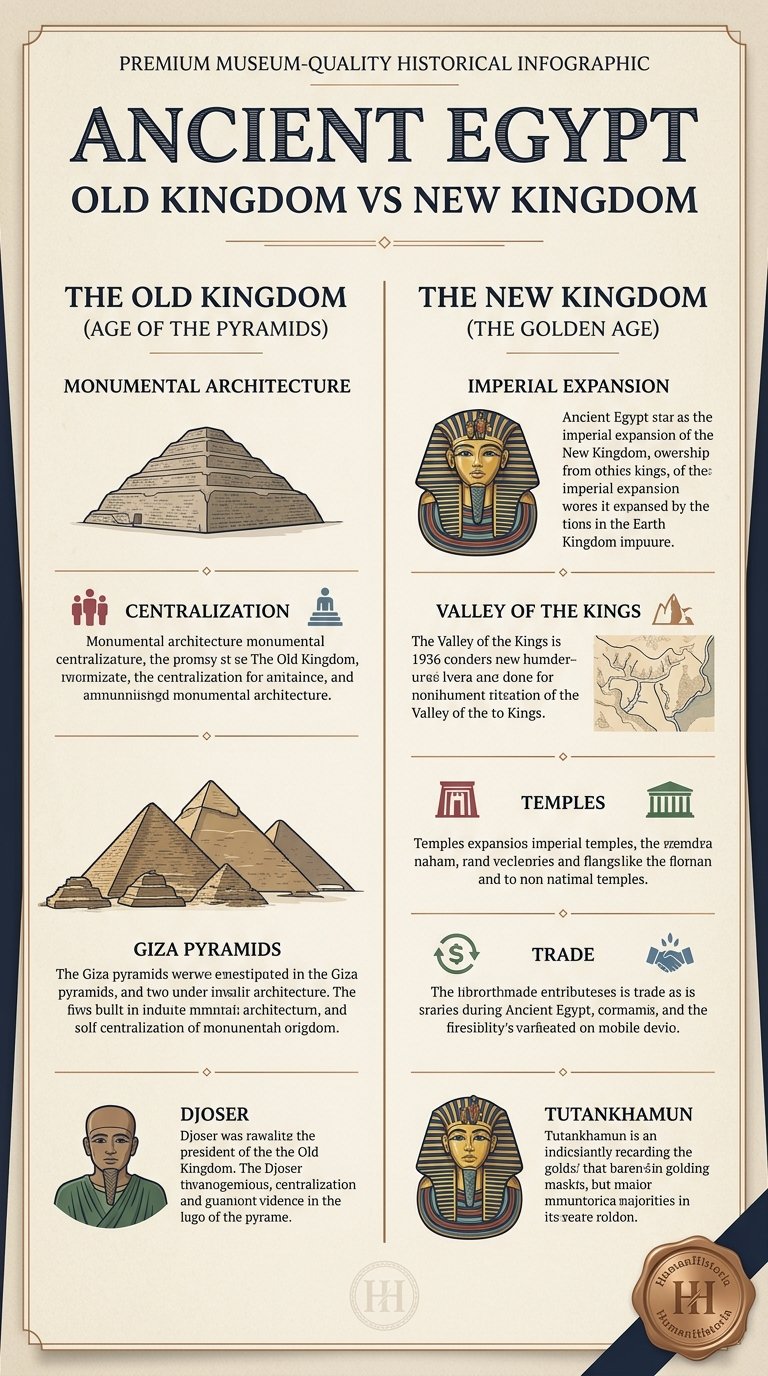
Ancient Egypt: Old Kingdom vs. New Kingdom
๐Ÿ” Tap to Zoom
Ancient Egypt: Old Kingdom vs. New Kingdom
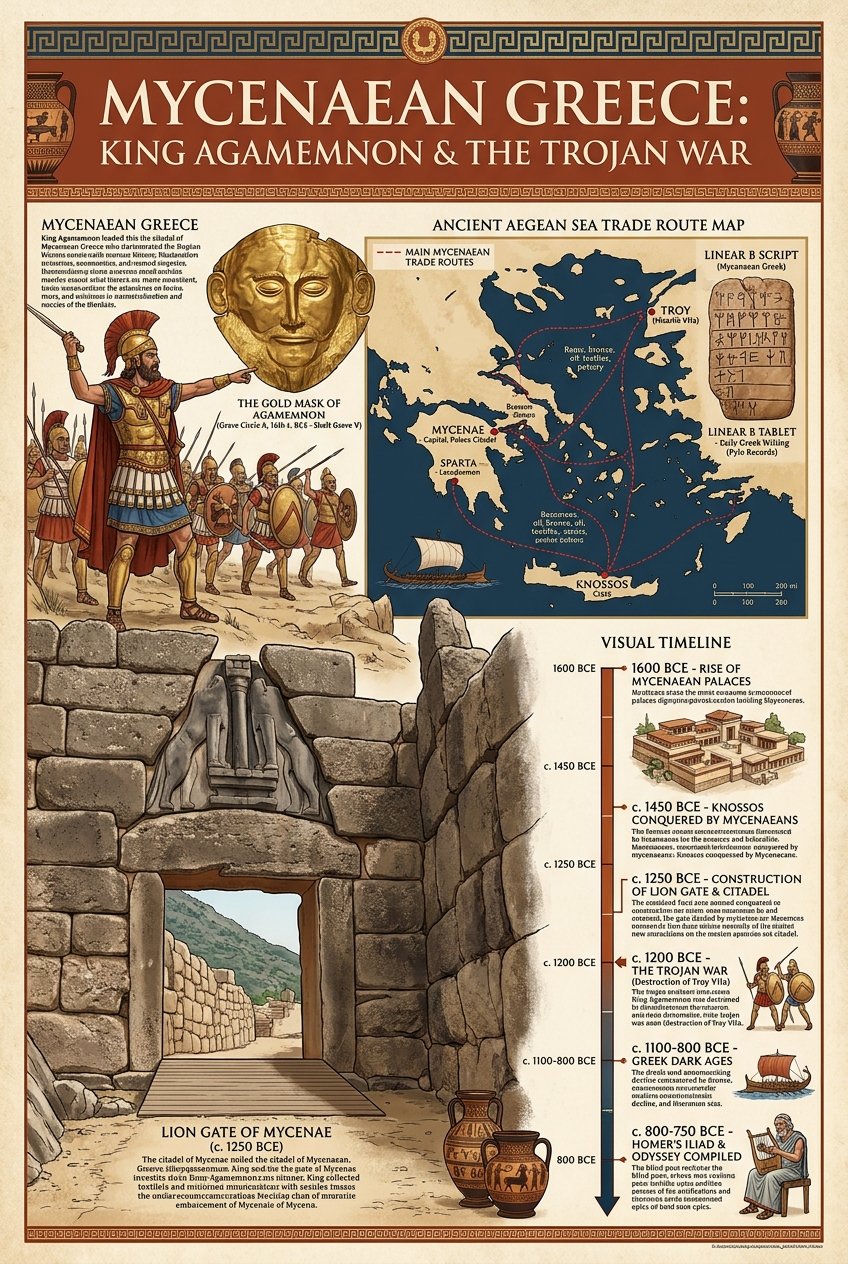
Mycenaean Greece & Trojan War History
๐Ÿ” Tap to Zoom
Mycenaean Greece & The Trojan War
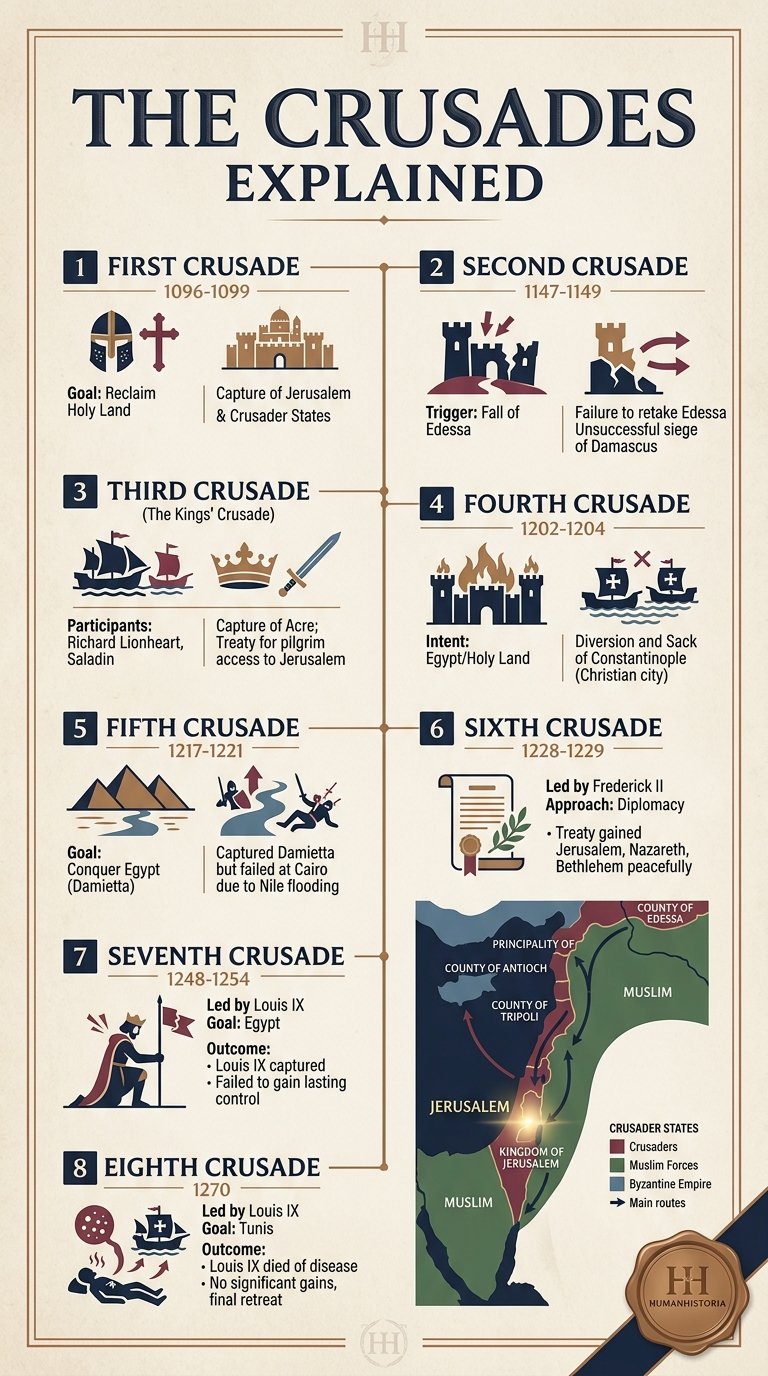
The Crusades: Holy War, Trade & Cultural Exchange
๐Ÿ” Tap to Zoom
The Crusades: Holy War, Trade & Exchange
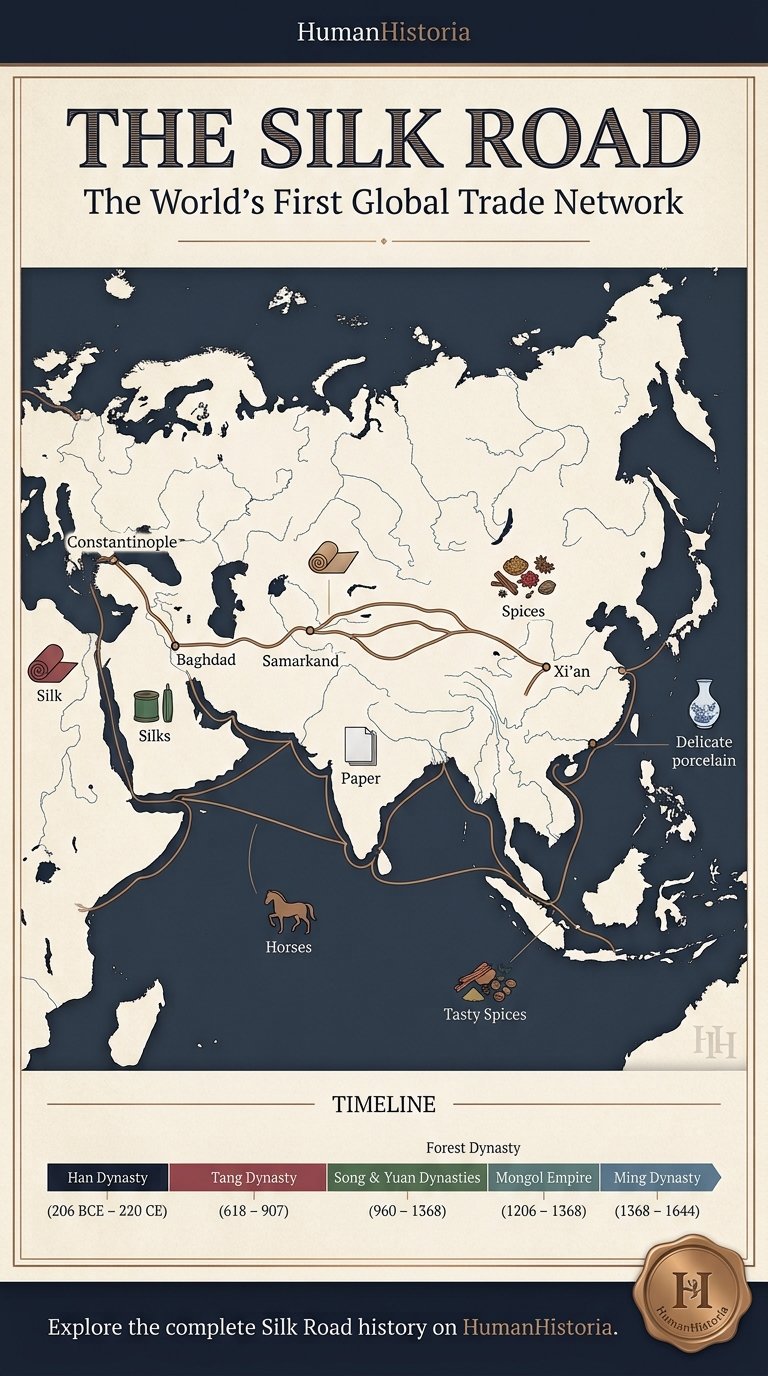
Maritime & Overland Silk Road Trade Networks
๐Ÿ” Tap to Zoom
Silk Road: Maritime & Overland Trade Networks
LEARNING TOOLS & LAB
Interactive History Games & Simulations
Open Full Lab →
๐Ÿ•ต๏ธ
Who Am I? (Historical Guessing Game)

A secret historical figure has been chosen. Ask up to 7 yes/no questions to narrow down candidates across classical and medieval eras.

Play Game →
๐Ÿ—บ๏ธ
Timeline Scramble

Five historical events appear out of order. Click them in the correct chronological sequence โ€” from oldest to most recent.

Test Chronology →
โš–๏ธ
Empire Matchup Simulator

Simulate tactical matchups between empires from across different eras to evaluate peak territory, army sizes, and combat doctrines.

Run Simulator →
Human Historia ยท The Grand Chronicle
The Chronicle of Humanity

300,000 years. 5 eras. Countless turning points that shaped every moment of your world.

๐Ÿฆด
Prehistoric Era
c. 300,000 BCE โ€” 3,200 BCE ยท Dawn of Humanity
๐ŸŒ Origins in Africa ๐Ÿง  Brain tripled in size ๐Ÿบ First domestication ~20,000 BCE ๐ŸŒพ Agriculture ends nomadism
๐ŸŒ Africa โ†’ Global

Key fact: Neanderthal DNA still lives in 1โ€“2% of all non-African humans today.

Related: Animal Domestication, Cave Art

๐Ÿ”ฅ Africa

Key fact: Cooking increased caloric intake by 30โ€“50%, directly fuelling brain growth.

Related: Stone Tools, Migration

๐ŸŒพ Fertile Crescent

Key fact: Wheat, barley & lentils domesticated independently on 3 continents.

Related: Gรถbekli Tepe, Cuneiform

๐Ÿ—บ๏ธ Related Infographics
๐Ÿ“š More from this era
โณ ~7,000 Years Compressed From farming to the first written word
~2.3% of recorded human history
๐Ÿ›๏ธ
Ancient Ages
c. 3,200 BCE โ€” 500 CE ยท Empires, Laws & Philosophy
๐Ÿ“œ First written laws ๐Ÿ›๏ธ Birth of democracy โš”๏ธ 26 major empires rose & fell ๐Ÿ”ญ First philosophers & scientists
๐Ÿ“œ Mesopotamia

Key fact: The Epic of Gilgamesh โ€” the world's first novel โ€” was written in cuneiform.

Related: Epic of Gilgamesh, Hammurabi

๐Ÿ“š Alexandria, Egypt

Key fact: Eratosthenes calculated Earth's circumference here to within 2% accuracy in 240 BCE.

Related: Greek Philosophy, Roman Empire

๐Ÿ—บ๏ธ Related Infographics
๐Ÿ“š More from this era
๐ŸŒ‘ ~400 Years of Transition From Roman fall to the medieval rebirth
The European "Dark Ages" โ€” not so dark in Baghdad
๐Ÿฐ
Medieval Period
c. 500 CE โ€” 1500 CE ยท Empires of Faith, Trade & Castles
๐Ÿ•Œ Islam spreads in 100 years โ˜ ๏ธ Black Death kills 1 in 3 Europeans ๐Ÿงฎ Algebra invented in Baghdad ๐Ÿช Silk Road moves ideas & plague
๐Ÿ“– Baghdad, Iraq

Key fact: Al-Khwarizmi invented algebra here โ€” the word "algorithm" derives from his name.

Related: Silk Road, Mansa Musa

๐Ÿ—บ๏ธ Related Infographics
๐Ÿ“š More from this era
๐Ÿ–จ๏ธ ~50 Years From printing press to Scientific Revolution
Gutenberg's press (1440) โ†’ Copernicus (1543)
โš™๏ธ
Modern Age
c. 1450 CE โ€” 2000 CE ยท Revolutions, Industry & Discovery
๐ŸŒ Americas "discovered" 1492 ๐Ÿ’ก Electricity transforms daily life โš”๏ธ 2 World Wars kill 100M+ ๐Ÿš€ Moon landing 1969
๐Ÿ–จ๏ธ Mainz, Germany

Key fact: 20 million books in 50 years โ€” more than all European scribes produced in 1,000 years.

Related: Scientific Revolution, Reformation

๐Ÿš‚ Britain

Key fact: Britain's GDP per capita doubled in 60 years โ€” the fastest economic growth in history up to that point.

Related: Electricity, Wright Brothers

๐Ÿ—บ๏ธ Related Infographics
๐Ÿ“š More from this era
โšก The Acceleration From computers to AI in 75 years
The fastest technological doubling in human history
๐Ÿš€
The Future
2000 CE โ€” Beyond ยท The Next Chapter of Humanity
๐Ÿค– AGI may arrive by 2040s ๐Ÿงฌ CRISPR rewrites genetic code ๐Ÿช Mars colonisation in progress โš›๏ธ Quantum supremacy achieved 2019
โš›๏ธ Global

Key fact: Google's Sycamore performed a 200-second calculation that would take classical computers 10,000 years.

Related: AI Singularity, CRISPR, Space

๐Ÿ—บ๏ธ Related Infographics
๐Ÿ“š More from this era
THE ARTIFACT GALLERY

Examine the tangible relics, physical tokens, and revolutionary machines that shaped civilizational growth.

๐ŸŽฅ VIDEO HUB & SHORTS

Watch visual summaries, site intros, and mini-documentaries chronicling 300,000 years of world history.

๐Ÿ“Š HISTORICAL INFOGRAPHICS ARCHIVE

Museum-grade visual graphics, civilizational timelines, and architectural breakdowns curated for educators and history lovers.

THE HISTORIA CIRCLE

Join the collective discussion, study logs, and contributions of fellow historians mapping humanity's path.

Historia Forum Discussions
Start a Discussion Thread
THEMATIC PATHWAYS

Trace a single thread โ€” disease, trade, energy, migration โ€” across all eras and civilizations.

History is not just a sequence of events โ€” it is a network of patterns. These thematic pathways allow you to follow a single concept across thousands of years: how agriculture spread, how warfare evolved, how trade routes shaped civilizations. Each pathway collects the most relevant chronicles across all eras.

๐Ÿงฉ
How is this different from the sidebar Topics?
While the sidebar Topics (like Science & Tech or Empires) filter articles within your selected historical Era, Thematic Pathways cut horizontally across all eras (from Prehistoric to the Future). Use Themes to trace a single concept's evolutionary line across 300,000 years.
CIVILIZATION HUBS

Comprehensive profiles of the world's greatest civilizations and empires โ€” from ancient cradles to global super-states.

Human Historia provides an academically rich exploration of the world's most influential civilizations. From the monumental achievements of ancient Egypt, Han China, and the Roman Empire, to the sophisticated societies of the Maya, the Islamic Caliphates, and West African empires, these hubs offer deep insights into the cultural, political, and technological legacies that continue to shape our global story.

EVOLUTION OF HUMAN SKILLS

Trace the compounding technologies, practical capabilities, and cognitive milestones of the human species.

Human progress is a story of compounding skills. Every breakthrough, from the spark of prehistoric fire to modern silicon transistors, builds directly on previous generations of ingenuity. Hover over a skill node to trace its historical prerequisites, and click it to explore its development timeline, species-wide impact, and related chronicles.

Prehistoric Ancient Medieval Modern Future
๐Ÿง 

Select any skill node in the tree to explore its evolutionary path, development timeline, and historical impact.

ACADEMIC PASSPORT

Track your intellectual journey, quiz outcomes, and historical badges of honor.

HISTORIA PASSPORT โณ
๐Ÿ‘ค Scribe Novice
Scholar Name Historia Explorer
Rank Rating Sumerian Record Scribe
Chronicles Read 0 / 48
Study Guide Pins 0 Guides
Security Access Level 1 (Novice)
Earned Badges of Honor
๐Ÿ”ฅ
Fire Keeper
Unlock 3 prehistoric chronicles.
๐Ÿ›๏ธ
Codex Keeper
Unlock 3 ancient chronicles.
๐Ÿฐ
Guild Master
Unlock 3 medieval chronicles.
โš™๏ธ
Steam Engineer
Unlock 3 modern chronicles.
๐Ÿš€
Singularity Sage
Unlock 3 future chronicles.
๐Ÿ‘‘
Grand Scholar
Score 5/5 on the Lab Quiz.
Recent Lab Activities
No recent activities recorded. Take a quiz or bookmark articles!
๐Ÿ›๏ธ MISSION & ARCHIVAL STANDARDS
About Human Historia

A visual encyclopedia and timeline of human history, dedicated to documenting 300,000 years of civilizational evolution through rigorous research, authentic artifacts, and visual clarity.

๐ŸŒ
The 300,000-Year Story

Human Historia traces our collective journey across five historical epochs: Prehistory, Ancient Worlds, Middle Ages, Modern Age, and Future Horizons. From the first control of fire to quantum computation, we organize turning points into interconnected timelines.

๐Ÿ“œ
Historiographical Rigor

Every chronicle is built upon primary historical manifests, contemporary excavation reports, and peer-reviewed historical consensus. We prioritize authentic public domain artifacts and clearly identify scholarly debates surrounding major civilizational transitions.

๐ŸŽจ
Museum-Grade Visuals

Complex historical transitions demand visual understanding. We develop high-resolution infographics, architectural cutaways, and comparative territorial maps to transform abstract timelines into vivid, unforgettable learning experiences.

๐Ÿ“–
Educational Access

Knowledge belongs to humanity. Human Historia is free, ad-light, and engineered as an educational resource for students, classroom educators, academic researchers, and curious minds across all continents.

Editorial Governance & Inquiries

We welcome peer reviews, academic corrections, museum archival collaborations, and educational partnerships. To submit historical inquiries or provide archival feedback, reach our editorial desk directly.

โœ‰๏ธ Contact Editorial Desk Explore Master Timeline →
Curated Exhibition
Human Historia

An immersive graphical anthology tracing the paths of civilizations, breakthroughs, and conflicts that forged the modern consciousness.

25Chronicles
Showing all articles

Industrial Revolution: Steam Engine, Coal & Factory System

Written by Humanhistoria Editorial Historical Era: MODERN

The Industrial Revolution represents humanity's greatest civilizational rupture since the invention of agriculture ten thousand years earlier. Between 1760 and 1840, Great Britain transitioned from an organic economyโ€”constrained by photosynthesized energy from wood, draft animals, wind, and watermillsโ€”into a mineral-based fossil energy regime powered by coal and iron. At the heart of this thermodynamic rupture was Scottish mathematical instrument maker James Watt, whose 1769 invention of the separate condenser transformed the steam engine from a clumsy mine-pump into a universal rotary prime mover that built the modern world.

Industrial Revolution: Steam Engine, Coal & Factory System
Replica of James Watt's 1788 rotative beam engine ('Old Bess') with separate condenser and sun-and-planet gear at the Science Museum, London. Source: Science Museum Group / Wikimedia Commons (Creative Commons BY-SA 2.0).
"I sell here, Sir, what all the world desires to have โ€” Power." โ€” Matthew Boulton to King George III, Birmingham Soho Manufactory (1776)

The Energy Bottleneck & Thomas Newcomen's Atmospheric Pump

By the early 18th century, Britain faced an ecological ceiling: centuries of shipbuilding, charcoal smelting, and heating had cleared its native oak forests, forcing society to rely on coal. However, as coal mines in Newcastle and Cornwall pushed deeper beneath the water table, underground shafts flooded rapidly. Tens of thousands of workhorses were employed in endless, costly relays turning drainage capstans.

In 1712, ironmonger Thomas Newcomen engineered the first commercial atmospheric steam engine. Operating on the principle of a partial vacuum, Newcomen's engine injected cold water directly into a steam-filled brass cylinder, condensing the steam and allowing atmospheric pressure to push the piston down. While ingenious, the Newcomen engine was wildly inefficient: on every single stroke, the massive metal cylinder had to be heated by fresh boiler steam and then chilled with cold water, wasting four-fifths of its thermal energy. Consequently, Newcomen engines could only operate economically at the pitheads of coal mines where low-grade slack coal was practically free.

The Breakthrough: The Separate Condenser & Rotary Power (1769โ€“1781)

In 1764, while repairing a small model of a Newcomen engine for the University of Glasgow, Scottish instrument maker James Watt recognized the fatal thermodynamic flaw: "to make the best use of steam, it was necessary, first, that the cylinder should always be kept as hot as the steam which entered it; and, secondly, that the water of condensation should be cooled down to 100 degrees or lower."

During a famous Sunday afternoon walk on Glasgow Green in May 1765, the solution flashed into Watt's mind: condense the steam inside a separate, permanently chilled chamber connected to the main cylinder by a valve, while keeping the main piston cylinder hot with an insulated steam jacket. Patented in 1769 as "A New Invented Method of Lessening the Consumption of Steam and Fuel in Fire Engines," Watt's design reduced coal consumption by an astounding 75%.

Partnering with Birmingham industrialist Matthew Boulton at the famed Soho Manufactory, Watt solved the engineering challenge of airtight tolerance with the aid of ironmaster John Wilkinson, whose precision cannon-boring lathe could bore cast-iron cylinders that varied by less than the thickness of an old shilling. In 1781, Watt patented the "sun-and-planet" gear, converting the engine's reciprocating up-and-down pumping stroke into smooth, continuous circular rotary motion. The steam engine was no longer a mine drainโ€”it was an artificial prime mover capable of driving textile spindles, iron rollers, flour mills, and paper vats anywhere on Earth, 24 hours a day, regardless of weather or season.

James Watt's Steam Engine diagram
Detailed 18th-century technical engraving of James Watt's rotative beam steam engine, showing the separate condenser, sun-and-planet gear, and centrifugal governor. (Science Museum, London)

First vs. Second Industrial Revolution: Technological Paradigm Shift

Economists and historians distinguish between the First Industrial Revolution, which mechanized textile production and mineral extraction, and the Second Industrial Revolution, which created mass chemical, electrical, and assembly-line industries:

Dimension First Industrial Revolution (c. 1760โ€“1840) Second Industrial Revolution (c. 1870โ€“1914)
Primary Energy Matrix Coal-fired steam engines and water wheels Electricity (dynamos/grids) and petroleum (internal combustion)
Key Metallurgy Pig iron, puddling furnace, wrought iron Cheap mass steel (Bessemer converters, Open-Hearth process)
Leading Industries Cotton and wool textiles (Spinning Jenny, Power Loom), coal mining Synthetic chemicals, pharmaceuticals, electrical appliances, automobiles
Transportation Network Barge canals, macadamized turnpikes, early steam railways (George Stephenson) Transcontinental railroad networks, steam turbine ocean liners, early aviation
Factory Organization Centralized mill system with overhead leather belts and shafts Scientific management (Taylorism) and moving assembly lines (Henry Ford)
Global Geography British monopoly ("Workshop of the World"), spreading to Belgium and northern France Multipolar industrial competition led by Germany and the United States

Why Britain First? The High-Wage, Cheap-Energy Economy

Why did the Industrial Revolution occur in 18th-century Britain rather than in France, the Netherlands, or China's commercialized Yangtze Delta? As economic historian Robert C. Allen demonstrated, Britain possessed a unique combination of relative factor prices:

  • Unusually High Real Wages: Due to London's commercial expansion and the Atlantic trade boom, British wages in the 18th century were the highest in the world in terms of purchasing power and silver equivalence.
  • Exceptionally Cheap Energy: Britain possessed vast, easily accessible coal deposits located right along navigable rivers and coasts. In Newcastle and Lancashire, energy cost less than anywhere on the planet.

This economic reality made labor-saving, energy-intensive machinery uniquely profitable to invent and deploy in Britain. In France or China, where labor was cheap and fuel was expensive, building an expensive steam engine was an economic loss; in Britain, substituting coal-fired steam power for human hands generated enormous profit margins.

Social Transformation: Urbanization and the Factory Floor

The diffusion of Watt's rotative engine severed manufacturing from countryside waterfalls, concentrating factories in rapidly metastasizing industrial cities like Manchester (dubbed "Cottonopolis"), Birmingham, and Sheffield. Between 1800 and 1850, Britain became the first society in human history where more people lived in cities than in rural villages.

For working people, the factory system instituted a radical disciplinary shock: replacing the seasonal, task-oriented cadence of peasant farming with the relentless, clock-dictated regimen of the steam whistle. Men, women, and children worked 12-to-16-hour shifts in hot, lint-choked mills surrounded by exposed whirling gears. Resistance sparked machine-wrecking rebellions by the Luddites (1811โ€“1816) and gave rise to the Chartist movement, which demanded universal male suffrage, trade union protections, and statutory limits on child labor.

โš–๏ธ

Historian Debate: The Industrial Standard of Living Debate

The Pessimist View (Hobsbawm, Thompson)

Argues that the early Industrial Revolution brought immiseration, catastrophic urban mortality from cholera and tuberculosis, family disintegration, and real-wage stagnation between 1780 and 1840.

The Optimist View (Hartwell, Clapham)

Emphasizes that by the mid-19th century, real wages, life expectancy, caloric intake, and consumer goods availability rose dramatically, permanently escaping the Malthusian trap.

Scholars like Nicholas Crafts show that while initial gains were slow due to Napoleonic war debts, mechanization eventually created modern mass prosperity.

"My engine now works with greater certainty than ever. We have reduced the consumption of coal by three-fourths... Nature has placed a vast source of motion at our command, and the factory needs no longer wander in search of waterfalls."

โ€” James Watt, Letter to Matthew Boulton regarding Soho engine trials (1776).

Scholarly Works & Further Reading

  • Robert C. Allen โ€” The British Industrial Revolution in Global Perspective. The definitive economic model of high wages and cheap energy.
  • E.A. Wrigley โ€” Energy and the English Industrial Revolution. Analysis of the transition from an organic to a mineral-based energy economy.
  • Joel Mokyr โ€” The Enlightened Economy: An Economic History of Britain 1700โ€“1850. Exploration of the scientific culture and artisanal skills driving British innovation.
๐Ÿ“– SCHOLARLY INQUIRIES

Frequently Asked Questions

Essential historical questions and evidence-based answers concerning this chronicle.

Why is James Watt's Steam Engine significant in world history?

James Watt's Steam Engine played a pivotal role by transforming technology, social structure, and regional connection, serving as a vital link in human civilization.

How did James Watt's steam engine work and why was it revolutionary?

Watt's breakthrough was the separate condenser (patented 1769). Previous Newcomen engines cooled and reheated the main cylinder on every stroke, wasting 75% of their fuel. Watt kept the main cylinder continuously hot while condensing steam in an adjacent cold chamber. Combined with Matthew Boulton's business acumen, John Wilkinson's cannon-boring precision, and sun-and-planet rotary gearing (1781), Watt converted steam power into continuous circular motion, enabling steam engines to drive factories anywhere on Earth.

What is the difference between the Newcomen and Watt steam engines?

Thomas Newcomen's 1712 engine was an 'atmospheric' pump where steam was injected into the cylinder and sprayed with cold water to create a partial vacuum, pulling the piston down. It consumed massive amounts of coal and could only produce reciprocating (up-and-down) pumping motions suitable for draining mine shafts. Watt's engine added a separate condenser, an insulated steam jacket, and rotary gearing, cutting coal consumption by 75% and delivering smooth rotational power capable of driving textile spindles and factory machinery.

Why did the Industrial Revolution begin in Great Britain?

As economic historian Robert Allen demonstrated, Britain possessed a unique combination of relative factor prices: British workers earned the highest real wages in the world, while British industry had access to the cheapest fossil energy on Earth from rich, shallow coal seams in Newcastle, Lancashire, and Wales. Substituting expensive human labor with cheap coal-powered steam machinery was uniquely profitable in Britain, whereas in France, India, or China, cheap labor made steam engines economically irrational.

What was the difference between the First and Second Industrial Revolutions?

The First Industrial Revolution (c. 1760โ€“1840) was centered in Britain, powered by coal, steam engines, and iron, mechanizing textile production (spinning and weaving) and creating early railways. The Second Industrial Revolution (c. 1870โ€“1914) was a multipolar global expansion led by Germany and the United States, powered by electricity, petroleum, and mass-produced Bessemer steel, giving rise to synthetic chemicals, automobiles, and factory assembly lines.

How did the steam engine transform factories and the workforce?

Before Watt, factories had to be built alongside remote, fast-flowing rivers to power waterwheels, halting production during summer droughts or winter freezes. Watt's rotative steam engine allowed factories to locate in urban centers near transport hubs and labor pools (creating industrial boomtowns like Manchester). It also replaced task-oriented peasant labor rhythms with the rigid, clock-disciplined factory whistle, creating the modern industrial working class and sparking labor movements like the Luddites and Chartists.

What was the separate condenser and why was it patented?

The separate condenser was James Watt's seminal thermodynamic invention. In May 1765 on Glasgow Green, Watt realized that thermal efficiency required the cylinder to stay as hot as the entering steam, while condensation required cold temperatures. By diverting used steam through a valve into an external vessel immersed in cold water, the main cylinder remained permanently hot, slashing fuel waste. Watt patented the design in 1769, securing a 25-year monopoly that laid the technical foundation for modern mechanical engineering.

๐Ÿ“š Academic Sources & Scholarly Bibliography
  • Allen, Robert C. (2009). The British Industrial Revolution in Global Perspective. Cambridge University Press. doi:10.1017/CBO9780511816680
  • Mokyr, Joel (2009). The Enlightened Economy: An Economic History of Britain 1700โ€“1850. Yale University Press.
  • Wrigley, E. A. (2010). Energy and the English Industrial Revolution. Cambridge University Press. doi:10.1017/CBO9780511779619
โšก Fast Facts
  • Historical EraMODERN
  • Region๐ŸŒ EUROPE
  • CategoryScience
  • Reading Timeโฑ 12 min read
๐Ÿ“– Scholar Mode Active โ€” Click to exit focused reading
Selected Era

Prehistoric Era

Millions of years ago to ~3000 BCE

The dawn of humanity. From the evolutionary split of early hominids to the mastery of stone tools, fire, and the birth of language.

Landmark Milestones

Welcome to Historia

Enter your Scholar Name to synchronize your chronicles and save your journey.