>
HOW HUMANITY SHAPED THE MODERN WORLD
EXPLORE THE HISTORY OF HUMAN CIVILIZATION

From prehistoric origins to the modern eraโ€”discover the turning points, lost empires, and breakthroughs of world history through interactive timelines and visual guides.

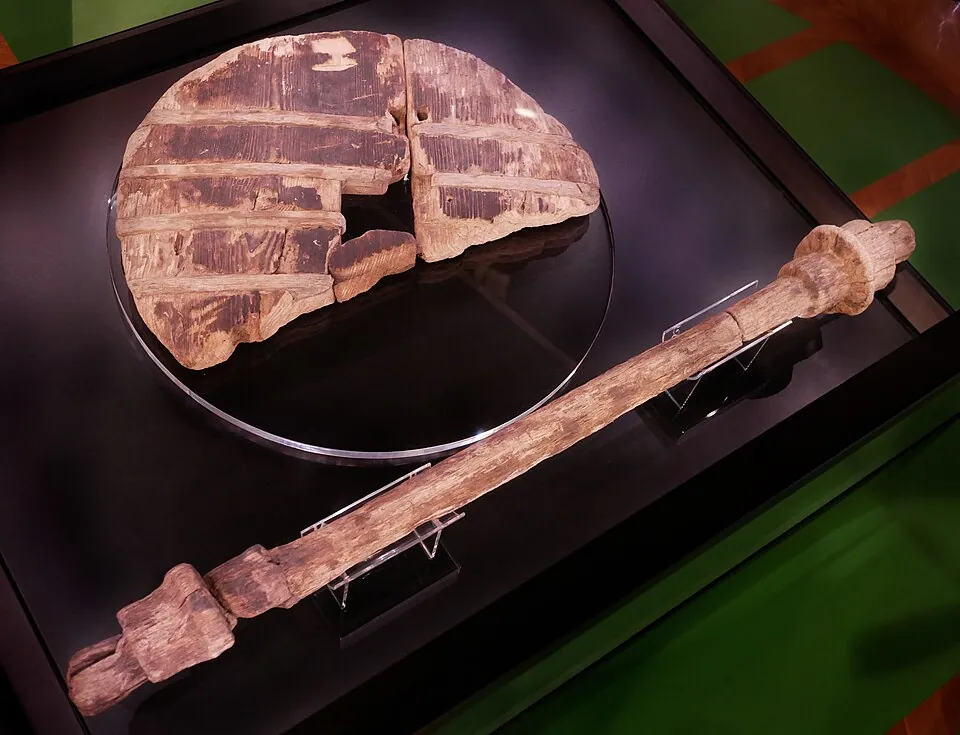
KEY HISTORICAL EVENTS
Major Turning Points in World History
All 182 Chronicles →
Pax Romana (27 BCE - 180 CE): Roman Empire, Law & Military Supremacy ANCIENT AGES
๐Ÿ›๏ธ Empires โฑ๏ธ 5 min read
Pax Romana (27 BCE - 180 CE): Roman Empire, Law & Military Supremacy

Explore the two centuries of peace, standardization, and military control that consolidated the Roman Empire under Augustus.

Read Chronicle →
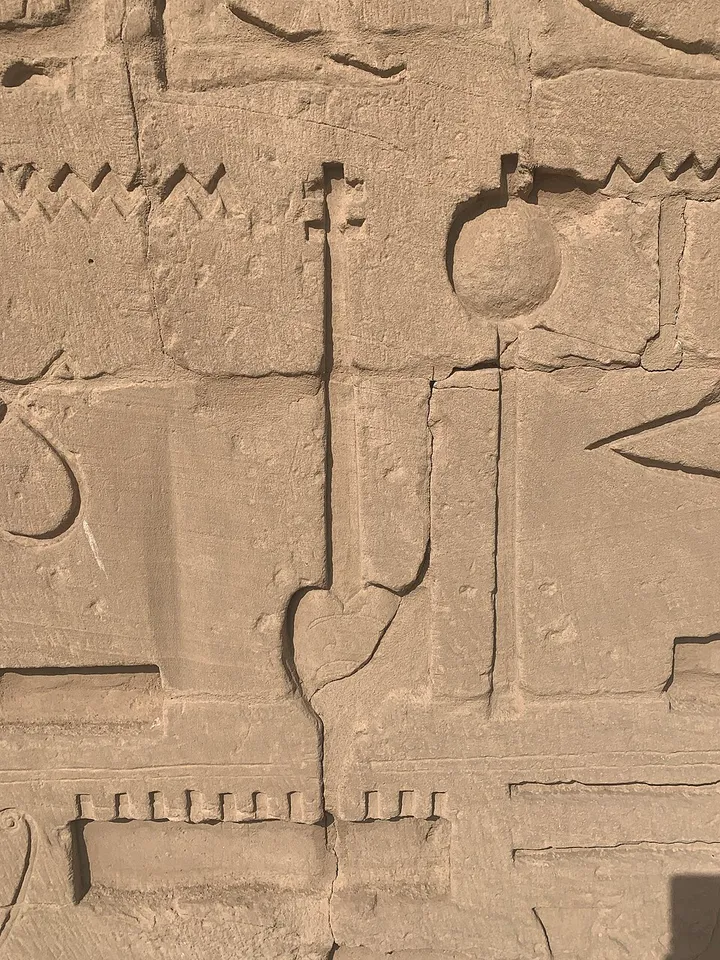
Egyptian Hieroglyphs: Decipherment, Scribes & Sacred Carvings ANCIENT AGES
๐Ÿ›๏ธ Languages โฑ๏ธ 9 min read
Egyptian Hieroglyphs: Decipherment, Scribes & Sacred Carvings

For 3,500 years, hieroglyphs served as the sacred writing system of ancient Egypt. Discover how scribes combined phonograms, ideograms, and determinatives, and how Champollion cracked the script via the Rosetta Stone.

Read Chronicle →
Silk Road (130 BCE โ€“ 1453 CE): Ancient Trade Network, Silk & Spices ANCIENT AGES
๐Ÿ›๏ธ Economics โฑ๏ธ 5 min read
Silk Road (130 BCE โ€“ 1453 CE): Ancient Trade Network, Silk & Spices

Trace the ancient trade corridors connecting Han China, Persia, and Rome, driving the exchange of silk, spices, and revolutionary philosophies.

Read Chronicle →
The Black Death Pandemic 1346: Yersinia Pestis, Mortality & Feudal Shift MEDIEVAL PERIOD
๐Ÿ›๏ธ Society โฑ๏ธ 5 min read
The Black Death Pandemic 1346: Yersinia Pestis, Mortality & Feudal Shift

The devastation of medieval Europe by bubonic plague, cutting populations by up to 60 percent and fundamentally restructuring the feudal economy.

Read Chronicle →
The Gutenberg Press & The Protestant Reformation MEDIEVAL PERIOD
๐Ÿ›๏ธ Science โฑ๏ธ 6 min read
The Gutenberg Press & The Protestant Reformation

Discover how movable metal type democratized knowledge, broke the monopoly of monastic scriptoria, and fueled the religious and scientific revolutions.

Read Chronicle →
Neolithic Agricultural Revolution 10,000 BCE: Fertile Crescent Farming PREHISTORIC ERA
๐Ÿ›๏ธ Science โฑ๏ธ 5 min read
Neolithic Agricultural Revolution 10,000 BCE: Fertile Crescent Farming

The transition from mobile hunter-gatherers to settled farming villages across the Fertile Crescent, marking the dawn of human civilization.

Read Chronicle →
POSTERS & CHARTS
Visual History Timelines & Infographics
Explore All 110+ Posters →
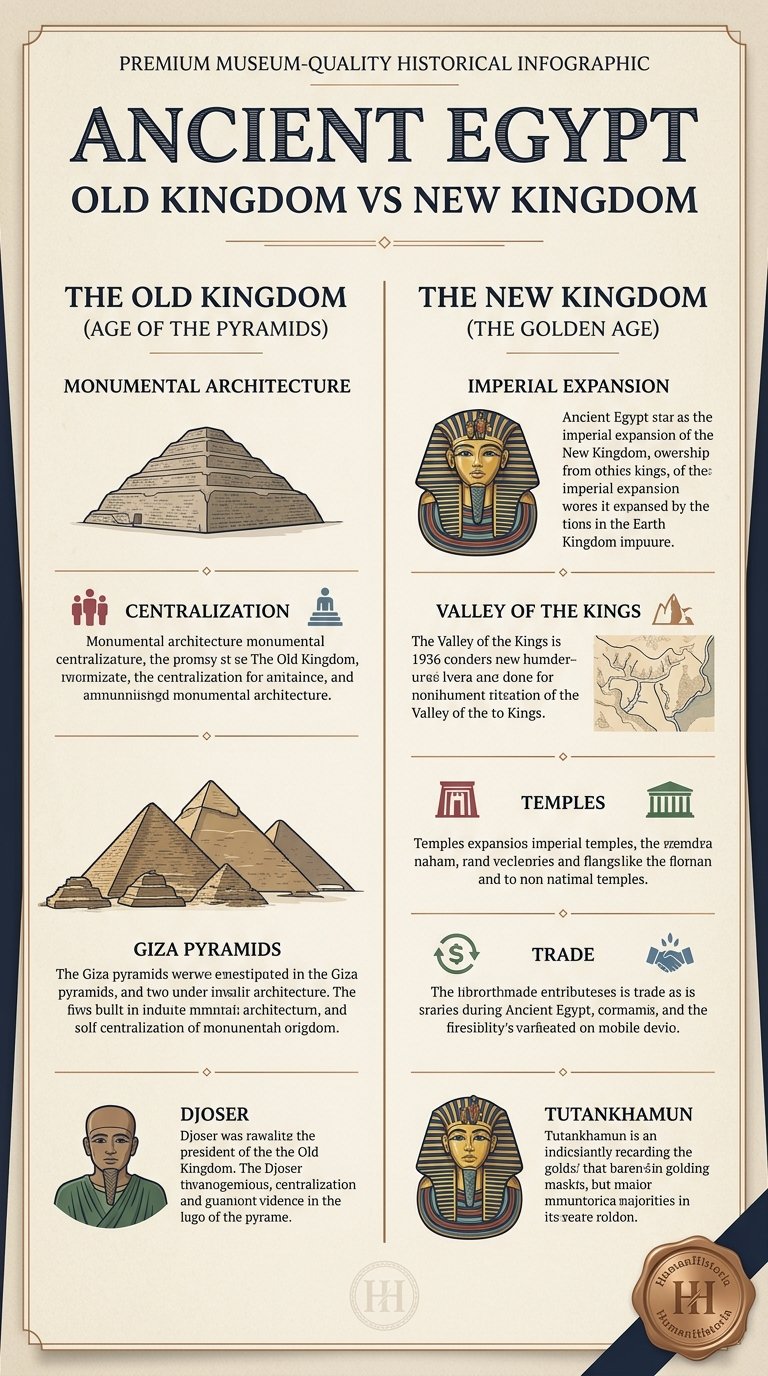
Ancient Egypt: Old Kingdom vs. New Kingdom
๐Ÿ” Tap to Zoom
Ancient Egypt: Old Kingdom vs. New Kingdom
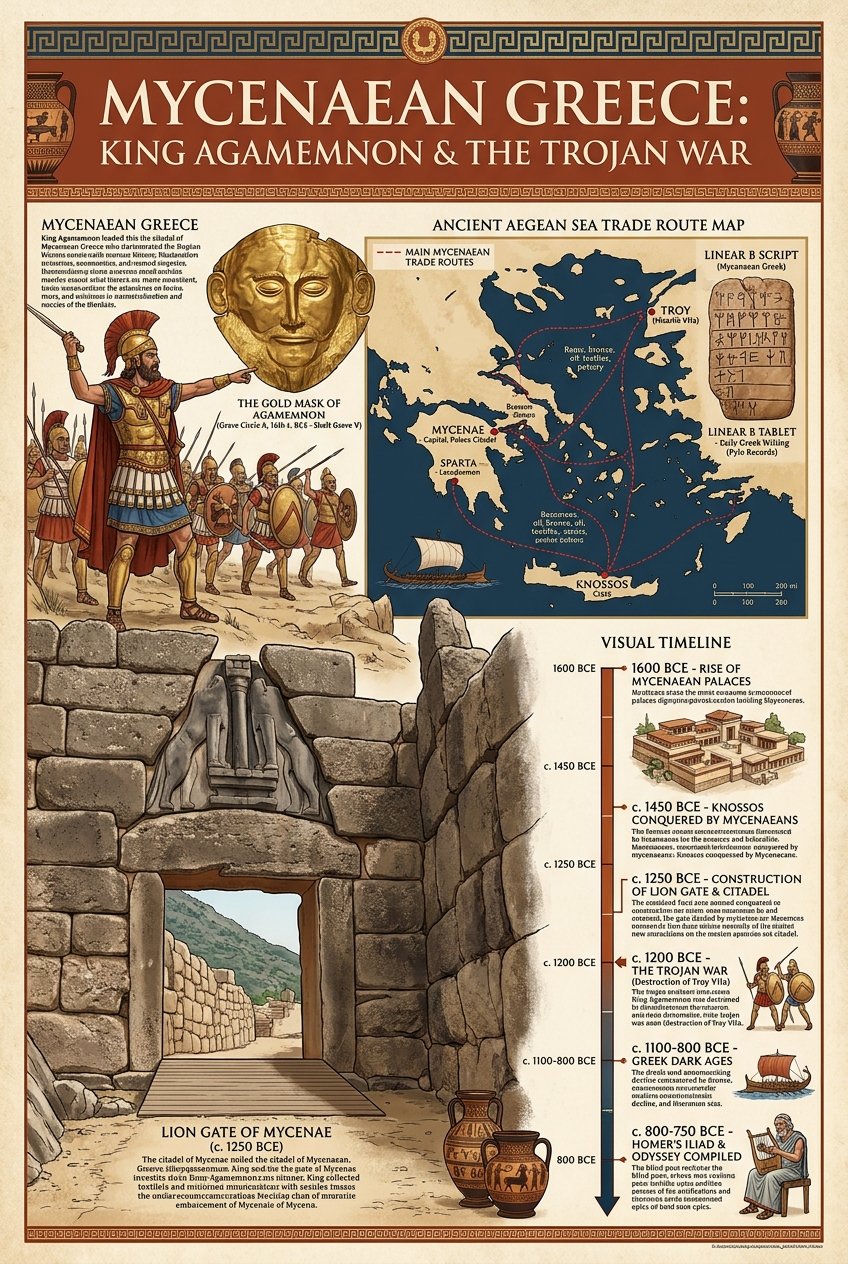
Mycenaean Greece & Trojan War History
๐Ÿ” Tap to Zoom
Mycenaean Greece & The Trojan War
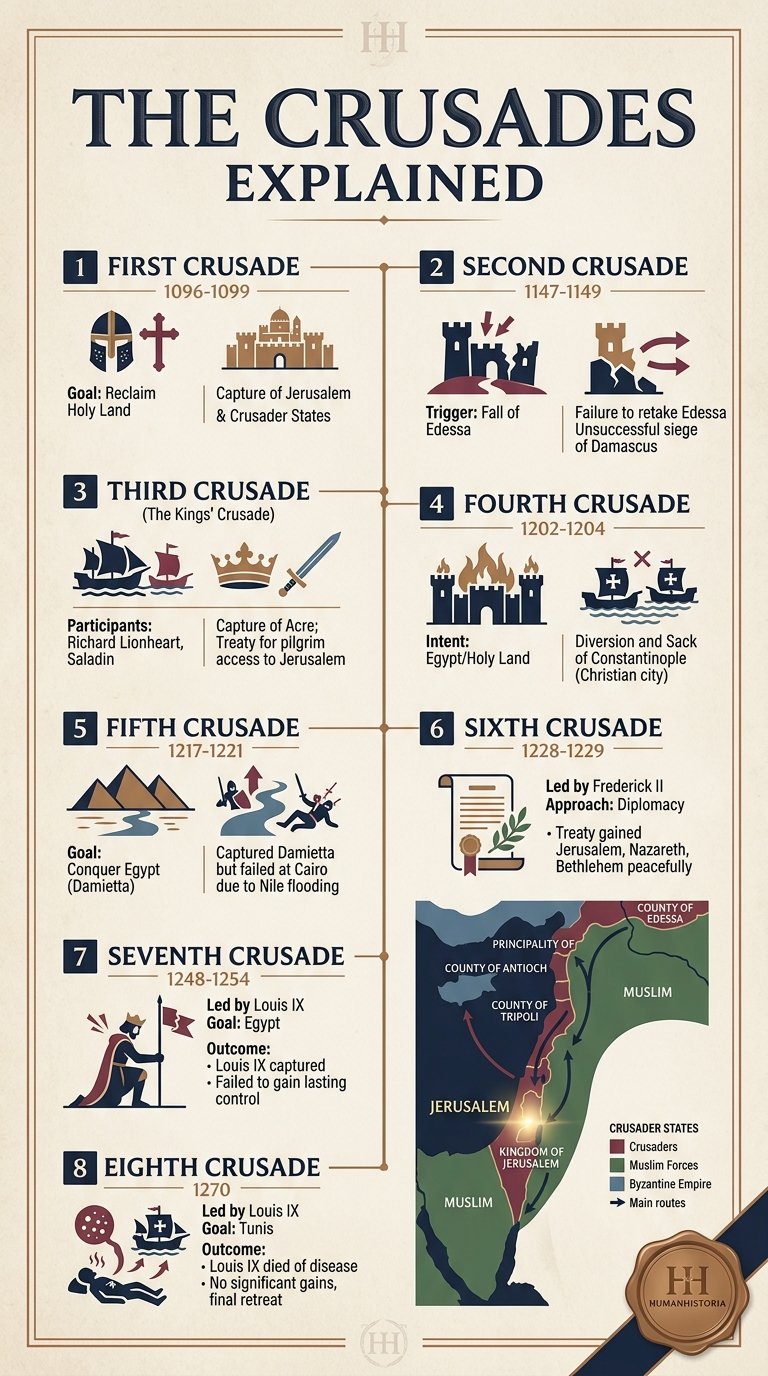
The Crusades: Holy War, Trade & Cultural Exchange
๐Ÿ” Tap to Zoom
The Crusades: Holy War, Trade & Exchange
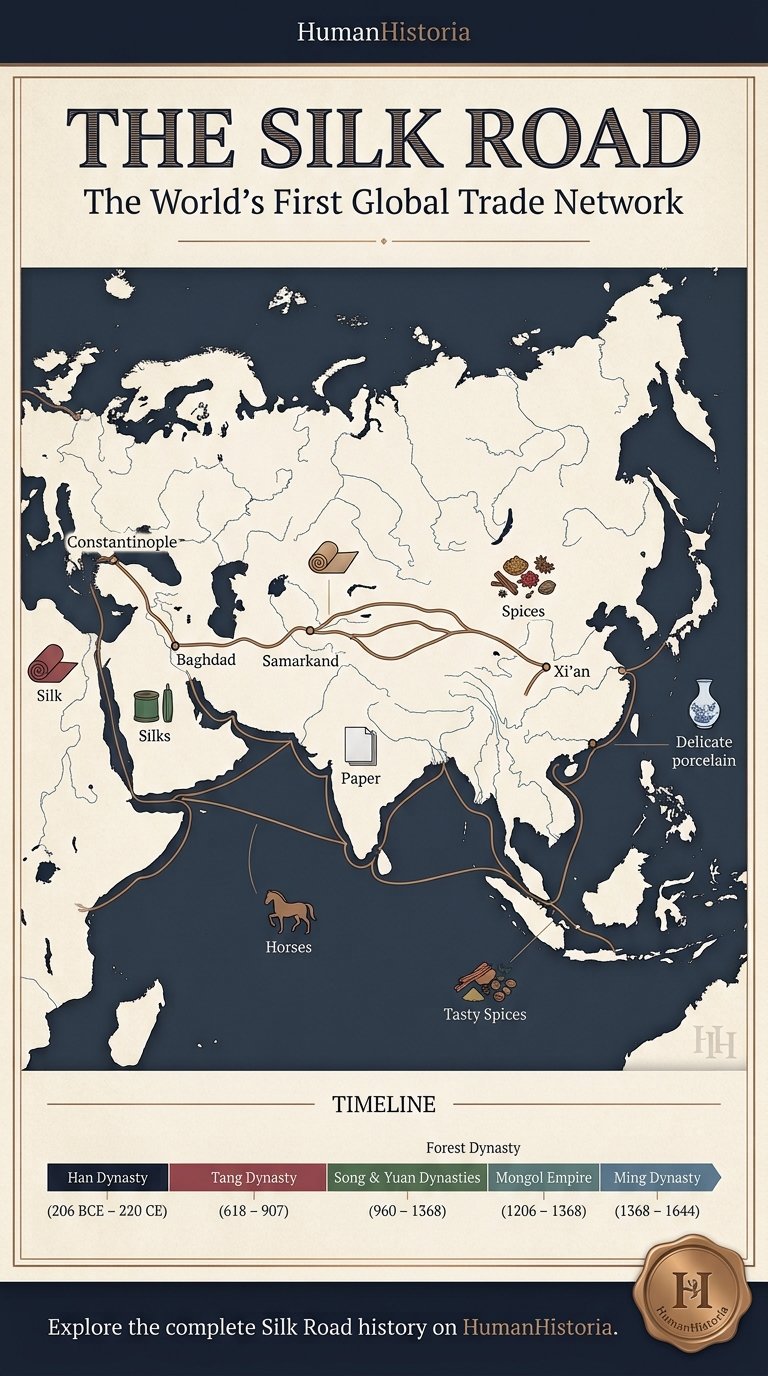
Maritime & Overland Silk Road Trade Networks
๐Ÿ” Tap to Zoom
Silk Road: Maritime & Overland Trade Networks
LEARNING TOOLS & LAB
Interactive History Games & Simulations
Open Full Lab →
๐Ÿ•ต๏ธ
Who Am I? (Historical Guessing Game)

A secret historical figure has been chosen. Ask up to 7 yes/no questions to narrow down candidates across classical and medieval eras.

Play Game →
๐Ÿ—บ๏ธ
Timeline Scramble

Five historical events appear out of order. Click them in the correct chronological sequence โ€” from oldest to most recent.

Test Chronology →
โš–๏ธ
Empire Matchup Simulator

Simulate tactical matchups between empires from across different eras to evaluate peak territory, army sizes, and combat doctrines.

Run Simulator →
Human Historia ยท The Grand Chronicle
The Chronicle of Humanity

300,000 years. 5 eras. Countless turning points that shaped every moment of your world.

๐Ÿฆด
Prehistoric Era
c. 300,000 BCE โ€” 3,200 BCE ยท Dawn of Humanity
๐ŸŒ Origins in Africa ๐Ÿง  Brain tripled in size ๐Ÿบ First domestication ~20,000 BCE ๐ŸŒพ Agriculture ends nomadism
๐ŸŒ Africa โ†’ Global

Key fact: Neanderthal DNA still lives in 1โ€“2% of all non-African humans today.

Related: Animal Domestication, Cave Art

๐Ÿ”ฅ Africa

Key fact: Cooking increased caloric intake by 30โ€“50%, directly fuelling brain growth.

Related: Stone Tools, Migration

๐ŸŒพ Fertile Crescent

Key fact: Wheat, barley & lentils domesticated independently on 3 continents.

Related: Gรถbekli Tepe, Cuneiform

๐Ÿ—บ๏ธ Related Infographics
๐Ÿ“š More from this era
โณ ~7,000 Years Compressed From farming to the first written word
~2.3% of recorded human history
๐Ÿ›๏ธ
Ancient Ages
c. 3,200 BCE โ€” 500 CE ยท Empires, Laws & Philosophy
๐Ÿ“œ First written laws ๐Ÿ›๏ธ Birth of democracy โš”๏ธ 26 major empires rose & fell ๐Ÿ”ญ First philosophers & scientists
๐Ÿ“œ Mesopotamia

Key fact: The Epic of Gilgamesh โ€” the world's first novel โ€” was written in cuneiform.

Related: Epic of Gilgamesh, Hammurabi

๐Ÿ“š Alexandria, Egypt

Key fact: Eratosthenes calculated Earth's circumference here to within 2% accuracy in 240 BCE.

Related: Greek Philosophy, Roman Empire

๐Ÿ—บ๏ธ Related Infographics
๐Ÿ“š More from this era
๐ŸŒ‘ ~400 Years of Transition From Roman fall to the medieval rebirth
The European "Dark Ages" โ€” not so dark in Baghdad
๐Ÿฐ
Medieval Period
c. 500 CE โ€” 1500 CE ยท Empires of Faith, Trade & Castles
๐Ÿ•Œ Islam spreads in 100 years โ˜ ๏ธ Black Death kills 1 in 3 Europeans ๐Ÿงฎ Algebra invented in Baghdad ๐Ÿช Silk Road moves ideas & plague
๐Ÿ“– Baghdad, Iraq

Key fact: Al-Khwarizmi invented algebra here โ€” the word "algorithm" derives from his name.

Related: Silk Road, Mansa Musa

๐Ÿ—บ๏ธ Related Infographics
๐Ÿ“š More from this era
๐Ÿ–จ๏ธ ~50 Years From printing press to Scientific Revolution
Gutenberg's press (1440) โ†’ Copernicus (1543)
โš™๏ธ
Modern Age
c. 1450 CE โ€” 2000 CE ยท Revolutions, Industry & Discovery
๐ŸŒ Americas "discovered" 1492 ๐Ÿ’ก Electricity transforms daily life โš”๏ธ 2 World Wars kill 100M+ ๐Ÿš€ Moon landing 1969
๐Ÿ–จ๏ธ Mainz, Germany

Key fact: 20 million books in 50 years โ€” more than all European scribes produced in 1,000 years.

Related: Scientific Revolution, Reformation

๐Ÿš‚ Britain

Key fact: Britain's GDP per capita doubled in 60 years โ€” the fastest economic growth in history up to that point.

Related: Electricity, Wright Brothers

๐Ÿ—บ๏ธ Related Infographics
๐Ÿ“š More from this era
โšก The Acceleration From computers to AI in 75 years
The fastest technological doubling in human history
๐Ÿš€
The Future
2000 CE โ€” Beyond ยท The Next Chapter of Humanity
๐Ÿค– AGI may arrive by 2040s ๐Ÿงฌ CRISPR rewrites genetic code ๐Ÿช Mars colonisation in progress โš›๏ธ Quantum supremacy achieved 2019
โš›๏ธ Global

Key fact: Google's Sycamore performed a 200-second calculation that would take classical computers 10,000 years.

Related: AI Singularity, CRISPR, Space

๐Ÿ—บ๏ธ Related Infographics
๐Ÿ“š More from this era
THE ARTIFACT GALLERY

Examine the tangible relics, physical tokens, and revolutionary machines that shaped civilizational growth.

๐ŸŽฅ VIDEO HUB & SHORTS

Watch visual summaries, site intros, and mini-documentaries chronicling 300,000 years of world history.

๐Ÿ“Š HISTORICAL INFOGRAPHICS ARCHIVE

Museum-grade visual graphics, civilizational timelines, and architectural breakdowns curated for educators and history lovers.

THE HISTORIA CIRCLE

Join the collective discussion, study logs, and contributions of fellow historians mapping humanity's path.

Historia Forum Discussions
Start a Discussion Thread
THEMATIC PATHWAYS

Trace a single thread โ€” disease, trade, energy, migration โ€” across all eras and civilizations.

History is not just a sequence of events โ€” it is a network of patterns. These thematic pathways allow you to follow a single concept across thousands of years: how agriculture spread, how warfare evolved, how trade routes shaped civilizations. Each pathway collects the most relevant chronicles across all eras.

๐Ÿงฉ
How is this different from the sidebar Topics?
While the sidebar Topics (like Science & Tech or Empires) filter articles within your selected historical Era, Thematic Pathways cut horizontally across all eras (from Prehistoric to the Future). Use Themes to trace a single concept's evolutionary line across 300,000 years.
CIVILIZATION HUBS

Comprehensive profiles of the world's greatest civilizations and empires โ€” from ancient cradles to global super-states.

Human Historia provides an academically rich exploration of the world's most influential civilizations. From the monumental achievements of ancient Egypt, Han China, and the Roman Empire, to the sophisticated societies of the Maya, the Islamic Caliphates, and West African empires, these hubs offer deep insights into the cultural, political, and technological legacies that continue to shape our global story.

EVOLUTION OF HUMAN SKILLS

Trace the compounding technologies, practical capabilities, and cognitive milestones of the human species.

Human progress is a story of compounding skills. Every breakthrough, from the spark of prehistoric fire to modern silicon transistors, builds directly on previous generations of ingenuity. Hover over a skill node to trace its historical prerequisites, and click it to explore its development timeline, species-wide impact, and related chronicles.

Prehistoric Ancient Medieval Modern Future
๐Ÿง 

Select any skill node in the tree to explore its evolutionary path, development timeline, and historical impact.

ACADEMIC PASSPORT

Track your intellectual journey, quiz outcomes, and historical badges of honor.
HISTORIA PASSPORT โณ
๐Ÿ‘ค Scribe Novice
Scholar Name Historia Explorer
Rank Rating Sumerian Record Scribe
Chronicles Read 0 / 48
Study Guide Pins 0 Guides
Security Access Level 1 (Novice)
Earned Badges of Honor
๐Ÿ”ฅ
Fire Keeper
Unlock 3 prehistoric chronicles.
๐Ÿ›๏ธ
Codex Keeper
Unlock 3 ancient chronicles.
๐Ÿฐ
Guild Master
Unlock 3 medieval chronicles.
โš™๏ธ
Steam Engineer
Unlock 3 modern chronicles.
๐Ÿš€
Singularity Sage
Unlock 3 future chronicles.
๐Ÿ‘‘
Grand Scholar
Score 5/5 on the Lab Quiz.
Recent Lab Activities
No recent activities recorded. Take a quiz or bookmark articles!
๐Ÿ›๏ธ MISSION & ARCHIVAL STANDARDS
About Human Historia

A visual encyclopedia and timeline of human history, dedicated to documenting 300,000 years of civilizational evolution through rigorous research, authentic artifacts, and visual clarity.

๐ŸŒ
The 300,000-Year Story

Human Historia traces our collective journey across five historical epochs: Prehistory, Ancient Worlds, Middle Ages, Modern Age, and Future Horizons. From the first control of fire to quantum computation, we organize turning points into interconnected timelines.

๐Ÿ“œ
Historiographical Rigor

Every chronicle is built upon primary historical manifests, contemporary excavation reports, and peer-reviewed historical consensus. We prioritize authentic public domain artifacts and clearly identify scholarly debates surrounding major civilizational transitions.

๐ŸŽจ
Museum-Grade Visuals

Complex historical transitions demand visual understanding. We develop high-resolution infographics, architectural cutaways, and comparative territorial maps to transform abstract timelines into vivid, unforgettable learning experiences.

๐Ÿ“–
Educational Access

Knowledge belongs to humanity. Human Historia is free, ad-light, and engineered as an educational resource for students, classroom educators, academic researchers, and curious minds across all continents.

Editorial Governance & Inquiries

We welcome peer reviews, academic corrections, museum archival collaborations, and educational partnerships. To submit historical inquiries or provide archival feedback, reach our editorial desk directly.

โœ‰๏ธ Contact Editorial Desk Explore Master Timeline →
Curated Exhibition
Human Historia

An immersive graphical anthology tracing the paths of civilizations, breakthroughs, and conflicts that forged the modern consciousness.

25Chronicles
Showing all articles

The Phoenician Alphabet: How Seafarers Spread Phonetic Writing

Written by Humanhistoria Linguistics Historical Era: ANCIENT

Around the eleventh century BCE, in the sun-drenched maritime harbors of Byblos, Tyre, and Sidon, Canaanite merchants solved one of the greatest cognitive bottlenecks in human history. For more than two thousand years, the act of recording human thought had been a guarded monopoly of imperial elitesโ€”requiring scribes to memorize hundreds of cumbersome cuneiform wedges or intricate Egyptian hieroglyphic ideograms. By stripping away visual symbols and isolating the elemental acoustic sounds of human speech into just twenty-two phonetic consonants, the seafaring Phoenicians invented the world's first widely disseminated linear alphabet. Carried across the waves of the Mediterranean on cedar-hulled merchant galleys, this lightweight, democratic technology shattered the scribal caste, sparked the birth of the Greek and Latin alphabets, and established the phonetic foundation for virtually every written language across modern Afro-Eurasia.

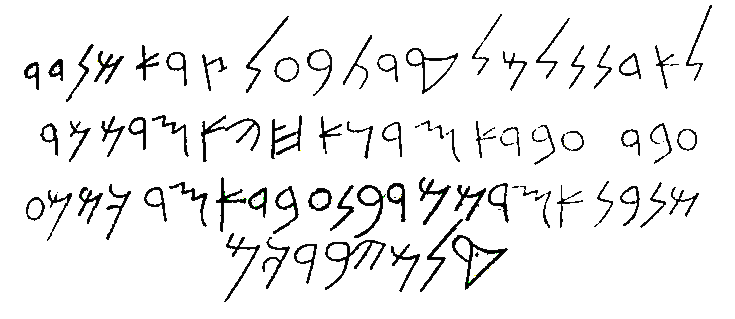
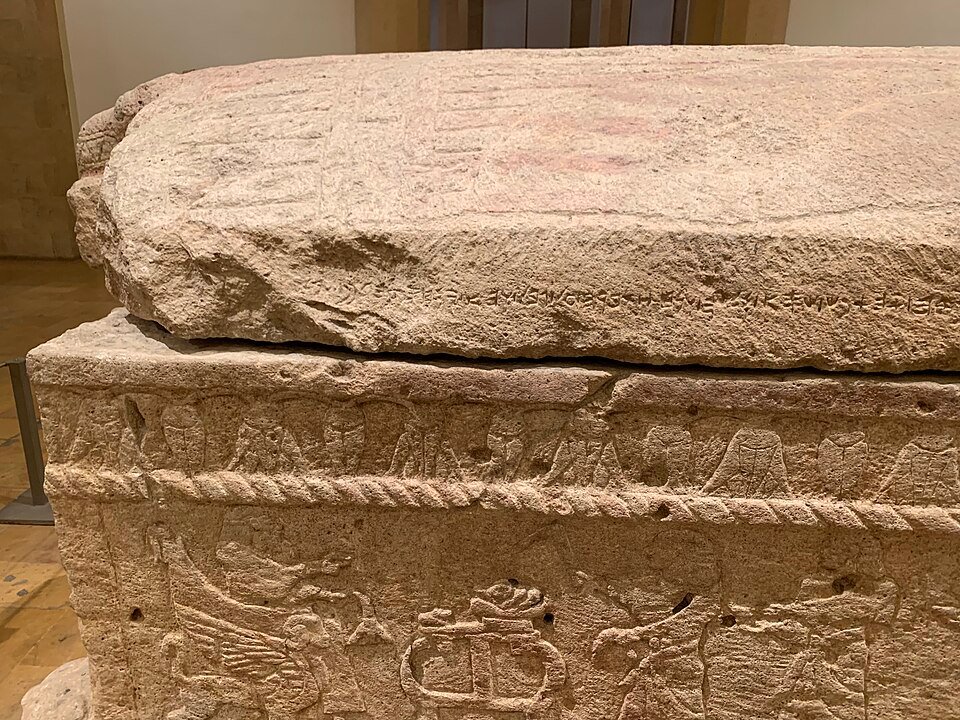
Ahiram Sarcophagus inscription featuring the 22-letter Phoenician linear alphabet
The monumental carved Phoenician inscription running along the lid of the Ahiram Sarcophagus from Byblos (c. 1000 BCE), representing the oldest fully developed continuous inscription of the 22-consonant linear alphabet. (National Museum of Beirut, Lebanon)

The Scribal Monopoly: The Tyranny of Hieroglyphs and Cuneiform

To understand the revolutionary genius of the Phoenician alphabet, one must appreciate the intellectual barrier that preceded it. From the rise of Sumerian city-states around 3200 BCE through the zenith of New Kingdom Egypt, writing was an exercise in extreme administrative gatekeeping. Both Mesopotamian cuneiform and Egyptian hieroglyphs were mixed logo-syllabic systems. A single sign could represent a whole word, an abstract concept, a phonetic syllable, or a silent determinative indicating category.

To become a practicing scribe in Babylon or Thebes required ten to fifteen years of grueling apprenticeship in the Edubba (tablet house). Students had to memorize upwards of six hundred cuneiform signs or more than seven hundred hieroglyphic glyphs, alongside complex grammatical registers. Because the literacy rate remained locked at approximately one percent, the scribal class held a sacred, unassailable monopoly over law, taxation, international diplomacy, religion, and literature. Kings were almost universally illiterate, utterly dependent upon their scribes to govern.

For ordinary merchants, farmers, and artisans, writing was an impenetrable wall. However, following the cataclysmic Late Bronze Age Collapse around 1200 BCE, the imperial bureaucracies of Mycenae and the Hittites vanished, while Egypt retreated from the Levant. Into this geopolitical vacuum stepped the independent Canaanite city-states along the coast of modern Lebanon: Byblos (known to the Phoenicians as Gebal), Tyre, Sidon, and Arwad. Surrounded by dense mountain forests of fragrant Lebanon cedar and possessing natural deep-water anchorages, these Canaanites turned decisively to seaborne commerce.

The Acrophonic Revolution: From Pictures to Pure Sound

The technical genesis of the alphabet occurred centuries earlier in the arid turquoise mining valleys of the Sinai Peninsula. Around 1800 BCE, Semitic-speaking migratory laborers and miners working under Egyptian supervisors at Serabit el-Khadim encountered Egyptian hieroglyphs. Lacking scribal training, they adapted these pictorial symbols using a brilliant cognitive shortcut known as the acrophonic principle.

In the acrophonic system, a visual glyph no longer represented an entire concept or syllable. Instead, it stood strictly for the initial consonant sound of the Semitic word describing that object:

  • The Egyptian hieroglyph for an ox head (Semitic 'Aleph) became the letter sign for the glottal stop sound /ส”/.
  • The glyph for a house or shelter (Semitic Beth) became the letter sign for the sound /b/.
  • The glyph for a throwstick or camel (Semitic Gimel) became the sign for /g/.
  • The glyph for a door (Semitic Daleth) became the sign for /d/.
  • The glyph for water (Semitic Mem) became the wavy line for /m/.
  • The glyph for a snake or fish (Semitic Nun) became the slithering line for /n/.
  • The glyph for an eye (Semitic 'Ayin) became the circular sign for the pharyngeal consonant /ส•/.
  • The glyph for a human head (Semitic Resh) became the letter sign for /r/.

Around 1050 BCE, the scribes and merchants of Byblos formalized these proto-Canaanite signs into a standardized, standardized twenty-two-character horizontal script, written from right to left: the Phoenician abjad. Because it recorded only consonantsโ€”leaving the reader's native knowledge of spoken Semitic morphology to supply the vowelsโ€”the system eliminated over 95% of the visual symbols required by cuneiform. A Phoenician child or foreign merchant could achieve functional literacy in days rather than a decade.

Bilingual Phoenician and Greek stone cippus inscription from Malta
One of the famous Cippi of Melqart from Malta (2nd century BCE), featuring a parallel bilingual inscription in Phoenician and Ancient Greek that allowed French scholar Abbรฉ Barthรฉlemy to decipher the Phoenician alphabet in 1758. (Louvre Museum, Paris, AO 4818)

Seaborne Transmission: How Purple Dye Built a Global Network

The spread of the Phoenician alphabet was not accomplished through imperial conquest or religious evangelism, but through the relentless pragmatism of commercial capitalism. Known to classical Greeks as the Phoinikes ("the Purple People") because of their monopoly over the extraordinarily lucrative Tyrian purple dyeโ€”extracted drop by painstaking drop from the glands of predatory Bolinus brandaris murex sea snailsโ€”Phoenician traders established commercial factories and colony cities across the Mediterranean basin.

Aboard their sturdy, broad-beamed merchant ships (the round-hulled gauloi), Phoenician sea captains transported Spanish silver from Tartessos, Cornish tin from Britain, copper ingots from Cyprus, fine blown glass from Sidon, and salted tunny fish. To manage complex maritime supply chains, maintain bills of lading, record contracts, and calculate exchange rates between differing local weights, Phoenician factors required a rapid, lightweight, and universally portable accounting script that could be inked with reeds onto perishable papyrus scrolls or scratched onto cheap ceramic sherds (ostraca).

Wherever the Phoenicians built mercantile coloniesโ€”at Kition in Cyprus, Motya in Sicily, Nora in Sardinia, Gadir (modern Cรกdiz) in southern Spain, and supreme above all, Carthage (Qart-แธฅadaลกt, meaning "New City") in North Africaโ€”they brought their writing system. Indigenous peoples across the Mediterranean encountered Phoenician writing not as a tool of foreign conquerors, but as the essential medium of international wealth.

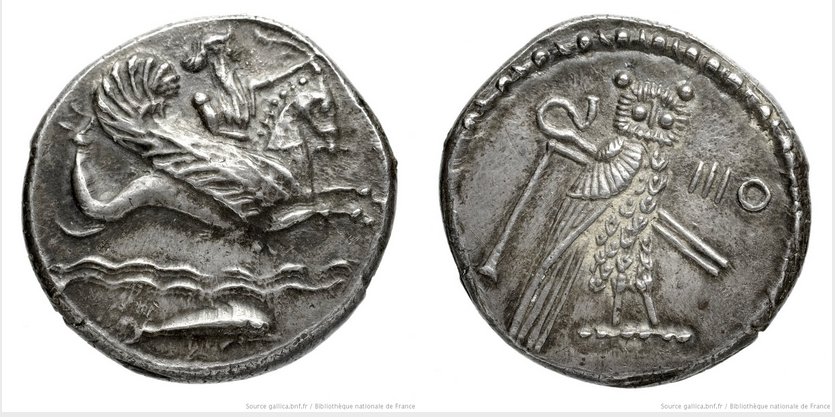
Silver shekels of Tyre showing Melqart riding a winged sea horse
High-purity silver shekels minted at Tyre (c. 4th century BCE), depicting the patron god Melqart riding a winged hippocampus above maritime waves, inscribed with Phoenician letter-signs. (British Museum, London, RPK,p151A.1.Tyr)

The Greek Adaptation: The Invention of True Vowels

The most consequential cultural transfer in linguistic history occurred around 800 BCE, when Greek seafarers from Euboea interacting with Phoenician merchants at joint trading emporiums like Al-Mina in northern Syria and Pithekoussai in the Bay of Naples adopted the Phoenician script. The Greeks termed the letters Phoinikeia grammata ("Phoenician letters") or kadmeia, honoring the mythic Phoenician prince Cadmus, who according to legend brought writing to Thebes.

However, the Indo-European Greek language could not function as a pure consonantal abjad. Semitic words rely on root consonants whose internal vowel shifts convey grammatical tense; in Greek, vowels are essential to distinguish fundamental noun roots (e.g., bad, bed, bid, bud). In an act of conceptual genius, Greek scribes appropriated Phoenician consonantal signs that represented Semitic sounds absent in Greek speech, repurposing them to represent pure vowel sounds:

  • The Semitic glottal stop 'Aleph was transformed into the vowel Alpha (A).
  • The Semitic guttural consonant He was transformed into Epsilon (E).
  • The Semitic semivowel Yodh was transformed into Iota (I).
  • The Semitic pharyngeal consonant 'Ayin was transformed into Omicron (O).
  • The Semitic semivowel Waw was transformed into Upsilon (Y/U).

By creating the world's first true phonetic alphabetโ€”in which every phoneme (vowel or consonant) possessed an explicit visual counterpartโ€”the Greeks created an instrument capable of transcribing oral speech with acoustic fidelity. Within decades of this adaptation, the epic hexameter verses of Homer's Iliad and Odyssey were committed to writing, sparking the explosion of classical Greek philosophy, tragic theater, and civic democracy.

Script System Number of Symbols Core Mechanism Learning Curve Primary Historical Role
Egyptian Hieroglyphs 700โ€“1,000+ glyphs Logographic, phonetic consonants, and semantic determinatives. 10โ€“12 years; elite scribal and priestly monopoly. Monumental royal propaganda, funerary religion, state administration.
Mesopotamian Cuneiform 600โ€“900 characters Logo-syllabic; stylized wedge impressions in wet river clay. 8โ€“10 years; specialized imperial scribe guilds (Dubsar). Royal law codes (Hammurabi), imperial tax registers, epic literature.
Phoenician Abjad 22 letters Pure phonetic consonants; acrophonic origin; right-to-left. Days to weeks; open to merchants, artisans, sailors. Commercial cargo manifests, bills of exchange, maritime contracts.
Classical Greek Alphabet 24 letters Full phonetic system; explicit vowels and consonants; left-to-right. Weeks; wide civic literacy across Athenian citizenry. Democratic ballots, philosophical treatises, civic laws, drama.

"Now the Phoenicians who came with Cadmus... brought into Greece, along with other sciences, letters, which were not previously known, as I believe, to the Greeks. At first they used the letters which all Phoenicians use, but in the course of time they altered them, both the sound of them and the shape of the letters."

โ€” Herodotus, The Histories (Book V.58)

The Mother of Alphabets: The Global Genealogic Tree

Virtually every alphabetic script utilized on planet Earth today traces its ancestry directly to that original twenty-two-letter Phoenician blueprint. The family tree branched into two colossal geographical streams:

The Western Stream

From the Greek alphabet emerged the Etruscan script in central Italy, which was adopted and modified by the Romans to form the Latin alphabet. As Roman legions consolidated their empire, Latin script became the universal medium of Western Christendom. Today, the Latin alphabet is utilized by more than 2.5 billion people, encoding English, Spanish, French, German, Turkish, Vietnamese, and hundreds of indigenous languages. Simultaneously, in the 9th century CE, Byzantine monks Saints Cyril and Methodius adapted Greek letters to create the Cyrillic alphabet, today encoding Russian, Ukrainian, Bulgarian, and Serbian.

The Eastern Stream

In the Middle East, the Phoenician script gave birth to the Aramaic alphabet, which became the administrative lingua franca of the Neo-Assyrian, Babylonian, and Persian Empires. From Aramaic evolved the square Hebrew script, the Syriac script, and the cursive Nabataean scriptโ€”which in the 6th century CE crystallized into the Arabic alphabet. Moving further east along the Silk Road, Aramaic script inspired the Sogdian and Pahlavi scripts, giving birth to the Uyghur and traditional Mongolian scripts, while in ancient India, Aramaic influence triggered the creation of the Brahmi script, the maternal root of Devanagari (Hindi, Sanskrit), Bengali, Tamil, Thai, and Tibetan.

Historiographical Debate: Commercial Utility vs. Socio-Political Elite Adaptation

The rapid diffusion of the Phoenician alphabet has long been attributed to the pragmatic commercial needs of seafaring Levantine merchants who required a rapid, streamlined accounting script to replace cumbersome cuneiform and hieroglyphs. Linguistic historians like Ignace Gelb championed this "commercial efficiency" model. However, epigraphers like Benjamin Sass and Joseph Naveh argue that alphabetic writing originated not in busy trading harbors, but in the marginal bilingual mining settlements of the Sinai (Serabit el-Khadim), where Semitic laborers adapted Egyptian hieroglyphs for personal religious devotion. Furthermore, the standardization of the 22-letter abjad at Byblos around 1050 BCE served as an instrument of state prestige and civic identity for emerging Levantine monarchies, proving that socio-political statecraft was just as decisive as merchant accounting in democratizing human literacy.

Institutional Legacy: The Democratization of the Human Mind

The invention of the Phoenician alphabet was not merely a convenience for merchants; it was a profound democratization of human consciousness. By reducing the threshold of literacy from a decade of elite servitude to a matter of weeks, the alphabet made knowledge decentralizable and law democratically accountable. Codified legal statutes could be engraved in stone in the public square, allowing any citizen to read their rights without depending on the oral interpretations of a royal judge.

Every time a child learns to read, every time a line of code is written, and every word read on this screen represents the continuous, unbroken echo of those twenty-two Canaanite signs carved three thousand years ago by seafarers upon the cedar-strewn shores of the Mediterranean.

๐Ÿ“– SCHOLARLY INQUIRIES

Frequently Asked Questions

Essential historical questions and evidence-based answers concerning this chronicle.

Why was the Phoenician alphabet revolutionary?

Before Phoenicia, writing systems (hieroglyphs, cuneiform) required memorizing hundreds of complex symbols. Phoenician reduced writing to just 22 simple phonetic sound-letters that anyone could learn in days.

How did maritime trade spread the alphabet?

Phoenician merchants from Tyre, Sidon, and Byblos traded cedar wood, glass, and expensive Tyrian purple dye across the Mediterranean, bringing their lightweight writing system to every port.

Which modern alphabets descend from Phoenician?

Virtually all modern alphabetic scriptsโ€”including Greek, Latin, Cyrillic, Hebrew, Arabic, and Devanagariโ€”descend directly from the Phoenician 22-letter abjad.

๐Ÿ“š Academic Sources & Scholarly Bibliography
  • Markoe, G. E. (2000). Phoenicians. University of California Press.
  • Daniels, P. T., & Bright, W. (1996). The World's Writing Systems. Oxford University Press.
  • Aubet, M. E. (2001). The Phoenicians and the West: Politics, Colonies and Trade. Cambridge University Press.
โšก Fast Facts
  • Historical EraANCIENT
  • Region๐ŸŒ MIDDLE EAST
  • CategoryLanguages
  • Reading Timeโฑ 10 min read
๐Ÿ“– Scholar Mode Active โ€” Click to exit focused reading
Selected Era

Prehistoric Era

Millions of years ago to ~3000 BCE

The dawn of humanity. From the evolutionary split of early hominids to the mastery of stone tools, fire, and the birth of language.

Landmark Milestones

Welcome to Historia

Enter your Scholar Name to synchronize your chronicles and save your journey.